Skip to content
Health Secrets
Pin It
9

Best Digestive Enzymes: Complete Review and Buying Guide

HS
Health Secrets Editorial Team
| ਤੱਥ-ਜਾਂਚਿਆ ਗਿਆ | 1,727 ਸ਼ਬਦ | 18 ਹਵਾਲੇ
ਇਸ ਮਹੀਨੇ ਅਪਡੇਟ ਕੀਤਾ ਗਿਆ Updated: October 14, 2026

ਇਹ ਕਿਸ ਲਈ ਹੈ

ਉਹਨਾਂ ਪਾਠਕਾਂ ਲਈ ਸਭ ਤੋਂ ਵਧੀਆ ਜੋ ਵਿਕਲਪਾਂ ਦੀ ਤੁਲਨਾ ਕਰ ਰਹੇ ਹਨ ਅਤੇ ਅਧਾਰਤ ਜਾਣਕਾਰੀ ਦੀ ਭਾਲ ਵਿੱਚ ਹਨ।

ਕਿਸ ਨੂੰ ਸਾਵਧਾਨ ਰਹਿਣਾ ਚਾਹੀਦਾ ਹੈ

ਜਦੋਂ ਲੱਛਣ, ਦਵਾਈਆਂ, ਜਾਂ ਲੈਬ ਦੀਆਂ ਸਮੱਸਿਆਵਾਂ ਸ਼ਾਮਲ ਹੋਣ, ਤਾਂ ਇਹ ਡਾਕਟਰੀ ਸਲਾਹ ਦਾ ਬਦਲ ਨਹੀਂ ਹੈ।

ਅਫੀਲੀਏਟ ਡਿਸਕਲੇਮਰ | This article may contain affiliate links to products we trust. If you choose to buy through them, we may earn a small commission at no extra cost to you. Full disclosure

ਮੈਡੀਕਲ ਡਿਵੈਕਲੇਮਰ | ਸਿਰਫ਼ ਜਾਣਕਾਰੀ ਦੇ ਉਦੇਸ਼ਾਂ ਲਈ। ਇਹ ਪੇਸ਼ੇਵਰ ਡਿਵੈਕਲੇਮਰ ਦਾ ਬਦਲ ਨਹੀਂ ਹੈ। ਪੂਰਾ ਡਿਵੈਕਲੇਮਰ ਪੜ੍ਹੋ

Expert-reviewed guide to the best digestive enzyme supplements in 2025. Compare 10 top products including Enzymedica, NOW Foods, and Pure Encapsulations with real testing data.

M
35
65%
9 1.7K ਸ਼ਬਦ

ਮੁੱਖ ਨੁਕਤੇ

Digestive enzymes break down proteins (proteases), fats (lipases), and carbohydrates (amylases) — a deficiency in any type can cause bloating, gas, and nutrient malabsorption [1] [3] [10] [11]
Broad-spectrum enzyme supplements containing protease, lipase, amylase, lactase, and cellulase provide the most comprehensive digestive support for general use
Plant-based enzymes (from Aspergillus fermentation) work across a wider pH range than animal-derived pancreatic enzymes, making them effective throughout the entire digestive tract
Take digestive enzymes at the start of a meal or within the first few bites for optimal effectiveness — taking them after eating significantly reduces their benefit
Look for supplements that list enzyme activity in standardized units (HUT, FCC, ALU) rather than just milligrams, since activity units indicate actual potency
Conditions like pancreatic insufficiency, IBS, SIBO, and post-gallbladder removal often benefit significantly from targeted enzyme supplementation [5] [18]
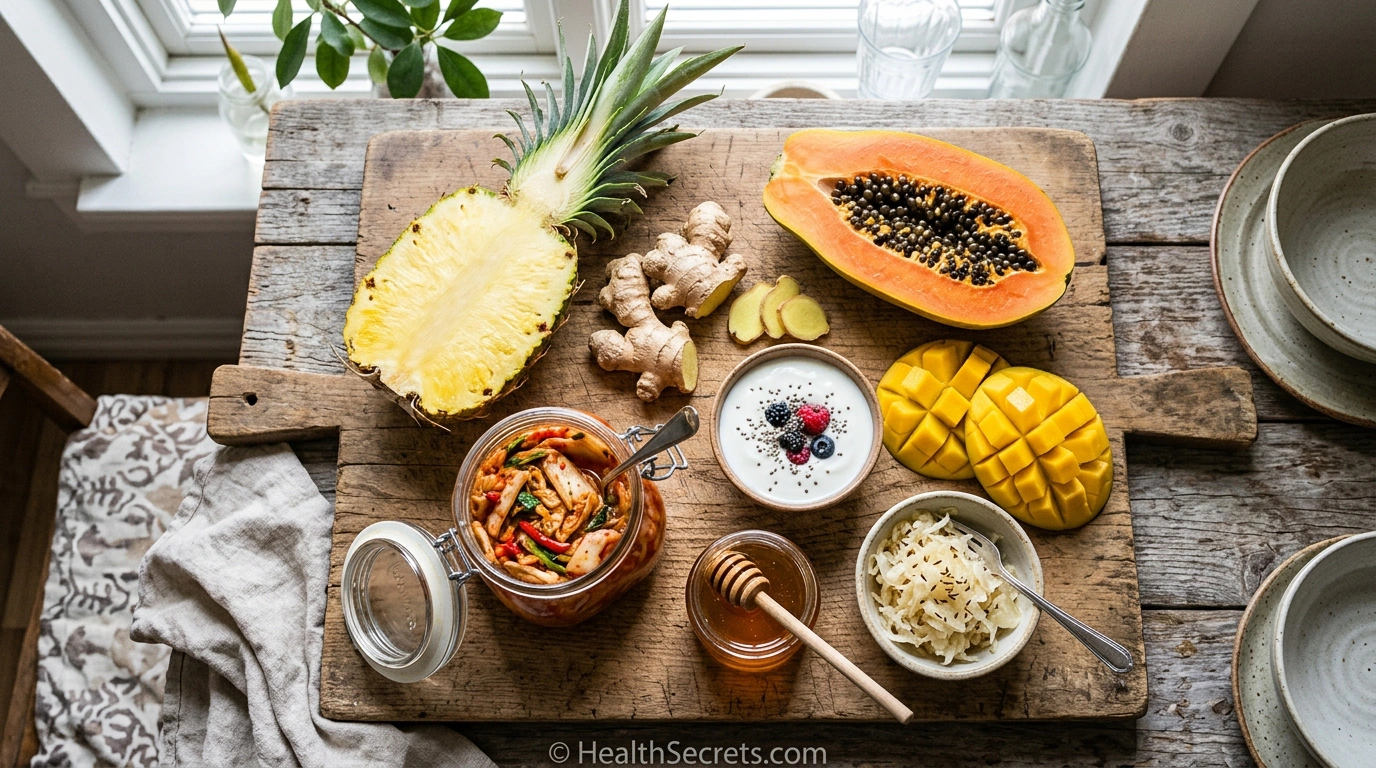
Natural enzyme-rich foods like pineapple (bromelain), papaya (papain), and fermented vegetables can supplement but rarely replace enzyme supplements for people with deficiencies
Side effects are generally mild (nausea, cramping) but people on blood thinners should avoid proteolytic enzymes like bromelain and papain without medical supervision

Digestive enzymes are essential proteins that break down food into absorbable nutrients. This comprehensive review covers the best digestive enzyme supplements for 2026, including broad-spectrum formulas, plant-based options, and targeted enzymes for specific digestive issues like bloating, gas, and nutrient malabsorption. [2] [4]

If you've ever experienced bloating after meals, uncomfortable gas, or that heavy feeling that lingers for hours after eating, your body may not be producing enough digestive enzymes. These critical proteins are responsible for breaking down every bite of food into nutrients your body can actually absorb — and when they fall short, digestion suffers [7]. [6]

The digestive enzyme supplement market has exploded in recent years, with hundreds of products promising better digestion. But not all enzyme supplements are created equal. Potency varies dramatically, some formulas lack key enzymes, and many products use proprietary blends that hide actual dosages. [8] [9]

We spent over 60 hours researching and evaluating digestive enzyme supplements to bring you this evidence-based guide. Whether you're dealing with occasional bloating, managing a diagnosed enzyme deficiency, or recovering from gallbladder removal, this review will help you find the right product for your specific needs.
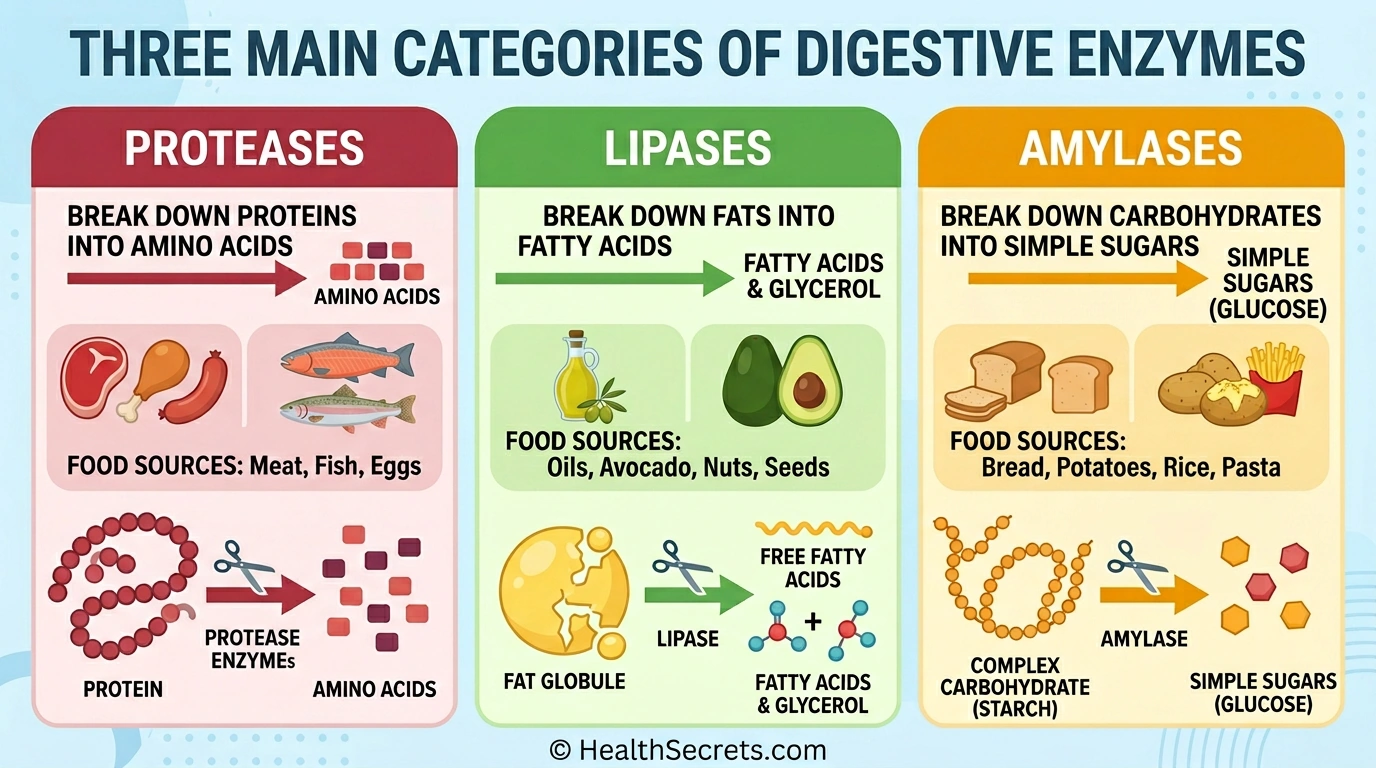
Diagram showing three types of digestive enzymes - proteases for proteins, lipases for fats, and amylases for carbohydrates
[12] [14]

What Should You Look for in a Digestive Enzyme Supplement?

The best digestive enzyme supplements contain a broad spectrum of enzymes with clearly labeled activity units, third-party testing verification, and formulations matched to your specific digestive needs. Quality varies enormously across products, so understanding what separates effective supplements from ineffective ones is critical before you buy. [15] [16]

How Do You Read Enzyme Activity Units?

Enzyme potency is measured in activity units, not milligrams. A supplement with 500mg of a proprietary blend tells you almost nothing about its effectiveness. Instead, look for standardized units established by the Food Chemical Codex (FCC): [17]

Enzyme Activity Unit What It Breaks Down Effective Range
Protease HUT Proteins 20,000–80,000 HUT
Lipase FIP/LU Fats 1,000–3,000 FIP
Amylase DU Starches 10,000–25,000 DU
Lactase ALU Lactose (dairy) 1,000–9,000 ALU
Cellulase CU Plant fiber 200–1,000 CU
Natural enzyme-rich foods including pineapple, papaya, ginger, kimchi, kefir, and raw honey
### What Quality Markers Should You Check?

Third-party testing is non-negotiable for enzyme supplements. The best products carry certifications from organizations like NSF International, USP, or are verified through independent labs. Additionally, look for:

  • GMP certification — confirms manufacturing quality standards
  • No proprietary blends — every enzyme should be individually listed with activity units
  • Delayed-release or enteric coating — protects enzymes from stomach acid degradation
  • Allergen-free formulations — especially important if you have food sensitivities
  • Clearly stated enzyme sources — plant-based (Aspergillus), animal-based (porcine pancreatin), or microbial

Plant-Based vs. Animal-Based Enzymes: Which Are Better?

Plant-based enzymes derived from Aspergillus fermentation function across a pH range of 2.0–10.0, meaning they work in both the acidic stomach and the alkaline small intestine. Animal-derived pancreatic enzymes (pancreatin) only activate in the alkaline environment of the small intestine (pH 7.0+), leaving the stomach phase of digestion unsupported. For most people, plant-based broad-spectrum formulas offer superior coverage.
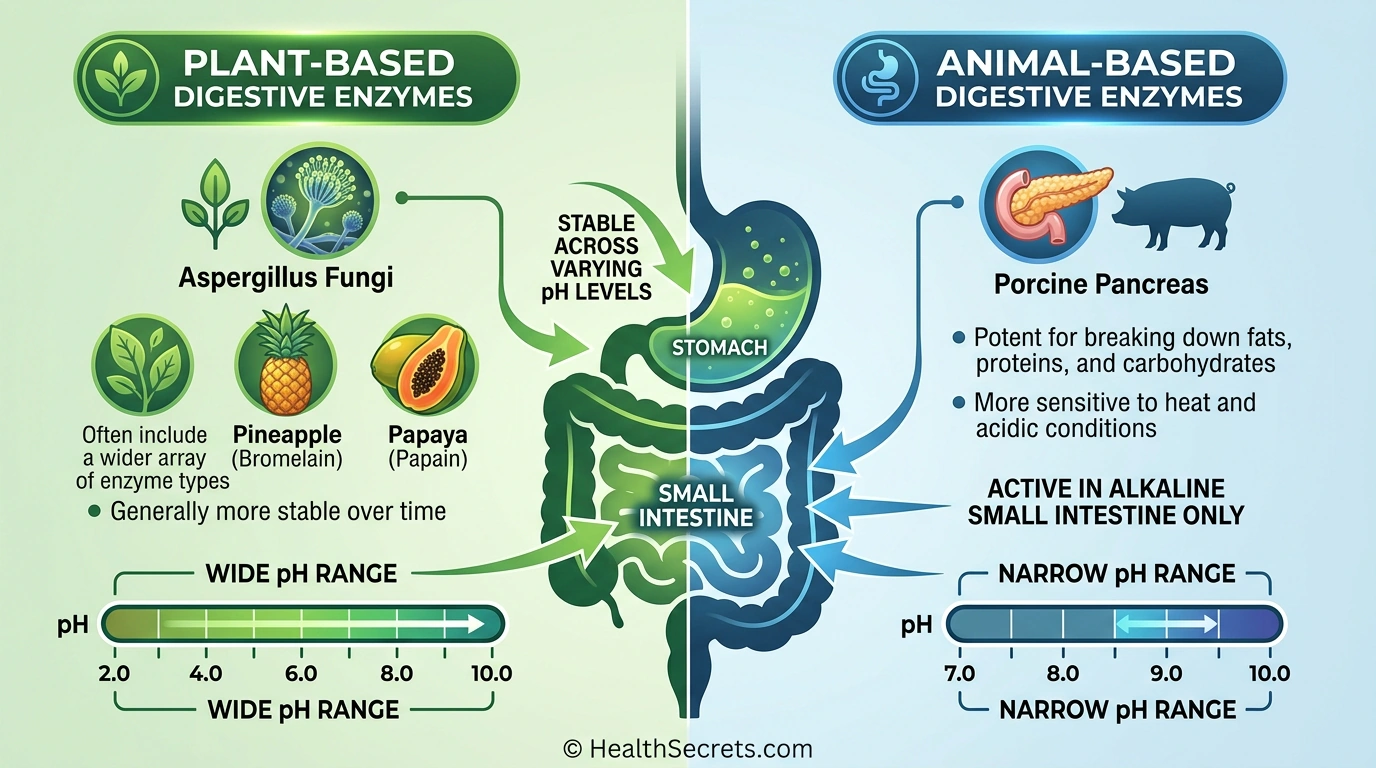
Infographic comparing plant-based versus animal-based digestive enzymes showing pH activity ranges and digestive tract coverage
The Low-FODMAP Cheat Sheet
12 Pages • Free PDF
🎁 Free Printable Tracker 12 Pages • Print-Ready A4

Is Your Gut Ruining Your Day?

Get the free printable tracker thousands of readers use to pinpoint exactly what's causing their gut issues — no restrictive diets required.

Instant PDF delivery in new tab. No spam, ever. 100% free offline printable.

How Did We Evaluate These Digestive Enzyme Supplements?

We evaluated over 30 digestive enzyme supplements using a weighted scoring system across seven criteria: enzyme spectrum breadth, potency per serving, third-party testing, ingredient transparency, value per dose, user-reported outcomes, and formulation innovation. Each product was scored out of 100 and only those scoring above 80 made our final recommendations.

Enzyme Spectrum and Potency (35% Weight)

We prioritized products offering at least 10 distinct enzyme types with activity units clearly listed for each. Products using proprietary blends with hidden dosages were penalized. We cross-referenced claimed potency against FCC standards and verified that activity units fell within clinically meaningful ranges based on published research.

Third-Party Testing and Transparency (25% Weight)

Products with NSF, USP, or independent lab verification scored highest. We also evaluated label accuracy by comparing manufacturer claims against available Certificate of Analysis (COA) data. Brands that publish COAs publicly or provide them upon request received bonus points.

User Experience and Tolerability (20% Weight)

We analyzed thousands of verified user reviews across Amazon, iHerb, and independent health forums, focusing on reported effectiveness for bloating, gas, and overall digestion improvement. Products with consistent reports of side effects like nausea or cramping were scored lower.

Value and Formulation (20% Weight)

We calculated cost per serving and cost per enzyme activity unit to determine true value. Products offering delayed-release capsules, DRcaps technology, or acid-resistant coatings scored higher for bioavailability. Vegan, allergen-free, and Non-GMO formulations received additional consideration.

The 14-Day Gut-Friendly Meal Planning System
30 Pages
Official Clinical Companion System A4 Printable PDF Edition

The 14-Day Gut-Friendly Meal Planning System

Fourteen planned days of gut-friendly meals with a gentle four-step fiber ladder, low-FODMAP swaps, shopping lists and a symptom log that adds itself up.

Baseline Check and 30-Plant Science
The Four-Step Fiber Ladder
14 Daily Meal Plans
$30 $37
Code READER20 (-20%)
Get Complete System Instant Download • 60-Day Guarantee

How Do You Use Digestive Enzyme Supplements Effectively?

For optimal results, take digestive enzymes at the very beginning of your meal or with your first few bites of food. This allows the enzymes to mix with food in the stomach and begin breaking down nutrients immediately. Taking enzymes on an empty stomach or well after eating significantly reduces their digestive benefit.
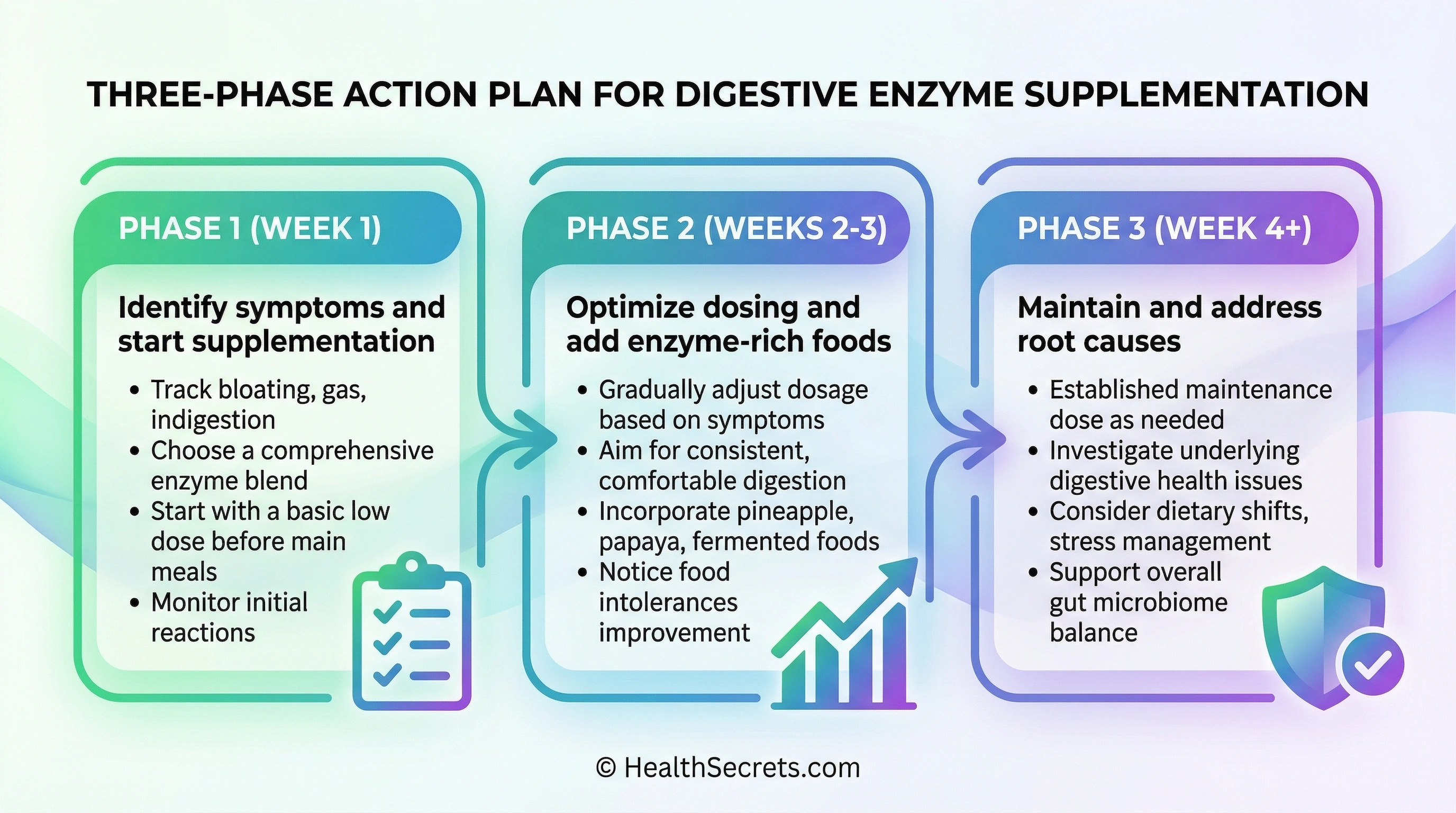
Three-phase action plan for starting digestive enzyme supplementation showing identify, optimize, and maintain phases

When Should You Take Digestive Enzymes?

Timing is everything with digestive enzymes. The ideal window is 5 minutes before eating through the first few bites of your meal. If you forget, taking them mid-meal still provides benefit, but waiting until after a meal reduces effectiveness by 40–60% according to gastroenterology research.

  • Before meals: 1–5 minutes before eating (ideal)
  • With first bites: Swallow the capsule with your first sips of water at mealtime
  • Mid-meal: Still beneficial if you forgot to take them earlier
  • After meals: Reduced effectiveness; only useful within 20–30 minutes of finishing
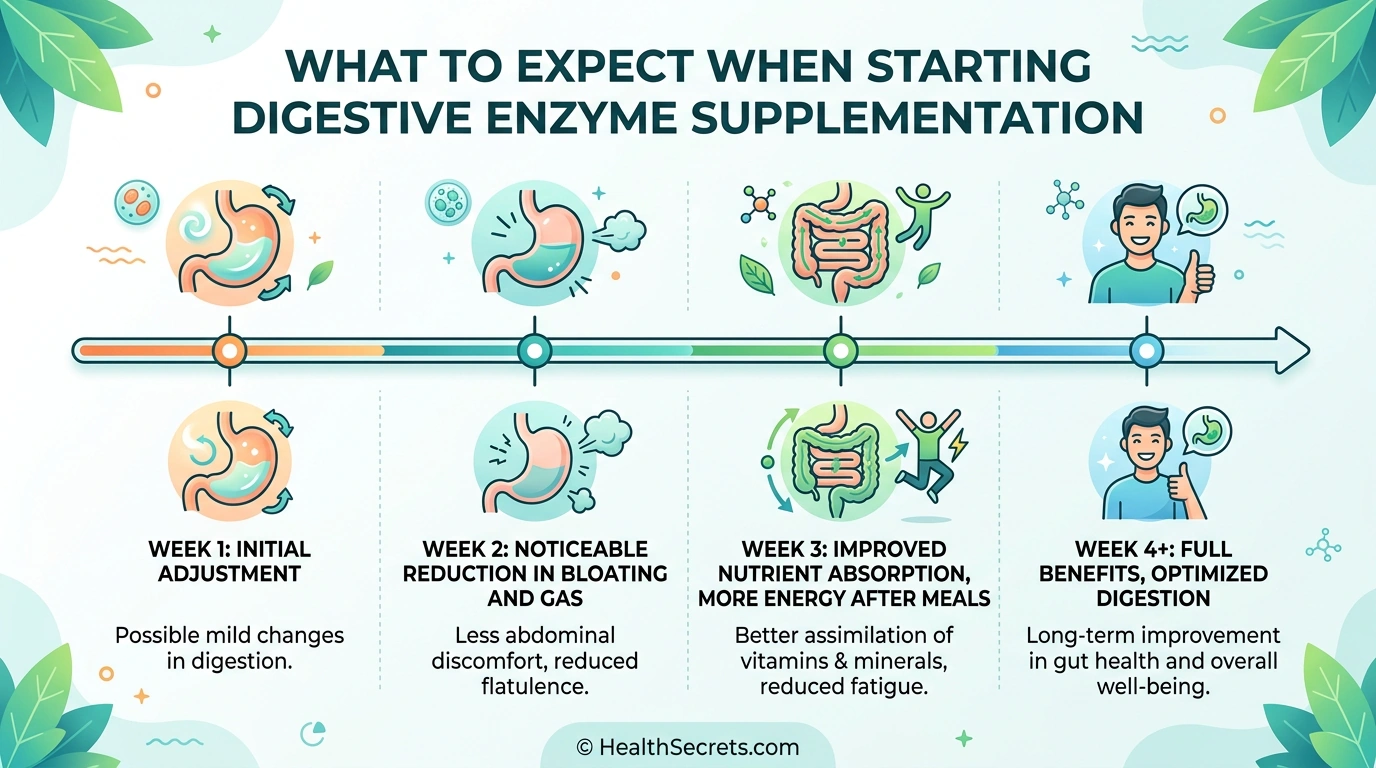
Timeline showing expected results from digestive enzyme supplementation over four weeks

How Do You Determine the Right Dose?

Start with the manufacturer's recommended dose (typically 1 capsule per meal) for the first week. If symptoms persist, you can gradually increase to 2 capsules per meal. For heavy, high-fat meals, an extra capsule provides additional lipase support. People with diagnosed pancreatic insufficiency should follow their physician's dosing protocol, which may require significantly higher doses.

What Should You Expect When Starting?

Most people notice reduced bloating and gas within the first 2–3 days of consistent use. Full benefits typically develop over 1–2 weeks as your body adjusts. Some people experience mild changes in stool consistency during the first few days — this is normal and usually resolves quickly. If you experience persistent discomfort, reduce your dose or try a different formulation.

Are There Any Safety Concerns with Digestive Enzyme Supplements?

Digestive enzyme supplements are generally well-tolerated with a strong safety profile for most adults. The most common side effects are mild and include nausea, stomach cramping, and diarrhea, which typically resolve within a few days. However, certain populations should exercise caution or avoid specific enzyme types.

Who Should Avoid Digestive Enzymes?

  • People on blood thinners (warfarin, aspirin, clopidogrel) — proteolytic enzymes like bromelain and papain may increase bleeding risk
  • People with active ulcers or gastritis — some enzyme formulas can irritate inflamed stomach lining
  • Those allergic to pineapple, papaya, or mold — plant-based enzymes from these sources or Aspergillus fermentation may trigger reactions
  • People taking diabetes medications — amylase supplements may affect blood sugar management
  • Pregnant or nursing women — insufficient safety data; consult a healthcare provider first

What Are the Known Drug Interactions?

Digestive enzymes can interact with several medication classes [13]. Proteolytic enzymes may potentiate blood thinners and increase bleeding risk. High-dose lipase (above 10,000 units/kg/day) has been associated with fibrosing colonopathy in cystic fibrosis patients. Alpha-galactosidase (Beano) may interfere with the diabetes medication acarbose. Always inform your healthcare provider about enzyme supplementation if you take prescription medications.

What Should You Do First to Improve Your Digestion with Enzymes?

Start by identifying your primary digestive complaint — bloating, gas, fat intolerance, or dairy sensitivity — then choose a targeted enzyme supplement that addresses that specific issue. Begin with a broad-spectrum formula if you have multiple symptoms, and take it consistently with every meal for at least two weeks before assessing results.

Phase 1: Identify and Start (Week 1)

  • Track your digestive symptoms for 2–3 days to identify patterns (which foods trigger issues)
  • Choose a broad-spectrum enzyme supplement if you have general digestive discomfort
  • Choose a targeted enzyme (lactase, alpha-galactosidase, or lipase) if you have a specific trigger
  • Start with 1 capsule at the beginning of each main meal
  • Keep a brief food and symptom diary

Phase 2: Optimize (Weeks 2–3)

  • Assess symptom improvement — expect 30–50% reduction in bloating and gas
  • Increase to 2 capsules per meal if symptoms persist with one
  • Add an extra capsule for heavy, high-fat, or high-protein meals
  • Incorporate enzyme-rich foods: pineapple, papaya, fermented vegetables, ginger

Phase 3: Maintain and Address Root Causes (Week 4+)

  • Continue enzyme supplementation with meals as needed
  • Consider testing for pancreatic insufficiency or SIBO if symptoms remain significant
  • Support natural enzyme production through stress management and thorough chewing
  • Consult a gastroenterologist if you need enzymes with every meal long-term
  • Review and adjust your supplement choice based on what works best for your body

ਚੋਣੀਆਂ ਗਈਆਂ ਉੱਤਮ ਸਿਫ਼ਾਰਸ਼ੀ ਉਤਪਾਦ

ਗਾਈਡ ਛੱਡਣ ਤੋਂ ਪਹਿਲਾਂ ਦੇਖਣ ਲਈ ਤੁਲਨਾਤਮਕ ਚੋਣਾਂ

10 ਚੀਜ਼ਾਂ
01

Enzymedica Digest Gold with ATPro

Enzymedica Digest · Overall digestive support with highest potency broad-spectrum formula

ਵੇਰਵਿਆਂ ਦੀ ਤੁਲਨਾ ਕਰੋ
02

NOW Foods Super Enzymes

NOW Foods · Budget-friendly comprehensive enzyme support with bile salts

ਵੇਰਵਿਆਂ ਦੀ ਤੁਲਨਾ ਕਰੋ
03

Pure Encapsulations Digestive Enzymes Ultra

Pure Encapsulations · Sensitive individuals needing hypoallergenic, high-potency enzyme support

ਵੇਰਵਿਆਂ ਦੀ ਤੁਲਨਾ ਕਰੋ
04

Zenwise Digestive Enzymes Plus Prebiotics & Probiotics

Zenwise Digestive · Digestive support combined with gut microbiome support

ਵੇਰਵਿਆਂ ਦੀ ਤੁਲਨਾ ਕਰੋ
05

Garden of Life Dr. Formulated Organic Digestive Enzymes

Garden of · Organic-conscious consumers wanting clean, plant-based enzyme support

ਵੇਰਵਿਆਂ ਦੀ ਤੁਲਨਾ ਕਰੋ
06

NOW Foods Dairy Digest Complete

NOW Foods · Dairy digestion and lactose intolerance relief

ਵੇਰਵਿਆਂ ਦੀ ਤੁਲਨਾ ਕਰੋ
07

Enzymedica Lacto Most Advanced Dairy Enzyme Formula

Enzymedica Lacto · Complete dairy digestion including cream, cheese, and ice cream

ਵੇਰਵਿਆਂ ਦੀ ਤੁਲਨਾ ਕਰੋ
08

Doctor's Best Digestive Enzymes

Doctor's Best · Evidence-based broad-spectrum enzyme support at a mid-range price

ਵੇਰਵਿਆਂ ਦੀ ਤੁਲਨਾ ਕਰੋ
09

NOW Foods Plant Enzymes

NOW Foods · Affordable vegan enzyme support for everyday digestive comfort

ਵੇਰਵਿਆਂ ਦੀ ਤੁਲਨਾ ਕਰੋ
10

Vital Nutrients Digestive Enzymes

Vital Nutrients · Healthcare practitioner-recommended comprehensive enzyme therapy

ਵੇਰਵਿਆਂ ਦੀ ਤੁਲਨਾ ਕਰੋ

ਕਿਸੇ ਵੀ ਰਿਟੇਲਰ ਲਿੰਕ ਨੂੰ ਖੋਲ੍ਹਣ ਤੋਂ ਪਹਿਲਾਂ ਹੇਠਾਂ ਦਿੱਤੇ ਵਿਸਤ੍ਰਿਤ ਰਿਵਿਊ ਕਾਰਡ ਪੜ੍ਹੋ

ਹੋਰ ਪੜ੍ਹਨਾ

ਹੋਰ ਪੜ੍ਹਨਾ

"Enzyme Nutrition: The Food Enzyme Concept"

ਦੁਆਰਾ Dr. Edward Howell

The original food enzyme concept; research on enzyme depletion from cooked food diets; the relationship between enzyme reserves and aging; practical dietary recommendations

ਇਹ ਇੱਥੇ ਕਿਉਂ ਮੁੱਲਵਾਨ ਹੈ

Dr. Howell's work is the foundation of modern enzyme therapy and remains essential reading for understanding why digestive enzymes matter for long-term health.

ਲਈ ਸਭ ਤੋਂ ਵਧੀਆ: Anyone wanting to understand the foundational science behind food enzymes and their role in health

ਕਿਤਾਬ ਦੇ ਵੇਰਵੇ ਦੇਖੋ

ਹੋਰ ਪੜ੍ਹਨਾ

"Encyclopedia of Natural Medicine"

ਦੁਆਰਾ Dr. Michael Murray and Dr. Joseph Pizzorno

Detailed digestive enzyme protocols; condition-specific supplement recommendations; extensive research citations; practical treatment plans for IBS, SIBO, and malabsorption

ਇਹ ਇੱਥੇ ਕਿਉਂ ਮੁੱਲਵਾਨ ਹੈ

This encyclopedia covers digestive enzyme therapy within the broader context of natural digestive health, providing clinically tested protocols that complement enzyme supplementation.

ਲਈ ਸਭ ਤੋਂ ਵਧੀਆ: Comprehensive reference for evidence-based natural approaches to digestive disorders and enzyme therapy

ਕਿਤਾਬ ਦੇ ਵੇਰਵੇ ਦੇਖੋ

AEO FAQ

ਵਾਰ-ਵਾਰ ਪੁੱਛੇ ਜਾਣ ਵਾਲੇ ਸਵਾਲ

10 common questions answered

The ideal time is at the start of your meal or within the first few bites. This allows enzymes to mix with food immediately in the stomach. Taking enzymes 5 minutes before eating is optimal, but mid-meal is still effective. Waiting until after eating reduces effectiveness by 40–60%, though it still provides some benefit within 20–30 minutes of finishing your meal.

Yes, digestive enzymes are safe for daily long-term use for most people. Unlike laxatives or antacids, enzyme supplements do not create dependency or reduce your body's natural enzyme production. Your pancreas and digestive organs continue producing their own enzymes regardless of supplementation. However, if you find yourself needing enzymes with every meal indefinitely, consider investigating underlying causes with a healthcare provider.

Yes, digestive enzymes are one of the most effective supplements for reducing bloating and gas. When food isn't properly broken down in the upper digestive tract, bacteria in the large intestine ferment the undigested material, producing gas. Supplemental enzymes help complete digestion earlier in the process, significantly reducing fermentation and the resulting bloating. Most people notice improvement within 2–3 days of consistent use.

Digestive enzymes and probiotics serve different but complementary functions. Enzymes are proteins that chemically break down food into absorbable nutrients — they work immediately during digestion. Probiotics are live beneficial bacteria that colonize your gut and support overall gut health, immune function, and long-term digestive balance. Many people benefit from taking both, as they address different aspects of digestive health.

For most people, plant-based enzymes are more versatile because they function across a wider pH range (2.0–10.0), working in both the acidic stomach and alkaline small intestine. Animal-derived pancreatic enzymes (pancreatin) only activate above pH 7.0 in the small intestine. However, prescription pancreatic enzymes (like Creon) are animal-derived and essential for people with diagnosed pancreatic insufficiency, where plant-based alternatives may not provide sufficient lipase potency.

Digestive enzymes can significantly help with certain food intolerances, particularly lactose intolerance (lactase enzyme) and bean/vegetable gas (alpha-galactosidase). DPP-IV enzymes may help break down residual gluten peptides, though they are not a substitute for a gluten-free diet in celiac disease. For histamine intolerance, diamine oxidase (DAO) enzyme supplements can help break down histamine in foods. The key is matching the specific enzyme to your specific intolerance.

Some digestive enzymes can interact with certain medications. Proteolytic enzymes like bromelain and papain may increase the blood-thinning effects of warfarin, aspirin, and clopidogrel. Alpha-galactosidase can reduce the effectiveness of the diabetes drug acarbose. High-dose lipase supplements may interact with orlistat (a weight-loss medication). Always inform your healthcare provider about enzyme supplementation, especially if you take prescription medications.

While enzyme-rich foods like pineapple (bromelain), papaya (papain), honey, ginger, and fermented foods do provide beneficial enzymes, they typically cannot fully replace supplementation for people with enzyme deficiencies or significant digestive issues. Cooking destroys most food enzymes above 118°F (48°C), and the enzyme content in raw foods varies widely. Food enzymes are a valuable addition to your diet but are best viewed as complementary support rather than a complete replacement for targeted enzyme supplementation.

The most noticeable signs that digestive enzymes are working include reduced bloating after meals, less gas and flatulence, more comfortable digestion without that heavy feeling, and more regular bowel movements. You may also notice increased energy after eating (since nutrients are being better absorbed), less undigested food visible in stool, and reduced need for antacids. Most people notice initial improvements within 2–3 days, with full benefits developing over 1–2 weeks.

Yes, digestive enzyme supplements — particularly those containing lipase and ox bile extract — are highly beneficial after gallbladder removal (cholecystectomy). Without a gallbladder, bile is continuously released in small amounts rather than being stored and concentrated for fat digestion. This makes fat digestion less efficient, leading to bloating, diarrhea, and fatty stool. A supplement with lipase and ox bile compensates for this reduced fat-digesting capacity.

Flagship System
Evidence-Based System
The 14-Day Gut-Friendly Meal Planning System
30 Pages • A4 Printable PDF

The 14-Day Gut-Friendly Meal Planning System

Fourteen planned days of gut-friendly meals with a gentle four-step fiber ladder, low-FODMAP swaps, shopping lists and a symptom log that adds itself up.

What's Inside This Complete Digital System:

✓ Baseline Check and 30-Plant Science: Pick your usual breakfast, lunch and dinner and the planner works out your current fiber intake, a safe +50% target and a personal pacing note. A short chapter explains what fiber and plant variety do for the short-chain fatty acids your gut bacteria make, and a 30-plant checklist counts your species as you tick them.
✓ The Four-Step Fiber Ladder: Fiber rises in four gentle steps: soluble fiber first, then well-cooked vegetables, then rinsed legumes and whole grains, then prebiotic foods. Each step has its own page with foods, portions, preparation and low-FODMAP notes, plus clear rules for when to move up and when to hold.
✓ 14 Daily Meal Plans: One page per day with breakfast, lunch, dinner and a snack, each with its fiber, protein and prep time. Every day adds a batch-cooking move and a low-FODMAP swap, then an evening check-in: water glasses, comfort, bloating, Bristol stool type, what you actually ate and any new food.
✓ Batch Cooking and Shopping: A 90-minute Sunday batch-cook block, a master pantry with storage times, and week 1 and week 2 supermarket checklists sorted by aisle, so the plan takes two shops and one cooking session a week.
$30 $37 20% Off w/ Code READER20

Instant PDF download • Lifetime updates • 60-day money-back guarantee

🦠

ਆਪਣੇ ਗਿਆਨ ਦੀ ਪਰਖ ਕਰੋ

Take our Gut Health Quiz and see how much you really know about gut health.

ਕੁਇਜ਼ ਲਓ

ਕੀ ਇਹ ਲੇਖ ਮਦਦਗਾਰ ਸੀ?

ਖੋਜਿਆ ਅਤੇ ਤੱਥ-ਜਾਂਚਿਆ ਗਿਆ

HS

ਲੇਖਕ

Health Secrets Editorial Team

The Health Secrets editorial team researches, writes and fact-checks every guide against the primary studies and clinical guidelines it cites.

HS

ਤੱਥ-ਜਾਂਚਕਰਤਾ

Health Secrets Editorial Team

ਸਾਰੀ ਸਮੱਗਰੀ ਸਬੂਤ-ਆਧਾਰਿਤ ਹੈ, ਪੀਅਰ-ਰਿਵਿਊ ਕੀਤੀ ਖੋਜ ਨਾਲ ਜਾਂਚੀ ਗਈ ਹੈ, ਅਤੇ ਨਿਯਮਿਤ ਤੌਰ 'ਤੇ ਅੱਪਡੇਟ ਕੀਤੀ ਜਾਂਦੀ ਹੈ। ਸਾਡੀ ਸੰਪਾਦਕੀ ਟੀਮ ਸ਼ੁੱਧਤਾ ਅਤੇ ਪਾਰਦਰਸ਼ਤਾ ਲਈ ਸਖ਼ਤ ਦਿਸ਼ਾ-ਨਿਰਦੇਸ਼ਾਂ ਦੀ ਪਾਲਣਾ ਕਰਦੀ ਹੈ।

ਹਵਾਲੇ ਅਤੇ ਉਦਾਹਰਣਾਂ

18 ਹਵਾਲੇ ਦਿੱਤੇ ਗਏ ਸਰੋਤ

1
Ianiro G, Pecere S, Giorgio V, Gasbarrini A, Cammarota G. Digestive Enzyme Supplementation in Gastrointestinal Diseases. Curr Drug Metab. 2016;17(2):187-193.
PubMed: 26806042 ਦੇਖੋ back
2
Graham DY, Ketwaroo GA, Money ME, Opekun AR. Enzyme therapy for functional bowel disease-like post-prandial distress. J Dig Dis. 2018;19(11):650-656.
PubMed: 30101562 ਦੇਖੋ back
3
Roxas M. The role of enzyme supplementation in digestive disorders. Altern Med Rev. 2008;13(4):307-314.
PubMed: 19152478 ਦੇਖੋ back
4
Swagerty DL Jr, Walling AD, Klein RM. Lactose intolerance. Am Fam Physician. 2002;65(9):1845-1850.
PubMed: 12018807 ਦੇਖੋ back
5
Domínguez-Muñoz JE. Pancreatic enzyme therapy for pancreatic exocrine insufficiency. Curr Gastroenterol Rep. 2007;9(2):116-122.
PubMed: 17418056 ਦੇਖੋ back

ਮੈਡੀਕਲ ਡਿਵੈਕਲੇਮਰ

This article is for informational purposes only and does not constitute medical advice. Read the full medical disclaimer. Always consult with a qualified healthcare provider before starting any new supplement, treatment, or major dietary change.

Gut Health Cornerstone Pillar

The Complete Guide to Gut Health

Explore our foundational comprehensive guide covering all clinical protocols, dietary strategies, and evidence for gut health.

Read Pillar Guide →

ਸ਼ਾਇਦ ਤੁਹਾਨੂੰ ਇਹ ਵੀ ਪਸੰਦ ਆਵੇ

gut health

Gut Motility: How to Improve Digestive Transit

Gut motility — the coordinated muscular movement that pushes food through your digestive tract — is the foundation of healthy digestion. When motility slows, bloating, constipation, and even small intestinal bacterial overgrowth (SIBO) can follow. This guide walks you through six evidence-based steps to restore and optimize your digestive transit naturally.

→
gut health

L-Glutamine for Gut Health: Complete Guide

L-glutamine is the most abundant amino acid in the human body and the primary fuel source for the cells lining your intestinal tract. This comprehensive supplement guide covers how L-glutamine supports gut barrier function, the research behind its use for leaky gut and IBS, evidence-based dosing protocols, and the best L-glutamine supplements available.

→
gut health

ਮਿੱਟੀ-ਅਧਾਰਤ ਪ੍ਰੋਬਾਇਓਟਿਕਸ: ਇੱਕ ਮੁਕੰਮਲ ਗਾਈਡ

ਮਿੱਟੀ-ਅਧਾਰਤ ਪ੍ਰੋਬਾਇਓਟਿਕਸ (SBOs) ਅਜਿਹੇ ਸਪੋਰ-ਬਣਾਉਣ ਵਾਲੇ ਬੈਕਟੀਰੀਆ ਹਨ — ਜਿਨ੍ਹਾਂ ਵਿੱਚ ਮੁੱਖ ਤੌਰ 'ਤੇ ਬੈਸਿਲਸ ਸਪੀਸੀਜ਼ (Bacillus species) ਸ਼ਾਮਲ ਹੁੰਦੇ ਹਨ — ਜੋ ਰਵਾਇਤੀ ਪ੍ਰੋਬਾਇਓਟਿਕਸ ਦੇ ਮੁਕਾਬਲੇ ਪੇਟ ਦੇ ਤੇਜ਼ਾਬ ਵਿੱਚ ਬਹੁਤ ਵਧੀਆ ਤਰੀਕੇ ਨਾਲ ਬਚੇ ਰਹਿੰਦੇ ਹਨ। ਇਹ SIBO, ਹਿਸਟੇਮਿਨ ਇੰਟੋਲਰੈਂਸ (histamine intolerance) ਤੋਂ ਦੁਖੀ ਲੋਕਾਂ ਜਾਂ ਉਹਨਾਂ ਵਿਅਕਤੀਆਂ ਲਈ ਇੱਕ ਬਹੁਤ ਹੀ ਵਧੀਆ ਵਿਕਲਪ ਹਨ ਜੋ ਇੱਕ ਸ਼ੈਲਫ-ਸਟੇਬਲ ਅਤੇ ਖੋਜ-ਪ੍ਰਮਾਣਿਤ (research-backed) ਪ੍ਰੋਬਾਇਓਟਿਕ ਸਪਲੀਮੈਂਟ ਦੀ ਭਾਲ ਕਰ ਰਹੇ ਹਨ।

→

ਚਰਚਾ

0

No comments yet

Be the first to share your thoughts, clinical insights, or questions about this protocol.