Here's something that caught me off guard when I started digging into the research: mental wellness isn't really about "not being depressed" or "not having anxiety." It's... bigger than that. Way bigger. The World Health Organization now defines mental health as a state of well-being where you can cope with normal life stresses, work productively, and contribute to your community. And yet—over a billion people worldwide live with mental health conditions, according to WHO's 2024 Mental Health Atlas.
So what gives? Why are so many of us struggling when we arguably have more resources than any generation before us?
The answer, I think, lies in how disconnected modern life has become from the things our brains actually need. Mental wellness naturally starts with understanding that your brain is a biological organ—one that requires specific nutrients, adequate sleep, physical movement, social connection, and stress regulation to function well. It's not just about willpower or positive thinking.
This guide pulls together the latest research on brain health, the gut-brain connection, stress management techniques, sleep optimization, and evidence-based supplements to give you a complete, actionable framework for supporting your mental wellness—naturally.
You'll learn which neurotransmitters drive your mood (and how to support them), why your gut microbiome might be more important for your mental state than you'd expect, and how to build a personalized plan that actually sticks.
- Mental wellness is a holistic state encompassing emotional regulation, cognitive function, stress resilience, and social connection—not merely the absence of mental illness
- The gut-brain axis is a bidirectional communication highway, and emerging research links microbiome diversity to reduced anxiety, depression, and improved mood regulation
- Nutrition directly impacts brain function—omega-3 fatty acids, B vitamins, magnesium, and amino acids like tryptophan are essential building blocks for neurotransmitter production
- Regular physical activity increases serotonin and BDNF (brain-derived neurotrophic factor), with research showing exercise can be as effective as medication for mild-to-moderate depression
- Sleep quality profoundly affects mental health—chronic sleep disruption increases risk of depression by 2-3x and impairs emotional regulation, memory consolidation, and cognitive performance
- Adaptogens like ashwagandha and rhodiola have demonstrated stress-reducing effects in clinical trials, lowering cortisol levels by 20-30% in some studies
- Social connection reduces mortality risk by up to 50%—loneliness is now recognized as a public health crisis with effects comparable to smoking 15 cigarettes daily
- Mindfulness meditation physically changes brain structure, increasing gray matter density in areas associated with emotional regulation and self-awareness within 8 weeks
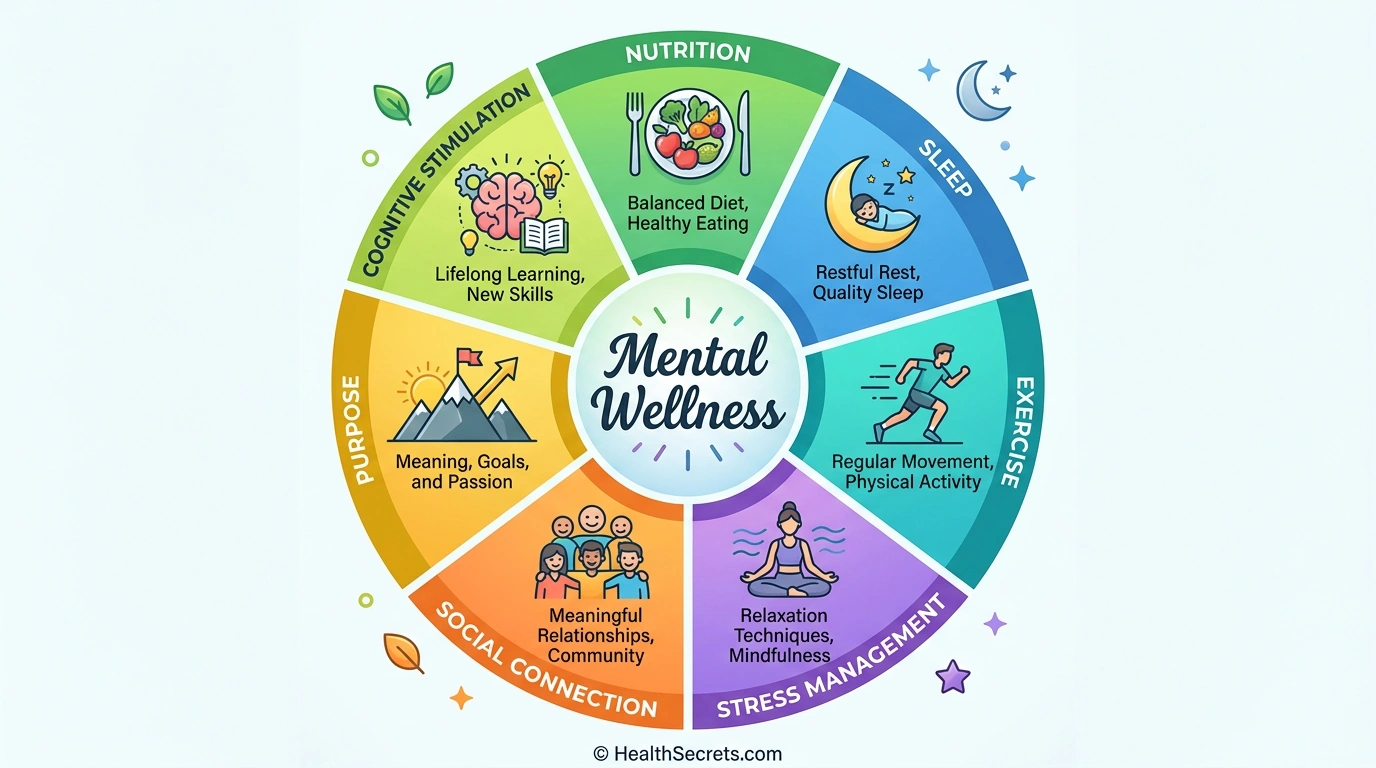
- A personalized, multi-pillar approach combining nutrition, movement, sleep, stress management, and social connection produces the most sustainable mental wellness outcomes
What Is Mental Wellness and Why Does It Matter More Than Ever?
Mental wellness is the ongoing process of nurturing your emotional, psychological, and cognitive health so you can navigate life's challenges, maintain meaningful relationships, and function at your best. It's distinct from mental health treatment—think of it as the proactive, preventive side of brain care.
And the numbers paint a sobering picture. The Sapien Labs Mental State of the World report—which assessed over one million participants across 82 countries—found a persistent global decline in mental well-being among younger generations. Depression affects approximately 280 million people worldwide. Anxiety disorders affect another 301 million. These aren't just statistics; they represent a fundamental mismatch between how we're living and what our brains require.
What actually constitutes mental wellness? Most researchers break it down into interconnected dimensions:
- Emotional regulation — the ability to experience, process, and manage emotions without being overwhelmed
- Cognitive function — clear thinking, memory, focus, and decision-making capacity
- Stress resilience — recovering from setbacks and adapting to challenges
- Social connection — maintaining meaningful relationships and a sense of belonging
- Purpose and meaning — having direction, goals, and reasons to engage with life
- Self-awareness — understanding your patterns, triggers, and needs The exciting part? Research increasingly shows that lifestyle factors—nutrition, exercise, sleep, stress management, social connection—have a profound, measurable impact on all of these dimensions. You have far more influence over your mental wellness than the old "chemical imbalance" model suggested.
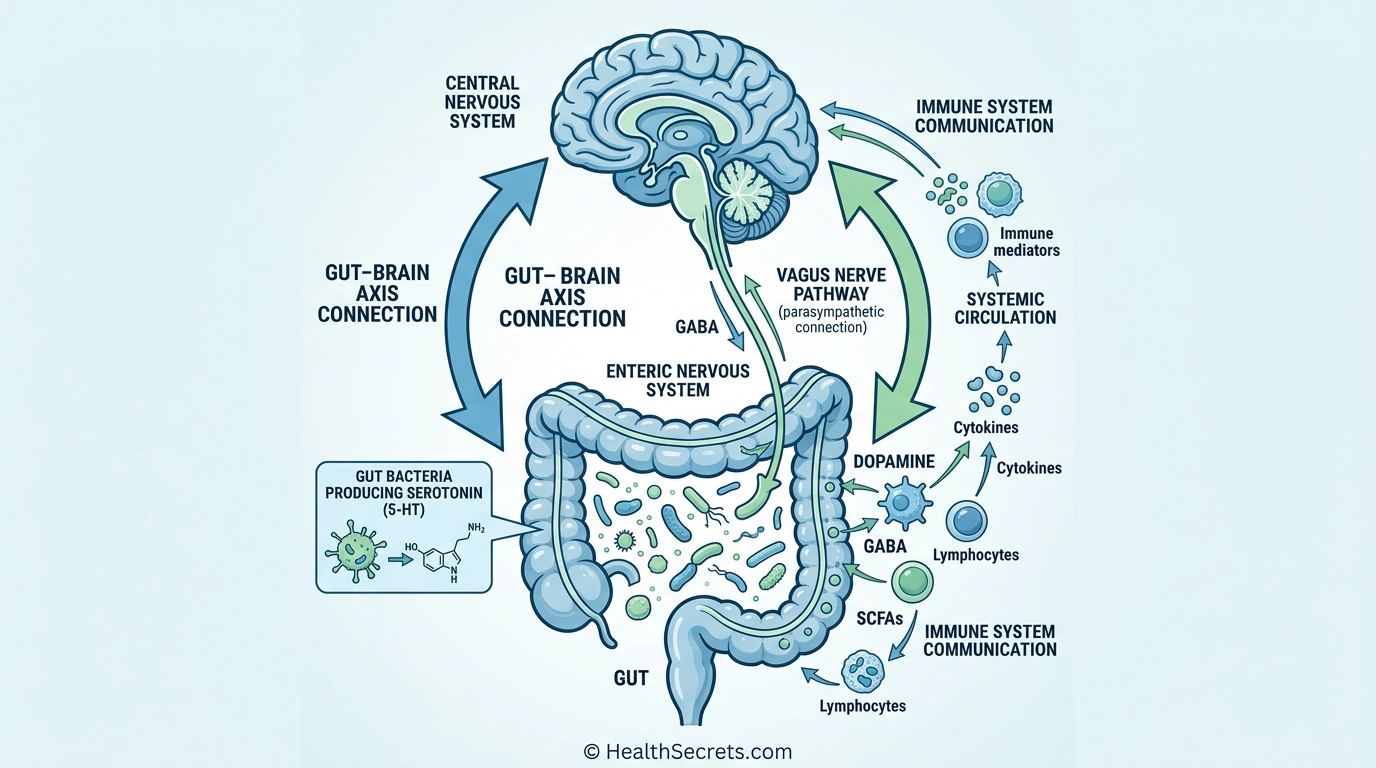
How Does Your Brain Create and Regulate Mental Wellness?
Your brain's emotional and cognitive health depends on a complex interplay of neurotransmitters, neural pathways, hormones, and even gut bacteria. Understanding the basics of these systems helps you make informed choices about which natural strategies to prioritize.
What Are the Key Neurotransmitters That Control Your Mood?
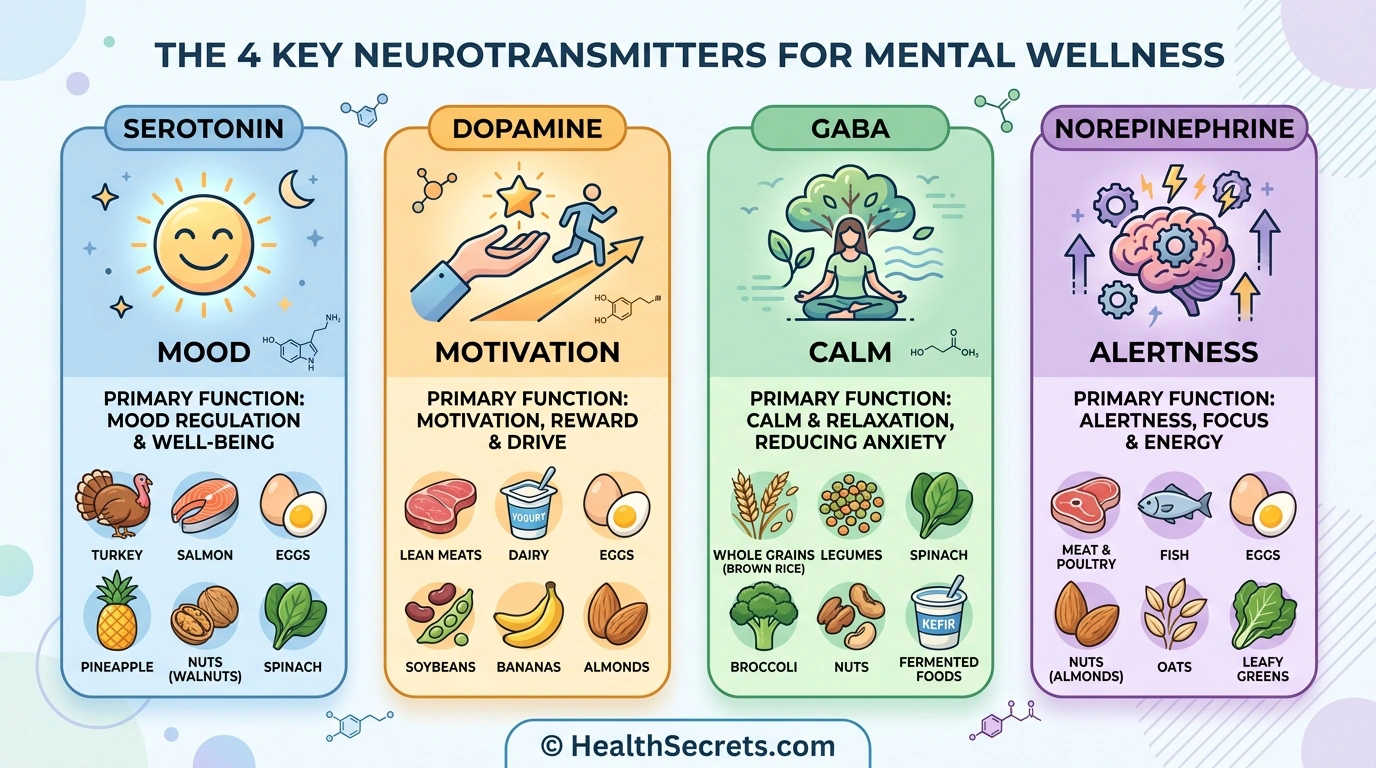
Neurotransmitters are chemical messengers that regulate virtually every aspect of your mental state. Four neurotransmitters deserve special attention for mental wellness:
Serotonin — often called the "mood stabilizer," serotonin regulates mood, sleep, appetite, and social behavior. Approximately 90-95% of your body's serotonin is produced in the gut, not the brain—which is why the gut-brain connection matters so much. Research published in PMC shows that exercise, sunlight exposure, and tryptophan-rich foods naturally support serotonin production.
Dopamine — your "motivation molecule" drives reward-seeking behavior, focus, and pleasure. Low dopamine is associated with apathy, poor concentration, and loss of motivation. Physical activity—especially resistance training and HIIT—stimulates dopamine release.
GABA (Gamma-Aminobutyric Acid) — the brain's primary inhibitory neurotransmitter, GABA calms neural activity and reduces anxiety. Research in npj Science of Food (2026) found that long-term GABA supplementation mitigated anxiety by modulating complement and neuroinflammatory pathways. Natural GABA support includes valerian, passionflower, and magnesium.
Norepinephrine — regulates alertness, attention, and the stress response. Balanced norepinephrine keeps you alert without being anxious. Chronic stress depletes norepinephrine, contributing to fatigue and brain fog.
| Neurotransmitter | Primary Function | Natural Support | Deficiency Signs |
|---|---|---|---|
| Serotonin | Mood, sleep, appetite | Tryptophan foods, exercise, sunlight | Low mood, insomnia, cravings |
| Dopamine | Motivation, focus, reward | Tyrosine foods, exercise, cold exposure | Apathy, poor focus, anhedonia |
| GABA | Calming, anxiety reduction | Magnesium, valerian, fermented foods | Anxiety, restlessness, insomnia |
| Norepinephrine | Alertness, attention, stress | Adequate sleep, stress management | Fatigue, brain fog, poor concentration |
How Does Neuroplasticity Support Mental Wellness?
Your brain isn't static—it physically rewires itself based on your experiences, habits, and environment. This neuroplasticity means that consistent mental wellness practices literally reshape your brain. Mindfulness meditation, for instance, increases gray matter density in the prefrontal cortex (decision-making) and hippocampus (memory) within just 8 weeks of regular practice. Exercise stimulates BDNF (brain-derived neurotrophic factor), which promotes new neural connections and protects existing ones.
What Causes Mental Wellness to Decline?
Mental wellness doesn't collapse overnight—it erodes gradually through a combination of nutritional deficiencies, chronic stress, sleep disruption, social isolation, and environmental factors. Understanding these root causes is the first step toward reversing them.
Nutritional deficiencies are far more common than most people realize. The standard Western diet—heavy in ultra-processed foods—delivers calories but starves your brain of omega-3s, B vitamins, magnesium, zinc, and vitamin D. The American Psychological Association's 2026 review confirmed that dietary changes, including reducing ultra-processed food intake, are directly associated with improvements in depression and other mental health outcomes.
Chronic stress is arguably the biggest silent threat. When your stress response stays activated for weeks or months, cortisol damages the hippocampus (memory center), suppresses serotonin production, increases inflammation, and disrupts sleep. A PMC review on lifestyle and brain health found that chronic stress disrupts critical brain functions, increasing vulnerability to psychiatric disorders, memory deficits, and neurodegeneration.
Sleep deprivation compounds everything. Even modest sleep restriction—getting 6 hours instead of 7-8—impairs emotional regulation, increases inflammatory markers, and reduces cognitive performance. Chronic poor sleep doubles or triples depression risk.
Social isolation has biological consequences. Loneliness activates the same brain regions as physical pain and triggers chronic low-grade inflammation. The meta-analytic evidence is stark: weak social connections increase mortality risk by 50%.
Gut dysbiosis — an imbalanced gut microbiome — disrupts the gut-brain axis communication network, potentially contributing to anxiety, depression, and cognitive dysfunction.
What Are the Warning Signs That Your Mental Wellness Needs Attention?
Early recognition of declining mental wellness allows you to intervene before problems escalate. Watch for these signals across emotional, cognitive, physical, and behavioral domains—they often appear gradually and are easy to dismiss.
- Persistent low mood or irritability lasting more than two weeks
- Feeling overwhelmed by tasks that previously seemed manageable
- Emotional numbness or detachment from things you used to enjoy
- Increased anxiety or excessive worry about routine situations
- Brain fog, difficulty concentrating, or forgetfulness
- Indecisiveness or difficulty with problem-solving
- Racing thoughts or inability to "turn off" your mind
- Decreased creativity and mental flexibility
- Persistent fatigue despite adequate sleep
- Changes in appetite (significantly increased or decreased)
- Unexplained headaches, muscle tension, or digestive issues
- Disrupted sleep patterns (insomnia, early waking, or oversleeping)
- Withdrawing from social activities and relationships
- Increased reliance on alcohol, caffeine, sugar, or other substances
- Procrastination on tasks you'd normally handle easily
- Neglecting self-care routines (exercise, hygiene, nutrition) If you're experiencing several of these signs consistently for more than two weeks, it's worth taking action—starting with the strategies in this guide and consulting a healthcare provider if symptoms persist or worsen.
What Are the Best Evidence-Based Strategies for Mental Wellness?
The most effective approach to mental wellness combines multiple strategies rather than relying on any single intervention. Research consistently shows that a multi-pillar approach—addressing nutrition, sleep, movement, stress management, social connection, and targeted supplementation—produces the most sustainable improvements in brain health and emotional balance.
Here's what's interesting about the research: these strategies aren't just additive—they're synergistic. Exercise improves sleep quality, better sleep reduces stress hormones, lower stress improves gut health, a healthier gut produces more serotonin, and higher serotonin improves mood and motivation to exercise. It's a positive feedback loop.
The key is starting where you'll see the fastest results and building from there. For most people, that means addressing sleep and basic nutrition first, then layering in movement, stress management, and social connection.
| Approach | Key Benefits | Time to Results | Best For |
|---|---|---|---|
| Nutrition | Neurotransmitter support, reduced inflammation | 2-4 weeks | Brain fog, low mood, fatigue |
| Supplements | Targeted nutrient gaps, stress reduction | 2-8 weeks | Specific deficiencies, stress, sleep |
| Lifestyle (sleep, exercise) | BDNF boost, hormonal balance, resilience | 1-4 weeks | Anxiety, depression, cognitive decline |
| Mind-body (meditation, breathwork) | Cortisol reduction, emotional regulation | 2-8 weeks | Chronic stress, anxiety, rumination |
What Should You Eat (and Avoid) for Better Mental Wellness?
Your brain consumes roughly 20% of your daily calories despite being only 2% of your body weight—making it the most metabolically demanding organ you have. What you feed it matters enormously. The emerging field of nutritional psychiatry now has robust evidence linking dietary patterns to mental health outcomes.
The Mediterranean diet consistently shows the strongest association with reduced depression risk—a landmark 2017 SMILES trial demonstrated that dietary intervention alone produced remission in 32% of participants with moderate-to-severe depression, compared to 8% in the social support control group.
- Fatty fish (salmon, sardines, mackerel) — omega-3 fatty acids (EPA and DHA) reduce neuroinflammation and support cell membrane fluidity
- Leafy greens (spinach, kale, Swiss chard) — folate, magnesium, and antioxidants that protect neural tissue
- Berries (blueberries, strawberries) — anthocyanins cross the blood-brain barrier and reduce oxidative stress
- Fermented foods (yogurt, kimchi, sauerkraut, kefir) — support gut microbiome diversity linked to improved mood
- Nuts and seeds (walnuts, flaxseeds, pumpkin seeds) — omega-3s, magnesium, zinc, and tryptophan
- Eggs — choline for acetylcholine production (memory and learning)
- Dark chocolate (70%+ cacao) — flavanols improve cerebral blood flow and mood
- Ultra-processed foods (linked to 25-30% increased depression risk in large cohort studies)
- Excess refined sugar (causes blood sugar spikes and crashes that destabilize mood)
- Excessive alcohol (depletes B vitamins, disrupts sleep architecture, impairs GABA function)
- High-sodium processed foods (increase inflammation and blood pressure)
- Artificial sweeteners (may disrupt gut microbiome composition)

What Lifestyle Changes Have the Biggest Impact on Mental Wellness?
Lifestyle modifications are the foundation of sustainable mental wellness—they address root causes rather than symptoms and create the conditions your brain needs to self-regulate effectively. Three lifestyle factors stand out for their evidence base: sleep, exercise, and stress management.

How Does Sleep Affect Your Mental Health?
Sleep optimization is arguably the single most impactful lifestyle change for mental wellness. During deep sleep, your brain clears metabolic waste (via the glymphatic system), consolidates memories, processes emotional experiences, and restores neurotransmitter balance.
Sleep hygiene essentials:
- Consistent schedule — same bedtime and wake time, even on weekends (±30 minutes)
- Dark, cool environment — 65-68°F (18-20°C), blackout curtains, minimal blue light
- Wind-down routine — 30-60 minutes of calming activities before bed
- Caffeine cutoff — no caffeine after 2 PM (half-life is 5-6 hours)
- Melatonin — 0.5-3mg, 30-60 minutes before bed if needed (start low)
How Does Exercise Improve Brain Health and Mood?
Exercise is one of the most powerful—and underutilized—mental wellness tools available. A 2023 umbrella review found that physical activity was 1.5x more effective than counseling and medications for reducing symptoms of depression, anxiety, and psychological distress.
The mechanisms are clear: exercise increases serotonin synthesis (via increased tryptophan availability to the brain), boosts BDNF production, reduces cortisol, improves sleep quality, and creates new neural connections. Research in PMC confirms that exercise increases plasma tryptophan and decreases branched-chain amino acids that compete for brain uptake.
- Aerobic exercise — 150 minutes/week moderate or 75 minutes vigorous (walking, cycling, swimming)
- Strength training — 2x/week (improves confidence, reduces anxiety)
- Yoga or tai chi — 1-2x/week (combines movement with mindfulness)
- Daily walks in nature — even 20 minutes reduces cortisol significantly
How Do Meditation and Breathwork Reduce Stress?
Meditation and breathwork directly counteract the stress response by activating the parasympathetic nervous system. Regular practice reduces cortisol, lowers blood pressure, and—remarkably—physically changes brain structure.
Start with just 5-10 minutes daily of focused breathing or guided meditation. Apps like Insight Timer, Headspace, or Calm make it accessible. Stress management techniques like box breathing (4-4-4-4 pattern), progressive muscle relaxation, and journaling are also well-supported by research.
Which Supplements Support Mental Wellness and Brain Health?
Supplements can fill nutritional gaps and provide targeted support for specific mental wellness challenges—but they work best as part of a comprehensive lifestyle approach, not as standalone solutions. Here are the supplements with the strongest evidence base.
Omega-3 Fatty Acids (EPA/DHA):
EPA (1-2g daily) is particularly effective for mood support—meta-analyses show 30-40% reduction in depression symptoms
DHA supports brain structure (40% of brain fatty acids are DHA)
Choose high-EPA formulas for mood; balanced EPA/DHA for general brain health Magnesium:
Involved in 300+ enzymatic reactions, including GABA receptor function
Magnesium glycinate or threonate preferred for brain health (better absorption, crosses blood-brain barrier)
200-400mg daily; deficiency is extremely common (50-80% of adults) Adaptogens:
Ashwagandha (300-600mg KSM-66 daily) — reduces cortisol 20-30%, improves anxiety and sleep in clinical trials
Rhodiola rosea (200-400mg daily) — combats mental fatigue and stress-related burnout
Lion's mane mushroom (500-1,000mg daily) — stimulates nerve growth factor (NGF) for cognitive function
- B6 (cofactor for serotonin and dopamine synthesis), B9 (folate—critical for methylation), B12 (nerve function)
- Methylated forms preferred (methylfolate, methylcobalamin) for better bioavailability
- B-complex supplement covers all bases
- Low levels strongly correlated with depression—maintain 40-60 ng/mL
- 2,000-4,000 IU daily (test levels first)
- Especially important for people in northern latitudes or those with limited sun exposure St. John's Wort (for mild-to-moderate depression):
- 300mg standardized extract, 3x daily
- Comparable to SSRIs for mild depression in clinical trials
- ⚠️ Significant drug interactions—consult doctor before use

How Do You Build a Personalized Mental Wellness Plan?
Building a sustainable mental wellness plan requires a phased approach—trying to change everything at once is a recipe for overwhelm and burnout. Here's a realistic, evidence-based protocol you can start today.
Phase 1: Foundation (Weeks 1-2) — Sleep and Nutrition
Start with the two factors that affect everything else:
- Set a consistent sleep schedule (same bed/wake time daily)
- Create a 30-minute wind-down routine (no screens, dim lights)
- Add one serving of fatty fish per week (or start omega-3 supplement)
- Eat 2-3 servings of leafy greens daily
- Reduce ultra-processed food intake by 50%
- Stay hydrated (8+ glasses of water daily)
- Start magnesium glycinate 200mg before bed
Phase 2: Movement and Stress Management (Weeks 3-4)
- Begin 20-minute daily walks (preferably outdoors, in nature)
- Add 2 strength training sessions per week
- Start 5-minute daily meditation or breathwork practice
- Begin journaling (even 5 minutes—gratitude or stream of consciousness)
- Reduce caffeine to 1-2 cups before noon
Phase 3: Optimization (Weeks 5-8)
- Increase exercise to 150+ minutes/week
- Extend meditation to 10-20 minutes daily
- Add adaptogens if stress remains elevated (ashwagandha or rhodiola)
- Prioritize social connection (schedule at least 2 meaningful interactions weekly)
- Consider vitamin D testing and supplementation if needed
- Explore nootropics for cognitive optimization if desired
Phase 4: Maintenance and Growth (Ongoing)
- Monthly self-assessment of mood, energy, sleep quality, and cognitive function
- Adjust supplements based on seasonal changes and stress levels
- Continue building social connections and community
- Pursue cognitive stimulation (learning, reading, creative activities)
- Reassess and adjust your plan every 3 months
What Should You Do First to Improve Your Mental Wellness?
Start with the highest-impact, lowest-effort changes and build from there. This phased action plan prioritizes the interventions with the fastest return on investment for your brain health and emotional balance.
- Fix your sleep schedule (consistent bedtime, 7-8 hours)
- Add magnesium glycinate 200mg before bed
- Take a 20-minute walk daily (outdoors if possible)
- Eat one omega-3-rich meal (salmon, sardines, or walnuts)
- Start 5-minute morning meditation or breathwork
- Add fermented foods daily (yogurt, kimchi, sauerkraut)
- Begin omega-3 supplement (1-2g EPA+DHA daily)
- Reduce ultra-processed food and added sugar
- Increase exercise to 150 minutes/week (aerobic + strength)
- Add adaptogen if needed (ashwagandha 300mg KSM-66)
- Deepen meditation practice to 10-15 minutes
- Schedule regular social activities
- Get vitamin D levels tested
- Explore additional brain health supplements as needed
- Build a support network and community connections
- Consider professional guidance for persistent challenges
This article is for informational and educational purposes only and is not intended as medical advice, diagnosis, or treatment. Mental health conditions can be serious and require professional evaluation and care. Always consult a qualified healthcare provider before starting any new supplement regimen, especially if you are pregnant, nursing, taking medications (including antidepressants, anxiolytics, or other psychiatric medications), or have a diagnosed mental health condition. Supplements are not FDA-approved to treat, cure, or prevent any disease. Individual results vary based on genetics, health status, diet, and lifestyle factors. If you are experiencing thoughts of self-harm or suicide, please contact the 988 Suicide and Crisis Lifeline (call or text 988) or go to your nearest emergency room immediately. The product recommendations in this article contain affiliate links, and we may earn a small commission at no additional cost to you.
What Sources Support This Article?
- World Health Organization. Mental Health Atlas 2024: Over a Billion People Living with Mental Health Conditions. WHO, 2026. [16]
- Sapien Labs. Mental State of the World Report 2024. Sapien Labs, 2024.
- Carabotti M, et al. The Gut-Brain Axis: Interactions Between Enteric Microbiota, Central and Enteric Nervous Systems. Ann Gastroenterol. 2015;28(2):203-209. [15]
- Clapp M, et al. Gut Microbiota's Effect on Mental Health: The Gut-Brain Axis. Clin Pract. 2017;7(4):987. [14]
- Rutsch A, et al. The Role of Gut Microbiota in Anxiety, Depression, and Other Mental Disorders. Nutrients. 2023;15(14):3258. [13]
- Young SN. How to Increase Serotonin in the Human Brain Without Drugs. J Psychiatry Neurosci. 2007;32(6):394-399. [12]
- Savage K, et al. GABA-modulating phytomedicines for anxiety. Phytother Res. 2018;32(1):3-18. [11]
- Nature. Long-term GABA supplementation mitigates anxiety by modulating complement and neuroinflammatory pathways. npj Sci Food. 2026. [10]
- Briguglio M, et al. Dietary Neurotransmitters: A Narrative Review on Current Knowledge. Nutrients. 2018;10(5):591. [9]
- Stanford Medicine. The Gut-Brain Connection: What the Science Says. Stanford Medicine News, 2026.
- Harvard Medical School. Drawing a Line From the Gut Microbiome to Inflammation and Depression. HMS News, 2024.
- American Psychological Association. We Are What We Eat: Nutrition, Food, and Mental Health. APA Monitor, 2026.
- Singh B, et al. Effectiveness of Physical Activity Interventions for Improving Depression, Anxiety and Distress: An Overview of Systematic Reviews. Br J Sports Med. 2023;57(18):1203-1209. [8]
- Church A, et al. Gut Microbiome and Stress Resilience. Nature Mental Health. 2024. [7]
- Hölzel BK, et al. Mindfulness Practice Leads to Increases in Regional Brain Gray Matter Density. Psychiatry Res. 2011;191(1):36-43. [6]
- Jacka FN, et al. A Randomised Controlled Trial of Dietary Improvement for Adults with Major Depression (SMILES trial). BMC Med. 2017;15(1):23. [5]
- Mayo Clinic. 8 Brain Health Tips for a Healthier You. Mayo Clinic, 2024. [4]
- PMC. The Impact of Lifestyle on Brain Health. PMC, 2026. [3]
- Holt-Lunstad J, et al. Social Relationships and Mortality Risk: A Meta-analytic Review. PLoS Med. 2010;7(7):e1000316. [2]
- Chandrasekhar K, et al. A Prospective, Randomized Double-Blind Study of Safety and Efficacy of Ashwagandha Root Extract. Indian J Psychol Med. 2012;34(3):255-262. [1]
- SEO Title: Mental Wellness Guide: Natural Strategies for Brain Health (2026)
- Meta Description: Complete guide to mental wellness naturally. Evidence-based strategies for brain health, mood support, stress management, nutrition, supplements & lifestyle changes.
- URL Slug: /mental-wellness-guide/
- Focus Keyphrase: mental wellness
- Article Type: Pillar Page
- Pillar: Mental Wellness
- Hero Image: Serene person in nature practicing mindfulness with calm landscape background
- Images Suggested: 8
- Schema Type: BlogPosting, FAQPage, Product, Book, WebPage