If bloating, brain fog, and digestive discomfort have become your daily normal, your gut may be sending distress signals. Years of processed foods, chronic stress, antibiotics, and environmental toxins can disrupt the trillions of microorganisms that make up your gut microbiome — the ecosystem that influences everything from immunity to mood. [1] [2]
The good news? Your gut microbiome is remarkably adaptable. Research from Stanford University shows that dietary changes can shift microbial composition in as little as 24 hours, and a structured 7-day protocol can create meaningful, lasting improvements in digestive function and overall wellbeing. [7] [8]
If you are new to gut health, start with our complete gut health guide for foundational knowledge. For a deeper detox approach, see our 7-day detox diet and cleanse guide. Those dealing with specific digestive issues may also benefit from our gut detox protocol. [10] [11]
What Do You Need to Know Before Starting a 7-Day Gut Reset Protocol?
A 7-day gut reset is a structured dietary protocol that removes common inflammatory triggers, introduces gut-healing foods and nutrients, and systematically rebuilds beneficial gut bacteria. Research published in Cell Host & Microbe demonstrates that short-term dietary interventions can significantly alter microbial composition and metabolic output within days, making a week-long reset both scientifically supported and practically achievable [3]. [14]
Who Is a 7-Day Gut Reset For?
This protocol is designed for generally healthy adults experiencing:
- Chronic bloating, gas, or irregular bowel movements
- Brain fog or low energy after meals
- Food sensitivities that seem to be increasing
- Skin issues like acne, eczema, or rashes
- Frequent colds or weakened immunity
- Recent antibiotic use
- High stress periods affecting digestion [17]
What You Will Need
- Kitchen basics: Blender, slow cooker or stockpot, glass storage containers, fermentation-friendly jars
- Core foods: Organic vegetables, bone broth (homemade or store-bought), healthy fats (olive oil, coconut oil, avocado), clean proteins (wild fish, organic chicken, pastured eggs)
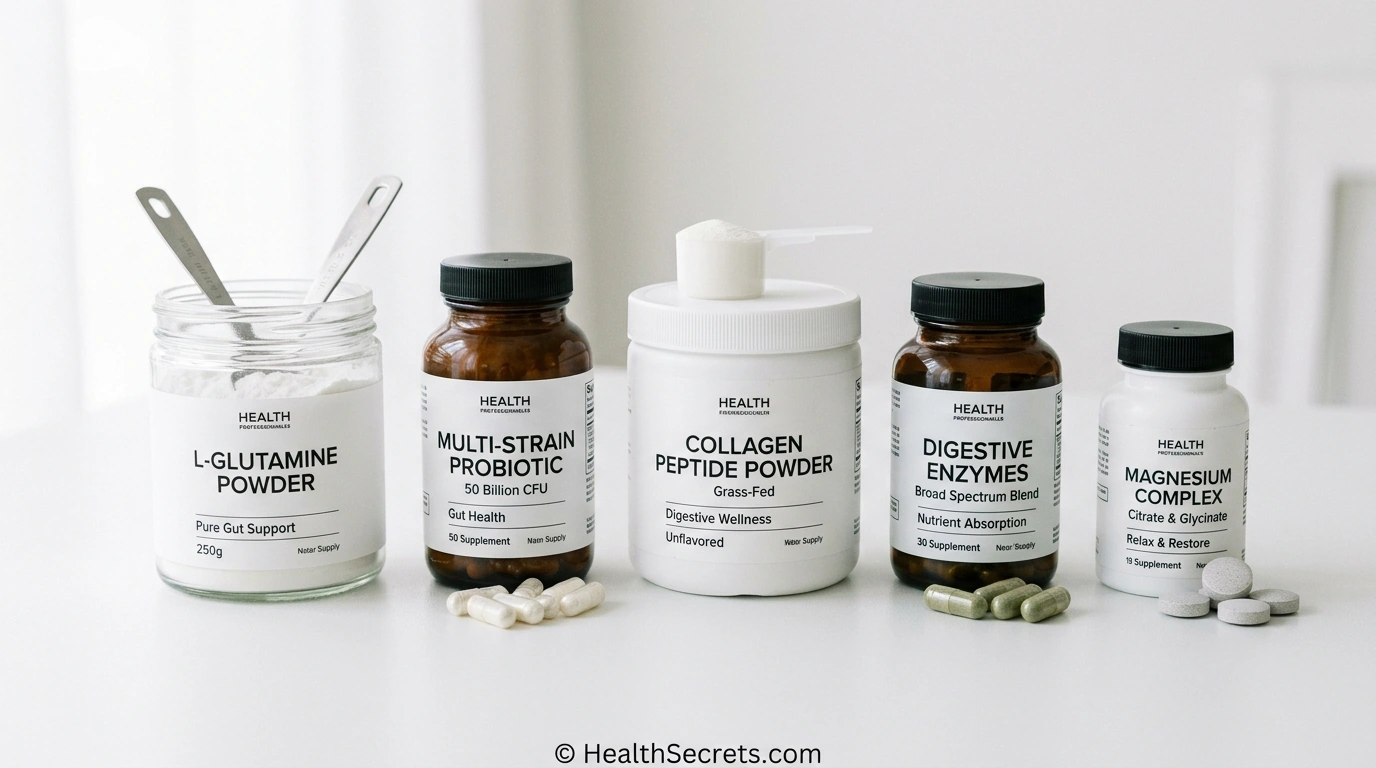
- Supplements: L-glutamine powder, high-quality probiotic (50+ billion CFU), digestive enzymes, collagen peptides
- Time commitment: 30-45 minutes daily for meal preparation
- Journal: Track symptoms, energy, bowel movements, and mood daily
Expected Timeline
| Day | Phase | What to Expect |
|---|---|---|
| Day 1 | Elimination | Initial adjustment, possible cravings |
| Days 2-3 | Deep Cleanse | Possible die-off symptoms (headache, fatigue) |
| Days 4-5 | Healing | Energy improvement, reduced bloating |
| Days 6-7 | Repopulation | Improved digestion, mental clarity |

Is Your Gut Ruining Your Day?
Get the free printable tracker thousands of readers use to pinpoint exactly what's causing their gut issues — no restrictive diets required.
How Do You Prepare for a Successful Gut Reset?
Preparation is the most overlooked step in any gut reset protocol, yet it determines whether you will complete the full 7 days successfully. Spending 2-3 days before your official start date clearing your pantry of trigger foods, batch-prepping bone broth, and stocking gut-friendly staples reduces decision fatigue and eliminates the temptation to abandon the protocol when cravings hit hardest during days 2-3.
Clear Out Inflammatory Foods
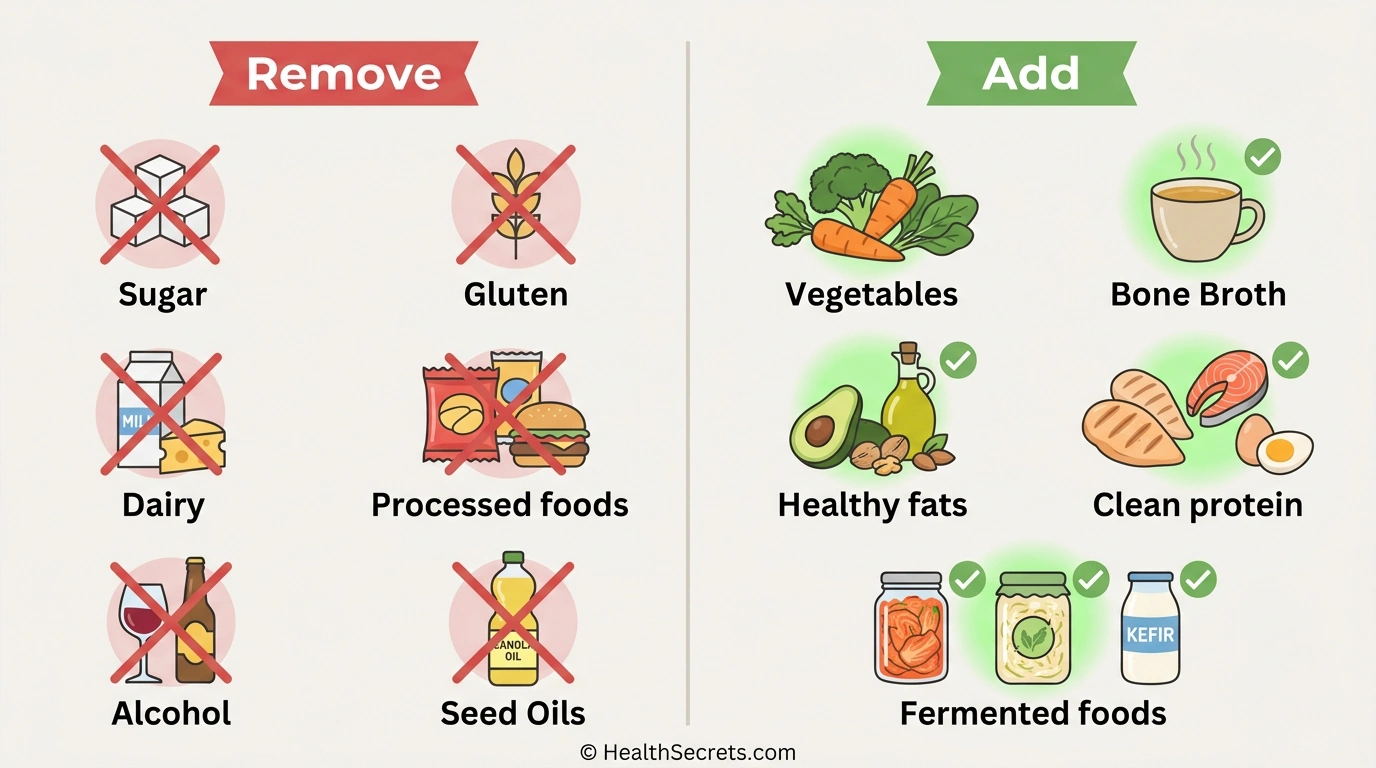
Remove these from your kitchen before Day 1:
- Refined sugar and artificial sweeteners — feed pathogenic bacteria and yeast
- Gluten-containing grains — wheat, barley, rye, and most processed cereals
- Conventional dairy — pasteurized milk, cheese, ice cream (cultured dairy may return later)
- Processed and packaged foods — anything with ingredient lists longer than 5 items
- Alcohol and caffeine — both irritate the gut lining and disrupt microbial balance
- Industrial seed oils — canola, soybean, corn, and sunflower oils
Stock Your Reset Kitchen
- Vegetables: Leafy greens, zucchini, sweet potatoes, carrots, beets, asparagus, artichokes
- Proteins: Wild-caught salmon, organic chicken, grass-fed beef (for broth), pastured eggs
- Healthy fats: Extra virgin olive oil, coconut oil, avocados, ghee
- Healing staples: Bone broth (or collagen peptides), ginger, turmeric, apple cider vinegar
- Fermented foods: Raw sauerkraut, coconut yogurt, water kefir (for later in the week) [9]
Start Your Symptom Journal
Before Day 1, record your baseline: current digestive symptoms, energy level (1-10), sleep quality, skin condition, mood, and bowel movement frequency. This journal becomes your objective measure of progress.

The 14-Day Gut-Friendly Meal Planning System
Fourteen planned days of gut-friendly meals with a gentle four-step fiber ladder, low-FODMAP swaps, shopping lists and a symptom log that adds itself up.
How Do You Eliminate Inflammatory Trigger Foods on Days 1-2?
Days 1-2 focus on removing all common gut irritants while introducing simple, easy-to-digest whole foods that give your digestive system a rest. The elimination phase is based on the gold-standard elimination diet approach used by integrative medicine practitioners at institutions like the University of Wisconsin Integrative Health program, adapted into an accelerated format for a 7-day protocol [15].
Day 1 Sample Meal Plan
- Morning (7-8 AM): Warm lemon water with 1 tbsp apple cider vinegar, followed by a smoothie with spinach, avocado, blueberries, collagen peptides, and coconut milk
- Midday (12-1 PM): Large salad with mixed greens, roasted sweet potato, grilled chicken, olive oil and lemon dressing
- Afternoon (3 PM): Cup of warm bone broth with turmeric and ginger
- Evening (6-7 PM): Baked wild salmon with steamed broccoli, zucchini, and roasted carrots drizzled with olive oil
Day 2 Sample Meal Plan
- Morning: Warm bone broth, followed by scrambled pastured eggs with sauteed spinach and avocado
- Midday: Zucchini noodles with ground turkey, marinara (sugar-free), and roasted vegetables
- Afternoon: Sliced cucumber with guacamole
- Evening: Slow-cooked chicken thighs with root vegetables (carrots, parsnips, sweet potato) in bone broth
Managing Die-Off Symptoms
As pathogenic bacteria and yeast begin to die, you may experience Herxheimer-like reactions: headaches, fatigue, irritability, or changes in bowel habits. These are temporary and typically peak on Day 2-3. Support your body with extra water (aim for half your body weight in ounces), gentle movement like walking, Epsom salt baths, and adequate sleep.
How Do You Introduce Gut-Healing Foods on Day 3?
Day 3 marks the transition from elimination to active gut repair by introducing concentrated gut-healing nutrients that support intestinal lining integrity. L-glutamine, the most abundant amino acid in the body, serves as the primary fuel source for enterocytes (intestinal lining cells), and research published in the International Journal of Molecular Sciences confirms its role in maintaining intestinal barrier function and reducing permeability [4] [5].
Gut-Healing Powerhouse Foods
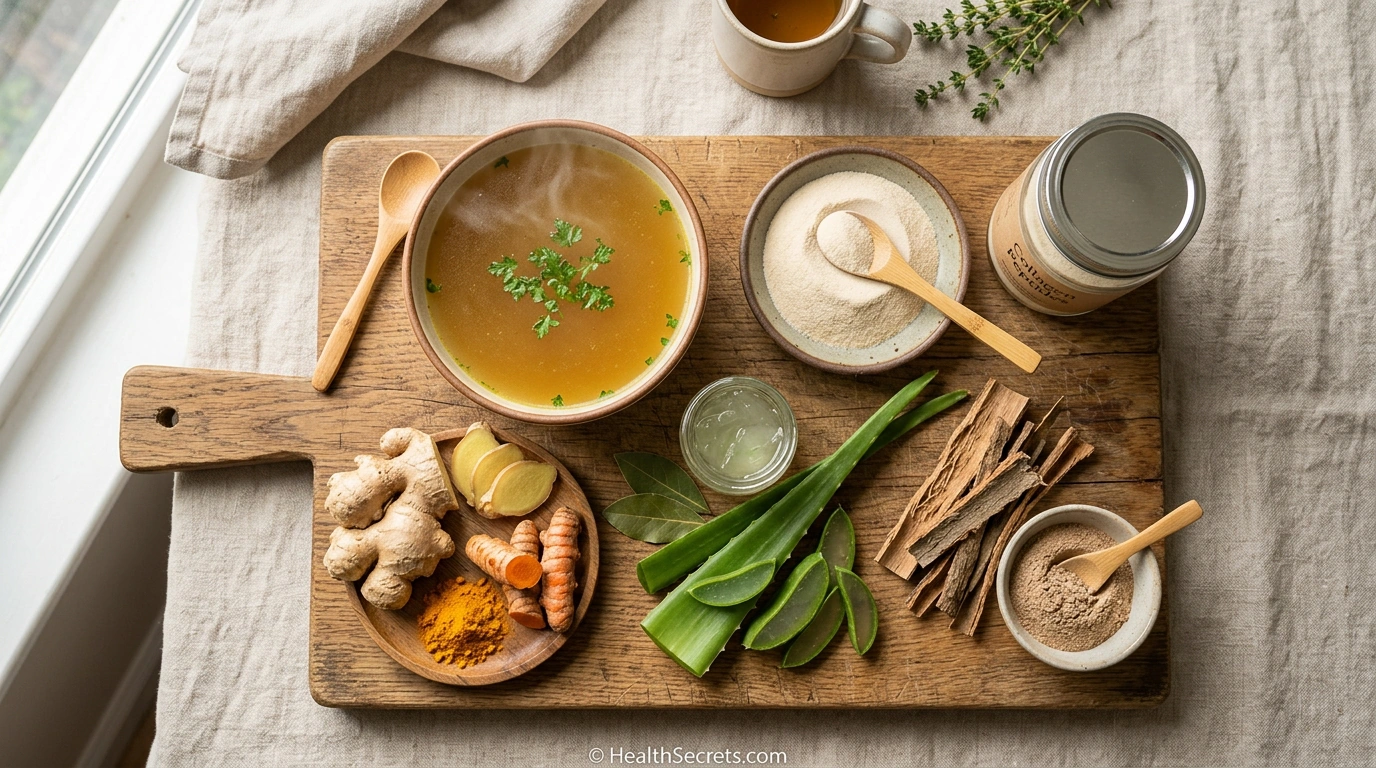
- Bone broth (2-3 cups daily): Rich in collagen, gelatin, glycine, and proline — the building blocks of intestinal tissue repair
- Collagen peptides (10-20g daily): Supplemental form that dissolves in any liquid; studies show improved gut barrier integrity within days [6]
- L-glutamine powder (5g, 2x daily): Mix into water or broth on an empty stomach; primary fuel for intestinal cell regeneration
- Aloe vera juice (2-4 oz daily): Soothes inflammation and supports mucosal lining
- Slippery elm or marshmallow root tea: Creates a protective mucilage coating along the digestive tract
Day 3 Sample Meal Plan
- Morning: L-glutamine in water (5g), wait 20 min, then bone broth smoothie with collagen peptides, banana, and ginger
- Midday: Healing soup — slow-cooked bone broth with chicken, carrots, celery, zucchini, and turmeric
- Afternoon: Aloe vera juice (2 oz) mixed with water, plus a handful of soaked almonds
- Evening: Pan-seared salmon with steamed asparagus and mashed sweet potato with ghee; L-glutamine in water before bed (5g)
How Do You Add Prebiotic Fiber to Feed Beneficial Bacteria on Days 4-5?
Days 4-5 introduce prebiotic-rich foods that selectively feed beneficial gut bacteria, creating the conditions for a thriving microbiome before you add probiotics. Prebiotics are non-digestible fibers that pass through the upper GI tract and are fermented by beneficial bacteria in the colon, producing short-chain fatty acids (SCFAs) like butyrate that nourish the intestinal lining and regulate immune function.
Top Prebiotic Foods to Add
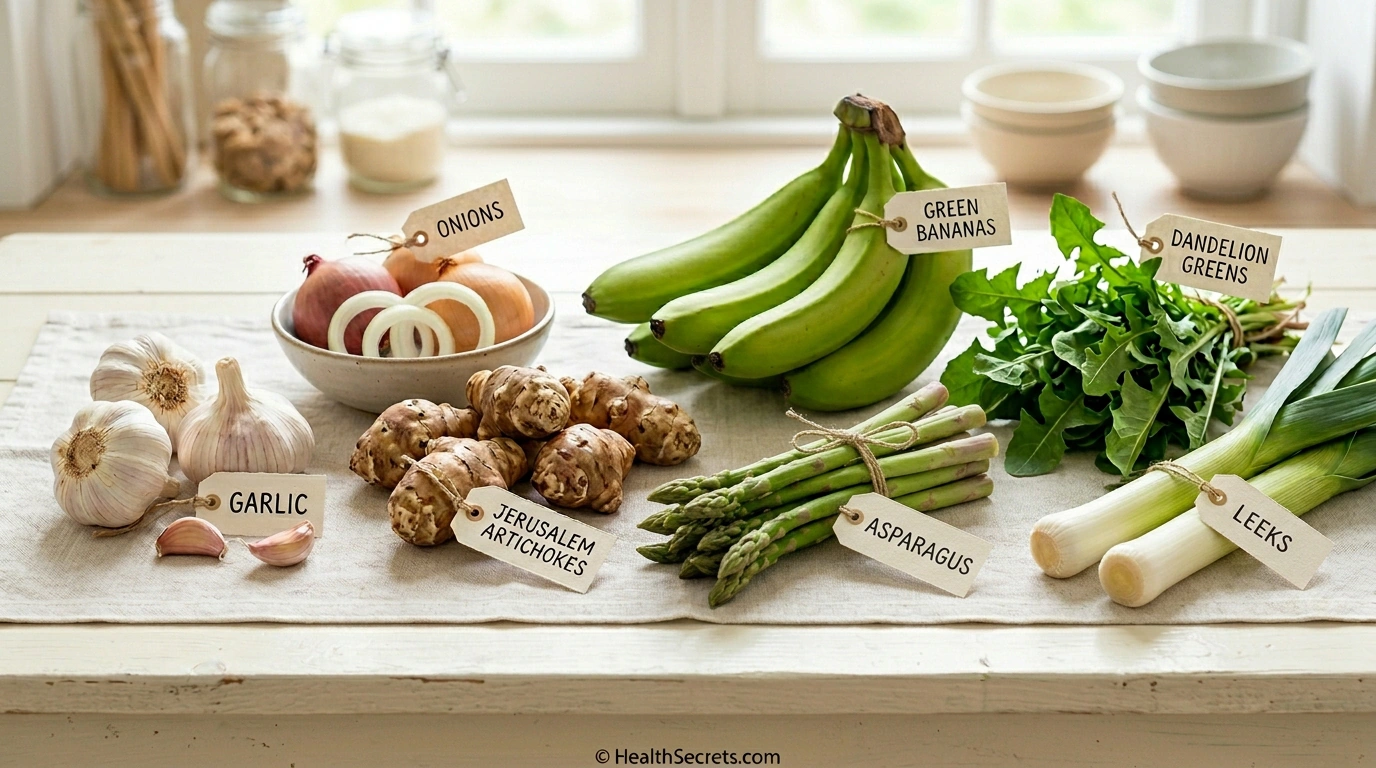
- Garlic (2-3 cloves daily): Contains inulin and fructooligosaccharides (FOS); best raw or lightly cooked
- Onions (1/2 cup daily): Rich in inulin and quercetin; cook lightly to reduce FODMAP load if sensitive
- Jerusalem artichokes: One of the richest natural sources of inulin
- Asparagus: Contains inulin-type fructans; steam lightly
- Under-ripe bananas: High in resistant starch that feeds Bifidobacteria
- Dandelion greens: Prebiotic fiber plus liver-supportive bitter compounds
- Leeks: Mild flavor with significant inulin content
For additional prebiotic support, consider an organic inulin powder supplement mixed into smoothies or warm beverages.
Day 4-5 Sample Meals
- Morning: Green smoothie with under-ripe banana, spinach, collagen peptides, and coconut milk; L-glutamine in water
- Midday: Roasted garlic and leek soup with chicken, topped with fresh herbs
- Afternoon: Bone broth with sliced ginger; jicama sticks with guacamole
- Evening: Herb-roasted chicken with asparagus, sauteed dandelion greens, and roasted Jerusalem artichokes
How Do You Incorporate Fermented Foods and Probiotics on Day 5-6?
With the gut lining healing and prebiotic fiber feeding your existing beneficial bacteria, Days 5-6 are the optimal time to introduce fermented foods and a high-quality probiotic supplement. A landmark Stanford study published in Cell found that a diet high in fermented foods increased microbial diversity and reduced inflammatory markers in just 10 weeks — and the benefits began within the first week of consumption.
Best Fermented Foods to Start With
Start with small amounts (1-2 tablespoons) and increase gradually:
- Raw sauerkraut: Look for refrigerated, unpasteurized varieties with live cultures
- Coconut yogurt or kefir: Dairy-free option rich in Lactobacillus strains
- Kimchi: Traditional Korean fermented vegetables with diverse bacterial strains
- Water kefir or kombucha: Probiotic-rich beverages; limit to 4-8 oz daily initially
- Miso paste: Add to warm (not boiling) soups at the end of cooking to preserve live cultures
For a comprehensive guide to making your own fermented foods at home, see our fermented foods for gut health guide.

Probiotic Supplement Protocol
- Choose a multi-strain probiotic with at least 50 billion CFU containing Lactobacillus and Bifidobacterium strains
- Take on an empty stomach — 30 minutes before breakfast or at bedtime
- Start with half the recommended dose if you are sensitive, then increase after 2-3 days
- Continue for at least 30 days after the reset for lasting colonization
How Do You Optimize Digestion with Targeted Supplements on Day 6-7?
Days 6-7 layer in targeted supplementation to optimize digestive function, support detoxification pathways, and lock in the progress you have made. By this point, most people notice significantly reduced bloating, improved energy, and more regular bowel movements. Strategic supplement support accelerates these improvements and provides a bridge to your long-term maintenance protocol.
Core Supplements for Days 6-7
- Digestive enzymes: Take with meals to ensure complete breakdown of proteins, fats, and carbohydrates; especially important as you reintroduce a wider variety of foods
- Magnesium glycinate (200-400mg at bedtime): Supports relaxation, bowel regularity, and over 300 enzymatic processes; many people with gut issues are magnesium deficient
- Zinc (15-30mg daily with food): Essential for intestinal barrier integrity and stomach acid production; zinc deficiency is common in those with digestive disorders [16]
- Omega-3 fatty acids: Anti-inflammatory support for the gut lining; wild-caught fish or a quality fish oil supplement
- Vitamin D3 (2000-5000 IU daily): Supports immune regulation in the gut; test your levels if possible
Day 7: Your Reset Completion Day
- Morning: Celebrate with a gut-nourishing breakfast bowl — coconut yogurt topped with berries, ground flaxseed, a drizzle of raw honey, and sliced almonds
- Midday: Rainbow salad with mixed greens, roasted beets, shredded carrots, avocado, sauerkraut, pumpkin seeds, and grilled chicken
- Afternoon: Bone broth with miso stirred in at the end; piece of fruit with almond butter
- Evening: Herb-crusted wild salmon with roasted root vegetables, steamed broccoli, and a side of kimchi
How Do You Reintroduce Foods and Maintain Results After the Reset?
The reintroduction phase is where most gut reset protocols fail — people rush back to their old eating patterns and lose all progress within days. A systematic, one-food-at-a-time reintroduction over 2-3 weeks after your 7-day reset is what separates temporary relief from lasting gut transformation. Research on elimination diet protocols confirms that structured reintroduction is essential for identifying individual food triggers.
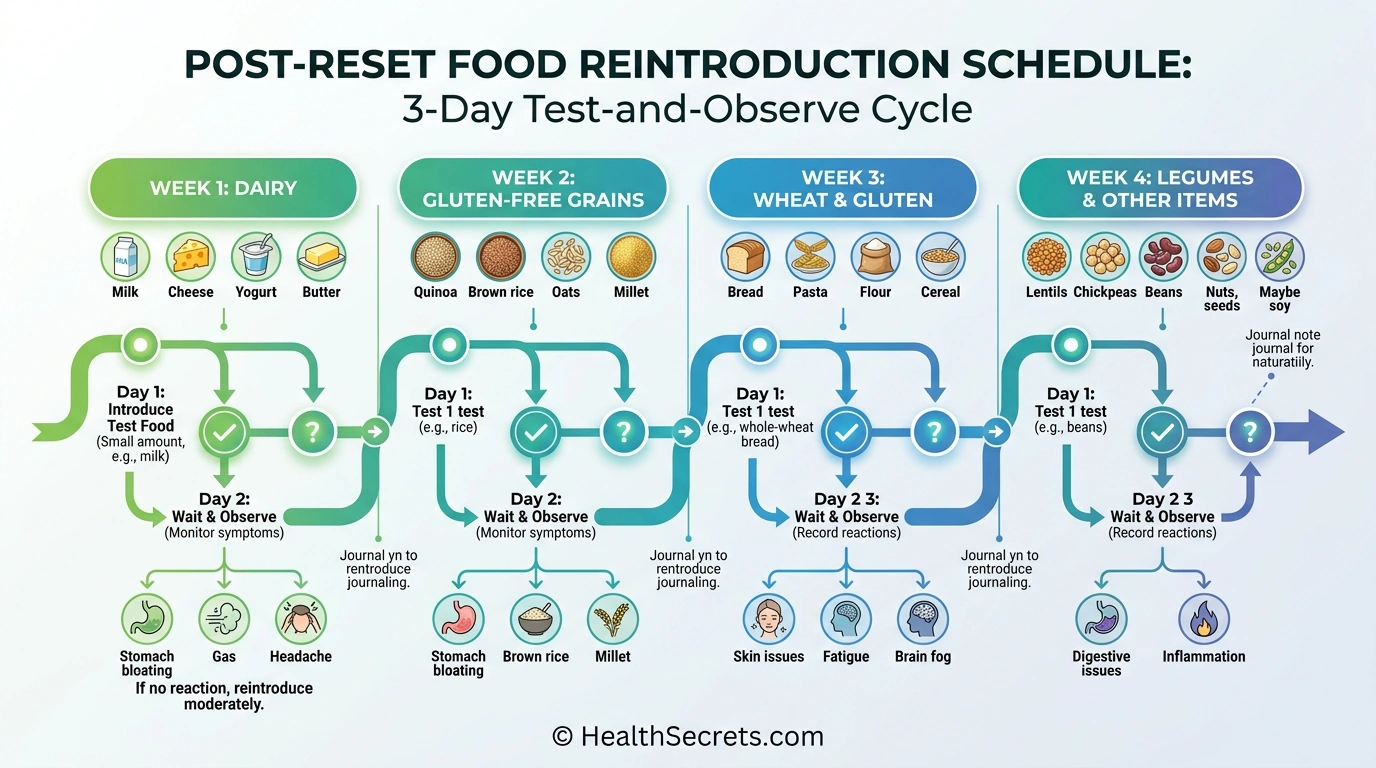
The 3-Day Reintroduction Rule
- Day 1: Introduce ONE eliminated food in a small amount (e.g., a small serving of dairy or a slice of sourdough bread)
- Day 2-3: Return to your reset diet and monitor symptoms for 48-72 hours
- Record everything: Note any bloating, gas, fatigue, skin changes, headaches, or mood shifts
- If no reaction: That food is likely safe for you — add it back to your regular rotation
- If symptoms return: Remove that food for at least 30 days before retesting
Suggested Reintroduction Order
- Week 1 post-reset: Organic dairy (start with ghee, then butter, then yogurt, then cheese)
- Week 2: Gluten-free grains (rice, quinoa, oats)
- Week 3: Gluten-containing grains (sourdough bread first, then conventional wheat)
- Week 4: Other items (legumes, nightshades, eggs if eliminated, corn)
Long-Term Maintenance Habits
- Continue eating 1-2 servings of fermented foods daily
- Keep bone broth as a regular part of your diet (3-4 cups per week)
- Maintain a diverse plant intake — aim for 30+ different plants per week
- Take your probiotic supplement for at least 90 days post-reset
- Manage stress through meditation, breathwork, or yoga — the gut-brain axis directly impacts digestive function
- Revisit a mini 3-day gut reset every quarter for maintenance
What Are the Most Common Mistakes to Avoid During a Gut Reset?
The most common gut reset mistakes include reintroducing foods too quickly, not drinking enough water, skipping the preparation phase, and relying solely on supplements without dietary changes. Avoiding these pitfalls can double the effectiveness of your 7-day protocol and prevent the frustrating cycle of temporary improvement followed by symptom relapse.
Top Expert Tips
- Do not skip meals or fast excessively — your gut lining needs consistent nutrition to repair; intermittent fasting of 12-14 hours overnight is fine, but extended fasts are counterproductive during a reset
- Chew each bite 20-30 times — mechanical digestion starts in the mouth and significantly reduces the burden on your stomach and intestines
- Eat in a relaxed state — activate your parasympathetic nervous system before meals with 3-5 deep breaths; eating while stressed impairs enzyme secretion by up to 50%
- Avoid drinking large amounts of water with meals — sip small amounts only; large volumes dilute digestive enzymes
- Do not add all fermented foods at once — start with 1 tablespoon of one type and increase gradually over 3-4 days
- Sleep 7-9 hours nightly — gut repair happens primarily during deep sleep; poor sleep undermines the entire protocol
- Move gently every day — 20-30 minutes of walking stimulates peristalsis and lymphatic drainage without stressing the body
- Batch cook on prep day — having meals ready prevents decision fatigue and the temptation to grab convenient processed foods
Is a 7-Day Gut Reset Protocol Safe? When Should You Stop?
A 7-day gut reset is generally safe for healthy adults when followed as outlined, with temporary die-off symptoms being the most common side effect during days 2-3. However, certain populations should modify the protocol or work with a healthcare provider, and specific warning signs warrant stopping the reset immediately and seeking medical attention.
Who Should Modify or Avoid This Protocol
- Pregnant or nursing women — consult your OB/GYN before any elimination protocol
- People with eating disorder history — restrictive protocols can trigger disordered patterns; work with a therapist and dietitian
- Those on prescription medications — some supplements interact with medications; consult your pharmacist
- People with diabetes — dietary changes can affect blood sugar management; monitor closely
- Children and adolescents — this protocol is designed for adults only
- Those with severe GI conditions — IBD, Crohn's, ulcerative colitis, or diagnosed SIBO should work with a gastroenterologist
Stop the Protocol and Seek Medical Attention If You Experience
- Severe abdominal pain that does not resolve with rest
- Blood in stool or vomit
- High fever (above 101.3 degrees F / 38.5 degrees C)
- Persistent vomiting or inability to keep fluids down
- Signs of allergic reaction (hives, swelling, difficulty breathing)
- Worsening symptoms after Day 4 (die-off should resolve by then)
- Dizziness, fainting, or heart palpitations
Action Plan
What Should You Do First to Start Your 7-Day Gut Reset?
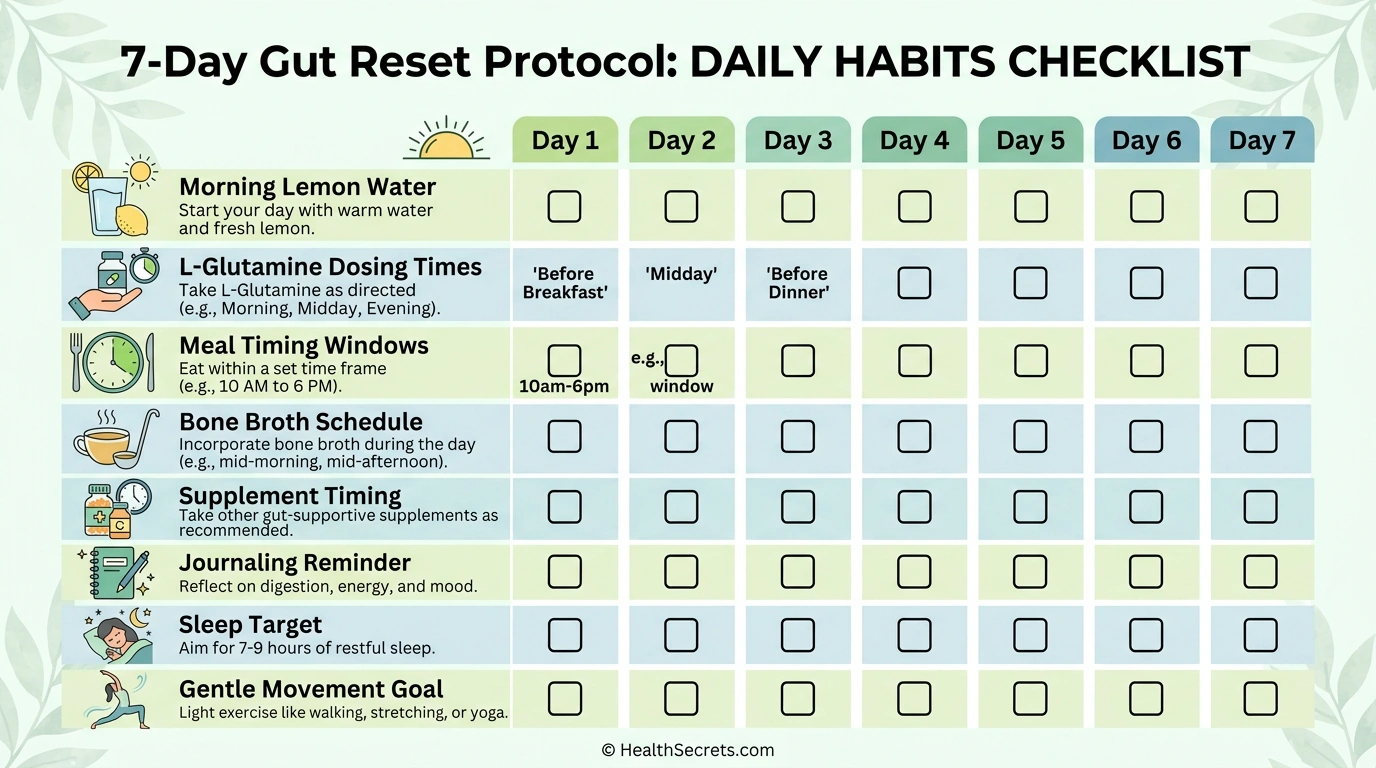
Follow the sequence below, work through each phase in order, and use the checklist as your practical implementation guide.
Start by choosing your reset start date (ideally a Monday for weekday structure), then spend the weekend before clearing inflammatory foods from your kitchen and batch-preparing bone broth. Having everything ready before Day 1 is the single most important predictor of completing the full protocol successfully.
Phase 1: Pre-Reset (2-3 Days Before)
- Choose your 7-day start date and block your calendar
- Clear pantry of sugar, gluten, processed foods, and seed oils
- Shop for gut reset groceries (see Step 1 shopping list)
- Prepare a large batch of bone broth (or purchase high-quality store-bought)
- Order supplements: L-glutamine, probiotic, collagen peptides, digestive enzymes
- Start your symptom journal with baseline measurements
Phase 2: Active Reset (Days 1-7)
- Follow the daily meal plans for each step
- Take L-glutamine (5g 2x daily) starting Day 3
- Introduce fermented foods starting Day 5 (1-2 tbsp, increasing gradually)
- Begin probiotic supplement on Day 5
- Record symptoms, energy, and bowel movements daily
- Sleep 7-9 hours every night
Phase 3: Post-Reset Maintenance (Weeks 2-4)
- Follow the 3-day reintroduction rule for each eliminated food
- Continue probiotic supplement for at least 90 days
- Maintain 1-2 servings of fermented foods daily
- Keep bone broth as a weekly staple (3-4 cups)
- Schedule quarterly 3-day mini-resets