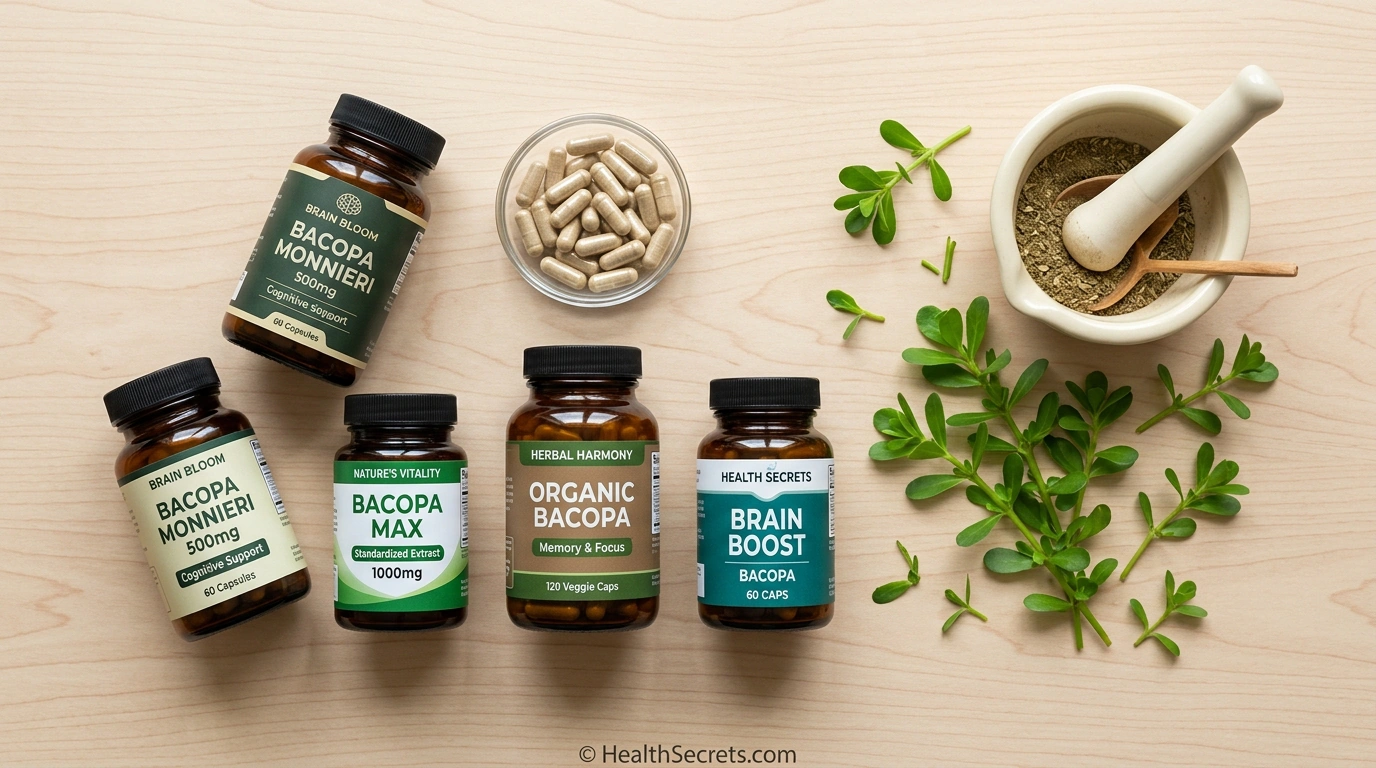
Bacopa monnieri. You've probably seen this one floating around nootropic forums and Ayurvedic wellness blogs—but here's what's genuinely interesting. This isn't some trendy supplement that appeared out of nowhere. Brahmi, as it's called in Ayurveda, has been used for memory enhancement for over 3,000 years. And modern research? It's actually starting to back those ancient claims up.
Human studies show that bacopa monnieri positively affects learning and word recall, though the FDA has not approved it for any medical condition (StatPearls, NCBI Bookshelf [1]). The active compounds—bacosides A and B—appear to enhance synaptic communication, support neurotransmitter function, and provide antioxidant protection to brain cells.
But—and this matters a lot—bacopa is a slow-acting nootropic. We're talking 8 to 12 weeks of consistent daily use before you'll notice the full benefits. This isn't caffeine. You won't feel sharper after your first dose.
In this guide, we'll cover the clinical evidence for bacopa's memory benefits, how bacosides work in the brain, dosing protocols, quality considerations, realistic expectations, and the best supplements available. If you're interested in a broader approach, check out our mental wellness complete guide for additional brain health strategies.
What Is Bacopa Monnieri and What Does This Ancient Herb Actually Do?
Bacopa monnieri is a creeping perennial herb from the Plantaginaceae family that grows in wetlands across India, Southeast Asia, and other tropical regions. In Ayurvedic medicine, it's classified as a "medhya rasayana"—a rejuvenating herb for the mind—and has been prescribed for memory enhancement, learning, and anxiety reduction for over three millennia.
The cognitive effects come from bacosides, a group of triterpene saponins. The two primary compounds—bacoside A and bacoside B—are responsible for most of bacopa's documented brain benefits. Studies indicate that administering bacosides significantly improves memory and learning in both animal and human models ([2]).
Modern research has validated many traditional claims. A randomized, double-blind study found that bacopa extract demonstrated cognitive improvements comparable to donepezil (a prescription Alzheimer's drug) after 52 weeks of treatment ([11]). However, effects are modest—typically 10–20% improvements on standardized memory tests—not dramatic transformations.
Forms available:
- Standardized extract (preferred): Concentrated to 50% bacosides for consistent potency
- Whole herb powder: Lower bacoside content, requires higher doses
- Capsules, powders, and liquid extracts: Capsules are most common and convenient

The Bedroom Sleep Audit Checklist
Sixteen checks across temperature, light, sound and air with target ranges, a score sheet that counts what to fix first, and the one-change-at-a-time rule.
How Does Bacopa Monnieri Work in the Brain?
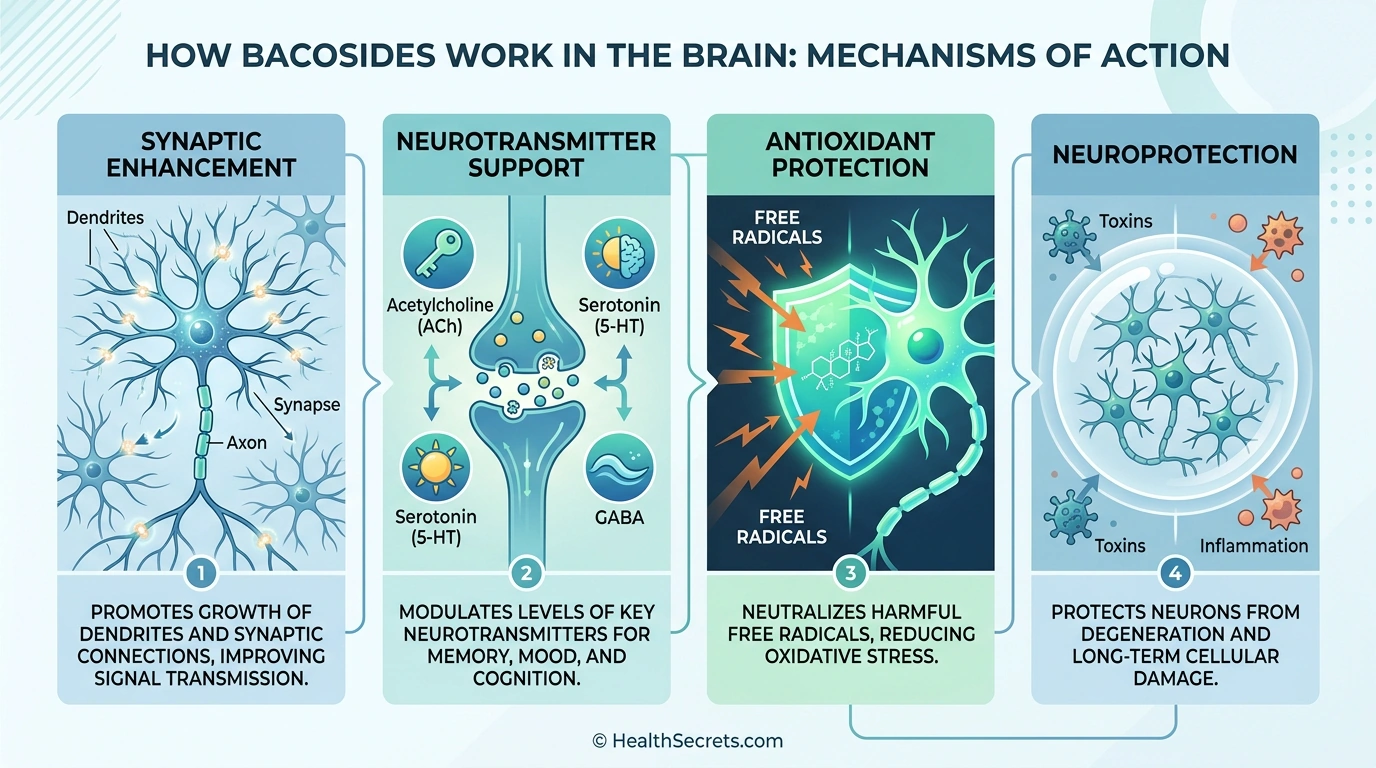
Bacopa supports cognitive function through multiple interconnected mechanisms involving antioxidant protection, neurotransmitter modulation, and synaptic enhancement. These pathways work together over weeks to months, which explains why consistent long-term use is essential for results.
How Do Bacosides Enhance Synaptic Communication?
Bacosides increase dendritic branching and synaptic density—essentially creating more connections between neurons. Animal studies show BM increases signaling molecules involved in synapse formation, including protein-kinase activity, neurotrophins, and phosphorylated CREB ([3]). More synapses means better signal transmission, which translates to improved learning and memory formation.
How Does Bacopa Affect Neurotransmitters?
Bacopa acts as an acetylcholinesterase inhibitor, enhancing cholinergic transmission through increased acetylcholine levels—a neurotransmitter critical for memory and learning ([11]). It also modulates serotonin (mood regulation) and GABA (calming effects), contributing to its traditional use as an anxiolytic. In silico experiments predict that bacosides interact with tryptophan hydroxylase to facilitate serotonin synthesis ([14]).
How Does Bacopa Protect Brain Cells From Damage?
Bacopa has potent antioxidant properties that neutralize reactive oxygen species and inhibit lipid peroxidation, preserving neuronal integrity ([11]). It also reduces neuroinflammation by inhibiting inflammatory cytokines and microglial activation. Additionally, bacopa displays anti-amyloidogenic properties, reducing aggregation of amyloid-beta peptides relevant to Alzheimer's disease pathology.
Does Bacopa Have Adaptogenic Properties?
Yes—bacopa reduces cortisol levels and improves stress resilience, protecting against stress-induced cognitive impairment. This adaptogenic effect may contribute to the anxiety-reducing benefits reported in clinical trials, making it useful for people dealing with both memory concerns and stress.
How Well Is Bacopa Monnieri Absorbed by the Body?
Bacopa's bioavailability depends significantly on the formulation and how you take it. Standard bacopa extracts have moderate absorption, but fat-soluble bacosides are absorbed substantially better when taken with dietary fat. Newer formulations using lipid-based delivery systems show improved bioavailability over conventional extracts.
Absorption enhancers:
- Take with meals containing fat: Bacosides are fat-soluble—coconut oil, olive oil, avocado, or nuts improve absorption significantly
- Standardized extracts vs. whole herb: Standardized extracts (50% bacosides) deliver consistent, concentrated doses; whole herb powder requires much higher doses for equivalent effects
- Advanced formulations: Some manufacturers now offer lipid-encapsulated or phytosome-bound bacopa for enhanced bioavailability
Food vs. supplement forms:
- Traditional Ayurvedic preparations used bacopa in ghee (clarified butter) or milk—effectively pairing the herb with fat for better absorption
- Modern supplements standardized to 50% bacosides provide more reliable dosing than traditional preparations
- Powder forms mixed into smoothies with fat sources can work well for those who prefer non-capsule options
How Much Bacopa Monnieri Should You Take for Memory Support?
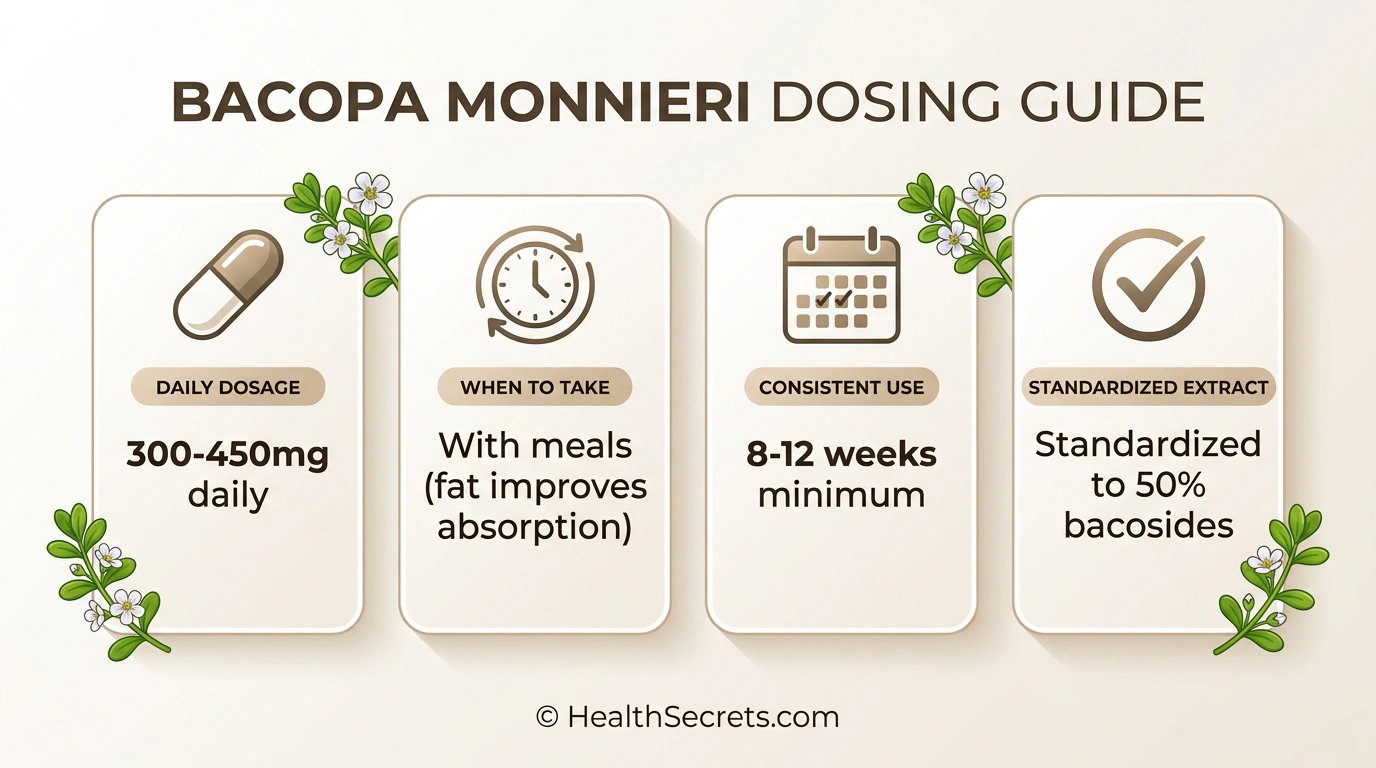
The standard evidence-based dose is 300–450 mg daily of extract standardized to 50% bacosides, equivalent to approximately 150 mg of pure bacosides. A phase I study confirmed that doses of 300 mg and 450 mg per day are safe in healthy adults. The critical factor is consistency over 8–12 weeks minimum.
| Purpose | Daily Dose | Duration | Notes |
|---|---|---|---|
| General cognitive support | 300 mg (50% bacosides) | 8–12+ weeks | Standard maintenance dose |
| Memory enhancement | 300–450 mg (50% bacosides) | 12+ weeks | Clinical trial dose range |
| Loading phase (optional) | 450–600 mg first 4 weeks | 4 weeks, then reduce | May accelerate benefits |
| Age-related memory support | 300 mg twice daily | 12+ weeks | Elderly study protocol |
| Timing tips: |
- Take with meals containing fat for better absorption
- Morning or lunchtime preferred—some people find bacopa mildly calming
- Divide into 2 doses (morning and afternoon) or take as a single dose
- Daily consistency is essential—skipping doses delays results
- No cycling required—continuous long-term use is safe
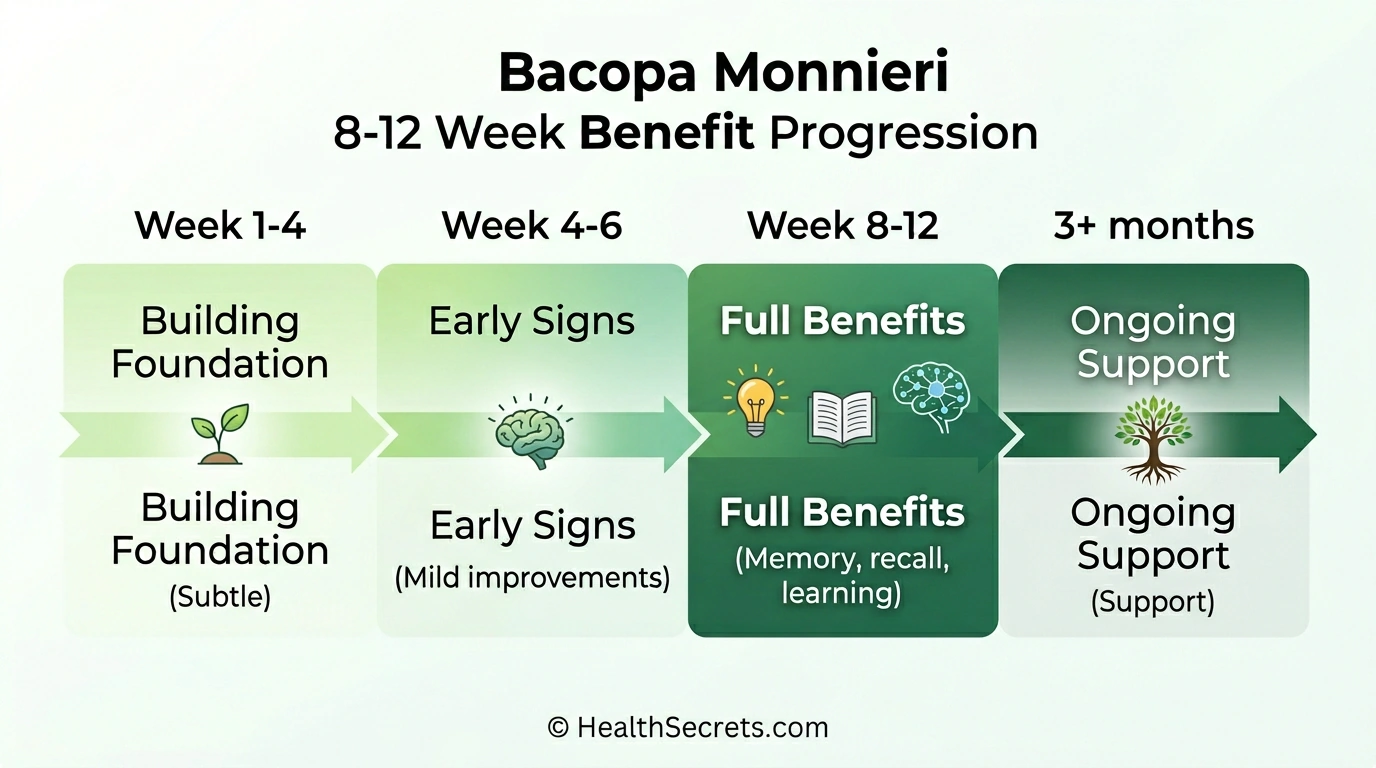
The 8–12 week rule: This is the single most important thing to understand about bacopa. Weeks 1–4 typically show minimal noticeable effects. Subtle improvements may appear around weeks 4–6. Full benefits—improved memory retention, recall, and learning—emerge at 8–12 weeks. Don't judge effectiveness before this timeline ([6]).
Can You Get Enough Bacopa Monnieri From Food Sources?
Unlike many supplements, bacopa monnieri isn't a common dietary ingredient—it's primarily consumed as a supplement or traditional herbal preparation. You cannot realistically obtain therapeutic doses of bacosides from food alone, making supplementation the practical approach for cognitive benefits.

Traditional preparations:
- Brahmi ghee: Bacopa cooked in clarified butter—traditional Ayurvedic preparation that naturally enhances fat-soluble absorption
- Brahmi tea: Dried leaves steeped in hot water—lower bacoside concentration than extracts
- Fresh leaves: Consumed raw or cooked in some South Asian cuisines—very low bacoside content per serving
The practical reality:
- Therapeutic doses require standardized supplements (300–450 mg extract with 50% bacosides)
- Traditional preparations provide some benefit but lack the concentrated, consistent dosing of modern extracts
- A balanced approach: use traditional preparations for enjoyment and cultural connection, supplements for targeted cognitive support
Is Bacopa Monnieri Safe? Side Effects and Interactions You Should Know
Bacopa monnieri is generally well-tolerated with a strong safety profile. Clinical trials lasting up to 12 months have shown no significant toxicity, and animal studies at very high doses (up to 1,500 mg/kg for 270 days) produced no significant adverse effects (StatPearls, NCBI [1]).
Common side effects (usually mild and transient):
- Gastrointestinal upset: nausea, diarrhea, stomach cramps—most common in first 2–3 weeks
- Fatigue or mild sedation—adaptogenic calming effect
- Dry mouth—occasional
- Headache—rare
Management: Start with a lower dose (150–200 mg) and increase gradually. Taking with meals significantly reduces digestive side effects.
Drug interactions (consult your doctor):
- Thyroid medications: Bacopa may increase T4 thyroid hormone levels—monitor thyroid function (MSD Manual)
- Anticholinergic drugs: Bacopa increases acetylcholine, potentially reducing effectiveness of anticholinergic medications (WebMD [13])
- Cholinergic drugs: May increase side effects of medications that also raise acetylcholine (e.g., Alzheimer's drugs)
- CYP450 substrates: Bacopa may alter blood levels of warfarin, calcium channel blockers, and some chemotherapy drugs (Merck Manual)
Contraindications:
- Pregnancy and breastfeeding: Insufficient safety data—avoid unless directed by doctor
- Bradycardia: Bacopa may slow heart rate—use caution with heart conditions
- Scheduled surgery: Discuss with surgeon due to potential interactions
What Can Bacopa Monnieri Actually Do for Your Memory?
Bacopa provides modest, measurable improvements in memory retention and recall—typically 10–20% on standardized cognitive tests after 8–12 weeks of consistent use. It is not a dramatic cognitive enhancer or miracle memory pill, but rather a supportive tool that works best as part of a comprehensive brain health approach.
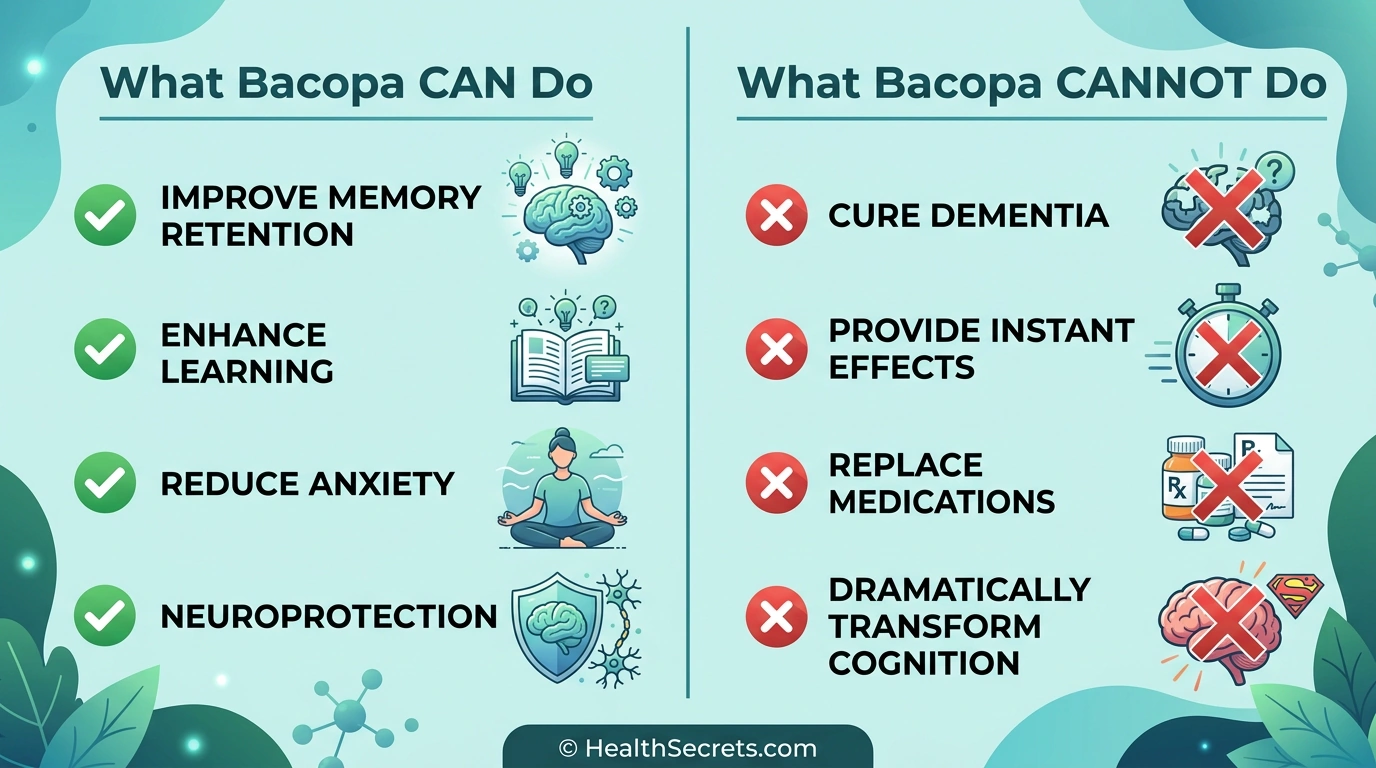
What bacopa CAN do:
- Improve memory retention and recall (most consistent benefit)
- Enhance learning rate and information processing speed
- Reduce anxiety and stress through adaptogenic effects
- Provide neuroprotective antioxidant support for long-term brain health
- Support cognitive function in age-related memory decline
What bacopa CANNOT do:
- Cure or treat dementia, Alzheimer's, or serious cognitive impairment
- Provide immediate cognitive enhancement (takes 8–12 weeks)
- Replace medications prescribed by your doctor
- Dramatically transform cognitive ability overnight
Realistic timeline:
- Weeks 1–4: Minimal noticeable effects; some report subtle stress reduction
- Weeks 4–6: Some people begin noticing mild memory improvements
- Weeks 8–12: Full benefits emerge—improved recall, learning, retention
- 3+ months: Continued benefits with ongoing consistent use
Who benefits most: Older adults with age-related memory decline, students and professionals with high cognitive demands, and people willing to commit to 8–12 weeks of daily use. Effects may be less dramatic in healthy young adults with already-optimal cognitive function.
Best results: Combine bacopa with Mediterranean-style diet, regular exercise (150+ min/week), 7–9 hours of sleep, stress management, and ongoing mental stimulation.
কর্মপরিকল্পনা
What Should You Do First if You Want to Try Bacopa Monnieri?
নিচের ক্রম অনুসরণ করুন, প্রতিটি ধাপ পর্যায়ক্রমে সম্পন্ন করুন এবং আপনার বাস্তবায়নের নির্দেশিকা হিসেবে চেকলিস্টটি ব্যবহার করুন।
Start by choosing a quality supplement standardized to 50% bacosides, begin at a lower dose with meals, and commit to a minimum 8–12 week trial before evaluating results. Consistency is more important than dosage—daily use is essential for bacopa's cumulative mechanisms to work.
Phase 1 — Weeks 1–2: Start Smart
- Choose a reputable bacopa supplement standardized to 50% bacosides
- Start with 150–200 mg daily with a fat-containing meal
- Track baseline memory and cognitive function (use a journal or app)
- Consult your doctor if on thyroid or anticholinergic medications
Phase 2 — Weeks 3–4: Full Dose
- Increase to full dose: 300–450 mg daily
- Take consistently at the same time each day
- Note any side effects (digestive, fatigue)—usually resolve by week 3
Phase 3 — Weeks 5–12: Patience Period
- Continue daily use without interruption
- Combine with brain-supporting lifestyle: exercise, sleep, healthy diet
- Begin tracking cognitive improvements around week 8
- Evaluate effectiveness at 12 weeks before making changes
Phase 4 — Ongoing: Maintenance
- Continue 300 mg daily for long-term cognitive support
- Reassess every 3–6 months with your healthcare provider
- Maintain healthy lifestyle habits alongside supplementation