
Wound Up by Evening? Seven Short Practices and a 30-Day Log
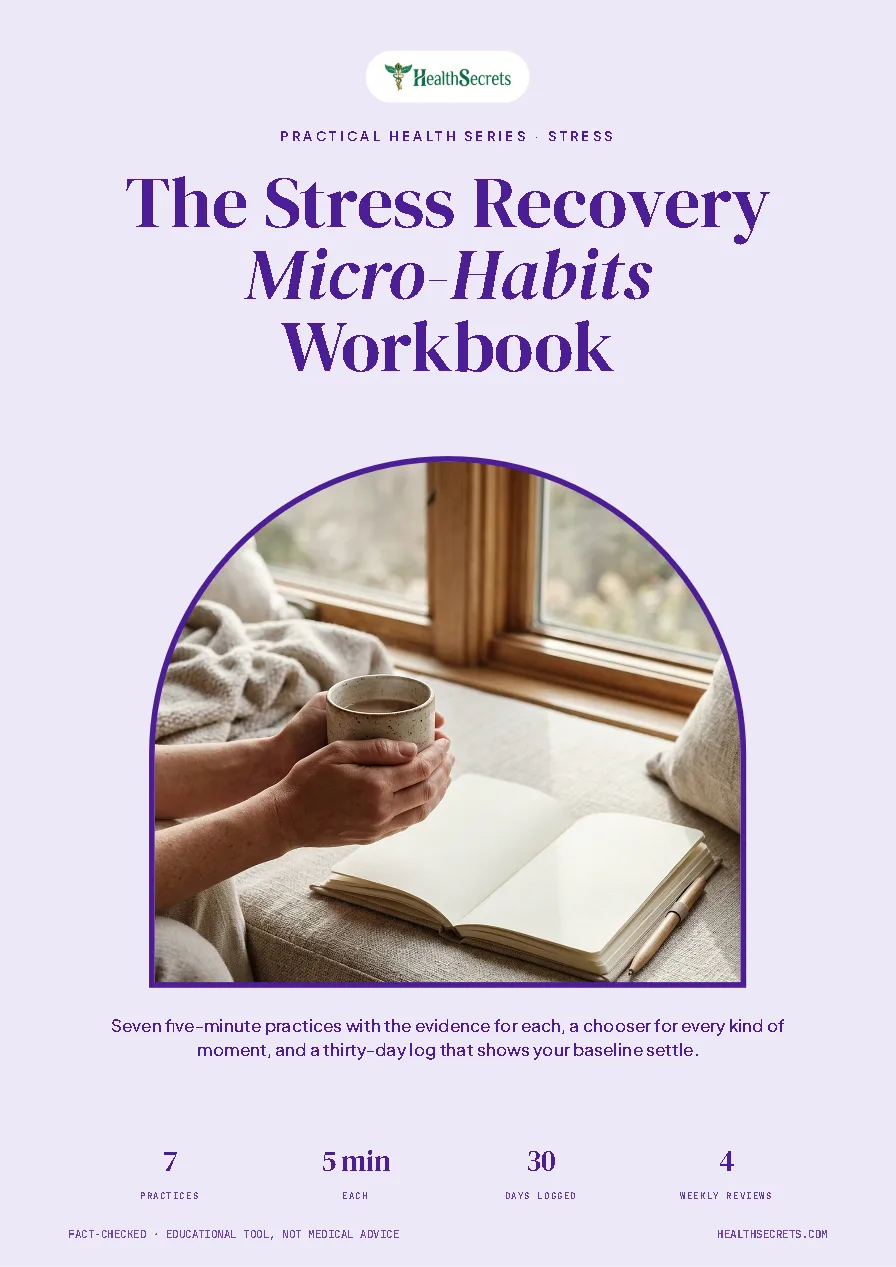 $27 Instant download
Code READER60: 60% off at checkout. One payment. No subscription.
See the actual pages firstTonight, write your tension from 0 to 10, then try cyclic sighing for 5 minutes. No app, no mat. Seven practices of 1 to 10 minutes, matched to the moment.
You are purchasing Stress Recovery Micro-Habits Workbook — a downloadable digital publication (31-page fillable PDF e-book, with free bonus access to an online edition of the same e-book). Upon checkout, you will receive instant online access and an immediate download link sent to your email address. This is a 100% digital product. No physical books, binders, jars, or equipment will be shipped to your address.
- One payment, no subscription
- Secure checkout through Digistore24
- Download link right after you pay
Does This Sound Familiar?

See the Actual Pages
These are real pages from the 31-page e-book (the free online edition has the same content). Tap any page to see it full size.
Tie each practice to something you already do
Five rows of the cue table, exactly as printed in the workbook. Practices are numbered 1 to 7 in the book.
| Cue | Practice | Why |
|---|---|---|
| First coffee or tea is brewing | Practice 2 (5 min) or three cyclic sighs | Reliable and daily; the kettle is a natural timer. |
| Sitting down in the car or on the train or bus | Practice 1 or 3 (short form) | A transition nobody sees. |
| Washing hands before lunch | Practice 4 (cold wrists and face) | Water is already running. |
| Brushing teeth at night | Practice 6, then 2 in bed | The strongest existing habit most people have. |
| Any door handle | One physiological sigh | Twenty transitions a day; the dose adds up. |
Cue table in chapter 02 of the workbook. Gollwitzer and Sheeran 2006; Lally et al. 2010.
What’s Inside Stress Recovery Micro-Habits Workbook
Every section gives you something to fill in and use, not just something to read.
What Stress Does in Your Body
The body's accelerator and brake in plain words, what short bursts do, what the cortisol day looks like, and the warning signs that mean getting help.
What Is Worth Your Five Minutes
Nine common habits graded by the evidence, from slow breathing to the ones that only feel like a break, such as scrolling or a drink.
Seven Practices, One Page Each
Cyclic sighing, resonance breathing, muscle relaxation, cold water to the face, a 10-minute green walk, worry postponement and a 10-minute body scan. Each page gives the steps, the signs it is working and the cautions.
Which One, and When
A chart with 8 everyday moments and the practice for each, a sample day, 6 habit rules, your own if-then plan and 7 cut-out cards for your wallet or desk.
Day 0 and Day 30
Eight measures and a 10-question self-check that you fill in on day 0 and day 30. The change is worked out for you.
The 30-Day Log
Two numbers a day, morning and evening tension from 0 to 10, plus sleep, minutes and what set you off. Each week averages itself. It also has the 6 triggers to work on and troubleshooting.
How You Will Use It
Start tonight
Write your evening tension from 0 to 10. Learn cyclic sighing for spikes and resonance breathing for your daily 5 minutes.
Score twice a day
Note morning and evening tension, sleep, minutes and the main trigger. The week averages itself.
Keep what works
Try all seven over four weeks. Keep the two or three that work for you, then compare day 30 with day 0.
Your PDF E-Book, Plus a Free Online Edition
The PDF e-book (what you buy)
- 31 A4 pages, ready to print or fill in on screen
- Calculations fill in by themselves in Adobe Acrobat Reader, Chrome, Edge, Firefox and Foxit
- Works offline; keep it forever
Free bonus: the online edition
- The same e-book as an interactive page in any browser on iPhone, Android, tablet or computer
- Every calculator always works, and your entries save automatically on your device
- Add it to your home screen and open it like an app
Is This Right for You?
- Busy adults who feel tense most days and have minutes, not hours.
- People who have tried breathing exercises and want to know which one, when, and whether it helps them.
- People with a demanding job or family duties who need a break they can take on the spot.
- Anyone who likes to see progress in numbers on paper.
- It is not therapy, and it is not care for an anxiety disorder, depression or trauma. Chapter 1 lists when to get help.
- If you have thoughts of harming yourself, call or text 988 (US) or your local emergency number today.
- Skip cold water to the face if you have a heart-rhythm disorder or a very slow pulse, unless your doctor agrees.
Where the Numbers Come From
The practices draw on published trials: cyclic sighing versus mindfulness (Balban, Cell Reports Medicine 2023); slow breathing and heart-rate variability (Laborde, Neurosci Biobehav Rev 2022); breathwork and stress (Fincham, Sci Rep 2023); relaxation training (Manzoni, BMC Psychiatry 2008); cold facial stimulation (Jungmann, JMIR Form Res 2018); nature exposure (Hunter, Front Psychol 2019; Bratman, PNAS 2015); worry postponement and bedtime writing (McGowan and Behar 2013; Scullin 2018); and brief yoga nidra (Moszeik 2020). Habit timelines follow Lally (2010) and if-then planning Gollwitzer and Sheeran (2006). The self-check is a reflection tool written for this workbook. It is not a validated questionnaire.
This publication is an educational and organizational tool. It does not diagnose any condition, and it does not replace advice from your doctor or therapist.
Written by the Health Secrets Editorial Team. Read how we work in our editorial policy, or write to us at support@healthsecrets.com.
Tools and staples mentioned in the e-book: see our recommended gear list.
Why a workbook beats scattered tips
| This workbook | Free apps | Web searches | Free handouts | |
|---|---|---|---|---|
| 7 short practices, each with steps and minutes | Some | Some | Some | |
| A cue menu that ties each practice to your day | ||||
| A chooser: what you feel, which practice to use | Some | |||
| A 30-day log with weekly review questions | Some | |||
| A caffeine table by drink | Some | |||
| Works on paper, no app or login |
Everything You Get Today
- Stress Recovery Micro-Habits Workbook: 31-page fillable PDF. Download it right after checkout.
- Online edition: read it on your phone or computer. No app.
- The Breathing Cards: 7-page guide on your download page. Also free on this site, included here so everything is in one place.
60-Day Money-Back Guarantee
Use it for 60 days. If it is not useful to you, write to support@healthsecrets.com and ask for your money back. This is a one-time payment, with no subscription.
What happens after you click
- 1You fill in the secure Digistore24 order form.
- 2You get instant access, and the download link goes to your email.
- 3You open the PDF or the online edition and start.
Frequently Asked Questions
Is this for me?
How long does it take each day?
Do I need an app, a watch or special gear?
Is this meditation?
Which practice do I do first?
Should I talk to my doctor?
Is my information private?
Can I print it, or use it on a screen?
What if it is not right for me?
How do I get it after I pay?
Is anything mailed to me?
Is this a subscription? Will I be charged again?
Will it open on my phone, tablet or computer?
Is paying safe? Why do I see Digistore24?
How does the money-back guarantee work?
Who wrote it?
Get Stress Recovery Micro-Habits Workbook Today
Instant download. Fillable PDF, ready for A4 home printing or reading on a tablet, plus the free online edition.
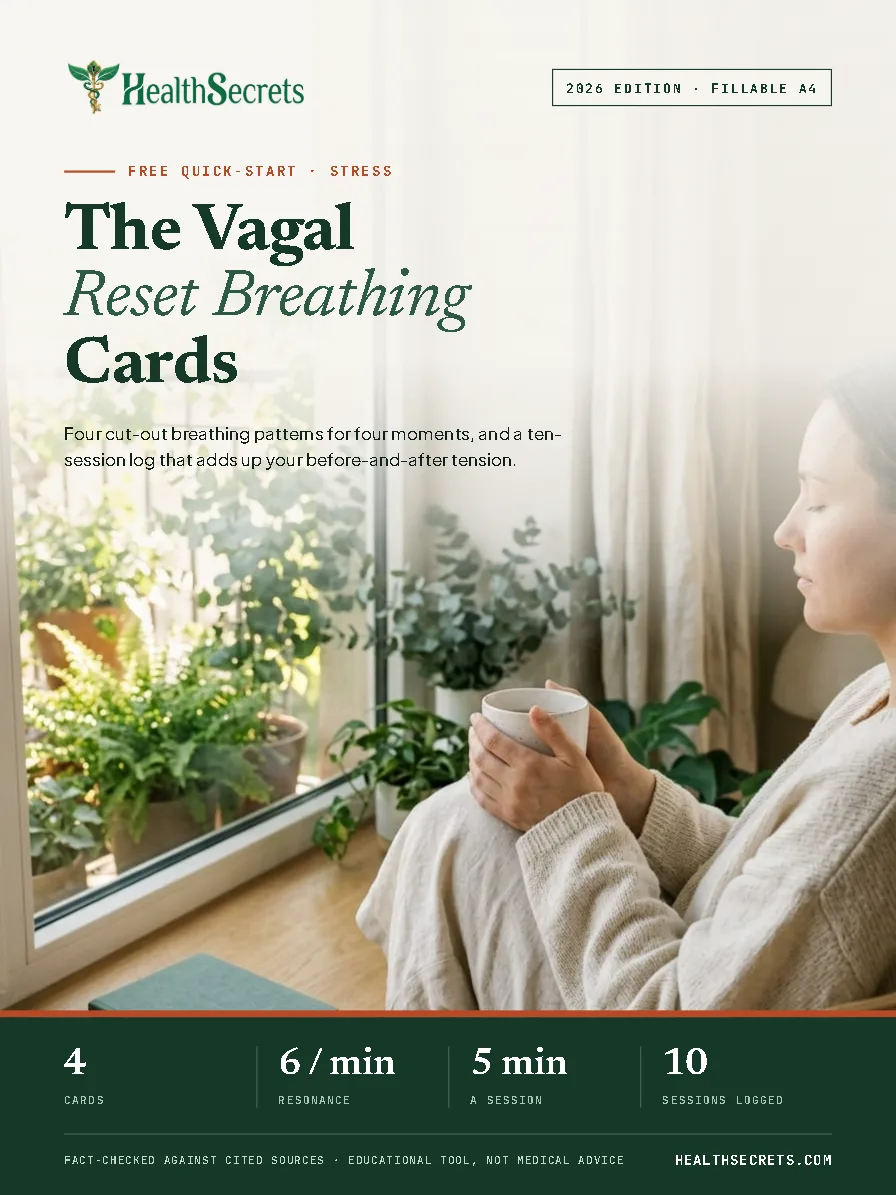
Want a Free Printable Quick-Start?
Four cut-out breathing patterns with exact counts and the moment each fits, a ten-session log that averages your before-and-after tension, and when breathwork is the wrong tool.
Other E-Books Readers Look At
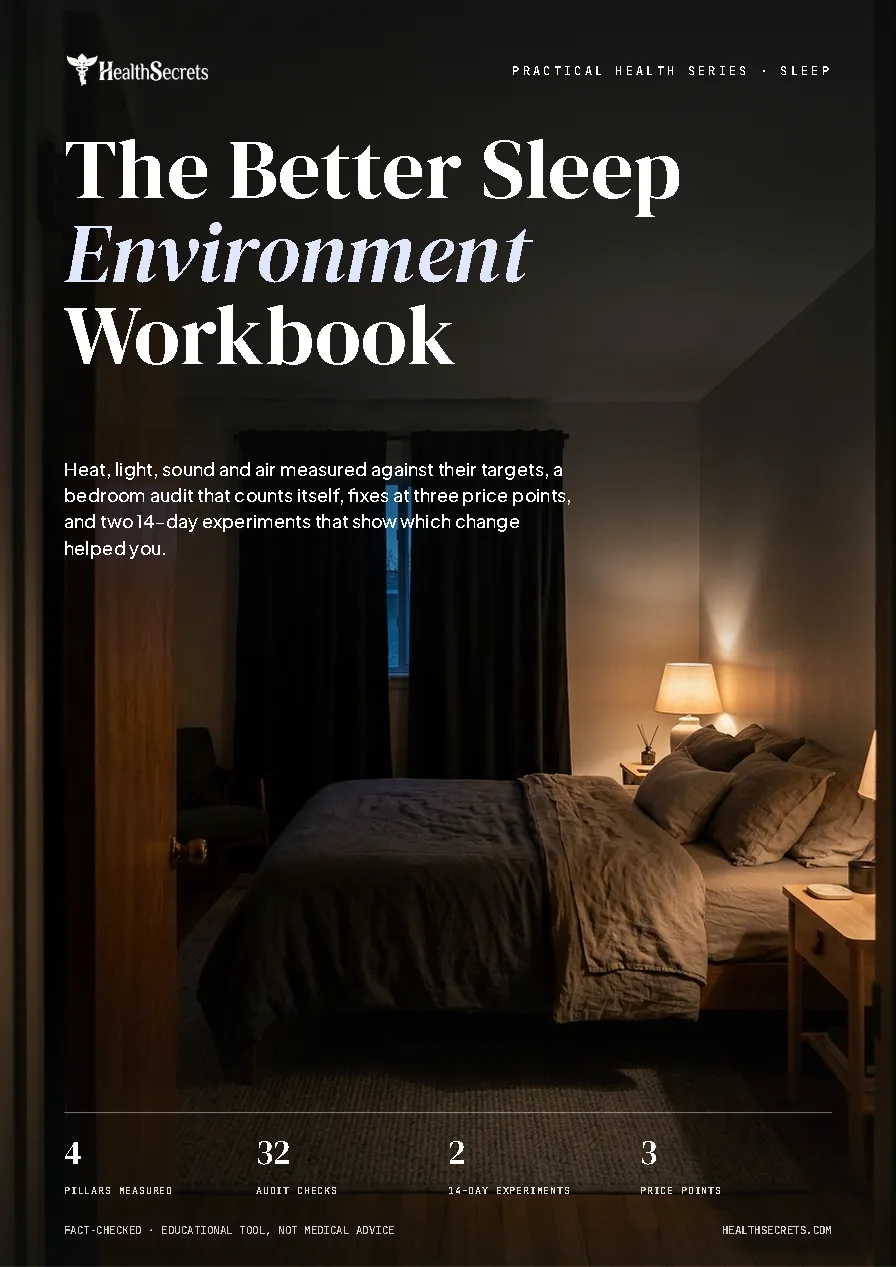
Want them all? See the complete Vault.