Skip to content
Health Secrets
Pin It
7

Best Immune Boosting Supplements: Top 10 Science-Backed Options

DS
Dr. Sarah Chen
| Dr. Sarah Chen | 1,248 ਸ਼ਬਦ | 15 ਹਵਾਲੇ
ਇਸ ਮਹੀਨੇ ਅਪਡੇਟ ਕੀਤਾ ਗਿਆ ਆਖਰੀ ਵਾਰ సమీਖਿਆ ਗਈ: September 24, 2026 ਡਾਕਟਰੀ ਤੌਰ 'ਤੇ సమీਖਿਆ ਗਿਆ Dr. Sarah Chen

ਇਹ ਕਿਸ ਲਈ ਹੈ

ਉਹਨਾਂ ਪਾਠਕਾਂ ਲਈ ਸਭ ਤੋਂ ਵਧੀਆ ਜੋ ਵਿਕਲਪਾਂ ਦੀ ਤੁਲਨਾ ਕਰ ਰਹੇ ਹਨ ਅਤੇ ਅਧਾਰਤ ਜਾਣਕਾਰੀ ਦੀ ਭਾਲ ਵਿੱਚ ਹਨ।

ਕਿਸ ਨੂੰ ਸਾਵਧਾਨ ਰਹਿਣਾ ਚਾਹੀਦਾ ਹੈ

ਜਦੋਂ ਲੱਛਣ, ਦਵਾਈਆਂ, ਜਾਂ ਲੈਬ ਦੀਆਂ ਸਮੱਸਿਆਵਾਂ ਸ਼ਾਮਲ ਹੋਣ, ਤਾਂ ਇਹ ਡਾਕਟਰੀ ਸਲਾਹ ਦਾ ਬਦਲ ਨਹੀਂ ਹੈ।

ਅਫੀਲੀਏਟ ਡਿਸਕਲੇਮਰ | This article may contain affiliate links to products we trust. If you choose to buy through them, we may earn a small commission at no extra cost to you. Full disclosure

ਮੈਡੀਕਲ ਡਿਵੈਕਲੇਮਰ | ਸਿਰਫ਼ ਜਾਣਕਾਰੀ ਦੇ ਉਦੇਸ਼ਾਂ ਲਈ। ਇਹ ਪੇਸ਼ੇਵਰ ਡਿਵੈਕਲੇਮਰ ਦਾ ਬਦਲ ਨਹੀਂ ਹੈ। ਪੂਰਾ ਡਿਵੈਕਲੇਮਰ ਪੜ੍ਹੋ

Discover the best immune boosting supplements backed by clinical research. We reviewed dozens of products to find the top 10 science-backed options for vitamin C, D, zinc, elderberry, NAC, and mushroom immune support in 2025.

M
21
75%
7 1.2K ਸ਼ਬਦ

ਮੁੱਖ ਨੁਕਤੇ

Vitamin C, vitamin D, and zinc have the strongest clinical evidence for immune support, with multiple systematic reviews confirming their roles in immune cell function [1][2]
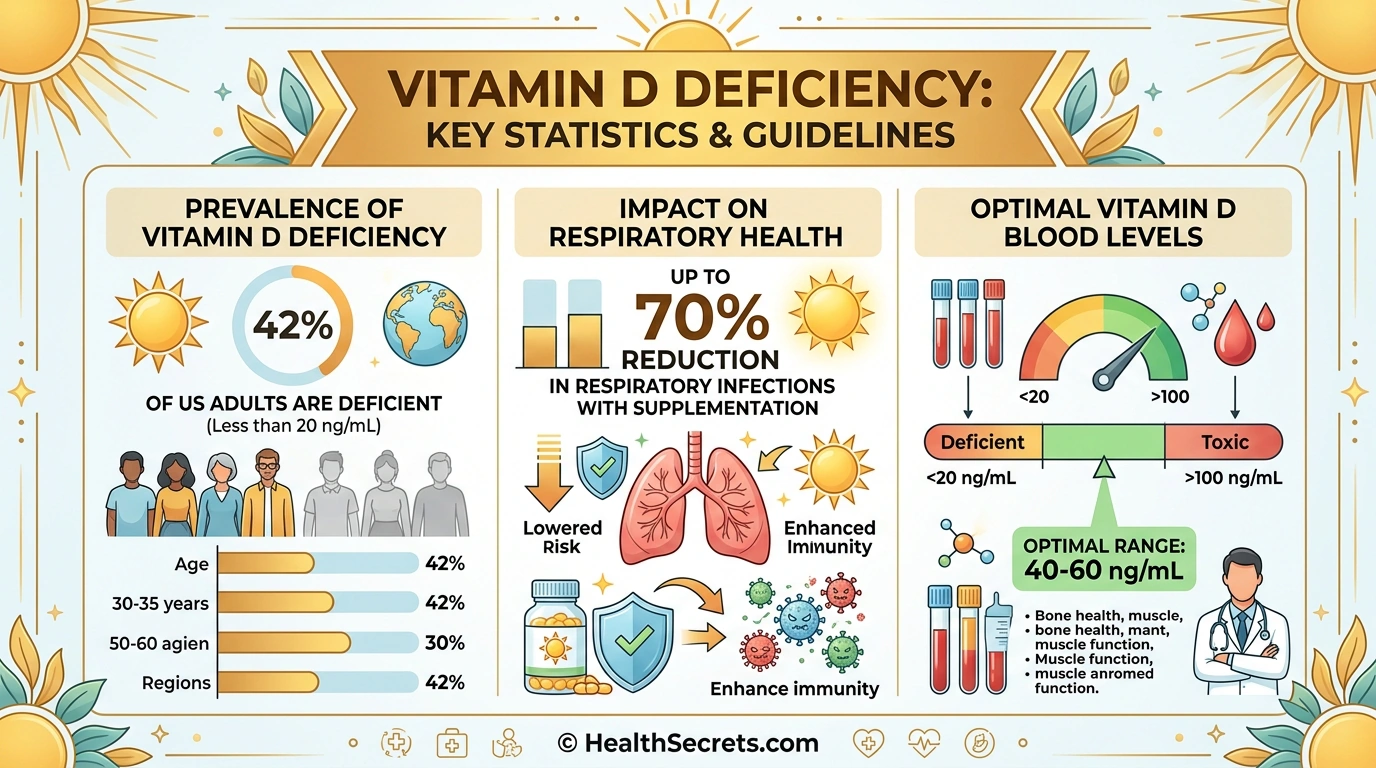
Vitamin D deficiency affects an estimated 42% of U.S. adults, making it the most common immune-relevant nutrient gap to address through supplementation [4]
Elderberry extract may reduce cold and flu duration by 2–4 days when taken at symptom onset, though it should be avoided by people with autoimmune conditions [5]
NAC supports immunity by boosting glutathione — the body’s master antioxidant — and has shown flu symptom reduction in clinical studies [6]
Medicinal mushrooms contain beta-glucans that modulate immune response without overstimulation, making them safe for long-term daily use [7]
Third-party testing (USP, NSF, ConsumerLab) is the single most important quality marker — independent analyses frequently find products that don’t match label claims [8]
The best strategy combines foundational nutrients (C + D + zinc) with targeted additions based on individual needs

The immune supplement market has exploded into a multi-billion dollar industry — and sorting science-backed products from overhyped formulas has never been harder. With thousands of options claiming to "boost" immunity, most people end up overwhelmed or taking supplements that don’t deliver meaningful benefits.

Here’s what the science tells us: your immune system requires specific nutrients to function optimally. Research shows that a significant portion of adults are deficient in key immune nutrients like vitamin D, zinc, and vitamin C — and targeted supplementation can genuinely help fill those gaps [1][2].

But "boosting" immunity isn’t quite the right framing. Quality supplements support optimal immune function by ensuring your body has the raw materials for a balanced, effective immune response. Overactivating the immune system can be just as problematic as an underperforming one — especially for people with autoimmune conditions [3].

We spent over 40 hours researching clinical evidence, analyzing ingredient quality, verifying third-party testing, and comparing prices to identify the 10 best immune boosting supplements that genuinely deliver. Every product on this list contains research-backed ingredients at clinically meaningful doses.

What Should You Look for in the Best Immune Boosting Supplements?

The best immune boosting supplements combine clinically validated ingredients at research-backed doses, transparent labeling, third-party quality testing, and bioavailable forms your body can absorb. Avoiding proprietary blends, inflated claims, and under-dosed formulas is just as important as choosing the right ingredients [8].

Which Ingredients Have the Strongest Evidence for Immune Support?

The nutrients with the most robust evidence are vitamin C (200–1,000 mg/day), vitamin D3 (1,000–5,000 IU/day), and zinc (15–30 mg/day). These three form the foundation of evidence-based immune supplementation. Beyond the basics, elderberry, NAC, probiotics (specific strains), and medicinal mushrooms have growing clinical support [1][2][9].
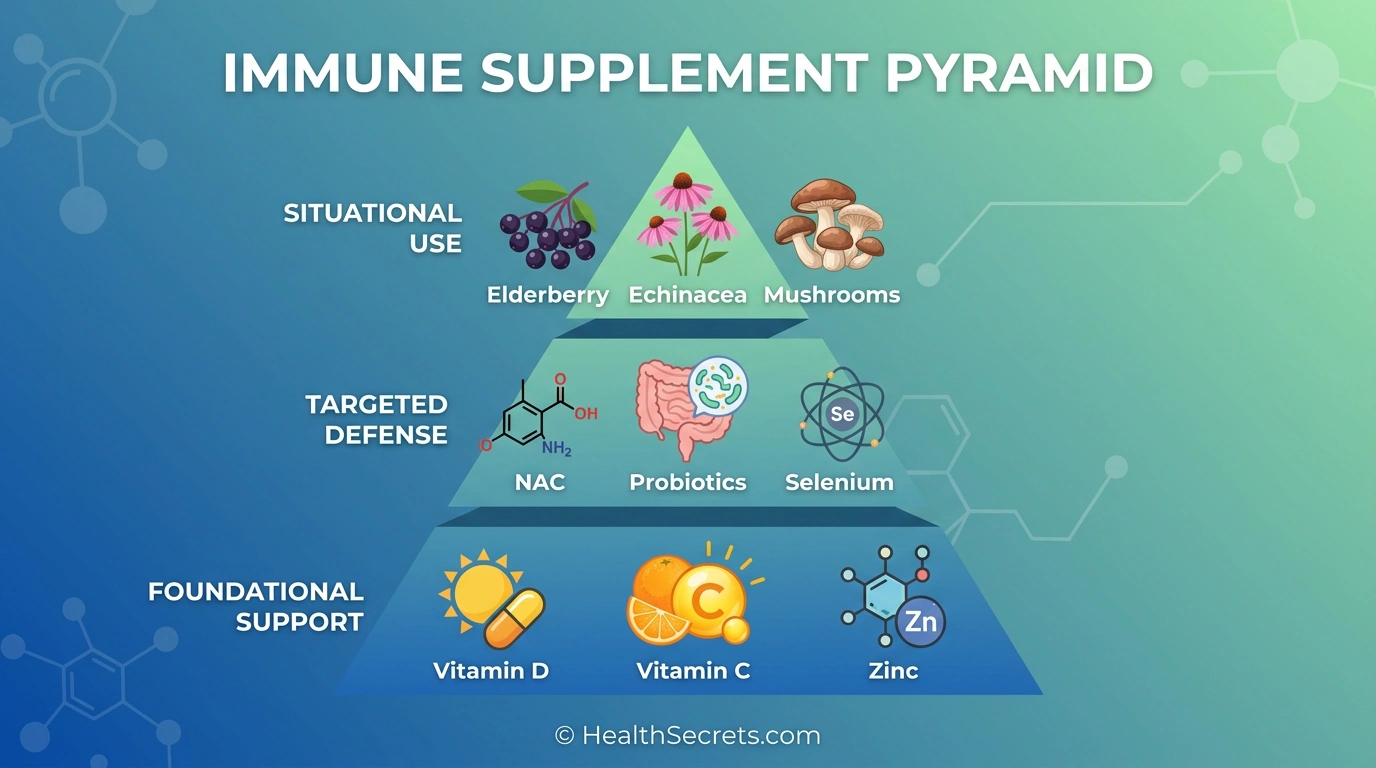
Immune supplement priority pyramid showing foundational targeted and situational supplements

What Quality Markers Should You Check Before Buying?

  • Third-party testing: USP Verified, NSF Certified, or ConsumerLab Approved seals
  • Clinically meaningful doses: Compare label amounts to clinical study doses
  • Bioavailable forms: Zinc picolinate over oxide, D3 over D2, methylated B vitamins
  • No proprietary blends: Exact amounts of every ingredient visible
  • GMP certification: Ensures manufacturing quality standards
  • Transparent sourcing: Reputable brands disclose ingredient origins [8]

How Did We Evaluate These Immune Support Products?

We evaluated over 40 immune supplement products using systematic criteria prioritizing clinical evidence, ingredient quality, and real-world value. Our process ensures every recommendation is backed by science, not marketing [8].

Our evaluation criteria:

  1. Clinical evidence (30%): Ingredients supported by peer-reviewed research from PubMed and Cochrane databases
  2. Dosing accuracy (25%): Clinically meaningful doses verified against research-backed amounts
  3. Bioavailability (15%): Ingredients in forms the body efficiently absorbs
  4. Third-party testing (15%): Independent verification by USP, NSF, or ConsumerLab
  5. Value (10%): Cost per daily serving relative to quality
  6. Transparency (5%): Full ingredient and manufacturing disclosure
The Supplement Seal Verifier
4 Pages • Free PDF
Free Companion Guide • Verifier Print-Ready A4

The Supplement Seal Verifier

What USP, NSF, NSF Certified for Sport, ConsumerLab, BSCG and Informed Choice each actually test for, the label claims that mean nothing, and a bottle-by-bottle audit sheet.

Instant PDF delivery in new tab. No spam, ever. 100% free offline printable.

How Do You Use Immune Supplements Effectively for Best Results?

For optimal results, take immune supplements consistently as part of a daily routine rather than only when sick. Fat-soluble vitamins (D3, K2) should be taken with a meal containing fat, while vitamin C and zinc are best taken with food to minimize stomach upset [2][10].

Should You Take Immune Supplements Daily or Only When Sick?

Daily (preventive) use is recommended for foundational nutrients like vitamin D, vitamin C, and zinc — these work best when tissue levels are maintained consistently.

Acute use (at first sign of symptoms) is the better strategy for elderberry, echinacea, and high-dose zinc lozenges [5][11].
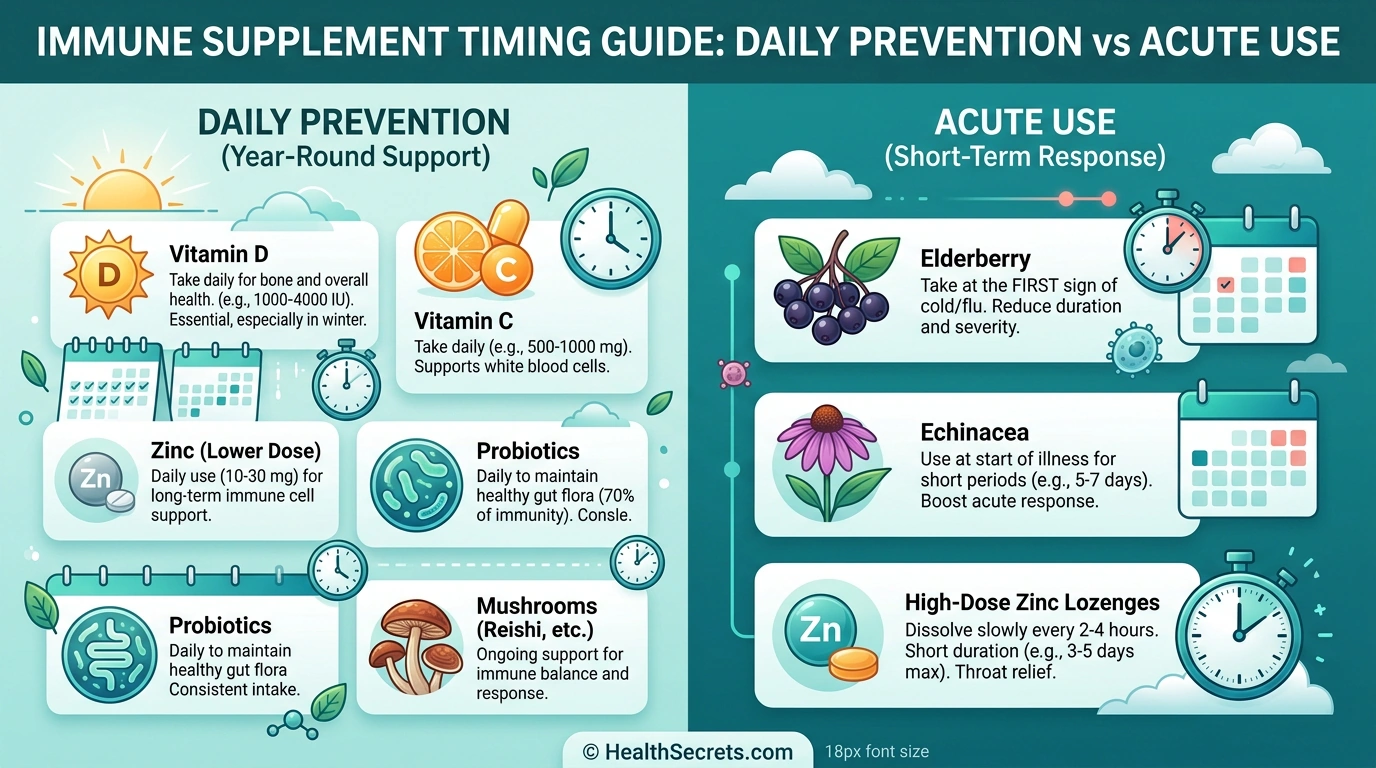
Guide showing which immune supplements to take daily versus at first sign of illness
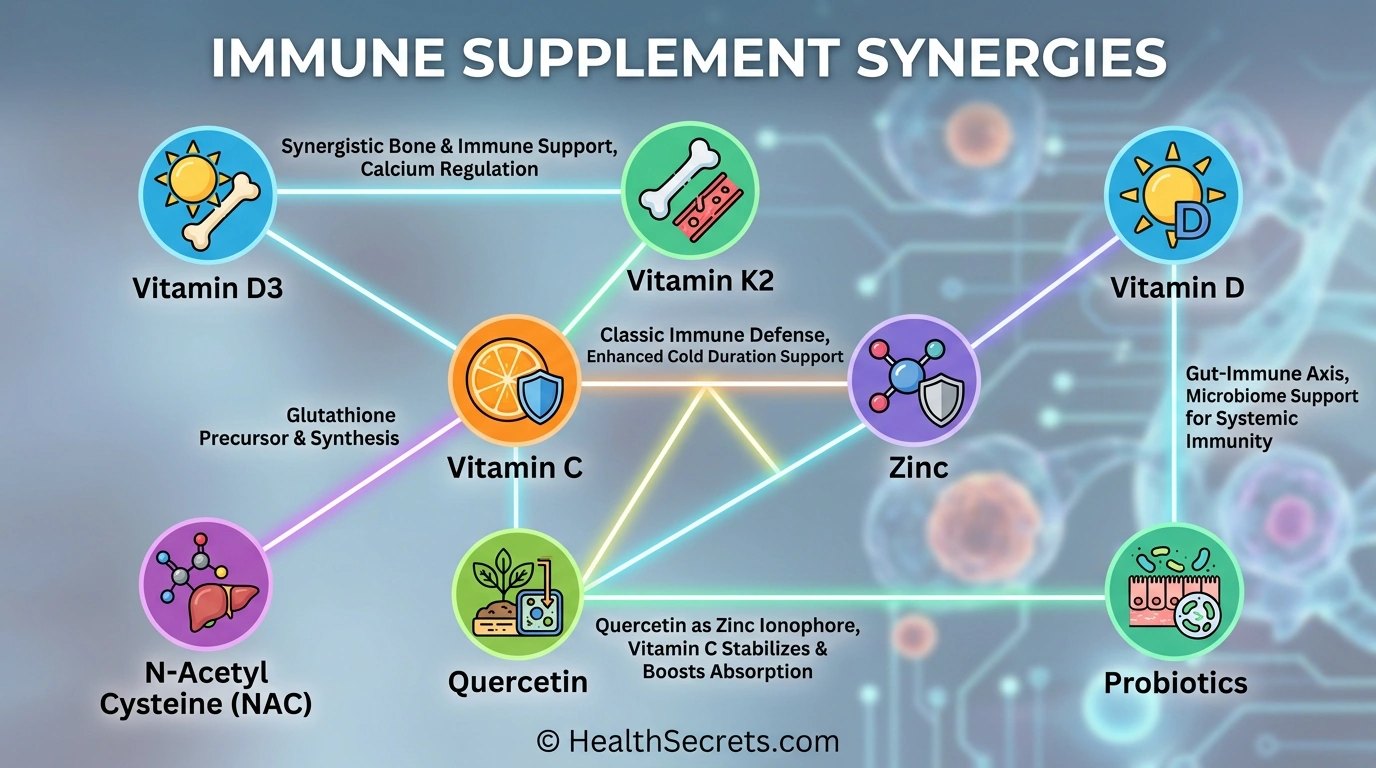
Chart showing synergistic combinations of immune boosting supplements

What Immune Supplement Combinations Work Well Together?

  • Vitamin D3 + K2: K2 directs calcium properly when D3 increases absorption
  • Vitamin C + Zinc: Complementary mechanisms — C supports neutrophils, zinc supports T-cells
  • NAC** + Vitamin C:** Both support glutathione and antioxidant defense
  • Vitamin D + Probiotics: D supports gut barrier where most immune cells reside
  • Quercetin** + Vitamin C:** Quercetin acts as a zinc ionophore; C recycles quercetin [12]

Who Should NOT Take Certain Immune Supplements?

People with autoimmune conditions (lupus, RA, MS, Hashimoto’s) should avoid immune-stimulating supplements like elderberry, echinacea, and astragalus. Immune-modulating options (vitamin D, probiotics, medicinal mushrooms) are generally safer but still require medical consultation [3].

Are There Any Safety Concerns with Immune Boosting Supplements?

Most immune supplements are safe for healthy adults at recommended doses, but several carry interaction risks. Zinc above 40 mg/day long-term can cause copper deficiency, vitamin D toxicity is possible above 10,000 IU/day without monitoring, and elderberry may interact with immunosuppressants [2][13].

What Are the Most Common Side Effects?

  • Zinc: Nausea and metallic taste at higher doses; copper depletion above 40 mg/day long-term [13]
  • Vitamin C: GI distress above 2,000 mg/day; may increase kidney stone risk in susceptible people [14]
  • Elderberry: Mild GI symptoms; raw berries are toxic — only use commercially prepared extracts [5]
  • Echinacea: Allergic reactions possible in ragweed-allergic people; limit to 8–10 weeks [11]
  • NAC: GI side effects at higher doses; may interact with nitroglycerin and blood thinners [6]

Which Medications Interact with Immune Supplements?

  • Immunosuppressants: Elderberry, echinacea, astragalus may counteract these
  • Blood thinners: High-dose vitamin C and NAC may affect clotting
  • Antibiotics: Zinc can reduce absorption (take 2+ hours apart)
  • Thyroid medications: Take supplements 4+ hours apart from levothyroxine [13][14]

ਕਾਰਜ ਯੋਜਨਾ

What Should You Do First to Build an Immune Supplement Routine?

ਹੇਠਾਂ ਦਿੱਤੇ ਕ੍ਰਮ ਦੀ ਪਾਲਣਾ ਕਰੋ, ਹਰੇਕ ਪੜਾਅ ਨੂੰ ਕ੍ਰਮਵਾਰ ਪੂਰਾ ਕਰੋ, ਅਤੇ ਚੈੱਕਲਿਸਟ ਨੂੰ ਆਪਣੇ ਵਿਵਹਾਰਕ ਲਾਗੂ ਕਰਨ ਲਈ ਗਾਈਡ ਵਜੋਂ ਵਰਤੋ।

ਕਦਮ-ਦਰ-ਕਦਮ

Start with three foundational nutrients — vitamin D3, vitamin C, and zinc — since these address the most common deficiencies and have the strongest evidence. Then add targeted supplements based on individual needs after 2–4 weeks [1][2].

Phase 1 — Foundation (Weeks 1–2):

  • Get vitamin D levels tested (25-hydroxyvitamin D blood test)
  • Start vitamin D3 (2,000–5,000 IU/day with a fat-containing meal)
  • Add vitamin C (500–1,000 mg/day with food)
  • Add zinc picolinate (15–30 mg/day; don’t exceed 40 mg/day long-term)

Phase 2 — Targeted Additions (Weeks 3–4):

  • For antioxidant support: add NAC (600 mg 1–2x/day)
  • For daily immune modulation: add a medicinal mushroom blend
  • For gut-immune support: add a probiotic with immune-specific strains
  • Keep elderberry on hand for acute cold/flu use

Phase 3 — Optimize (Month 2+):

Vitamin D deficiency statistics showing prevalence and impact on immune function
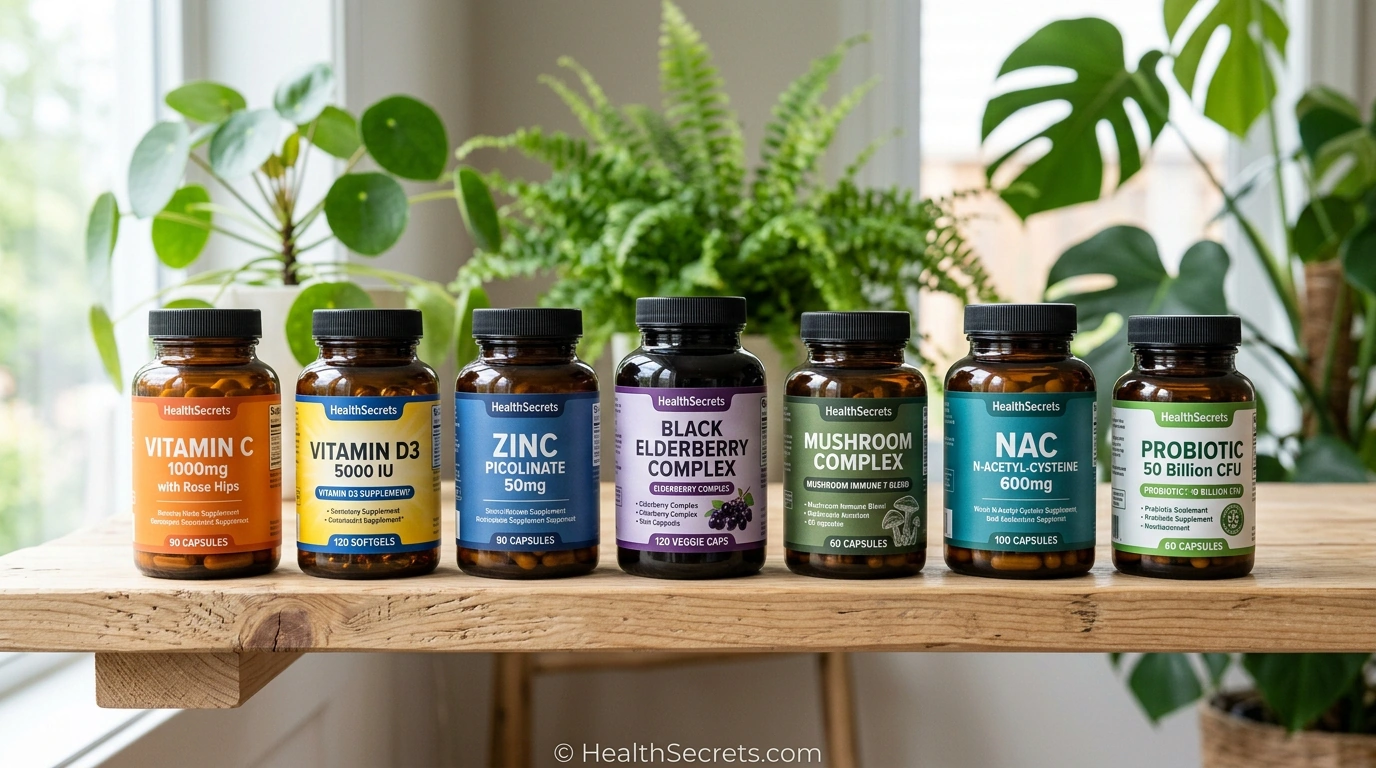
Collection of top-rated immune boosting supplement products on display

ਚੋਣੀਆਂ ਗਈਆਂ ਉੱਤਮ ਸਿਫ਼ਾਰਸ਼ੀ ਉਤਪਾਦ

ਗਾਈਡ ਛੱਡਣ ਤੋਂ ਪਹਿਲਾਂ ਦੇਖਣ ਲਈ ਤੁਲਨਾਤਮਕ ਚੋਣਾਂ

10 ਚੀਜ਼ਾਂ
01

Viva Naturals Elderberry 5-in-1 Immune Support

Viva Naturals · Comprehensive daily immune support in a single product

ਵੇਰਵਿਆਂ ਦੀ ਤੁਲਨਾ ਕਰੋ
02

NOW Foods Vitamin C-1000 with Rose Hips

NOW Foods · Affordable daily vitamin C at a clinical dose

ਵੇਰਵਿਆਂ ਦੀ ਤੁਲਨਾ ਕਰੋ
03

Sports Research Vitamin D3 + K2

Sports Research · Correcting vitamin D deficiency with proper K2 co-factor

ਵੇਰਵਿਆਂ ਦੀ ਤੁਲਨਾ ਕਰੋ
04

Thorne Zinc Picolinate 30mg

Thorne Zinc · Highly absorbable zinc for immune cell function

ਵੇਰਵਿਆਂ ਦੀ ਤੁਲਨਾ ਕਰੋ
05

Host Defense MyCommunity Mushroom Capsules

Host Defense · Daily immune modulation with comprehensive mushroom support

ਵੇਰਵਿਆਂ ਦੀ ਤੁਲਨਾ ਕਰੋ
06

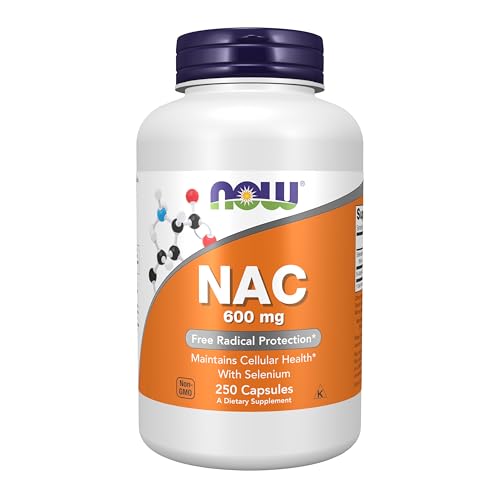
NOW Foods NAC 600mg

NOW Foods · Glutathione support and antioxidant defense on a budget

ਵੇਰਵਿਆਂ ਦੀ ਤੁਲਨਾ ਕਰੋ
07

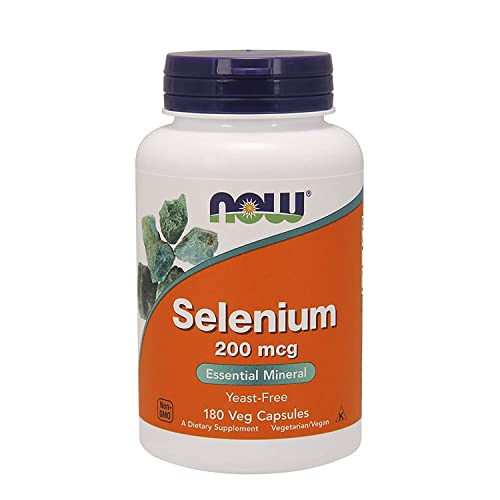
NOW Foods Selenium 200mcg

NOW Foods · Affordable selenium for thyroid and immune function

ਵੇਰਵਿਆਂ ਦੀ ਤੁਲਨਾ ਕਰੋ
08

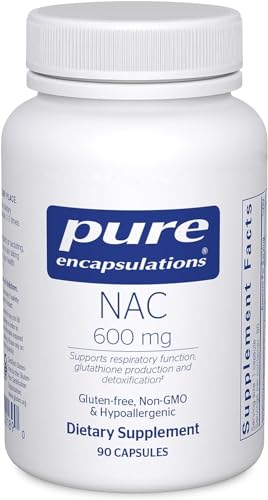
Pure Encapsulations NAC 600mg

Pure Encapsulations · Hypoallergenic, clinical-grade NAC for sensitive individuals

ਵੇਰਵਿਆਂ ਦੀ ਤੁਲਨਾ ਕਰੋ
09

Renew Life Ultimate Flora Extra Care 50 Billion

Renew Life · Gut-immune connection support with high-potency probiotics

ਵੇਰਵਿਆਂ ਦੀ ਤੁਲਨਾ ਕਰੋ
10

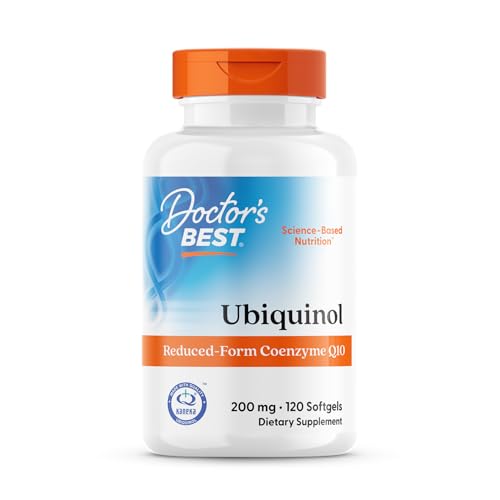
Doctor's Best Ubiquinol 200mg (Kaneka)

Doctor's Best · Cellular energy and antioxidant support alongside immune supplements

ਵੇਰਵਿਆਂ ਦੀ ਤੁਲਨਾ ਕਰੋ

ਕਿਸੇ ਵੀ ਰਿਟੇਲਰ ਲਿੰਕ ਨੂੰ ਖੋਲ੍ਹਣ ਤੋਂ ਪਹਿਲਾਂ ਹੇਠਾਂ ਦਿੱਤੇ ਵਿਸਤ੍ਰਿਤ ਰਿਵਿਊ ਕਾਰਡ ਪੜ੍ਹੋ

ਹੋਰ ਪੜ੍ਹਨਾ

ਹੋਰ ਪੜ੍ਹਨਾ

"Immune: A Journey into the Mysterious System That Keeps You Alive"

ਦੁਆਰਾ Philipp Dettmer

Beautifully illustrated explanation of immune system mechanics; understanding of why supplements work (or don’t); context for making informed health decisions

ਇਹ ਇੱਥੇ ਕਿਉਂ ਮੁੱਲਵਾਨ ਹੈ

You can’t effectively supplement what you don’t understand — this book makes complex immunology accessible and fascinating

ਲਈ ਸਭ ਤੋਂ ਵਧੀਆ: Anyone wanting to understand how the immune system actually works in plain language

ਕਿਤਾਬ ਦੇ ਵੇਰਵੇ ਦੇਖੋ

ਹੋਰ ਪੜ੍ਹਨਾ

"Super Immunity: The Essential Nutrition Guide for Boosting Your Body's Defenses"

ਦੁਆਰਾ Joel Fuhrman

Evidence-based dietary protocols for immune optimization; superfood recommendations; understanding of how nutrition and supplements complement each other

ਇਹ ਇੱਥੇ ਕਿਉਂ ਮੁੱਲਵਾਨ ਹੈ

Bridges the gap between dietary immune support and supplementation with practical meal plans and research citations

ਲਈ ਸਭ ਤੋਂ ਵਧੀਆ: People wanting a nutrition-first approach to immune health with supplement guidance

ਕਿਤਾਬ ਦੇ ਵੇਰਵੇ ਦੇਖੋ

AEO FAQ

ਵਾਰ-ਵਾਰ ਪੁੱਛੇ ਜਾਣ ਵਾਲੇ ਸਵਾਲ

10 common questions answered

Specific supplements have evidence for reducing infection risk and duration, but none can guarantee prevention. Vitamin D supplementation reduces respiratory infection risk by up to 70% in people who are deficient. Vitamin C may shorten cold duration by 8% in adults. Zinc lozenges started within 24 hours of symptom onset can reduce cold duration by 1–3 days. The key is consistent, preventive use of foundational nutrients rather than reactive supplementation [1][2][4].

If you can only take one supplement, vitamin D3 has the strongest case. An estimated 42% of U.S. adults are deficient, and vitamin D is critical for activating T-cells and regulating both innate and adaptive immune responses. Multiple meta-analyses show vitamin D supplementation significantly reduces respiratory infection risk, especially in deficient individuals. Get your levels tested and supplement accordingly [4][10].

Yes. More isn’t always better with immune supplements. Zinc above 40 mg/day long-term causes copper deficiency. Vitamin D above 10,000 IU/day without monitoring risks toxicity. Combining multiple immune-stimulating herbs (elderberry + echinacea + astragalus) may overstimulate the immune system. Stick to recommended doses and avoid duplicating ingredients across multiple products [13][14].

It depends on the supplement. Immune-stimulating supplements like elderberry, echinacea, and astragalus may worsen autoimmune conditions by further activating an already overactive immune system. However, immune-modulating supplements like vitamin D, probiotics, and medicinal mushrooms may actually help balance immune function. Always consult your rheumatologist or immunologist before starting any immune supplement [3].

Foundational nutrients (vitamin D, C, zinc, selenium) should be taken year-round for consistent immune support. Seasonal additions like elderberry and echinacea can be added during fall/winter or at symptom onset. Vitamin D supplementation is especially important in winter months when sun exposure drops significantly [2][5].

Children can safely take age-appropriate doses of vitamin C, vitamin D, and zinc, which are the most important immune nutrients for kids. Doses must be adjusted for body weight — consult a pediatrician for proper amounts. Many adult supplements are too concentrated for children. Gummy formulations designed for children’s immune support are typically the easiest option [2].

It depends on the nutrient and your starting levels. Vitamin D can take 2–3 months to reach optimal blood levels if you’re severely deficient. Zinc and vitamin C effects on immune cell function begin within days to weeks of consistent use. Probiotics typically need 2–4 weeks to establish meaningful gut colonies. Elderberry and echinacea work acutely, within hours to days of symptom onset [2][10].

Several do. Elderberry, echinacea, and astragalus may counteract immunosuppressant drugs. NAC can interact with nitroglycerin. Zinc reduces absorption of certain antibiotics and should be taken 2+ hours apart. High-dose vitamin C may affect blood thinners. Vitamin D can interact with steroids. Always inform your doctor about all supplements you take [6][13].

Food first is always the ideal approach — nutrients from whole foods come with co-factors, fiber, and synergistic compounds that supplements can’t fully replicate. However, it’s difficult to get therapeutic levels of vitamin D from food alone, and many people don’t consume enough zinc-rich or vitamin C-rich foods consistently. Supplements fill specific gaps that diet alone may not cover [1][2].

Immune-boosting supplements stimulate immune activity (elderberry, echinacea, astragalus), which is helpful during infections but potentially harmful for autoimmune conditions. Immune-modulating supplements help balance and regulate immune function (vitamin D, probiotics, medicinal mushrooms), supporting appropriate responses without overstimulation. For general long-term use, immune modulators are typically safer [3][7].

The Supplement Seal Verifier
4 Pages • Free PDF
Free Companion Guide • Verifier Print-Ready A4

The Supplement Seal Verifier

What USP, NSF, NSF Certified for Sport, ConsumerLab, BSCG and Informed Choice each actually test for, the label claims that mean nothing, and a bottle-by-bottle audit sheet.

Instant PDF delivery in new tab. No spam, ever. 100% free offline printable.
💊

ਆਪਣੇ ਗਿਆਨ ਦੀ ਪਰਖ ਕਰੋ

Take our Supplement Science Quiz and see how much you really know about supplements.

ਕੁਇਜ਼ ਲਓ

ਕੀ ਇਹ ਲੇਖ ਮਦਦਗਾਰ ਸੀ?

ਮਾਹਿਰਾਂ ਦੁਆਰਾ ਲਿਖਿਆ ਅਤੇ సమీਕਸ਼ਿਤ

Dr. Sarah Chen

ਲੇਖਕ

Dr. Sarah Chen

MD, ABOIM — American Board of Integrative Medicine

Board-certified physician specializing in integrative and functional medicine with over 15 years of clinical experience. Dr. Chen trained at UCSF Medical Center and completed a fellowship in integrative oncology. She is the lead medical reviewer for Health Secrets, ensuring all content meets the highest standards of clinical accuracy. Her work bridges evidence-based conventional medicine with evidence-informed natural therapies, and she has been published in the Journal of Integrative Medicine and featured in national health media.

Dr. Sarah Chen

ਡਾਕਟਰੀ సమీਖਿਅਕ

Dr. Sarah Chen

MD, ABOIM — American Board of Integrative Medicine

ਸਾਰੀ ਸਮੱਗਰੀ ਅਧਾਰਤ ਸਬੂਤਾਂ 'ਤੇ ਅਧਾਰਤ ਹੈ, ਯੋਗ ਪੇਸ਼ੇਵਰਾਂ ਦੁਆਰਾ ਪੀਅਰ-ਰਿਵਿਊ ਕੀਤੀ ਗਈ ਹੈ, ਅਤੇ ਨਿਯਮਤ ਤੌਰ 'ਤੇ ਅਪਡੇਟ ਕੀਤੀ ਜਾਂਦੀ ਹੈ। ਸਾਡੀ ਸੰਪਾਦਕੀ ਟੀਮ ਸ਼ੁੱਧਤਾ ਅਤੇ ਪਾਰਦਰਸ਼ਤਾ ਲਈ ਸਖ਼ਤ ਦਿਸ਼ਾ-ਨਿਰਦੇਸ਼ਾਂ ਦੀ ਪਾਲਣਾ ਕਰਦੀ ਹੈ।

ਹਵਾਲੇ ਅਤੇ ਉਦਾਹਰਣਾਂ

15 ਹਵਾਲੇ ਦਿੱਤੇ ਗਏ ਸਰੋਤ

1
Gombart AF, Pierre A, Maggini S. "A Review of Micronutrients and the Immune System – Working in Harmony to Reduce the Risk of Infection." Nutrients. 2020;12(1):236.
2
NIH Office of Dietary Supplements. "Dietary Supplements for Immune Function and Infectious Diseases." 2024.
3
Calder PC, et al. "Optimal Nutritional Status for a Well-Functioning Immune System Is an Important Factor to Protect against Viral Infections." Nutrients. 2020;12(4):1181.
PubMed: 32340216 ਦੇਖੋ back
4
Forrest KY, Stuhldreher WL. "Prevalence and correlates of vitamin D deficiency in US adults." Nutrition Research. 2011;31(1):48-54.
PubMed: 21310306 ਦੇਖੋ back
5
Hawkins J, et al. "Black elderberry (Sambucus nigra) supplementation effectively treats upper respiratory symptoms." Complementary Therapies in Medicine. 2019;42:361-365.
PubMed: 30670267 ਦੇਖੋ back

ਮੈਡੀਕਲ ਡਿਵੈਕਲੇਮਰ

This article is for informational purposes only and does not constitute medical advice. Read the full medical disclaimer. Always consult with a qualified healthcare provider before starting any new supplement, treatment, or major dietary change.

Supplements Cornerstone Pillar

The Complete Guide to Supplements

Explore our foundational comprehensive guide covering all clinical protocols, dietary strategies, and evidence for supplements.

Read Pillar Guide →

ਸ਼ਾਇਦ ਤੁਹਾਨੂੰ ਇਹ ਵੀ ਪਸੰਦ ਆਵੇ

supplements

ਆਇਰਨ ਸਪਲੀਮੈਂਟਸ: ਐਨੀਮੀਆ (ਖੂਨ ਦੀ ਕਮੀ) ਅਤੇ ਊਰਜਾ ਲਈ ਇੱਕ ਮੁਕੰਮਲ ਗਾਈਡ

<p>ਦੁਨੀਆ ਭਰ ਵਿੱਚ ਆਇਰਨ (ਲੋਹਾ) ਦੀ ਕਮੀ ਸਭ ਤੋਂ ਆਮ ਪੋਸ਼ਕ ਤੱਤ ਦੀ ਘਾਟ ਹੈ, ਜੋ 2 ਬਿਲੀਅਨ ਤੋਂ ਵੱਧ ਲੋਕਾਂ ਨੂੰ ਪ੍ਰਭਾਵਿਤ ਕਰਦੀ ਹੈ ਅਤੇ ਥਕਾਵਟ, ਕਮਜ਼ੋਰੀ ਅਤੇ ਐਨੀਮੀਆ (ਖੂਨ ਦੀ ਕਮੀ) ਦਾ ਕਾਰਨ ਬਣਦੀ ਹੈ। ਇਹ ਅਧਾਰਤ ਗਾਈਡ ਆਇਰਨ ਸਪਲੀਮੈਂਟਾਂ ਦੇ ਰੂਪਾਂ, ਸਹੀ ਖੁਰਾਕ, ਇਸ ਨੂੰ ਸਰੀਰ ਵਿੱਚ ਸੋਖਣ (absorption) ਦੇ ਵਧੀਆ ਤਰੀਕਿਆਂ, ਟੈਸਟਿੰਗ ਪ੍ਰੋਟੋਕੋਲ ਅਤੇ ਖੁਰਾਕ ਦੀ ਕਮੀ ਨੂੰ ਸੁਰੱਖਿت ਰੂਪ ਵਿੱਚ ਪੂਰਾ ਕਰਨ ਅਤੇ ਊਰਜਾ ਵਧਾਉਣ ਲਈ ਵਧੀਆ ਉਤਪਾਦਾਂ ਬਾਰੇ ਵਿਸਤਾਰ ਵਿੱਚ ਜਾਣਕਾਰੀ ਦਿੰਦੀ ਹੈ।</p>

→
supplements

Collagen Supplements: Complete Guide for Skin, Joints and Gut

Collagen supplements — the most abundant protein in your body — have strong clinical evidence for improving skin elasticity, reducing joint pain, and supporting gut health. This comprehensive product review covers collagen types, sources (marine vs bovine vs chicken), dosing, essential cofactors like vitamin C, and the 10 best collagen supplements for every goal and budget.

→
supplements

ਚਿੰਤਾ (Anxiety) ਲਈ ਮੈਗਨੀशियम: ਇੱਕ ਅਜਿਹਾ ਕੁਦਰਤੀ ਇਲਾਜ ਜਿਸ ਨੂੰ ਅਕਸਰ ਨਜ਼ਰਅੰਦਾਜ਼ ਕੀਤਾ ਜਾਂਦਾ ਹੈ

ਮੈਗਨੀशियम ਚਿੰਤਾ (anxiety) ਨੂੰ ਦੂਰ ਕਰਨ ਲਈ ਸਭ ਤੋਂ ਪ੍ਰਭਾਵਸ਼ਾਲੀ ਅਤੇ ਅਕਸਰ ਅਣਦੇਖੇ ਕੀਤੇ ਜਾਣ ਵਾਲੇ ਕੁਦਰਤੀ ઉપਚਾਰਾਂ ਵਿੱਚੋਂ ਇੱਕ ਹੈ। ਇਹ ਦਿਮਾਗ ਵਿੱਚ GABA ਰਿਸੈਪਟਰਾਂ ਦੀ ਕਾਰਜਸ਼ੀਲਤਾ ਨੂੰ ਵਧਾਉਂਦਾ ਹੈ, ਉਤੇਜਕ ਗਲੂਟামেਟ (excitatory glutamate) ਨੂੰ ਰੋਕਦਾ ਹੈ ਅਤੇ ਕਾਰਟੀਸੋਲ (cortisol) ਦੇ ਪੱਧਰ ਨੂੰ ਘਟਾਉਂਦਾ ਹੈ — ਜੋ ਕਿ ਸਿੱਧੇ ਤੌਰ 'ਤੇ ਦਿਮਾਗੀ ਰਸਾਇਣਕ ਪੱਧਰ 'ਤੇ ਚਿੰਤਾ ਦਾ ਨਿਪਟਾਰਾ ਕਰਦਾ ਹੈ। ਚਿੰਤਾ ਨੂੰ ਘਟਾਉਣ ਲਈ 'ਮੈਗਨੀशियम ਗਲਾਇਸੀਨੇਟ' (Magnesium glycinate) (ਰੋਜ਼ਾਨਾ 200–400 ਮਿਲੀਗ੍ਰਾਮ) ਸਭ ਤੋਂ ਵਧੀਆ ਰੂਪ ਹੈ; ਕਲੀਨਿਕਲ ਤੌਰ 'ਤੇ ਇਹ ਸਾਬਤ ਹੋ ਚੁੱਕਾ ਹੈ ਕਿ ਇਸਦੀ ਵਰਤੋਂ ਨਾਲ 2 ਤੋਂ 6 ਹਫ਼ਤਿਆਂ ਦੇ ਅੰਦਰ ਚਿੰਤਾ ਵਿੱਚ ਮਹੱਤਵਪੂਰਨ ਸੁਧਾਰ ਦੇਖਣ ਨੂੰ ਮਿਲਦਾ ਹੈ।

→

ਚਰਚਾ

0

No comments yet

Be the first to share your thoughts, clinical insights, or questions about this protocol.