Natural remedies and herbal medicine represent one of humanity’s oldest healing traditions, with archaeological evidence of medicinal plant use dating back over 60,000 years [1]. Today, the World Health Organization estimates that 80% of the global population relies on some form of traditional or herbal medicine as part of their primary healthcare [2]. Yet despite this widespread use, navigating the world of natural remedies remains confusing — claims of miracle cures sit alongside genuine scientific breakthroughs, and the line between effective botanical medicine and expensive placebo can be difficult to draw.
This comprehensive guide was created to bring clarity to natural healing. Using evidence from PubMed, the National Institutes of Health (NIH), the National Center for Complementary and Integrative Health (NCCIH), and peer-reviewed clinical trials, we’ve evaluated the most popular natural remedies to tell you what works, what doesn’t, and what could be dangerous. Whether you’re exploring herbal medicine for the first time or looking to optimize an existing natural health protocol, you’ll find science-backed guidance you can trust.
- Approximately 25% of modern pharmaceuticals are derived from plant compounds, validating the therapeutic potential of botanical medicine [1]
- Turmeric (curcumin), ginger, elderberry, and valerian root are among the most clinically studied natural remedies with strong evidence [3]
- Herbal supplements can interact dangerously with prescription medications — St. John's Wort alone interacts with over 50% of all drugs [4]
- Quality and standardization vary dramatically between herbal products; third-party testing is essential for safety [5]
- The "natural equals safe" assumption is false — many potent herbs carry real risks at incorrect doses [6]
- A growing body of clinical evidence supports integrative approaches that combine natural remedies with conventional medicine [7]
- Herbal medicine regulation differs significantly by country; in the U.S., supplements are not FDA-approved before sale [5]
- Adaptogens like ashwagandha and rhodiola show promising evidence for stress resilience and hormonal balance [8]
- Always inform your healthcare provider about all natural remedies you take to prevent dangerous interactions [4]
- Evidence-based natural remedies work best as part of a holistic lifestyle that includes nutrition, sleep, movement, and stress management [7]
What Are Natural Remedies and How Do They Differ from Conventional Medicine?
Natural remedies encompass plant-based medicines, herbal supplements, essential oils, homeopathic preparations, and traditional healing practices used to prevent or treat health conditions. Unlike pharmaceutical drugs that contain isolated synthetic compounds, most natural remedies deliver complex mixtures of bioactive compounds that work through multiple mechanisms simultaneously [1].
The spectrum of natural remedies includes:
- Herbal medicine (phytotherapy) — Therapeutic use of whole plants or standardized extracts (turmeric, milk thistle, echinacea, valerian)
- Nutritional therapies — Using specific foods, vitamins, minerals, and dietary protocols for healing
- Aromatherapy — Therapeutic use of essential oils through inhalation or topical application
- Traditional systems — Ayurveda, Traditional Chinese Medicine (TCM), and Western herbalism with centuries of empirical use
- Mind-body practices — Meditation, yoga, acupuncture, and breathwork that influence physiological healing
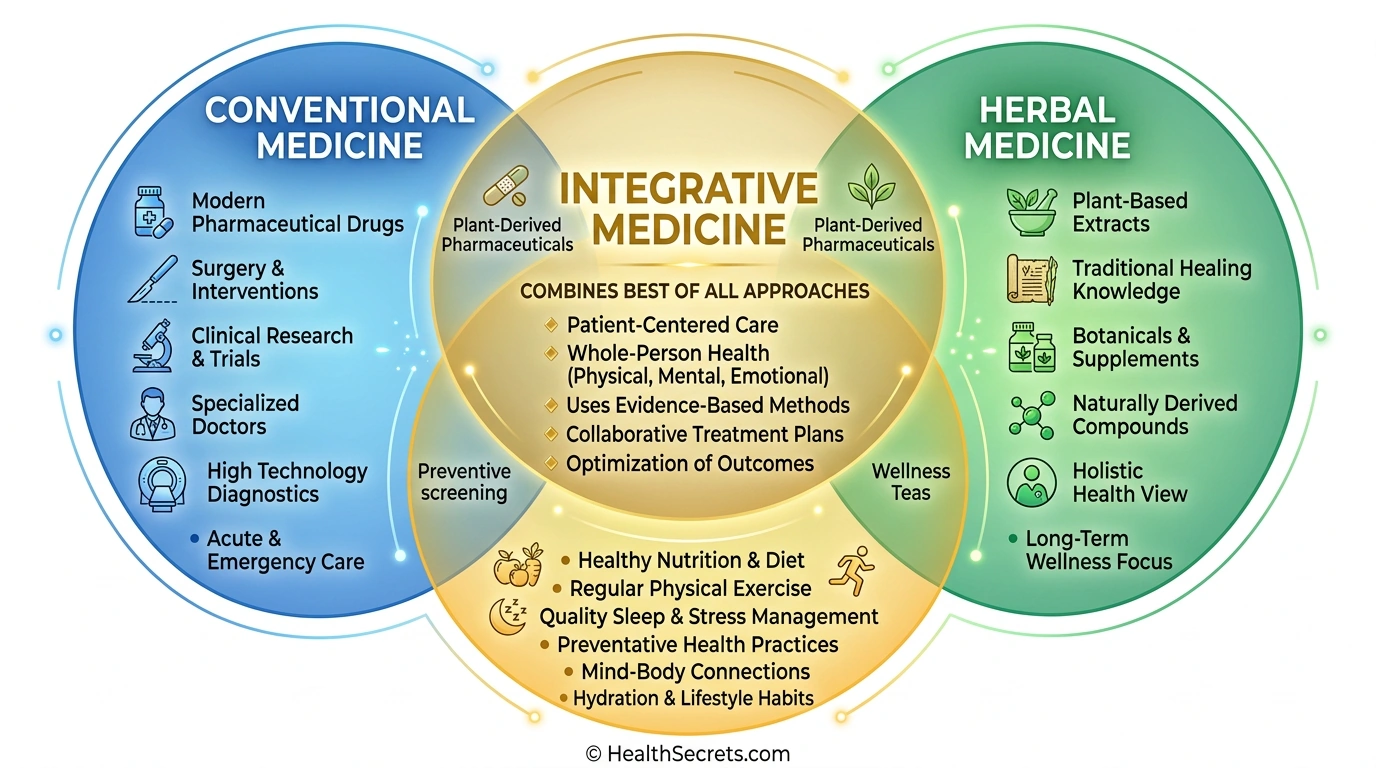
The key distinction between natural remedies and conventional medicine lies not in efficacy but in approach. Conventional medicine typically targets specific biological pathways with isolated compounds, while natural medicine often works through multiple pathways with broader, gentler effects [7]. The strongest approach — integrative medicine — combines the best of both worlds, using evidence-based natural remedies alongside conventional treatments when appropriate.
How Does Modern Science Validate Traditional Herbal Medicine?
Modern pharmacology has confirmed that many traditional herbal remedies contain bioactive compounds with measurable therapeutic effects — in fact, approximately 25% of all prescription drugs are derived directly from plant sources, including aspirin (willow bark), morphine (poppy), and digoxin (foxglove) [1].
What Mechanisms Make Herbal Remedies Effective at the Molecular Level?
Plant-based medicines work through identifiable biochemical mechanisms that modern research has mapped extensively. Understanding these mechanisms helps distinguish genuinely effective remedies from those with only placebo effects [3].
Key mechanisms of action:
- Anti-inflammatory pathways — Curcumin inhibits NF-κB and COX-2 enzymes; boswellia blocks 5-lipoxygenase; ginger suppresses prostaglandin synthesis [9]
- Antioxidant defense — Polyphenols in green tea, berries, and milk thistle neutralize free radicals and upregulate endogenous antioxidant enzymes [10]
- Adaptogenic modulation — Ashwagandha and rhodiola regulate the HPA axis, modulating cortisol and stress hormones [8]
- Antimicrobial activity — Garlic (allicin), oregano oil (carvacrol), and manuka honey demonstrate broad-spectrum antimicrobial properties [11]
- Neurotransmitter modulation — Valerian and passionflower enhance GABA activity; St. John’s Wort inhibits serotonin reuptake [12]
- Immune modulation — Elderberry stimulates cytokine production; echinacea activates macrophages and natural killer cells [13]
How Strong Is the Clinical Evidence for the Most Popular Natural Remedies?
| Natural Remedy | Primary Use | Evidence Level | Key Research |
|---|---|---|---|
| Turmeric/Curcumin | Inflammation, joint pain | ⭐⭐⭐⭐⭐ Strong | 140+ clinical trials [9] |
| Ginger | Nausea, digestion, pain | ⭐⭐⭐⭐⭐ Strong | 100+ clinical trials [14] |
| Elderberry | Cold/flu, immune support | ⭐⭐⭐⭐ Good | Multiple RCTs [13] |
| Valerian Root | Sleep, anxiety | ⭐⭐⭐⭐ Good | 60+ clinical trials [12] |
| Ashwagandha | Stress, energy, hormones | ⭐⭐⭐⭐ Good | 30+ RCTs [8] |
Why Are So Many People Turning to Natural Remedies Today?
The growing interest in natural remedies is driven by dissatisfaction with pharmaceutical side effects, rising healthcare costs, a desire for preventive and holistic approaches, and increasing scientific validation of traditional botanical medicines. Surveys show that over 38% of U.S. adults now use some form of complementary or alternative medicine [2].
Key drivers of the natural remedies movement:
- Pharmaceutical side effects — Many patients seek gentler alternatives after experiencing adverse effects from prescription medications [7]
- Preventive health focus — Growing awareness that preventing disease through lifestyle and nutrition is more effective than treating symptoms [15]
- Rising healthcare costs — Natural remedies often cost less than prescription drugs and specialist visits [2]
- Scientific validation — Increasing clinical evidence supporting traditional remedies legitimizes their use [3]
- Antibiotic resistance — The global crisis of antimicrobial resistance has renewed interest in natural antimicrobial agents [11]
- Chronic disease epidemic — Conditions like anxiety, insomnia, chronic pain, and digestive issues often respond well to integrative approaches [7]
- Cultural traditions — Many people draw on ancestral healing traditions that have stood the test of centuries [1]
However, the popularity of natural remedies also creates risks. Unregulated products, exaggerated marketing claims, and the dangerous assumption that “natural” always means “safe” can lead to harm if consumers aren’t educated about proper use, dosing, and interactions [6].
What Health Conditions Respond Best to Natural Remedies?
Clinical research shows that natural remedies are most effective for chronic inflammatory conditions, digestive issues, mild to moderate anxiety and depression, sleep disorders, immune support, and pain management. These conditions often respond well because botanical medicines address underlying imbalances rather than just suppressing symptoms [7].
Conditions with the strongest evidence for natural treatment:
- Inflammation and joint pain — Turmeric/curcumin rivals ibuprofen in clinical trials for osteoarthritis pain [9]
- Digestive disorders — Ginger for nausea, peppermint oil for IBS, slippery elm for acid reflux [14]
- Anxiety and stress — Ashwagandha, passionflower, and lavender show anxiolytic effects comparable to low-dose benzodiazepines in some trials [8]
- Sleep disorders — Valerian root, magnesium, chamomile, and natural sleep remedies improve sleep quality without dependency risk [12]
- Immune defense — Elderberry, vitamin C, zinc, and echinacea reduce cold and flu duration and severity [13]
- Skin conditions — Tea tree oil for acne, chamomile for eczema, aloe vera for burns and wound healing [16]
- Pain management — Willow bark, capsaicin, arnica, and boswellia for arthritis, back pain, and headaches [17]
- Mood and mental health — St. John’s Wort for mild depression, saffron for mood support, omega-3s for brain health [18]
When Should You Choose Natural Remedies vs. Conventional Medicine?
Natural remedies work best for prevention, chronic conditions, mild-to-moderate symptoms, and as complements to conventional treatment. However, acute emergencies, severe infections, cancer, and serious mental health crises require conventional medical intervention first. The ideal approach is integrative — using the strengths of both systems [7].
How Should You Safely Incorporate Natural Remedies into Your Health Routine?
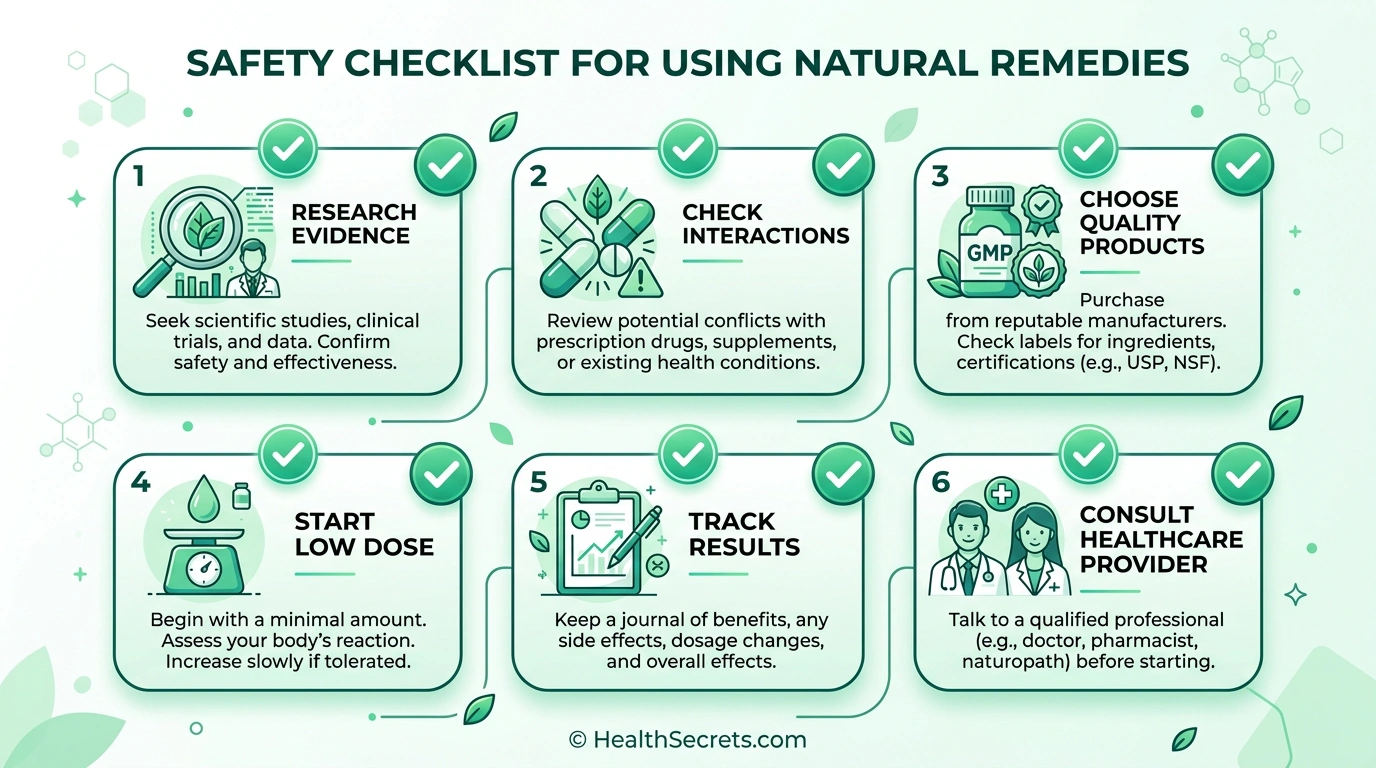
Start by researching evidence levels for your specific condition, choose standardized products from reputable manufacturers, begin with one remedy at a time at conservative doses, inform your healthcare provider, and monitor your response systematically. This methodical approach maximizes benefits while minimizing risks [5].
Evidence-based strategy for safe natural remedy use:
- Research before you buy — Check NCCIH, PubMed, and Examine.com [1] for evidence ratings on specific remedies [3]
- Identify your goal — Match remedies to specific, measurable health outcomes (e.g., sleep latency, pain scores, anxiety levels)
- Choose quality products — Only purchase standardized extracts with third-party testing (USP, NSF, ConsumerLab) [5]
- Check interactions — Use the NIH’s interaction checker or consult a pharmacist before combining herbs with medications [4]
- Start low, go slow — Begin at the lowest recommended dose and increase gradually over 1–2 weeks
- One at a time — Introduce remedies individually so you can identify what works and any adverse reactions
- Track results — Keep a health journal documenting symptoms, doses, and changes over 4–8 weeks
- Communicate — Always inform every healthcare provider about all natural remedies you use [4]
How Do You Evaluate Whether a Natural Remedy Actually Works?
Look for evidence from randomized controlled trials (RCTs) published in peer-reviewed journals, systematic reviews, and meta-analyses. Be skeptical of testimonials, proprietary studies funded by manufacturers, and claims of miracle cures. The hierarchy of evidence places systematic reviews and RCTs far above anecdotal reports [3].
Which Healing Foods and Kitchen Remedies Have Scientific Support?
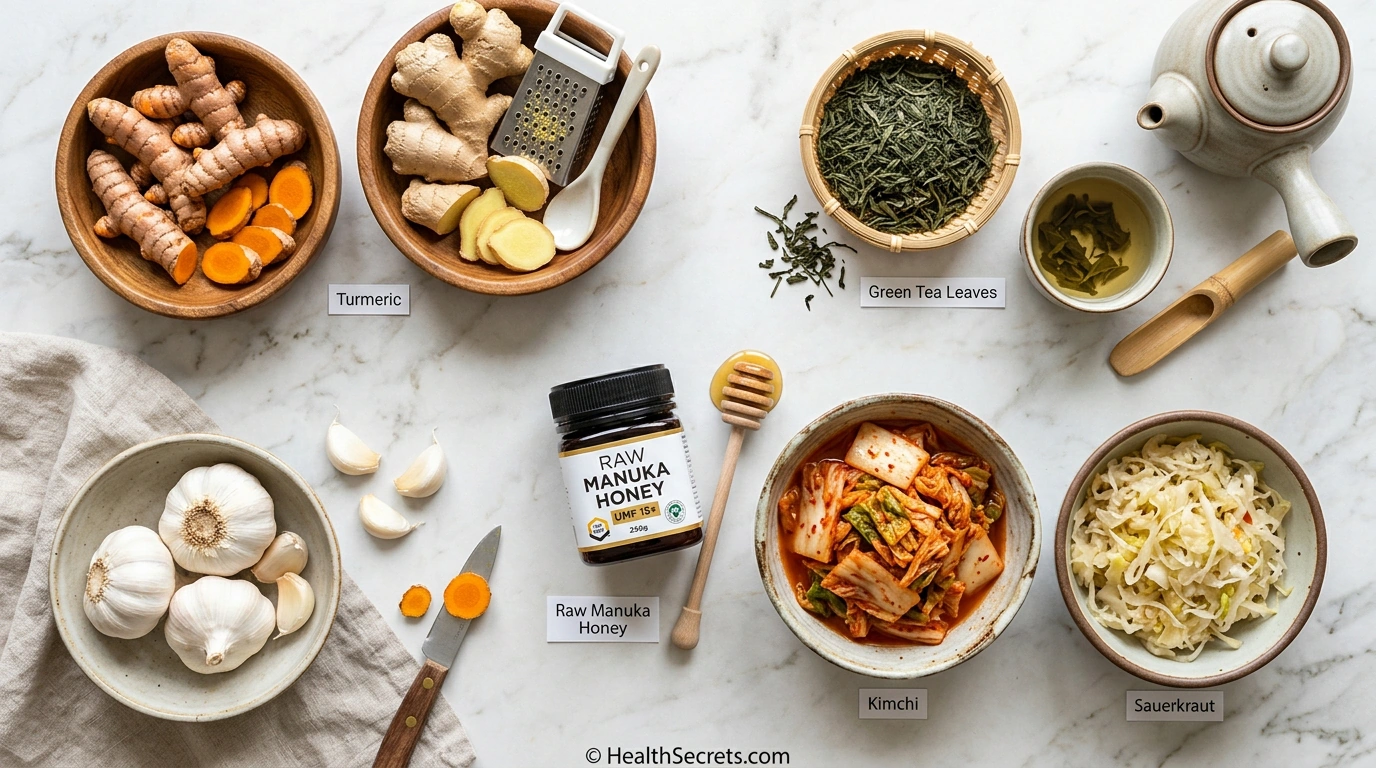
Many of the most effective natural remedies are common foods and spices with centuries of culinary and medicinal use. Ginger, turmeric, garlic, honey, green tea, and fermented foods contain bioactive compounds with clinically demonstrated anti-inflammatory, antimicrobial, and immune-modulating properties [14].
Top evidence-based healing foods:
- Turmeric — Contains curcumin; powerful anti-inflammatory comparable to NSAIDs for joint inflammation; pair with black pepper for 2,000% increased absorption [9]
- Ginger — Clinically proven for nausea (pregnancy, chemotherapy, motion sickness), pain relief, and digestive support [14]
- Raw honey (Manuka) — Medical-grade antimicrobial activity; wound healing; cough suppression (more effective than dextromethorphan in children’s studies) [11]
- Garlic — Allicin provides broad-spectrum antimicrobial, cardiovascular, and blood pressure benefits; best consumed raw or aged [19]
- Green tea — EGCG catechins provide antioxidant protection, metabolic support, and cognitive benefits [10]
- Fermented foods — Kimchi, sauerkraut, kefir, and miso deliver probiotics that support gut health and immune function [20]
- Bone broth — Collagen, glycine, and minerals support gut lining repair, joint health, and immune resilience [21]
- Apple cider vinegar — Limited but emerging evidence for blood sugar regulation and digestive support; use diluted [22]
What Lifestyle Practices Enhance the Effectiveness of Natural Remedies?
Natural remedies work best within a supportive lifestyle framework. Quality sleep, regular movement, stress management, adequate hydration, and a nutrient-dense diet amplify the therapeutic effects of herbal medicines while addressing the root causes that create health imbalances in the first place [7].
Synergistic lifestyle practices:
- Anti-inflammatory diet — A Mediterranean-style diet rich in omega-3s, colorful produce, and healthy fats creates an internal environment where anti-inflammatory herbs work more effectively [15]
- Stress management — Chronic stress undermines immune function and amplifies inflammation; adaptogenic herbs combined with meditation, breathwork, or yoga produce compounding benefits [8]
- Sleep hygiene — Natural sleep remedies like valerian and magnesium are far more effective when combined with consistent sleep schedules, cool dark bedrooms, and screen-time limits [12]
- Movement — Regular exercise enhances circulation, lymphatic drainage, and the delivery of botanical compounds to target tissues [15]
- Gut health — A healthy microbiome is essential for metabolizing and activating many herbal compounds; prioritize prebiotic and probiotic foods [20]
- Toxin reduction — Minimizing exposure to environmental toxins, processed foods, alcohol, and tobacco reduces the burden on your body’s detoxification systems [23]
Which Herbal Supplements Have the Strongest Scientific Evidence?
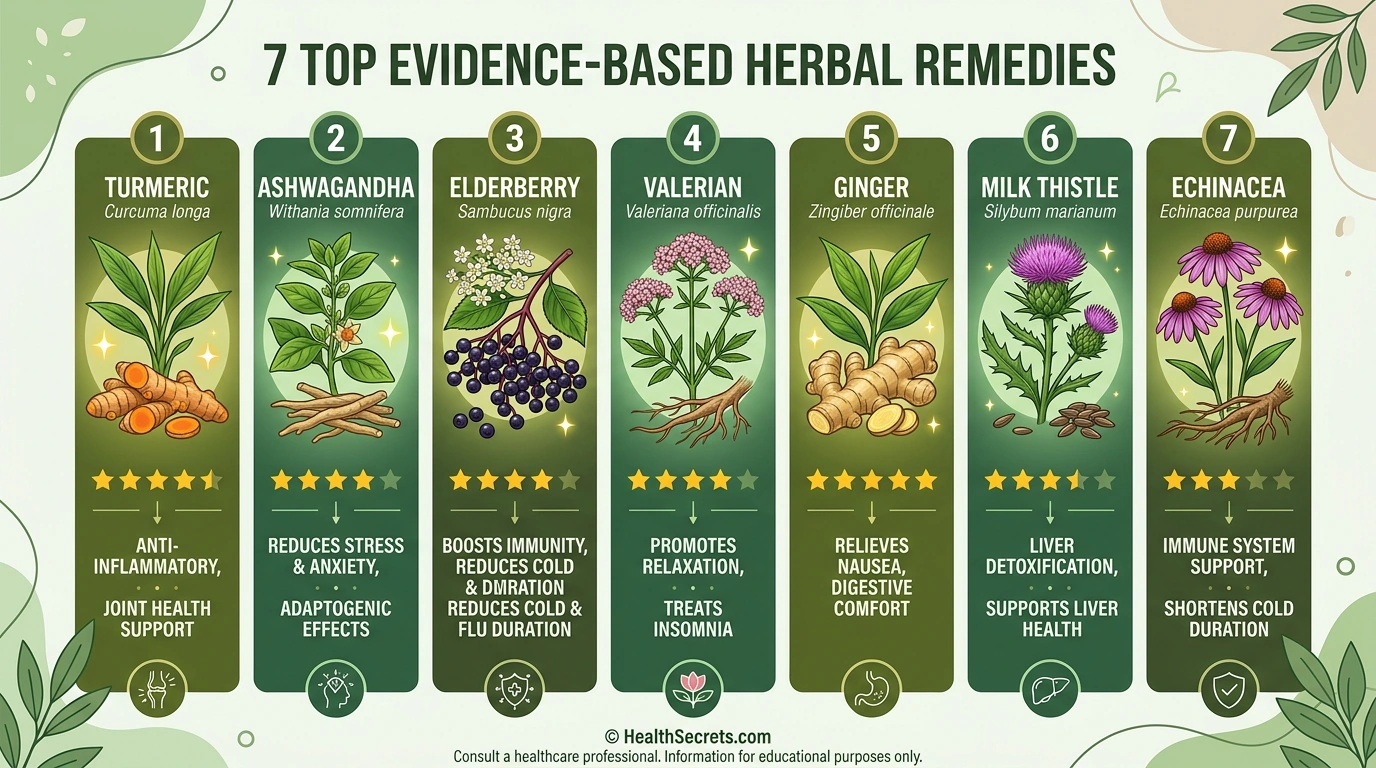
Turmeric (curcumin), ashwagandha, elderberry, valerian root, ginger extract, milk thistle, and echinacea have the most robust clinical evidence among herbal supplements. Each has been evaluated in multiple randomized controlled trials with measurable, reproducible outcomes [3].
What Are the Top Evidence-Based Herbal Remedies Everyone Should Know?
- Turmeric/Curcumin — The most studied herbal anti-inflammatory with 140+ clinical trials demonstrating efficacy for arthritis, metabolic syndrome, and inflammatory conditions. Use standardized extract with piperine for absorption [9]
- Ashwagandha (Withania somnifera) — Premier adaptogen with strong evidence for reducing cortisol (14–28%), improving anxiety scores, enhancing sleep quality, and supporting thyroid function. Use KSM-66® or Sensoril® standardized extracts [8]
- Elderberry (Sambucus nigra) — Potent immune-supporting berry with clinical evidence showing reduced cold and flu duration by 2–4 days. Rich in anthocyanins and vitamin C. Use standardized extract, never raw berries [13]
- Valerian Root (Valeriana officinalis) — Most researched herbal sedative with 60+ clinical trials supporting improved sleep quality and reduced sleep latency. Works through GABA modulation without morning grogginess [12]
- Ginger (Zingiber officinale) — Clinically proven for nausea (pregnancy, chemotherapy, post-surgery), anti-inflammatory effects, and pain reduction. 250–500 mg standardized extract 2–4x daily [14]
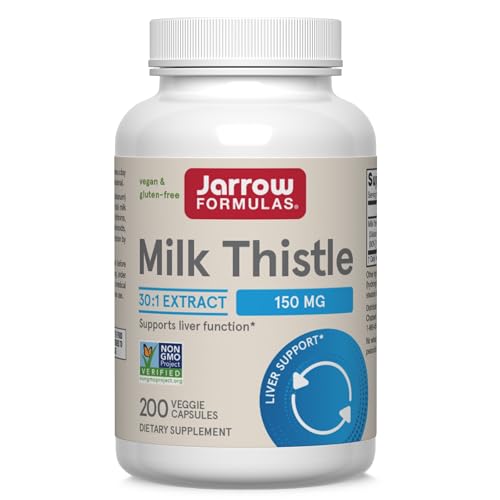
- Milk Thistle (Silybum marianum) — Gold standard for liver protection with 400+ studies demonstrating hepatoprotective effects. Standardized to 80% silymarin. Supports detoxification and liver cell regeneration [10]
- Echinacea — Immune-stimulating herb with evidence for reducing cold duration by 1–2 days when taken at symptom onset. Most effective in standardized root extract form [13]
Which Natural Remedies Should You Approach with Caution?
- St. John’s Wort — Effective for mild depression but interacts with over 50% of medications including birth control, blood thinners, and antidepressants [4]
- Kava — Effective anxiolytic but associated with rare but serious liver toxicity; banned in some countries [6]
- Comfrey — Traditional wound healer but contains pyrrolizidine alkaloids that are hepatotoxic; external use only [6]
- Ephedra (Ma Huang) — Banned in the U.S. due to cardiovascular risks including stroke and heart attack [6]
How Do You Build a Personalized Natural Remedies Protocol Step by Step?
Building an effective natural remedies protocol requires methodical assessment of your health goals, careful research of evidence-based options, quality sourcing, systematic introduction, and ongoing monitoring. This structured approach ensures safety and allows you to identify which remedies genuinely work for your unique physiology [5].
Phase 1: Assessment and Research (Week 1–2)
- Identify your top 2–3 health priorities (e.g., sleep, inflammation, stress, immunity)
- Research evidence levels for relevant natural remedies using NCCIH and PubMed
- Review potential interactions with any current medications or supplements [4]
- Consult your healthcare provider about your plans
Phase 2: Foundation (Week 3–4)
- Start with ONE evidence-based remedy targeting your highest priority
- Choose a standardized, third-party tested product from a reputable brand [5]
- Begin at the lowest recommended dose
- Start a health journal tracking symptoms, energy, sleep, and any side effects
Phase 3: Expansion (Week 5–8)
- If the first remedy is well-tolerated and showing benefits, add a second
- Allow 2 weeks between adding new remedies to isolate effects
- Build complementary combinations (e.g., turmeric + ginger for inflammation; valerian + magnesium for sleep)
- Maintain consistent timing and dosing
Phase 4: Optimization and Maintenance (Month 3+)
- Evaluate results against your original health goals
- Adjust doses based on response (some remedies have dose-response relationships)
- Consider cycling adaptogenic herbs (6 weeks on, 2 weeks off) to maintain efficacy [8]
- Schedule follow-up with your healthcare provider to review progress
- Remove remedies that show no measurable benefit after 8–12 weeks
What Is the Best Action Plan for Starting Natural Remedies Safely?
Begin with education and professional consultation, then systematically introduce one evidence-based remedy at a time while tracking your response. This measured approach prevents adverse reactions, identifies what genuinely works for you, and builds a sustainable natural health protocol grounded in science rather than marketing [5].
Week 1: Prepare
- Identify your top health concern and research evidence-based natural remedies for it
- Check the NCCIH website for safety and efficacy data on your chosen remedy
- Review all current medications for potential herb-drug interactions
- Consult your healthcare provider or pharmacist about your plan
Week 2: Source Quality Products
- Choose a standardized extract from a third-party tested brand (USP, NSF, ConsumerLab)
- Read labels carefully — verify active compound amounts and check for allergens
- Purchase from reputable retailers (avoid unverified online sellers)
- Start a health journal to establish your baseline symptoms
Week 3–4: Begin Your First Remedy
- Start at the lowest recommended dose of your chosen remedy
- Take consistently at the same time each day
- Record daily symptoms, sleep quality, energy levels, and any side effects
- Discontinue immediately if you experience adverse reactions
Week 5–8: Evaluate and Expand
- Assess your response after 4 weeks of consistent use
- If beneficial, consider adding a second complementary remedy
- Continue tracking in your health journal
- Schedule a check-in with your healthcare provider
Month 3+: Optimize
- Remove remedies that show no benefit after 8–12 weeks
- Implement cycling protocols for adaptogenic herbs
- Explore complementary healing foods and lifestyle practices
- Reassess your protocol quarterly