Headaches affect more than 50% of the global population each year, making them one of the most common neurological complaints worldwide. Whether you are dealing with dull, squeezing tension headaches after a long workday or debilitating migraines that send you to a dark room for hours, the search for relief is universal. While over-the-counter painkillers offer quick fixes, frequent use can lead to medication-overuse headaches — a frustrating cycle that affects up to 2% of the general population [1].
The good news is that decades of clinical research now support a growing toolkit of natural remedies that can reduce headache frequency, intensity, and duration. From targeted supplements like magnesium and riboflavin to hands-on techniques like acupressure and lifestyle shifts that address root triggers, these approaches work with your body rather than merely masking symptoms.
This guide covers 15 evidence-based natural strategies organized as a step-by-step protocol you can begin today. We will start with identifying your headache type and triggers, then move through the most effective supplements, topical remedies, mind-body techniques, and long-term lifestyle changes — all backed by peer-reviewed research.
What Do You Need to Know Before Trying Natural Headache Remedies?
Before starting any natural headache protocol, you need to understand your headache type, rule out serious causes, and set realistic expectations for how long natural remedies take to work. Most preventive supplements require 4–12 weeks of consistent daily use before you see meaningful reductions in headache frequency, so patience and consistency are essential.
Tension Headaches vs. Migraines: Why the Difference Matters
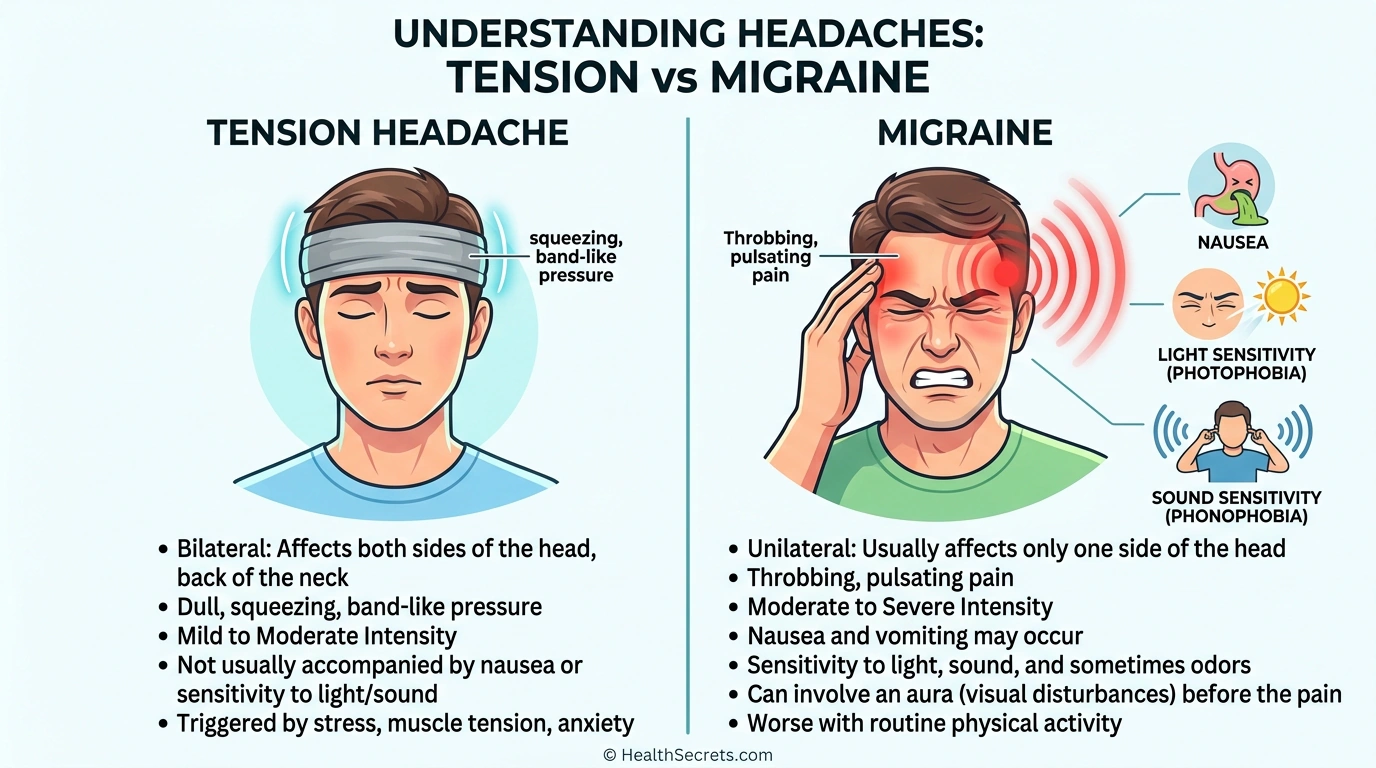
Tension-type headaches (TTH) feel like a tight band around both sides of your head, with mild-to-moderate pressure that does not typically prevent daily activities. They last 30 minutes to 7 days and are not worsened by physical activity [2].
Migraines produce moderate-to-severe throbbing pain, usually on one side, lasting 4–72 hours. They are commonly accompanied by nausea, vomiting, and sensitivity to light, sound, or smells. Physical activity makes them worse [3].
This distinction matters because some remedies work better for specific headache types. Magnesium, riboflavin, and CoQ10 have stronger evidence for migraine prevention, while peppermint oil and acupressure show robust results for tension headache relief. Many strategies in this guide work for both.
Who Should See a Doctor First?
- Headaches that are new, sudden, or the worst you have ever experienced
- Headaches with fever, stiff neck, confusion, or seizures
- Headaches after head injury
- Progressive headaches that worsen over weeks
- Headaches that change pattern significantly
- Anyone over 50 with new-onset headaches
Expected Timeline for Results
| Remedy | Type | Onset | Full Effect |
|---|---|---|---|
| Peppermint oil | Acute relief | 15–30 min | Immediate |
| Acupressure | Acute relief | 5–15 min | Immediate |
| Ginger | Acute relief | 30–60 min | Immediate |
| Magnesium | Preventive | 4 weeks | 8–12 weeks |
| Riboflavin | Preventive | 4 weeks | 12 weeks |

Can't Sleep Through the Night?
Download the free Sleep Audit & Recovery Guide — used by our readers to identify the exact bedroom triggers and stress habits wrecking their rest.
How Do You Identify Your Headache Triggers?
Tracking your triggers is the foundation of any natural headache management plan because it allows you to prevent headaches before they start. Keep a headache diary for at least 4 weeks, noting the date, time, duration, intensity (1–10), potential triggers, foods eaten, sleep quality, stress level, weather, and menstrual cycle phase if applicable.
Common Headache Triggers to Track
- Stress and tension — the number one trigger for both tension headaches and migraines
- Irregular sleep — too little, too much, or inconsistent timing
- Dehydration — even 1–2% fluid loss can trigger headaches [4]
- Skipped meals — blood sugar drops trigger headaches in many people
- Alcohol — especially red wine (histamine, tyramine, sulfites)
- Caffeine — both excess intake and withdrawal
- Weather changes — barometric pressure shifts are a documented migraine trigger
- Hormonal fluctuations — estrogen drops before menstruation
- Screen time — blue light and eye strain
- Specific foods — aged cheese, processed meats, MSG, artificial sweeteners (varies individually)
After 4 weeks, review your diary for patterns. Most people discover 2–3 primary triggers that account for the majority of their headaches.

Better Sleep Environment Workbook
Run a structured two-week bedroom experiment to optimize temperature, light, and noise before buying gadgets.
How Does Magnesium Help Prevent Headaches?
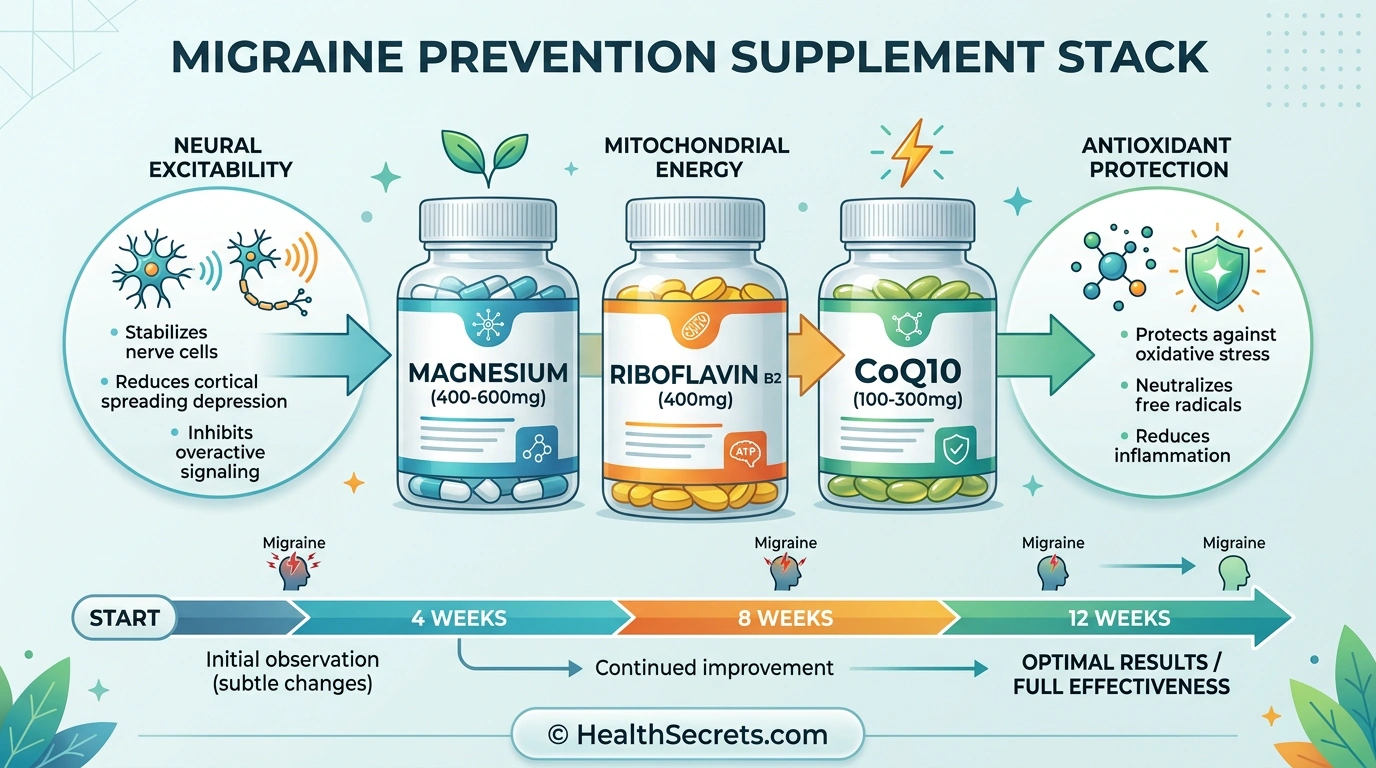
Magnesium is the most evidence-backed mineral supplement for headache prevention, with multiple randomized controlled trials showing it reduces migraine frequency by 40–50% at doses of 400–600 mg daily. Up to 50% of migraine sufferers have low magnesium levels, and deficiency increases cortical excitability and neuroinflammation — both pathways involved in migraine [5].
Magnesium works by regulating neurotransmitter release, inhibiting the NF-κB inflammatory pathway, modulating substance P (a pain signaling molecule), and stabilizing serotonin receptors. It also blocks NMDA glutamate receptors, which play a role in the cortical spreading depression that underlies migraine aura [6].
How to Take Magnesium for Headaches
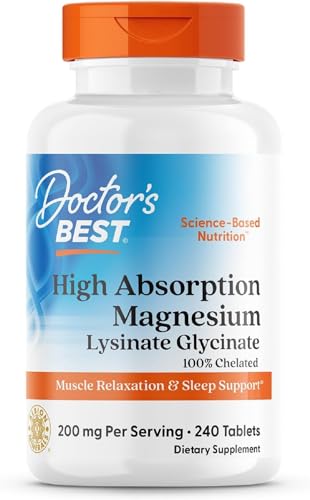
- Dose: 400–600 mg elemental magnesium daily
- Best forms: Magnesium glycinate (well-absorbed, gentle on stomach) or magnesium citrate (good absorption, may have mild laxative effect)
- Timing: Take with dinner or before bed (magnesium supports relaxation and sleep)
- Duration: Allow 8–12 weeks for full preventive effect
- Start low: Begin with 200 mg and increase by 100 mg every 3–5 days to minimize digestive side effects
Who Benefits Most
- People with frequent migraines (4+ per month)
- Those with menstrual migraines (magnesium levels drop premenstrually)
- Anyone with signs of low magnesium: muscle cramps, poor sleep, restless legs
- People who eat low-magnesium diets (processed foods, low vegetable intake)
3: Can Riboflavin (Vitamin B2) Reduce Migraine Frequency?
Yes — riboflavin at 400 mg per day reduces migraine frequency by approximately 50% and is recommended by the American Academy of Neurology and the Canadian Headache Society as a Level B preventive therapy. It works by improving mitochondrial energy metabolism, which is impaired in migraine sufferers [7].
A landmark randomized controlled trial found that 400 mg of riboflavin daily for 3 months reduced migraine attack frequency from a mean of 4 attacks per month to 2 per month, with 59% of participants achieving a ≥50% reduction in attacks compared to 15% on placebo [8].
How to Take Riboflavin for Headaches
- Dose: 400 mg daily (this is well above the RDA of 1.3 mg but is safe — excess is excreted in urine)
- Timing: Take with breakfast (riboflavin is better absorbed with food)
- Duration: Minimum 3 months to assess effectiveness
- Side note: Your urine will turn bright yellow — this is harmless and expected
- Combine with: Magnesium and CoQ10 for a synergistic "migraine prevention stack"
How Do You Use Peppermint Oil for Headache Relief?
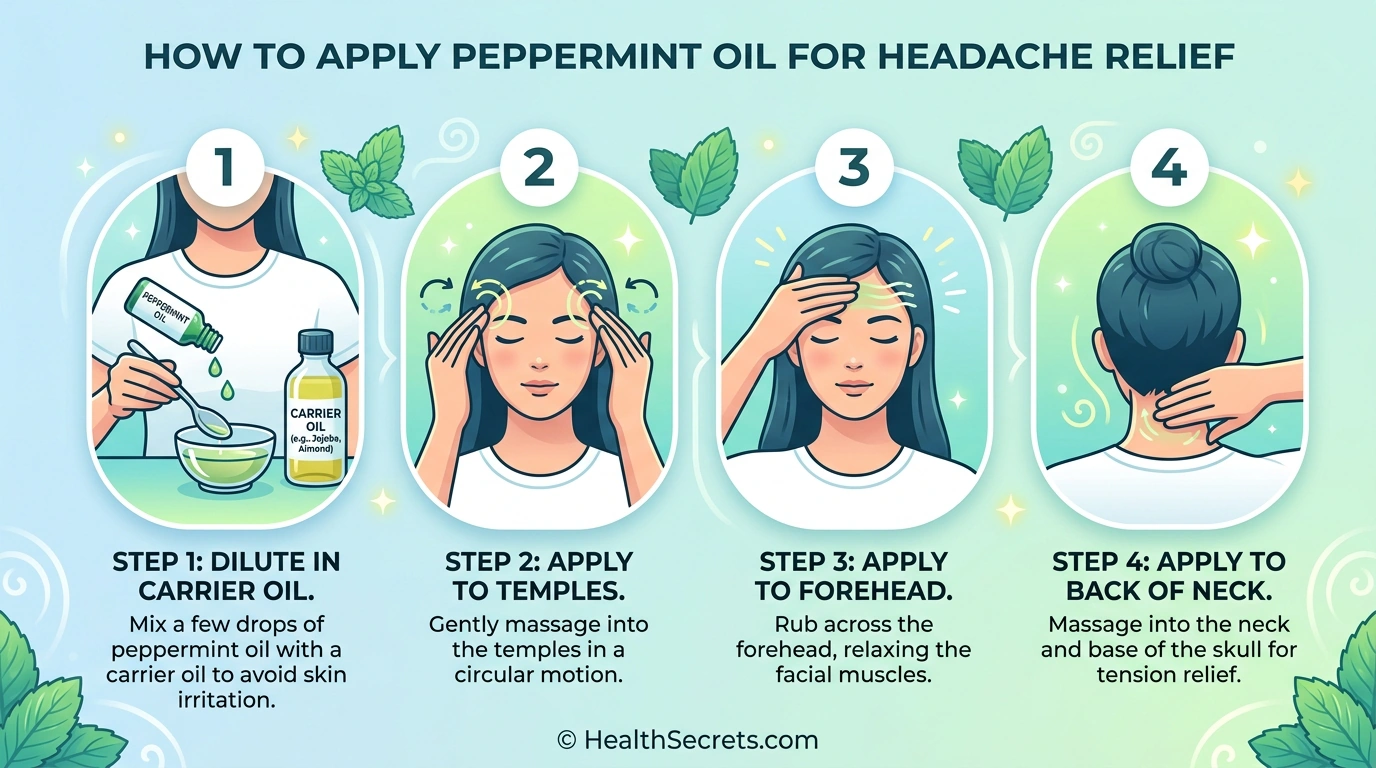
Peppermint oil applied topically to the forehead and temples provides rapid tension headache relief through its active compound menthol, which activates cold receptors, improves local blood flow, and relaxes muscles. A randomized controlled trial found that 10% peppermint oil solution applied to the temples was as effective as 1,000 mg of acetaminophen for tension headache relief [9].
A 2019 double-blind study also found that intranasal peppermint oil reduced migraine headache intensity in 40% of patients, comparable to intranasal lidocaine [10].
How to Apply Peppermint Oil
- Dilute pure peppermint essential oil in a carrier oil (coconut, jojoba) — 10% concentration (about 6 drops per tablespoon of carrier oil)
- Apply to temples, forehead, and back of neck using gentle circular motions
- Reapply every 15–30 minutes as needed
- Avoid contact with eyes and broken skin
- Alternative: Use a pre-made peppermint roll-on stick for convenience
Safety Notes
- Do not apply undiluted peppermint oil directly to skin (can cause irritation)
- Keep away from infants and young children (menthol can cause breathing problems)
- Test on a small area first if you have sensitive skin
- Safe to combine with other headache remedies
What Acupressure Points Relieve Headaches Fast?
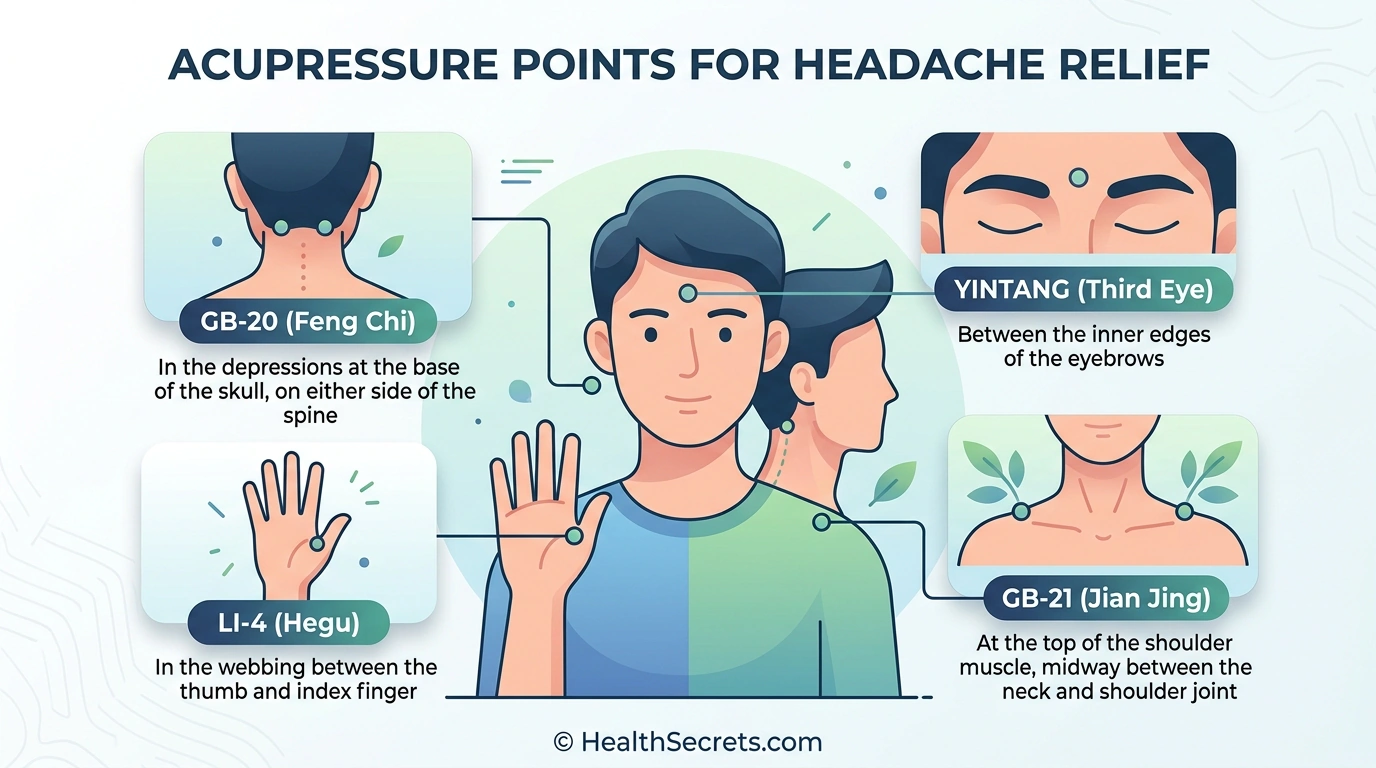
Acupressure — applying firm pressure to specific body points — can provide rapid headache relief by stimulating the release of endorphins, improving blood circulation, and reducing muscle tension. The most studied point for headache relief is LI-4 (Hegu), located in the fleshy area between the thumb and index finger [11].
Research published in the American Journal of Chinese Medicine shows acupressure can significantly reduce headache intensity and frequency, with effects comparable to some preventive medications for chronic tension headaches.
Top 4 Acupressure Points for Headaches
1. LI-4 (Hegu) — Between Thumb and Index Finger
- Best for: All headache types
- Technique: Squeeze the fleshy area between thumb and index finger on the opposite hand with firm pressure for 3–5 minutes. Massage in small circles.
- ⚠️ Avoid during pregnancy
2. GB-20 (Feng Chi) — Base of Skull
- Best for: Tension headaches, neck-related headaches
- Technique: Place thumbs at the base of your skull in the two hollows on either side of the spine. Press firmly upward for 2–3 minutes.
3. Yintang (Third Eye) — Between Eyebrows
- Best for: Sinus headaches, frontal headaches
- Technique: Press firmly between your eyebrows with one finger for 1–2 minutes.
4. GB-21 (Jian Jing) — Top of Shoulder
- Best for: Tension headaches, neck and shoulder tension
- Technique: Pinch the muscle at the top of the shoulder halfway between the neck and shoulder joint. Hold 2–3 minutes per side.
Can Ginger Treat Acute Headaches and Migraines?
Ginger is a potent natural anti-inflammatory that can relieve acute migraine pain and associated nausea. A remarkable 2014 randomized controlled trial found that 250 mg of ginger powder was as effective as 50 mg of sumatriptan (a standard migraine drug) for reducing migraine severity within 2 hours, with significantly fewer side effects [12].
Ginger works by inhibiting prostaglandin and leukotriene synthesis — the same inflammatory pathways targeted by NSAIDs like ibuprofen.
How to Use Ginger for Headaches
- Ginger powder capsule: 250–500 mg at headache onset (repeat once after 2 hours if needed)
- Fresh ginger tea: Slice 1 inch of fresh ginger root, steep in boiling water for 10 minutes, add honey and lemon. Drink 2–3 cups at headache onset.
- Ginger chews: Convenient for on-the-go relief
- Timing: Most effective when taken at the first sign of a headache or migraine
- Bonus: Ginger also relieves the nausea that accompanies migraines
Safety
- Generally very safe at recommended doses
- May thin blood slightly — use caution if on anticoagulants
- Can cause mild heartburn in some people
- Safe during pregnancy at culinary doses (consult provider for supplement doses)
How Does Proper Hydration Prevent Headaches?
Dehydration is one of the most overlooked and easily correctable headache triggers. Even mild dehydration — as little as 1.4% body fluid loss — can trigger headaches and impair cognitive function. A 2020 study in the Journal of Clinical Medicine found that increasing water intake by 1.5 liters per day reduced headache duration by 21 hours per month and headache intensity on a 10-point scale in chronic headache sufferers [4].
Daily Hydration Protocol
- Baseline intake: Aim for half your body weight in ounces daily (e.g., 160 lb person → 80 oz)
- Morning: Drink 16 oz of water within 30 minutes of waking
- Before meals: 8 oz of water 30 minutes before each meal
- During exercise: 8 oz every 20 minutes of activity
- Electrolytes: Add a pinch of sea salt or electrolyte mix if you sweat heavily or drink large volumes
- Track: Use a marked water bottle to monitor intake
Signs You May Be Under-Hydrated
- Dark yellow urine (aim for pale straw color)
- Thirst (by the time you feel thirsty, you are already mildly dehydrated)
- Fatigue, brain fog, dizziness
- Dry lips and mouth
How Does CoQ10 Help With Migraines?
Coenzyme Q10 (CoQ10) is an antioxidant that plays a critical role in mitochondrial energy production. Like riboflavin, it targets the mitochondrial dysfunction now recognized as a key factor in migraine pathophysiology. A 2021 meta-analysis of 6 randomized controlled trials found that CoQ10 supplementation significantly reduced migraine frequency, duration, and severity compared to placebo [13].
CoQ10 at 100–300 mg per day reduced migraine frequency by approximately 50% in multiple trials, with effects becoming apparent after 4–8 weeks [14].
How to Take CoQ10 for Headaches
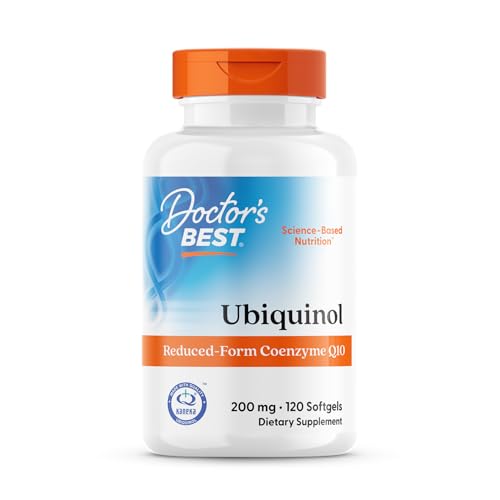
- Dose: 100–300 mg daily (start at 100 mg, increase if needed)
- Form: Ubiquinol (active form, better absorbed) preferred over ubiquinone
- Timing: Take with a meal containing fat (CoQ10 is fat-soluble)
- Duration: Allow 4–12 weeks for preventive effects
- Combine with: Magnesium + riboflavin for the complete "mitochondrial migraine stack"
What Are the Most Common Mistakes to Avoid With Natural Headache Remedies?
The biggest mistakes people make with natural headache remedies are giving up too soon, using incorrect doses, and relying on a single remedy instead of a comprehensive approach. Understanding these pitfalls will dramatically improve your results.
Mistake 1: Not Giving Preventive Supplements Enough Time
Magnesium, riboflavin, and CoQ10 require 8–12 weeks of daily use to reach full effectiveness. Many people quit after 2–3 weeks because they do not notice immediate changes. Commit to at least 3 months before judging whether a supplement works for you.
Mistake 2: Using the Wrong Form or Dose
- Magnesium oxide is poorly absorbed — use glycinate or citrate instead
- Riboflavin needs to be 400 mg/day — multivitamin doses (1–2 mg) are far too low
- Peppermint oil must be diluted before skin application
Mistake 3: Ignoring Lifestyle Factors
Supplements alone will not eliminate headaches if you are chronically dehydrated, sleep-deprived, or stressed. The most effective approach combines supplements with the lifestyle strategies in this guide.
Mistake 4: Overusing Acute Remedies
Even natural acute remedies (ginger, peppermint oil) should not be relied upon daily. If you need acute treatment more than 10–15 days per month, focus on prevention rather than treatment.
Mistake 5: Not Tracking Results
Without a headache diary, you cannot objectively assess whether a remedy is working. Track frequency, intensity, and duration monthly to measure progress.
Additional Natural Strategies Worth Exploring
- Feverfew: 50–100 mg dried leaf daily — mixed evidence but traditionally used for migraine prevention [15]
- Butterbur: Previously recommended but now carries hepatotoxicity warnings — only use PA-free formulations under medical supervision [16]
- Lavender essential oil: Inhaling lavender oil during a migraine may reduce severity — a small trial showed benefit after 15 minutes of inhalation [17]
- Cold therapy: Applying a cold pack to the forehead or neck for 15 minutes constricts blood vessels and reduces inflammation
- Yoga and meditation: Regular practice reduces headache frequency by improving stress management and reducing muscle tension
- Regular exercise: 30–40 minutes of moderate aerobic exercise 3–5 times per week is as effective as some preventive medications for migraines [18]
- Consistent sleep schedule: Go to bed and wake at the same time daily, even on weekends — irregular sleep is a top migraine trigger
Are Natural Headache Remedies Safe? When Should You Stop?
Natural headache remedies have excellent safety profiles when used correctly, but they are not risk-free. The most important safety consideration is knowing when a headache requires medical evaluation rather than self-treatment. Stop self-treatment and see a healthcare provider if your headaches change in character, frequency, or severity.
Supplement Safety Overview
| Supplement | Common Side Effects | Cautions |
|---|---|---|
| Magnesium | Loose stools, mild GI upset | Kidney disease; reduce dose if diarrhea |
| Riboflavin | Bright yellow urine (harmless) | Very safe; no major interactions |
| CoQ10 | Mild GI upset, insomnia (rare) | May interact with blood thinners |
| Ginger | Mild heartburn | Blood thinners; gallbladder disease |
| Peppermint oil | Skin irritation (if undiluted) | Avoid in infants; GERD (oral use) |
Drug Interactions to Watch
- Magnesium: May reduce absorption of certain antibiotics and bisphosphonates — take 2 hours apart
- CoQ10: May reduce effectiveness of warfarin; consult your provider
- Ginger: May enhance blood-thinning effects of warfarin, aspirin, and NSAIDs
- Feverfew: Interacts with blood thinners and NSAIDs
Red Flags — Seek Immediate Medical Attention
- Sudden "thunderclap" headache (worst headache of your life)
- Headache with fever and stiff neck
- Headache with vision changes, weakness, numbness, or speech difficulty
- Headache after head trauma
- New headaches after age 50
- Progressively worsening headaches over days or weeks
Action Plan
What Is the Best Action Plan for Natural Headache Relief?
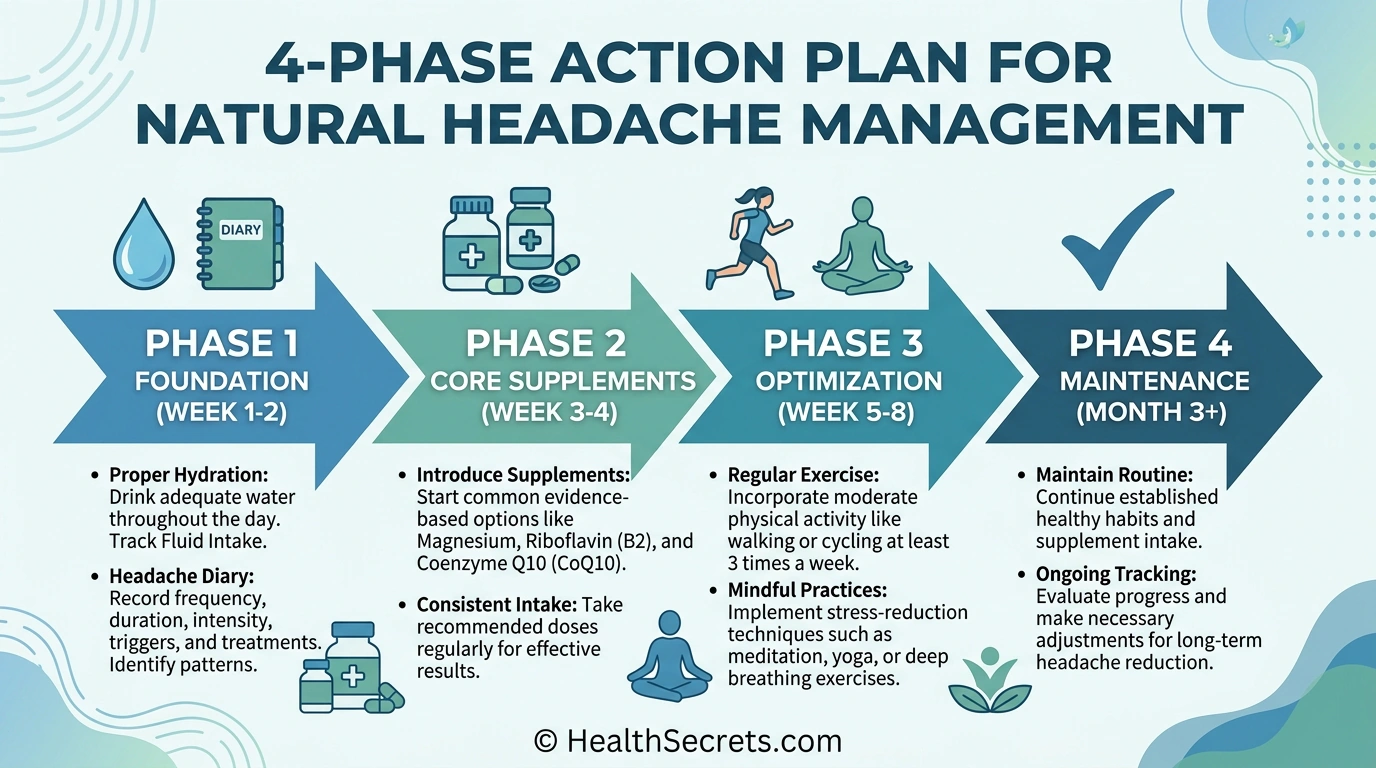
Follow the sequence below, work through each phase in order, and use the checklist as your practical implementation guide.
Start by tracking your headache triggers for one week, then introduce the most evidence-based supplements one at a time while implementing daily hydration and sleep consistency. Build your protocol gradually over 4–8 weeks, giving each addition time to demonstrate its effect.
Phase 1: Foundation (Week 1–2)
- Start a headache diary (track triggers, intensity, duration, meals, sleep, stress)
- Increase daily water intake to half your body weight in ounces
- Set a consistent sleep schedule (same bedtime and wake time daily)
- Begin magnesium glycinate at 200 mg with dinner
- Purchase peppermint oil roll-on for acute headache relief
Phase 2: Core Supplements (Week 3–4)
- Increase magnesium to 400 mg daily (split into 200 mg twice daily if needed)
- Add riboflavin 400 mg with breakfast
- Practice acupressure (LI-4, GB-20) at the first sign of headache
- Prepare ginger tea or have ginger capsules available for acute episodes
- Review headache diary for trigger patterns
Phase 3: Optimization (Week 5–8)
- Add CoQ10 100–300 mg with a fatty meal (if migraines persist)
- Begin regular aerobic exercise 3–5 times per week, 30–40 minutes
- Eliminate identified food triggers for a 2-week trial
- Explore stress reduction: meditation, yoga, or deep breathing 10 minutes daily
- Apply cold therapy during acute headaches (15 minutes on, 15 minutes off)
Phase 4: Long-Term Maintenance (Month 3+)
- Reassess headache frequency — aim for ≥50% reduction from baseline
- Continue effective supplements long-term (safe for ongoing use)
- Adjust doses based on response and side effects
- Maintain lifestyle modifications (hydration, sleep, exercise, stress management)
- Consider adding feverfew if additional prevention is needed