If you've ever frozen mid-step because your lower back seized up, you already know how back pain hijacks your entire day. Roughly 80% of adults deal with back pain at some point — and for many, it becomes a recurring problem that chips away at sleep, work, and basic movement [1].
The good news? A growing body of research shows that natural approaches can genuinely help. A 2024 randomized clinical trial found virtual yoga significantly reduced chronic low back pain intensity and improved function [1]. Systematic reviews confirm that Pilates strengthens core muscles and decreases pain more effectively than no exercise [4][5]. And anti-inflammatory herbs like turmeric and white willow bark have clinical evidence supporting their use for back pain relief [6][8].
This isn't about ignoring pain or avoiding doctors — it's about understanding that for most people with chronic, non-specific back pain, a combination of movement, targeted supplements, and smarter daily habits can produce meaningful relief. In this guide, you'll get a step-by-step protocol built on clinical research, not wishful thinking.
If you're also dealing with inflammation-related pain or poor sleep quality that worsens your back issues, those connected problems deserve attention too. For a broader look at how your body's immune defenses relate to inflammation, that foundation matters as well.
What Do You Need to Know Before Trying Natural Back Pain Remedies?
Most back pain falls into the "non-specific" category, meaning imaging won't reveal a single structural cause. This is actually encouraging — it means your pain likely stems from muscle tension, inflammation, poor posture, or deconditioning rather than something requiring surgery. Natural remedies work best for this type of chronic, non-specific lower back pain that has persisted beyond 12 weeks [2][3].
Who Are Natural Remedies Best For?
If your back pain is chronic and non-specific — meaning it's not caused by fractures, tumors, infections, or severe nerve compression — you're an ideal candidate. People with acute pain (less than 6 weeks) may benefit too, though acute episodes often resolve on their own with basic self-care.
Back pain breaks down into three categories by duration:
- Acute: Less than 6 weeks — often resolves with rest and gentle movement
- Subacute: 6–12 weeks — natural remedies can prevent progression to chronic pain
- Chronic: More than 12 weeks — the sweet spot where natural approaches shine brightest
What's the Expected Timeline?
Exercise-based approaches typically show measurable improvement within 4–8 weeks of consistent practice [1][4]. Herbal supplements like turmeric may take 4–8 weeks for full anti-inflammatory effects [7]. Topical remedies like capsaicin provide faster relief, often within days to weeks [14]. The key point: natural approaches require patience and consistency — they're not instant fixes, but their benefits tend to be more sustainable.
Important Safety Baseline
Before starting, rule out serious causes. If you have pain after trauma, pain radiating down your leg with numbness, fever with back pain, or any bladder/bowel changes, see a doctor first. These are red flags that natural remedies cannot address.

Are You Unknowingly Inflaming Your Body?
Get the free Health Vitals & Nutrient Checklist — the daily guide that shows you which habits and supplements are silently triggering inflammation.
How Do You Use Exercise and Stretching to Relieve Back Pain?
Exercise therapy — especially yoga, Pilates, and core strengthening — has the strongest scientific evidence for reducing chronic low back pain. A 2024 JAMA Network Open trial found that 12 weeks of therapeutic yoga significantly improved both pain intensity and back-related function compared to controls, with no serious adverse effects [1]. Multiple systematic reviews confirm these benefits across different exercise modalities [2][3].
Why Does Yoga Work So Well for Back Pain?
Yoga combines gentle stretching, core engagement, and mindful breathing — addressing both the physical tension and the stress response that amplify pain. An overview of systematic reviews in Frontiers in Neurology found that yoga significantly improved pain scores compared to non-exercise measures, with the strongest effects in the first 4–6 weeks [2]. The practice builds flexibility, strengthens stabilizing muscles, and teaches body awareness that prevents re-injury.
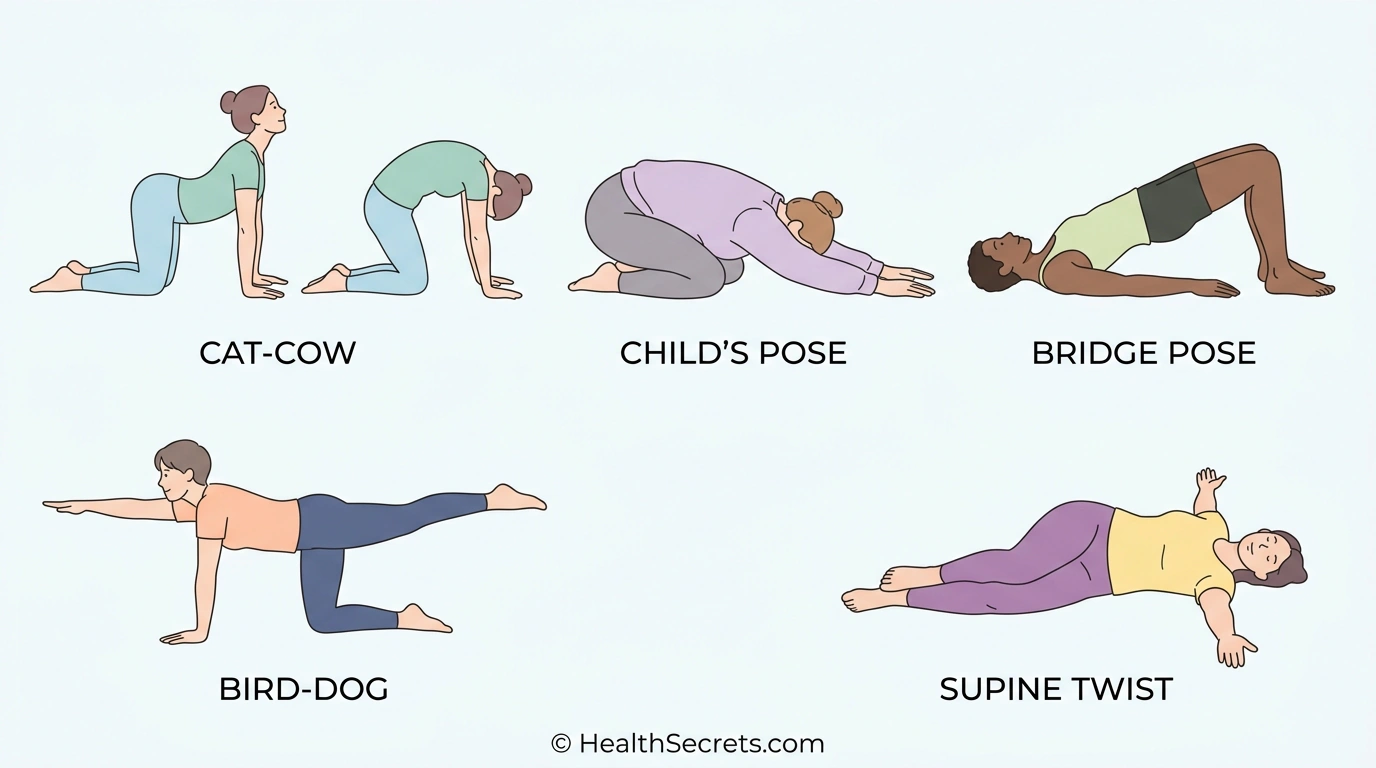
Best yoga poses for back pain:
- Cat-cow stretches (spinal mobility)
- Child's pose (gentle lower back release)
- Downward-facing dog (hamstring and back stretch)
- Bridge pose (glute and core activation)
- Supine twist (spinal rotation and tension release)
What About Pilates and Core Exercises?
A 2023 meta-analysis in Disability and Rehabilitation confirmed that Pilates significantly decreases low back pain compared to both no exercise and non-specific exercise [4]. Pilates targets the deep stabilizing muscles — transversus abdominis, multifidus, and pelvic floor — that act as your spine's internal support system [5].
Getting started safely:
- Begin with 2–3 sessions per week, 20–30 minutes each
- Focus on form over intensity — sloppy movement creates more problems
- Start with modified positions if you're currently in pain
- Walking and swimming are excellent low-impact complements
- Consistency matters far more than occasional intense sessions
If you're also managing stress or anxiety alongside your back pain, the mind-body component of yoga and Pilates offers dual benefits that address both problems simultaneously.

Evidence-Based Supplement Organizer & Safety Log
An inventory that adds up the cost, thirty-three supplements graded on the evidence, an upper-limit tally, an interaction screen, a daily schedule and a one-sheet for your clinician.
How Do Anti-Inflammatory Herbs Help With Back Pain?
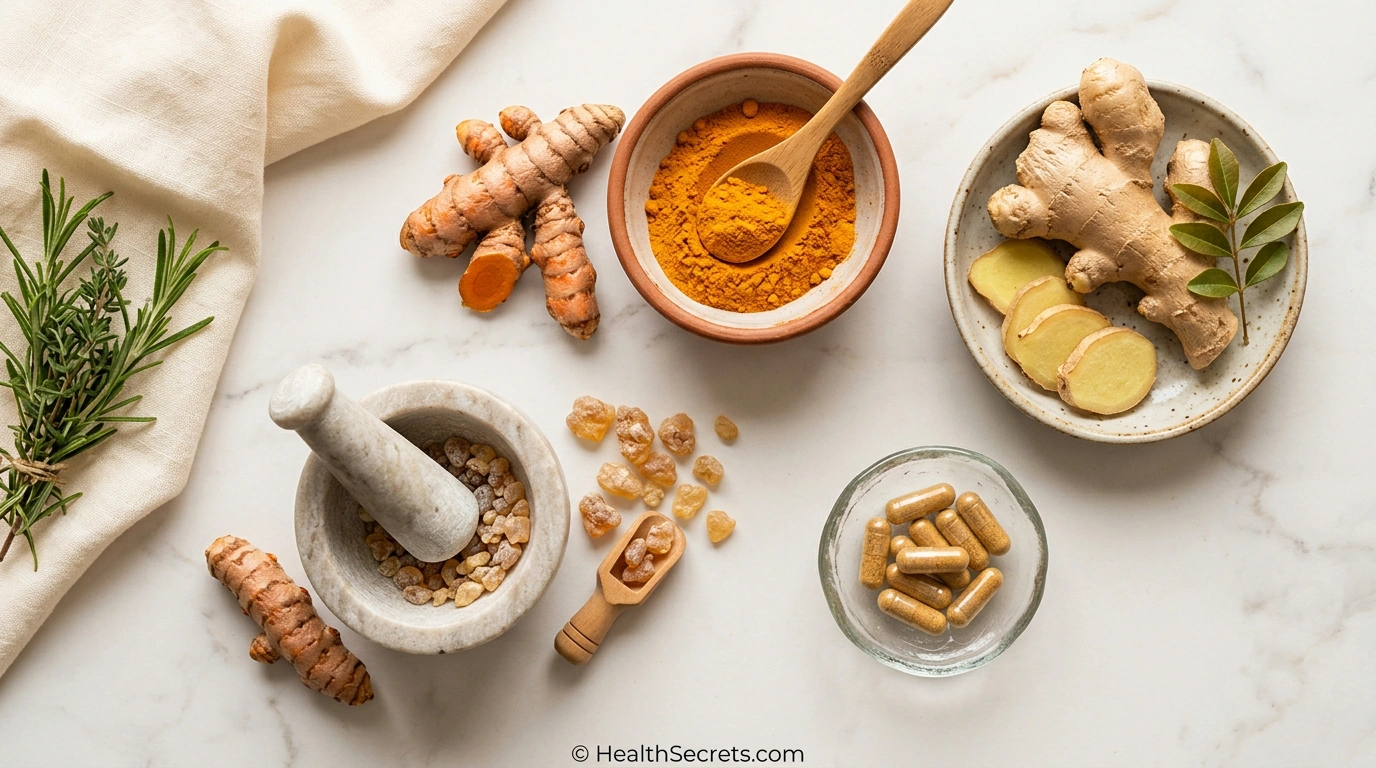
Turmeric, boswellia, and ginger contain compounds that block key inflammatory pathways involved in pain signaling.
Curcumin — turmeric's active compound — inhibits COX-2 and NF-κB, the same targets that pharmaceutical anti-inflammatories aim for, but with a substantially gentler side effect profile [6]. Clinical research on a turmeric-boswellia formulation demonstrated significant reduction in acute low back pain compared to placebo [7].
How Does Turmeric (Curcumin) Reduce Back Pain?
Curcumin has been the subject of over 400 clinical studies for various inflammatory conditions [7]. For back pain specifically, its anti-inflammatory and analgesic effects target the biological pathways that drive chronic inflammation and pain.
Dosing guidance:
- 500–1,500 mg curcumin daily
- Always pair with piperine (black pepper extract) or choose enhanced-absorption formulas — curcumin alone has notoriously poor bioavailability [7]
- Take with a fat-containing meal for better absorption
- Allow 4–8 weeks for full effects
- Generally well tolerated; may interact with blood thinners
What About Boswellia and Ginger?
Boswellic acids from Boswellia serrata inhibit 5-lipoxygenase, an enzyme involved in inflammatory leukotriene production. Clinical research supports its use alongside turmeric for inflammation-related pain, with the combination showing synergistic effects [7].
Boswellia dosing: 300–500 mg boswellia extract, 2–3 times daily
Ginger shares similar anti-inflammatory mechanisms with turmeric and has centuries of traditional use for pain and inflammation. It works well as a dietary addition — fresh ginger in meals, ginger tea, or standardized supplements (250 mg, 2–4 times daily).
Should You Try White Willow Bark or Devil's Claw for Back Pain?
White willow bark and devil's claw are two herbal analgesics with specific clinical evidence for lower back pain. White willow bark contains salicin — a natural precursor to aspirin — and a landmark randomized trial found that 240 mg salicin daily left significantly more patients pain-free compared to placebo [8]. Devil's claw shows comparable effectiveness with clinical trials supporting doses of 50–100 mg harpagoside daily [11].
How Effective Is White Willow Bark for Back Pain?
A randomized, double-blind study of 210 patients with chronic low back pain found the high-dose group (240 mg salicin) was significantly more likely to be pain-free than placebo, with lower rescue medication use [8]. A follow-up study found willow bark extract comparable to the pharmaceutical rofecoxib (Vioxx), but at lower cost [9]. A 2015 review confirmed both the efficacy and favorable safety profile compared to synthetic NSAIDs [10].
Dosing: 120–240 mg salicin daily (standardized extract)
Cautions: Similar precautions as aspirin — avoid if you have aspirin sensitivity, bleeding disorders, or take blood thinners. Not recommended for children or during pregnancy.
What Does the Research Say About Devil's Claw?
This southern African herb contains harpagosides with demonstrated anti-inflammatory and analgesic properties. A systematic review of 12 trials found moderate evidence for effectiveness in both osteoarthritis and low back pain [11]. Research indicates devil's claw extract with at least 50 mg harpagoside daily can meaningfully reduce pain, with a lower risk of adverse events than synthetic analgesics [12].
Dosing: 600–2,400 mg daily (standardized to 50–100 mg harpagoside)
Cautions: May interact with blood thinners and diabetes medications. Contraindicated with gastric ulcers due to increased gastric secretion. Discontinue before surgery.
These herbal supplements complement rather than replace the exercise approaches from Step 1. Supporting your body's natural detoxification pathways can also help reduce the inflammatory burden that contributes to chronic pain.
How Do Topical Remedies and Heat/Cold Therapy Reduce Back Pain?
Topical capsaicin cream and strategic heat/cold application provide localized pain relief without systemic side effects. A systematic review in BMJ found topical capsaicin moderately effective for chronic musculoskeletal pain [13], while a placebo-controlled study showed capsicum plasters reduced chronic low back pain by 42% — significantly better than the 31% reduction with placebo [14].
How Does Capsaicin Cream Work?
Capsaicin — the compound that makes chili peppers hot — works by depleting substance P, a neurotransmitter that carries pain signals to your brain. Regular application (3–4 times daily) gradually reduces pain signaling in the treated area [13][15].
How to use effectively:
- Start with low-concentration cream (0.025–0.075%)
- Apply to the painful area 3–4 times daily
- Wash hands thoroughly after application
- Expect a burning sensation initially — this decreases with continued use
- Full pain relief typically develops over 1–2 weeks of consistent use
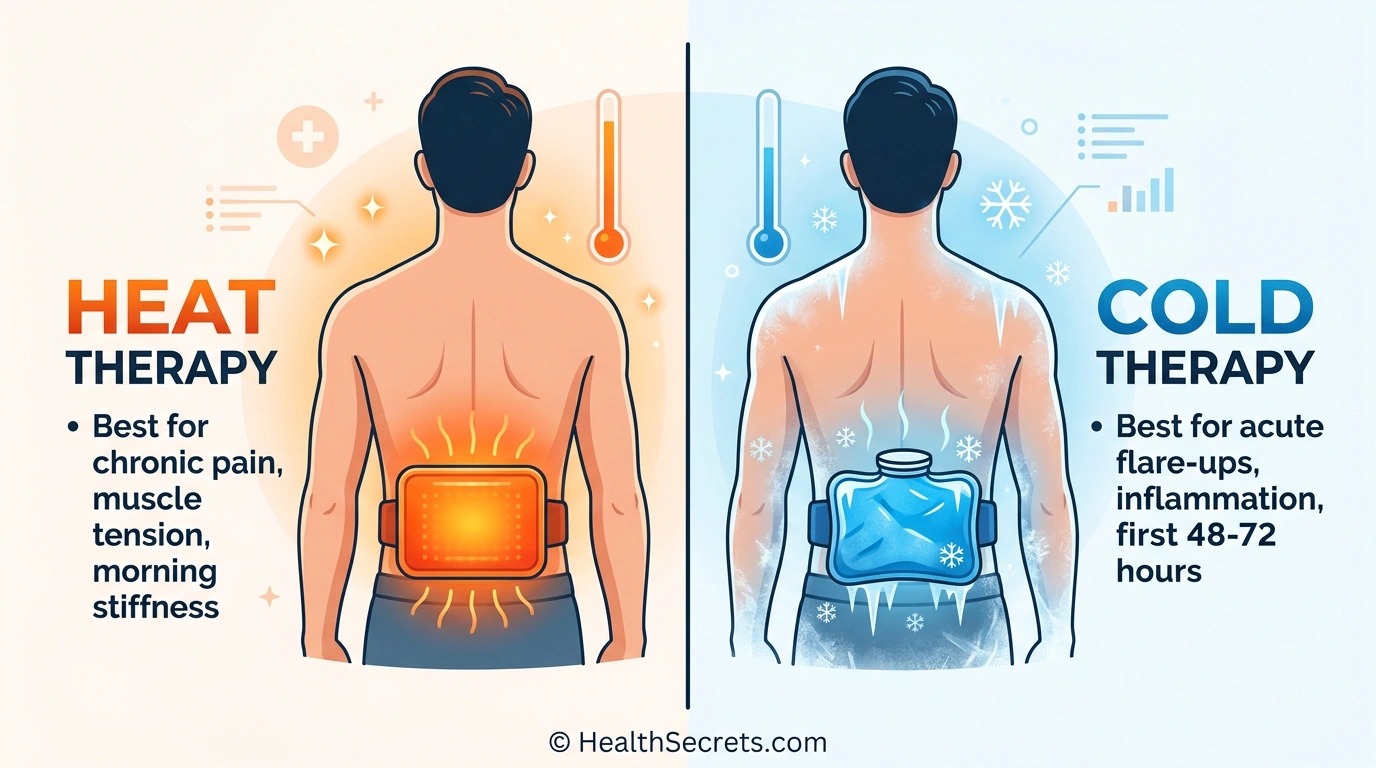
When Should You Use Heat vs. Cold Therapy?
Heat (for chronic pain and muscle tension):
- Relaxes tight muscles and increases blood flow
- Use heating pads, warm baths, or heat wraps
- Apply for 15–20 minutes at a time
- Best for morning stiffness and muscle spasms
Cold (for acute flare-ups and inflammation):
- Reduces inflammation and numbs acute pain
- Ice packs wrapped in a cloth, 15–20 minutes at a time
- Best within the first 48–72 hours of a flare-up
- Never apply ice directly to skin
Alternating heat and cold can also be beneficial — cold to reduce inflammation, then heat to relax muscles and promote healing.
What Lifestyle Changes Help Prevent and Manage Back Pain?
Posture correction, ergonomic adjustments, weight management, and quality sleep address the root causes that keep back pain coming back. Even the best supplements and exercises lose effectiveness if you spend 10 hours daily in a position that strains your spine. These modifications cost nothing and compound over time.
How Does Posture Affect Back Pain?
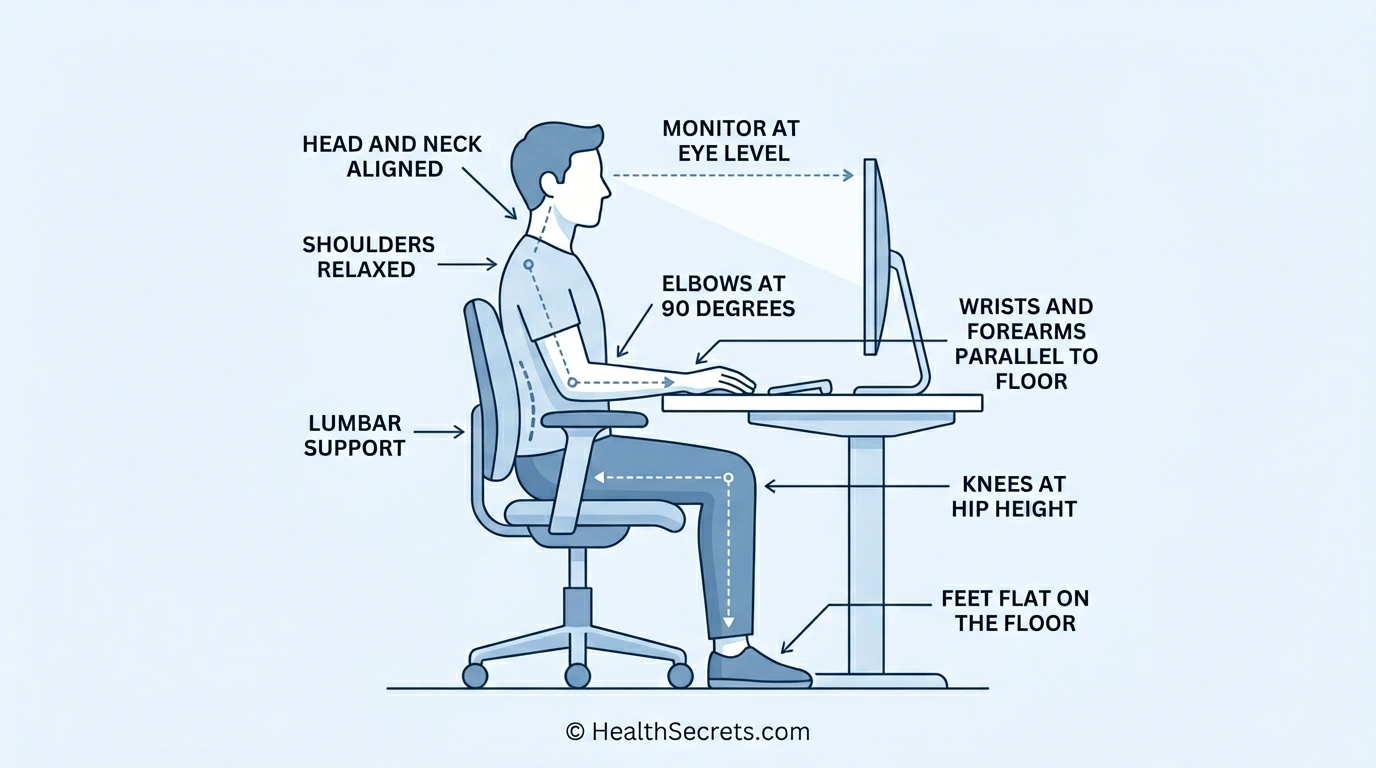
- Sitting: Feet flat on the floor, knees at hip height, lumbar support in the curve of your lower back
- Standing: Weight evenly distributed, shoulders back without force, core lightly engaged
- Computer work: Monitor at eye level, elbows at 90 degrees, take standing breaks every 30–45 minutes
- Lifting: Bend at the knees (not the waist), keep the load close to your body, avoid twisting while lifting
What Sleep Position Helps Back Pain?
Poor sleep posture contributes more to back pain than most people realize. Side sleepers should place a pillow between their knees. Back sleepers benefit from a pillow under the knees to support the natural lumbar curve. Stomach sleeping generally worsens back pain — if you can't break the habit, place a thin pillow under your pelvis.
How Does Weight and Stress Management Help?
Every extra pound of body weight places approximately four additional pounds of pressure on your lumbar spine. Even modest weight loss (5–10% of body weight) can meaningfully reduce back pain. A nutrient-dense, anti-inflammatory diet — rich in omega-3 fatty acids, colorful vegetables, and whole grains — supports both weight management and gut health, which influences systemic inflammation.
Chronic stress amplifies pain perception through elevated cortisol and increased muscle tension. Mindfulness meditation, deep breathing exercises, and the yoga practice from Step 1 all help break the stress-pain cycle. Addressing mental wellness isn't separate from treating back pain — it's a core part of the solution.
What Are the Most Common Mistakes People Make With Natural Back Pain Remedies?
The biggest mistake is expecting any single remedy to work in isolation. Back pain is multifactorial, and the most effective approach combines movement, anti-inflammatory support, and lifestyle modifications. Relying solely on supplements while remaining sedentary rarely produces meaningful improvement [1][4].
Mistakes to avoid:
- Bed rest beyond 1–2 days — prolonged inactivity actually worsens back pain. Gentle movement promotes healing
- Pushing through sharp pain during exercise — dull aching is normal initially, but sharp or shooting pain means you need to modify or stop
- Inconsistent supplement use — herbs like turmeric and devil's claw need 4–8 weeks of consistent daily use to reach full effectiveness
- Ignoring posture during exercise — bad form during yoga or Pilates can create new problems. Consider a few sessions with a qualified instructor
- Overdoing it on good days — the boom-bust cycle (doing too much when pain is low, crashing afterward) prevents steady progress
- Mixing multiple herbal blood thinners — white willow bark, turmeric, and ginger all have mild blood-thinning effects. Combining them with prescription blood thinners requires medical guidance
- Skipping the basics — no supplement compensates for chronic dehydration, poor sleep, or a sedentary lifestyle
Is Using Natural Remedies for Back Pain Safe? When Should You Stop?
For most people with chronic non-specific back pain, the natural approaches in this guide are safe when used appropriately. However, back pain can sometimes signal serious conditions that require medical intervention. Recognizing the difference between manageable discomfort and warning signs is critical for your safety [11][12].
What Are the Red Flags That Require Immediate Medical Attention?
- Numbness or tingling in your legs or groin area
- Progressive leg weakness
- Loss of bladder or bowel control
- Fever accompanying back pain
- Unexplained weight loss with back pain
- Pain after a fall, accident, or other trauma
- Back pain that wakes you from sleep consistently
- Pain that doesn't improve at all after 4–6 weeks of conservative treatment
What Are the Safety Considerations for Each Supplement?
- Turmeric/curcumin: Generally safe. May interact with blood thinners, diabetes medications, and gallbladder medications. Avoid with bile duct obstruction.
- White willow bark: Avoid if allergic to aspirin. Not for children under 18, pregnant women, or people with bleeding disorders [10].
- Devil's claw: Contraindicated with gastric ulcers. May interact with blood thinners, diabetes medications, and heart medications [11].
- Capsaicin: External use only. Avoid on broken skin, near eyes, and mucous membranes. Burning sensation is normal but should diminish with use [13].
Always inform your healthcare provider about all supplements you're taking, particularly before surgery or when starting new medications.
Action Plan
What Should You Do First to Start Managing Back Pain Naturally?
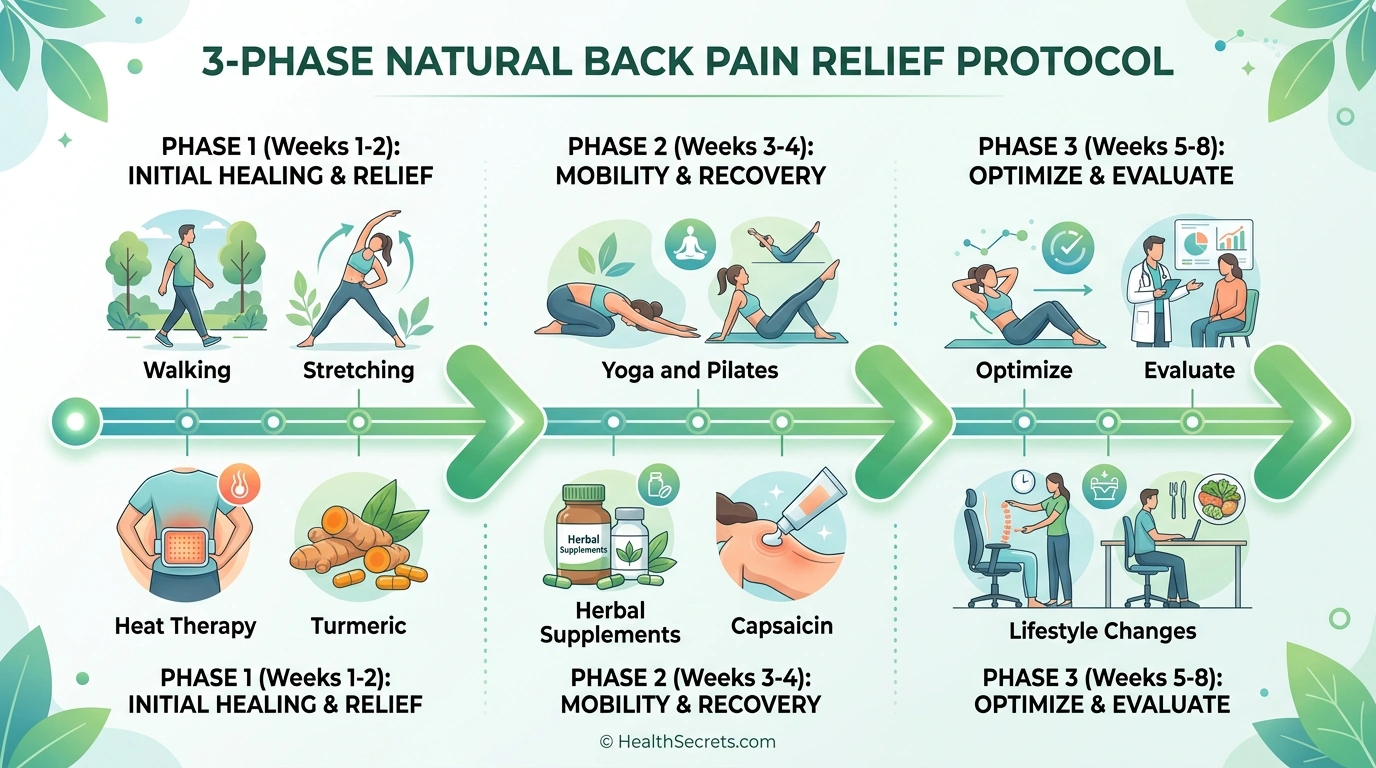
Follow the sequence below, work through each phase in order, and use the checklist as your practical implementation guide.
Start with gentle movement today — even a 10-minute walk counts. Then build a layered protocol over the next 4–8 weeks that combines exercise, anti-inflammatory support, and lifestyle adjustments. Trying everything at once creates overwhelm; phased implementation is more sustainable and lets you identify what works best for your body.
Phase 1: Weeks 1–2 (Foundation)
- Start daily walking (15–30 minutes)
- Begin gentle stretching routine (cat-cow, child's pose, supine twist)
- Apply heat therapy for 15–20 minutes daily on stiff areas
- Audit your workstation ergonomics and sleep position
- Start a turmeric/curcumin supplement with piperine
Phase 2: Weeks 3–4 (Build)
- Begin a structured yoga or Pilates program (2–3 sessions per week)
- Add white willow bark or devil's claw if needed for pain relief
- Introduce capsaicin cream for localized pain
- Improve dietary anti-inflammatory intake (omega-3s, vegetables, ginger)
- Practice stress management techniques (5–10 minutes daily)
Phase 3: Weeks 5–8 (Optimize)
- Increase exercise frequency and intensity gradually
- Evaluate supplement effectiveness — continue what works, adjust or discontinue what doesn't
- Address weight management if applicable
- Consider professional guidance (yoga instructor, physiotherapist) for form refinement
- Reassess overall progress — if minimal improvement, consult a healthcare provider