That wave of nausea hits and suddenly nothing else matters. Whether you're white-knuckling through a car ride, pushing through the first trimester, or dealing with a stomach that just won't cooperate—you want relief, and you want it now. The good news? Several natural remedies for nausea have genuine scientific backing. A clinical trial published in Nutrition Journal found ginger superior to vitamin B6 for reducing nausea severity, with 1,000 mg daily proving effective [1] [3] [10] [15]. Cochrane systematic reviews confirm both ginger and P6 acupressure reduce pregnancy-related nausea. And peppermint oil inhalation shows promise for postoperative and chemotherapy-induced nausea across multiple studies [13].
The trick is matching the right remedy to your specific type of nausea. Pregnancy nausea responds to different approaches than motion sickness or digestive upset. This guide walks you through each evidence-based remedy step by step—exact dosing, proper technique, and which combinations work best for your situation.
If you're exploring natural approaches to digestive wellness, our gut health complete guide covers the foundations, and our detox diet guide offers complementary dietary strategies.
What Do You Need to Know Before Trying Natural Nausea Remedies?
Natural nausea remedies target different biological pathways depending on your cause of nausea, so understanding the basics helps you choose the right approach. Ginger blocks serotonin receptors in the gut and brain. Acupressure stimulates the vagus nerve. Peppermint relaxes gastrointestinal smooth muscle. Matching remedy to mechanism makes all the difference.
Common causes of nausea include:
- Pregnancy (morning sickness) — hormonal changes, particularly rising hCG and estrogen levels
- Motion sickness — conflicting signals between your eyes and inner ear (vestibular system)
- Digestive issues — gastroenteritis, food poisoning, indigestion, IBS, GERD
- Medications — chemotherapy, antibiotics, opioids, post-surgical anesthesia
- Other triggers — migraines, anxiety, infections, inner ear problems, head injury
Your body processes nausea through several pathways: the chemoreceptor trigger zone detects toxins and hormones in the blood, the vestibular system responds to motion conflicts, and direct gastrointestinal irritation sends signals to the brain. Each remedy addresses specific pathways, which is why combining approaches often works better than relying on a single one.
What you'll need: Most remedies require minimal supplies—fresh or dried ginger, peppermint tea or essential oil, and optionally acupressure wristbands. Start with the remedy best suited to your type of nausea.
How Do You Use Ginger to Relieve Nausea Naturally?
Ginger has the strongest clinical evidence of any natural nausea remedy. Research shows it's superior to vitamin B6 for nausea severity, with 1,000 mg daily proving effective for pregnancy nausea, motion sickness, and postoperative nausea. It works by blocking serotonin (5-HT3) receptors in the gut and brain while speeding gastric emptying.
What's the Right Ginger Dose for Nausea?
For most adults, 250–1,000 mg daily divided into 3–4 doses covers the therapeutic range. Start on the lower end and increase as needed.
- Pregnancy nausea: 250 mg four times daily (1,000 mg total) [9]. Take consistently, not just during episodes
- Motion sickness: 500–1,000 mg taken 30–60 minutes before travel. Repeat every 4 hours as needed
- Digestive nausea: Up to 1,500 mg daily in divided doses
- Post-operative nausea: 1,000 mg taken before surgery (with physician approval)
Which Form of Ginger Works Best?
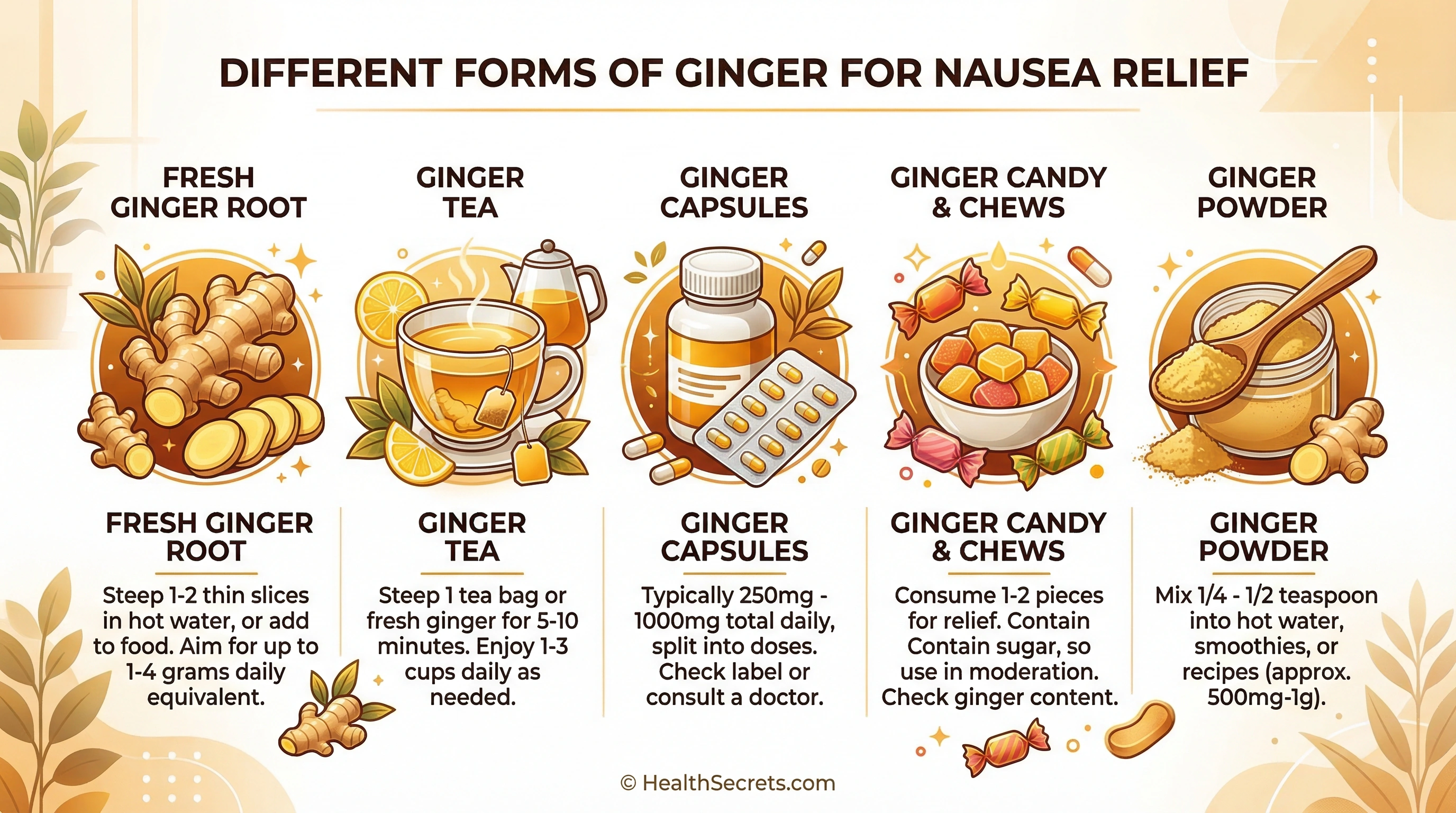
- Ginger capsules — standardized extract provides consistent dosing and maximum convenience
- Fresh ginger tea — steep a 1-inch piece of sliced ginger in hot water for 5–10 minutes, add honey if desired
- Ginger chews or candy — convenient for travel; ensure they contain real ginger, not just flavoring
- Fresh ginger — chew small pieces or grate into warm water for immediate relief
Take ginger with food to minimize heartburn, the most common mild side effect. Ginger has mild blood-thinning properties, so consult your doctor if you take anticoagulants.

The Supplement Seal Verifier
What USP, NSF, NSF Certified for Sport, ConsumerLab, BSCG and Informed Choice each actually test for, the label claims that mean nothing, and a bottle-by-bottle audit sheet.
How Do You Find and Stimulate the P6 Acupressure Point for Nausea?
P6 acupressure is a drug-free technique that reduces nausea by stimulating the vagus nerve on your inner wrist. A randomized controlled trial found acupressure wristbands significantly decreased nausea severity in hyperemesis gravidarum patients, while Cochrane reviews confirm effectiveness for pregnancy, postoperative, and chemotherapy-induced nausea [5].
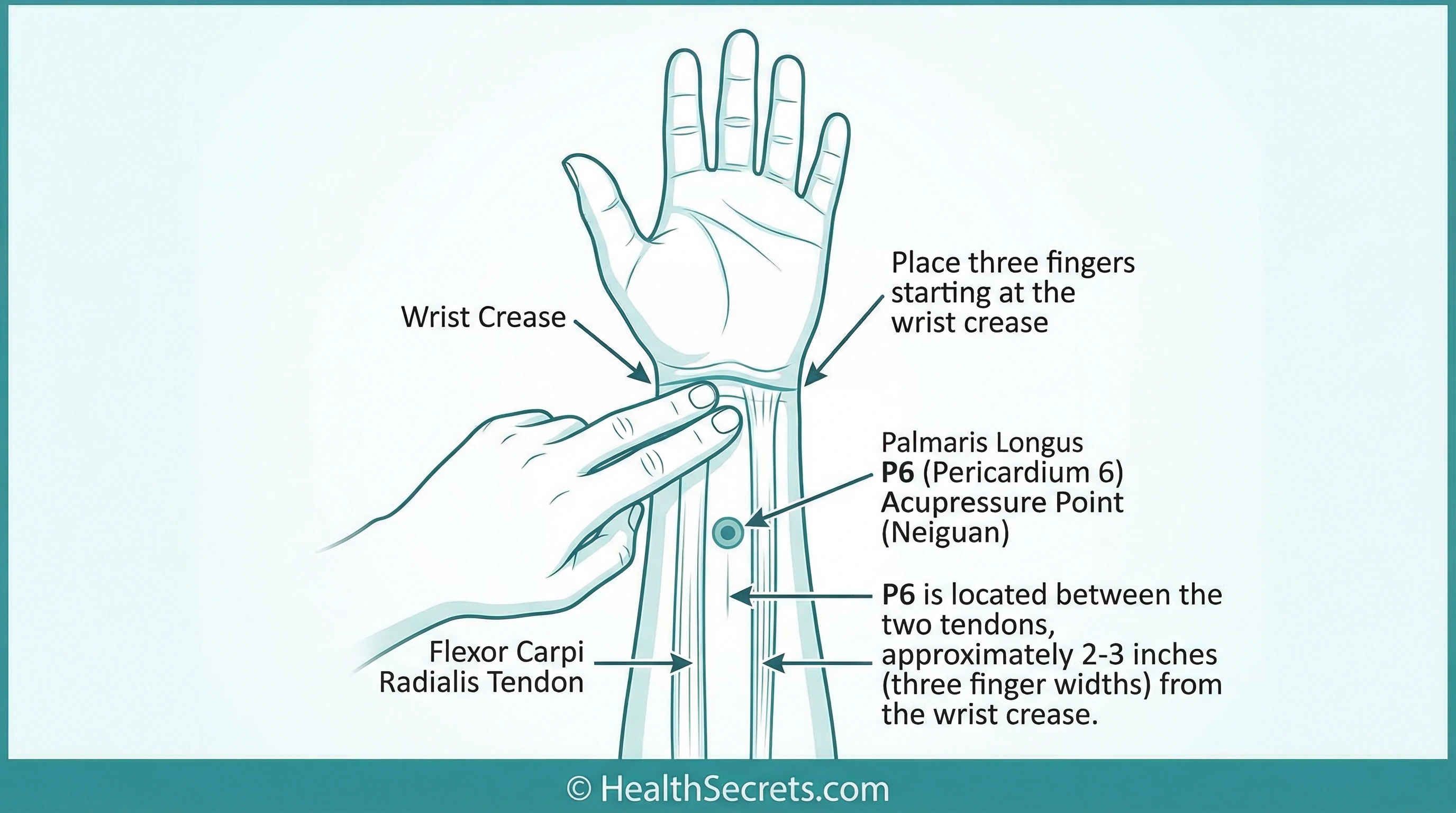
How Do You Locate the P6 Point?
- Hold your hand palm-up
- Place three fingers on your inner wrist, starting at the wrist crease
- The P6 point sits just below your third finger, between the two prominent tendons
- You'll feel a slight depression between the tendons—that's the spot
How Do You Apply P6 Acupressure Correctly?
- Press firmly with your thumb or index finger
- Use steady pressure or small circular motions
- Maintain for 2–3 minutes
- Repeat on the other wrist
- Apply whenever nausea strikes—there's no limit on frequency
Acupressure wristbands (Sea-Bands) apply constant pressure to P6 and are particularly useful for ongoing nausea during pregnancy or travel. Put them on before symptoms start for best results. They have zero side effects and are safe for all populations, including children and pregnant women.
How Can Peppermint Aromatherapy Relieve Nausea Quickly?
Inhaling peppermint essential oil can reduce nausea within minutes by blocking serotonin and dopamine receptors, relaxing gastrointestinal smooth muscle, and having a direct calming effect on the stomach [6]. A 2026 meta-analysis found peppermint oil inhalation significantly reduced nausea in postoperative, chemotherapy, and pregnancy settings.
Peppermint Aromatherapy Technique:
- Place 1–2 drops of peppermint essential oil on a cotton ball or tissue
- Hold 2–3 inches from your nose
- Inhale slowly and deeply for 2–3 minutes
- Repeat as needed throughout the day
Other peppermint options:
- Peppermint tea — steep leaves for 5–10 minutes, sip slowly. Soothing for digestive upset
- Enteric-coated peppermint oil capsules — 180–225 mg three times daily between meals for IBS-related nausea
Important: Avoid peppermint if you have GERD—it can relax the lower esophageal sphincter and worsen reflux. Peppermint tea is generally safe in pregnancy in moderation, but avoid high-dose peppermint oil capsules during pregnancy.

How Does Vitamin B6 Help With Pregnancy Nausea?
Vitamin B6 (pyridoxine) is a first-line recommendation for morning sickness, working as a cofactor for neurotransmitter synthesis that affects serotonin pathways. While ginger may be more effective for nausea severity, B6 is still proven effective, well-tolerated, and can be combined with ginger for enhanced relief.
Dosing: Take 10–25 mg three times daily (30–75 mg total). Maintain a consistent schedule throughout the day—not just during nausea episodes—for best results.
B6 is often combined with doxylamine (the combination sold as Diclegis/Bonjesta) for stronger relief. Some women find B6 alone sufficient, particularly for mild to moderate morning sickness. Stay under 100 mg daily to avoid potential nerve issues from long-term high doses. Your prenatal vitamin already contains B6, but you may need additional supplementation—discuss with your OB/GYN.
What Supporting Remedies Can Help Settle Your Stomach Naturally?
Beyond the primary remedies, several lifestyle and dietary approaches provide meaningful nausea relief, particularly when combined with ginger, acupressure, or peppermint [2] [12]. Eating small frequent meals, staying hydrated, and using lemon aromatherapy all address different nausea triggers with minimal risk.
What Dietary Changes Help With Nausea?
- Eat small meals every 2–3 hours — an empty stomach worsens nausea and blood sugar drops trigger symptoms
- Keep crackers by your bed — eat before getting up in the morning (especially helpful for pregnancy nausea)
- Choose cold, bland foods — they produce less odor and are easier to tolerate. The BRAT approach works: bananas, rice, applesauce, toast
- Avoid fatty, spicy, and fried foods — these slow digestion and irritate the stomach
- Add protein — helps stabilize blood sugar and prevents the drops that trigger nausea
Why Is Hydration Critical When Nauseous?
- Sip fluids frequently in small amounts—don't gulp large quantities
- Best options: water, ginger tea, lemon water, clear broth, popsicles
- Use electrolyte drinks (Pedialyte, diluted sports drinks) if you're vomiting
- Ginger tea and lemon water provide hydration plus anti-nausea benefits
- If you can't keep fluids down for 24+ hours, seek medical care immediately
What Other Approaches Provide Quick Relief?
- Lemon aromatherapy — inhale fresh lemon scent or add to cold water. Especially effective for pregnancy nausea
- Chamomile tea — soothing and anti-inflammatory, gentle on the stomach. Safe in pregnancy in moderation
- Fresh air and deep breathing — sit near an open window, breathe slowly through your nose. Try 4-7-8 breathing: inhale 4 seconds, hold 7 seconds, exhale 8 seconds
How Do You Match the Right Natural Remedy to Your Cause of Nausea?
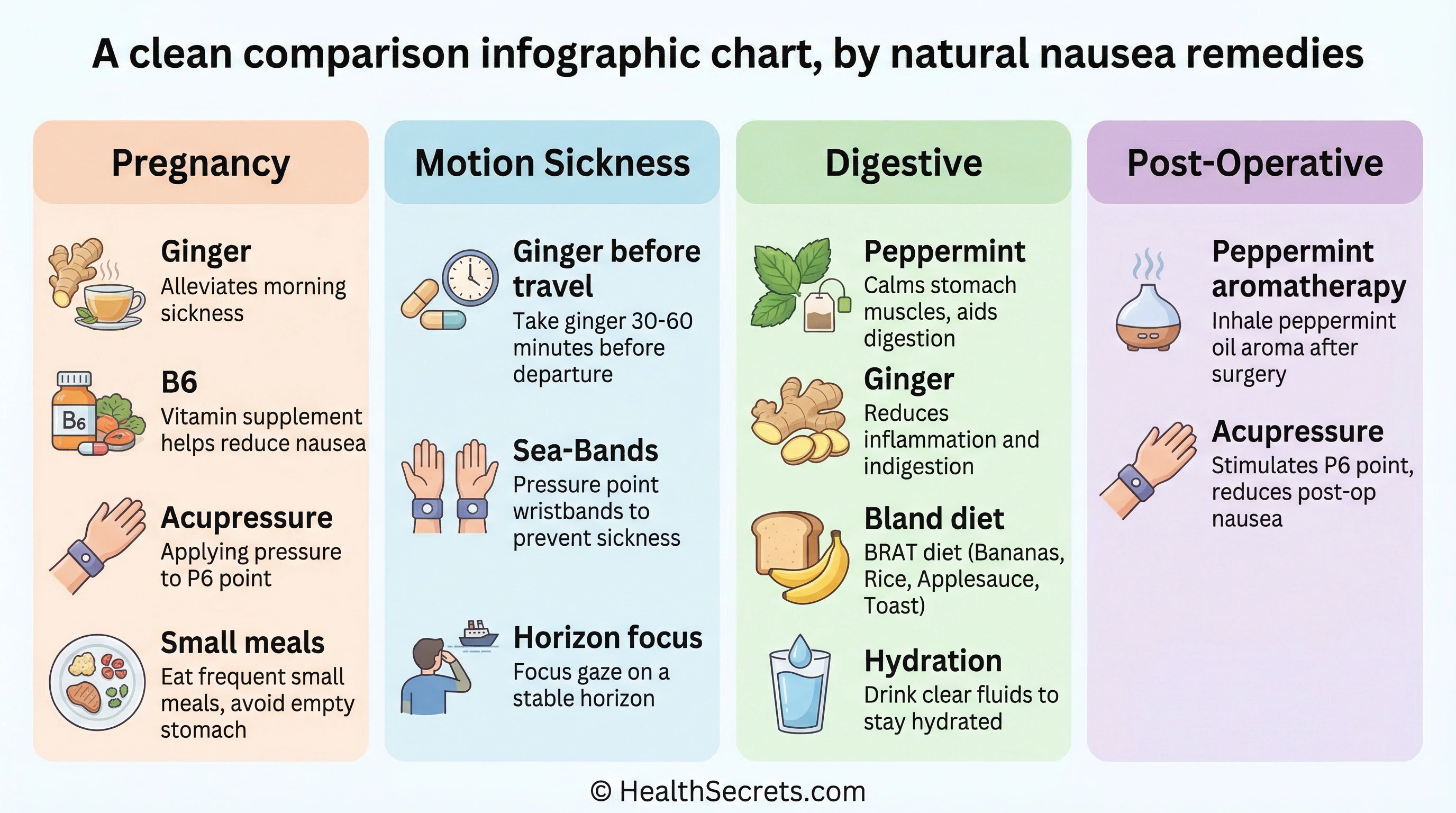
The most effective approach depends entirely on what's causing your nausea, because different causes activate different biological pathways. Pregnancy nausea involves hormonal triggers, motion sickness involves the vestibular system, and digestive nausea involves direct GI irritation—each responds best to specific remedies.
- Pregnancy nausea: Ginger (250 mg four times daily) + acupressure wristbands + vitamin B6 (10–25 mg three times daily) [4] [8] [14]. Small frequent meals. Avoid an empty stomach. Take prenatal vitamins at night if they trigger nausea. Seek care for hyperemesis gravidarum—severe vomiting, inability to keep fluids down, weight loss.
- Motion sickness: Ginger (500–1,000 mg) 30–60 minutes before travel + acupressure bands on before departure. Sit in the front seat or over the airplane wing. Focus on the horizon, not screens. Ginger candy during travel. Fresh air.
- Digestive nausea: Peppermint tea or aromatherapy + ginger + chamomile tea. Bland BRAT diet. Small meals. Stay hydrated. If due to infection, focus on hydration and seek care if severe.
- Post-operative nausea: Peppermint aromatherapy (inhale essential oil) + P6 acupressure [7]. Ginger if able to take orally.
- Medication-related nausea: Discuss timing and dosage adjustments with your prescribing doctor. Supportive measures: take medications with food when appropriate, ginger, small frequent meals.
What Are the Most Common Mistakes When Using Natural Nausea Remedies?
Most people wait until nausea peaks before trying remedies, but the most effective approach is consistent and preventive use. Ginger works better taken regularly throughout the day than as a rescue remedy. Acupressure bands should go on before symptoms start. Here are the mistakes that undermine relief.
- Using ginger ale for nausea relief. Most commercial brands contain little to no real ginger—check for "ginger extract" or "ginger root" in the ingredients before relying on it
- Taking ginger on an empty stomach, which can cause heartburn and actually make things worse. Always take with food or a small snack
- Using peppermint when you have GERD or acid reflux — it relaxes the esophageal sphincter and can increase reflux symptoms
- Inconsistent B6 dosing — vitamin B6 works best on a regular schedule, not taken sporadically when symptoms appear
- Ignoring hydration — even mild dehydration worsens nausea significantly. Sip fluids constantly in small amounts throughout the day
- Lying flat when nauseous — elevate your upper body and get fresh air instead, which engages the parasympathetic nervous system
Are Natural Nausea Remedies Safe, and When Should You See a Doctor?
Most natural nausea remedies are safe for healthy adults when used at recommended doses. Ginger is well-tolerated with mild heartburn as the main side effect at higher doses. Acupressure has zero known side effects. Peppermint is safe except for those with GERD. Vitamin B6 is safe in pregnancy at recommended doses.
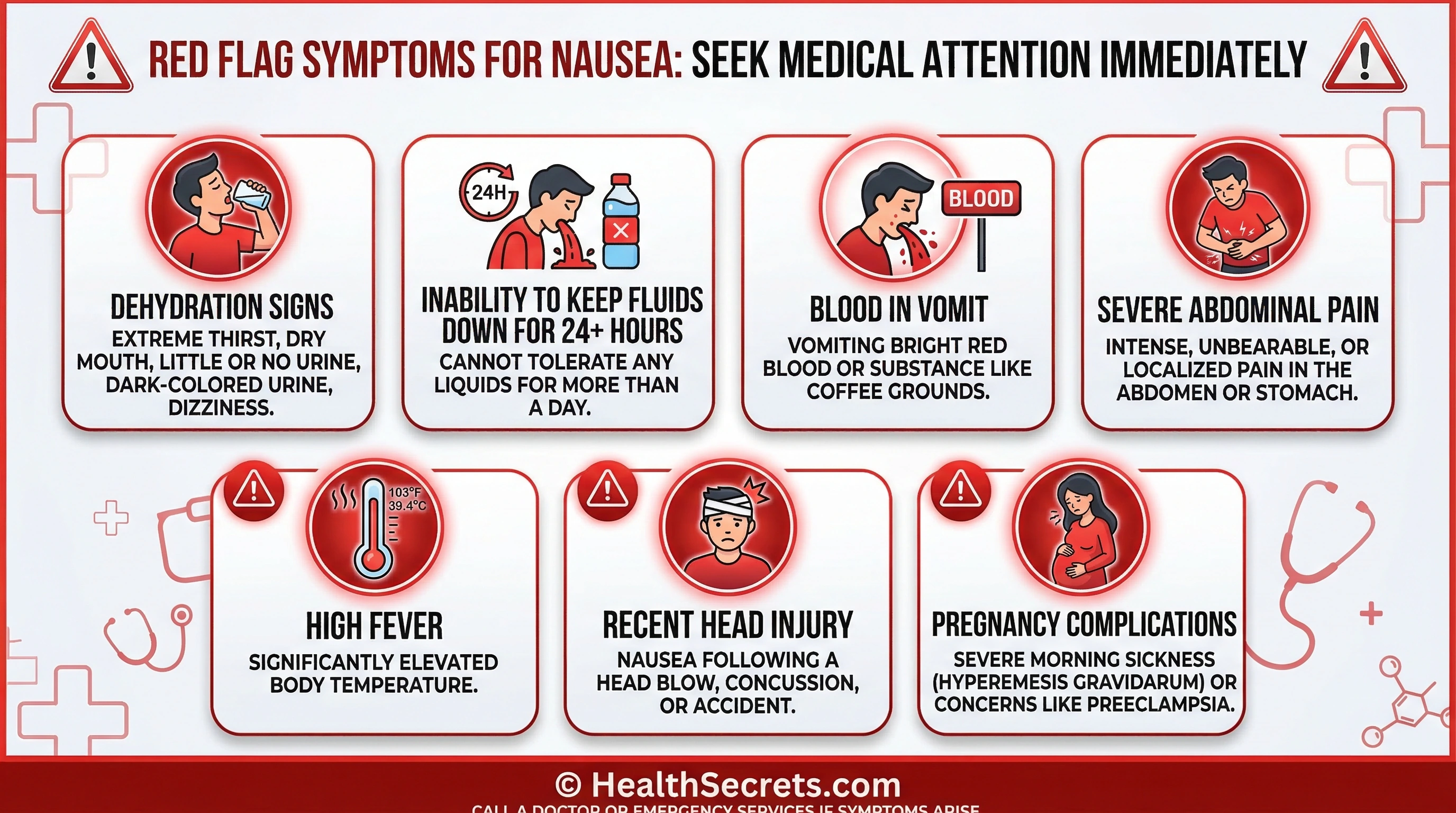
Seek immediate medical care if you experience:
- Can't keep any fluids down for 24+ hours
- Signs of dehydration: dark urine, dizziness, dry mouth, rapid heartbeat, decreased urination
- Blood in vomit (red or "coffee grounds" appearance)
- Severe or localized abdominal pain
- Fever over 101°F (38.3°C)
- Nausea following a head injury
- Severe pregnancy complications (hyperemesis gravidarum, weight loss, inability to eat or drink)
- Chronic or unexplained nausea lasting more than a few days without clear cause
Drug interactions to discuss with your doctor:
- Ginger has mild blood-thinning effects—use caution with anticoagulants (warfarin, aspirin)
- Peppermint oil capsules may interact with certain medications metabolized by the liver
- High-dose vitamin B6 (over 100 mg daily long-term) can cause peripheral neuropathy
Natural remedies work well for mild to moderate nausea from common causes. Persistent nausea that doesn't respond to these remedies warrants medical evaluation to rule out underlying conditions.
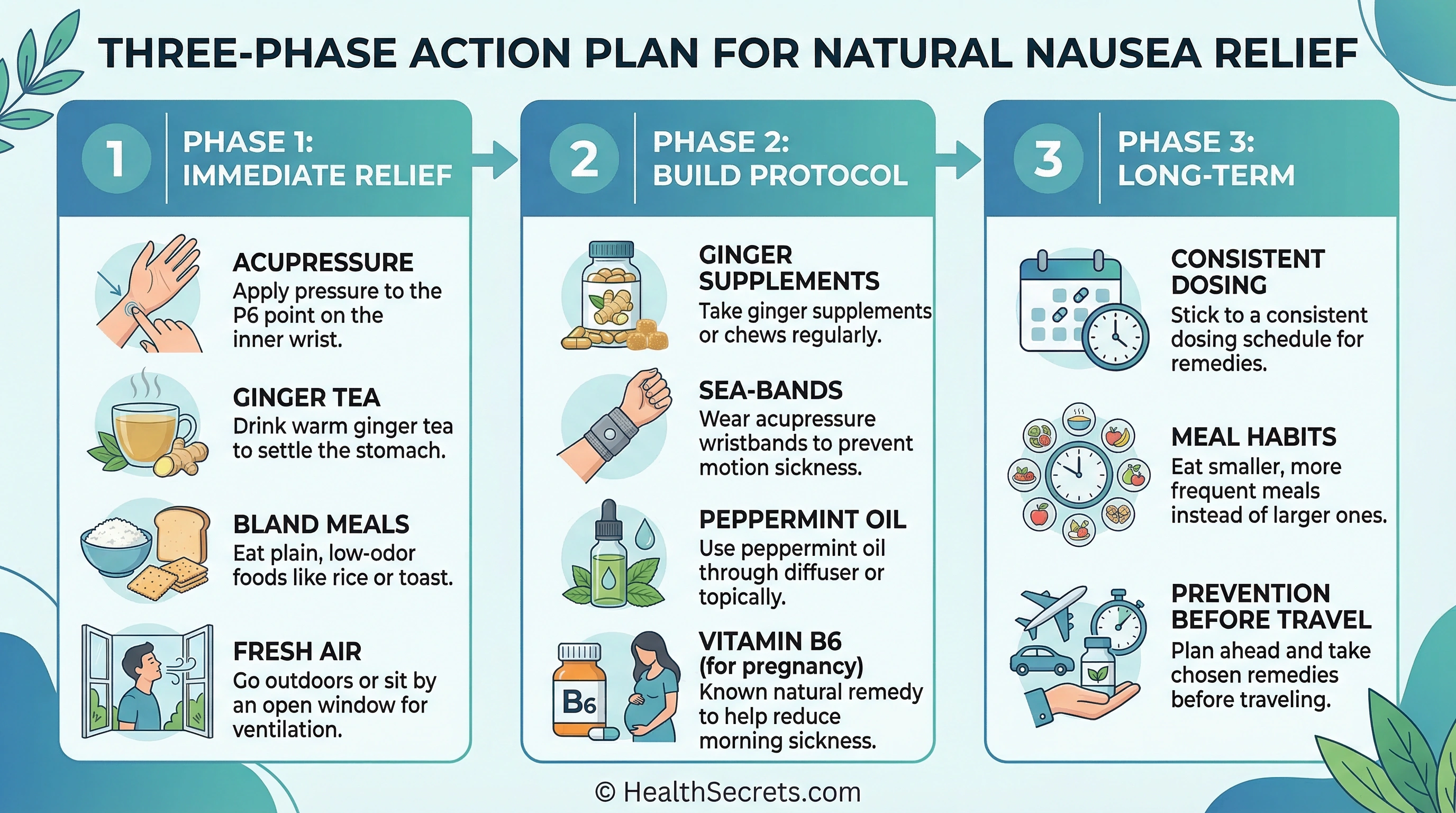
Action Plan
What Should You Do First to Get Natural Nausea Relief?
Follow the sequence below, work through each phase in order, and use the checklist as your practical implementation guide.
Start by identifying your nausea cause, then choose the best-matched remedy from this guide. For immediate relief, try P6 acupressure—it works in minutes with no supplies needed. For ongoing management, begin a ginger regimen and address your diet. Build your approach in phases for lasting results.
Phase 1 — Immediate Relief (Today):
- Apply pressure to the P6 acupressure point for 2–3 minutes on each wrist
- Sip room-temperature ginger tea or lemon water slowly
- Switch to small, bland meals every 2–3 hours
- Get fresh air and practice deep breathing
Phase 2 — Build Your Protocol (This Week):
- Start a ginger supplement at 250 mg three times daily (increase to 1,000 mg daily if needed)
- Get acupressure wristbands for ongoing P6 stimulation
- Stock peppermint tea and essential oil for aromatherapy
- If pregnant, discuss vitamin B6 supplementation with your provider
Phase 3 — Long-Term Management (Ongoing):
- Take ginger and/or B6 consistently on schedule, not just when nauseous
- Maintain small frequent meals and hydration habits
- Use the motion sickness prevention protocol before travel (ginger + Sea-Bands 30 minutes before)
- Monitor symptoms—seek medical care if nausea persists or worsens despite remedies