You know that wired-but-tired feeling — the one where your mind races at 2 a.m. while your body begs for rest? That is chronic cortisol doing its damage. Cortisol is your body's primary stress hormone, and while short bursts help you survive genuine threats, modern life keeps the faucet running around the clock. Over time, elevated cortisol levels erode sleep quality, pack visceral fat around your midsection, weaken your immune system, and accelerate brain aging [4]. [2]
The good news: cortisol responds predictably to the right lifestyle interventions. A 2023 meta-analysis confirmed that structured stress management practices — including mindfulness, breathwork, and relaxation training — significantly reduce cortisol output (1) [1]. Targeted supplements like ashwagandha have been shown to lower cortisol by up to 23% in randomized controlled trials (2). And simple habits like consistent sleep timing and daily nature exposure produce measurable drops within weeks. [8]
This guide walks you through five concrete steps to lower cortisol naturally, backed by peer-reviewed research and organized so you can start today. [18]
Related HealthSecrets guides: Mental Wellness: Natural Strategies for Emotional Balance · Sleep Optimization Guide · Mental Wellness Complete Guide · Longevity & Anti-Aging Guide
What Do You Need to Know Before Starting a Cortisol-Lowering Protocol?
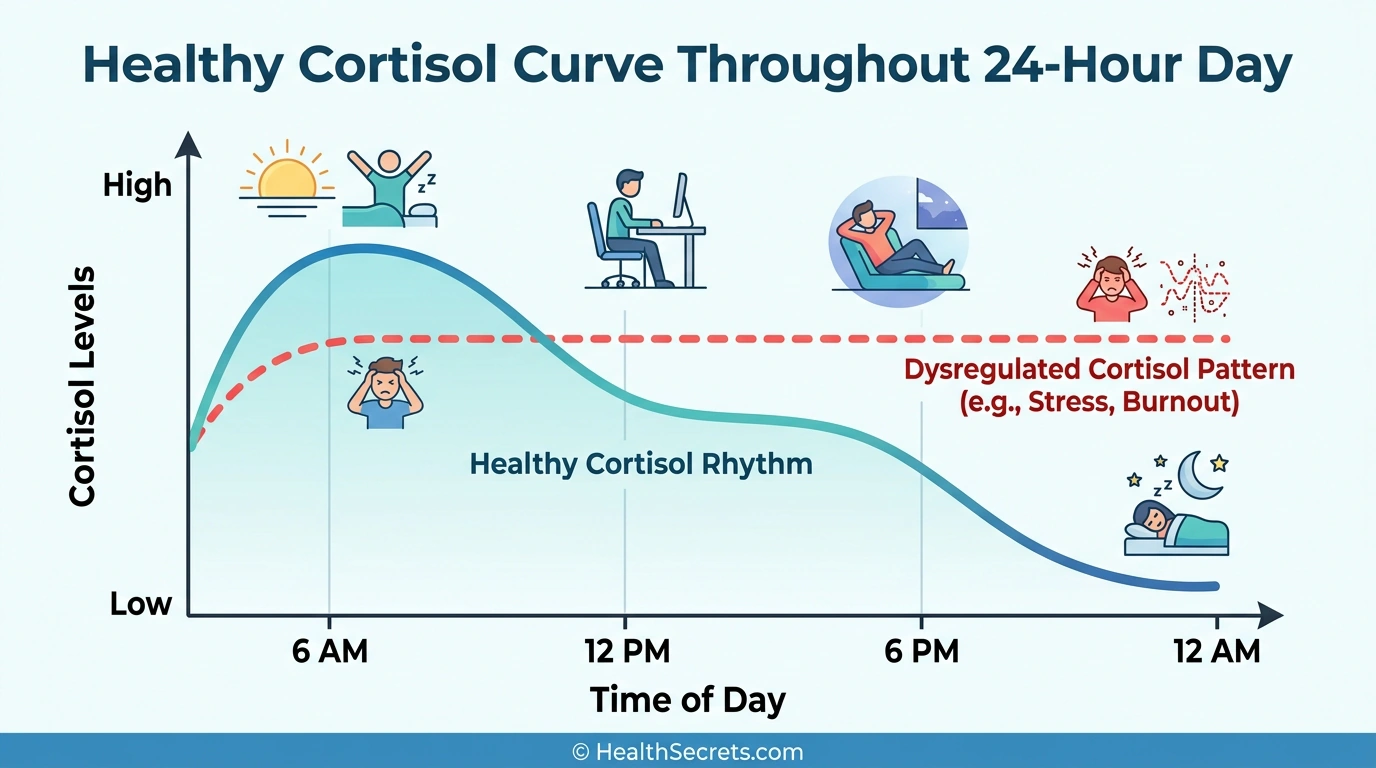
Before you begin lowering cortisol naturally, understand that cortisol follows a circadian rhythm — it peaks within 30 minutes of waking and gradually declines throughout the day. Your goal is not to eliminate cortisol but to restore this healthy rhythm so levels drop appropriately in the evening and stay low overnight. Most adults with chronic stress symptoms can expect measurable improvement within 4–8 weeks of consistent practice.
Who Is This Protocol For?
This guide is designed for adults experiencing symptoms of chronic stress — persistent fatigue, difficulty sleeping, afternoon energy crashes, sugar cravings, brain fog, or unexplained weight gain around the midsection. If you suspect abnormally high cortisol (moon face, purple stretch marks, severe muscle weakness), see your doctor first to rule out Cushing's syndrome or adrenal disorders.
What Results Can You Expect?
Most people notice improved sleep quality and reduced anxiety within 2–4 weeks of consistent practice. Supplement effects typically become measurable after 4–8 weeks. Full HPA axis recalibration may take 8–12 weeks depending on how long chronic stress has been present (16).
What Do You Need to Get Started?
No special equipment is required. You will benefit from a consistent daily schedule, a quiet space for stress-reduction practice, and optionally, targeted supplements (covered in Step 4). A baseline cortisol saliva test can help you track progress but is not mandatory.

The Vagal Reset Breathing Cards
Four cut-out breathing patterns with exact counts and the moment each fits, a ten-session log that averages your before-and-after tension, and when breathwork is the wrong tool.
How Do You Regulate Your Sleep-Wake Cycle to Lower Cortisol?
Consistent sleep timing is the most powerful cortisol-lowering tool available because cortisol rhythm is tightly coupled to your circadian clock. A 2024 meta-analysis confirmed that sleep deprivation significantly elevates cortisol, particularly in the evening when levels should be at their lowest (5) [5]. Fixing your sleep schedule restores the natural cortisol decline that allows deep, restorative sleep.
Why Does Sleep Timing Matter More Than Sleep Duration?
Your body's HPA axis uses light exposure and wake timing to calibrate cortisol release. Irregular sleep schedules — sleeping until noon on weekends, staying up late on weeknights — confuse this system and keep cortisol elevated at the wrong times. Research shows that even partial sleep deprivation (sleeping 4–6 hours) increases next-day cortisol significantly (4).
How Do You Implement Sleep Timing Changes?
- Set a fixed wake time — choose the same wake time 7 days a week, including weekends. This is the single most important change.
- Get bright light within 30 minutes of waking — sunlight exposure suppresses melatonin and helps cortisol peak properly in the morning.
- Create a wind-down buffer — stop screens 60 minutes before bed. Dim lights. This signals your HPA axis to begin lowering cortisol.
- Target 7–9 hours of sleep opportunity — go to bed early enough to allow adequate rest before your fixed wake time.
- Avoid caffeine after noon — caffeine directly stimulates cortisol release and has a half-life of 5–6 hours.
How Do You Build a Daily Stress-Reduction Practice That Lowers Cortisol?
Daily mindfulness or breathwork practice is the most researched non-pharmacological intervention for reducing cortisol. A 2023 systematic review of 45 studies found that stress management interventions — particularly mindfulness meditation and progressive relaxation — significantly reduced cortisol levels, with the strongest effects seen in people with the highest baseline stress (3).
Which Stress-Reduction Techniques Lower Cortisol Most Effectively?
- Diaphragmatic breathing (box breathing): Inhale 4 seconds, hold 4 seconds, exhale 4 seconds, hold 4 seconds. This activates the parasympathetic nervous system and reduces cortisol within a single session.
- Mindfulness meditation: Even 10 minutes daily reduces salivary cortisol. The research is clearest for practices lasting 8+ weeks.
- Progressive muscle relaxation: Systematically tensing and releasing muscle groups for 15–20 minutes lowers cortisol and is particularly effective before bed [3].
- Laughter: A 2023 systematic review confirmed that spontaneous laughter reduces cortisol, with some studies reporting drops of up to 37% after a single laughter session (15) [15]. Watch a comedy, spend time with funny friends, or try laughter yoga. Social laughter also triggers endogenous opioid release, creating a dual calming effect (17) [17].
How Do You Build the Habit?
- Start with just 5 minutes of box breathing each morning, immediately after your light exposure.
- Add 10 minutes of guided meditation (apps like Insight Timer or Calm) after 1 week.
- By week 3, aim for 15–20 minutes total daily practice.
- Consistency matters more than duration — a daily 10-minute practice outperforms an occasional 45-minute session.
How Do You Adjust Your Diet to Support Healthy Cortisol Levels?
Your diet directly influences cortisol output through blood sugar regulation, micronutrient supply, and gut-brain axis signaling. High-sugar meals trigger cortisol spikes, while balanced meals rich in magnesium, vitamin C, and omega-3 fatty acids support adrenal function and HPA axis regulation [10]. Making strategic dietary changes can reduce cortisol within weeks without any supplements.

What Should You Eat to Lower Cortisol?
- Magnesium-rich foods: Dark leafy greens, pumpkin seeds, almonds, dark chocolate (85%+), and avocados [12] [13]. Magnesium is a cofactor in over 300 enzymatic reactions and directly supports HPA axis regulation. A 24-week supplementation study found that magnesium decreased urinary cortisol excretion (12).
- Vitamin C-rich foods: Bell peppers, citrus fruits, kiwi, broccoli, and strawberries [11]. Your adrenal glands contain the highest concentration of vitamin C in the body (11). A 2024 study showed that 1,000 mg of daily vitamin C reduced cortisol in chronically stressed patients (9) [9].
- Omega-3 fatty acids: Wild-caught salmon, sardines, mackerel, walnuts, and flaxseeds. Omega-3s reduce neuroinflammation and modulate the cortisol response.
- Complex carbohydrates: Sweet potatoes, oats, quinoa, and legumes. These provide steady glucose without the cortisol-spiking crashes of refined carbs.
What Foods and Drinks Should You Avoid?
- Added sugar and refined carbohydrates — trigger rapid blood sugar spikes followed by cortisol-driven crashes
- Excessive caffeine — more than 200 mg daily (about 2 cups of coffee) elevates cortisol, especially in the afternoon
- Alcohol — disrupts sleep architecture and increases nighttime cortisol
- Ultra-processed foods — drive inflammation, which activates the HPA axis
Which Supplements Have the Strongest Evidence for Lowering Cortisol?
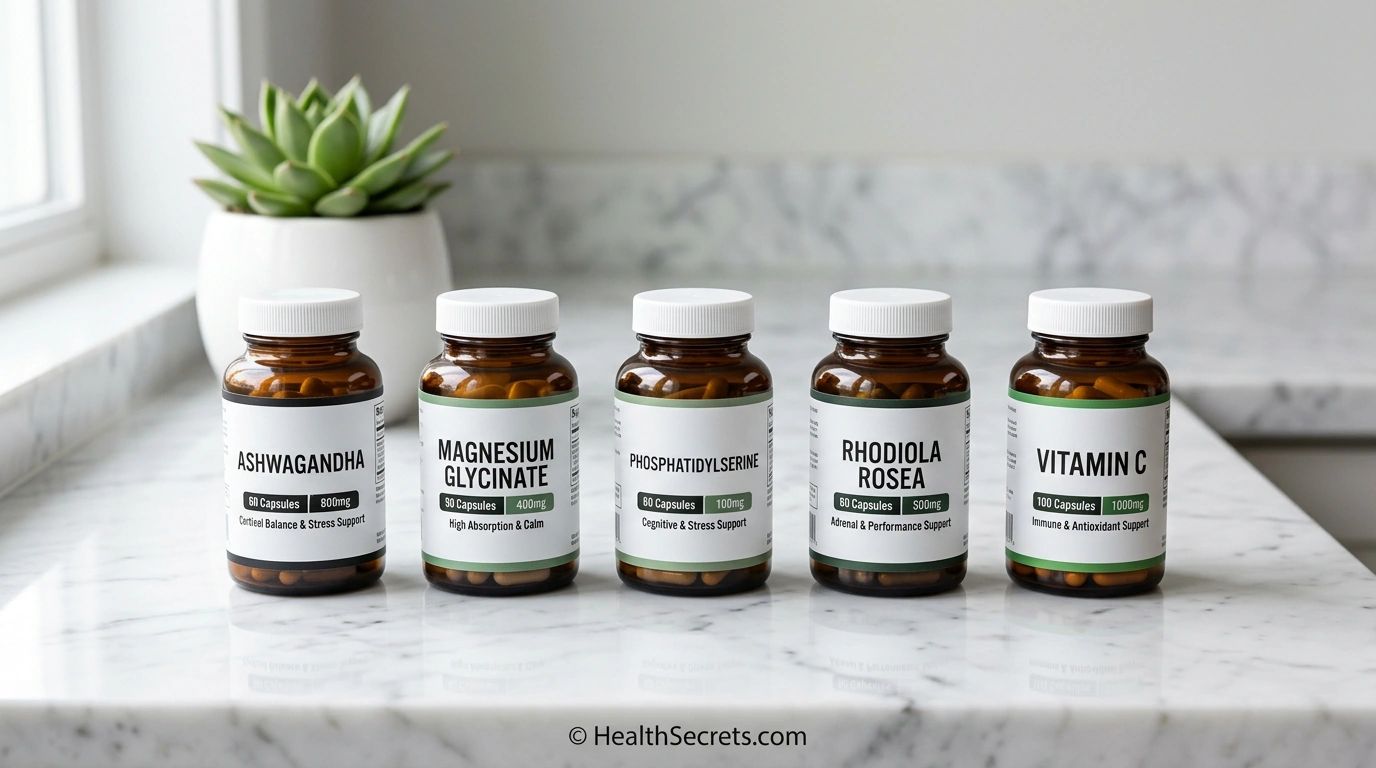
Several supplements have demonstrated cortisol-lowering effects in randomized controlled trials. Ashwagandha, phosphatidylserine, rhodiola, magnesium, and vitamin C each target different mechanisms in the stress response, and combining them with lifestyle changes amplifies results. Start with one or two and add others based on your individual response.
How Does Ashwagandha Lower Cortisol?
A landmark 2019 randomized controlled trial found that 240 mg of ashwagandha extract (KSM-66) daily reduced serum cortisol by 23% compared to placebo over 60 days (2). A 2026 meta-analysis confirmed these findings, showing significant cortisol reduction across multiple trials at doses ranging from 125–600 mg daily (1).
Recommended dose: 300–600 mg KSM-66 daily, taken with food. Effects typically begin within 4–8 weeks.
How Does Phosphatidylserine Blunt Cortisol Spikes?
Phosphatidylserine blunts the HPA axis response to both physical and psychological stress [6]. A study using 800 mg daily found that PS lowered exercise-induced cortisol by 30% (6). Another trial showed that 600 mg reduced cortisol by 39% following mental stress (7).
Recommended dose: 300–800 mg daily, split into 2–3 doses with meals.
How Does Rhodiola Rosea Support Stress Resilience?
Rhodiola modulates the HPA axis and improves the body's adaptive response to stress. Clinical studies show reduced fatigue, improved mood, and lower cortisol in stressed individuals taking 200–600 mg of standardized rhodiola extract daily (8).
Recommended dose: 200–400 mg daily of extract standardized to 3% rosavins and 1% salidroside, taken in the morning.
How Does Magnesium Glycinate Help Regulate Cortisol?
Magnesium deficiency — common in stressed individuals — amplifies cortisol output. A 24-week supplementation study demonstrated that magnesium decreased urinary cortisol excretion and improved stress-related symptoms including anxiety and insomnia (12, 13).
Recommended dose: 200–400 mg magnesium glycinate daily, taken in the evening.
How Does Vitamin C Support Adrenal Function?
Your adrenal glands use more vitamin C than any other organ (11). Research shows that 1,000 mg daily supports faster cortisol recovery after acute stress (10) and reduces chronic cortisol in stressed patients (9).
Recommended dose: 500–1,000 mg daily, split into 2 doses.
How Does Movement and Nature Exposure Lower Cortisol Levels?
Regular moderate exercise and time spent in natural environments are two of the most effective cortisol regulators. A 2019 meta-analysis of forest bathing studies found that spending time in forested environments produced significantly lower cortisol levels compared to urban settings (14) [14]. Moderate exercise lowers baseline cortisol, while excessive high-intensity training without recovery can temporarily raise it.
What Type of Exercise Lowers Cortisol Most Effectively?
- Walking (30–45 minutes): The most accessible cortisol-lowering exercise. Brisk walking reduces cortisol without the spike caused by intense training.
- Yoga: Combines movement with breathwork and mindfulness, addressing cortisol through multiple pathways simultaneously.
- Swimming and cycling: Moderate-intensity aerobic exercise for 30–60 minutes lowers cortisol and improves sleep quality.
- Important: Avoid intense training (HIIT, heavy lifting) when you are already stressed or sleep-deprived. High-intensity exercise temporarily raises cortisol, which is counterproductive when your baseline is already elevated.
How Does Nature Exposure Reduce Cortisol?
Forest bathing (shinrin-yoku) — simply spending quiet time among trees — lowers cortisol, blood pressure, and heart rate. The meta-analysis found significant cortisol reductions after just 20 minutes in a forest environment (14). Even a park walk provides measurable benefits compared to the same walk in an urban setting.
How to implement: Aim for 20–30 minutes of outdoor movement in a green space at least 4–5 days per week. Combine this with your morning light exposure for a double benefit.
What Are the Most Common Mistakes When Trying to Lower Cortisol?
Most people fail to lower cortisol not because they choose the wrong interventions but because they undermine their efforts with avoidable mistakes. Understanding these pitfalls helps you get results faster and avoid the frustrating plateau that sends many people back to square one.

Mistake 1: Inconsistent Sleep Timing
Sleeping in on weekends feels restorative but resets your cortisol rhythm. A 2-hour shift in wake time can disrupt your HPA axis for 2–3 days. Keep your wake time within a 30-minute window every day.
Mistake 2: Over-Exercising Under Stress
Adding intense HIIT sessions when you are already chronically stressed raises cortisol further. Switch to walking, yoga, or swimming until your stress levels stabilize.
Mistake 3: Relying on Supplements Alone
Supplements amplify lifestyle changes — they do not replace them. Ashwagandha will not overcome the cortisol impact of 5 hours of sleep and 6 cups of coffee.
Mistake 4: Ignoring Blood Sugar
Skipping meals or eating high-sugar snacks creates cortisol roller coasters throughout the day. Eat balanced meals with protein, fat, and complex carbohydrates every 3–4 hours.
Mistake 5: Expecting Overnight Results
HPA axis recalibration takes 4–12 weeks. Track your sleep quality and energy levels weekly rather than expecting immediate changes.
Is Lowering Cortisol Naturally Safe? When Should You Stop and See a Doctor?
For most healthy adults, the lifestyle strategies and supplements in this guide are safe and well-tolerated. However, cortisol plays essential roles in immune function, blood sugar regulation, and inflammation control, so the goal is restoration of normal rhythm — not suppression. Knowing the warning signs of both excess and insufficient cortisol helps you stay safe throughout the process.
When Should You See a Doctor Immediately?
- Symptoms of Cushing's syndrome: moon face, purple stretch marks, severe muscle weakness, easy bruising — these suggest pathologically high cortisol requiring medical evaluation.
- Symptoms of adrenal insufficiency: extreme fatigue, dizziness upon standing, salt cravings, darkening skin — these suggest cortisol may be too low.
- No improvement after 8–12 weeks of consistent lifestyle and supplement changes — this warrants hormonal testing.
- If you take corticosteroid medications — do NOT change your dose or add cortisol-lowering supplements without medical supervision.
What Are the Supplement Safety Considerations?
- Ashwagandha: Generally well-tolerated. Rare cases of liver concerns reported — start low, monitor. Avoid if pregnant, breastfeeding, or on thyroid medications (ashwagandha may increase thyroid hormone levels).
- Phosphatidylserine: Very safe at recommended doses. May interact with blood-thinning medications.
- Rhodiola: May cause mild dizziness or dry mouth. Avoid combining with SSRIs or stimulant medications without medical guidance.
- Magnesium glycinate: Generally safe. High doses may cause loose stools. Reduce dose if GI discomfort occurs.
- Vitamin C: Safe at 500–1,000 mg daily. Doses above 2,000 mg may cause digestive upset.
কর্মপরিকল্পনা
What Should You Do First to Start Lowering Cortisol Today?
নিচের ক্রম অনুসরণ করুন, প্রতিটি ধাপ পর্যায়ক্রমে সম্পন্ন করুন এবং আপনার বাস্তবায়নের নির্দেশিকা হিসেবে চেকলিস্টটি ব্যবহার করুন।
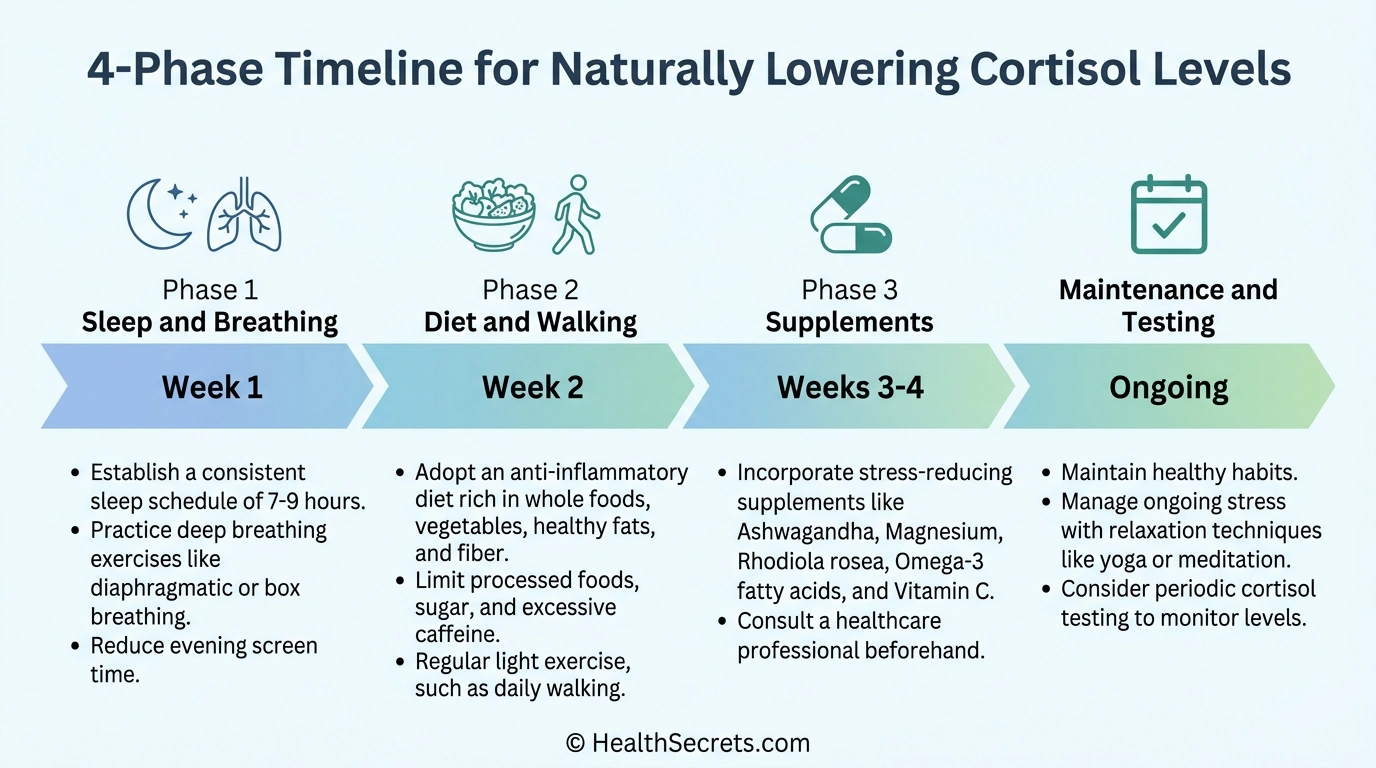
Start with sleep timing and one stress-reduction technique this week. These two changes are free, require no supplements, and produce the fastest measurable cortisol reductions. Add dietary changes in week 2, supplements in week 3, and nature exposure as an ongoing habit. This phased approach prevents overwhelm and builds sustainable results.
Phase 1: This Week (Days 1–7)
- Set a fixed wake time and stick to it every day, including weekends
- Get 10+ minutes of bright light within 30 minutes of waking
- Practice 5 minutes of box breathing each morning
- Stop caffeine after noon
- Create a 60-minute screen-free wind-down before bed
Phase 2: Week 2 (Days 8–14)
- Increase daily breathwork/meditation to 10–15 minutes
- Remove added sugar and ultra-processed foods from your diet
- Add magnesium-rich foods (dark leafy greens, pumpkin seeds, dark chocolate)
- Begin a daily 30-minute walk, ideally outdoors in a green space
Phase 3: Weeks 3–4 (Days 15–28)
- Start ashwagandha (300 mg KSM-66 with breakfast)
- Add magnesium glycinate (200 mg in the evening)
- Add vitamin C (500 mg twice daily)
- Consider phosphatidylserine (300 mg with meals) if cortisol symptoms persist
Phase 4: Ongoing (Weeks 5+)
- Maintain all Phase 1–3 habits consistently
- Add rhodiola if additional adaptogen support is needed
- Consider a cortisol saliva test to measure progress
- Re-assess supplement doses at 8–12 weeks