You've probably heard someone say that supplements just give you "expensive urine." Or maybe a well-meaning friend insisted that because something is natural, it must be safe. These supplement myths are everywhere — repeated on social media, in casual conversations, even by some healthcare professionals who haven't kept up with the latest research.
Here's the thing: the supplement industry is worth over $35 billion in the United States alone, and with that much money on the table, misinformation thrives on both sides. Some companies overpromise miraculous results, while skeptics dismiss every supplement as snake oil. The truth, as usual, sits somewhere in the middle.
Whether you're curious about milk thistle for liver health or exploring glutathione as a master antioxidant, understanding these common supplement myths will help you navigate the overwhelming world of dietary supplements with a sharper, more critical eye.
What Are Supplement Myths and Why Do They Persist?
Supplement myths are widespread misconceptions about dietary supplements that distort how people make health decisions. These myths persist because the supplement industry lacks strict FDA oversight, marketing often outpaces science, and well-intentioned but outdated advice gets repeated without critical evaluation. Understanding these myths is the first step toward making evidence-based supplement choices.
The supplement landscape is complicated by design. The 1994 Dietary Supplement Health and Education Act (DSHEA) classifies supplements as food rather than drugs, meaning manufacturers don't need to prove safety or efficacy before selling products. This regulatory gap creates fertile ground for both exaggerated claims and blanket dismissals.
Why do supplement myths spread so easily?
Several factors fuel the spread of supplement misinformation. Social media amplifies anecdotal experiences over clinical evidence. Marketing budgets dwarf research budgets. And confirmation bias leads people to seek out information that supports what they already believe — whether that's "all supplements work" or "all supplements are useless."
The reality requires nuance. Some supplements have robust clinical evidence supporting specific uses. Others are genuinely worthless for most people. And a few can actually cause harm. The key is learning to tell the difference.

Are You Unknowingly Inflaming Your Body?
Get the free Health Vitals & Nutrient Checklist — the daily guide that shows you which habits and supplements are silently triggering inflammation.
How Do Supplement Myths Actually Mislead Consumers?
Supplement myths mislead consumers by creating false binary thinking — either supplements are miracle cures or complete scams. This black-and-white framing prevents people from evaluating individual supplements based on their actual evidence, quality, and relevance to personal health needs. The result is wasted money, missed benefits, or worse, genuine health risks.
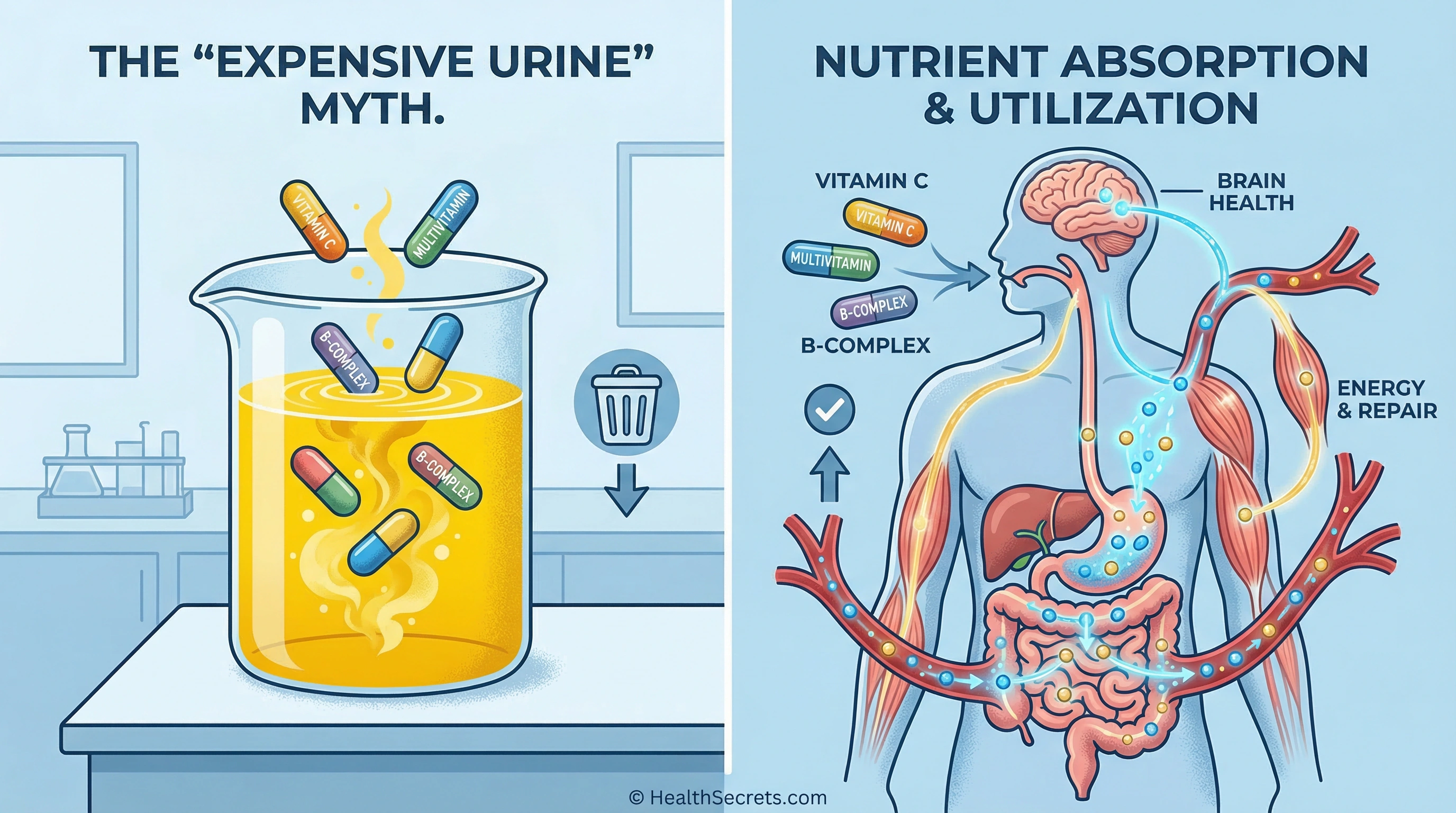
Myth 1: Do supplements just give you "expensive urine"?
This is perhaps the most frequently repeated supplement myth, and it's a half-truth at best. Yes, your body excretes excess water-soluble vitamins like B-complex and vitamin C through urine — that bright yellow color after taking a B-complex is riboflavin (B2) being excreted. But your body absorbs what it needs first before eliminating the rest.
Federal nutrition surveys (NHANES) consistently show that significant portions of the U.S. population fall short on vitamins D, magnesium, potassium, iron, calcium, and fiber. For these individuals, supplementation isn't producing expensive urine — it's filling genuine nutritional gaps. The "expensive urine" dismissal ignores that nutrient deficiencies, while not always dramatic, can meaningfully impact energy, immunity, and long-term health.
Myth 2: Does "natural" mean a supplement is safe?
This myth is genuinely dangerous. The National Center for Complementary and Integrative Health (NCCIH) explicitly states that "natural doesn't necessarily mean safer, or better." Nature gave us aspirin and morphine, but also arsenic and hemlock. The natural-equals-safe bias leads people to underestimate real risks.
Turmeric supplements, widely marketed as anti-inflammatory, have been linked to liver injuries — some severe enough to require transplants. St. John's wort can dangerously interact with antidepressants and birth control pills. Kava, sold for anxiety relief, carries FDA warnings about potential liver damage. These aren't rare, exotic products — they're supplements found on every pharmacy shelf.
Myth 3: Is taking more of a supplement always better?
Absolutely not. Fat-soluble vitamins (A, D, E, K) accumulate in body tissue and can reach toxic levels. Excessive vitamin A causes liver damage, bone loss, and birth defects. Too much vitamin D leads to hypercalcemia — dangerous calcium buildup in the blood. Even water-soluble vitamin C causes kidney stones and digestive distress at doses above 2,000mg daily.
The dose makes the poison, and supplement megadosing carries real clinical risks that marketers rarely mention.

Evidence-Based Supplement Organizer & Safety Log
An inventory that adds up the cost, thirty-three supplements graded on the evidence, an upper-limit tally, an interaction screen, a daily schedule and a one-sheet for your clinician.
What Are the Real Benefits of Evidence-Based Supplementation?
Evidence-based supplementation offers genuine health benefits when targeted to specific deficiencies, populations, or health goals. Vitamin D supplementation benefits people with documented deficiency, magnesium supports those who don't meet dietary requirements, and omega-3 fatty acids show cardiovascular benefits in certain populations. The key is matching specific supplements to specific needs based on clinical evidence.
Can vitamin D supplements actually improve your health?
Vitamin D deficiency affects an estimated 35–42% of U.S. adults, with higher rates among older adults, people with darker skin, and those living in northern latitudes. For these populations, supplementation (typically 1,000–4,000 IU daily) can improve bone density, immune function, and potentially mood regulation. The evidence here is strong — the controversy is mainly about supplementing people who aren't deficient.
Does magnesium supplementation have proven benefits?
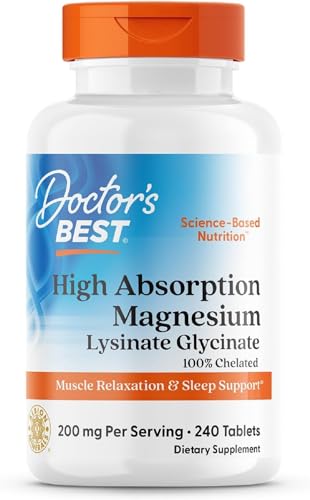
Roughly half of Americans consume less magnesium than the estimated average requirement. Supplemental magnesium (particularly magnesium glycinate or citrate) has demonstrated benefits for sleep quality, muscle relaxation, blood pressure regulation, and migraine prevention. Research from Mayo Clinic suggests 250–500mg at bedtime for sleep support.
Are omega-3 supplements worth taking?
For people who don't regularly eat fatty fish, omega-3 supplementation (EPA/DHA) has evidence supporting cardiovascular health, anti-inflammatory effects, and cognitive function. The American Heart Association recommends omega-3s for people with established heart disease, and emerging research supports benefits for joint health and mood.
Do probiotics offer genuine health benefits?
Specific probiotic strains have demonstrated benefits for particular conditions — Lactobacillus rhamnosus GG for antibiotic-associated diarrhea, Saccharomyces boulardii for traveler's diarrhea, and certain multi-strain formulations for IBS symptoms. However, the benefits are strain-specific, not universal, which is a nuance most marketing ignores.
Are There Real Risks from Taking Supplements?
Supplement risks are genuine and underappreciated. The FDA receives approximately 50,000 adverse event reports annually related to dietary supplements, including liver injuries, allergic reactions, and dangerous drug interactions. Supplements can also contain undeclared ingredients, heavy metals, or doses that don't match labels. Understanding these risks isn't anti-supplement — it's essential for using supplements safely.
The biggest risks come from:
- Drug interactions — Vitamin K reduces warfarin effectiveness; St. John's wort interferes with dozens of medications including antidepressants, birth control, and blood thinners
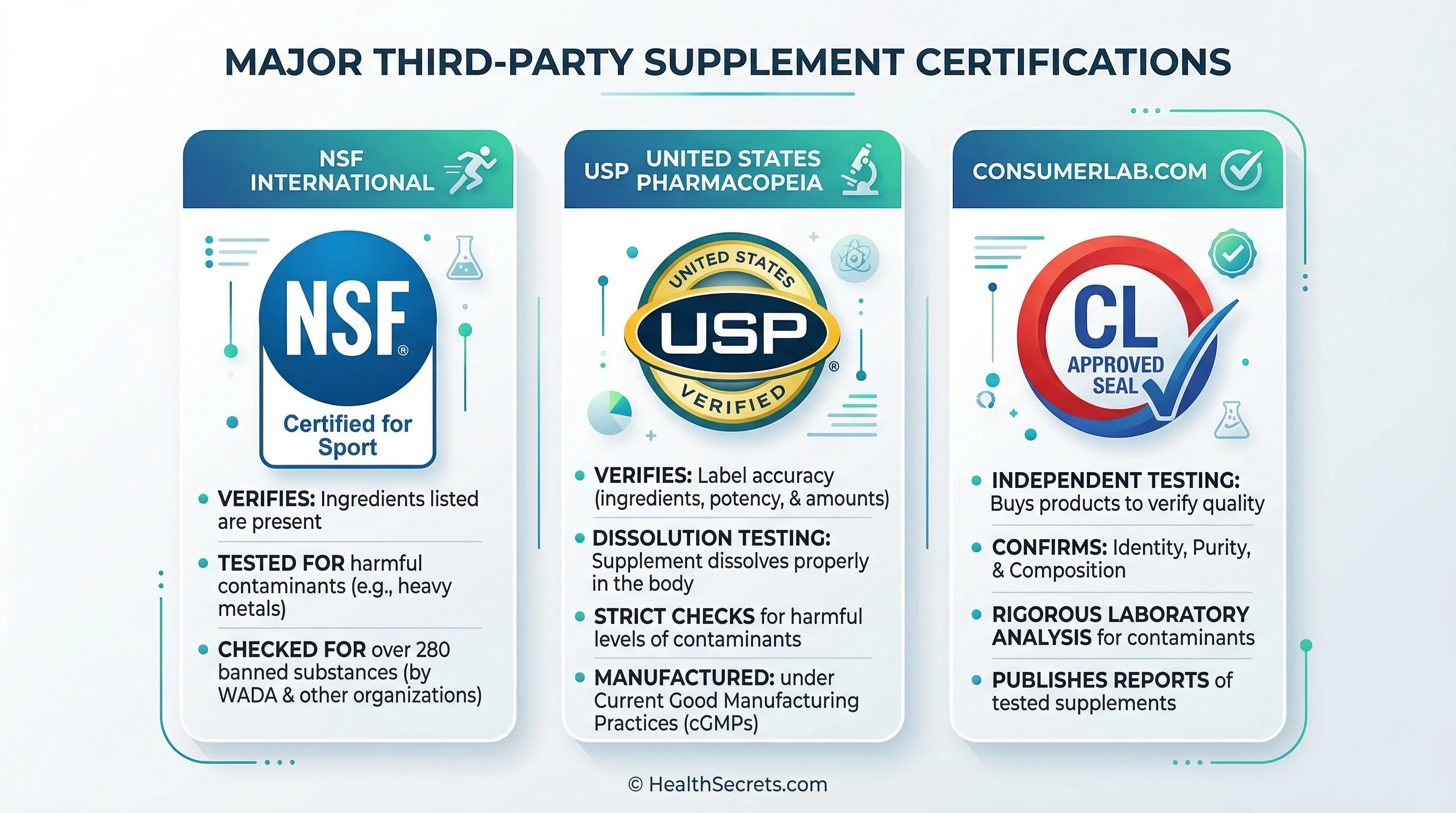
- Contamination — Independent testing by ConsumerLab and USP regularly finds supplements containing less (or more) of the listed ingredient, or contaminated with heavy metals
- Liver toxicity — Green tea extract, kava, and high-dose turmeric are among the most common supplement causes of drug-induced liver injury
- Megadose toxicity — Fat-soluble vitamin accumulation, iron overload, and calcium-related cardiovascular concerns
The Stanford Medicine myth-busting guide (2026) emphasizes always informing your healthcare provider about supplements you're taking, since interactions can be clinically significant.

How Do You Evaluate Supplements Using Evidence-Based Thinking?
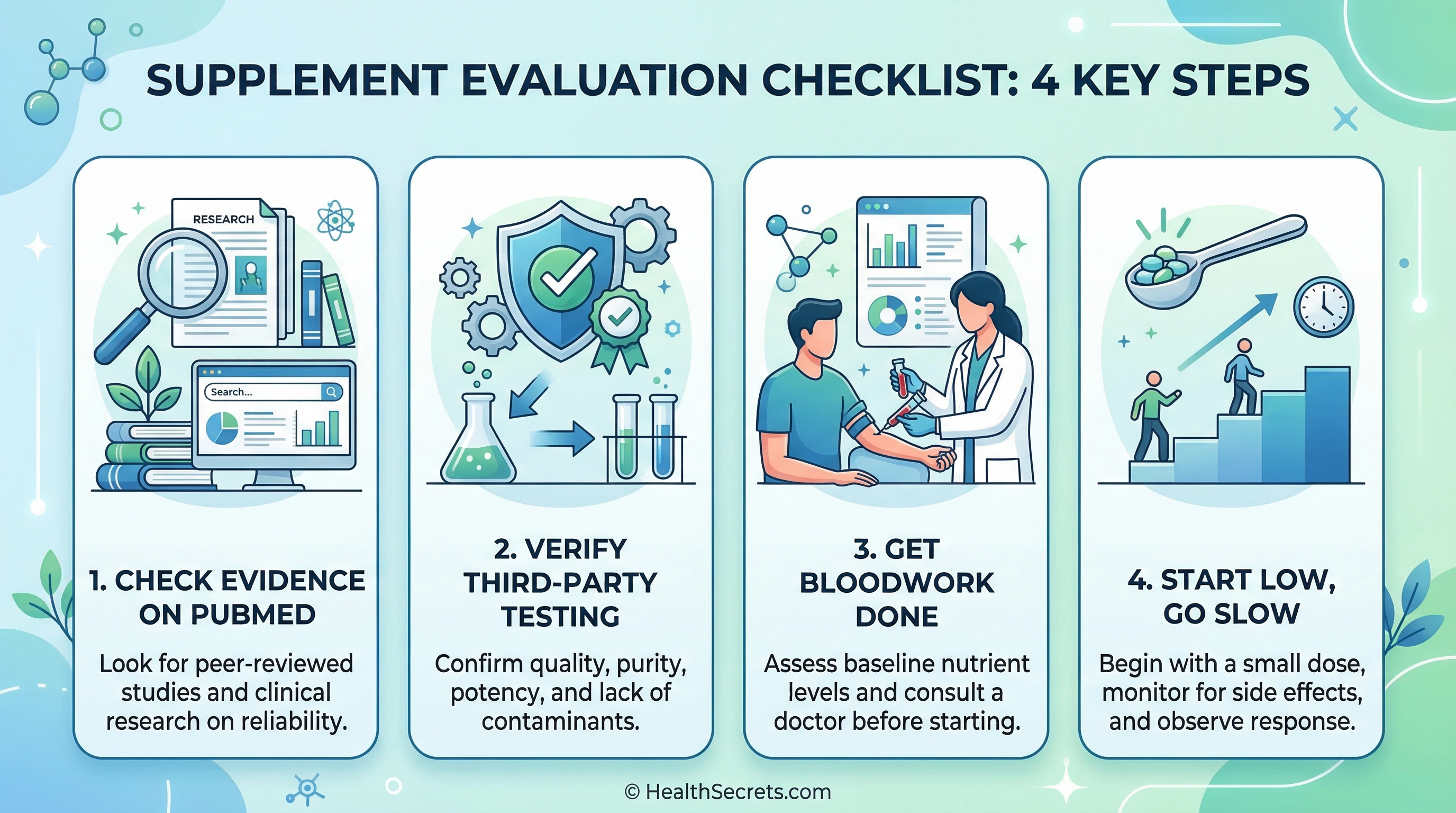
To evaluate supplements effectively, apply a simple framework: check the specific claim against peer-reviewed research, verify product quality through third-party testing, assess whether you personally need the supplement, and consult a healthcare provider for personalized guidance. This critical thinking approach separates genuine supplement benefits from marketing hype.
Step 1: Check the evidence
Look for randomized controlled trials (RCTs) published in peer-reviewed journals — not testimonials, influencer posts, or cherry-picked studies funded by the supplement manufacturer. PubMed, the NIH Office of Dietary Supplements, and Examine.com [18] are reliable starting points.
Step 2: Verify quality
Choose supplements with third-party testing certification from NSF International, USP (United States Pharmacopeia), or ConsumerLab. These organizations independently verify that what's on the label matches what's in the bottle.
Step 3: Assess your personal need
Get bloodwork done. A vitamin D test costs about $50 and tells you definitively whether you need supplementation. Don't supplement blindly based on generalized advice — your needs depend on your diet, age, health status, medications, and genetics.
Step 4: Start low, go slow
If you do decide to supplement, start with conservative doses and monitor how you feel. More is rarely better, and gradual introduction helps you identify any adverse reactions.
What Diet and Lifestyle Changes Matter More Than Supplements?
A nutrient-dense diet, regular physical activity, adequate sleep, and stress management provide health benefits that no supplement can replicate. Whole foods contain thousands of synergistic compounds — fiber, phytonutrients, enzymes — that work together in ways isolated supplements cannot. Supplements should complement a healthy lifestyle, never substitute for one.

Prioritize these foods for nutrient density:
- Leafy greens (spinach, kale) — magnesium, folate, vitamin K
- Fatty fish (salmon, sardines) — omega-3s, vitamin D
- Nuts and seeds — magnesium, selenium, vitamin E
- Fermented foods (yogurt, kimchi, sauerkraut) — natural probiotics
- Colorful vegetables and fruits — antioxidants, fiber, vitamin C
- Eggs — vitamin D, B12, choline
- Legumes — iron, folate, fiber
The 2026 PMC review on supplement myths noted that even well-intentioned eaters often fall short on key nutrients due to soil depletion, food processing, and changes in agricultural practices — which is precisely where targeted, evidence-based supplementation can fill the gap. The goal isn't supplements versus food — it's a strategic combination of both.
For a deeper dive into how nutrition supports specific health goals, explore our guides on gut health, immune system support, and inflammation management.
Action Plan
What Should You Do First to Cut Through Supplement Myths?
Follow the sequence below, work through each phase in order, and use the checklist as your practical implementation guide.
Start by auditing your current supplement routine against the evidence, eliminating products without clinical support, and getting baseline bloodwork to identify genuine deficiencies. This three-phase approach ensures you're investing in supplements that actually benefit your health rather than following marketing claims.
Phase 1: Audit (Week 1)
- List every supplement you currently take
- Research each one on PubMed or NIH Office of Dietary Supplements
- Check if each product has third-party testing (NSF, USP, ConsumerLab)
- Note any that overlap or have no evidence for your specific use case
Phase 2: Test (Week 2–3)
- Schedule bloodwork with your doctor (vitamin D, B12, iron, magnesium at minimum)
- Discuss your supplement list with your healthcare provider
- Identify any potential drug-supplement interactions
Phase 3: Optimize (Week 4+)
- Discontinue supplements without evidence or personal need
- Switch to third-party tested brands for supplements you keep
- Focus on dietary changes to meet nutrient needs naturally first
- Re-test blood levels after 3 months to measure progress