Something strange happened in the 20th century. Average human lifespan nearly doubled — jumping from around 40 years in 1900 to almost 80 by 2000. Most of that gain came from beating infectious disease, improving sanitation, and reducing infant mortality. The low-hanging fruit, basically.
Now the question has shifted. We're not just asking how long can we live — we're asking how well can we live as we age. And that distinction matters more than most people realize.
Longevity research has exploded in the past decade. Scientists have identified twelve distinct biological hallmarks that drive the aging process [1]. They've mapped communities where people routinely live past 100 in good health [4]. They've shown that caloric restriction can extend lifespan across dozens of species [10], that specific exercise patterns reduce cardiovascular mortality by 22–31% [12], and that social connection rivals quitting smoking as a longevity intervention.
This guide pulls all of that together. We'll walk through the biology of why you age, what the world's centenarians actually do differently, and which strategies — from diet and fasting to supplements and stress management — have the strongest evidence behind them. Whether you're 25 and thinking preventively or 65 and looking to optimize, the fundamentals apply.
One important note before we start: no single intervention has been proven to extend maximum human lifespan. Anyone selling you a longevity "cure" is overselling the science. What is well-supported is extending your healthspan — the years you spend feeling strong, thinking clearly, and living independently. That's the real prize, and it's absolutely within reach.
- Aging is driven by twelve interconnected biological hallmarks — from telomere shortening and mitochondrial decline to chronic inflammation and cellular senescence — and most can be influenced by lifestyle choices [1] [3].
- Blue Zone centenarians share nine common lifestyle factors (the Power 9) that contribute to extraordinary longevity, including natural movement, plant-forward diets, strong social bonds, and daily stress-reduction rituals [4] [5].
- Healthspan — years lived in good health — matters more than raw lifespan. The goal is compressing morbidity, not just adding years.
- Caloric restriction and intermittent fasting activate cellular repair pathways (autophagy, sirtuins, AMPK) that slow biological aging across multiple species [9] [10] [11].
- Meeting basic exercise guidelines (150 minutes moderate activity plus strength training) can reduce cardiovascular mortality by 22–31%, with Zone 2 training offering outsized benefits for mitochondrial health [12] [13].
- Sleep quality — particularly deep sleep and REM cycles — directly impacts cellular repair, immune function, and cognitive longevity.
- NAD+ precursors (NMN, NR), omega-3 fatty acids, and vitamin D have emerging evidence for supporting healthy aging, though no supplement replaces foundational lifestyle habits.
- Strong social connections reduce mortality risk by approximately 50% — comparable to quitting smoking — making relationships one of the most underrated longevity interventions.
- A realistic longevity strategy starts with diet, movement, and sleep as the foundation, then layers in fasting, stress management, targeted supplementation, and regular health monitoring.
- The science is clear: you don't need exotic interventions. Consistent, boring fundamentals done for decades beat any shortcut.
What Is Longevity and Why Should You Actually Care About It?
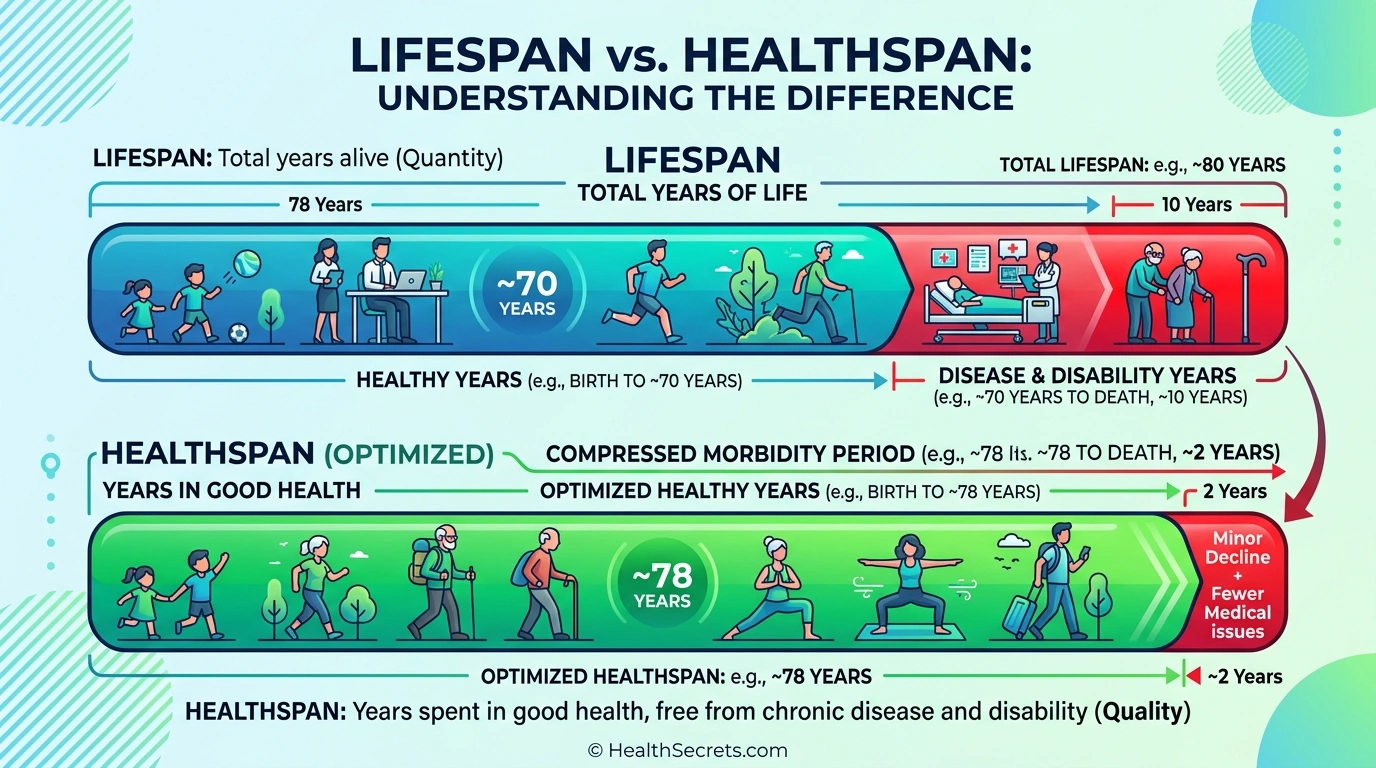
Longevity, in the simplest sense, means living a long time. But researchers have split this into two distinct concepts that change how you should think about aging: lifespan (total years lived) and healthspan (years lived free from chronic disease and disability). The gap between these two numbers is where most suffering happens.
The average American lives to about 77, but spends the last 12–15 of those years managing chronic conditions — heart disease, diabetes, cognitive decline, mobility limitations. That's not the kind of "long life" anyone dreams about.
The concept driving modern longevity science is compression of morbidity — shortening that period of illness at the end of life. Instead of a slow, 15-year decline, the goal is staying vibrant until close to the end. Some researchers call this "dying young as late as possible."
Who benefits from thinking about longevity? Everyone, honestly. But especially:
- People in their 30s–50s who still have decades to build healthy habits (the compounding returns are enormous)
- Those with family histories of Alzheimer's, heart disease, or cancer (where prevention matters most)
- Anyone already managing a chronic condition who wants to improve trajectory
- People who simply want more energy, better cognition, and greater physical independence as they age
The most encouraging finding from longevity research is this: genetics account for only about 20–25% of longevity variation. The remaining 75–80% comes from lifestyle, environment, and behavior [5]. That means most of what determines how well you age is within your control.
How Does Aging Actually Work in Your Body?
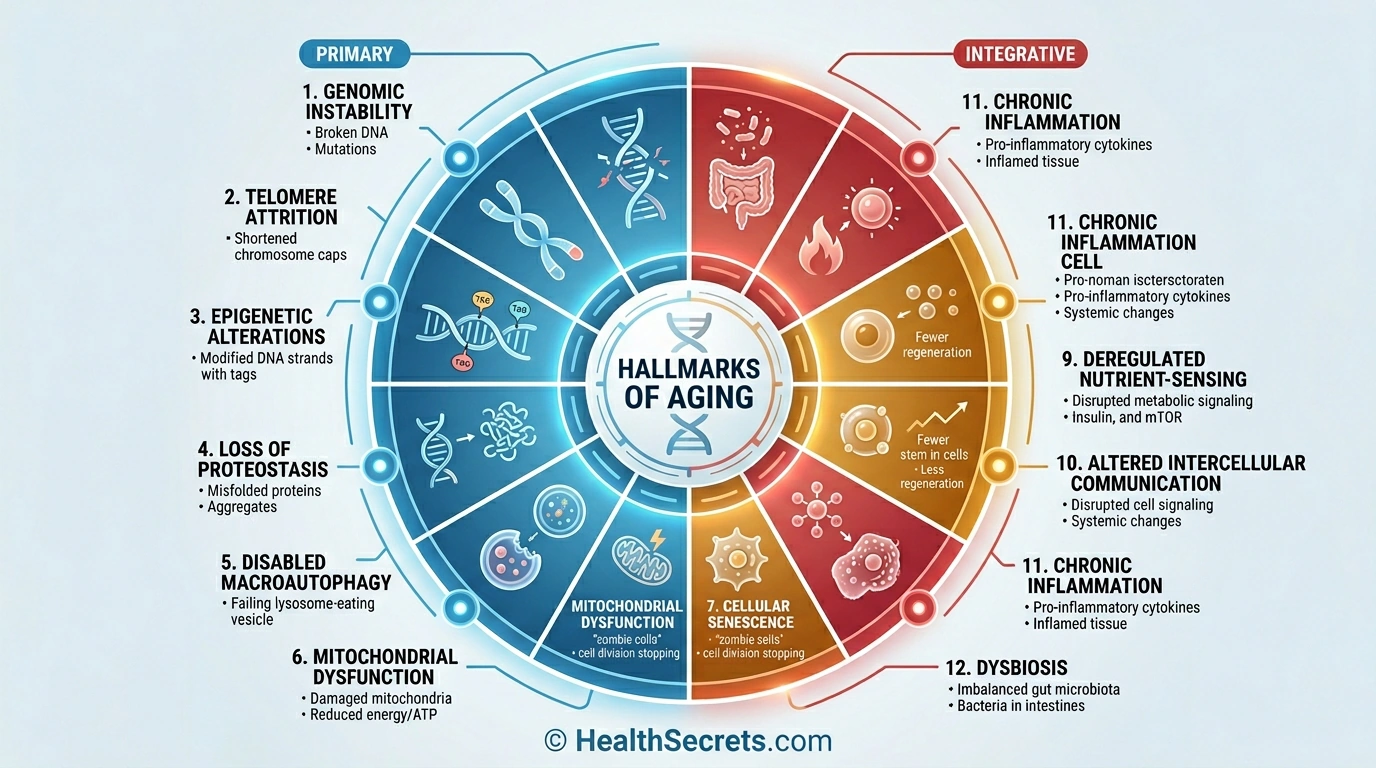
Aging isn't a single process — it's a cascade of interconnected breakdowns happening across every organ system simultaneously. In 2023, researchers López-Otín and colleagues published an updated framework identifying twelve hallmarks of aging that drive this decline [1] [2] [3]. Understanding these hallmarks is key because each one represents a potential intervention point.
What Are the 12 Hallmarks of Aging?
The twelve hallmarks fall into three categories — primary damage, antagonistic responses, and integrative failures:
Primary Hallmarks (the initial damage):
- Genomic instability — Your DNA accumulates damage from oxidation, radiation, and replication errors over time
- Telomere attrition — Protective caps on chromosomes shorten with each cell division, eventually limiting cell replication
- Epigenetic alterations — Chemical modifications that control gene expression become dysregulated, turning wrong genes on or off
- Loss of proteostasis — The quality-control system for proteins breaks down, allowing misfolded proteins to accumulate
Antagonistic Hallmarks (initially protective, eventually harmful):
- Disabled macroautophagy — The cellular "cleanup crew" that removes damaged components becomes less efficient [9]
- Deregulated nutrient sensing — Pathways like mTOR, AMPK, and insulin/IGF-1 that regulate growth and metabolism become imbalanced
- Mitochondrial dysfunction — Your cellular power plants produce less energy and more damaging free radicals [0]
- Cellular senescence — "Zombie cells" stop dividing but refuse to die, secreting inflammatory compounds that damage neighboring cells
Integrative Hallmarks (the downstream consequences):
- Stem cell exhaustion — Regenerative capacity declines, slowing tissue repair
- Altered intercellular communication — Signaling between cells becomes disrupted, increasing systemic inflammation
- Chronic inflammation (inflammaging) — Low-grade, persistent inflammation accelerates virtually every age-related disease
- Dysbiosis — Gut microbiome composition shifts unfavorably, affecting immunity, metabolism, and even brain function
What Are the Key Aging Pathways You Can Actually Influence?
Several of these hallmarks converge on specific biochemical pathways that respond to lifestyle interventions:
- mTOR (mechanistic target of rapamycin) — A nutrient-sensing pathway that promotes cell growth. When chronically overactive (from constant eating), it accelerates aging. Fasting and caloric restriction inhibit mTOR [10].
- AMPK — An energy sensor activated by exercise and fasting.
When AMPK is active, cells shift into repair and maintenance mode rather than growth mode.
- Sirtuins — A family of NAD+-dependent proteins involved in DNA repair, metabolism, and stress resistance. Caloric restriction and NAD+ precursors activate sirtuins [0].
- NAD+ (nicotinamide adenine dinucleotide) — A coenzyme essential for sirtuins and mitochondrial function. NAD+ levels decline approximately 50% between ages 40 and 60.
- Autophagy — The cellular self-cleaning process that removes damaged proteins and organelles. Enhanced by fasting, exercise, and compounds like spermidine [9].
The practical takeaway: most evidence-based longevity interventions work by pushing one or more of these pathways in a favorable direction.
What Accelerates Aging and Shortens Your Healthspan?
While aging is universal, the rate at which you age is highly variable — and largely influenced by controllable factors. Biological age can differ from chronological age by 10–20 years in either direction. Here's what pushes the needle in the wrong direction.
Dietary factors:
- Ultra-processed foods (linked to accelerated telomere shortening and systemic inflammation)
- Excess refined sugar and seed oils
- Chronic overeating (keeps mTOR chronically activated, suppresses autophagy)
- Nutrient deficiencies (especially vitamin D, omega-3s, magnesium)
Lifestyle factors:
- Sedentary behavior (sitting 8+ hours daily increases all-cause mortality significantly)
- Chronic sleep deprivation (fewer than 6 hours consistently accelerates cognitive aging)
- Chronic psychological stress (shortens telomeres, elevates cortisol, impairs immune function) [24]
- Smoking (accelerates virtually every hallmark of aging)
- Excessive alcohol consumption
Environmental factors:
- Air pollution (accelerates lung aging, cardiovascular disease, cognitive decline)
- Toxin exposure — pesticides, heavy metals, endocrine disruptors in plastics. For more on reducing toxic burden, see our detox and cleansing guide.
- Excessive UV exposure without protection
Social and psychological factors:
- Social isolation and loneliness (increases mortality risk by 26–32%) [18]
- Lack of purpose or engagement [4]
- Chronic depression and anxiety (linked to accelerated epigenetic aging)
The encouraging flip side: addressing these factors is exactly how you slow biological aging. You don't need gene therapy or exotic drugs — you need consistent fundamentals.
What Are the Early Warning Signs That You're Aging Faster Than You Should?
Accelerated aging doesn't announce itself with a single dramatic event. It creeps in through subtle changes that most people dismiss as "just getting older." Recognizing these early signals gives you time to intervene before chronic disease takes hold.
Physical signs:
- Declining grip strength (one of the strongest predictors of all-cause mortality in older adults)
- Reduced exercise capacity — getting winded doing things that used to be easy
- Slower recovery from illness, injury, or intense exercise
- Unexplained weight gain, especially visceral fat accumulation around the midsection
- Joint stiffness, declining flexibility, chronic low-grade pain
Cognitive signs:
- Brain fog, difficulty concentrating, word-finding problems
- Declining short-term memory
- Reduced mental processing speed
- Sleep disruption — difficulty falling asleep, staying asleep, or feeling rested
Metabolic signs:
- Fasting blood glucose creeping above 100 mg/dL
- Rising inflammatory markers (CRP, IL-6)
- Declining HDL cholesterol, rising triglycerides
- Increasing blood pressure
When to take action: If you're experiencing multiple signs across categories — especially declining fitness, metabolic changes, and cognitive shifts simultaneously — that's your signal to get comprehensive bloodwork and make lifestyle changes. Don't wait for a diagnosis.
What Are the Best Evidence-Based Strategies for Living Longer?
The most effective longevity strategies aren't secrets — they're habits practiced consistently over decades. Based on Blue Zone research, clinical trials, and aging science, the evidence points to a clear hierarchy [4] [5].
Tier 1 — Foundation (largest effect, strongest evidence):
- Whole-food, plant-forward diet (Mediterranean or traditional diets)
- Regular physical activity (aerobic + strength training + daily movement)
- Adequate sleep (7–9 hours of quality sleep)
- Not smoking
Tier 2 — Optimization (significant effect, strong evidence):
- Time-restricted eating or intermittent fasting [8] [11]
- Stress management practices (meditation, nature, social rituals)
- Strong social connections and sense of purpose [4]
- Maintaining healthy body composition
Tier 3 — Supplementation (moderate effect, emerging evidence):
- Omega-3 fatty acids (EPA/DHA)
- Vitamin D optimization
- NAD+ precursors (NMN or NR)
- Magnesium, zinc, and other commonly deficient micronutrients
Tier 4 — Advanced (promising but experimental):
- Senolytics (clearing senescent cells)
- Rapamycin (mTOR inhibition)
- Biological age testing and optimization
The most common mistake? Jumping to Tier 3 and 4 while ignoring Tier 1. No supplement compensates for a poor diet, sedentary lifestyle, and chronic sleep deprivation.
What Should You Eat (and Avoid) for Maximum Longevity?
The longest-lived populations on Earth don't follow trendy diets — they eat traditional, whole-food, plant-forward meals refined over generations. The Blue Zone dietary patterns, Mediterranean diet research, and modern nutritional science all converge on remarkably similar principles [5] [6] [7].
What Do the World's Longest-Lived People Actually Eat?
Across all five Blue Zones, the dietary pattern is strikingly consistent:
- 95% plant-based — vegetables, fruits, whole grains, legumes form the bulk of every meal
- Beans and legumes daily — the single most consistent longevity food (lentils, black beans, soybeans, chickpeas)
- Whole grains — not refined flour, but intact grains like brown rice, oats, farro
- Nuts daily — a handful per day is associated with 2–3 extra years of life expectancy
- Moderate fish — 2–3 times per week in most Blue Zones
- Minimal meat — small portions, roughly once per week, treated as a condiment
- Olive oil — primary fat source in Mediterranean Blue Zones
- Moderate wine — 1–2 glasses daily with meals and friends (not mandatory)
What Foods Should You Minimize or Avoid?
- Ultra-processed foods — the single biggest dietary threat to longevity
- Added sugars — especially sugary beverages
- Refined carbohydrates — white bread, white rice, pastries
- Processed meats — bacon, sausage, deli meats (classified as Group 1 carcinogens by WHO)
- Trans fats and excess seed oils
- Excessive alcohol — more than 1–2 drinks daily reverses any potential benefit
The Okinawan practice of hara hachi bu — stopping eating when 80% full — is a simple but powerful way to naturally reduce caloric intake without counting calories [6].
For anti-inflammatory eating strategies, see our inflammation and pain relief guide. For gut-supporting dietary approaches, see our gut health complete guide.
What Lifestyle Changes Have the Biggest Impact on How Long You Live?
Diet gets most of the attention in longevity discussions, but lifestyle factors — exercise, sleep, stress management, and social connection — collectively have an even larger impact on healthspan.
How Does Exercise Extend Your Lifespan?
The evidence for exercise as a longevity intervention is overwhelming. Meeting minimum guidelines reduces cardiovascular mortality by 22–31% [12]. Moderate-to-vigorous exercise, strength training, and interactive sports are all independently associated with improved life expectancy [13] [14].
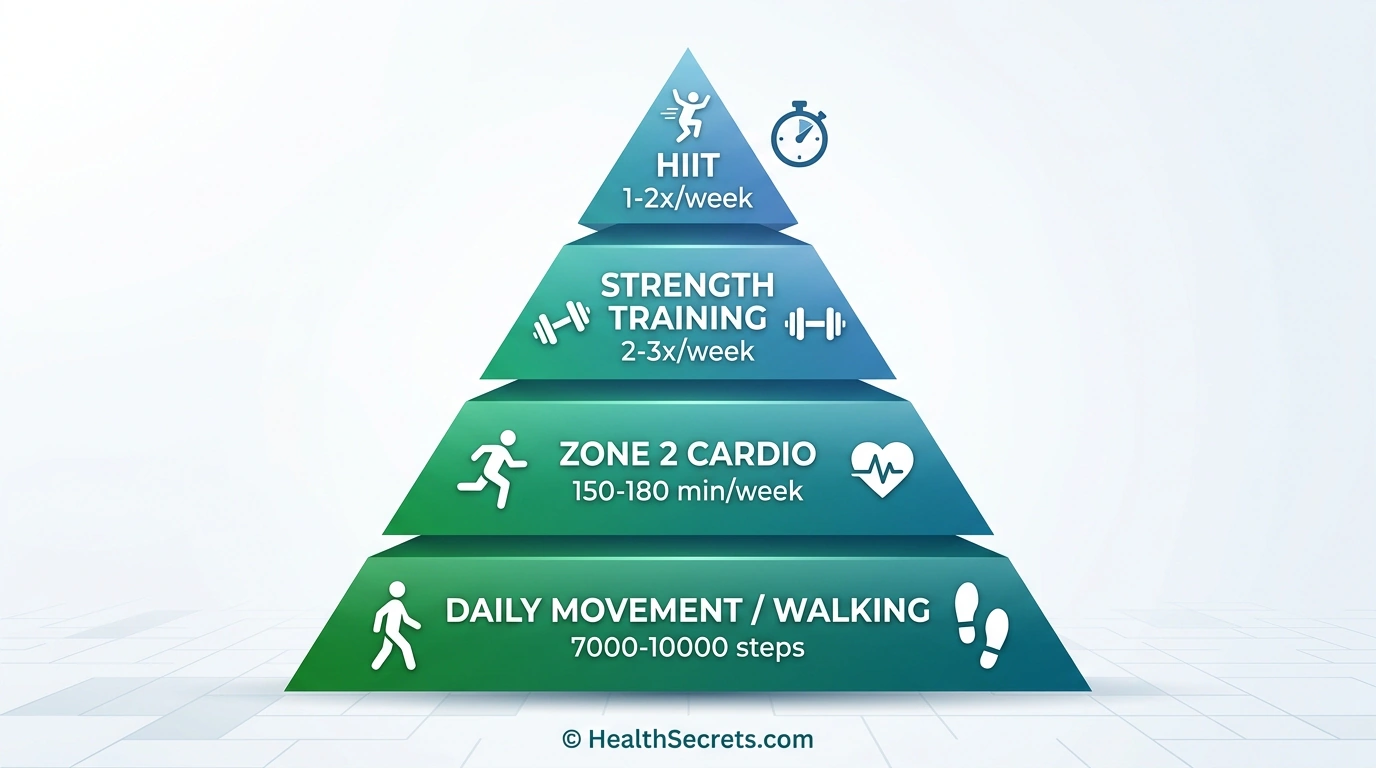
Optimal exercise prescription for longevity:
- Zone 2 cardio — 150–180 minutes per week (walking, easy cycling, swimming at conversational pace). Builds mitochondrial health and is the single best exercise investment for longevity.
- Strength training — 2–3 sessions per week. Muscle mass is protective against metabolic disease, falls, and all-cause mortality [14].
- High-intensity intervals (HIIT) — 1–2 sessions per week. Improves VO2 max, the single strongest fitness predictor of longevity [19].
- Daily movement — 7,000–10,000 steps reduces all-cause mortality even without formal exercise.
Endurance-based activities confer greater longevity benefits compared to power-only sports [15]. But the biggest return comes from simply going from sedentary to moderately active — that transition alone reduces mortality risk by approximately 50% [19].
Why Is Sleep a Non-Negotiable for Longevity?
7–9 hours of quality sleep is optimal, with both short sleep (<6 hours) and excessive sleep (>9 hours) associated with higher mortality:
- Deep sleep (stages 3–4) — triggers growth hormone release, cellular repair, immune restoration
- REM sleep — essential for memory consolidation, emotional regulation, brain detoxification via the glymphatic system
- Sleep consistency — irregular sleep schedules accelerate metabolic aging regardless of total hours
Practical optimization: consistent schedule (±30 minutes), dark room, cool temperature (65–68°F), no screens 60 minutes before bed, limit caffeine after noon.
For a deep dive, see our sleep optimization guide.
How Does Chronic Stress Accelerate Aging?
Chronic stress isn't just unpleasant — it's biologically aging. Sustained cortisol elevation shortens telomeres, increases systemic inflammation, impairs immune function, and disrupts sleep. One landmark study found caregivers under chronic stress had telomeres equivalent to 9–17 additional years of aging [24].
Blue Zone centenarians don't avoid stress — they have daily rituals to shed it [4]. Okinawans pause to remember ancestors. Ikarians nap. Sardinians enjoy daily happy hour with friends.
Evidence-based stress management:
- Meditation — even 10 minutes daily reduces inflammatory markers
- Time in nature — 120+ minutes weekly associated with significantly better outcomes
- Deep breathing — activates parasympathetic nervous system, reduces cortisol
- Social connection — perhaps the most powerful stress buffer of all
For mental wellness strategies, see our mental wellness complete guide.
Which Supplements Actually Have Evidence for Supporting Longevity?
Let's be direct: no supplement has been proven to extend human lifespan in randomized controlled trials. That said, several compounds have legitimate evidence for supporting the biological pathways that influence aging — and they're worth considering after nailing lifestyle fundamentals [0].
Do NAD+ Precursors (NMN and NR) Slow Aging?
NAD+ is essential for mitochondrial function, DNA repair, and sirtuin activation. Levels decline roughly 50% between ages 40 and 60.
- NMN (nicotinamide mononucleotide) — 250–1,000 mg daily. Animal studies show restored NAD+ levels, improved insulin sensitivity, enhanced mitochondrial function. Human trials show safety and NAD+ elevation [17].
- NR (nicotinamide riboside) — 300–500 mg daily. Similar mechanism with slightly more published human data [27].
- Evidence status: Promising but early-stage for longevity claims. NAD+ boosting is well-established; whether that translates to meaningful healthspan extension in humans remains under investigation.
Does Resveratrol Help You Live Longer?
Resveratrol activates sirtuins and extended lifespan in yeast, worms, and mice. Human evidence is mixed — benefits appear strongest in metabolically compromised individuals. Dosing: 250–500 mg trans-resveratrol daily. Bioavailability is a challenge; pterostilbene may be a superior alternative.
What Other Supplements Support Healthy Aging?
- Omega-3 fatty acids (EPA/DHA) — 2–3g daily. Strong evidence for cardiovascular protection and anti-inflammatory effects [29].
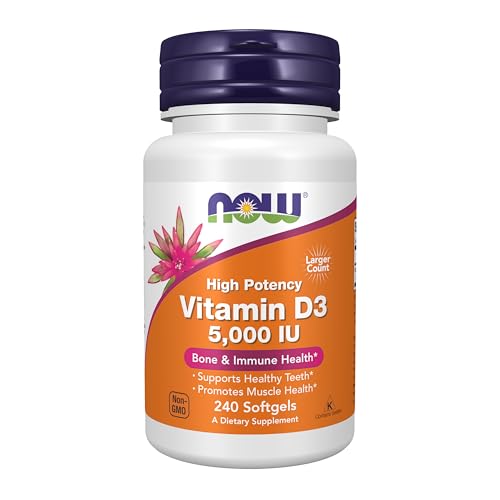
- Vitamin D — 2,000–4,000 IU daily (target blood levels 40–60 ng/mL). Deficiency associated with increased all-cause mortality.
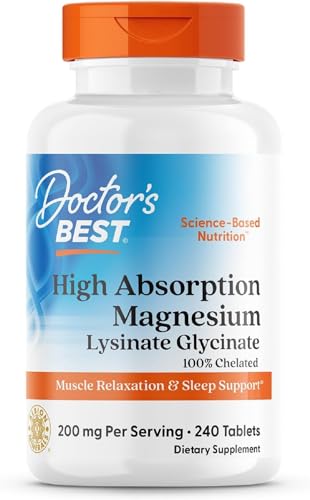
- Magnesium — 200–400 mg daily. Involved in 300+ enzymatic reactions; most adults are deficient.
- Spermidine — 1–2 mg daily. Induces autophagy; associated with reduced mortality in observational studies [28].
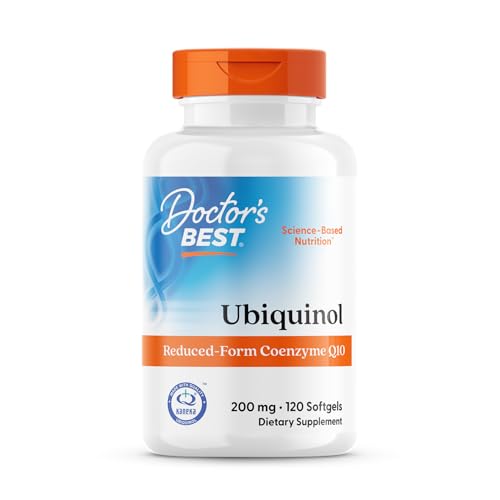
- CoQ10 / Ubiquinol — 100–200 mg daily. Supports mitochondrial energy production; levels decline with age and statin use.
What about metformin? This diabetes drug activates AMPK and has intriguing observational data. The TAME trial is investigating this in non-diabetics. Currently not recommended outside clinical settings — requires a prescription and has potential side effects.
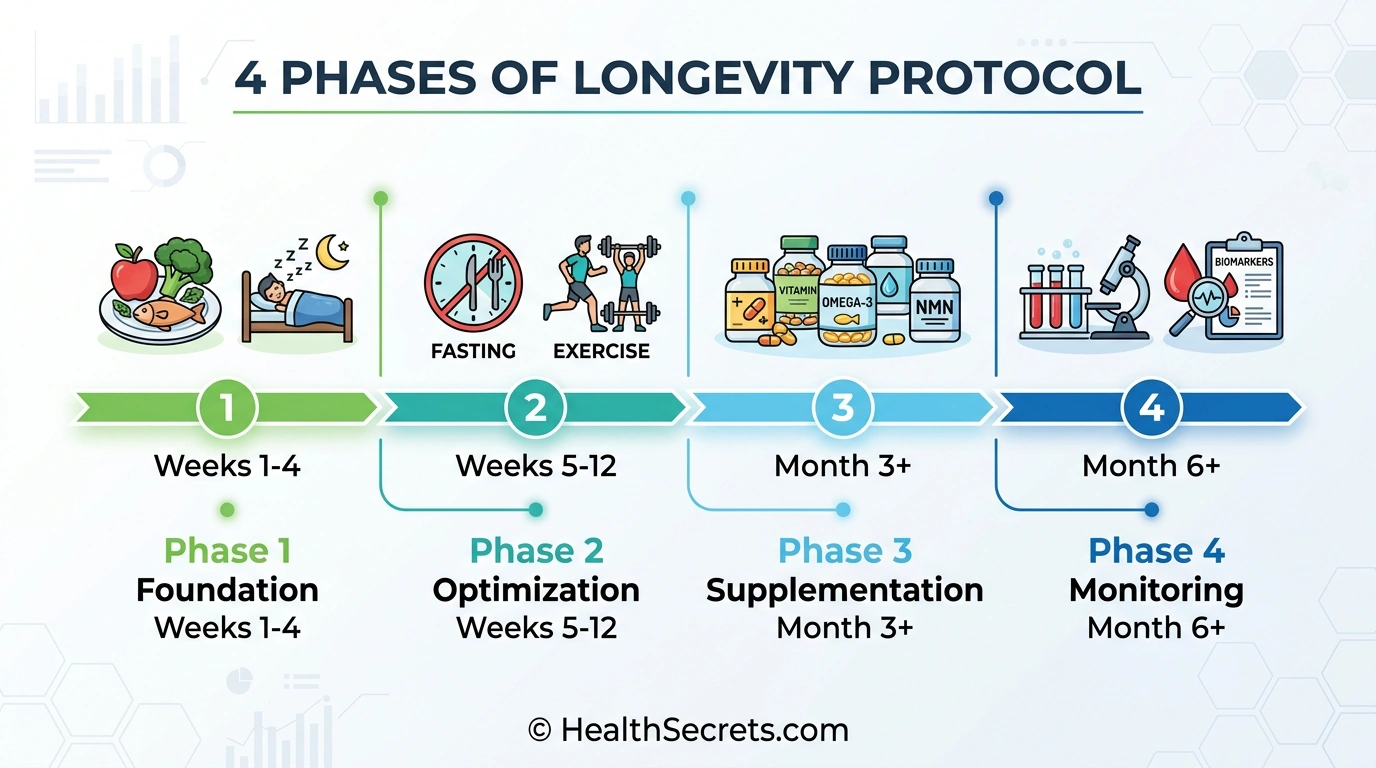
How Do You Actually Start a Longevity Protocol?
Knowing the science is one thing — implementing it sustainably is another. This phased approach lets you build momentum without overwhelm.
Phase 1: Foundation (Weeks 1–4)
- Shift toward a plant-forward diet (aim for 50% vegetables and legumes at every meal)
- Establish a consistent sleep schedule (same bed/wake time ±30 minutes, 7–9 hours)
- Start walking daily — target 7,000 steps minimum
- Add 2 strength training sessions per week
- Eliminate or drastically reduce ultra-processed foods
- Get baseline bloodwork: fasting glucose, insulin, CRP, lipid panel, vitamin D, HbA1c
Phase 2: Optimization (Weeks 5–12)
- Introduce time-restricted eating (start with 14:10, progress to 16:8 if tolerable)
- Add 2–3 Zone 2 cardio sessions per week (150+ minutes total)
- Start a daily stress management practice (10 minutes meditation or breathwork)
- Increase social engagement — schedule regular time with close friends and family
- Optimize sleep environment (blackout curtains, cool temperature, no screens before bed)
Phase 3: Supplementation (Month 3+)
- Start omega-3 supplementation (2g EPA/DHA daily)
- Optimize vitamin D levels (supplement if below 40 ng/mL)
- Consider magnesium glycinate (200 mg before bed)
- Evaluate NAD+ precursors if budget allows (NMN 250–500 mg or NR 300 mg)
- Add 1 HIIT session per week to boost VO2 max
Phase 4: Advanced Monitoring (Month 6+)
- Retest bloodwork and compare to baseline
- Consider biological age testing (epigenetic clocks)
- Evaluate additional supplements based on individual needs
- Fine-tune fasting protocol based on results
- Set long-term healthspan goals and tracking cadence
What Should You Do First to Start Living Longer Today?
The best longevity strategy is one you'll actually stick with for decades. Start with the highest-impact, lowest-friction changes and build from there.
This Week:
- Schedule comprehensive bloodwork (fasting glucose, CRP, lipid panel, vitamin D, HbA1c)
- Set a consistent sleep schedule and commit to 7–9 hours nightly
- Start a daily walking habit — even 20 minutes makes a measurable difference
- Add one extra serving of vegetables and one serving of legumes daily
This Month:
- Begin 2x/week strength training
- Experiment with time-restricted eating (start with a 14-hour overnight fast)
- Reduce ultra-processed food intake by 50%
- Establish a daily 10-minute stress management practice
This Quarter:
- Build up to 150+ minutes of Zone 2 cardio weekly
- Start omega-3 and vitamin D supplementation if bloodwork indicates need
- Invest in sleep optimization (environment, routine, consistency)
- Strengthen social connections
This Year:
- Retest biomarkers and compare to baseline
- Evaluate advanced supplementation (NAD+ precursors, CoQ10)
- Consider biological age testing
- Reassess and refine your protocol based on results