Here's something that threw me the first time I came across it: exercise causes inflammation.
Yes — the very thing doctors recommend to fight chronic inflammation actually triggers an inflammatory response every single time you work out. Sounds contradictory, right?
But here's where it gets fascinating. That short burst of inflammation after a workout isn't the enemy. It's actually a signal — your body's way of saying, "I'm rebuilding, adapting, getting stronger." The real problem starts when you don't give yourself enough time to recover, or when you push so hard that the inflammation never fully resolves.
The relationship between exercise and inflammation is genuinely one of the most important things you can understand if you're dealing with chronic pain, autoimmune issues, or just trying to age well. And the science behind it has evolved dramatically in the last few years.
If you're exploring the broader picture of how inflammation affects your body, our comprehensive inflammation and pain relief guide is a great starting point. You might also want to check out how diet plays a role in inflammation and how autoimmune conditions connect to chronic inflammation.
What Is the Relationship Between Exercise and Inflammation?
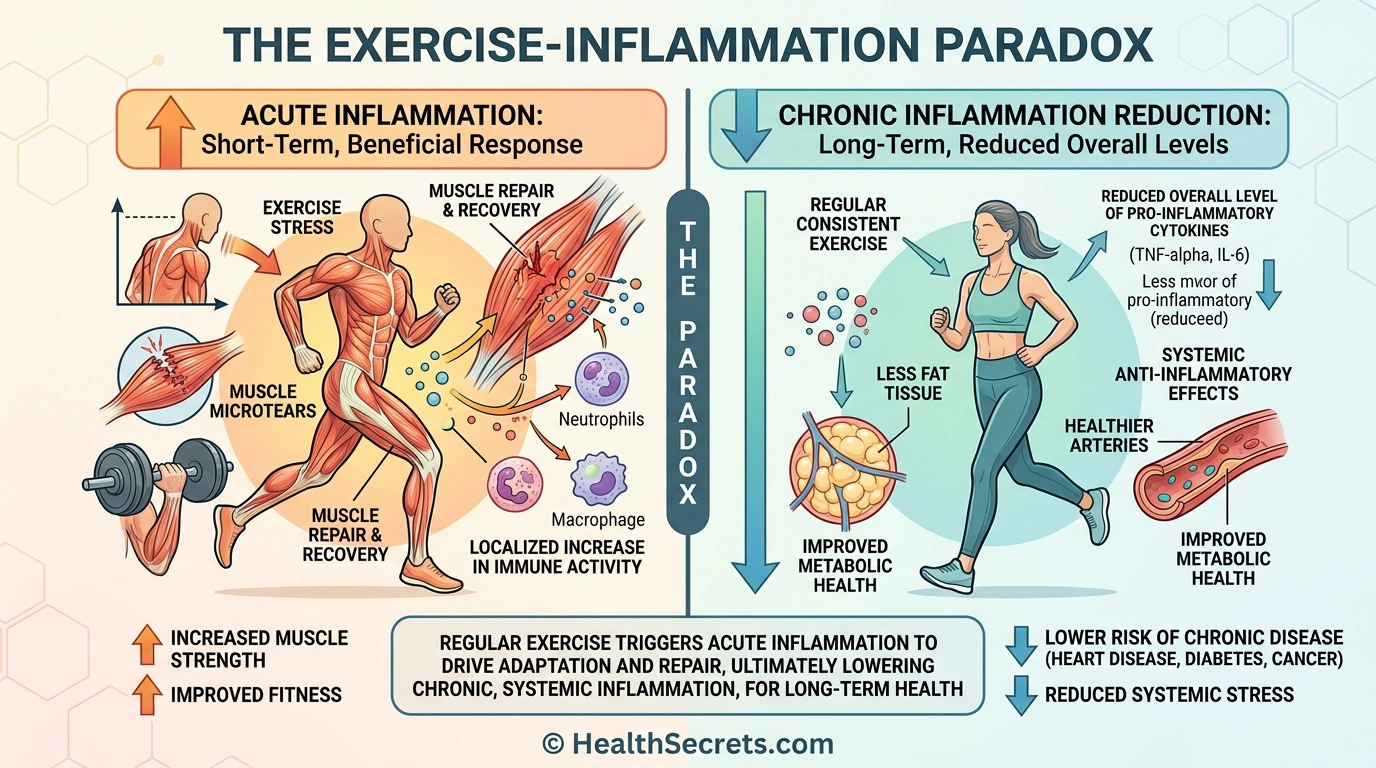
Exercise and inflammation exist in a paradox: regular physical activity is one of the most effective anti-inflammatory interventions known to science, yet every individual workout triggers an acute inflammatory response. Understanding this dual relationship is critical for anyone trying to use movement as medicine. The key lies in distinguishing between helpful short-term inflammation and harmful chronic inflammation.
The concept isn't as complicated as it sounds once you break it down. When you exercise, your muscles sustain microscopic damage. That damage sets off an immune response — white blood cells rush to the area, inflammatory cytokines spike, and your body begins the repair process. This is acute inflammation, and it's not just normal — it's necessary. Without it, you wouldn't get stronger, build endurance, or adapt to training.
Chronic inflammation is the villain here. It's a low-grade, persistent state where your body's inflammatory response never fully shuts off. It's linked to heart disease, type 2 diabetes, Alzheimer's, and several autoimmune conditions. And here's the critical piece: consistent moderate exercise actually reduces chronic inflammation over time, even though each session temporarily raises it.
A 2026 meta-meta-analysis encompassing over 30,000 participants found that exercise interventions significantly reduced CRP, IL-6, and TNF-α — three of the most widely tracked inflammatory biomarkers ([2]). The effect sizes were meaningful across all three markers, reinforcing that regular physical activity is one of the most reliable ways to bring chronic inflammation down.

Are You Unknowingly Inflaming Your Body?
Get the free Health Vitals & Nutrient Checklist — the daily guide that shows you which habits and supplements are silently triggering inflammation.
How Does Exercise Reduce Chronic Inflammation at the Molecular Level?
Exercise reduces chronic inflammation through three primary mechanisms: the release of anti-inflammatory myokines from contracting muscles, the reduction of visceral fat that produces inflammatory adipokines, and the modulation of immune cell function — including the mobilization of regulatory T cells. These effects accumulate over weeks of consistent training, typically becoming measurable after 8–12 weeks.

What Are Myokines and Why Do They Matter for Inflammation?
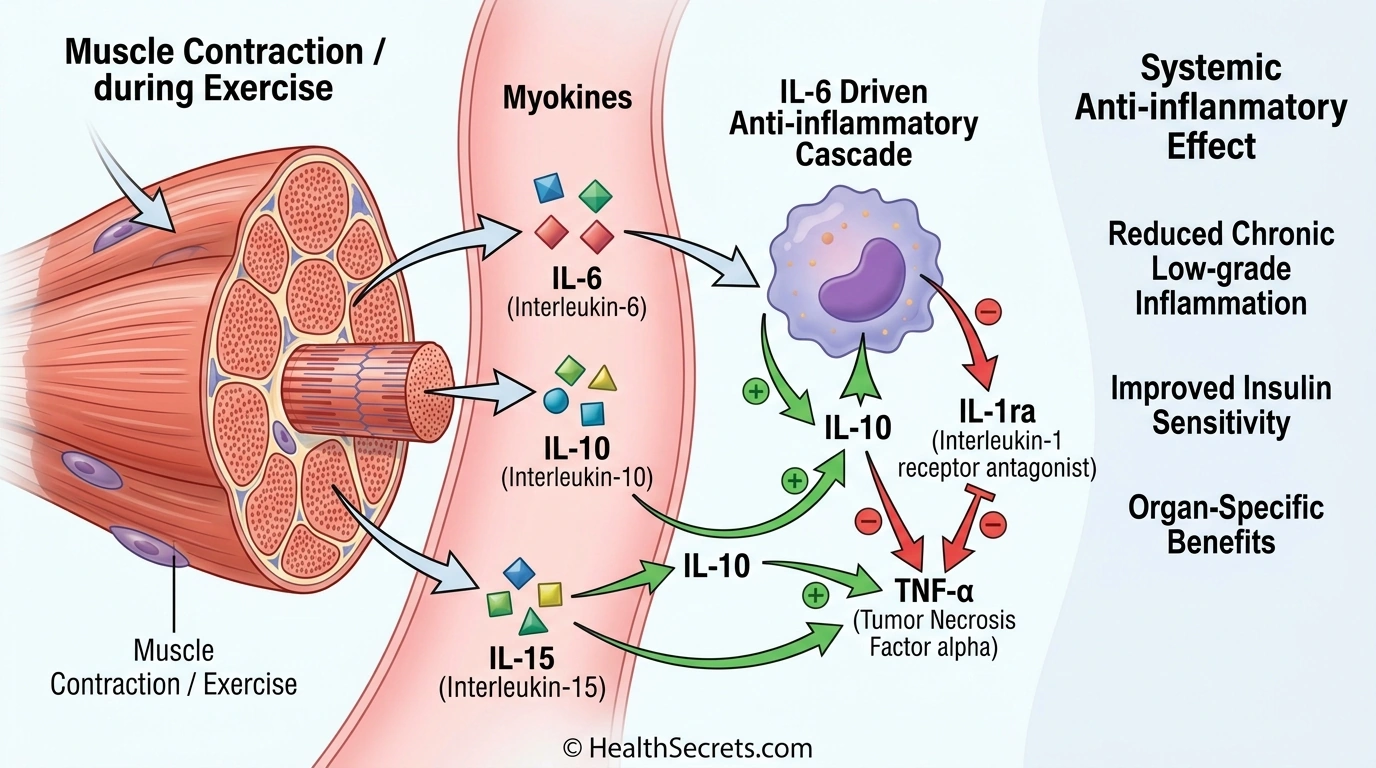
Myokines are cytokines produced and released by skeletal muscle during contraction. The most studied myokine is IL-6, which behaves differently during exercise than during chronic disease. In the context of exercise, IL-6 stimulates the production of anti-inflammatory cytokines IL-10 and IL-1ra while simultaneously inhibiting TNF-α — a major pro-inflammatory driver. This is the opposite of what IL-6 does in chronic inflammatory states, which is why context matters enormously.
A landmark study published in the Journal of Applied Physiology established that physiological concentrations of IL-6 from exercise stimulate anti-inflammatory pathways, lipolysis, and fat oxidation — creating a cascade that fights inflammation on multiple fronts simultaneously ([5]).
How Does the Acute Inflammatory Response After Exercise Become Anti-Inflammatory?
Every exercise session triggers a predictable inflammatory arc. Within the first 2–6 hours post-workout, cytokines like IL-6 and TNF-α spike temporarily. Creatine kinase rises as a marker of muscle damage. Delayed-onset muscle soreness (DOMS) may develop 24–48 hours later. But here's the mechanism that makes it all worthwhile: that acute spike activates anti-inflammatory feedback loops.
A 2023 Harvard Medical School study published in Science Immunology demonstrated that exercise-induced muscle inflammation mobilizes regulatory T cells (Tregs) that actively counter the inflammatory response ([3]). These Tregs enhanced the muscles' ability to use energy as fuel and improved overall exercise endurance. Essentially, the inflammation itself was training the immune system to become more anti-inflammatory.
This adaptation is why consistent, moderate exercise creates a net anti-inflammatory effect over time — even though each individual session is technically pro-inflammatory in the short term.

Anti-Inflammatory Pantry & Meal Builder
Build a flexible, plant-forward pantry without restrictive food lists or expensive specialty ingredients.
What Are the Proven Anti-Inflammatory Benefits of Regular Exercise?
Regular moderate exercise delivers measurable reductions in all three major inflammatory biomarkers: CRP decreases by approximately 20–30%, IL-6 and TNF-α both show significant reductions after 12+ weeks of consistent training. Beyond biomarkers, exercise improves immune surveillance, enhances NK cell and T-cell function, and reduces the risk of inflammation-driven diseases including cardiovascular disease, type 2 diabetes, and Alzheimer's.
How Does Exercise Protect Against Inflammation-Driven Disease?
The HERITAGE Family Study — one of the largest exercise studies conducted — found that 20 weeks of aerobic training reduced CRP by approximately 29% in participants with elevated baseline levels, and this reduction was independent of body weight changes ([8]). That's a significant finding because it means exercise fights inflammation through mechanisms beyond just weight loss.
A 2024 systematic review and network meta-analysis of 123 randomized controlled trials found that aerobic exercise was most effective for reducing CRP and increasing adiponectin (an anti-inflammatory marker), while combined aerobic and resistance training produced the best results for improving leptin levels. HIIT showed the greatest effectiveness for reducing IL-6 and TNF-α ([15]).
How Does Moderate Exercise Enhance Immune Function?
Moderate exercise enhances immune surveillance by increasing the circulation of NK cells and T-cells. Research from UC San Diego demonstrated that even a single 20-minute session of moderate exercise can stimulate the immune system, producing a measurable anti-inflammatory cellular response — specifically, a decrease in immune cells producing TNF ([6]).
Regular practice of moderate-intensity exercise directs the overall immune response toward an anti-inflammatory status, as documented in research published in Biochimica et Biophysica Acta ([9]). This is particularly relevant for people dealing with chronic inflammation or looking to support their immune system naturally.
What Happens When Exercise Causes Too Much Inflammation?
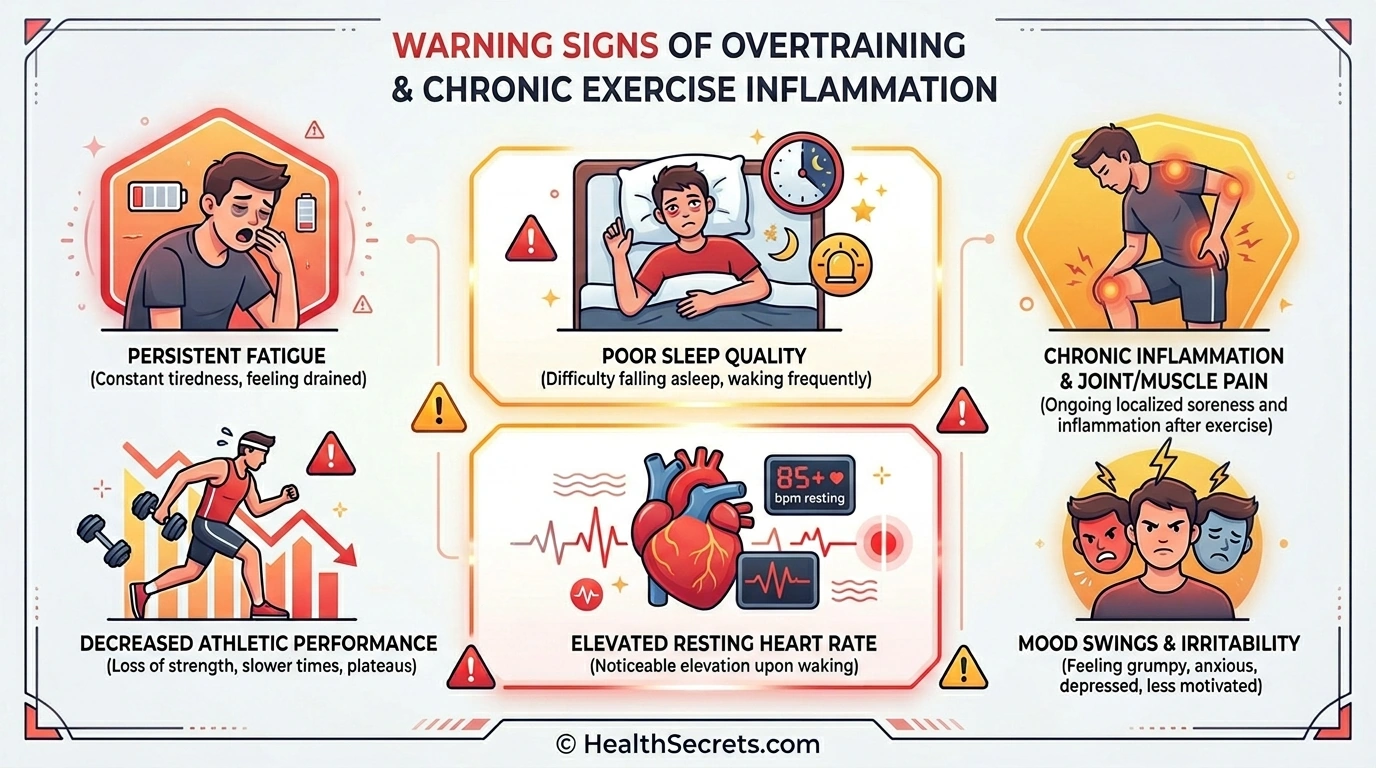
Excessive exercise without adequate recovery creates a state of chronic inflammation that mirrors the very condition you're trying to fight. Overtraining syndrome (OTS) is characterized by elevated resting cortisol, suppressed immune function with increased infection susceptibility, persistently elevated CRP and IL-6, mood disturbances, chronic fatigue, and performance decline. Recovery from full-blown OTS can take months.
What Is Overtraining Syndrome and How Does It Develop?
Overtraining syndrome develops gradually. It starts with functional overreaching — pushing a bit too hard in training, which is actually how athletes improve. But when the body doesn't get adequate recovery, functional overreaching becomes non-functional overreaching, and eventually overtraining syndrome.
Research published in Sports Health describes the progression: elevated cortisol disrupts the testosterone-to-cortisol ratio (a key recovery marker), creatine kinase remains chronically elevated indicating ongoing muscle damage, and oxidative stress biomarkers like isoprostanes can increase up to 7-fold ([11]). A 2007 study confirmed that overtraining induces marked oxidative stress responses proportional to training load ([12]).
The symptoms are wide-ranging: persistent fatigue that doesn't resolve with rest, decreased performance despite continued training, mood disturbances including irritability and depression, sleep disruption, and frequent illness. It's essentially the opposite of everything exercise should give you.
When Does Exercise Make Inflammation Worse?
There are specific situations where exercise can genuinely worsen inflammation rather than help it:
- Autoimmune disease flares — acute exercise during active flares can increase inflammatory biomarkers. A 2024 systematic review found that acute moderate-to-high intensity exercise can transiently increase inflammatory markers in autoimmune patients ([10]).
- Active infections or fever — your immune system is already fighting; exercise adds additional stress.
- Chronic fatigue syndrome / fibromyalgia — post-exertional malaise requires carefully graded exercise approaches.
- Uncontrolled chronic disease — unmanaged diabetes or cardiovascular disease requires medical clearance and modified programs.
The distinction between productive discomfort and harmful pain matters enormously here. Muscle soreness 24–48 hours after a workout is normal. Sharp joint pain during exercise is not. Fatigue that resolves after a good night's sleep is expected. Exhaustion that persists for days signals a problem.
What Is the Optimal Exercise Plan for Reducing Inflammation?
The most effective anti-inflammatory exercise plan combines 150–300 minutes per week of moderate-intensity aerobic activity (60–75% max heart rate) with 2–3 strength training sessions and 1–2 optional HIIT sessions — all supported by 1–2 full rest days. Consistency over 8–12 weeks matters more than intensity, and the best exercise is one you'll actually do regularly.
How Much Aerobic Exercise Do You Need for Anti-Inflammatory Benefits?
Walking, cycling, swimming, and light jogging at moderate intensity form the base of an anti-inflammatory exercise program. Research consistently shows that moderate aerobic exercise at 60–75% of maximum heart rate produces the strongest anti-inflammatory effects with the least risk of overtraining.
A practical weekly target: aim for 150–300 minutes, spread across 4–5 days. That's roughly 30–60 minutes per session. If you're just starting out, even 20 minutes of brisk walking triggers measurable anti-inflammatory responses.
How Does Strength Training Help Fight Inflammation?
Strength training 2–3 times per week promotes muscle mass — and muscle is an endocrine organ that produces anti-inflammatory myokines. A meta-analysis showed that resistance training conducted for more than 12 weeks can reduce CRP and TNF-α ([7]). The key is avoiding excessive volume. Focus on compound movements, moderate loads, and adequate rest between sessions.
Is HIIT Good or Bad for Inflammation?
High-intensity interval training delivers potent anti-inflammatory benefits, with research showing it's the most effective modality for reducing IL-6 and TNF-α. But the acute inflammatory spike is significant, and daily HIIT overwhelms recovery capacity. Limit to 1–2 sessions per week with at least 48 hours between sessions.
How Do Yoga and Tai Chi Reduce Exercise-Related Inflammation?
Yoga and tai chi deserve a spot in any anti-inflammatory exercise plan, not because they're intense, but because they directly target stress-driven inflammation. Chronic stress amplifies exercise-induced inflammation by keeping cortisol elevated. Mind-body practices reduce cortisol, activate the parasympathetic nervous system, and improve sleep quality — all of which support the anti-inflammatory benefits of your other training.
How Do Recovery, Nutrition, and Lifestyle Support Exercise's Anti-Inflammatory Effects?
Recovery and nutrition aren't optional add-ons — they're where the anti-inflammatory adaptation actually happens. Prioritize 7–9 hours of sleep for muscle repair and immune regulation, consume 20–30g protein within 30–60 minutes post-workout, include anti-inflammatory foods rich in omega-3s and antioxidants daily, and schedule 1–2 complete rest days per week. Without adequate recovery, exercise becomes pro-inflammatory.

What Should You Eat After Exercise to Reduce Inflammation?
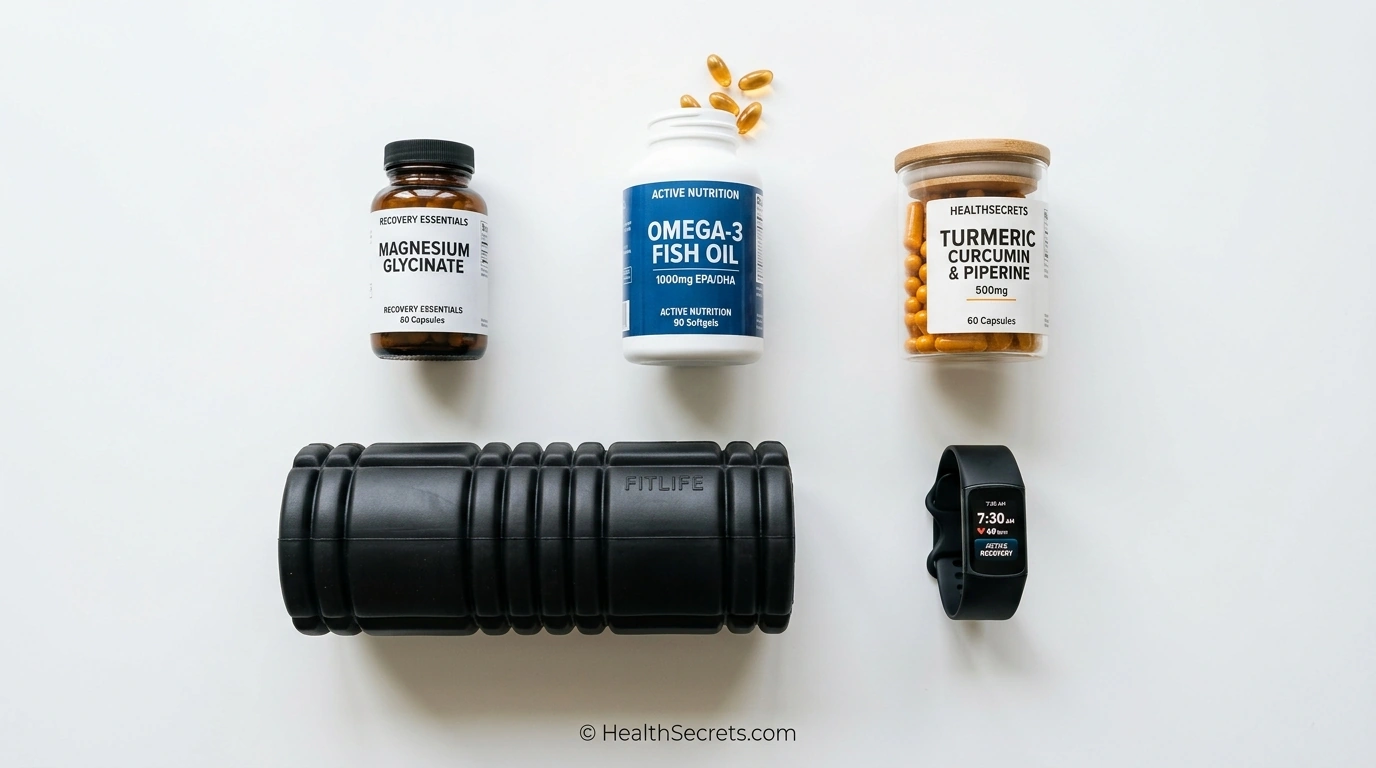
The 30–60 minute post-exercise window is when your body is primed for recovery. Protein (20–30g) provides amino acids for muscle repair, while carbohydrates replenish glycogen stores. Including omega-3 rich foods or anti-inflammatory spices like turmeric can enhance the anti-inflammatory recovery response.
Hydration matters more than most people realize. Dehydration increases cortisol and inflammatory markers. Aim for at least half your body weight in ounces of water daily, with extra around workouts.
Why Is Sleep the Most Important Recovery Tool for Inflammation?
Sleep is where muscle repair, immune regulation, and hormonal rebalancing occur. Research consistently links poor sleep to elevated inflammatory markers. Seven to nine hours is the target, and sleep quality matters as much as quantity. If you're training hard and sleeping poorly, you're undermining the entire anti-inflammatory benefit of your exercise program. Our sleep optimization guide covers this in depth.
How Do Active Recovery and Complementary Therapies Support Anti-Inflammatory Exercise?
Active recovery — light walking, gentle stretching, or easy cycling on rest days — promotes blood flow without adding significant inflammatory load. Foam rolling and massage reduce muscle tension and may accelerate recovery. Cold therapy (ice baths, cold showers) can reduce acute inflammation and DOMS, while heat therapy helps with chronic stiffness.
Your mental wellness plays a role too — chronic psychological stress amplifies the inflammatory response to exercise, so stress management is genuinely part of your recovery strategy.
Action Plan
What Should You Do First to Balance Exercise and Inflammation?
Follow the sequence below, work through each phase in order, and use the checklist as your practical implementation guide.
Start with a 4-week phased plan: build your aerobic base in weeks 1–2 with daily 20–30 minute walks, add strength training in weeks 3–4, and only introduce HIIT after establishing consistent recovery habits. Track your energy, sleep quality, and soreness to calibrate intensity. Most people see measurable improvements in inflammatory markers after 8–12 weeks of consistent moderate exercise.
Phase 1: Foundation (Weeks 1–2)
- Walk briskly for 20–30 minutes, 5 days per week
- Establish a consistent sleep schedule (7–9 hours nightly)
- Add post-workout protein (20–30g within 60 minutes)
- Include one anti-inflammatory food at each meal (berries, leafy greens, fatty fish, turmeric)
- Take 2 full rest days per week
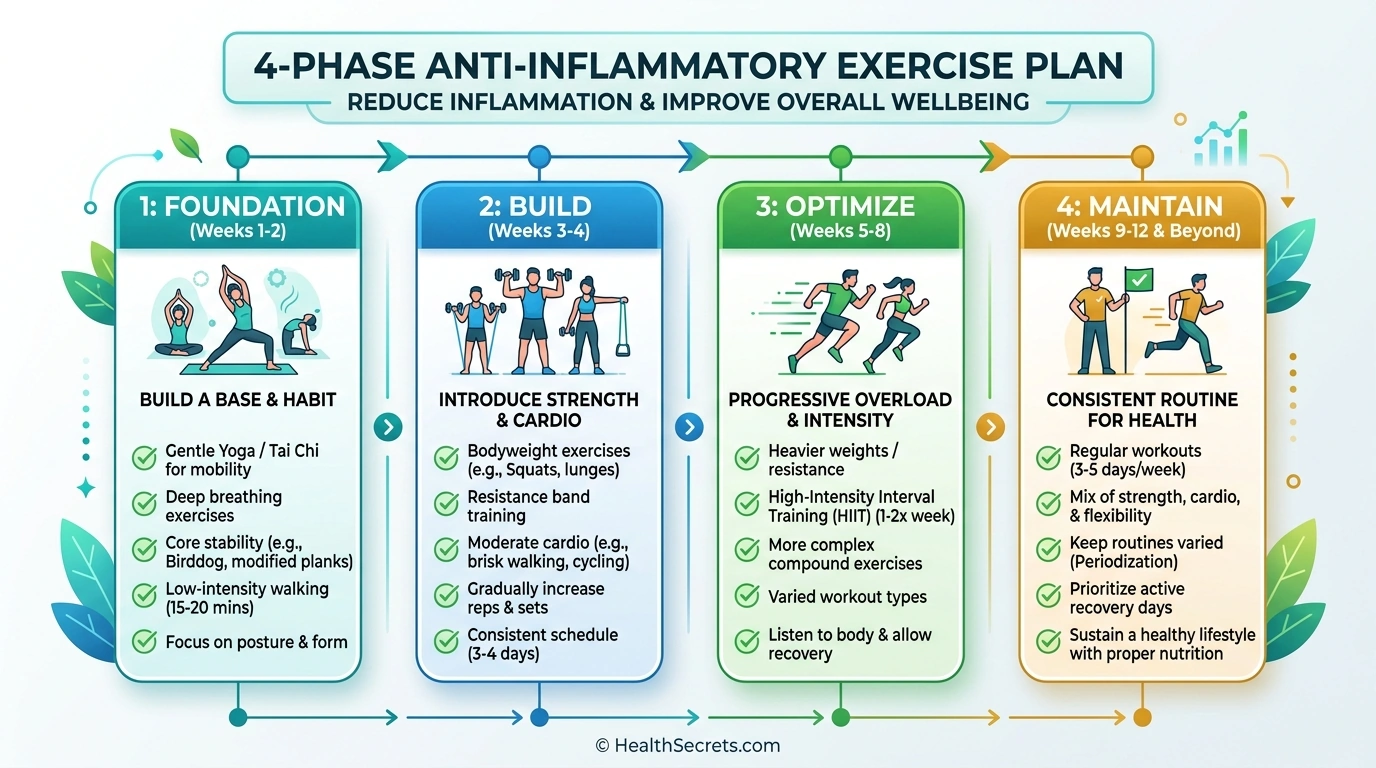
Phase 2: Build (Weeks 3–4)
- Increase walks to 30–45 minutes or add cycling/swimming
- Add 2 strength training sessions per week (compound movements, moderate loads)
- Begin a daily 10-minute stretching or yoga routine
- Start tracking soreness and energy levels in a journal
- Consider a gut-supporting protocol to address inflammation from the inside
Phase 3: Optimize (Weeks 5–8)
- Introduce 1 HIIT session per week (20–25 minutes)
- Increase aerobic sessions to 45–60 minutes
- Add foam rolling on training days (10 minutes)
- Evaluate progress — are you sleeping better, feeling less stiff, recovering faster?
- If fatigue persists or worsens, scale back intensity before adding more
Phase 4: Maintain (Weeks 9–12+)
- Maintain 150–300 minutes of aerobic activity weekly
- Continue 2–3 strength training sessions per week
- Keep HIIT to 1–2 sessions per week maximum
- Get annual bloodwork including CRP, IL-6, and other inflammatory markers
- Adjust based on how your body responds — there is no universal "perfect" plan