Skip to content
Health Secrets
All Tools

Body Fat Calculator

Body fat percentage is a more meaningful health metric than body weight or BMI because it distinguishes between fat mass and lean mass (muscle, bone, organs, water). Two people at the same weight can have vastly different body compositions — one may be lean and muscular while another carries excess visceral fat. Essential fat (needed for organ function) is 2-5% for men and 10-13% for women; athletic ranges are 6-13% and 14-20% respectively.

Gender

Measure horizontally at navel level

Measure just below larynx/Adam's apple

Understanding Body Fat Percentage

Body fat percentage is a more meaningful health metric than body weight or BMI because it distinguishes between fat mass and lean mass (muscle, bone, organs, water). Two people at the same weight can have vastly different body compositions — one may be lean and muscular while another carries excess visceral fat. Essential fat (needed for organ function) is 2-5% for men and 10-13% for women; athletic ranges are 6-13% and 14-20% respectively.

Key Facts

  • BMI misclassifies up to 30% of people — muscular individuals register as "overweight"
  • Visceral fat (around organs) is far more dangerous than subcutaneous fat (under skin)
  • Women naturally carry 6-11% more body fat than men due to reproductive hormones
  • Body fat below essential levels (men <5%, women <12%) impairs hormone production
  • Losing 1% body fat equals roughly 1-2 pounds of pure fat loss depending on body size
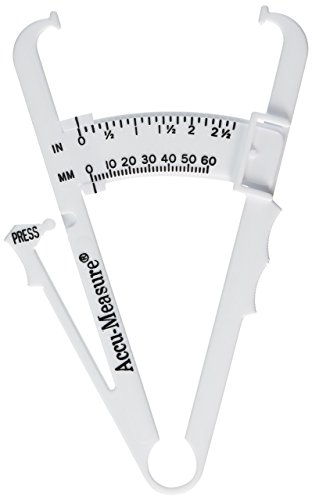
  • DEXA scans are the gold standard for body composition but skinfold calipers are 95% as accurate when used correctly

Why Body Fat Distribution Matters More Than Total Percentage

Research distinguishes between metabolically healthy and unhealthy obesity based on fat distribution. Visceral adipose tissue (VAT) around the liver and intestines produces inflammatory cytokines (IL-6, TNF-alpha) and is strongly correlated with insulin resistance, cardiovascular disease, and type 2 diabetes. Subcutaneous fat — especially in the gluteal-femoral region — is metabolically neutral or even protective. Waist-to-hip ratio and waist circumference are therefore better predictors of metabolic risk than body fat percentage alone. A waist circumference above 40 inches (men) or 35 inches (women) indicates elevated visceral fat regardless of total body fat.

Recommended Clinical Companion
Evidence-Based System
30-Day Walking & Mobility Planner
26 Pages • A4 Printable PDF

30-Day Walking & Mobility Planner

Build an accessible, personally tailored walking consistency routine with gentle mobility breaks and joint-safe progressions.

What's Inside This Complete Digital System:

✓ Starting-Point and Comfort Baseline: The baseline records current walking time, surfaces, footwear, balance confidence, daily schedule, and any clinician-supplied limits. It uses plain-language comfort and function prompts rather than assigning a fitness grade. The outcome is a starting point that can be explained and adjusted.
✓ 30-Day Walking Progression Calendar: The calendar offers flexible time-based progressions with repeat, reduce, and rest options for ordinary disruptions. It emphasizes consistency and recovery over a universal distance or speed. You can mark the planned version and the version that actually happened.
✓ Mobility Break and Warm-Up Cards: Illustrated cards provide gentle ankle, hip, thoracic, and seated movement prompts with range and stop reminders. They are designed as general education and do not assess a joint or prescribe rehabilitation. The practical outcome is a menu of brief movement breaks that can fit the day.
✓ Walking Context and Recovery Log: The log records duration, terrain, pace impression, footwear, weather, energy, and next-day recovery in a few lines. It includes space to note symptoms without asking you to diagnose or push through them. Over time, the record shows which conditions make movement more workable.
$22 $27 20% Off w/ Code READER20

Instant PDF download • Lifetime updates • 60-day money-back guarantee

Frequently Asked Questions

What is a healthy body fat percentage? +

For health (not aesthetics): men 10-20%, women 18-28%. Athletic ranges: men 6-13%, women 14-20%. Below essential fat levels (men <5%, women <12%) causes hormonal dysfunction, bone loss, and immune suppression.

How accurate are body fat scales? +

Bioelectrical impedance scales (BIA) have a margin of error of ±3-5% and are heavily influenced by hydration status. They are useful for tracking trends over time (same conditions, same time of day) but not for accurate absolute measurement. DEXA and underwater weighing are within ±1-2%.

Can you lose fat and gain muscle at the same time? +

Yes, called "body recomposition." It works best for beginners, those returning from a break, and people with higher body fat (>20% men, >28% women). The keys are adequate protein (1g/lb), progressive resistance training, and a mild deficit or maintenance calories.

Why is my weight the same but I look different? +

Muscle is denser than fat — it takes up less space per pound. If you are gaining muscle while losing fat at the same rate, the scale stays flat but your measurements, how clothes fit, and visual appearance all improve. This is why tracking body fat and measurements matters more than weight alone.

Recommended Reading

Best Immune Boosting Supplements: Top 10 Science-Backed Options

Best Immune Boosting Supplements: Top 10 Science-Backed Options

Discover the best immune boosting supplements backed by clinical research. We reviewed dozens of products to find the top 10 science-backed options for vitamin C, D, zinc, elderberry, NAC, and mushroom immune support in 2025.

read article

Supplement Timing and Absorption: When to Take What

Supplement Timing and Absorption: When to Take What

Taking supplements at the right time can dramatically change how well your body absorbs them. This guide breaks down exactly when to take each type of supplement — from fat-soluble vitamins with meals to magnesium before bed — so you get the most from every capsule.

read article

Milk Thistle for Liver Health: Silymarin Guide

Milk Thistle for Liver Health: Silymarin Guide

Milk thistle (silymarin) is one of the most evidence-backed herbal supplements for liver health. This comprehensive guide covers how silymarin protects liver cells, clinical evidence for fatty liver and hepatitis, dosing by condition, bioavailability solutions, and how to choose a quality supplement.

read article

Probiotics and Prebiotics: Complete Supplement Guide

Probiotics and Prebiotics: Complete Supplement Guide

Choosing the right probiotic or prebiotic supplement can transform your gut health, but with thousands of products available, finding what actually works requires understanding strains, CFU counts, and delivery mechanisms. This evidence-based guide reviews the top 11 probiotic, prebiotic, and synbiotic supplements for 2025, with detailed comparisons to help you find your ideal match.

read article

Supplements Guide: Complete Evidence-Based Reference

Supplements Guide: Complete Evidence-Based Reference

With thousands of dietary supplements on the market, choosing the right ones can feel overwhelming. This evidence-based supplements guide breaks down the science behind vitamins, minerals, and popular supplements — helping you make informed decisions about what actually works, what to avoid, and how to build a safe, effective supplement routine.

read article

B Vitamins Complete Guide: Energy and Nervous System

B Vitamins Complete Guide: Energy and Nervous System

B vitamins are a family of eight water-soluble nutrients that serve as essential cofactors in over 100 enzymatic reactions — from converting food into cellular energy to synthesizing neurotransmitters, building myelin sheaths around nerves, and regulating homocysteine for cardiovascular protection. This complete guide covers every B vitamin individually, explains methylated forms and the MTHFR polymorphism affecting 40% of the population, provides evidence-based dosing, and reviews the best supplements.

read article

Stay Ahead of Health Science

Get evidence-based health insights, calculator updates, and weekly longevity guides delivered to your inbox.

Body Composition Tools

Measure and track your body composition progress with these popular products.

As an Amazon Associate, Health Secrets earns from qualifying purchases. Product links open on Amazon, where current pricing and availability are displayed. We only feature products discussed in our editorial guides.