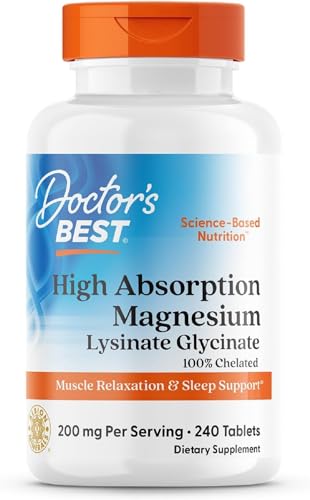
Here's a frustrating thought: that expensive bottle of vitamin D sitting on your counter might be doing almost nothing for you. Not because the supplement is bad — but because you're swallowing it on an empty stomach with your morning coffee.
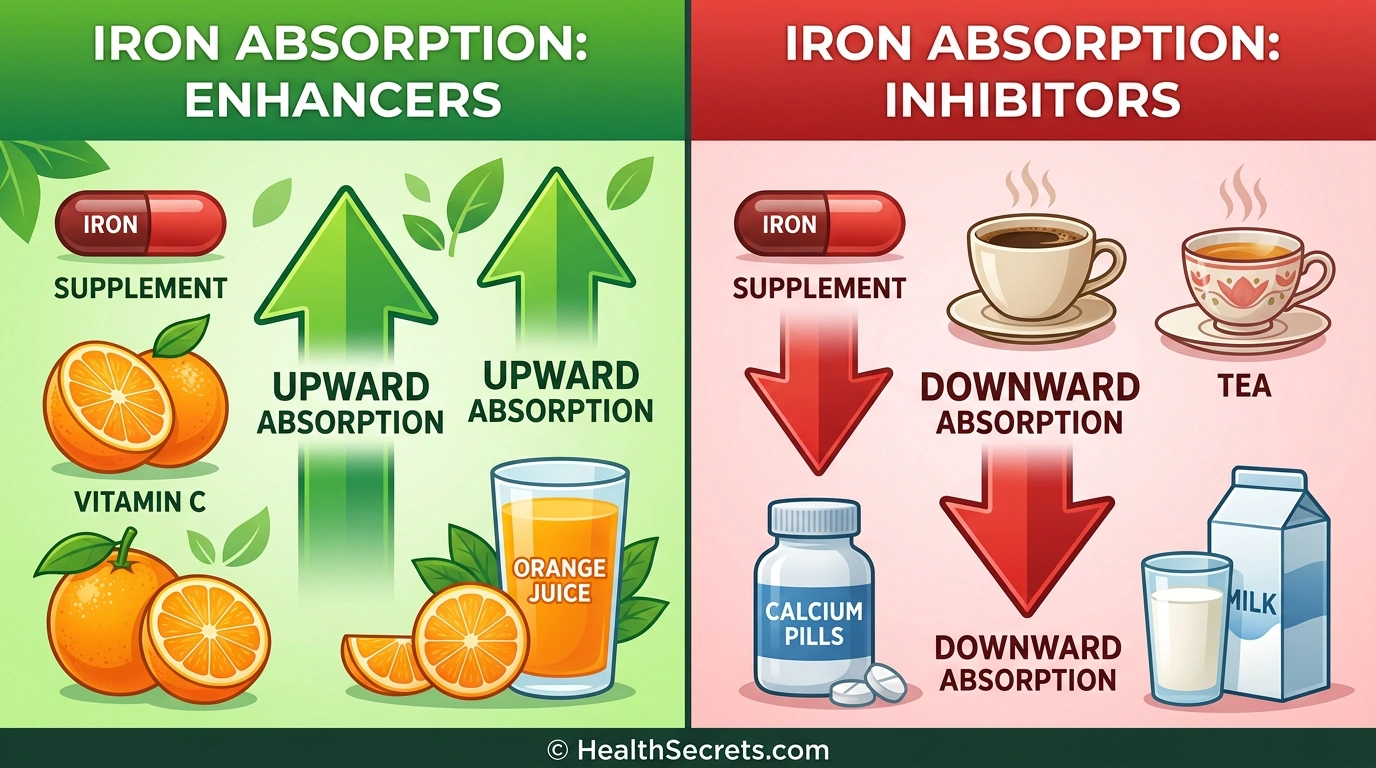
Timing matters more than most people realize. Research shows fat-soluble vitamins absorbed with dietary fat reach up to 80–90% bioavailability, compared to a measly 10–20% without it [1]. Magnesium taken at night enhances GABA activity and supports circadian rhythm for better sleep [2]. Iron taken on an empty stomach with vitamin C can boost absorption by 2–3 fold [3] — but pair it with calcium or tea, and you've just slashed that absorption by nearly half [4].
The difference between a supplement that works and one that doesn't often comes down to when and how you take it. Whether you're managing a stack of five bottles or just popping a daily multivitamin, getting the timing right means you're actually absorbing what you're paying for.
This guide covers the optimal timing for every common supplement — magnesium, B vitamins, fat-soluble vitamins, iron, calcium, omega-3s, probiotics, and more — plus a ready-made daily schedule you can start using tomorrow.
If you're new to supplements, start with our complete guide. For specific nutrients, see our guides on glutathione and detox protocols.
What Is Supplement Timing and Why Does It Affect Absorption?
Supplement timing refers to strategically scheduling when you take vitamins, minerals, and other supplements to maximize absorption and effectiveness. The right timing can mean the difference between absorbing 20% or 90% of a nutrient, depending on factors like stomach acidity, dietary fat, and competing minerals [1][4].
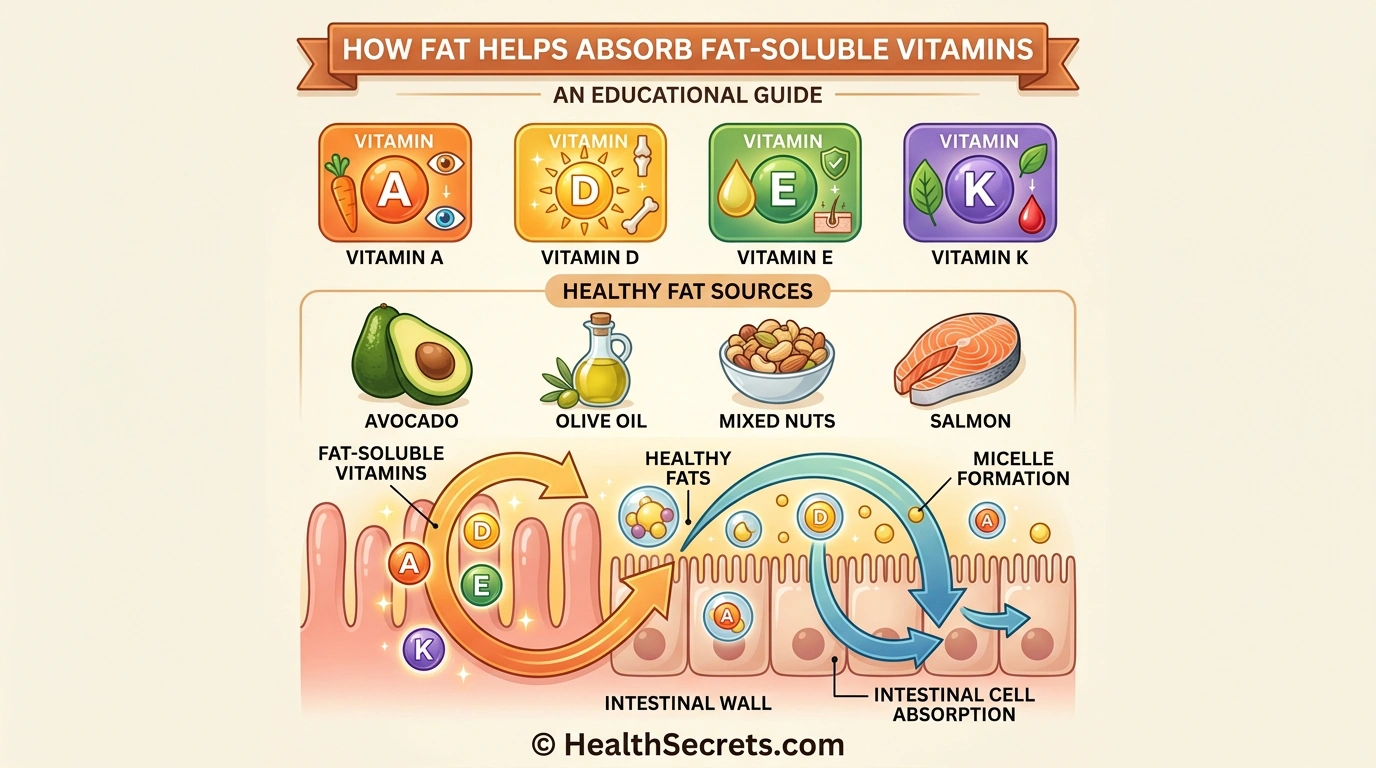
Your body doesn't process every nutrient the same way. Fat-soluble vitamins need to dissolve in lipids before they can cross into your bloodstream through micelle formation in the small intestine [5]. Water-soluble vitamins pass through more easily but get excreted quickly, so splitting doses maintains steadier blood levels. Minerals like iron, calcium, and zinc compete for the same absorption pathways — take them together, and they'll essentially fight each other for entry [6].
There are five core reasons timing matters:
Does food affect how supplements are absorbed?
Absolutely. Some supplements absorb dramatically better with food (fat-soluble vitamins, omega-3s), while others absorb best on an empty stomach (iron, certain probiotics). Taking iron with a meal can reduce its absorption by 40–50% due to inhibitors like phytates and tannins [4].
Can taking supplements at the wrong time cause side effects?
Yes. B vitamins and vitamin D taken at night may interfere with sleep in some people. Iron on an empty stomach can cause nausea. Magnesium taken in the morning may cause drowsiness. Matching timing to your body's natural rhythms minimizes side effects while maximizing benefits.
Do supplements interact with each other?
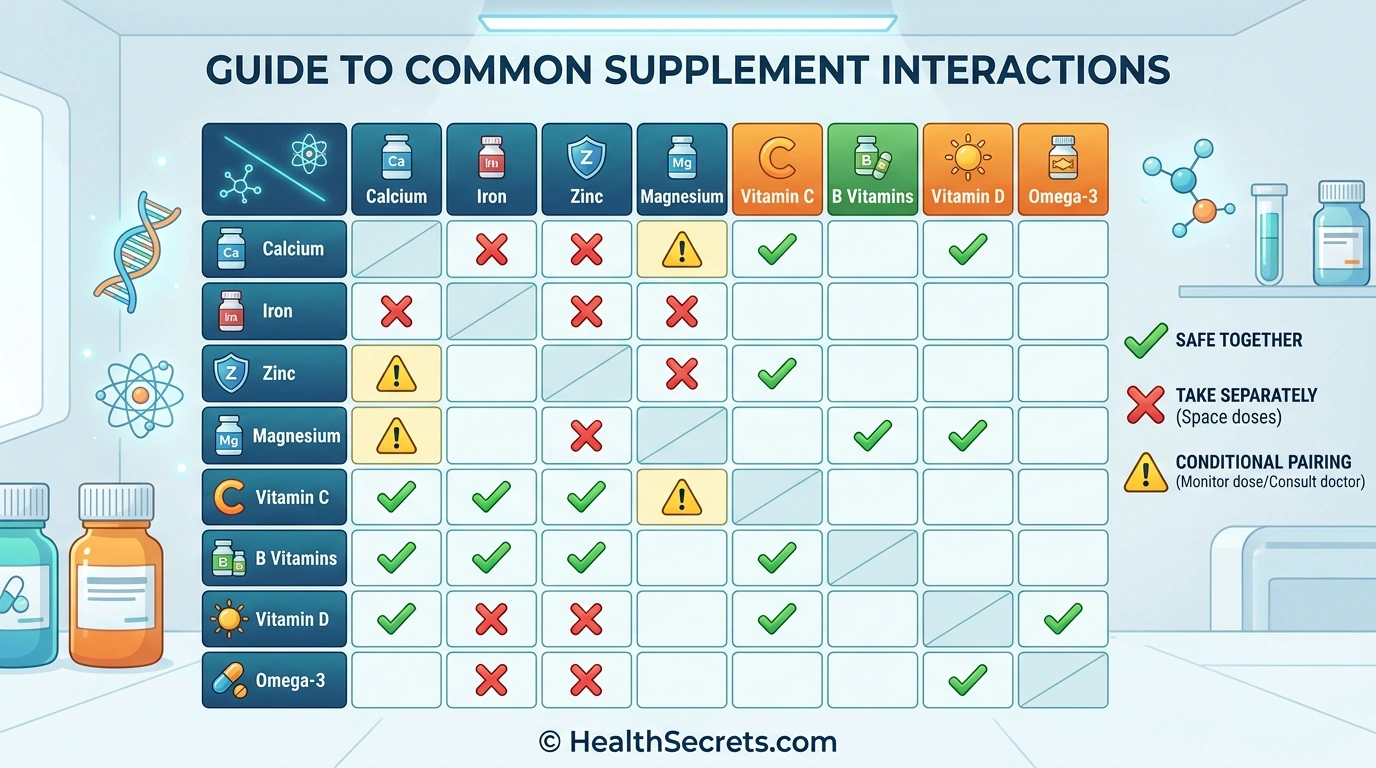
They do. Calcium inhibits iron absorption. Zinc and iron compete for the same transporters. High-dose zinc depletes copper over time. Understanding these interactions — and separating conflicting supplements by 2–4 hours — is essential for getting your money's worth [6].

Are You Unknowingly Inflaming Your Body?
Get the free Health Vitals & Nutrient Checklist — the daily guide that shows you which habits and supplements are silently triggering inflammation.
How Does Your Body Absorb Different Types of Supplements?
Your body uses distinct absorption pathways depending on whether a nutrient is fat-soluble, water-soluble, or a mineral — and each pathway has specific conditions that either enhance or block uptake. Understanding these mechanisms lets you time every supplement for peak absorption [5].
How are fat-soluble vitamins absorbed in the body?
Fat-soluble vitamins (A, D, E, K) dissolve in dietary fat and are absorbed into newly forming micelles — tiny lipid clusters — in the small intestine [5]. Without adequate fat in the meal, these vitamins pass through largely unabsorbed. Research confirms that absorption increases significantly when fat-soluble vitamins are taken with a high-fat meal, while a low-fat or empty stomach can have minimal effects on bioavailability [1]. At dietary doses, protein-mediated transport moves these vitamins across the intestinal wall, while higher concentrations may rely on passive diffusion [7].
How does the body absorb minerals like iron and calcium?
Iron is absorbed primarily in the duodenum, where an acidic environment converts ferric iron (Fe³⁺) to the more absorbable ferrous form (Fe²⁺). Vitamin C (ascorbic acid) acts as both a reducing agent and chelator, enhancing this conversion and boosting absorption 2–3 fold [3]. Calcium absorption requires vitamin D and occurs throughout the small intestine — but calcium carbonate specifically needs stomach acid, which is why calcium citrate is preferred for people on acid-reducing medications [8]. Both calcium and iron compete for absorption via the divalent metal transporter (DMT1), which is why they should never be taken simultaneously [6].
Why do water-soluble vitamins need split dosing?
B vitamins and vitamin C dissolve in water and aren't stored in significant amounts — excess is excreted through urine. For vitamin C specifically, your intestinal transporters become saturated at higher doses: the body absorbs roughly 70–90% of doses between 30–180mg, but only about 50% of a 1,000mg dose [9]. Splitting into smaller doses throughout the day maintains steadier blood levels and improves total absorption. The bright yellow urine after taking B-complex is riboflavin (B2) being excreted — it's completely normal and harmless.

Evidence-Based Supplement Organizer & Safety Log
Track your daily intake, verify third-party certifications, and prepare clear questions for your clinician.
What Are the Key Benefits of Proper Supplement Timing?
Strategic supplement timing can increase nutrient absorption by 2–4 fold, reduce side effects like nausea and insomnia, prevent mineral competition, and improve overall supplement effectiveness. Most people waste a significant portion of their supplement investment simply by taking them at suboptimal times [1][3].
Does taking magnesium at night actually improve sleep?
Yes — and the evidence is more robust than many people realize. A 2024 randomized controlled trial found that magnesium L-threonate significantly improved sleep quality and daytime functioning in adults with self-reported sleep problems [10]. Observational studies show magnesium helps maintain normal circadian rhythm, reduces daytime sleepiness, and improves overall sleep quality [2]. The mechanism involves GABA enhancement — magnesium increases activity of this calming neurotransmitter, relaxing muscles and quieting neural excitability [11]. A 2021 CARDIA study found that higher magnesium intake was associated with better sleep quality and recommended sleep duration of 7–9 hours, particularly among participants without depressive disorders [12].
Best practice: Take 200–400mg elemental magnesium (glycinate or L-threonate forms) 30–60 minutes before bed.
How much more vitamin D do you absorb with fat?
Studies from Iowa State University confirmed enhanced absorption of multiple fat-soluble vitamins when consumed with dietary fat — even modest amounts like 4–8g of oil significantly improved uptake [13]. The practical difference is stark: vitamin D taken with a meal containing avocado, nuts, or olive oil reaches substantially higher bioavailability than the same dose swallowed with water on an empty stomach.
Best practice: Take vitamins A, D, E, and K with your largest fat-containing meal — typically lunch or dinner. Even a tablespoon of olive oil or a handful of nuts provides enough fat.
Can vitamin C really boost iron absorption?
Vitamin C creates an acidic environment that prevents ferrous iron from oxidizing to the less-absorbable ferric form, while also chelating iron to keep it soluble in the alkaline duodenum [14]. One landmark study demonstrated that adding meat, fish, or poultry to a meal increased non-heme iron absorption 2–3 fold [3]. A 2020 JAMA Network Open randomized clinical trial confirmed vitamin C's role in creating optimal conditions for iron uptake [15].
Best practice: Take iron with 100–200mg vitamin C (or a glass of orange juice) on an empty stomach, 30 minutes before eating.
Does separating calcium and iron really matter?
It absolutely matters. Calcium directly inhibits iron absorption through competition at the DMT1 transporter — a study in Indian children showed that even 100–200mg of calcium significantly reduced iron uptake from fortified foods, though ascorbic acid could partially compensate [16]. The Mayo Clinic recommends taking calcium supplements at different times from iron-rich meals and iron supplements [8].
Best practice: Separate calcium and iron by at least 2 hours. Take iron in the morning or afternoon, calcium with a different meal.
Are There Any Risks From Incorrect Supplement Timing?
Poor supplement timing can reduce absorption by up to 80%, cause unnecessary side effects like nausea and insomnia, create dangerous nutrient depletions through mineral competition, and interfere with prescription medications. The most serious risks involve supplement-drug interactions, particularly with thyroid medications and blood thinners [8].

- Thyroid medication interactions are the most critical timing concern. Levothyroxine must be taken on an empty stomach, 30–60 minutes before breakfast, and separated from ALL supplements by at least 4 hours. Calcium, iron, and magnesium directly interfere with thyroid hormone absorption, potentially rendering the medication ineffective.
- Blood thinner conflicts with vitamin K require consistent — not necessarily reduced — intake. If you take warfarin, maintain the same vitamin K timing and amount daily so your doctor can calibrate your dosage accordingly.
- Mineral competition poses a subtler risk. Long-term high-dose zinc supplementation (over 40mg daily) without copper supplementation can deplete copper stores, leading to anemia and neurological issues. Always pair prolonged zinc use with 1–2mg copper [6].
- Antibiotic interactions with minerals are commonly overlooked. Calcium, iron, magnesium, and zinc all interfere with antibiotic absorption — separate them by at least 2 hours.
- Acid reducer effects on absorption are significant for long-term PPI users. Proton pump inhibitors reduce stomach acid needed for calcium carbonate, vitamin B12, iron, and magnesium absorption. Switch to calcium citrate (doesn't require acid) and consider sublingual B12.
How Do You Build the Perfect Supplement Schedule?
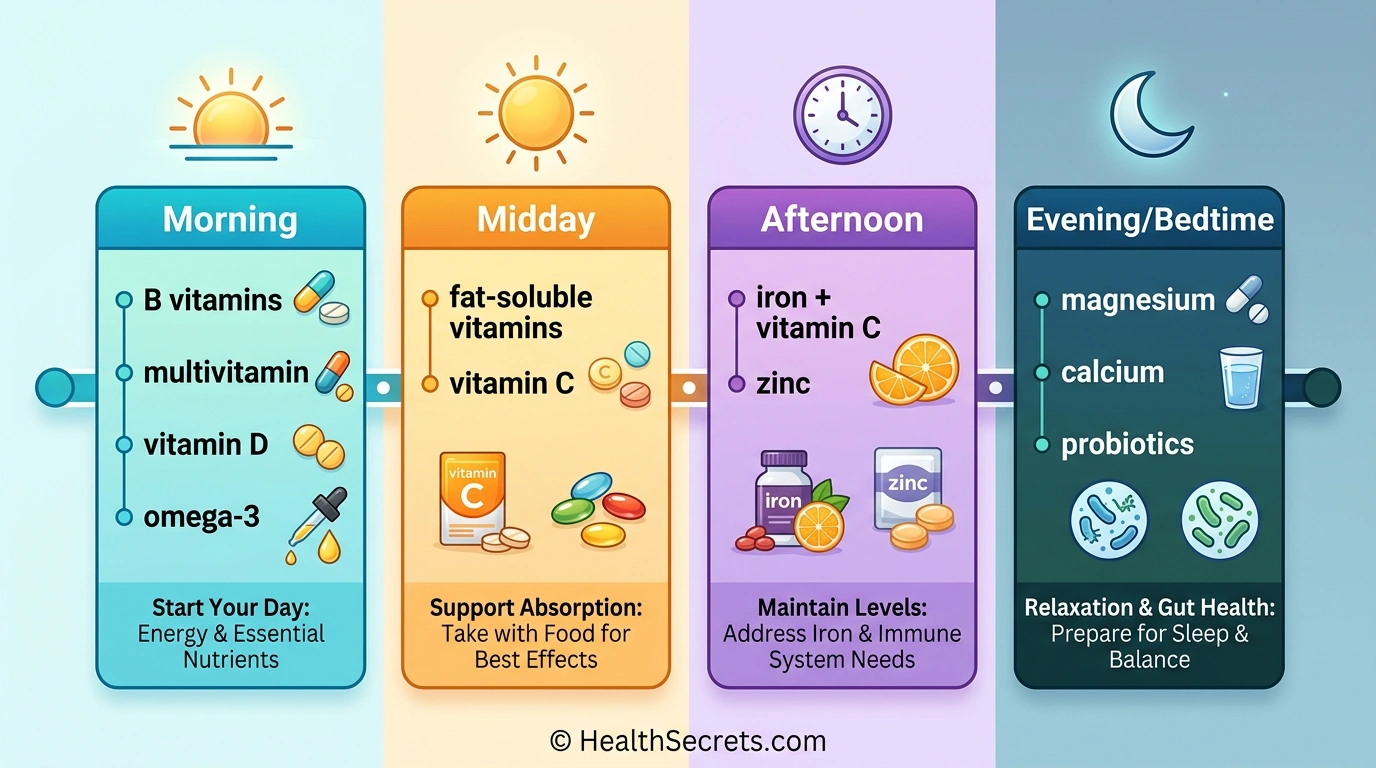
The most effective approach is dividing your supplements into four time slots — morning with breakfast, midday with lunch, afternoon on an empty stomach, and evening before bed — based on each nutrient's specific absorption requirements. Use a weekly pill organizer to make this automatic [1][2].
Morning (With Breakfast)
| Supplement | Why Morning | Take With |
|---|---|---|
| Multivitamin | Contains B vitamins (energizing) + fat-soluble vitamins | Meal with fat |
| B-Complex | Supports energy, may interfere with sleep at night | Food (reduces nausea) |
| Vitamin D | Fat-soluble, may disrupt sleep if taken at night | Meal with fat |
| Omega-3 Fish Oil | Fat-soluble, better absorbed with food | Meal with fat |
| CoQ10 | Fat-soluble, supports daytime energy | Meal with fat |
Midday (With Lunch)
- Vitamins A, E, K — if not taken at breakfast, take with a fat-containing lunch
- Vitamin C (second dose) — if splitting doses for better absorption
- Omega-3 (second dose) — if splitting a high dose
Afternoon (Empty Stomach, 2–3 Hours After Lunch)
- Iron — with 100–200mg vitamin C or orange juice. Avoid calcium, coffee, tea, high-fiber foods
- Zinc — on empty stomach for best absorption (take with small snack if nausea occurs)
Evening and Bedtime
| Supplement | When | Notes |
|---|---|---|
| Calcium | With dinner | Calcium carbonate needs food; calcium citrate doesn't. Split doses — max 500mg at once |
| Vitamin K2 | With dinner | Fat-soluble, pairs well with evening meal |
| Magnesium | 30–60 min before bed | Glycinate or L-threonate for sleep. 200–400mg elemental |
| Probiotics | Bedtime or 30 min before meals | Follow product instructions — timing varies by strain |
Supplement Interaction Quick Reference
| Combination | Rule | Why |
|---|---|---|
| Calcium + Iron | Separate by 2+ hours | Calcium inhibits iron absorption |
| Calcium + Zinc | Separate by 2+ hours | Compete for absorption |
| Iron + Zinc | Separate by 2+ hours | Compete for transporters |
| Zinc (long-term) + Copper | Add 1–2mg copper | Zinc depletes copper |
| Fiber supplements + All others | Separate by 2 hours | Fiber binds nutrients |
What Diet and Lifestyle Changes Support Better Supplement Absorption?
Eating balanced meals with healthy fats, maintaining consistent meal timing, staying hydrated, and supporting gut health all create the optimal internal environment for supplement absorption. Your diet is the foundation — supplements work best when they complement a nutrient-rich eating pattern, not replace it [7].
Fat Sources That Boost Absorption
Include at least one of these with your fat-soluble supplements:
- Avocado — roughly 15g fat per half
- Nuts and seeds — almonds, walnuts, sunflower seeds (12–18g fat per quarter cup)
- Olive oil — 14g fat per tablespoon
- Fatty fish — salmon, mackerel (10–15g fat per serving)
- Eggs — 5g fat per egg
- Nut butter — 16g fat per 2 tablespoons
Even a tablespoon of olive oil drizzled on a salad or a handful of almonds provides enough fat to significantly improve vitamin D, A, E, and K absorption [13].
Gut Health and Absorption
A healthy gut lining absorbs nutrients more efficiently. Support gut health with:
- Fermented foods — yogurt, kefir, sauerkraut, kimchi (natural probiotics)
- Prebiotic fiber — garlic, onions, bananas, asparagus (feeds beneficial bacteria)
- Adequate hydration — water helps dissolve water-soluble vitamins and transport nutrients
- Limiting alcohol — alcohol damages the intestinal lining and impairs absorption of B vitamins, folate, and minerals
See our gut health guide for a deeper dive into optimizing your digestive function for better nutrient uptake.
Lifestyle Habits That Support Absorption
- Consistent timing — taking supplements at the same time daily improves adherence and maintains steady nutrient levels
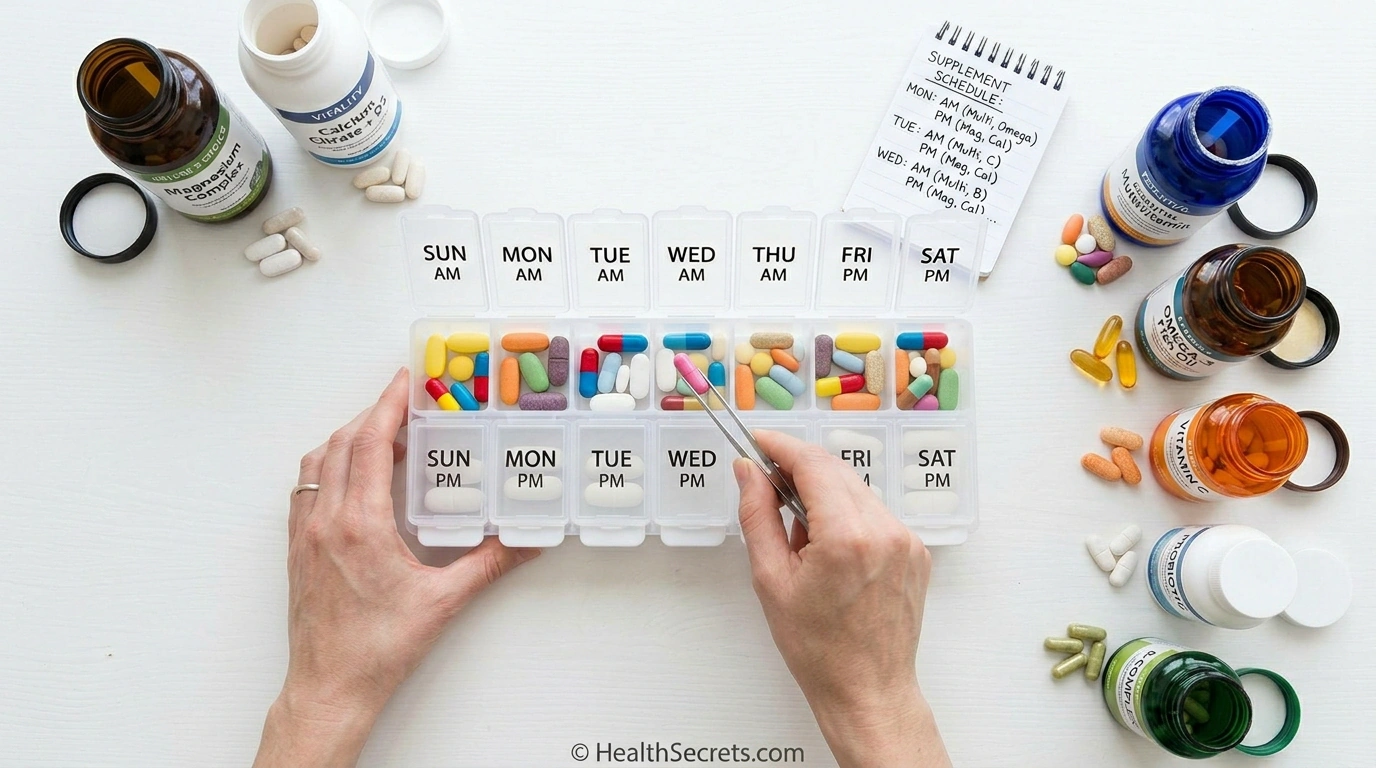
- Pill organizer — weekly organizers with AM/PM compartments eliminate guesswork
- Phone reminders — set alarms for each supplement window until timing becomes automatic
- Start slowly — introduce one new supplement at a time (wait 1–2 weeks) so you can identify any side effects
- Proper storage — cool, dry place away from light and moisture. Refrigerate probiotics and fish oil after opening

Action Plan
What Should You Do First to Optimize Your Supplement Timing?
Follow the sequence below, work through each phase in order, and use the checklist as your practical implementation guide.
Start by auditing your current supplements, separating any competing minerals, moving fat-soluble vitamins to meals with fat, and shifting magnesium to bedtime. Within one week you can have a fully optimized schedule that significantly improves absorption without changing which supplements you take [1][2].
Phase 1: Audit and Separate (Days 1–3)
- List every supplement you currently take and when you take it
- Identify any competing pairs (calcium + iron, calcium + zinc, iron + zinc)
- Separate competing minerals by at least 2 hours
- Check if any supplements interact with your medications (especially thyroid meds, blood thinners, antibiotics)
Phase 2: Optimize Timing (Days 4–7)
- Move fat-soluble vitamins (A, D, E, K, omega-3, CoQ10) to meals with fat
- Move B-complex and energizing supplements to morning
- Move magnesium to 30–60 minutes before bed
- Take iron on empty stomach with vitamin C (if applicable)
- Split calcium into 500mg doses if taking more than 500mg daily
Phase 3: Build Your System (Week 2)
- Buy a weekly pill organizer with AM/PM compartments
- Pre-fill your organizer every Sunday
- Set phone reminders for each supplement window
- Track any changes in energy, sleep, or digestion over 2–4 weeks
Phase 4: Fine-Tune (Month 2+)
- Consider blood work to check vitamin D, B12, iron, and magnesium levels
- Adjust timing if experiencing side effects (nausea, sleep disruption)
- Consult healthcare provider about any supplement-drug interactions
- Review and update your stack every 3–6 months