Skip to content
Health Secrets
← All Tools

Biological Age Estimator

Your chronological age counts calendar years, but your biological age reflects how well your body is actually aging at the cellular level. Two people born the same year can have biological ages that differ by 10-20 years depending on lifestyle, genetics, and environmental exposures. Biological age is measurable through biomarkers like telomere length, DNA methylation patterns, inflammatory markers, and metabolic health indicators.

1. Exercise frequency

2. Sleep quality & duration

3. Diet quality

4. Chronic stress

5. Smoking

6. Alcohol consumption

7. Social connections

8. Body composition

9. Sun protection

10. Sense of purpose/meaning

Understanding Biological vs. Chronological Age

Your chronological age counts calendar years, but your biological age reflects how well your body is actually aging at the cellular level. Two people born the same year can have biological ages that differ by 10-20 years depending on lifestyle, genetics, and environmental exposures. Biological age is measurable through biomarkers like telomere length, DNA methylation patterns, inflammatory markers, and metabolic health indicators.

Key Facts

  • DNA methylation clocks (like the Horvath clock) can predict biological age within 3-5 years
  • Regular exercise can reduce biological age by 3-9 years compared to sedentary individuals
  • Chronic stress accelerates biological aging by 2-4 years on average
  • Mediterranean diet adherence is associated with longer telomeres and younger biological age
  • Sleep deprivation accelerates epigenetic aging markers measurably within weeks
  • Social isolation has an aging effect comparable to smoking 15 cigarettes per day

The Hallmarks of Aging You Can Influence

The nine hallmarks of aging — genomic instability, telomere attrition, epigenetic alterations, loss of proteostasis, deregulated nutrient sensing, mitochondrial dysfunction, cellular senescence, stem cell exhaustion, and altered intercellular communication — are all influenced by modifiable factors. Caloric restriction activates AMPK and sirtuins (longevity pathways), exercise triggers autophagy (cellular cleanup), and polyphenol-rich diets reduce oxidative DNA damage. NAD+ precursors like NMN may support mitochondrial function, while managing inflammation (CRP, IL-6) slows the accumulation of senescent cells.
The e-book for this topic
Sources cited inside
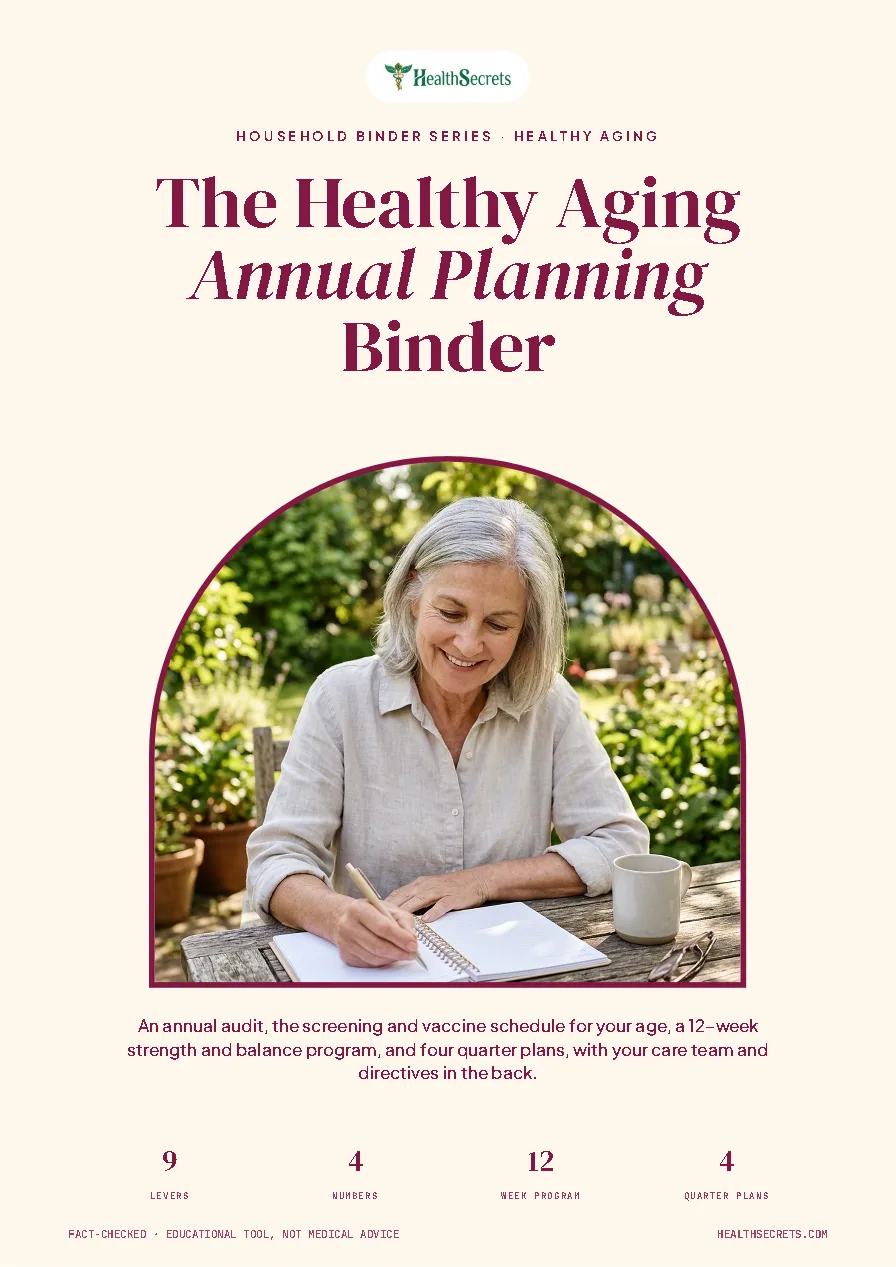
Healthy Aging Annual Planning Binder
45 pages • fillable PDF

Healthy Aging Annual Planning Binder

One binder for the year: an annual audit, the screening and vaccine schedule by age, a 12-week strength and balance program, four quarter plans, and your care team and directives.

What is inside:

✓ What Matters After 50: Nine areas with the evidence, including activity, strength, protein, blood pressure, hearing and vaccines. It also covers four numbers to know and a protein calculator. Supplements are graded.
✓ The Annual Audit: Home blood pressure averaged over 7 mornings, body numbers, blood and urine markers, senses, 10 habits, and the PHQ-9, GAD-2 and AUDIT-C questionnaires scored. Repeat the sheets each year to see the trend.
✓ The Screening and Vaccine Schedule: Each screening with its age band, interval and USPSTF grade, the ACIP adult vaccines, a record that counts what is due, and 5 decisions to talk over with your doctor.
✓ Strength, Balance and Falls: The 12-question CDC STEADI check scored, medicines that can raise fall risk, a mobility chart with your change at week 12, a 12-week program you can do with a chair and a counter, and a room-by-room home check.
$47 one payment

PDF e-book + free online edition • 60-day money-back guarantee

Frequently Asked Questions

How is biological age measured? +

The gold standard is DNA methylation testing (epigenetic clocks like GrimAge or DunedinPACE). More accessible markers include VO2max, grip strength, walking speed, CRP levels, fasting glucose, triglycerides, and blood pressure — all correlate with biological aging rate.

Can you reverse biological age? +

Yes. Studies show that lifestyle interventions (diet, exercise, sleep, stress management) can reduce biological age by 1-3 years over 8 weeks as measured by DNA methylation. The TRIIM trial showed thymus regeneration and 2.5-year epigenetic age reversal.

What accelerates biological aging the most? +

The top accelerators are: smoking (+4-7 years), chronic stress, poor sleep (<6 hours), sedentary lifestyle, excessive alcohol, obesity (especially visceral fat), chronic inflammation, and ultra-processed diets high in sugar and seed oils.

At what age should I start tracking biological age? +

Ideally from your 30s, when age-related decline begins. However, the interventions that reduce biological age (exercise, nutrition, sleep) benefit everyone regardless of when they start. Even starting in your 60s produces measurable improvements.

Recommended Reading

Anti-Aging Foods: 30 Foods to Slow Aging

Anti-Aging Foods: 30 Foods to Slow Aging

Discover the 30 best anti-aging foods backed by science to slow aging, protect your cells from oxidative damage, and promote longevity — from antioxidant-rich berries and omega-3-packed fatty fish to polyphenol-dense olive oil and green tea.

read article

Longevity Lifestyle: Daily Habits of the Longest-Lived

Longevity Lifestyle: Daily Habits of the Longest-Lived

The longest-lived people on Earth don't rely on expensive supplements or complex health protocols. They follow simple, daily habits rooted in natural movement, plant-based eating, purpose, stress management, and deep social connection—patterns researchers call the "Power 9." Here's how to adopt these longevity lifestyle habits wherever you live.

read article

Autophagy: How to Activate Cellular Cleanup

Autophagy: How to Activate Cellular Cleanup

Autophagy is your body's built-in cellular recycling system — a Nobel Prize-winning discovery that breaks down damaged proteins, clears dysfunctional organelles, and regenerates healthier cells. Research shows you can activate this powerful longevity mechanism through fasting, exercise, specific supplements like spermidine, and lifestyle strategies backed by decades of scientific evidence.

read article

Longevity Secrets: Science-Backed Strategies to Live Longer

Longevity Secrets: Science-Backed Strategies to Live Longer

Longevity isn't about chasing some mythical fountain of youth — it's about stacking everyday habits that keep your cells healthy, your mind sharp, and your body resilient for decades. This comprehensive guide breaks down the science of aging, lessons from the world's longest-lived communities, and practical strategies you can start using today to extend both your lifespan and your healthspan.

read article

Exercise for Longevity: Optimal Types and Duration

Exercise for Longevity: Optimal Types and Duration

Exercise is the single most powerful longevity intervention available — free, accessible, and backed by decades of research showing it can reduce all-cause mortality by 30–50% and extend lifespan by 3–7 years. This guide walks you through the optimal types, duration, and practical protocols to make exercise work for a longer, healthier life.

read article

Blue Zones: Lessons from the World's Longest-Lived People

Blue Zones: Lessons from the World's Longest-Lived People

Discover the science behind Blue Zones — five regions where people routinely live past 100 with remarkably low rates of chronic disease. Learn the Power 9 longevity principles, explore each Blue Zone's unique dietary and lifestyle secrets, and find out how to create your own Blue Zone lifestyle today.

read article

Stay Ahead of Health Science

Get evidence-based health insights, calculator updates, and weekly longevity guides delivered to your inbox.

Anti-Aging & Longevity Products

Clinically-backed products to support skin health, cellular repair, and biological age.

As an Amazon Associate, Health Secrets earns from qualifying purchases. Product links open on Amazon, where current pricing and availability are displayed. We only feature products discussed in our editorial guides.

We value your privacy

We use cookies to enhance your browsing experience, serve personalized content, and analyze our traffic. By clicking "Accept All", you consent to our use of cookies.