Here's something that still catches people off guard: the most powerful anti-aging tool on the planet doesn't come in a bottle, doesn't require a prescription, and won't cost you a dime. It's exercise. Plain and simple. [9] [12]
Decades of research — we're talking massive studies involving hundreds of thousands of people — consistently show that regular physical activity reduces your risk of dying from any cause by 30–50% [7] [15] [17]. That's not a typo. And it can add anywhere from 3 to 7 years to your life, while dramatically improving the quality of those years. A landmark 2022 study analyzing over 750,000 veterans found that each incremental improvement in cardiorespiratory fitness was linked to a 13–15% drop in mortality risk, regardless of age or existing health conditions [2] [6].
But here's where it gets interesting — and a bit more nuanced than "just move more." The type of exercise matters. The amount matters. And the combination of different exercise modalities matters perhaps most of all. Cardio alone won't cut it. Strength training alone won't either. The sweet spot, as the research increasingly shows, is a thoughtful blend of both — plus daily movement woven into your life the way Blue Zones centenarians have done for generations. [16]
In this guide, you'll learn exactly how exercise extends your lifespan at the cellular level, which types deliver the biggest longevity bang for your buck, how much you actually need (spoiler: it's probably less than you think), and step-by-step protocols for every fitness level. Whether you're starting from the couch or already training five days a week, there's a clear, evidence-based path to optimizing exercise for longevity [13].
Related reading: Telomeres and Aging: How to Protect Your DNA · Longevity and Anti-Aging Complete Guide
What Do You Need to Know Before Starting an Exercise for Longevity Program?
Before diving into specific protocols, you need to understand why exercise is such a uniquely powerful longevity tool — and what the research says about who benefits most. The short answer: everyone. Exercise reduces mortality risk across every age group, every BMI category, and every baseline fitness level. A 2022 study in JAMA Internal Medicine involving over 100,000 participants found that combinations of moderate and vigorous activity provide 35–42% maximum mortality reduction [4].
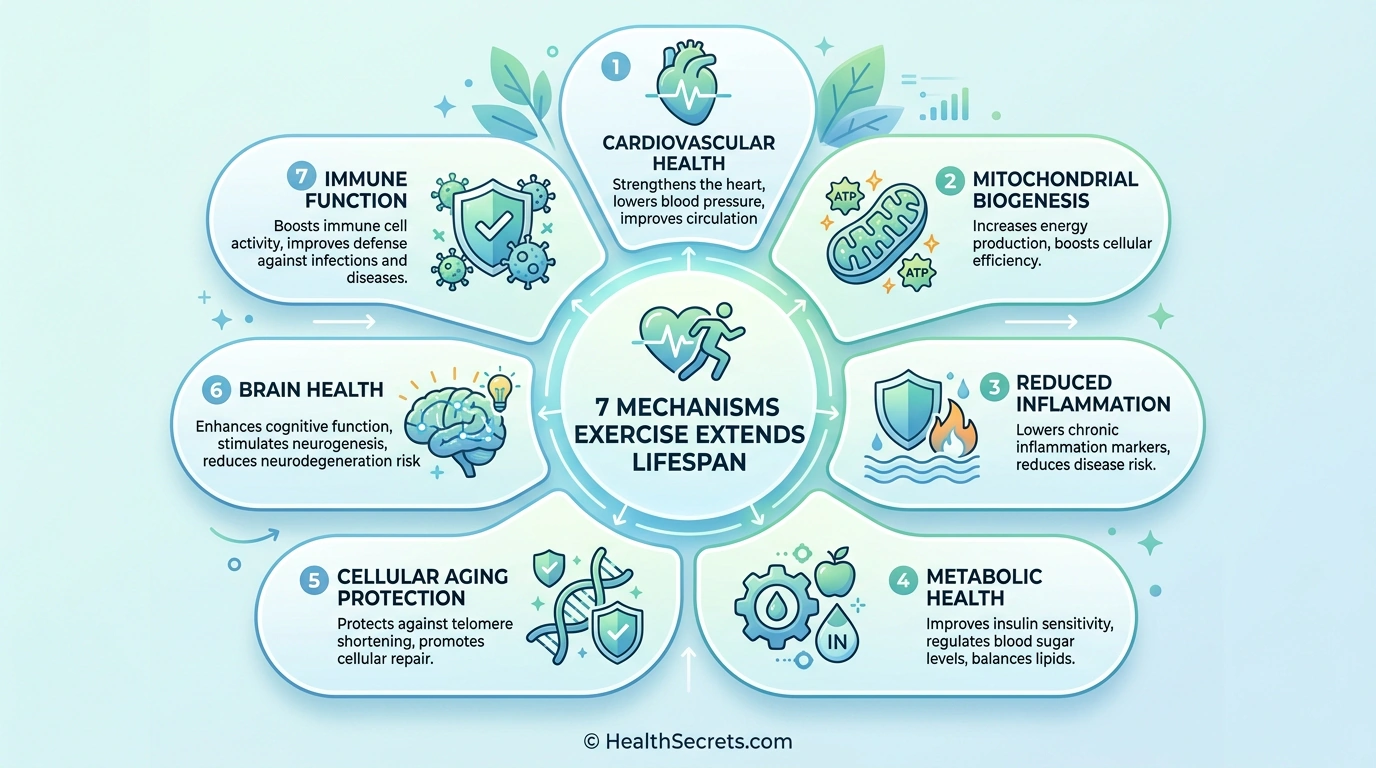
How exercise extends your lifespan — the mechanisms:
- Cardiovascular health: Strengthens heart muscle, lowers blood pressure, improves cholesterol profiles, and reduces atherosclerosis — addressing the leading cause of death worldwide.
- Mitochondrial biogenesis: Creates new mitochondria (your cells' energy factories), improving energy production and reducing oxidative stress — essentially making your cells younger.
- Reduced chronic inflammation: Lowers inflammatory markers like CRP, IL-6, and TNF-alpha. Muscles release anti-inflammatory myokines during exercise, directly counteracting "inflammaging."
- Metabolic health: Improves insulin sensitivity, enhances glucose control, and reduces dangerous visceral fat — cutting diabetes risk dramatically.
- Cellular aging protection: Protects telomeres, induces autophagy (cellular cleanup), and activates longevity pathways like sirtuins and AMPK.
- Brain health: Increases BDNF (brain-derived neurotrophic factor), promotes neuroplasticity, and reduces dementia risk by 30–40%.
- Immune function: Strengthens immune surveillance and reduces infection risk — particularly important as immune function naturally declines with age.
Who this guide is for: Anyone — whether you're currently sedentary, moderately active, or already training regularly. The protocols below scale from beginner to advanced. The only prerequisite is clearance from your healthcare provider if you have existing health conditions.
Expected timeline: You'll feel mood and energy improvements within days. Measurable fitness gains appear in 4–8 weeks. The longevity benefits accumulate over months and years of consistent practice.
How Do You Assess Your Current Fitness Level and Set Longevity Goals?
The first step toward exercising for longevity is honestly assessing where you are right now — because the optimal starting point varies dramatically based on your current activity level. Your baseline determines your entry protocol and how quickly you can progress.
Assess your current activity level:
- Sedentary: Less than 75 minutes of intentional physical activity per week. You'll start with the beginner protocol.
- Lightly active: 75–150 minutes per week. You're close to minimum guidelines and can start with the intermediate protocol.
- Moderately active: 150–300 minutes per week. You're meeting guidelines but may need to optimize your exercise mix.
- Highly active: 300+ minutes per week. Focus on balance, recovery, and ensuring you include both cardio and strength.
Key longevity metrics to track:
- VO2 max (or a proxy like resting heart rate): The single strongest fitness predictor of longevity. A 2018 JAMA Network Open study of 122,007 patients found that cardiorespiratory fitness is inversely associated with long-term mortality with no observed upper limit of benefit — meaning fitter is always better [1].
- Grip strength: A reliable proxy for overall strength and sarcopenia risk.
- Step count: A simple daily movement indicator. Research suggests 7,000–10,000 steps daily for optimal health.
- Body composition: Muscle mass relative to body fat — more informative than BMI alone.
You don't need expensive tests to start. Simply note how many minutes per week you currently exercise, what types you do, and whether you include both cardio and strength training. That's your baseline.

Healthy Aging Annual Planning Binder
Bring your longevity priorities, preventive screening schedules, and strength routines into one organized quarterly system.
How Do You Build a Cardio Foundation for Longevity?
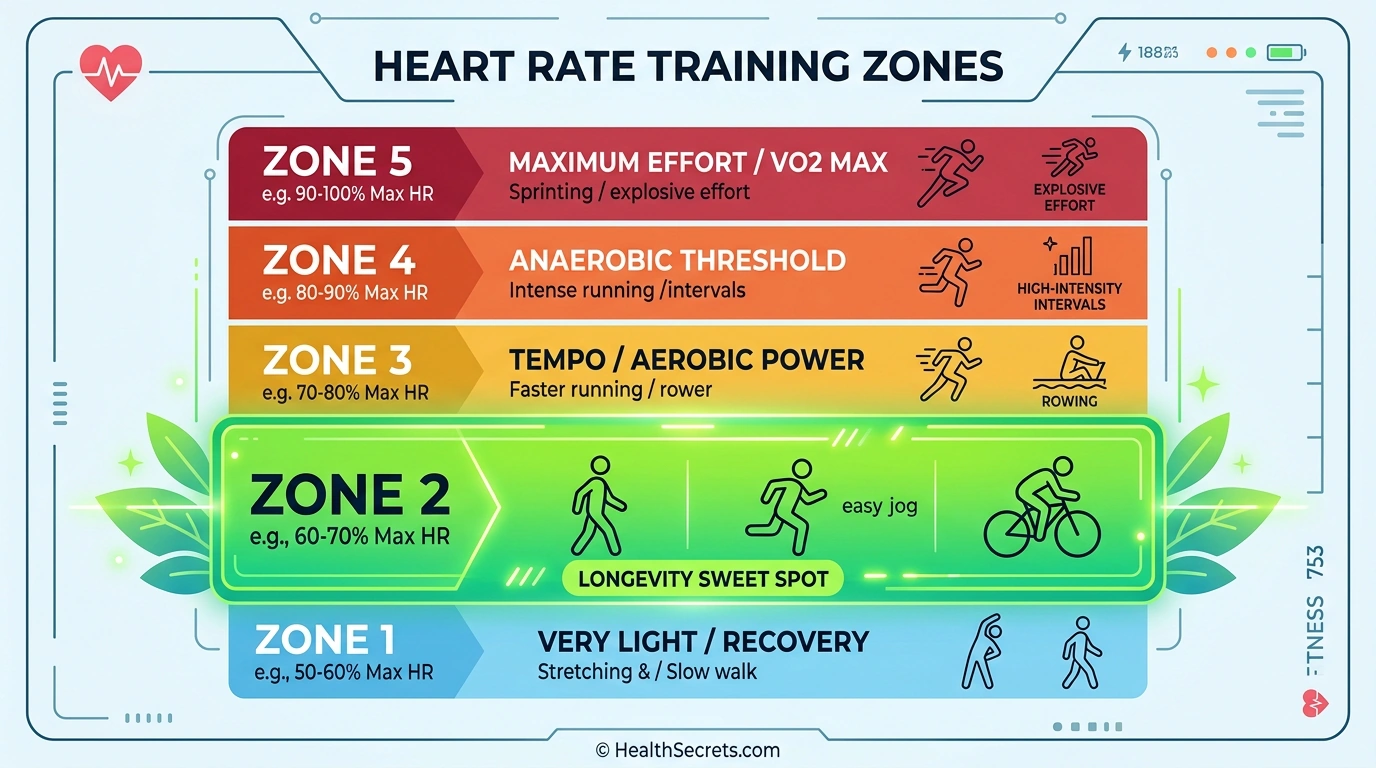
Aerobic exercise has the most robust longevity evidence of any exercise type — decades of studies across millions of people consistently show it extends lifespan. Building a solid cardio foundation is your highest-priority step. Zone 2 training (moderate intensity where you can hold a conversation) should form roughly 80% of your cardio volume.
Zone 2 training (the longevity sweet spot):
- Moderate intensity: 60–70% of max heart rate
- You can talk but not sing (the "talk test")
- Primary fuel: fat oxidation (metabolic flexibility)
- Drives mitochondrial biogenesis — literally creating new cellular powerhouses
- Activities: brisk walking, easy jogging, cycling, swimming, dancing
How much cardio for longevity:
- Minimum: 150 minutes moderate per week (30 min × 5 days) — meets WHO guidelines
- Optimal: 200–300 minutes moderate per week (40–60 min × 5 days) — maximum longevity benefit zone
- Or: 75–150 minutes vigorous per week (if you prefer higher intensity)
- Benefits plateau around 300 minutes moderate per week — more isn't harmful, just diminishing returns
Once or twice weekly, include higher-intensity efforts to improve your VO2 max — one of the strongest longevity predictors. The Norwegian 4×4 protocol (4 minutes hard at 85–95% max heart rate, 3 minutes easy recovery, repeat 4 times) is well-studied and effective.
Practical cardio options: Running or jogging (most studied), brisk walking (most accessible), cycling (low-impact, joint-friendly), swimming (full-body, zero-impact), dancing (social and cognitive benefits), hiking (nature exposure plus varied terrain).
How Do You Add Strength Training to Preserve Muscle and Extend Lifespan?
Strength training is non-negotiable for longevity. Muscle mass declines 3–8% per decade after age 30 — a condition called sarcopenia that accelerates frailty, falls, metabolic dysfunction, and loss of independence. A 2022 systematic review by Momma et al [3] [11]. found that resistance training programs are associated with a 10–20% lower risk of all-cause mortality, with maximum benefit at approximately 30–60 minutes per week.
How much strength training:
- Minimum: 2 days per week, all major muscle groups
- Optimal: 2–3 days per week, 30–45 minutes per session
- Sets/reps: 2–3 sets of 8–12 reps at moderate weight
- Recovery: 48 hours between sessions targeting the same muscle groups
- Progressive overload: Gradually increase weight or reps over time
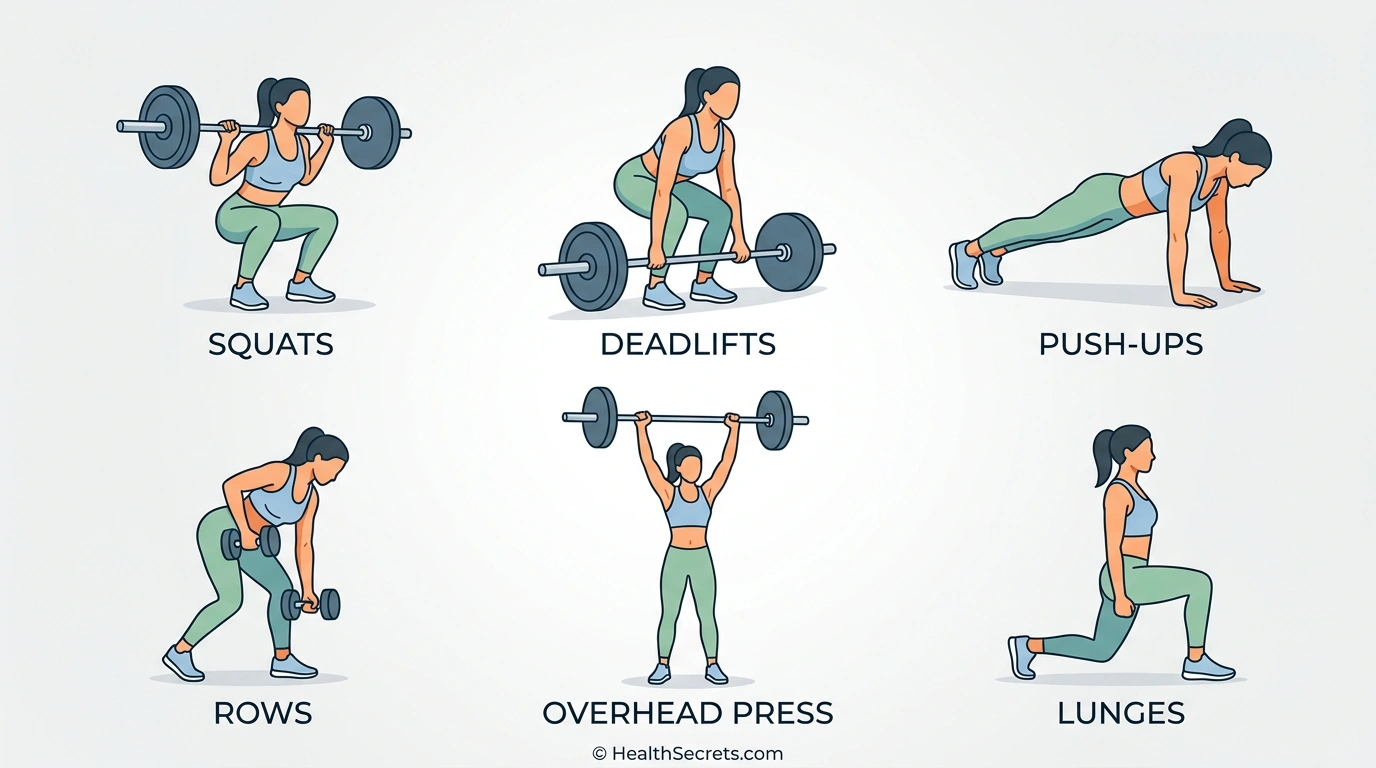
Best exercises — prioritize compound movements:
- Squats: Legs, glutes, core — the most functional movement pattern
- Deadlifts: Full posterior chain — builds real-world picking-up-things strength
- Push-ups or bench press: Chest, shoulders, triceps
- Rows or pull-ups: Back, biceps, posture
- Overhead press: Shoulders, core stability
- Lunges: Single-leg strength and balance (critical for fall prevention)
Equipment options: Bodyweight exercises require zero equipment and are effective for beginners. Resistance bands are portable and joint-friendly. Dumbbells offer versatility at home. Barbells allow maximum progressive overload. Machines provide guided movement for beginners.
It's never too late: Studies consistently show that adults in their 70s, 80s, and even 90s can build significant muscle mass and strength through resistance training. The functional benefits — independence, fall prevention, quality of life — are profound at any age.
How Do You Incorporate HIIT for Time-Efficient Longevity Benefits?
High-Intensity Interval Training alternates short bursts of intense effort with recovery periods, typically lasting 20–30 minutes total [14]. HIIT is a powerful but optional addition to your longevity exercise toolkit — it can deliver comparable cardiovascular benefits to longer moderate sessions in a fraction of the time.
HIIT benefits for longevity:
- Time-efficient: 20–30 minutes can match 45–60 minutes of moderate cardio for some outcomes
- Potent mitochondrial biogenesis stimulus — a 2022 review in PMC confirmed HIIT preserves mitochondrial quality with aging
- Improves VO2 max rapidly (the key longevity predictor)
- Enhances insulin sensitivity and metabolic flexibility
- Induces autophagy (cellular cleanup)
Popular HIIT protocols:
Norwegian 4×4: 4 min hard (85–95% max HR), 3 min easy, repeat 4× (total ~28 min)
Tabata: 20 sec all-out, 10 sec rest, repeat 8× (4 min — brutal but effective)
30-30: 30 sec hard, 30 sec easy, repeat 10–20×
Sprint intervals: 30–60 sec sprint, 2–3 min recovery, repeat 5–8×
Who should do HIIT: Healthy adults with a baseline fitness foundation, time-constrained individuals, and those seeking metabolic benefits.
Who should modify or avoid: Complete beginners (build a base first), injury-prone individuals, elderly or frail adults (too demanding without supervision), those with heart conditions (consult a doctor first).
How much HIIT: 1–2 sessions per week is sufficient. Follow the 80/20 rule: 80% of your training at moderate intensity (Zone 2), 20% at high intensity. HIIT is a supplement to — not a replacement for — your aerobic base.
How Do You Integrate Daily Movement Like Blue Zones Centenarians?
The world's longest-lived populations don't go to gyms [8]. Blue Zones research reveals that centenarians in Okinawa, Sardinia, Nicoya, Ikaria, and Loma Linda share one consistent trait: they move naturally throughout the day — walking, gardening, doing household chores, and using their bodies as part of daily life.
Prolonged sitting increases mortality risk even if you exercise regularly. An hour of structured exercise doesn't fully offset 8–10 hours of sitting. This is where NEAT (Non-Exercise Activity Thermogenesis) — the calories burned through daily activities beyond formal exercise — becomes critical.
Blue Zones movement habits:
- Walking as primary transportation (no driving short distances)
- Daily gardening and yard work
- Manual household tasks (cooking, cleaning, building)
- Social movement: walking to visit friends and community activities
- Rarely sedentary — constantly moving throughout the day
Practical daily movement strategies:
- Stand and move every 30 minutes (set a timer if needed)
- Take walking meetings or phone calls
- Use stairs instead of elevators
- Park farther away — extra steps add up
- Active commute: walk or bike part of your route
- Do household tasks yourself — cooking, cleaning, yard work
- Pursue active hobbies: gardening, dancing, playing with kids or pets
- Aim for 7,000–10,000 steps daily as a baseline
Think of it this way: structured exercise is your engine, but daily movement is your fuel efficiency. You need both for optimal longevity.

How Do You Create Your Optimal Weekly Longevity Exercise Schedule?
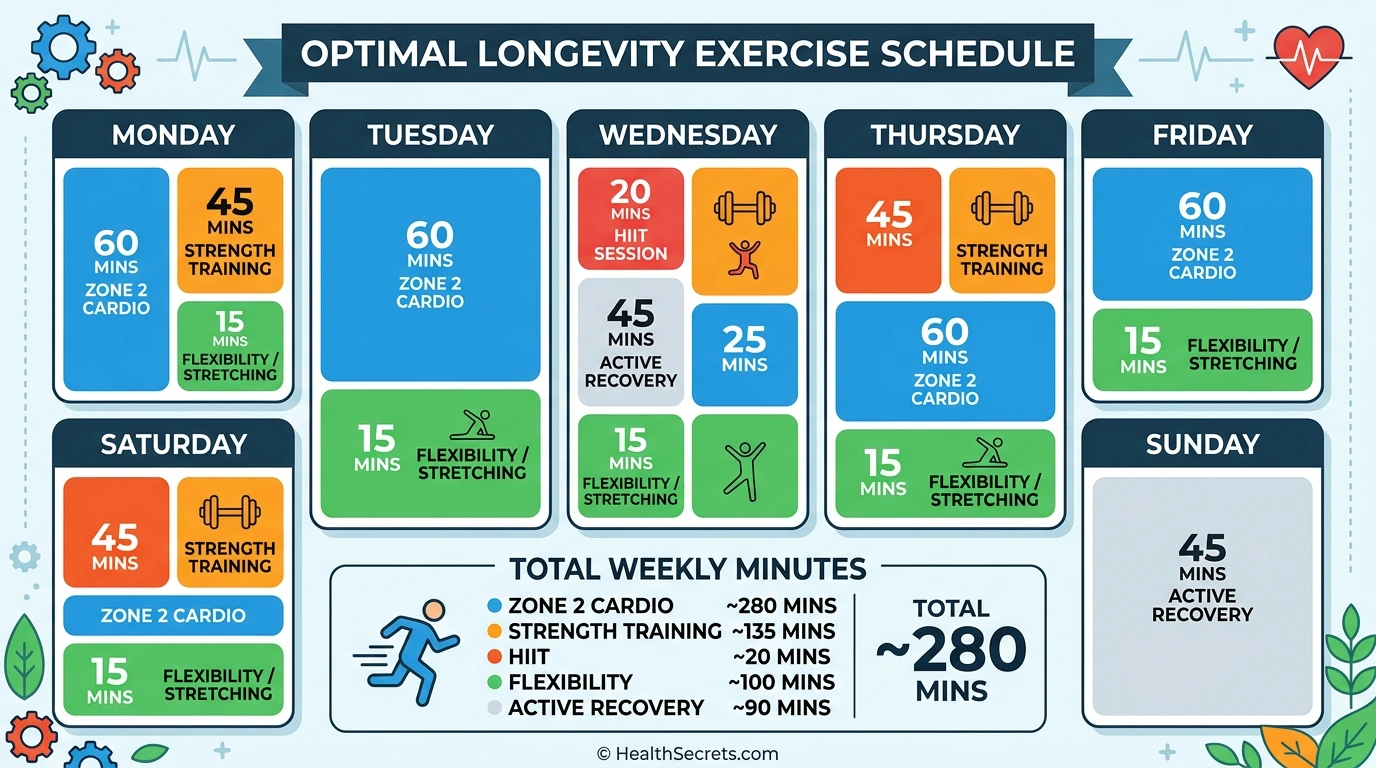
Here's where everything comes together into practical, actionable weekly plans. Choose the protocol that matches your current fitness level and progress gradually.
Optimal weekly schedule (for those already moderately active):
- Monday: 45 min Zone 2 cardio + 10 min stretching
- Tuesday: 40 min strength training (full body)
- Wednesday: 60 min Zone 2 cardio (easy pace)
- Thursday: 40 min strength training (full body)
- Friday: 45 min Zone 2 cardio + 10 min stretching
- Saturday: 25 min HIIT or vigorous cardio
- Sunday: Active recovery — walking, yoga, light activity
- Total: ~250 min cardio + 80 min strength + flexibility = ~6 hours/week
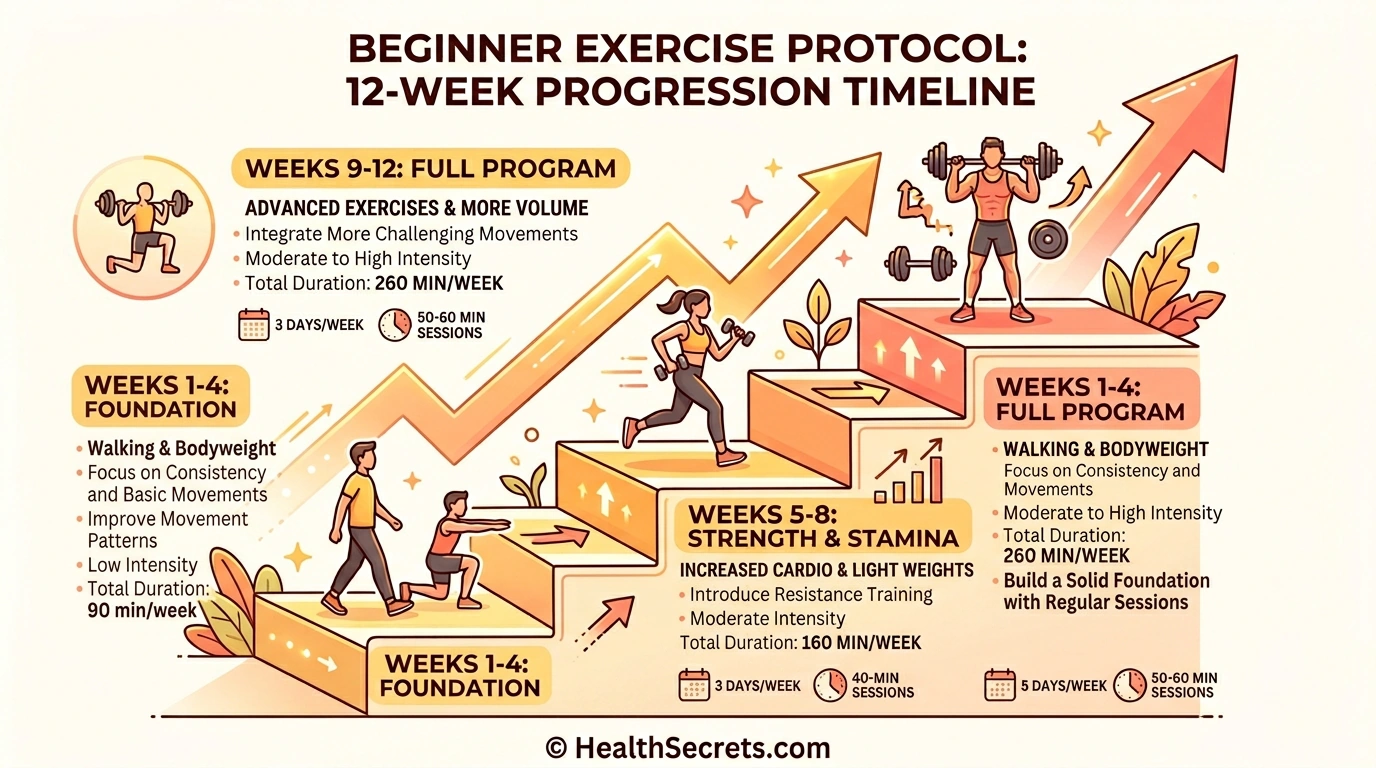
Beginner protocol (starting from sedentary):
- Weeks 1–4: 3 days × 20 min brisk walking + 2 days × 15 min bodyweight exercises (~90 min/week)
- Weeks 5–8: 4 days × 30 min walking + 2 days × 20 min bodyweight or light weights (~160 min/week)
- Weeks 9–12: 5 days × 40 min cardio + 2 days × 30 min strength training (~260 min/week)
- By month 4: You're at optimal longevity exercise levels. Maintain and enjoy.
The 10% rule: Never increase weekly volume by more than 10% — this prevents injuries and ensures sustainable progression.
How Do You Maintain Consistency and Overcome Common Exercise Barriers?
Consistency is the single greatest predictor of exercise-related longevity benefits. Regular moderate exercise beats sporadic intense bursts every time. Research confirms that sustainable habits built over years and decades deliver the real longevity payoff.
"I don't have time":
- HIIT sessions take only 20–30 minutes, 2× per week
- Break exercise into 10-minute chunks throughout the day (3×10 = 30 min)
- Walking meetings, lunch walks, active commutes — movement that multitasks
"I hate exercise":
- Find activities you genuinely enjoy: dancing, hiking, sports, gardening, swimming
- Exercise with friends — social accountability makes it enjoyable
- Listen to podcasts, music, or audiobooks during cardio
- Focus on how you feel after — energy, mood, and sleep improvements are immediate motivators
"I'm too old or out of shape":
- It's never too late. Studies show remarkable strength and fitness gains even in adults aged 70–90+
- Start with just 10 minutes — even that delivers measurable mortality reduction (14% lower risk)
- Compare yourself to yesterday's version of you, not anyone else
"I have injuries or limitations":
- Low-impact options: swimming, cycling, elliptical, water aerobics
- Modify exercises: resistance bands, seated variations, chair exercises
- Work with a physical therapist to address underlying issues
Keys to lasting consistency: Make exercise non-negotiable (like brushing teeth), schedule it at the same time daily, track your progress, celebrate small wins, and adapt your routine as life changes.

The Preventive Screening Timeline
USPSTF screening ages and intervals for average-risk adults in one age-ordered table, the questions that move you out of average risk, and a personal due-date tracker.
What Are the Most Common Exercise Mistakes That Hurt Your Longevity?
Even well-intentioned exercisers make mistakes that reduce their longevity benefits or increase injury risk. Avoiding these common pitfalls can dramatically improve your long-term outcomes. The biggest mistake by far is skipping strength training — cardio alone leaves you vulnerable to sarcopenia and metabolic decline.
- Doing only cardio and skipping strength training: Muscle loss accelerates aging. You need both.
- Going too hard too fast: Overtraining causes excessive inflammation, oxidative stress, and injury. Follow the 10% rule.
- Ignoring recovery: Adaptation happens during rest, not during exercise. Rest days are productive days.
- Sitting all day except for one workout: An hour of exercise doesn't offset 10 hours of sitting. Move throughout the day.
- Skipping flexibility and balance work: Especially after 50, falls are a major mortality risk. Yoga, tai chi, and stretching are not optional — they're longevity insurance.
- Inconsistency: Three months of intense exercise followed by six months off delivers far less benefit than moderate, sustained effort year-round.
- Neglecting form for ego: Injuries from poor technique can sideline you for months. Learn proper form — consider a trainer initially.
- Comparing yourself to others: The only relevant comparison is your own progress over time. Your genetic starting point and response to exercise are uniquely yours.
Is Intense Exercise Safe for Longevity? When Should You Stop or See a Doctor?
For the vast majority of people, exercise is overwhelmingly safe — the risks of being sedentary far exceed the risks of being active. However, understanding safety boundaries ensures you get the longevity benefits without unnecessary risk. Current evidence, including a 2026 review from the American College of Cardiology, confirms that even elite-level exercise volumes are not associated with increased mortality risk.
When to see a doctor before starting:
- You've been sedentary for more than 6 months
- You have known cardiovascular disease, diabetes, or hypertension
- You experience chest pain, dizziness, or shortness of breath with exertion
- You're over 50 and planning to start vigorous exercise for the first time
Warning signs to stop exercising immediately:
- Chest pain or pressure
- Severe shortness of breath disproportionate to effort
- Dizziness or lightheadedness
- Heart palpitations or irregular heartbeat
- Sharp joint or muscle pain (different from normal exertion discomfort)
Overtraining signs to watch for:
- Persistent fatigue that doesn't improve with rest
- Declining performance despite increased training
- Frequent illness or prolonged recovery from colds
- Disrupted sleep, mood changes, or loss of motivation
- Elevated resting heart rate over several days
The bottom line: More exercise is almost always better for longevity, but recovery is part of the equation. Listen to your body, progress gradually, and work with healthcare professionals when needed.
Action Plan
What Should You Do First to Start Exercising for Longevity?
Follow the sequence below, work through each phase in order, and use the checklist as your practical implementation guide.
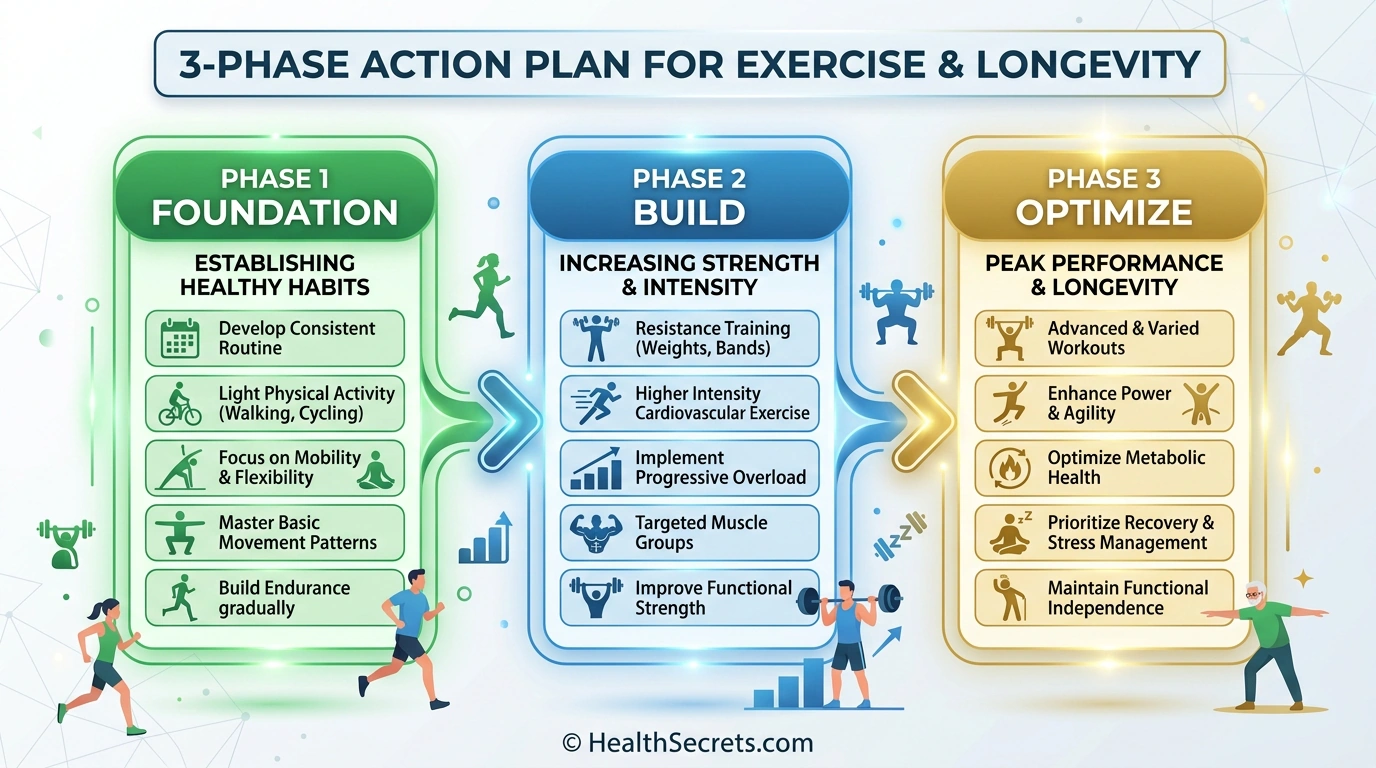
The best time to start was years ago — the second best time is today. Here's your phased action plan. Focus on building sustainable habits rather than dramatic short-term changes. Even small improvements in physical activity deliver meaningful longevity benefits.
Phase 1 — Foundation (Weeks 1–4):
- Get medical clearance if needed (sedentary, chronic conditions, over 50)
- Assess your current activity level honestly
- Start with 20 minutes of brisk walking, 3× per week
- Add 2 sessions of basic bodyweight exercises (squats, push-ups, planks)
- Set a daily step goal (start at 5,000, build to 7,000–10,000)
Phase 2 — Build (Weeks 5–12):
- Increase cardio to 30–40 minutes, 4–5× per week
- Add proper strength training 2× per week with progressive overload
- Introduce one Zone 2 long session per week (45–60 min)
- Integrate daily movement habits (walking meetings, stairs, active breaks)
Phase 3 — Optimize (Months 4+):
- Reach 200–300 min moderate cardio + 2–3× strength training per week
- Add 1–2 HIIT sessions per week (optional but beneficial)
- Include flexibility and balance work 2–3× per week
- Track VO2 max or resting heart rate trends
- Maintain consistency — this is now a lifelong practice