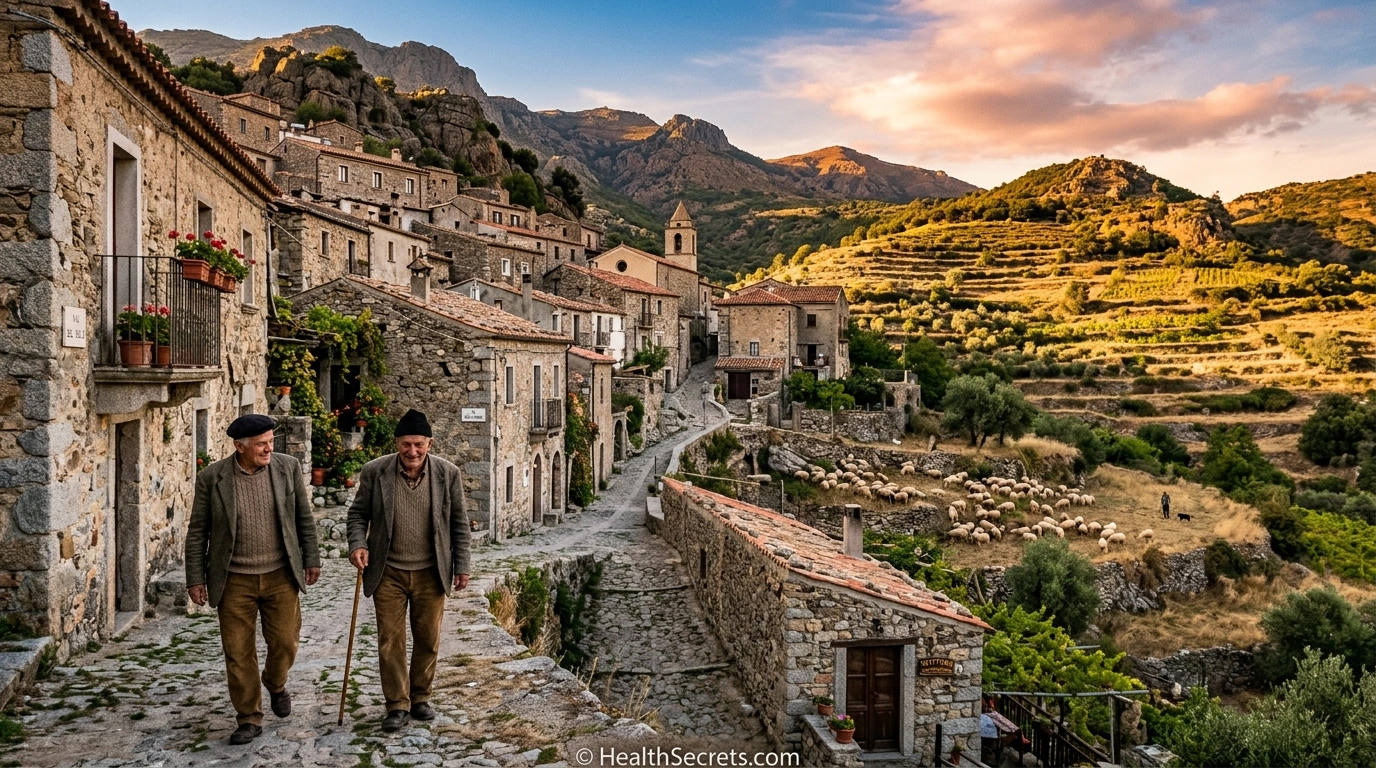
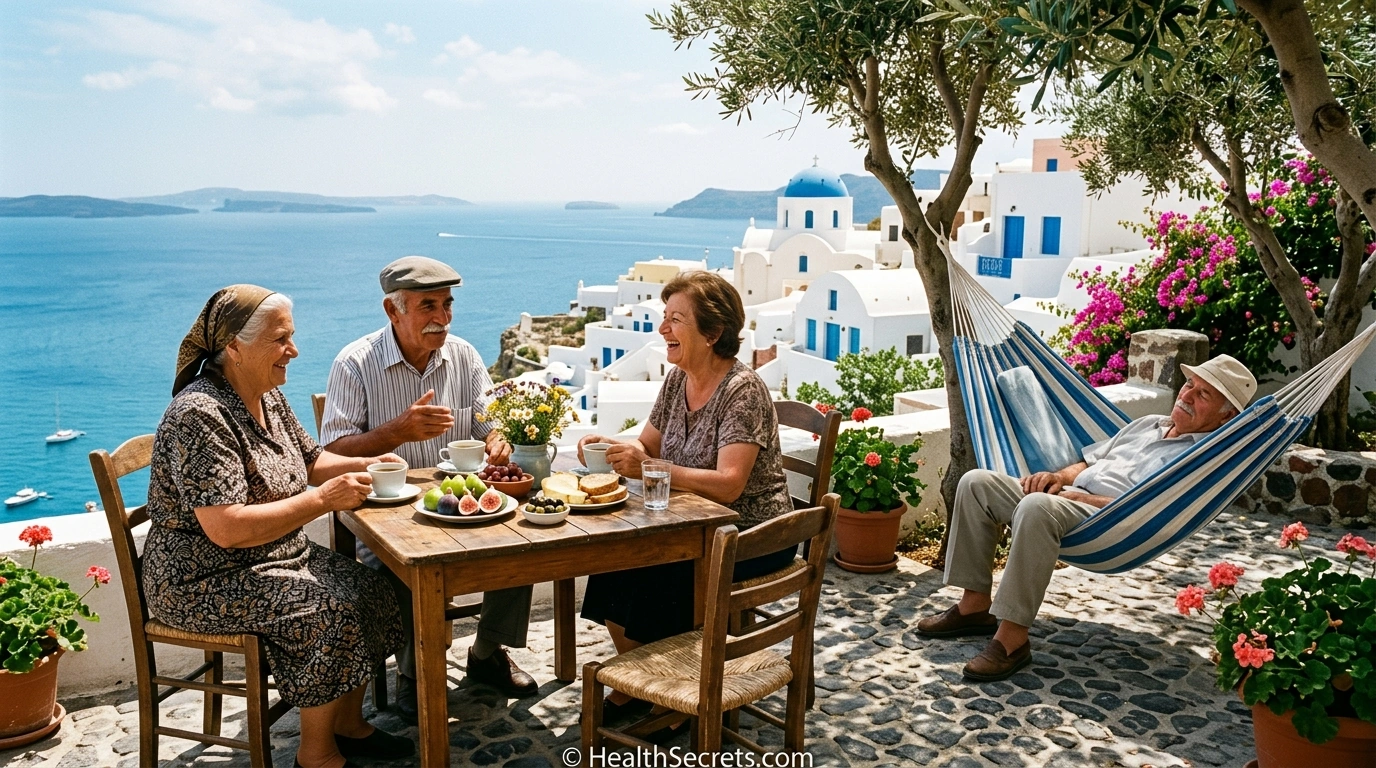
In the mountain villages of Sardinia, Italy, men routinely live past 100 — an extraordinary feat in a world where male life expectancy rarely exceeds 80. They herd sheep, tend gardens, and gather nightly with friends over wine and laughter. What do they know that the rest of us don't?
In 2004, National Geographic explorer Dan Buettner and a team of demographers identified five places on Earth where people live extraordinarily long lives — often past 100 — with remarkably low rates of heart disease, cancer, diabetes, and dementia. They called these regions Blue Zones, and their secrets could add years to your life. The landmark research, published in the American Journal of Lifestyle Medicine, established that only about 20% of how long the average person lives is dictated by genes — the other 80% is shaped by lifestyle choices [1].
These five Blue Zones —
Okinawa, Japan;
Sardinia, Italy;
Ikaria, Greece;
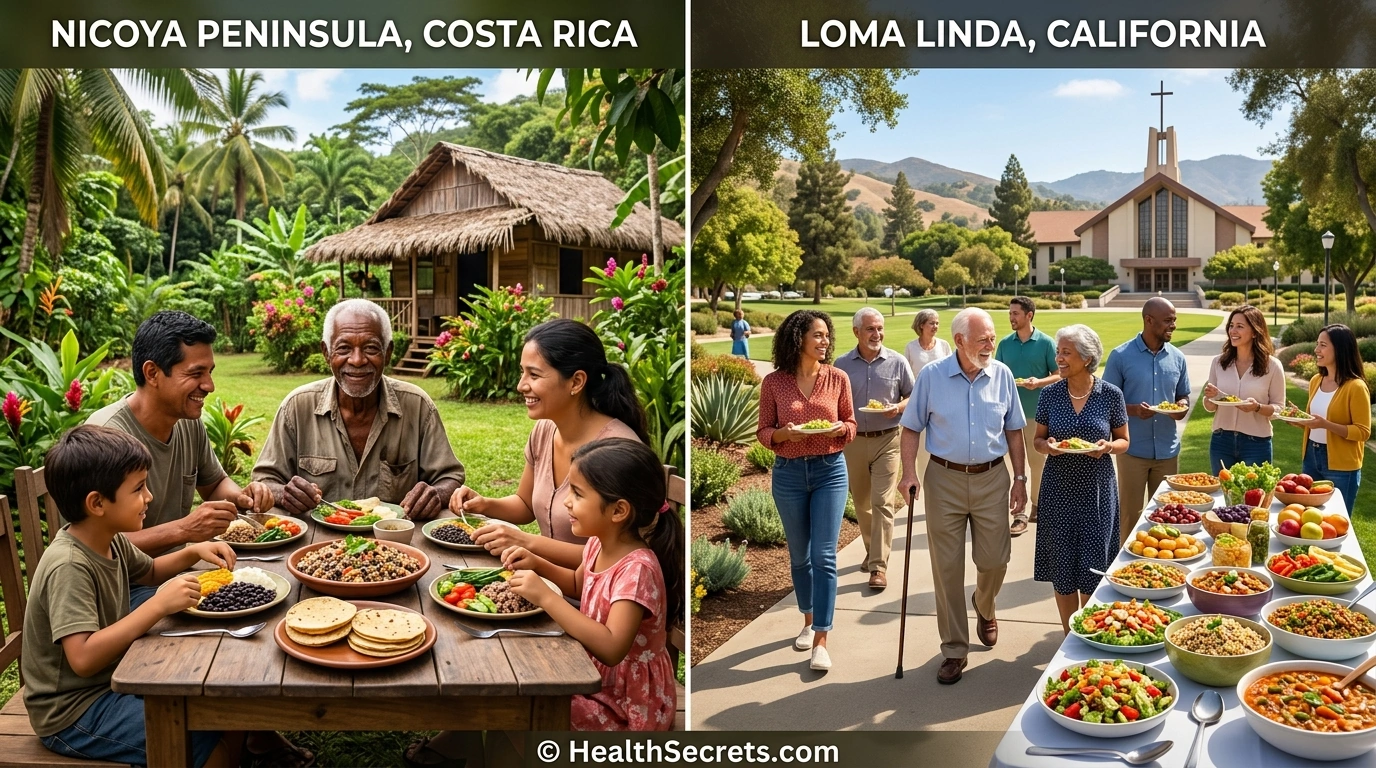
Nicoya Peninsula, Costa Rica; and
Loma Linda, California — share nine common longevity principles known as the
Power 9. People in these regions reach age 100 at rates up to 10 times greater than in the United States, and they do so while maintaining exceptional healthspan — not just living longer, but living better [1].
What makes Blue Zones research so compelling is that these aren't laboratory studies or controlled clinical trials. They're real communities, spanning different continents, cultures, and cuisines, all arriving at the same conclusion: longevity is largely a choice. This article explores each Blue Zone in detail, breaks down the Power 9 principles, examines the dietary patterns that fuel centenarians, and gives you a practical blueprint to create your own Blue Zone lifestyle — starting today.
What Are Blue Zones and Why Do They Matter for Longevity?
Blue Zones are five demographically confirmed regions where people live measurably longer, healthier lives than anywhere else on Earth. Identified through epidemiological data, birth certificates, and population statistics by Dan Buettner and the National Institute on Aging, these regions produce centenarians at extraordinary rates while maintaining some of the world's lowest rates of heart disease, cancer, and dementia [1].

The term "Blue Zone" originated when researchers Gianni Pes and Michel Poulain drew blue circles on a map of Sardinia to mark villages with the highest concentrations of male centenarians. The name stuck, and Buettner later expanded the concept to include four additional regions worldwide [1].
What Are the Five Blue Zones?
Each Blue Zone has unique characteristics shaped by geography, culture, and tradition — yet all share remarkable longevity and health:
These islands south of mainland Japan hold the highest life expectancy globally. Women live an average of 90 years, men 84 years, and the region has five times more centenarians per capita than the United States. Okinawans have remarkably low rates of heart disease, cancer, and dementia [1].
This mountainous Mediterranean island has the highest concentration of male centenarians in the world — an unusual distinction since women typically outlive men everywhere else. In Sardinia's Nuoro province, men and women live equally long, with 10 times more centenarians than the US [1].
On this small Aegean island, one in three people lives into their 90s. Ikarians have 50% lower rates of heart disease, 20% less cancer, and almost no dementia compared to Americans. They live 8–10 years longer on average [1].
This Pacific coast region has the lowest middle-age mortality in the world. Nicoyan men reach age 90 at twice the rate of American men, maintaining strong hearts and bones well into old age [1].
A community of Seventh-day Adventists in Southern California lives 10 years longer than the average American. They have 50% lower rates of heart disease and cancer, with men living to 89 and women to 91 on average [1].
Why Blue Zones Research Changes Everything
The most revolutionary finding from Blue Zones research is this: extreme longevity is achievable through lifestyle, not genetics. The landmark Danish Twin Study established that genes account for only 20–30% of lifespan, while lifestyle choices determine the remaining 70–80% [1]. Blue Zones provide real-world proof that the right combination of diet, movement, purpose, and social connection can add a decade or more to your life — and more life to your years.

Want Everyday Habits That Actually Stick?
Download the free printable habit checklist — evidence-backed clinical frameworks for daily energy, cellular recovery, and longevity.
How Do the Power 9 Principles Drive Longevity in Blue Zones?
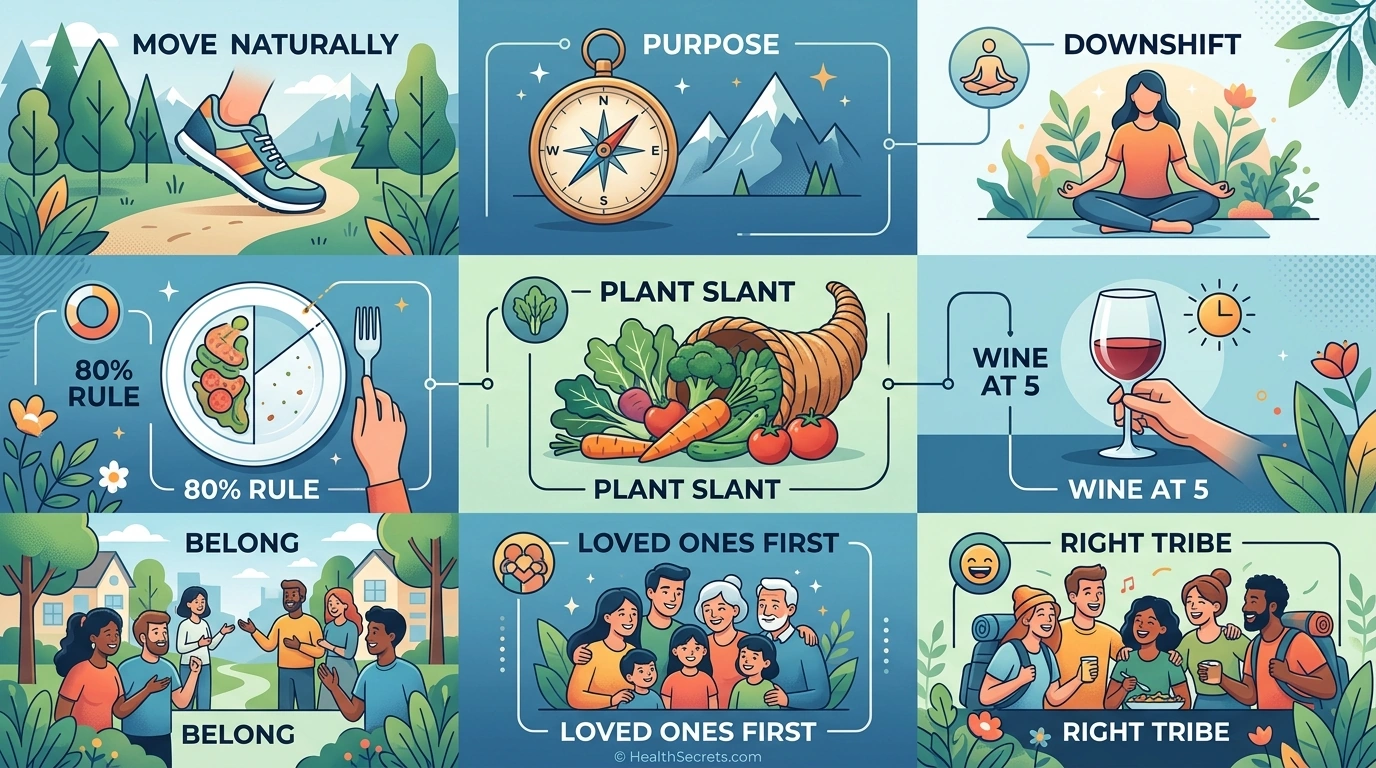
Despite different cultures, climates, and cuisines, all five Blue Zones share nine common lifestyle characteristics that researchers call the Power 9. These evidence-based principles are the core drivers of exceptional longevity, and every one of them can be applied to modern life regardless of where you live [1].
How Does Natural Movement Extend Lifespan?
Blue Zones centenarians don't go to gyms or run marathons. Instead, they build constant, low-intensity movement into daily life — gardening, walking, shepherding, floor sitting, and manual household tasks. Okinawans garden and sit on the floor (requiring them to stand and sit dozens of times daily), Sardinian shepherds walk 5+ miles daily in mountainous terrain, and Ikarians navigate hilly landscapes on foot. Research shows this type of sustained natural movement is more protective than occasional intense exercise [1][2].
Why Does Having a Purpose Add Years to Your Life?
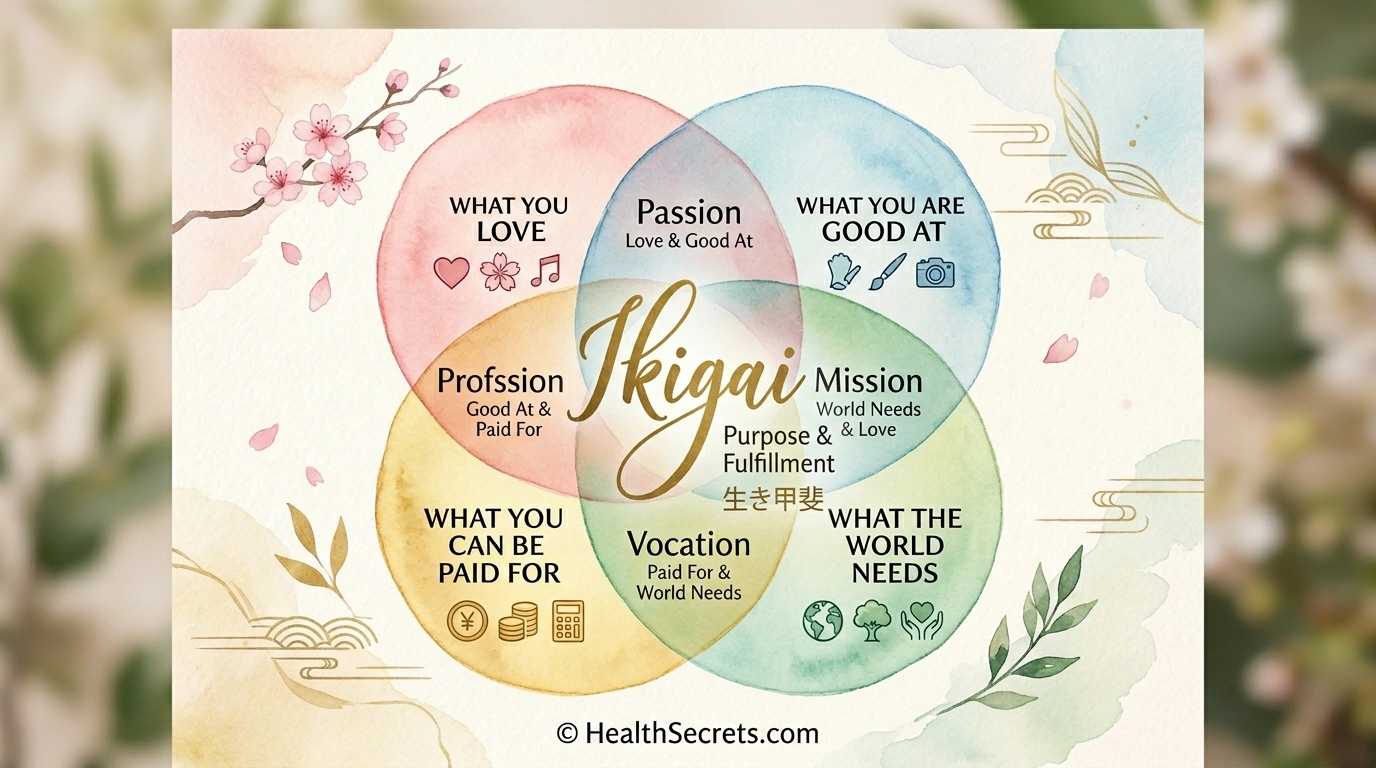
Okinawans call it ikigai. Nicoyans call it plan de vida. Both translate roughly to "reason for being" — a clear sense of why you wake up each morning. Research published in Psychological Science found that having a strong sense of purpose is associated with approximately 7 additional years of life expectancy. In every Blue Zone, purpose continues well into old age — there is no concept of "retirement" as the Western world knows it [1][3].
How Do Blue Zones Centenarians Manage Stress?
Chronic stress triggers inflammation that accelerates aging and drives chronic disease.
Every Blue Zone has built-in daily rituals for shedding stress. Okinawans practice ancestor remembrance and social gatherings. Sardinians enjoy daily happy hours with friends and laughter. Ikarians take afternoon naps that research shows reduce heart disease risk by 35%. Nicoyans pray and prioritize family time. And Loma Linda Adventists observe a weekly Sabbath — 24 hours of rest, prayer, and nature [1].
What Is the 80% Rule (Hara Hachi Bu) and How Does It Work?
The Okinawan practice of hara hachi bu — stopping eating when 80% full — is a form of natural caloric restriction, one of the most well-researched longevity interventions. The 20% gap between not feeling hungry and feeling full makes the difference between maintaining a healthy weight and gaining weight. Blue Zones centenarians eat slowly, mindfully, and use smaller plates. Most eat their smallest meal in the late afternoon or early evening and don't eat again until the next day [1].
Why Is a Plant-Based Diet the Foundation of Every Blue Zone?
Across all five Blue Zones, diets are 90–95% plant-based. Beans, legumes, whole grains, and vegetables form the foundation, while meat is consumed rarely — typically five times per month or less in portions of 3–4 ounces. The Adventist Health Study 2 from Loma Linda demonstrated that vegetarians within the same community live significantly longer than meat-eaters, providing powerful controlled evidence for the plant-slant approach [1][4].
How Do Social Connections and Community Protect Against Early Death?
The final four Power 9 principles all relate to social connection: moderate social drinking with friends (not alone), belonging to a faith-based community (associated with 4–14 extra years), putting family first (multi-generational living, caring for aging parents), and choosing the right social circle. In Okinawa, children are placed into moai — committed social groups of five friends who support each other for life. Research consistently shows that strong social bonds reduce all-cause mortality as powerfully as quitting smoking [1][5].
| Power 9 Principle | What It Means | How Blue Zones Do It | How You Can Apply It |
|---|---|---|---|
| Move Naturally | Constant low-intensity movement | Gardening, walking, shepherding, floor sitting | Walk more, take stairs, garden, stand during calls |
| Purpose | Clear reason to wake up | Ikigai (Okinawa), Plan de vida (Nicoya) | Write your purpose statement, volunteer, mentor |
| Downshift | Daily stress reduction ritual | Naps, prayer, happy hour, ancestor remembrance | 15–30 min daily: meditate, walk, read, tea |
| 80% Rule | Stop eating when 80% full | Hara hachi bu, small plates, early dinner | Eat slowly, use smaller plates, stop before full |
| Plant Slant | 90–95% plant-based diet | Beans, grains, vegetables, minimal meat | 1 cup beans daily, 2+ cups greens, meat as side |
| Power 9 Principle | What It Means | How Blue Zones Do It | How You Can Apply It |
| Wine at 5 | Moderate, social alcohol | 1–2 glasses with food and friends (not required) | If you drink, keep it moderate and social |
| Belong | Faith or community membership | Church, spiritual practices, weekly gatherings | Join a faith group, club, or volunteer org |
| Loved Ones First | Family is top priority | Multi-generational living, daily family meals | Schedule family time, care for aging parents |
| Right Tribe | Healthy social circle | Moai (Okinawa), tight-knit communities | Cultivate 3–5 close friendships, meet weekly |

Healthy Aging Annual Planning Binder
Bring your longevity priorities, preventive screening schedules, and strength routines into one organized quarterly system.
What Are the Proven Benefits of a Blue Zones Lifestyle?
Adopting Blue Zones principles doesn't require moving to a remote island or joining a specific religion. Research shows that even partial adoption of these lifestyle patterns produces measurable health benefits across multiple domains — from cardiovascular health to cognitive function to emotional wellbeing [1][6].
Can Blue Zones Habits Really Help You Live 10+ Years Longer?
The evidence strongly suggests yes. The Adventist Health Study 2, tracking over 96,000 participants, found that Adventists in Loma Linda who followed all key lifestyle principles lived 7–10 years longer than the average American. A 2020 study in BMJ analyzing combined lifestyle factors found that adopting five healthy habits at age 50 was associated with 14 additional years of disease-free life for women and 12.2 years for men [4][7]. Blue Zones centenarians aren't just surviving — they're thriving, remaining physically active, mentally sharp, and socially engaged well past 90.
How Does the Blue Zones Diet Protect Against Heart Disease and Cancer?
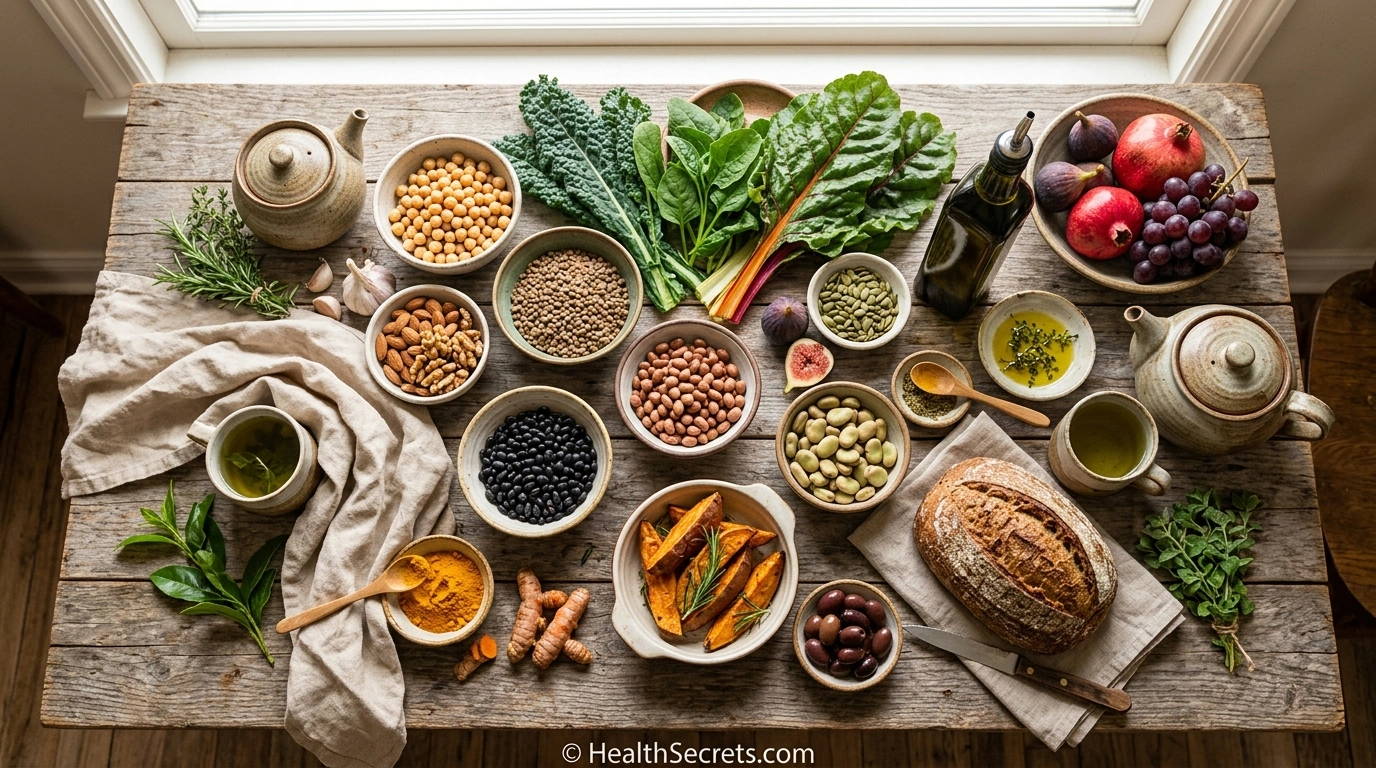
The predominantly plant-based diets across Blue Zones are rich in fiber, antioxidants, polyphenols, and anti-inflammatory compounds — all of which protect against cardiovascular disease and cancer. Ikarians have 50% lower rates of heart disease than Americans. Loma Linda Adventists show 50% lower rates of both heart disease and cancer. The Mediterranean-style diets of Sardinia and Ikaria — rich in olive oil, legumes, wild greens, and moderate red wine — are among the most well-studied dietary patterns for cardiovascular protection [1][8].
Key protective dietary factors include:
- Beans and legumes (1 cup daily) — reduce cholesterol, stabilize blood sugar, provide plant protein and fiber
- Nuts (1 oz daily) — reduce heart disease risk by up to 50% (Adventist Health Study)
- Olive oil — anti-inflammatory, rich in oleic acid and polyphenols
- Turmeric (Okinawa) — potent anti-inflammatory and antioxidant properties
- Wild greens (Ikaria) — over 150 varieties, dense in micronutrients
Does the Blue Zones Lifestyle Protect Brain Health?
Perhaps no Blue Zone demonstrates this more dramatically than Ikaria, where dementia is virtually unknown. The combination of Mediterranean diet, daily physical movement, social engagement, stress reduction through naps, and herbal tea consumption creates a powerful neuroprotective lifestyle. Research shows that each Power 9 principle independently supports cognitive health, and their combined effect is greater than the sum of their parts [1][9]. Regular social interaction, sense of purpose, and physical activity are all independently associated with reduced Alzheimer's risk.
How Do Blue Zones Principles Improve Mental Health and Happiness?
Blue Zones centenarians consistently report high levels of life satisfaction and low rates of depression. The combination of strong social bonds, sense of purpose, daily stress reduction rituals, and community belonging creates a robust foundation for mental wellbeing. Dan Buettner's parallel research on the world's happiest populations found significant overlap with Blue Zones principles — particularly the emphasis on community, purpose, and financial security through simple living rather than material wealth [10].
Are There Any Limitations or Criticisms of Blue Zones Research?
While Blue Zones principles are broadly supported by independent research, the concept is not without scientific debate. Understanding the limitations helps you apply the lessons more thoughtfully and avoid oversimplified claims about any single longevity factor [11].
- Data quality concerns: Some researchers, including demographer Saul Justin Newman, have questioned the accuracy of birth records in certain Blue Zones regions, particularly in areas with historically poor civil registration systems. A 2019 analysis published in bioRxiv suggested that some centenarian claims may be inflated by record-keeping errors rather than genuine extreme longevity [11].
- Survivorship bias: Blue Zones research primarily studies those who lived longest, which can overlook people in the same regions who died younger. The lifestyle patterns observed may partially reflect the habits of genetic outliers rather than universally applicable principles.
- Changing conditions: Several Blue Zones are experiencing rapid modernization. Younger generations in Okinawa, for example, have adopted more Western dietary habits, and their longevity advantage is diminishing — which, paradoxically, may actually support the lifestyle hypothesis, since the same genetics with different habits produce different outcomes [1].
- Alcohol controversy: The "Wine at 5" principle remains debated. While moderate social drinking is common in Sardinia and Ikaria, Loma Linda Adventists abstain completely and still achieve exceptional longevity — suggesting alcohol is not a necessary component. Recent meta-analyses have questioned whether any level of alcohol consumption is truly beneficial [12].
- The bottom line: While individual data points may be debatable, the convergence of evidence across five independent populations — combined with supporting data from large prospective studies like the Adventist Health Study — makes a compelling case that the Power 9 lifestyle principles genuinely promote longevity. The core principles align with mainstream medical recommendations from the WHO, AHA, and major medical institutions.
How Can You Create Your Own Blue Zone Lifestyle?
You don't need to move to Okinawa or Sardinia to benefit from Blue Zones wisdom. The Power 9 principles can be systematically applied to modern life, regardless of where you live. Start with high-impact, low-effort changes and build from there [1][2].
How Do You Assess Your Current Lifestyle Against Blue Zones Standards?
Rate yourself 1–10 on each Power 9 principle to identify your biggest gaps:
- Move Naturally — Do you get 8,000+ steps through daily activities?
- Purpose — Can you articulate your ikigai or reason for being?
- Downshift — Do you have a daily 15–30 minute stress reduction ritual?
- 80% Rule — Do you eat slowly and stop before feeling full?
- Plant Slant — Is your diet 90%+ plant-based?
- Wine at 5 — If you drink, is it moderate, social, and with food?
- Belong — Are you an active member of a faith or community group?
- Loved Ones First — Do you prioritize daily family time?
- Right Tribe — Do you have 3–5 close friends with healthy habits?
What Changes Should You Make First for Maximum Impact?
Tier 1 — Foundation (Start This Week):
- Add beans daily — 1 cup of beans, lentils, or chickpeas (the #1 longevity food across all Blue Zones)
- Increase natural movement — Add 2,000 steps daily through walking, stairs, and manual tasks
- Write your purpose — Spend 30 minutes journaling on your ikigai
- Create a downshift ritual — 15 minutes daily of meditation, walking, tea, or reading
- Prioritize sleep — Target 7–9 hours (Blue Zones centenarians sleep well and wake naturally)
Tier 2 — Dietary Shifts (Weeks 2–4):
- Shift toward 90% plant-based eating — gradually increase plants, decrease meat
- Add 2+ cups of leafy greens daily
- Eat 1 oz of nuts daily (almonds, walnuts)
- Practice hara hachi bu — eat slowly, use smaller plates, stop at 80% full
- Eat dinner early — finish 3+ hours before bed
Tier 3 — Social and Spiritual (Month 2+):
- Join a community group (faith community, club, volunteer organization)
- Build your moai — cultivate 3–5 close friendships with regular gatherings
- Schedule non-negotiable family time
- Create your own "Sabbath" — one tech-free rest day per week
How Do You Find Your Ikigai (Purpose)?
The Okinawan concept of ikigai sits at the intersection of four questions:
- What do you love? (passion)
- What are you good at? (vocation)
- What does the world need? (mission)
- What can you earn from? (profession)
Your ikigai doesn't need to be grand — it can be as simple as being a devoted grandparent, tending a beautiful garden, or helping neighbors. The key is having a clear, meaningful reason to get up every morning. Research consistently shows this single factor is one of the most powerful predictors of longevity [3].
What Do Blue Zones Centenarians Actually Eat Every Day?
While each Blue Zone has unique foods shaped by local geography and tradition, striking dietary patterns emerge across all five regions. These common threads reveal what a true longevity diet looks like in practice — and it's simpler than most modern diets suggest [1][2].
What Are the Foundation Foods Shared Across All Blue Zones?
Eaten daily in virtually every Blue Zone:
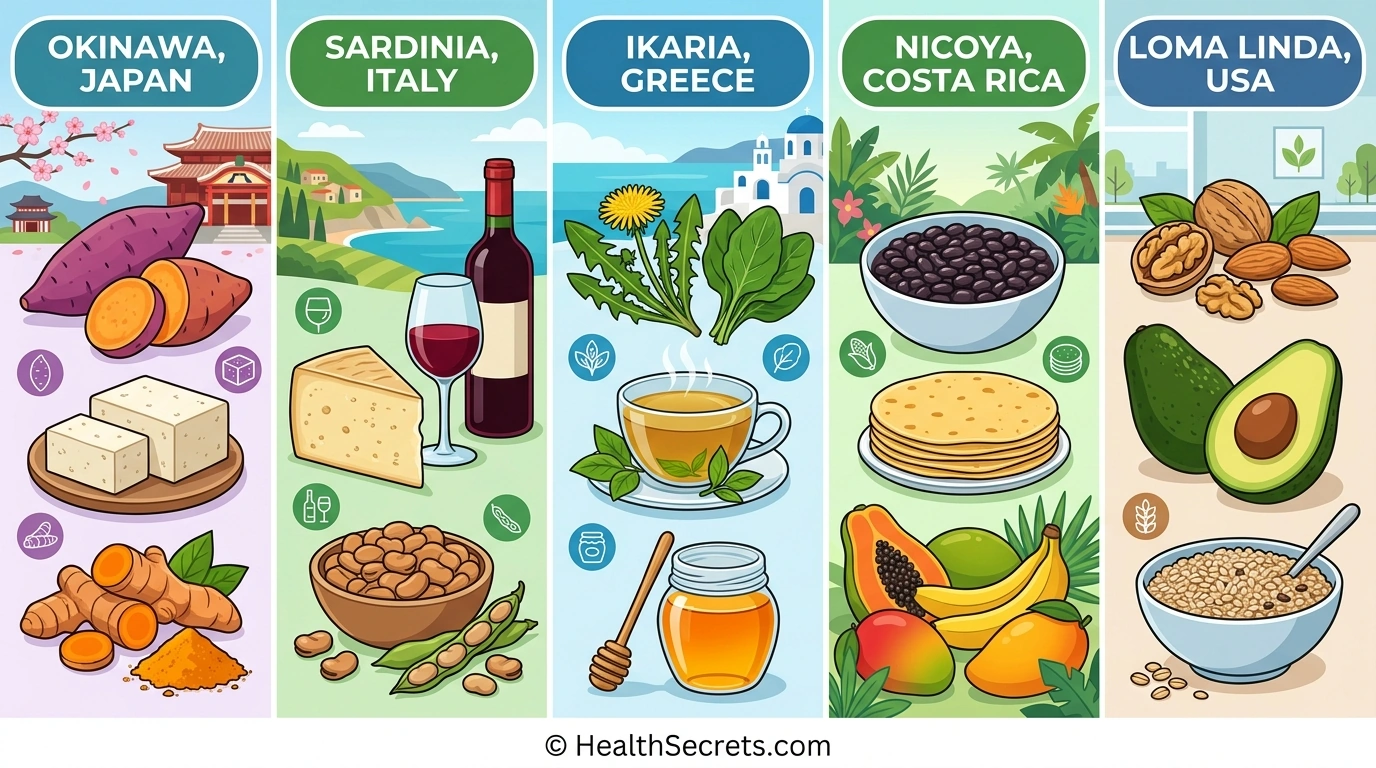
- Beans and legumes — The cornerstone longevity food. Fava beans in Sardinia, black beans in Nicoya, soybeans (tofu) in Okinawa, lentils in Ikaria, all varieties in Loma Linda. Aim for 1 cup daily.
- Whole grains — Sourdough bread (Sardinia), corn tortillas (Nicoya), oats and barley (Loma Linda), brown rice (Okinawa)
- Vegetables — Especially leafy greens. Wild horta in Ikaria (150+ foraged varieties), sweet potatoes in Okinawa, garden vegetables everywhere
- Nuts — Almonds and walnuts in Loma Linda (reduces heart disease by 50%), various nuts across all zones. 1 oz daily.
- Olive oil — Extra virgin, cold-pressed (Mediterranean zones)
- Tubers — Purple sweet potatoes (Okinawa), regular potatoes (Ikaria), yams (Nicoya)
What Zone-Specific Superfoods Contribute to Longevity?
- Okinawa: Purple sweet potatoes, bitter melon (goya), turmeric, green tea, seaweed, tofu
- Sardinia: Pecorino cheese (sheep's milk, rich in omega-3s), Cannonau wine (2–3x more polyphenols than other red wines), fava beans, sourdough bread
- Ikaria: Wild greens, herbal mountain teas (sage, rosemary, dandelion), goat's milk, raw local honey
- Nicoya: Nixtamalized corn tortillas (lime-treated for enhanced calcium and niacin absorption), tropical fruits (papaya, mango), calcium-rich hard water
- Loma Linda: Nuts (especially almonds), avocados, whole grains, beans, water as the primary beverage
What Do Blue Zones Centenarians NOT Eat?
Perhaps equally important is what's absent from Blue Zones diets:
- Processed foods — Virtually nonexistent in traditional Blue Zones
- Added sugars — Minimal; sweetness comes from fruit and honey
- Refined grains — Rare; grains are whole and often fermented
- Excessive meat — Consumed only 5x per month or less, in 3–4 oz portions
- Sugary beverages — Water, herbal tea, and occasional wine are the primary drinks
- Artificial ingredients — Traditional preparation methods only
What Eating Patterns Matter Beyond Food Choices?
Blue Zones centenarians don't just eat the right foods — they eat them the right way:
- Dinner is the smallest meal, eaten early (before 7 PM)
- Social meals are the norm — eating alone is rare
- Gratitude or prayer before meals is practiced across all zones
- Eating is slow and mindful — meals last 20–30 minutes minimum
- Seasonal, local foods dominate — centenarians eat what grows nearby
- Natural caloric restriction results from nutrient-dense, high-fiber foods and the hara hachi bu practice
| Blue Zone | Signature Foods | Key Dietary Pattern | Unique Factor |
|---|---|---|---|
| Okinawa, Japan | Sweet potatoes, tofu, bitter melon, turmeric | 90% plant-based, very low calorie | Hara hachi bu (eat until 80% full) |
| Sardinia, Italy | Pecorino cheese, fava beans, sourdough, Cannonau wine | Mediterranean with fermented foods | High-fat yet low heart disease |
| Ikaria, Greece | Wild greens, herbal teas, goat's milk, honey | Mediterranean with wild-foraged foods | 150+ varieties of wild greens |
| Nicoya, Costa Rica | Black beans, corn tortillas, tropical fruits | Traditional "Three Sisters" (corn, beans, squash) | Calcium-rich hard water |
| Loma Linda, California | Nuts, avocados, whole grains, beans | Vegetarian/vegan (Biblical diet) | No alcohol, no smoking, early dinner |
Action Plan
What Should You Do First to Start Living Like a Blue Zones Centenarian?
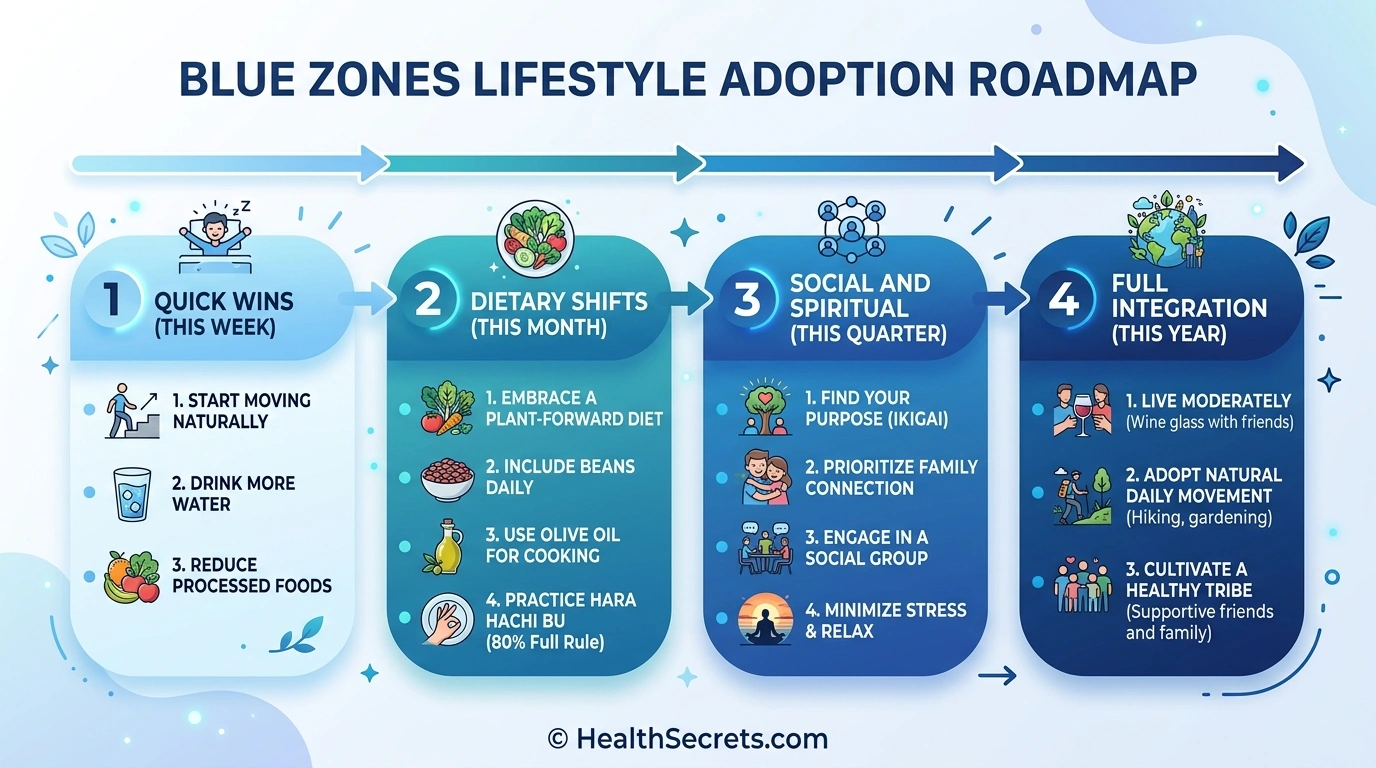
Follow the sequence below, work through each phase in order, and use the checklist as your practical implementation guide.
The best approach is to start small and build momentum. Blue Zones centenarians didn't follow a "program" — they lived in environments that made healthy choices the default. Here's a phased plan to gradually transform your lifestyle using the same principles [1][2].
Phase 1 — This Week (Quick Wins):
- Add 1 cup of beans or lentils to your daily meals
- Increase daily steps by 2,000 (park farther, take stairs, walk during calls)
- Write down your ikigai — your reason for getting up each morning
- Start a 15-minute daily downshift ritual (meditation, tea, walk, or reading)
- Eat dinner before 7 PM and practice stopping at 80% full
Phase 2 — This Month (Dietary Transformation):
- Shift to 80–90% plant-based eating (beans, greens, whole grains, nuts)
- Replace sugary drinks with water, green tea, or herbal teas
- Add 1 oz of nuts daily (almonds, walnuts, pistachios)
- Cook at least 4 meals at home per week using whole ingredients
- Remove processed snacks from your pantry; replace with fruit, nuts, vegetables
Phase 3 — This Quarter (Social and Spiritual):
- Join a community group — faith community, volunteer organization, or hobby club
- Invite 3–5 friends to form a moai (committed social circle) with regular gatherings
- Schedule weekly family meals with no devices
- Create a weekly "Sabbath" — one day with minimal technology and maximum rest
- Begin a garden, even if just a few pots of herbs on a windowsill
Phase 4 — This Year (Full Blue Zones Integration):
- Maintain 90%+ plant-based diet as your natural default
- Reach 8,000–10,000 daily steps through natural movement
- Actively maintain your moai and community memberships
- Mentor or volunteer regularly (purpose through contribution)
- Review and refine your ikigai statement quarterly