Intermittent fasting is one of the most powerful, science-backed strategies for extending healthspan and potentially lifespan — and it costs absolutely nothing. Unlike expensive supplements or complex protocols, intermittent fasting for longevity simply involves changing when you eat, not necessarily what you eat. Ancient humans naturally cycled between periods of feast and famine, and modern research confirms that these fasting periods activate deep cellular repair processes that slow aging at the molecular level.
Animal studies consistently show that intermittent fasting extends lifespan by 10–30% across species from yeast to mice, driven by autophagy, mTOR inhibition, AMPK activation, and sirtuin signaling [2]. While human lifespan data is unavailable — we simply live too long to measure — clinical research demonstrates remarkable improvements in healthspan markers: improved insulin sensitivity, reduced inflammation by 20–40%, better cardiovascular health, and enhanced brain function [1].
Whether you want to activate autophagy for cellular rejuvenation, improve metabolic health, lose weight naturally, or simply feel sharper and more energized, this guide walks you through everything you need to know — from the longevity science to practical step-by-step implementation.
Related reading: Learn about the broader longevity and anti-aging guide for comprehensive strategies, explore how NMN and NAD+ support longevity through the same sirtuin pathways activated by fasting, and discover resveratrol and sirtuins for synergistic benefits.
What Do You Need to Know Before Starting Intermittent Fasting for Longevity?
Intermittent fasting is an eating pattern that cycles between defined periods of fasting and eating — it focuses on when you eat rather than what you eat. Before starting, you need to understand the different methods available, confirm you have no contraindications, and set realistic expectations about the adaptation period. Most healthy adults can safely practice IF, with 16:8 time-restricted eating being the most beginner-friendly approach.
What intermittent fasting is (and isn't): IF is not starvation, not a diet, and not about restricting specific foods. It is a structured eating pattern where you compress your daily food intake into a defined window and fast for the remaining hours. Your ancestors naturally practiced this — hunter-gatherers didn't eat three meals plus snacks daily [1].
How IF differs from caloric restriction: Traditional caloric restriction (CR) reduces daily calories by 20–40% constantly. Intermittent fasting achieves similar longevity benefits — activating the same molecular pathways — without requiring constant calorie counting. A 2022 review in Nature Aging confirmed IF and CR activate overlapping longevity pathways including autophagy, sirtuins, and mTOR inhibition [2].
What Are the Main Intermittent Fasting Methods?
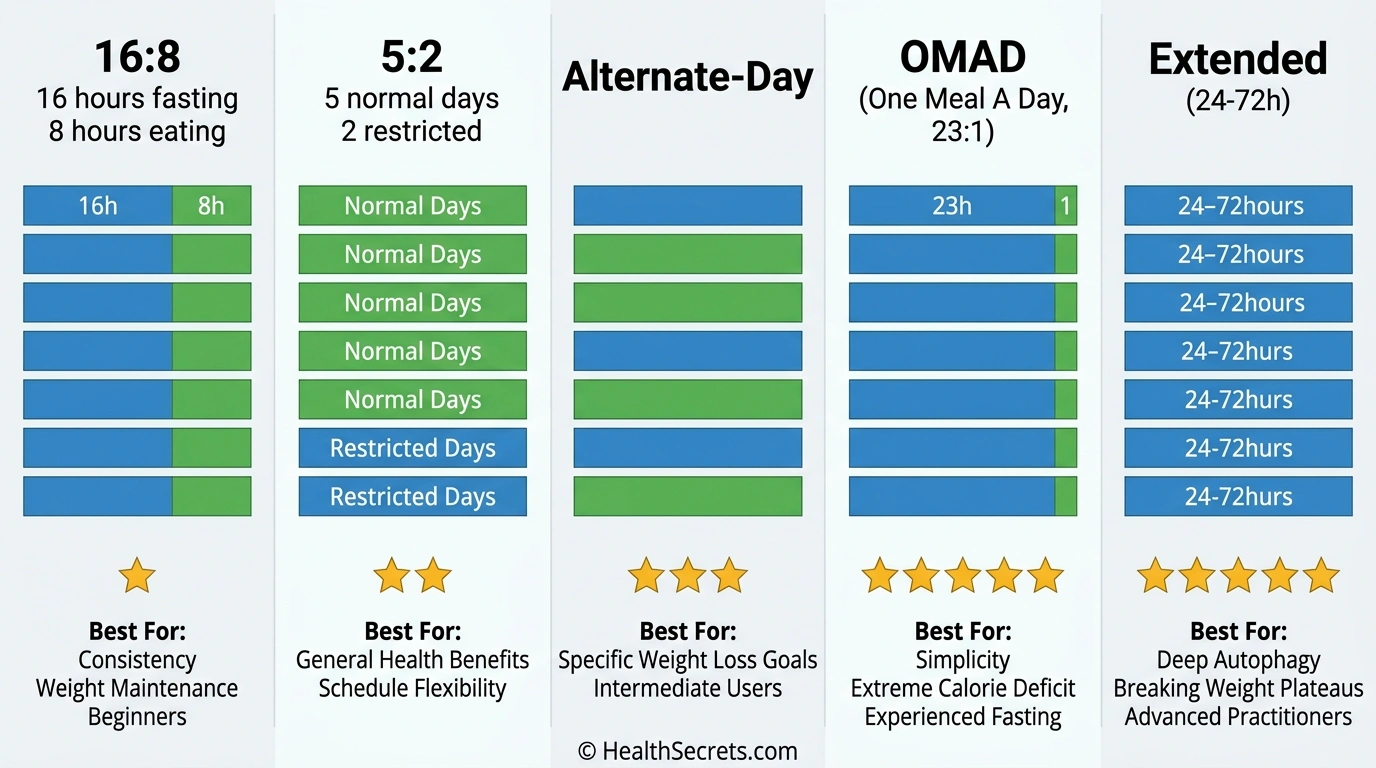
| Method | Protocol | Difficulty | Best For |
|---|---|---|---|
| 16:8 TRE | 16-hr fast, 8-hr eating window daily | Beginner | Long-term lifestyle |
| 5:2 Diet | 5 normal days, 2 days at 500–600 cal | Intermediate | Flexible schedules |
| Alternate-Day | Alternate eating/fasting days | Advanced | Aggressive goals |
| OMAD (23:1) | One meal per day | Advanced | Experienced fasters |
| Extended (24–72h) | Multi-day water fasting | Expert | Periodic reset (supervised) |
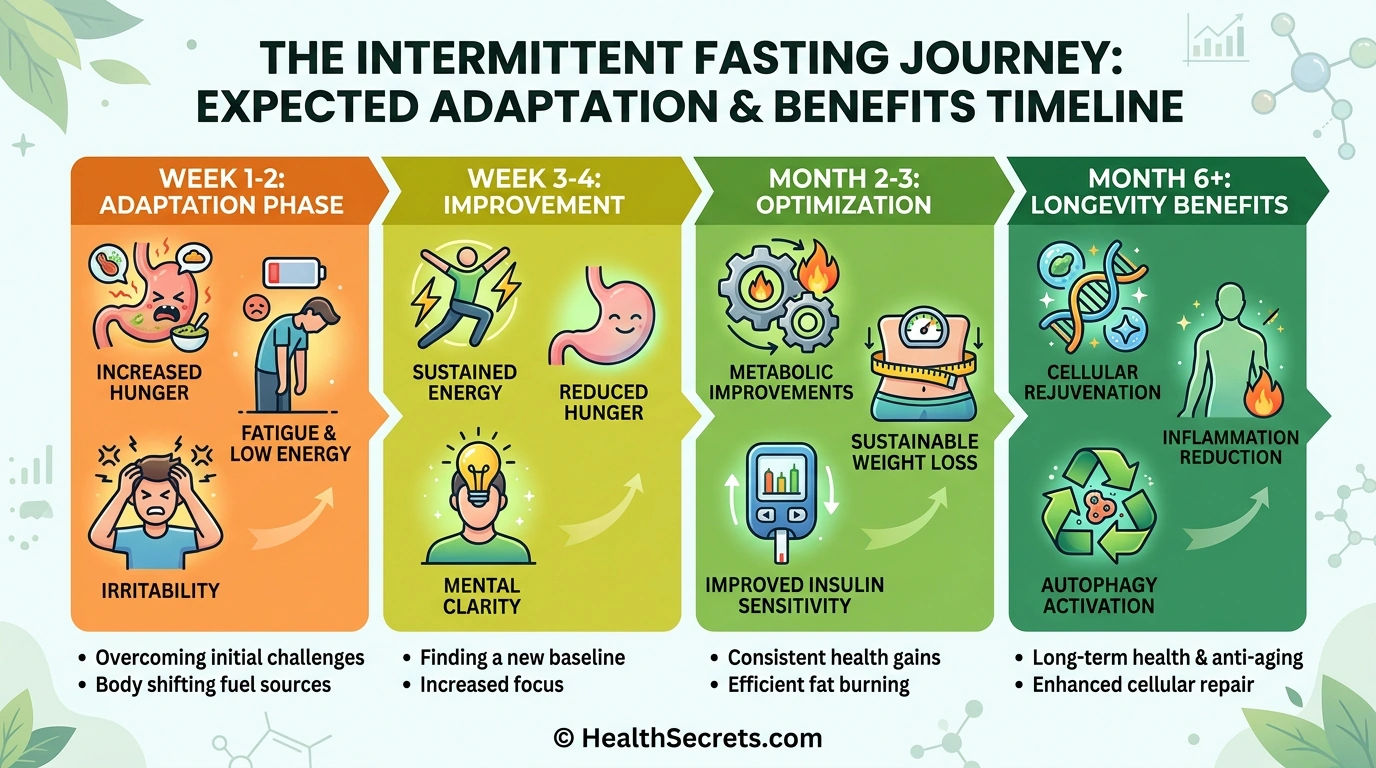
| Expected timeline: The adaptation period lasts 1–2 weeks. During this time, hunger, mild fatigue, and headaches are normal. After adaptation, most people report increased energy, mental clarity, and reduced hunger. Measurable health improvements (insulin sensitivity, weight loss, inflammation reduction) typically appear within 4–12 weeks. |
Who this guide is for: Healthy adults interested in longevity, metabolic health, weight management, or cellular rejuvenation. See the safety section for contraindications.

Want Everyday Habits That Actually Stick?
Download the free printable habit checklist — evidence-backed clinical frameworks for daily energy, cellular recovery, and longevity.
How Do You Understand the Longevity Science Behind Fasting?
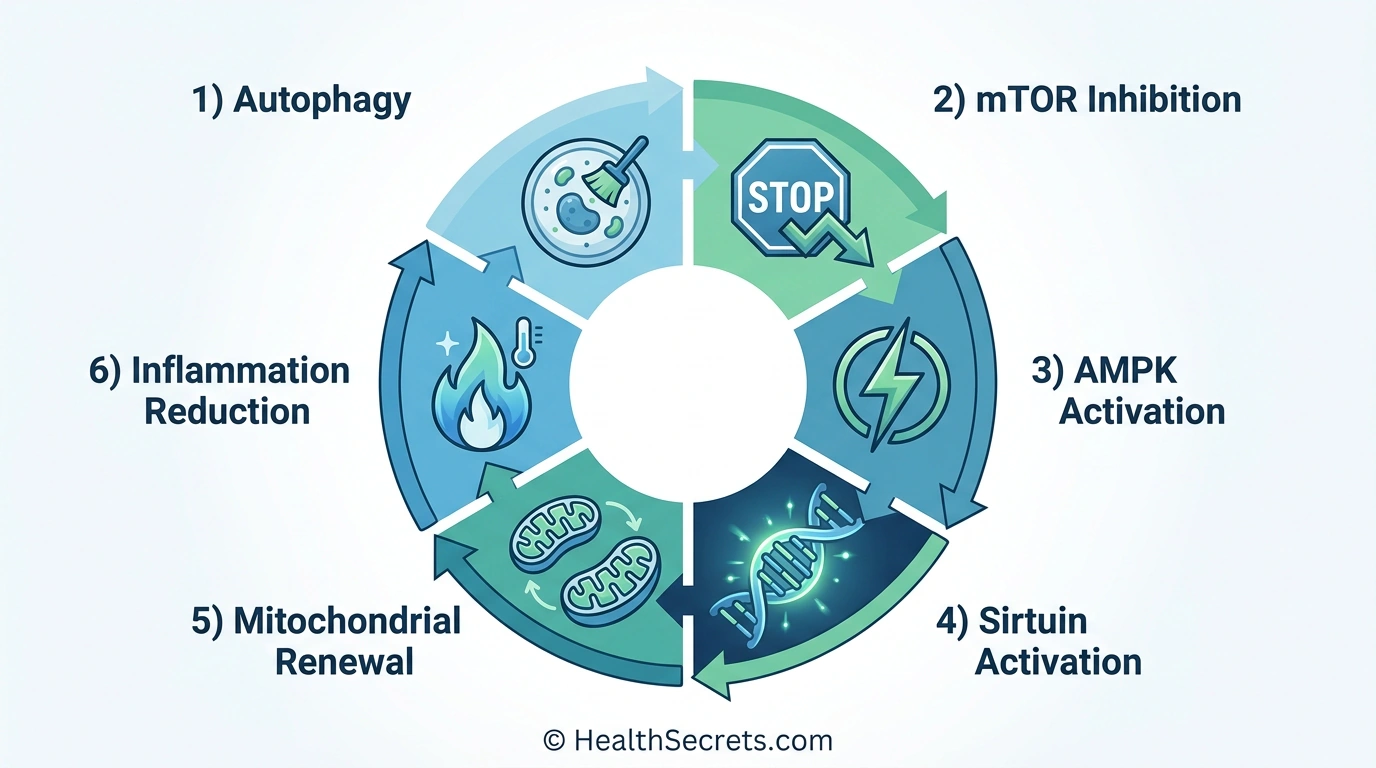
Intermittent fasting activates at least six major longevity pathways simultaneously: autophagy, mTOR inhibition, AMPK activation, sirtuin signaling, mitochondrial renewal, and inflammation reduction. Understanding these mechanisms helps you appreciate why fasting windows matter and motivates long-term adherence to your chosen protocol.
How Does Fasting Trigger Autophagy for Cellular Rejuvenation?
Autophagy — literally "self-eating" — is the cell's quality control system that breaks down and recycles damaged proteins, dysfunctional mitochondria, and cellular debris. Yoshinori Ohsumi won the 2016 Nobel Prize for discovering its mechanisms. Fasting is the most potent natural autophagy activator, with activity peaking between 16–24 hours of fasting [8]. This cellular "spring cleaning" removes pre-cancerous cells, clears amyloid plaques linked to Alzheimer's disease, and rejuvenates cellular function.
A 2024 study in Nature Cell Biology confirmed that fasting-induced autophagy depends on spermidine metabolism and is essential for the lifespan-extending effects of caloric restriction across species from yeast to mammals [4].
How Do mTOR Inhibition and AMPK Activation Promote Longevity?
mTOR (mechanistic target of rapamycin) is a nutrient sensor that promotes growth when active (fed state) and longevity pathways when inhibited (fasted state). Constant eating keeps mTOR chronically active, accelerating aging. Fasting inhibits mTOR by removing nutrient signals (especially amino acids), enabling autophagy and stress resistance [9].
AMPK (AMP-activated protein kinase) is the opposing energy sensor — activated when cellular energy is low during fasting. AMPK drives mitochondrial biogenesis (creating new mitochondria), fat oxidation, and autophagy. The AMPK-mTOR seesaw is the core longevity switch: fasting tips it toward repair (AMPK up, mTOR down), while constant feeding tips it toward growth and aging.
How Does Fasting Activate Sirtuins and Reduce Inflammation?
Sirtuins (SIRT1–7) are NAD+-dependent enzymes often called "longevity genes." Fasting increases NAD+ levels, activating SIRT1 (metabolic regulation, DNA repair) and SIRT3 (mitochondrial function). Sirtuin activation has extended lifespan in yeast, worms, flies, and mice. This is the same pathway activated by resveratrol and boosted by NMN supplementation.
Inflammation reduction: IF reduces inflammatory markers including C-reactive protein (CRP) by 20–40%, IL-6, and TNF-alpha. This combats "inflammaging" — the chronic low-grade inflammation that drives aging and disease. A 2024 umbrella review in eClinicalMedicine confirmed IF significantly reduces systemic inflammation markers [3].

Healthy Aging Annual Planning Binder
Bring your longevity priorities, preventive screening schedules, and strength routines into one organized quarterly system.
How Do You Choose the Right Fasting Method for Your Goals?
For longevity-focused beginners, the 16:8 time-restricted eating protocol offers the best balance of autophagy activation, metabolic benefits, and long-term sustainability. Choose your method based on your experience level, lifestyle constraints, and specific health goals — then commit to it for at least 4–8 weeks before evaluating results.
- 16:8 Time-Restricted Eating (recommended starting point): Fast for 16 hours, eat within an 8-hour window daily (e.g., 12pm–8pm). This is the most studied and sustainable method, effective for weight loss, insulin sensitivity, and metabolic health. A 2024 randomized controlled trial confirmed 16:8 IF significantly improved weight, glucose, and lipid profiles in just 3 months [5].
- 5:2 Diet: Eat normally 5 days per week, restrict to 500–600 calories on 2 non-consecutive days. Good for those who prefer flexibility and struggle with daily fasting routines.
- Alternate-Day Fasting (ADF): Alternate between normal eating days and fasting days (0 or 500 calories). A 2026 BMJ network meta-analysis found ADF showed slightly greater short-term weight loss than other IF methods [6]. Best for experienced fasters with short-term aggressive goals.
- OMAD (One Meal a Day): 23:1 fasting — one large meal daily. Maximizes autophagy window but challenging to meet nutritional needs. Not recommended for beginners.
- For women: Consider starting with 14:10 or 12:12 rather than 16:8, as some women experience hormonal disruption with aggressive fasting protocols. Crescendo fasting (fasting 2–3 days per week rather than daily) is another gentler option.
How Do You Gradually Build Your Fasting Window Over 4 Weeks?
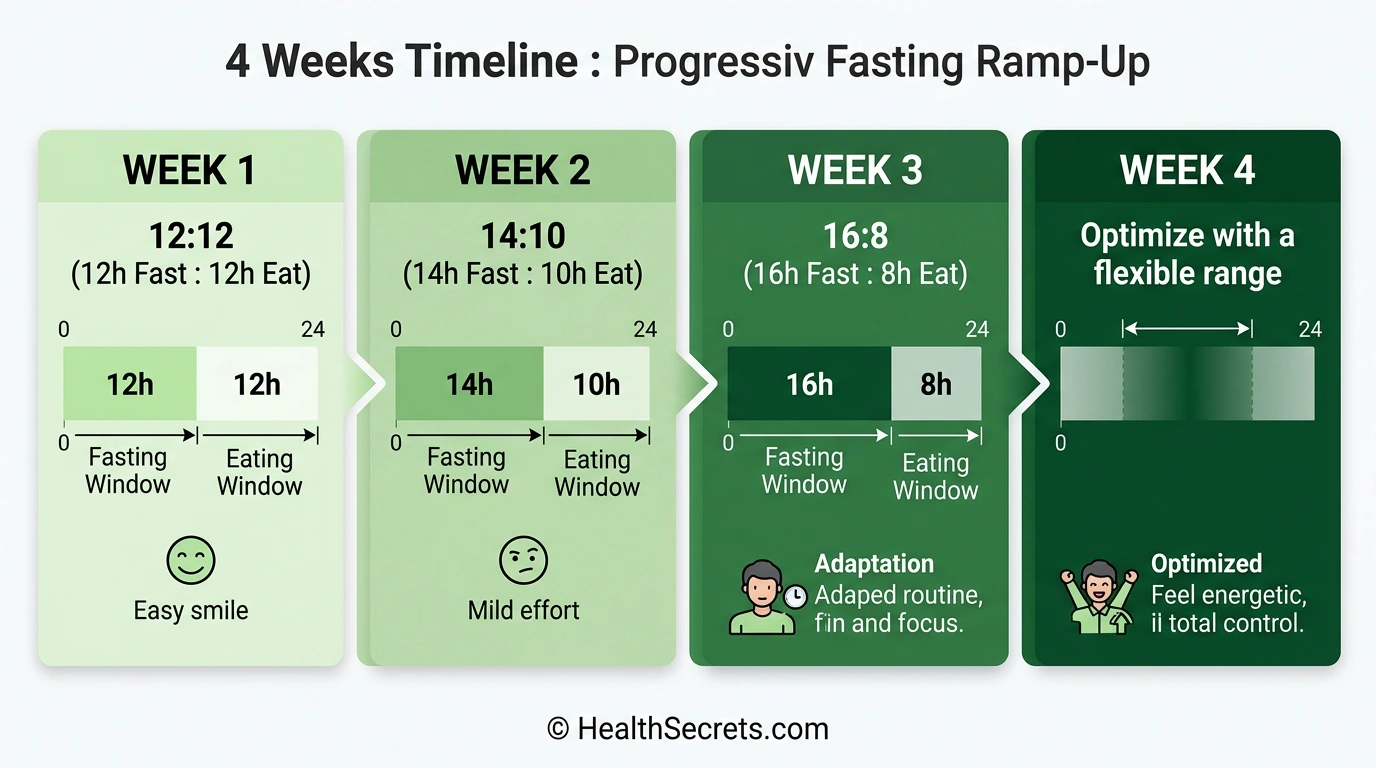
The most successful approach is a progressive 4-week ramp-up: start with a 12-hour overnight fast (which most people already do naturally), then extend by 2 hours each week until you reach your target fasting window. This gradual approach allows your hunger hormones (ghrelin) to adapt, minimizing discomfort and maximizing long-term adherence.
- Week 1 — 12:12 Fast: Stop eating at 8pm, resume at 8am. This is easy — most people naturally fast 10–12 hours overnight. Focus on eliminating after-dinner snacking. Monitor hunger, energy, and sleep quality.
- Week 2 — 14:10 Fast: Stop eating at 8pm, delay first meal until 10am. Push breakfast back by 2 hours. Have black coffee or tea in the morning if needed. You should notice hunger becoming more manageable.
- Week 3 — 16:8 Fast (Target): Stop eating at 8pm, first meal at 12pm. This is where longevity benefits begin — 16 hours triggers meaningful autophagy. Your eating window is now lunch and dinner (12pm–8pm).
- Week 4 — Optimize and Adjust: Fine-tune your eating window to match your lifestyle. Some prefer 10am–6pm (earlier eating aligns better with circadian rhythm). Research suggests early time-restricted eating may offer additional metabolic advantages [10]. Find what works for your social life, work schedule, and family meals.
How Do You Master the Fasting Window Without Breaking Your Fast?
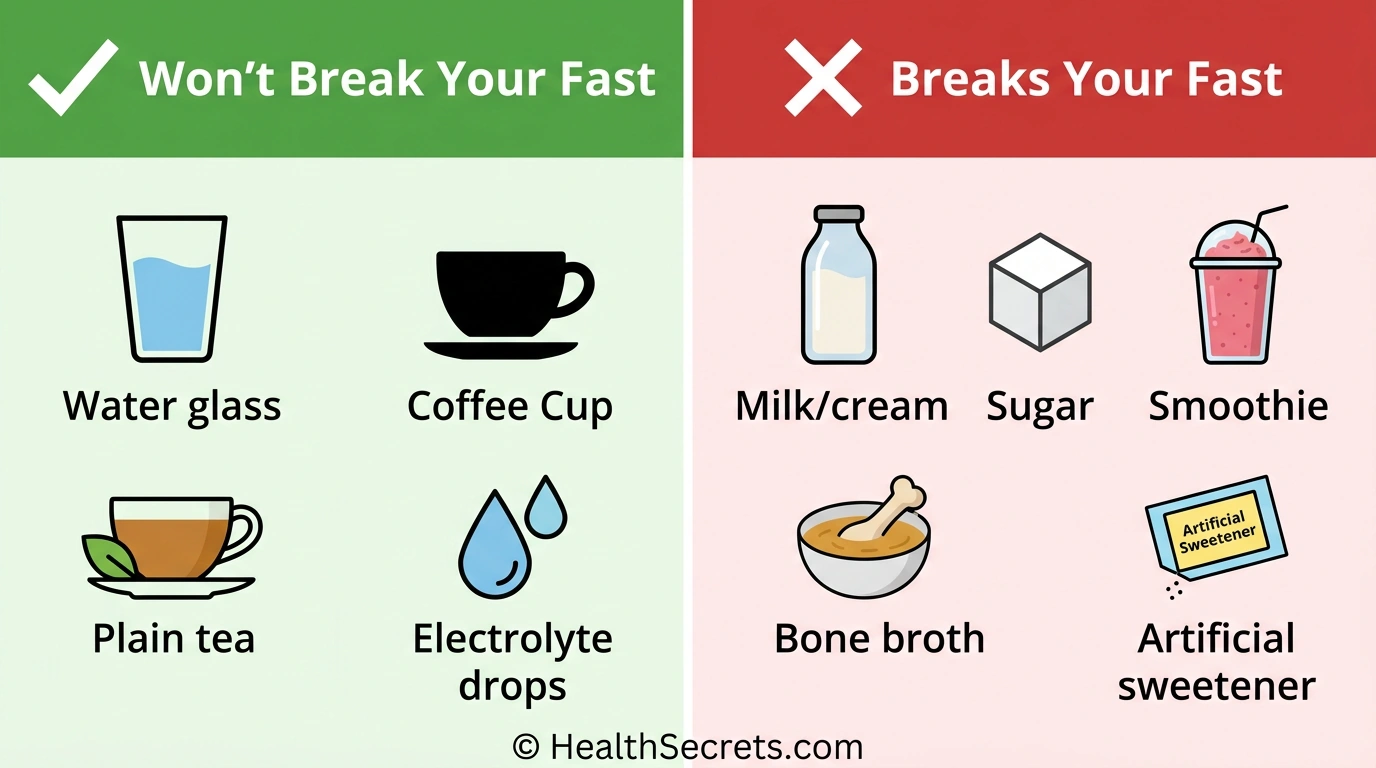
During your fasting window, consume only zero-calorie beverages: water, black coffee, and plain tea. These do not trigger insulin release or interrupt autophagy. Electrolytes (sodium, potassium, magnesium dissolved in water) are also acceptable and help prevent headaches and fatigue — especially important during the first two weeks of adaptation.
What does NOT break a fast:
- Water (plain, sparkling, or mineral) — drink 8–10 cups daily
- Black coffee (no cream, milk, sugar, or sweeteners) — caffeine may actually enhance autophagy
- Plain tea (green, black, herbal) — green tea's EGCG may support fasting benefits
- Electrolytes (sodium, potassium, magnesium in water)
What DOES break a fast (avoid during fasting hours):
- Any food or caloric beverage
- Cream, milk, sugar, honey in coffee/tea
- Bone broth (contains protein and calories)
- Artificial sweeteners (controversial — may trigger insulin response in some individuals; avoid to be safe)
Hunger management strategies: Hunger comes in waves and typically passes within 20–30 minutes. Stay busy with work or activities, drink water or black coffee when hunger hits, and remind yourself that ghrelin (hunger hormone) adapts to your new eating schedule within 3–7 days. By week 2, most people find morning hunger significantly reduced.
How Do You Optimize Nutrition During Your Eating Window?
The quality of food you eat during your eating window directly determines how well intermittent fasting supports your longevity goals. Focus on nutrient-dense whole foods with adequate protein (0.8–1g per kg body weight) to preserve muscle mass, abundant vegetables for fiber and micronutrients, healthy fats for hormone production and satiety, and complex carbohydrates for sustained energy.
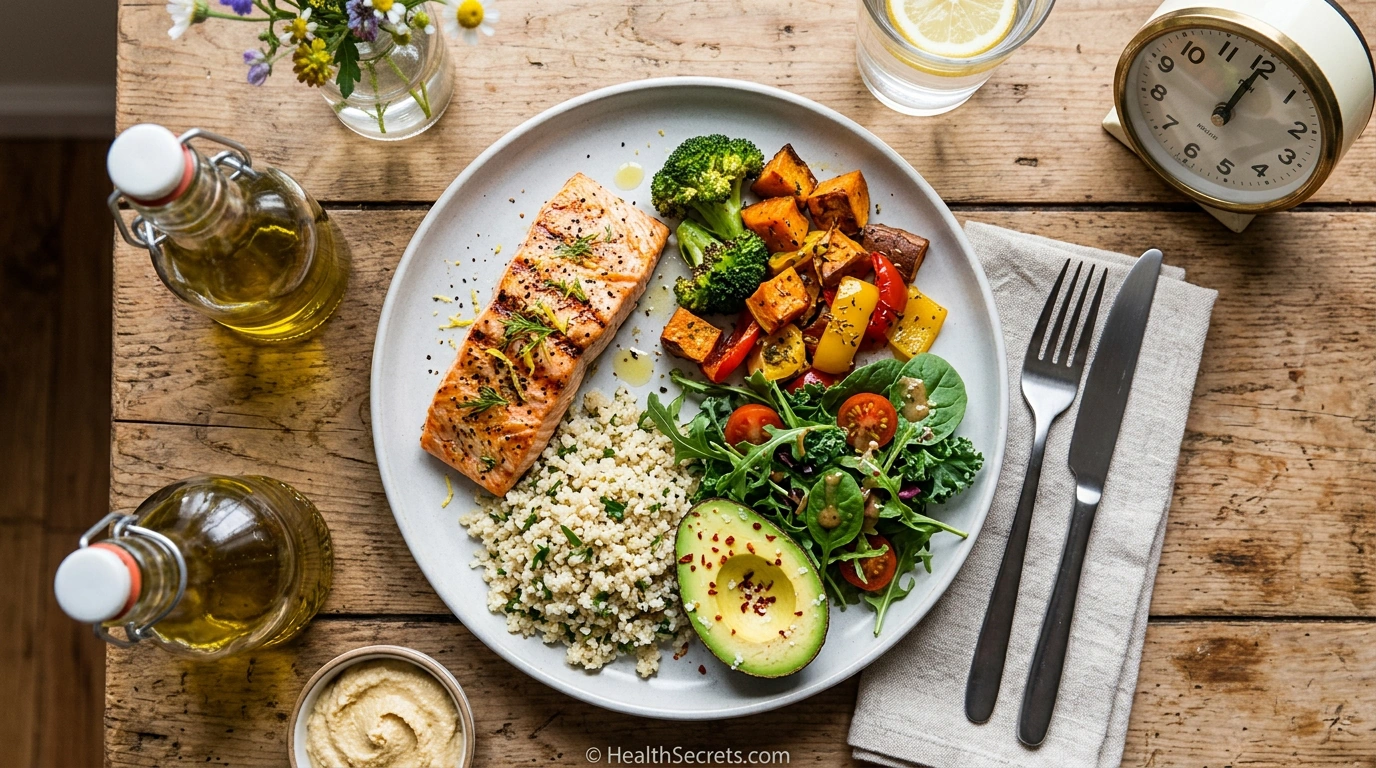
First meal (breaking the fast): Start with a moderate-sized, balanced meal rather than gorging. Example: grilled salmon with roasted vegetables, avocado, and quinoa. Ease into eating to avoid digestive discomfort.
Key nutrition priorities:
- Protein: 0.8–1g per kg body weight daily — critical for muscle preservation during fasting. Include fish, poultry, eggs, legumes, or tofu at every meal
- Healthy fats: Avocado, olive oil, nuts, seeds, fatty fish — support hormone production and keep you satiated longer
- Vegetables: 5–9 servings daily — fiber supports gut health and the gut-health connection to longevity
- Anti-inflammatory foods: Berries, turmeric, fatty fish, leafy greens — amplify fasting's inflammation reduction
Critical mistakes to avoid: Don't binge-eat during your eating window (this negates calorie benefits), don't fill your window with processed junk food, and don't ignore hydration. For sustainable weight loss alongside longevity benefits, maintain a moderate calorie deficit without extreme restriction.
How Do You Monitor Progress and Maintain Fasting Long-Term?
Track both subjective markers (energy, mental clarity, hunger levels, sleep quality, mood) and objective markers (weight, blood pressure, fasting glucose, inflammatory markers) over 4–12 weeks to evaluate your fasting protocol's effectiveness. Most people notice subjective improvements within 2–3 weeks and measurable metabolic improvements within 2–3 months.
- Weeks 1–2 (Adaptation): Expect hunger, mild fatigue, and possible headaches — these are normal and temporary. Track daily to confirm they're improving.
- Weeks 3–4 (Improvement): Hunger decreases as ghrelin adapts. Energy and mental clarity typically increase. Weight loss begins if that's a goal.
- Months 2–3 (Optimization): Measurable improvements in insulin sensitivity, blood pressure, lipid profiles, and inflammatory markers. A 2024 meta-analysis confirmed significant improvements in fasting glucose, HOMA-IR, insulin levels, and HDL cholesterol with 16:8 TRE [10].
- Month 6+ (Longevity benefits): Sustained cellular rejuvenation through autophagy, mitochondrial renewal, and chronic inflammation reduction. Consider periodic 24–48 hour extended fasts (quarterly) for deeper autophagy activation — a 2024 MIT study found stem cell regeneration surges during the refeeding period after fasting [7].
- Long-term flexibility: IF is a sustainable lifestyle, not a rigid diet. Take breaks for travel, holidays, or social events without guilt. Vary your fasting window occasionally (18:6 some days, 14:10 others) to build metabolic flexibility. The goal is decades of consistent practice, not perfection.
What Are the Most Common Intermittent Fasting Mistakes to Avoid?
The biggest mistakes beginners make are starting too aggressively (jumping straight to 18:6 or OMAD), neglecting electrolytes during fasting, binge-eating during the eating window, and not giving the adaptation period enough time. Avoiding these common pitfalls dramatically improves adherence and results.
- Starting too fast: Don't skip the gradual ramp-up. Going from constant snacking to 16:8 overnight causes unnecessary suffering. Use the 4-week progressive approach
- Ignoring electrolytes: Sodium, potassium, and magnesium depletion causes headaches, fatigue, and dizziness during fasting. Add a pinch of salt to water or use a fasting-specific electrolyte supplement
- Binge-eating when breaking the fast: Eating massive quantities to "make up" for fasting defeats the caloric and metabolic benefits. Eat normally-sized, nutrient-dense meals
- Drinking calories during the fast: A splash of cream in coffee or a glass of juice breaks your fast and halts autophagy. Keep the fasting window strictly zero-calorie
- Not drinking enough water: Aim for 8–10 cups daily, distributed throughout both fasting and eating windows
- Expecting overnight results: Longevity benefits are cumulative over months and years. Give your protocol at least 8 weeks before evaluating
- Exercising too intensely while fasted: Light to moderate exercise (walking, yoga) is fine during fasting. Save high-intensity or heavy resistance training for your eating window or immediately before breaking your fast
- Neglecting sleep: Poor sleep undermines fasting benefits by increasing cortisol, hunger hormones, and inflammation. Prioritize 7–9 hours nightly, and explore sleep optimization strategies for maximum longevity impact
Is Intermittent Fasting Safe, and When Should You Stop?
Intermittent fasting is safe for most healthy adults and has been well-tolerated in clinical trials lasting 3–12 months. However, it is not appropriate for everyone, and certain populations face serious risks from fasting. Common side effects during the 1–2 week adaptation period — hunger, fatigue, headaches, irritability — are temporary and manageable.
Who Should NOT Practice Intermittent Fasting?
Absolute contraindications (do not fast):
- Pregnant or breastfeeding — fetus and infant require consistent nutrition
- History of eating disorders (anorexia, bulimia, binge eating) — IF can trigger relapse
- Underweight or malnourished — need consistent caloric intake to restore health
- Type 1 diabetes — fasting creates dangerous hypoglycemia and DKA risk
- Children and adolescents under 18 — growing bodies need consistent nutrition
Relative contraindications (consult doctor first):
- Type 2 diabetes on insulin or sulfonylureas (hypoglycemia risk)
- Blood pressure medications (may need dose adjustment)
- Chronic heart, kidney, or liver disease
- History of amenorrhea or hormonal disruption
When Should You Stop or Modify Your Fasting Protocol?
- Menstrual cycle disruption lasting more than 2 cycles — switch to 14:10 or stop
- Extreme fatigue not improving after 3–4 weeks
- Development of binge-eating patterns
- Significant muscle loss despite adequate protein and resistance training
- Persistent negative symptoms (dizziness, heart palpitations, severe mood changes)
Women's considerations: Some women are more sensitive to fasting's hormonal effects, particularly on the hypothalamic-pituitary axis. If you experience menstrual irregularity, consider 14:10 instead of 16:8, try crescendo fasting (fast only 2–3 non-consecutive days per week), and ensure adequate caloric intake during eating windows.
Action Plan
What Should You Do First to Start Intermittent Fasting for Longevity?
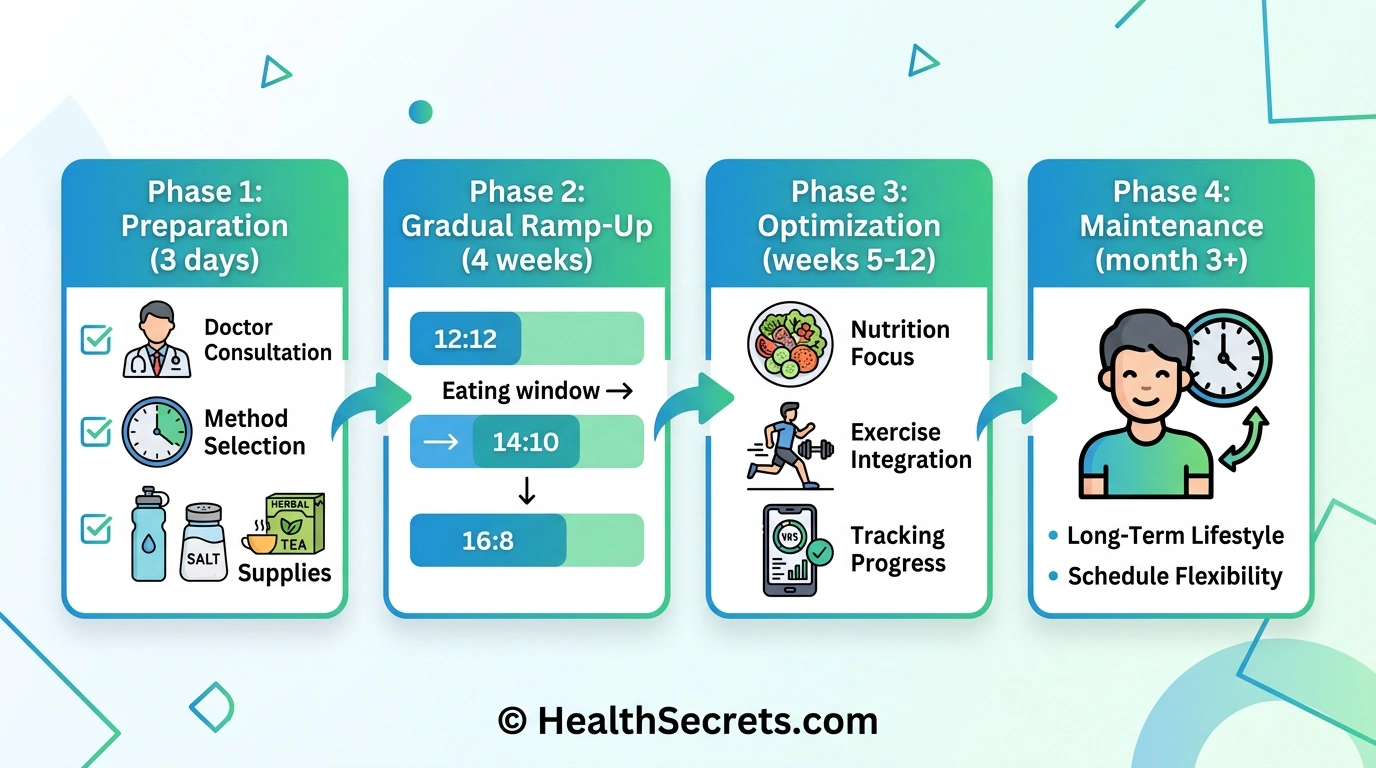
Follow the sequence below, work through each phase in order, and use the checklist as your practical implementation guide.
Begin by confirming you have no contraindications, choosing the 16:8 method as your starting target, and implementing the 4-week gradual ramp-up outlined below. This phased approach minimizes side effects, builds sustainable habits, and positions you for years of longevity-promoting fasting.
Phase 1 — Preparation (Days 1–3):
- Confirm no contraindications (review safety section above)
- Consult doctor if you take medications or have chronic conditions
- Choose your target method (16:8 recommended for beginners)
- Select your eating window (align with lifestyle — 12pm–8pm is most common)
- Stock up on black coffee, herbal tea, and electrolytes for fasting hours
Phase 2 — Gradual Ramp-Up (Weeks 1–4):
- Week 1: Practice 12:12 fasting (stop eating at 8pm, resume at 8am)
- Week 2: Extend to 14:10 (delay first meal to 10am)
- Week 3: Reach 16:8 target (first meal at 12pm)
- Week 4: Optimize and fine-tune eating window timing
Phase 3 — Optimization (Weeks 5–12):
- Prioritize nutrient-dense foods during eating window
- Add resistance training 2–3x/week to preserve muscle mass
- Track subjective markers (energy, clarity, hunger, sleep, mood)
- Get baseline blood work (fasting glucose, lipids, CRP, blood pressure)
Phase 4 — Long-Term Maintenance (Month 3+):
- Maintain consistent daily IF protocol
- Consider periodic 24-hour fasts quarterly for deeper autophagy
- Repeat blood work at 3 and 6 months to track metabolic improvements
- Stay flexible — adjust protocol as needed for life changes