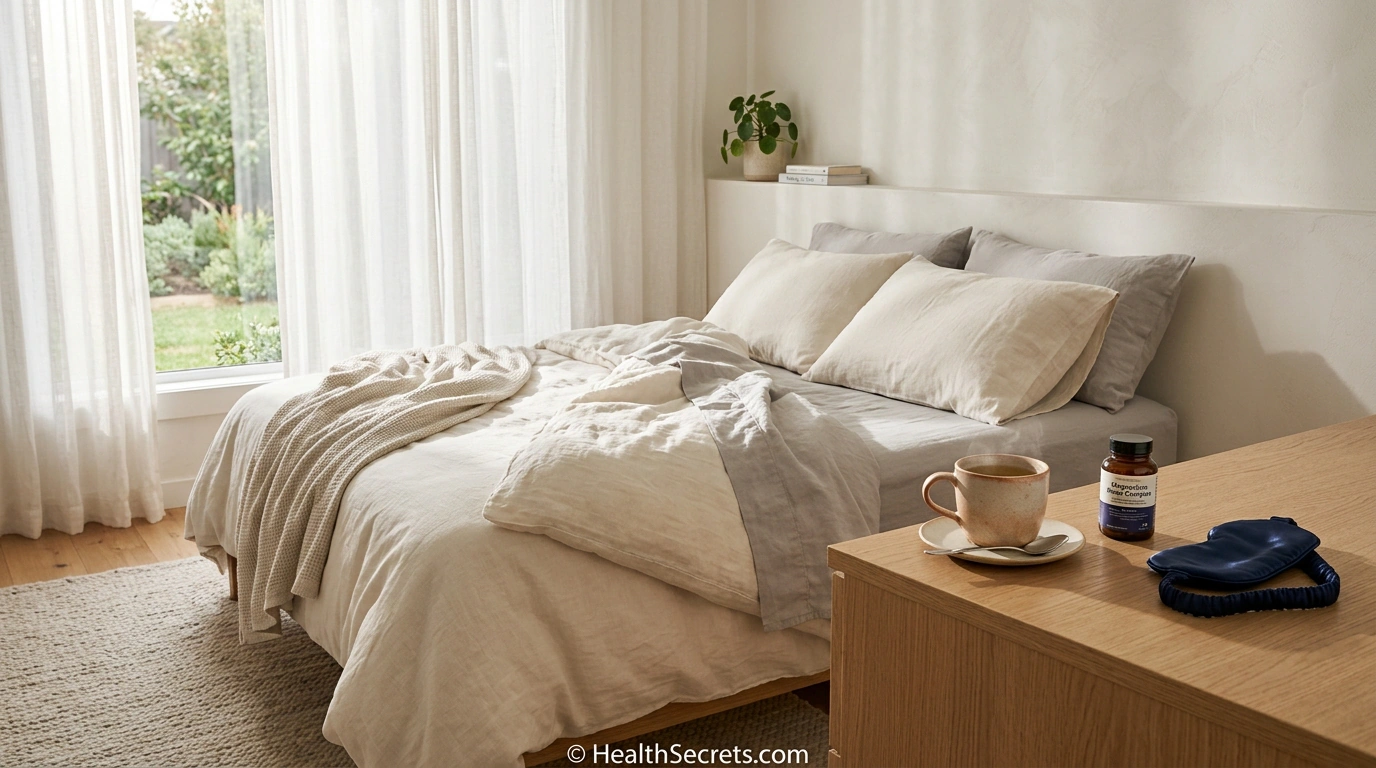
✓ Bedroom Environmental Audit: The audit walks through light, sound, temperature, bedding, ventilation, clutter, and device placement in the sleep space. It separates observations from assumptions and includes a baseline rating for each factor. The outcome is a prioritized list of low-cost variables to test first.
✓ Circadian Timing and Wind-Down Map: A daily map records wake time, daylight exposure, meals, caffeine timing, activity, screens, and the intended wind-down window. It is deliberately brief so the record reflects real life rather than a perfect laboratory routine. You gain a clearer view of schedule consistency and possible discussion points.
✓ 14-Day Single-Variable Experiment: The experiment assigns one environmental or behavioral change to a short test block and provides a hold-steady column for everything else that is practical to keep consistent. A nightly log captures time in bed, awakenings, morning restfulness, and notes without promising a result. This makes comparison more useful than changing five things at once.
✓ Light, Sound, and Temperature Decision Tree: The decision tree helps you choose between simple options such as dimming, masking, ventilation, bedding changes, or moving a device. It includes safety prompts for heaters, cords, fans, and shared bedrooms. The practical outcome is a measured next step instead of an impulse purchase.