Something frustrating happens when you start researching anti-aging supplements. You find dozens of antioxidants — vitamin C, vitamin E, CoQ10, glutathione — and every single one has a limitation. Vitamin C only works in water. Vitamin E only works in fat. Glutathione barely survives the digestive tract.
Then there's alpha-lipoic acid.
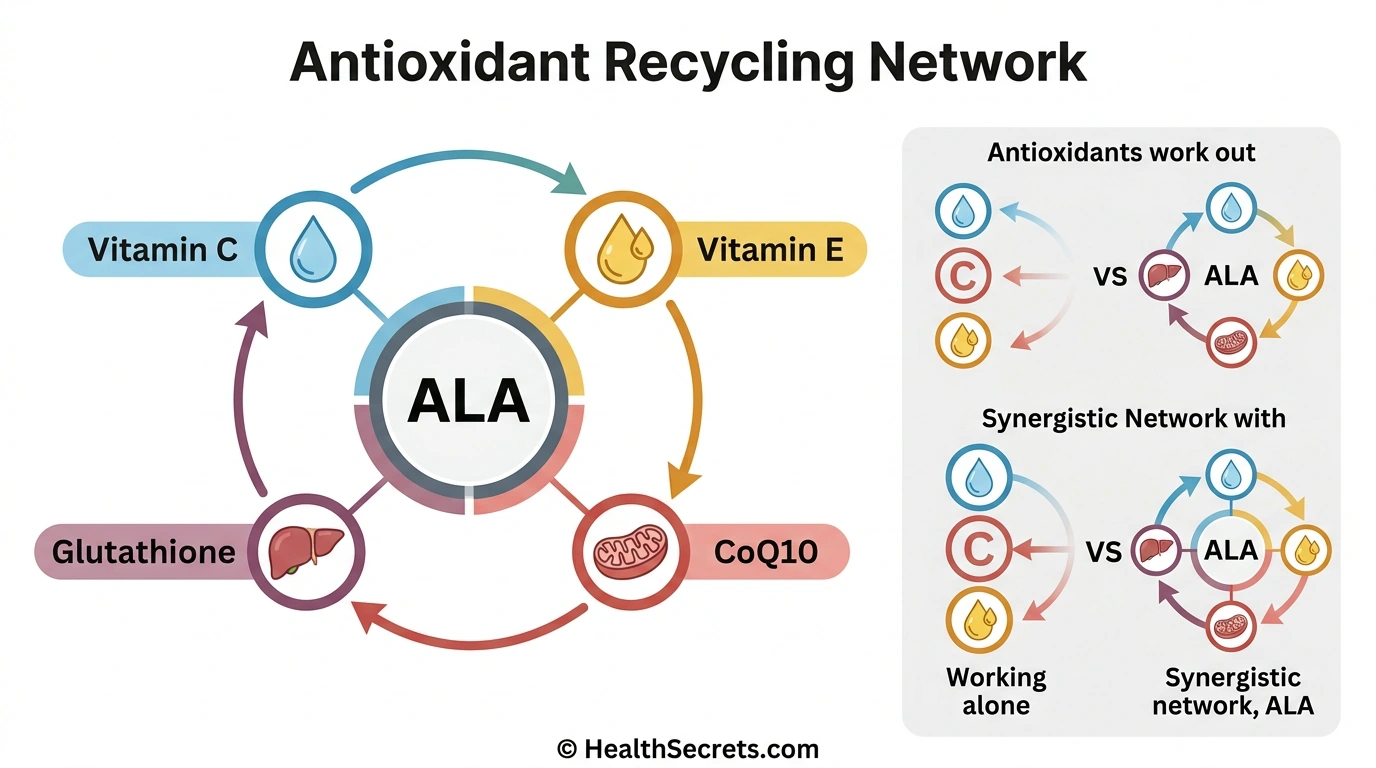
ALA breaks the rules. It dissolves in both water and fat, crosses the blood-brain barrier, penetrates every cell compartment from the membrane to the mitochondria, and — here's the part that caught researchers' attention decades ago — it actually regenerates other antioxidants after they've been used up. Vitamins C and E, glutathione, CoQ10: ALA recycles all of them.
That's why scientists started calling it the "universal antioxidant" back in the 1990s. And the research since then has only strengthened the case.
Your body naturally produces alpha-lipoic acid in the mitochondria, where it serves as an essential cofactor for energy production. But production declines with age — right when oxidative stress ramps up and mitochondrial function starts slipping. Supplementation fills that gap, and clinical trials show measurable benefits for diabetic neuropathy (50% symptom reduction at 600mg daily), blood sugar control, and potentially neuroprotection.
But there's nuance here. R-lipoic acid versus racemic. Timing on an empty stomach. The biotin depletion issue nobody talks about. Realistic expectations versus marketing hype.
This guide covers all of it — what alpha-lipoic acid actually does, which form to choose, how to dose it properly, and what the research genuinely supports versus what's speculation.
For broader context on anti-aging strategies, see our longevity and anti-aging guide. If you're interested in mitochondrial support, our NAD+ and NMN guide covers another key pathway.
What Is Alpha-Lipoic Acid and What Does It Actually Do?
Alpha-lipoic acid is a sulfur-containing compound naturally produced inside your mitochondria, where it functions as an essential cofactor for energy production. Without it, the enzymes pyruvate dehydrogenase and alpha-ketoglutarate dehydrogenase can't do their jobs — and those enzymes are central to converting food into ATP, the energy currency every cell depends on.
Your body makes small amounts of ALA on its own. You can also get trace quantities from foods like spinach, broccoli, and organ meats — but we're talking less than 1–3mg per serving. Therapeutic doses range from 300–600mg daily, so food sources alone won't cut it.
Here's what matters for anti-aging: ALA production naturally declines as mitochondrial function deteriorates with age. At the same time, oxidative stress increases — meaning you're producing less of one of your most versatile antioxidant defenses precisely when you need it most. A 2024 comprehensive review in Biomedicine & Pharmacotherapy confirmed ALA's potent antioxidant action and therapeutic effects across chronic diseases linked to oxidative stress [1].
What forms does alpha-lipoic acid come in?
Two molecular forms exist — and this matters for supplementation:
- R-lipoic acid (R-ALA): The natural form your body produces. Biologically active. Better absorbed.
- S-lipoic acid (S-ALA): A synthetic mirror image created during manufacturing. Less biologically active.
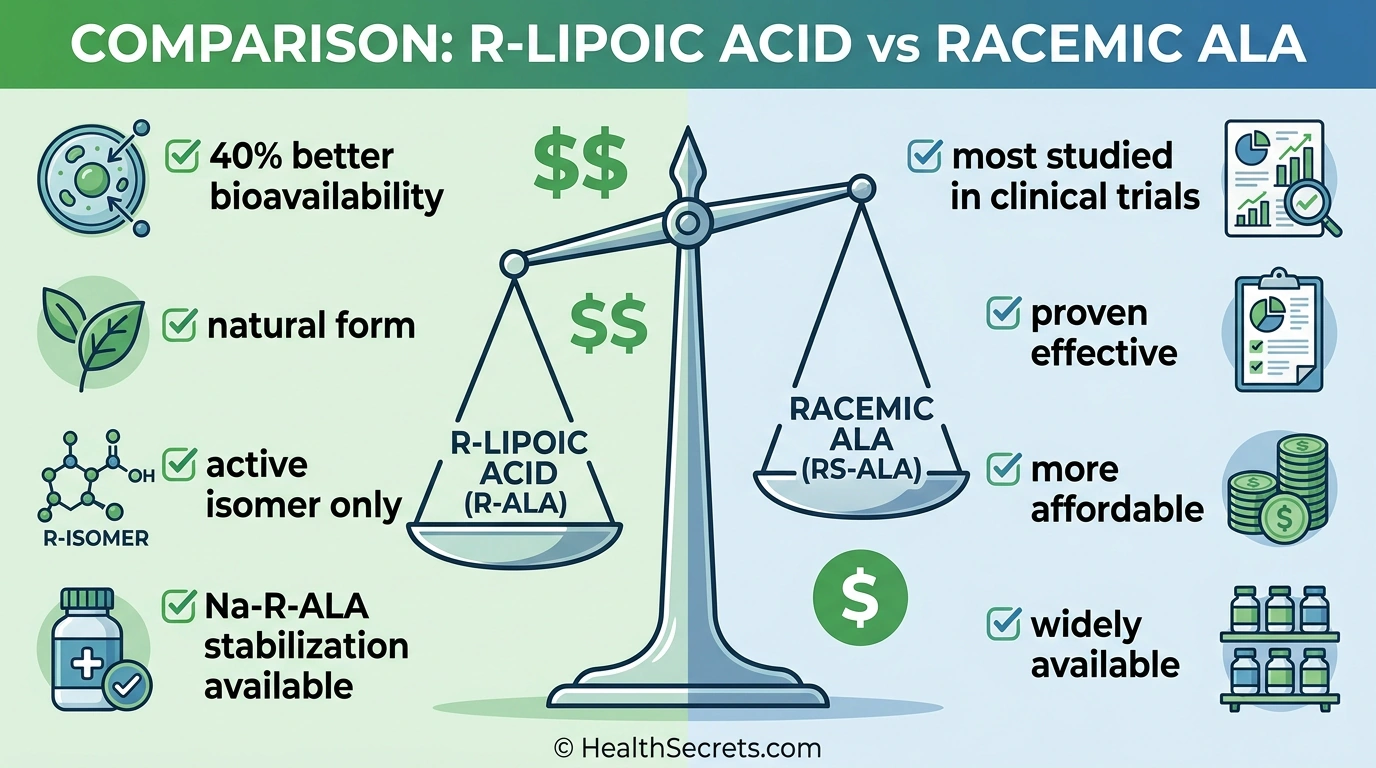
- Racemic ALA: A 50/50 mixture of R and S forms. This is what most supplements and most clinical studies use.
Both racemic and R-ALA are effective. The difference is bioavailability — R-ALA achieves 40–50% higher blood levels, which means you may need a lower dose for equivalent effects.
How Does Alpha-Lipoic Acid Work in the Body?
Alpha-lipoic acid operates through multiple mechanisms simultaneously — which is unusual for a single compound. It functions as a direct antioxidant, an antioxidant recycler, a mitochondrial cofactor, a heavy metal chelator, and a signaling molecule that activates longevity pathways. That multi-modal action explains why it keeps showing up in research across so many different conditions.
Why is ALA called the "universal antioxidant"?
Most antioxidants are limited by solubility. Vitamin C works in water-based environments (blood plasma, cytoplasm). Vitamin E works in lipid environments (cell membranes). ALA works in both — and that's genuinely rare.
This dual solubility means ALA can protect virtually every compartment of every cell: the watery interior, the fatty membranes, and even the mitochondria (which have their own double membrane). It also crosses the blood-brain barrier, providing direct neuroprotection that most antioxidants can't offer.
But the "universal" label goes further. ALA regenerates other antioxidants after they've neutralized free radicals — recycling oxidized vitamin C back to its active form, regenerating vitamin E, boosting glutathione synthesis, and restoring CoQ10. A review in Antioxidants documented ALA's role in this interconnected antioxidant network, showing reductions in oxidative stress markers (MDA, lipid peroxides) of 30–40% [2]MDPI [2].
Think of ALA as the antioxidant that makes your other antioxidants work better and last longer.
How does ALA support mitochondrial function?
ALA is literally built into the mitochondrial energy production machinery. It serves as an essential cofactor for two enzyme complexes in the Krebs cycle — pyruvate dehydrogenase and alpha-ketoglutarate dehydrogenase. Without ALA, these enzymes can't efficiently convert nutrients into ATP.
Beyond its cofactor role, ALA protects mitochondria from oxidative damage (mitochondria produce enormous amounts of free radicals as a byproduct of energy production), improves mitochondrial membrane potential, and stimulates mitochondrial biogenesis through PGC-1α activation — essentially triggering the creation of new, healthy mitochondria. Research in aged rats demonstrated that ALA supplementation restored mitochondrial membrane potential to levels seen in young animals [5].
Does ALA activate longevity pathways?
Yes — and this is where it gets interesting for anti-aging. ALA activates AMPK (AMP-activated protein kinase), the same energy-sensing pathway triggered by caloric restriction and exercise. AMPK activation promotes autophagy (cellular cleanup), mitochondrial biogenesis, fat oxidation, and reduced inflammation. It's one of the most validated longevity pathways in aging research.
ALA also inhibits NF-κB, a master regulator of inflammation. Chronic low-grade inflammation ("inflammaging") is now recognized as a primary driver of age-related disease, and NF-κB inhibition reduces production of inflammatory cytokines including IL-6, TNF-alpha, and CRP. A 2026 review in PMC documented ALA's role in reducing inflammatory markers across cardiovascular and metabolic conditions [3].
Additionally, ALA chelates heavy metals — mercury, lead, arsenic, cadmium — binding them and facilitating excretion. This detoxification capacity adds another layer to its anti-aging profile, especially given increasing environmental toxin exposure. For more on detoxification support, see our detox and cleanse guide.

The Preventive Screening Timeline
USPSTF screening ages and intervals for average-risk adults in one age-ordered table, the questions that move you out of average risk, and a personal due-date tracker.
How Well Is Alpha-Lipoic Acid Absorbed?
Absorption is one of ALA's weak points — and understanding it is critical for getting results. Oral bioavailability ranges around 30% due to rapid hepatic metabolism and instability in the stomach, according to pharmacokinetic research [8]. But you can significantly improve absorption with proper timing and form selection.
What improves ALA absorption?
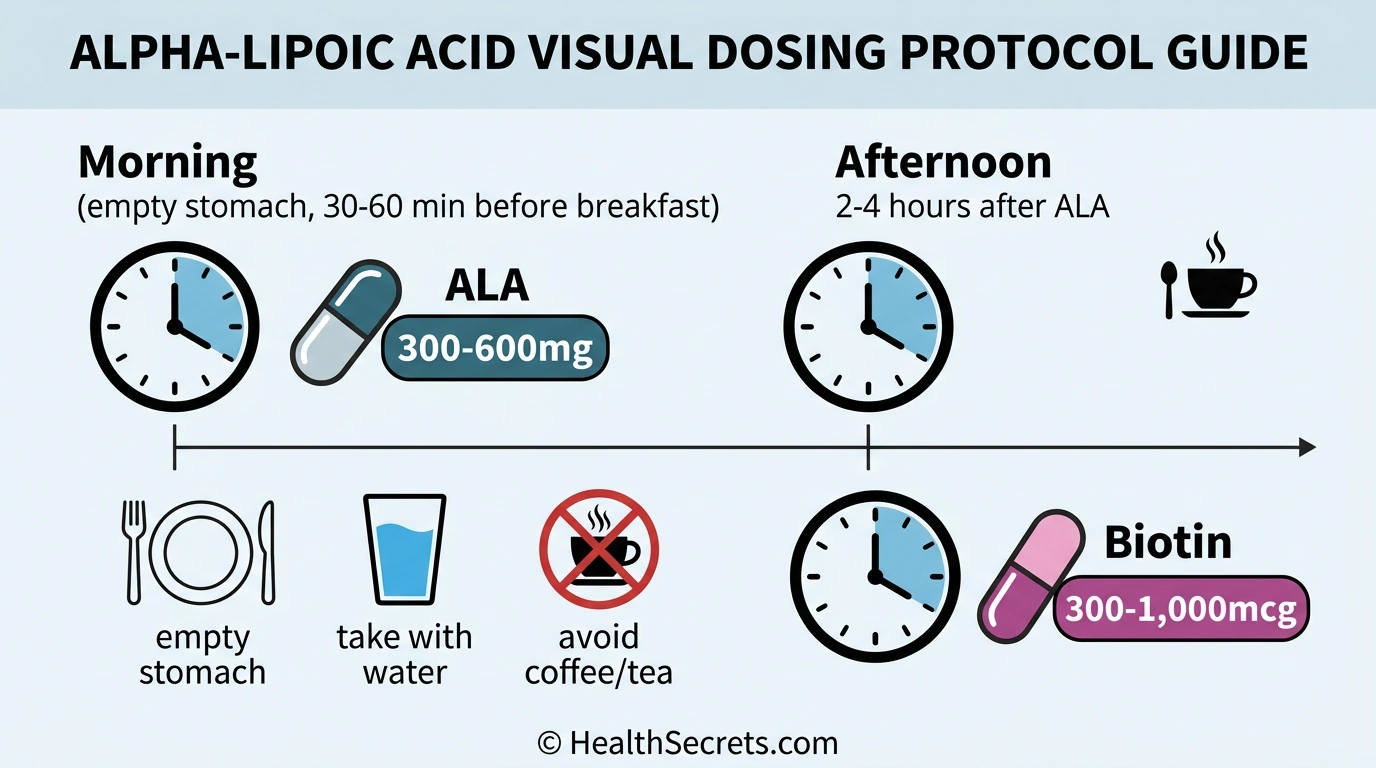
- Empty stomach is non-negotiable. Food reduces ALA absorption by 30–40%, particularly high-fat meals. Take it 30–60 minutes before eating, with plain water. Avoid coffee, tea, or juice at the same time.
- R-lipoic acid absorbs better. A pilot study comparing R-ALA to racemic ALA found R-ALA achieved 40–50% higher plasma concentrations in both young and older adults [9].
- Na-R-ALA (sodium R-lipoic acid) is the most bioavailable form. Stabilizing R-ALA with sodium prevents the polymerization (clumping) that degrades pure R-ALA at room temperature. Look for "stabilized R-lipoic acid" or "Na-R-ALA" on labels.
- Immediate-release vs. sustained-release: Immediate-release reaches peak blood levels in 30–60 minutes (better for acute needs like neuropathy). Sustained-release provides steadier levels over 4–8 hours but may reduce peak concentrations.
How Much Alpha-Lipoic Acid Should You Take?
Dosing depends on your goal, and the clinical literature provides reasonably clear guidance. Most studies use racemic ALA — if you're taking R-ALA, you may need roughly half the dose for equivalent blood levels.
| Goal | Daily Dose | Form | Duration |
|---|---|---|---|
| General anti-aging | 300–600mg | Racemic or R-ALA | Ongoing |
| Diabetic neuropathy | 600mg | Racemic (most studied) | 3–6 months minimum |
| Blood sugar support | 300–600mg | Either form | 8–12 weeks to assess |
| Neuroprotection | 300–600mg | R-ALA preferred (crosses BBB) | Ongoing |
What's the best timing protocol?
- Once daily: 600mg (or 300mg R-ALA) in the morning, 30–60 minutes before breakfast
- Twice daily: 300mg morning and 300mg evening, both on empty stomach
- Biotin: 300–1,000mcg daily, taken 2–4 hours after ALA (separate due to shared transporter)
- Start low: Begin at 300mg for 1–2 weeks to assess tolerance, then increase to 600mg
ALA has most often been used in clinical studies at doses of 600–1,800mg daily for up to 6 months, with 600mg being the most common therapeutic dose WebMD: Alpha-Lipoic Acid Uses, Side Effects [12].
Can You Get Enough Alpha-Lipoic Acid from Food?
The short answer is no — not at therapeutic levels. ALA exists in food bound to protein (lipoyllysine), and the amounts are small. The richest dietary sources provide only 1–3mg per serving, compared to therapeutic doses of 300–600mg.
Highest food sources:
- Organ meats (liver, kidney, heart): 1–3mg per 100g
- Spinach: ~0.1mg per 100g
- Broccoli: ~0.1mg per 100g
- Tomatoes, peas, Brussels sprouts: trace amounts
- Red meat: small amounts
Eating these foods contributes to overall antioxidant intake, and they provide many other beneficial nutrients. But for the specific anti-aging, neuroprotective, and metabolic benefits documented in clinical trials, supplementation is necessary.
A balanced approach: eat ALA-rich foods as part of an anti-inflammatory diet (organ meats, leafy greens, cruciferous vegetables), and supplement to reach therapeutic levels. This ensures you're getting the food-matrix benefits alongside concentrated ALA. For dietary guidance, see our supplements guide.
Is Alpha-Lipoic Acid Safe?
Alpha-lipoic acid has a strong safety profile at standard doses. A systematic review and meta-analysis of 71 randomized, placebo-controlled studies (4,749 subjects total) found ALA was generally well-tolerated with a low adverse event rate [7].
Common side effects (rare, less than 5%):
- Mild nausea (usually at doses above 600mg)
- Skin rash or itching (rare allergic reaction)
- Heartburn
- Headache at high doses
What drug interactions should you watch for?
- Diabetes medications: ALA improves insulin sensitivity, which can compound the blood-sugar-lowering effects of insulin and sulfonylureas. Monitor blood glucose closely and work with your doctor to adjust medication doses if needed. Hypoglycemia is a real risk.
- Thyroid medications (levothyroxine): ALA may reduce thyroid hormone levels. Separate ALA from thyroid medication by at least 4 hours. Have thyroid function monitored if using both long-term WebMD: Alpha-Lipoic Acid Precautions [12].
- Chemotherapy: Antioxidants during chemotherapy remain controversial. Consult your oncologist before taking ALA during cancer treatment.
The biotin depletion problem
This is the side effect most people don't know about. ALA and biotin share the same cellular transporter (SMVT). Long-term ALA supplementation can gradually deplete biotin, leading to hair thinning, brittle nails, skin issues, and fatigue.
Solution: Supplement with 300–1,000mcg biotin daily. Take it 2–4 hours after ALA to avoid direct competition for absorption.
Avoid ALA if: You are pregnant or breastfeeding (insufficient safety data), have thiamine deficiency, or have not consulted a physician while taking diabetes or thyroid medications.
What Can Alpha-Lipoic Acid Actually Do for You?
ALA has real, documented benefits — but it's not a miracle compound. Setting realistic expectations helps you evaluate whether supplementation is worth it for your specific situation.
What has strong clinical evidence?
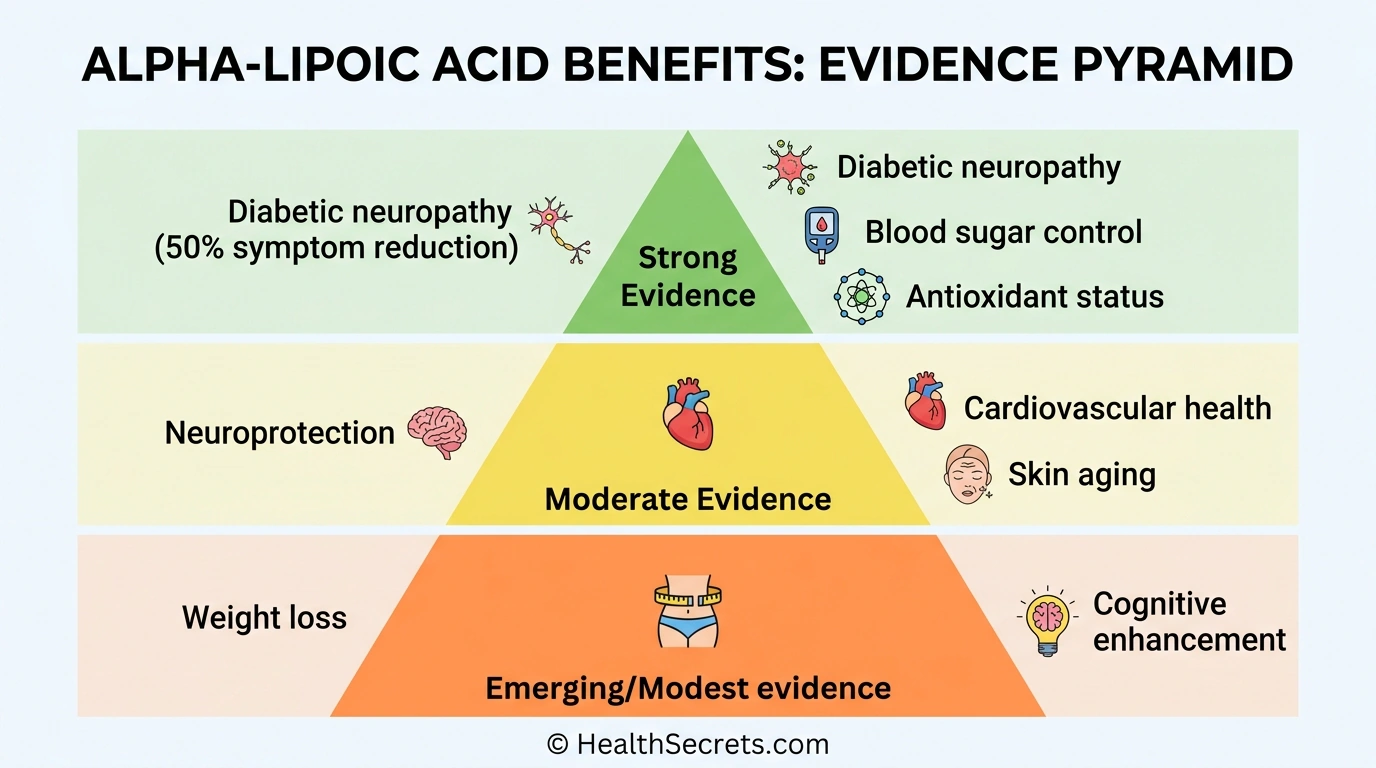
- Diabetic neuropathy: This is ALA's most validated application. Multiple randomized controlled trials and meta-analyses show 600mg daily reduces neuropathic pain, numbness, and tingling by approximately 50% within 3–5 weeks. It's an approved treatment in Germany. The mechanism involves improved nerve blood flow, reduced oxidative damage, and restored nerve conduction [4].
- Blood sugar control: ALA improves insulin sensitivity and may reduce fasting glucose by 10–20% in people with type 2 diabetes or prediabetes. Effects are dose-dependent (300–600mg daily).
- Antioxidant status: Consistent reductions in oxidative stress markers across multiple studies — this is well-established.
What has moderate or emerging evidence?
- Neuroprotection: ALA crosses the blood-brain barrier and has shown preliminary benefits in small Alzheimer's studies (slowing cognitive decline). Parkinson's models show dopaminergic neuron protection. But large-scale human trials are still lacking. A review in Oxidative Medicine and Cellular Longevity explored ALA's potential in neurodegenerative contexts but noted more clinical trials are needed [6].
- Cardiovascular health: Improves endothelial function and reduces LDL oxidation. Promising but not definitive.
- Skin aging: Topical ALA (5%) reduces fine lines and improves skin texture. Oral ALA provides systemic antioxidant protection.
- Weight loss: Modest at best — studies show 1–2kg average loss over 10–14 weeks. It's an adjunct, not a standalone solution.
What should you realistically expect?
- Weeks 1–2: Minimal noticeable effects. Assess tolerance.
- Weeks 2–4: Potential energy improvements, beginning of neuropathy relief (if applicable)
- Weeks 4–12: Measurable blood sugar changes, continued neuropathy improvement, subjective cognitive clarity
- Months 3–6+: Cumulative anti-aging benefits (reduced oxidative stress, improved mitochondrial function) — these are real but largely invisible without biomarker testing
ALA won't reverse aging or cure diabetes. It's a well-researched compound that addresses several mechanisms of aging simultaneously — oxidative stress, mitochondrial decline, inflammation, and insulin resistance. Combined with exercise, good nutrition, and sleep, it's a solid addition to an evidence-based longevity stack.
Action Plan
What Should You Do First to Start Using Alpha-Lipoic Acid?
Follow the sequence below, work through each phase in order, and use the checklist as your practical implementation guide.
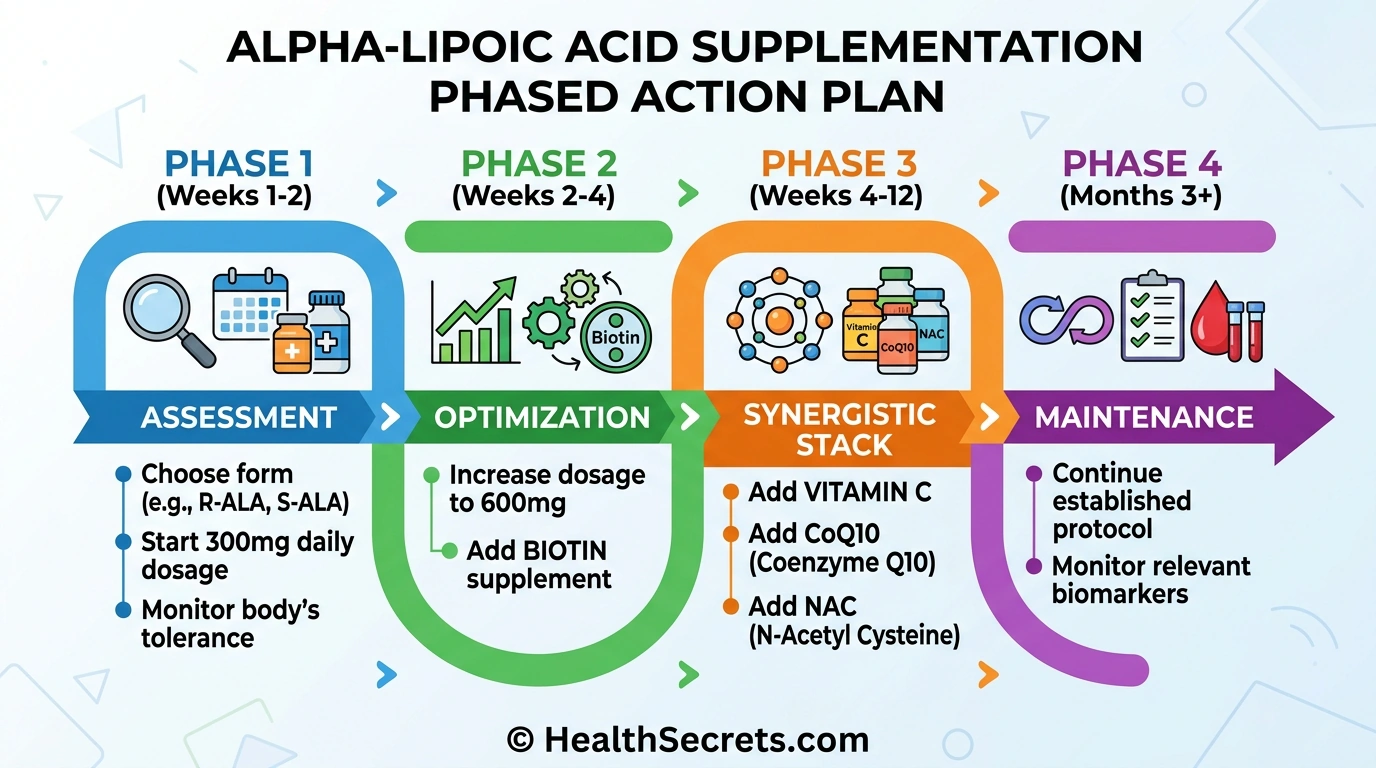
Start with a tolerance assessment at 300mg daily, then scale to your target dose over 2–4 weeks. Add biotin from week two onward, and combine with synergistic antioxidants after the first month if desired. Here's the phased approach:
Phase 1 — Assessment (Weeks 1–2):
- Determine your goal (anti-aging, blood sugar, neuropathy, neuroprotection)
- Choose your form: R-ALA (Na-R-ALA preferred) for optimal bioavailability, or racemic ALA for proven effectiveness at lower cost
- Start at 300mg daily, empty stomach, 30–60 minutes before breakfast
- Monitor for nausea or skin reactions (rare)
- If diabetic: monitor blood glucose closely and inform your doctor
Phase 2 — Dose Optimization (Weeks 2–4):
- Increase to 600mg daily (once daily or split 300mg twice daily)
- Begin biotin supplementation: 300–1,000mcg daily, 2–4 hours after ALA
- Maintain empty-stomach timing for all ALA doses
- Track subjective markers: energy, neuropathy symptoms, cognitive clarity
Phase 3 — Synergistic Stack (Weeks 4–12, optional):
- Add vitamin C (500–1,000mg daily) — ALA regenerates it
- Add CoQ10 (100–200mg daily) — ALA regenerates it, plus dual mitochondrial support
- Consider NAC (600–1,000mg daily) — boosts glutathione, which ALA also supports
- Continue ALA + biotin protocol
Phase 4 — Long-Term Maintenance (Months 3+):
- Maintain daily ALA (300–600mg) and biotin
- Recheck blood sugar and metabolic markers at 3 months (if applicable)
- Store supplements properly (cool, dry, away from light — especially R-ALA)
- Annual check-up to assess ongoing benefits