Nearly one in three adults fails to get the recommended seven to nine hours of sleep each night, and the consequences ripple into every corner of health — from impaired cognition and weakened immunity to elevated disease risk. The good news? Most sleep problems respond to a straightforward, free, and side-effect-free intervention: sleep hygiene.
Sleep hygiene is the foundation of sleep medicine and the first-line recommendation before any prescription. In a systematic review of 42 randomized controlled trials covering 4,245 adults, sleep-hygiene-based interventions improved Insomnia Severity Index scores by a mean difference of 3.4 points — a clinically meaningful change achieved without drugs [1].
In this guide, you will learn 15 evidence-based rules organized into seven practical steps. Each rule explains why it works, how to implement it tonight, and which products can help. Whether you struggle to fall asleep, wake up at 3 AM, or simply feel unrefreshed in the morning, these rules provide a clear path to better sleep.
What Do You Need to Know Before Starting a Sleep Hygiene Routine?
Sleep hygiene is a collection of behavioral and environmental practices that align your body with its natural sleep-wake cycle. Before diving into the 15 rules, it helps to understand two biological processes that determine when and how well you sleep — because every rule targets one or both of them.
What Is the Two-Process Model of Sleep?
Process S (Sleep Drive) builds pressure throughout the day as adenosine accumulates in the brain. The longer you stay awake, the stronger the drive to sleep.
Process C (Circadian Rhythm) is your 24-hour internal clock, regulated primarily by light exposure, that controls melatonin release and creates an optimal "sleep window" each night [2].
Sleep hygiene works by building adequate sleep drive (through sufficient wake time, exercise, and caffeine management) and aligning your circadian rhythm (through consistent scheduling and strategic light exposure). When both processes are in sync, you fall asleep quickly, cycle through all sleep stages, and wake up refreshed.
What Does Quality Sleep Actually Require?
Adults need 7–9 hours per night that include all four sleep stages: light sleep (NREM 1–2), deep restorative sleep (NREM 3), and REM dream sleep. Quality sleep also requires minimal disruptions and proper timing aligned with your circadian rhythm. The 15 rules below create the conditions for all of these requirements to be met.

Can't Sleep Through the Night?
Download the free Sleep Audit & Recovery Guide — used by our readers to identify the exact bedroom triggers and stress habits wrecking their rest.
How Do You Lock In a Consistent Sleep Schedule?
Going to bed and waking up at the same time every day — including weekends — is the single most impactful sleep hygiene rule. A consistent schedule strengthens your circadian rhythm so your body anticipates sleep at the right time, optimizes melatonin release, and improves morning alertness.
Irregular sleep schedules create "social jet lag," which research links to poorer mood, increased fatigue, and higher cardiovascular risk [3]. Aim for no more than 30–60 minutes of variation, even on weekends.
How to implement:
- Choose a realistic bedtime and wake time based on your obligations
- Set a "wind-down alarm" 60 minutes before bedtime
- Wake at the same time daily — no snooze button
- If shifting your schedule, adjust by 15–30 minutes every few days
- Track your schedule for one week to establish a baseline

Better Sleep Environment Workbook
Run a structured two-week bedroom experiment to optimize temperature, light, and noise before buying gadgets.
How Do You Optimize Your Bedroom Environment for Sleep?
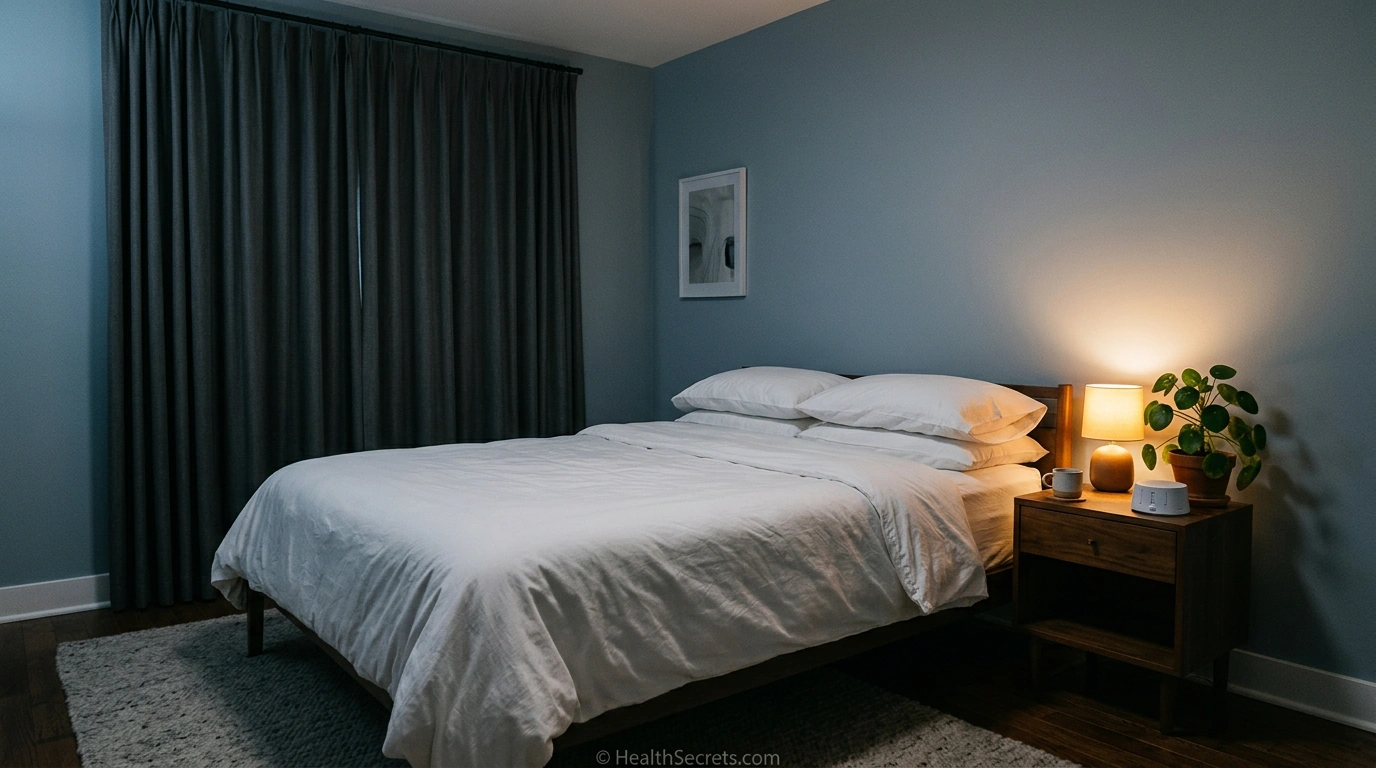
Your bedroom should be dark, cool, quiet, and comfortable — four environmental factors that directly influence sleep architecture. Optimizing all four can reduce nighttime awakenings and increase time spent in deep sleep.
Rule #2 — Why Does Complete Darkness Matter for Sleep?
Light — even dim light from a nightlight (as low as 8 lux) — suppresses melatonin production via signals from the retina to the suprachiasmatic nucleus (SCN), your brain's master clock [4]. A study published in the Journal of Clinical Endocrinology & Metabolism found that ordinary room light before bedtime suppressed melatonin onset by approximately 90 minutes [4].
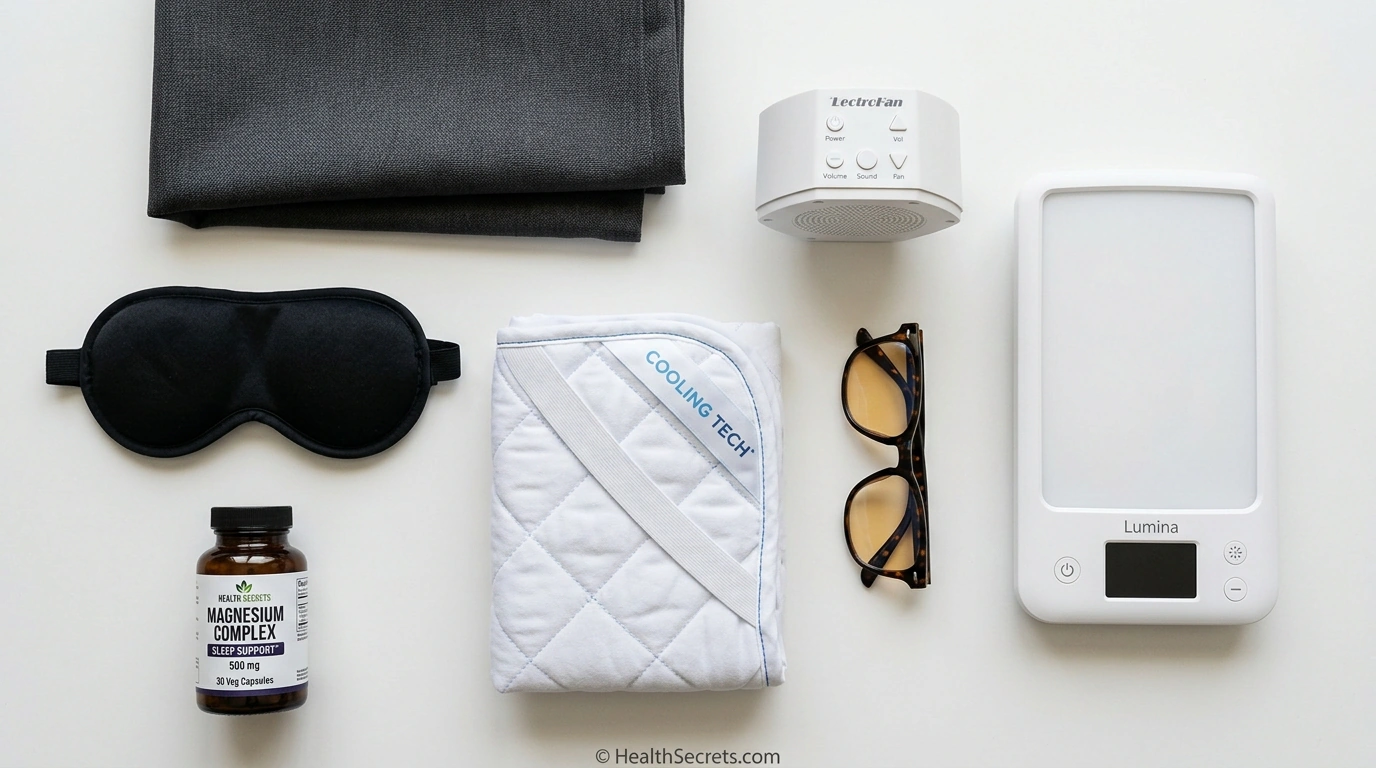
How to implement: Install blackout curtains, cover or remove LED standby lights, and use a contoured sleep mask if complete darkness is not achievable. If you need a nightlight for safety, choose a red-wavelength option — it is the least disruptive to melatonin.
Rule #3 — What Is the Best Bedroom Temperature for Sleep?
Your core body temperature must drop 1–2 °F to initiate sleep. Research published in Current Biology identifies 60–67 °F (15–19 °C) as the optimal bedroom temperature range [5]. The Sleep Foundation and Cleveland Clinic independently confirm the 65–68 °F sweet spot [6].
How to implement: Set your thermostat to 65 °F at night, use breathable cotton or bamboo bedding, and consider a cooling mattress pad if you sleep hot. If your feet are cold, wear socks — warming the extremities promotes vasodilation and faster sleep onset.
Rule #4 — Should You Use White Noise or Silence for Sleep?
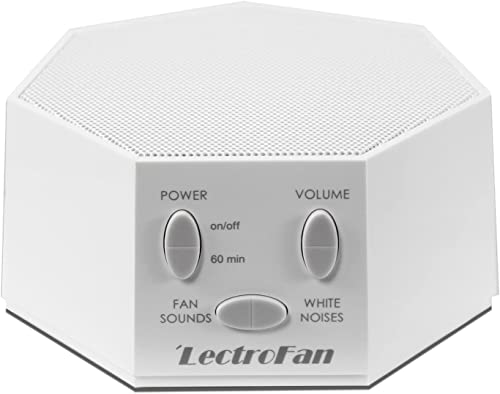
Noise fragments sleep stages even when it does not fully wake you, increasing cortisol and reducing deep sleep. Consistent background sound (white, pink, or brown noise) masks sudden disruptive sounds like traffic or a partner snoring.
How to implement: Use a dedicated white noise machine (more reliable than phone apps), try different sound profiles (pink noise emphasizes lower, rain-like frequencies), and consider earplugs if noise sources are unavoidable.
Rule #5 — How Does Bedroom Comfort Affect Sleep Quality?
A supportive mattress (replace every 7–10 years), properly sized pillows (replace every 1–2 years), and a decluttered environment all reinforce the mental association between your bedroom and restful sleep. Remove work materials, keep surfaces tidy, and choose calming neutral colors.
How Should You Manage Light Exposure Throughout the Day?
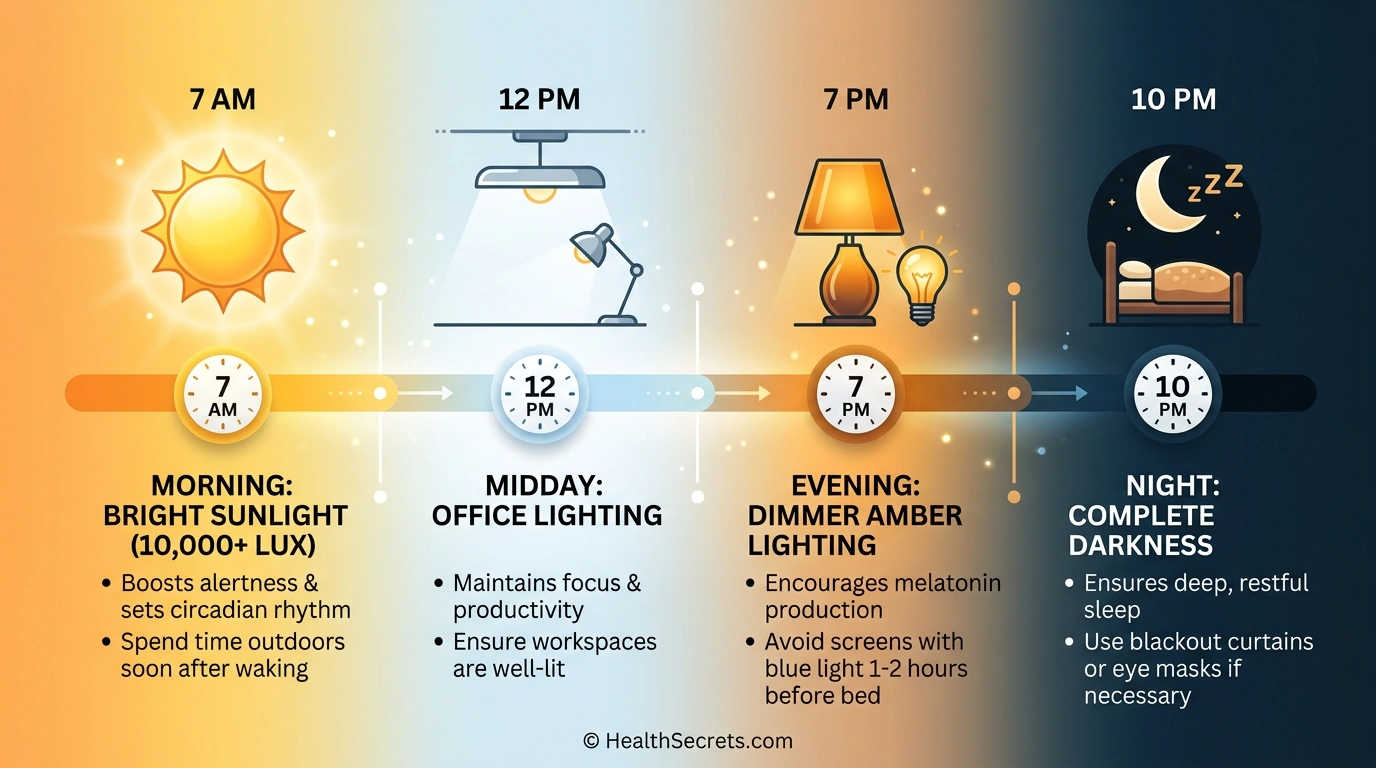
Light is the strongest zeitgeber (time-giver) for your circadian rhythm. Strategic light exposure during the day and deliberate dimming at night keep your internal clock precise and melatonin timing optimal [7].
Rule #6 — Why Is Morning Sunlight So Important for Sleep?
Bright morning light (10–30 minutes) advances your circadian phase, suppresses residual melatonin, and boosts daytime alertness. Even an overcast day delivers 10,000+ lux outdoors — far more than indoor lighting. If you cannot get outside, a 10,000-lux light therapy box for 20–30 minutes at breakfast provides a comparable signal.
Evening protocol: Dim household lights to 50 % or less two to three hours before bed, switch to warm amber bulbs, and use lamps rather than overhead fixtures.
Rule #7 — How Much Does Screen Time Before Bed Hurt Your Sleep?
Screens emit blue light at 460–480 nm, the wavelength most potent at suppressing melatonin. A systematic review in Sleep Medicine Reviews confirmed that evening blue-light exposure delays sleep onset, reduces total sleep time, and impairs next-day alertness [8]. One study found that two hours of LED tablet use decreased melatonin production by 55 % and delayed sleep onset by approximately 1.5 hours [9]. Research from Columbia University showed that wearing amber-lens glasses in the evening helped participants gain an extra 30 minutes of sleep [10].
How to implement: Set a screen cutoff 1–2 hours before bed, charge your phone outside the bedroom, and replace scrolling with reading a paper book, journaling, or gentle stretching. If you must use screens, wear blue-light-blocking glasses with amber lenses — they are better than nothing but not a full substitute for screen avoidance.
How Do Caffeine, Alcohol, and Late Meals Disrupt Sleep?
What you consume — and when — directly affects sleep architecture. Three rules address the most common dietary sleep disruptors.
Rule #8— How Late in the Day Can You Drink Coffee Without Ruining Sleep?
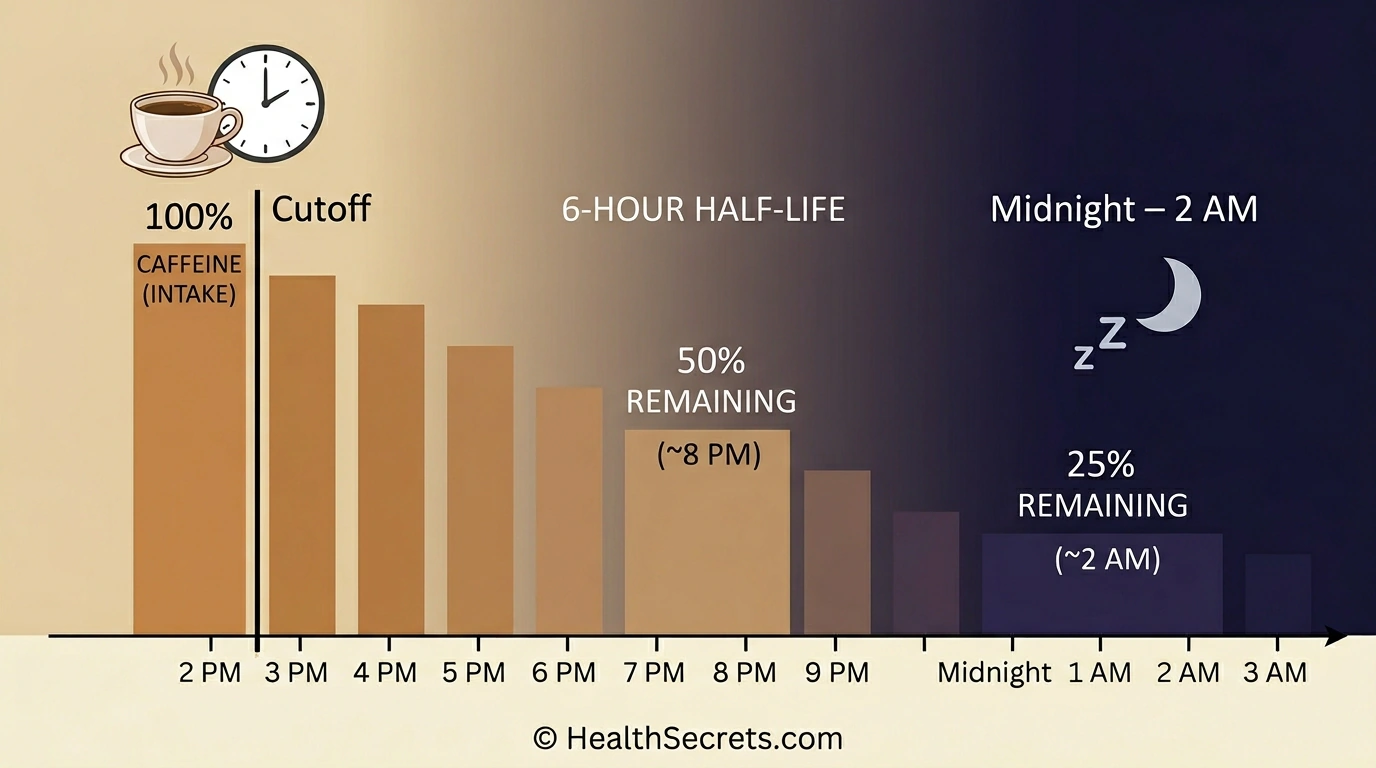
Caffeine is an adenosine-receptor antagonist with a half-life of 5–7 hours, meaning half the caffeine from a 3 PM coffee is still circulating at 10 PM. A meta-analysis found that caffeine consumed within six hours of bedtime reduced total sleep time by an average of 45 minutes and sleep efficiency by 7 % [11]. A 2024 randomized controlled trial published in Sleep confirmed that both dose and timing independently affect sleep quality [12].
Cutoff rule: No caffeine after 2 PM (or 8+ hours before bedtime). Remember hidden sources: dark chocolate (~20 mg/oz), green tea (25–50 mg), and some pain relievers. For the afternoon slump, try a brisk walk, bright light, or a protein-rich snack.
Rule #9 — Why Does Alcohol Before Bed Fragment Your Sleep?
Alcohol enhances GABA (a sedative neurotransmitter) and may help you fall asleep initially, but as it metabolizes overnight, rebound arousal causes fragmented sleep, suppressed REM in the first half of the night, and lighter sleep overall. Stop drinking 3–4 hours before bed and hydrate with water.
Rule #10 — What Should You Eat (and Avoid) Before Bed?
Finish large meals 2–3 hours before bedtime. If you are hungry, choose a light snack combining complex carbohydrates with tryptophan-rich protein — for example, a banana with a handful of almonds. Avoid spicy, fatty, and acidic foods that trigger heartburn, and taper fluid intake 1–2 hours before bed to minimize nighttime bathroom trips.
Sleep-promoting snack options: tart cherry juice (natural melatonin), kiwi, yogurt with oats, or magnesium-rich pumpkin seeds.
When Is the Best Time to Exercise for Better Sleep?
Regular moderate exercise (30–60 minutes most days) increases adenosine-driven sleep pressure, lowers cortisol, and — when done outdoors — reinforces circadian rhythm through light exposure. However, vigorous exercise raises core body temperature and releases stimulating endorphins, so finish intense workouts 3–4 hours before bedtime.
Best timing: Morning or early afternoon for vigorous sessions. Gentle evening activities — yoga, stretching, or a 20-minute walk — are fine and may even promote relaxation. Consistency matters more than perfect timing: if evenings are your only option, still exercise — the sleep benefits outweigh the minor timing risk for most people.
How Do You Build a Wind-Down Routine That Actually Works?
Three rules work together to create a powerful pre-sleep ritual that shifts your nervous system from sympathetic (fight-or-flight) to parasympathetic (rest-and-digest).
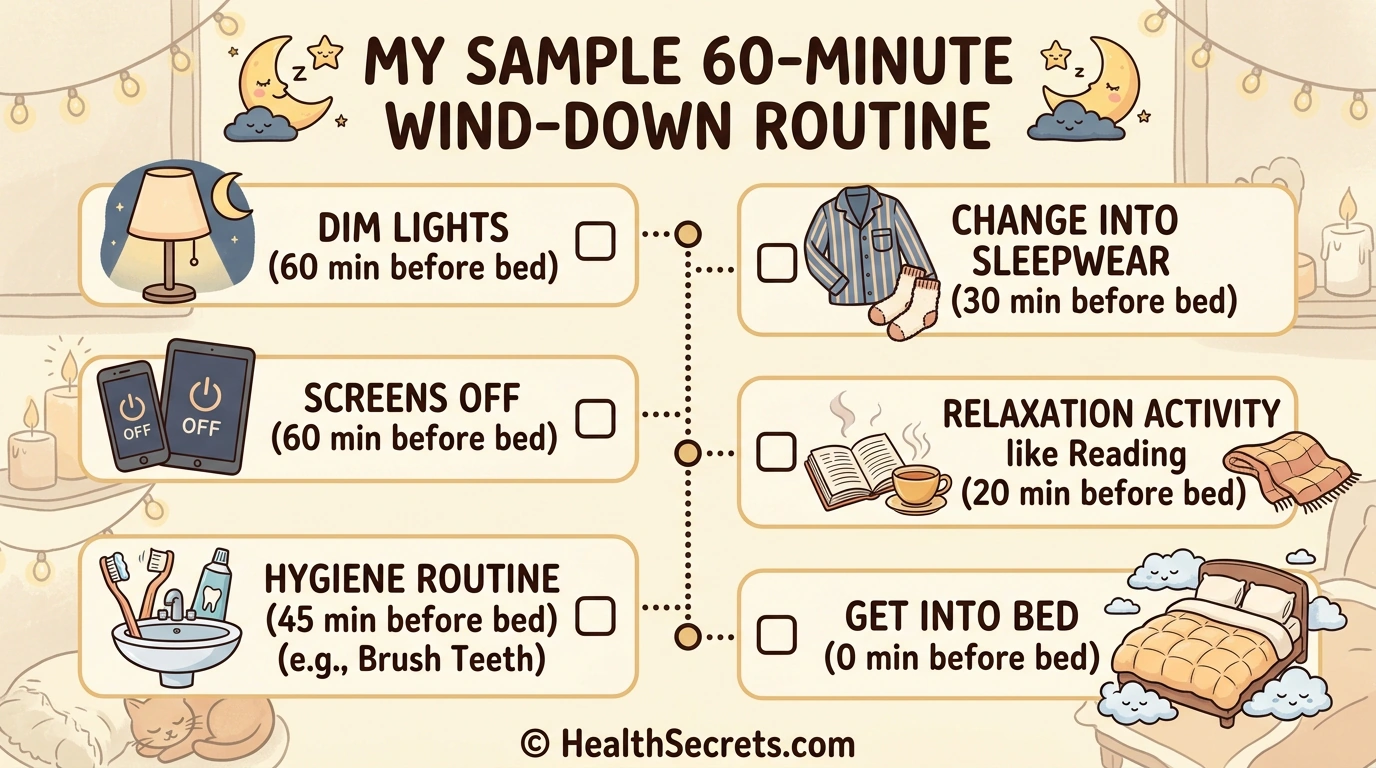
Rule #12 — What Should a 30–60 Minute Wind-Down Routine Include?
A consistent bedtime ritual acts as a Pavlovian cue: after a few weeks, simply starting the routine triggers drowsiness. Dim the lights, put away screens, complete your hygiene routine, change into sleepwear, and choose one relaxing activity — reading, journaling, gentle stretching, or a guided meditation.
Proven relaxation techniques:
- 4-7-8 breathing: Inhale 4 counts, hold 7, exhale 8 — repeat four cycles
- Progressive muscle relaxation (PMR): Tense each muscle group for 5 seconds, release, and move from feet to head
- Warm bath or shower: 1–2 hours before bed — the subsequent body-cooling effect mimics the natural temperature drop that initiates sleep
Rule #13 — Why Should You Use Your Bed Only for Sleep?
Stimulus control is a cornerstone of Cognitive Behavioral Therapy for Insomnia (CBT-I). Using your bed exclusively for sleep (and intimacy) strengthens the classical-conditioning association between bed and drowsiness. Remove the TV, avoid working in bed, and charge your phone in another room.
Rule #14 — How Do You Stop Racing Thoughts at Bedtime?
Stress and anxiety are the leading causes of insomnia. A "brain dump" — writing down worries and tomorrow's to-do list 1–2 hours before bed — externalizes racing thoughts. If anxious thoughts persist in bed, try cognitive defusion ("I notice I am having the thought that…") or the visualization of a peaceful scene. For chronic anxiety, consider professional support or explore evidence-based natural approaches.
What Should You Do If You Still Cannot Fall Asleep?
If you have not fallen asleep within approximately 20 minutes, get out of bed. Move to another room (or a chair), keep the lights dim, and do a quiet activity — reading a non-stimulating book, gentle stretching, or deep breathing. Return to bed only when you feel genuinely sleepy (heavy eyelids, yawning). Repeat as needed.
This technique prevents the bed from becoming a conditioned cue for frustration and wakefulness. Research on stimulus control therapy shows it is one of the most effective single-component interventions for chronic insomnia [13]. Do not watch the clock — that creates performance anxiety. Simply estimate 20 minutes and get up.
Important: The same rule applies if you wake in the middle of the night and cannot fall back asleep within 20 minutes.
What Are the Most Common Sleep Hygiene Mistakes to Avoid?
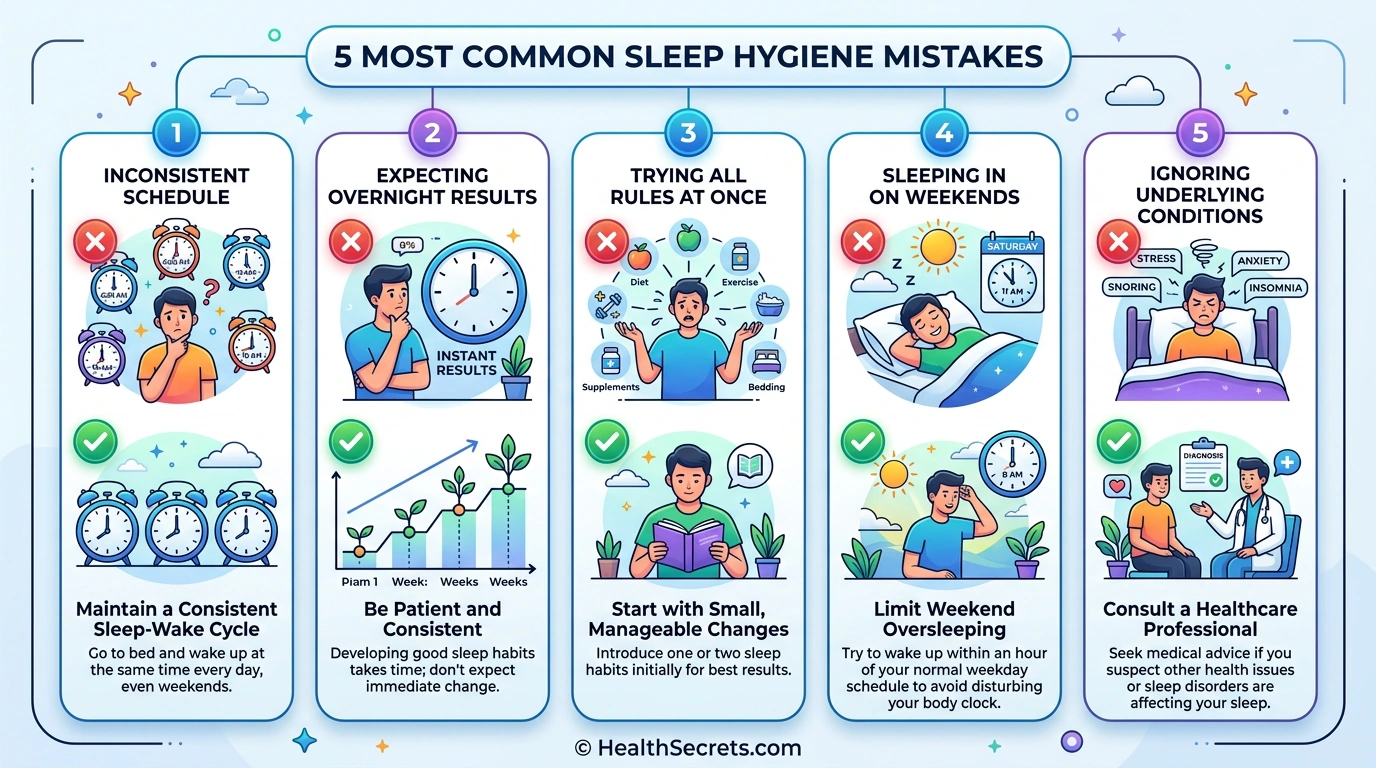
Even well-intentioned sleepers make errors that undermine their efforts. Avoiding these common pitfalls accelerates your results and prevents frustration.
- Mistake #1 — Inconsistent application. Following the rules only on weeknights and abandoning them on weekends creates "social jet lag" that resets your progress. Consistency every night is non-negotiable.
- Mistake #2 — Expecting overnight results. Your circadian rhythm needs 2–4 weeks of consistent cues to fully recalibrate. Give the process time before judging effectiveness.
- Mistake #3 — Trying all 15 rules at once. Start with the five highest-impact rules:
- Consistent wake time (Rule #1)
- No caffeine after 2 PM (Rule #6)
- No screens 1 hour before bed (Rule #5)
- Dark, cool bedroom (Rules #2, #3)
- Morning light exposure (Rule #11)
Master these for 1–2 weeks, then layer in additional rules gradually.
Mistake #4 — Sleeping in on weekends. If you need to recover lost sleep, take a short 20–30 minute nap before 3 PM instead of sleeping late — this preserves circadian alignment.
Mistake #5 — Ignoring underlying conditions. If sleep hygiene does not improve your sleep after 4–6 weeks, consult a sleep specialist — conditions like sleep apnea, restless leg syndrome, or chronic insomnia may require professional evaluation.
Is a Sleep Hygiene Routine Safe for Everyone?
Sleep hygiene is safe for virtually all adults and carries no side effects. However, certain situations warrant professional guidance rather than self-management alone.
When to see a doctor:
- Loud snoring with gasping or choking (possible sleep apnea)
- Restless legs or involuntary limb movements
- Chronic insomnia lasting more than three months despite consistent sleep hygiene
- Excessive daytime sleepiness interfering with work or driving
- Acting out dreams physically (REM sleep behavior disorder)
- Chronic pain disrupting sleep nightly
Gold-standard professional treatment: CBT-I (Cognitive Behavioral Therapy for Insomnia) is more effective long-term than sleeping medications and is recommended as first-line therapy by the American Academy of Sleep Medicine [14]. Ask your provider for a referral or explore digital CBT-I programs.
For supplemental support, some people benefit from melatonin (0.5–3 mg, 30–60 minutes before bed) or 5-HTP for mood-related sleep issues — but always consult a healthcare provider before adding supplements, especially if you take medications.
Action Plan
What Should You Do First to Improve Your Sleep Tonight?
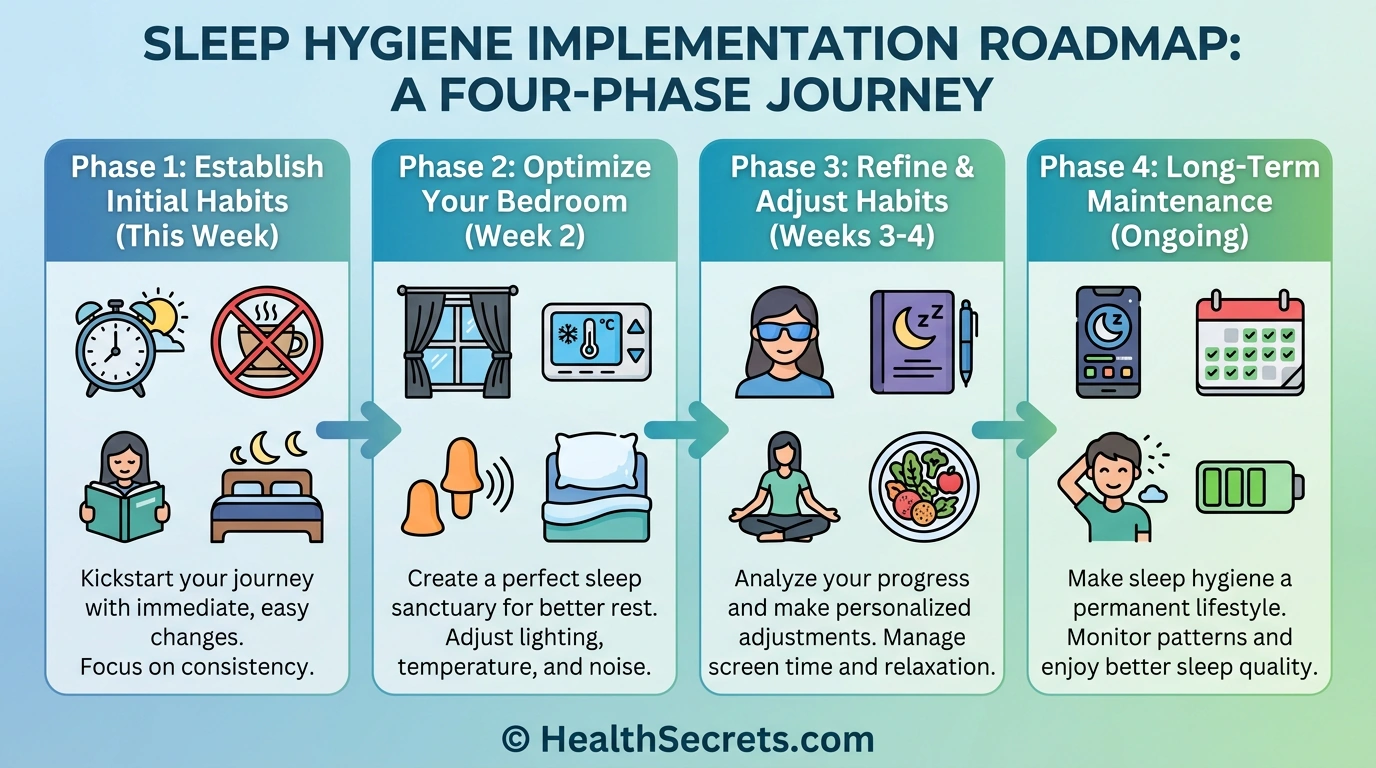
Follow the sequence below, work through each phase in order, and use the checklist as your practical implementation guide.
Follow this phased action plan to implement sleep hygiene without overwhelm.
Phase 1 — This Week (Quick Wins):
- Set a fixed wake time and bedtime — commit to both for 7 consecutive days
- Move your phone charger outside the bedroom
- Set a caffeine cutoff at 2 PM
- Lower your thermostat to 65 °F tonight
- Spend 10 minutes outside within 30 minutes of waking
Phase 2 — Week 2 (Environment):
- Install blackout curtains or start using a sleep mask
- Set up a white noise machine
- Begin a 30-minute wind-down routine each night
- Remove TV and work materials from the bedroom
Phase 3 — Weeks 3–4 (Fine-Tuning):
- Practice the 20-minute rule if you cannot fall asleep
- Add a relaxation technique (4-7-8 breathing or PMR)
- Start a simple sleep diary: bedtime, wake time, sleep quality (1–10)
- Review your diary and adjust rules that need attention
Phase 4 — Ongoing Maintenance:
- Maintain all 15 rules consistently
- Review sleep diary monthly
- Consult a doctor if no improvement after 4–6 weeks