You've tried the sleep hygiene tips. You've limited screen time, kept your bedroom cool, and even experimented with white noise. Yet you still find yourself staring at the ceiling at 2 AM, wondering why sleep feels so elusive. Here's something your doctor may not have mentioned: you could be among the nearly 50% of Americans not getting enough magnesium — and that mineral gap could be the hidden driver behind your restless nights. [11] [15]
Magnesium is involved in over 300 enzymatic reactions in your body, including several that directly regulate your sleep-wake cycle [2]. From boosting melatonin production to calming your nervous system through GABA receptor activation, this essential mineral plays a foundational role in helping your brain transition from wakefulness to restful sleep. The challenge? Modern diets, stress, and soil depletion have made magnesium deficiency surprisingly common.
If you're exploring natural approaches to better sleep, you may also find our guides on sleep optimization strategies and mental wellness approaches helpful companions to this article.
What Is Magnesium and Why Is It Essential for Sleep?
Magnesium is an essential mineral that serves as a cofactor in over 300 enzymatic reactions throughout the body, including critical processes that regulate your sleep-wake cycle. Despite being the fourth most abundant mineral in the human body, subclinical magnesium deficiency affects an estimated 50% of Americans due to declining dietary intake and soil mineral depletion.
Your body cannot produce magnesium on its own — it must come from food or supplements [10]. Magnesium is stored primarily in bones (about 60%), muscles (about 27%), and soft tissues, with less than 1% circulating in the blood. This makes standard blood tests unreliable for detecting deficiency, since your body will pull magnesium from bones and tissues to maintain stable serum levels long before a blood test shows anything abnormal.
For sleep specifically, magnesium influences several key neurotransmitter systems. It acts as a natural calcium channel blocker, helps regulate the hypothalamic-pituitary-adrenal (HPA) axis that controls your stress response, and directly supports the production of melatonin — your body's primary sleep hormone. When magnesium levels are low, these systems can become dysregulated, leading to difficulty falling asleep, frequent nighttime awakenings, and reduced time in restorative deep sleep stages.

The Bedroom Sleep Audit Checklist
Sixteen checks across temperature, light, sound and air with target ranges, a score sheet that counts what to fix first, and the one-change-at-a-time rule.
How Does Magnesium Help You Fall Asleep and Stay Asleep?
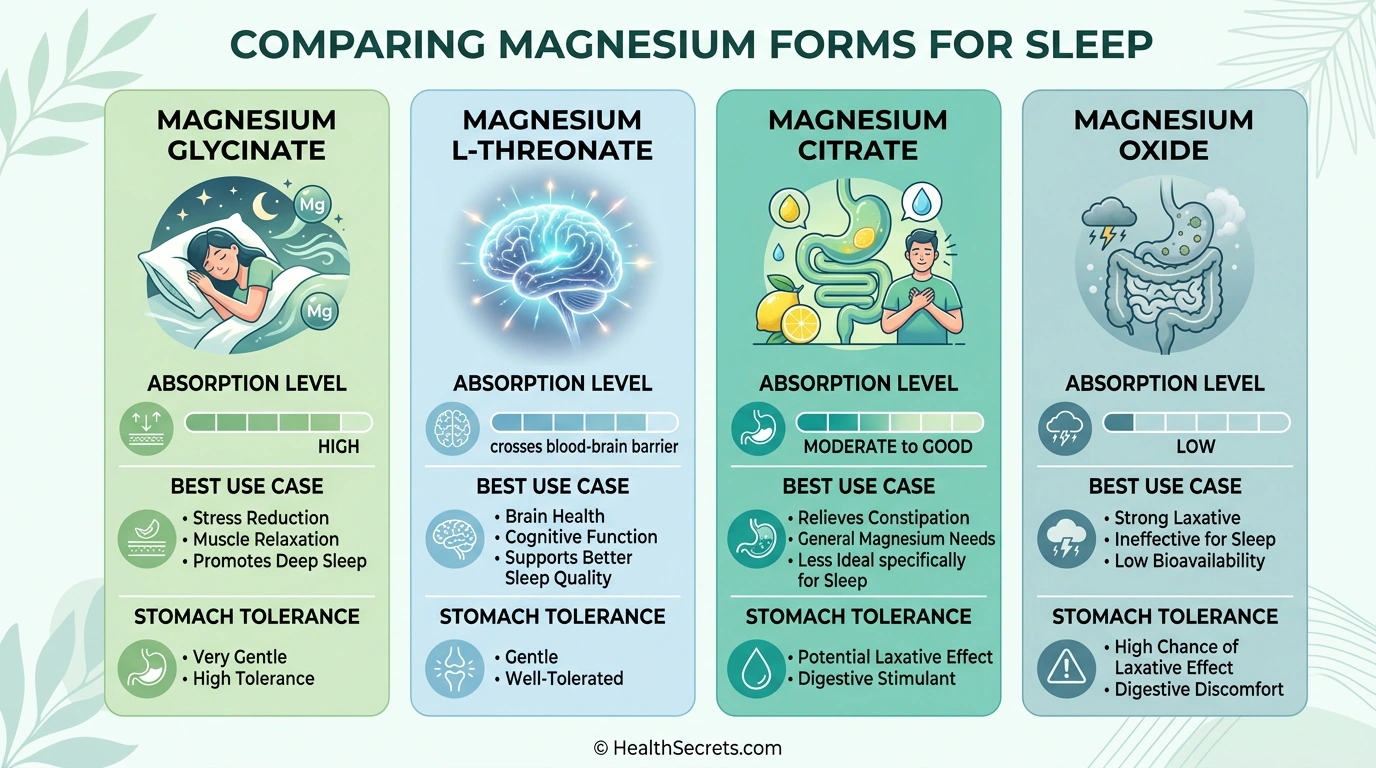
Magnesium promotes sleep through four interconnected mechanisms: it activates GABA receptors to quiet neural activity, stimulates melatonin production for circadian rhythm regulation, reduces cortisol levels to ease the stress response, and relaxes skeletal muscles to relieve physical tension. Together, these pathways help your brain and body transition smoothly into restful sleep.
How Does Magnesium Activate GABA Receptors for Sleep?
Magnesium binds to gamma-aminobutyric acid (GABA) receptors in the brain, enhancing the activity of this inhibitory neurotransmitter. GABA is your brain's primary "calm down" signal — it reduces neuronal excitability and helps shift your nervous system from sympathetic (fight-or-flight) to parasympathetic (rest-and-digest) mode [12]. When magnesium levels are adequate, GABA signaling is more efficient, helping you feel calm and drowsy at bedtime.
How Does Magnesium Boost Melatonin Production?
Magnesium stimulates the enzyme serotonin N-acetyltransferase, which is a critical step in converting serotonin into melatonin. A 2012 clinical trial in elderly adults with insomnia found that magnesium supplementation significantly increased serum melatonin levels while decreasing cortisol concentrations. This dual effect — more melatonin, less cortisol — creates an ideal hormonal environment for sleep onset.
How Does Magnesium Regulate Your Stress Response?
Magnesium modulates the HPA axis, which controls cortisol release. Elevated nighttime cortisol is one of the most common causes of 3 AM wake-ups and difficulty returning to sleep. Adequate magnesium helps keep cortisol rhythms healthy, with levels naturally declining in the evening to allow sleep initiation. Chronic stress depletes magnesium stores, creating a vicious cycle: stress reduces magnesium, and low magnesium amplifies the stress response.
Which Forms of Magnesium Are Best Absorbed for Sleep?
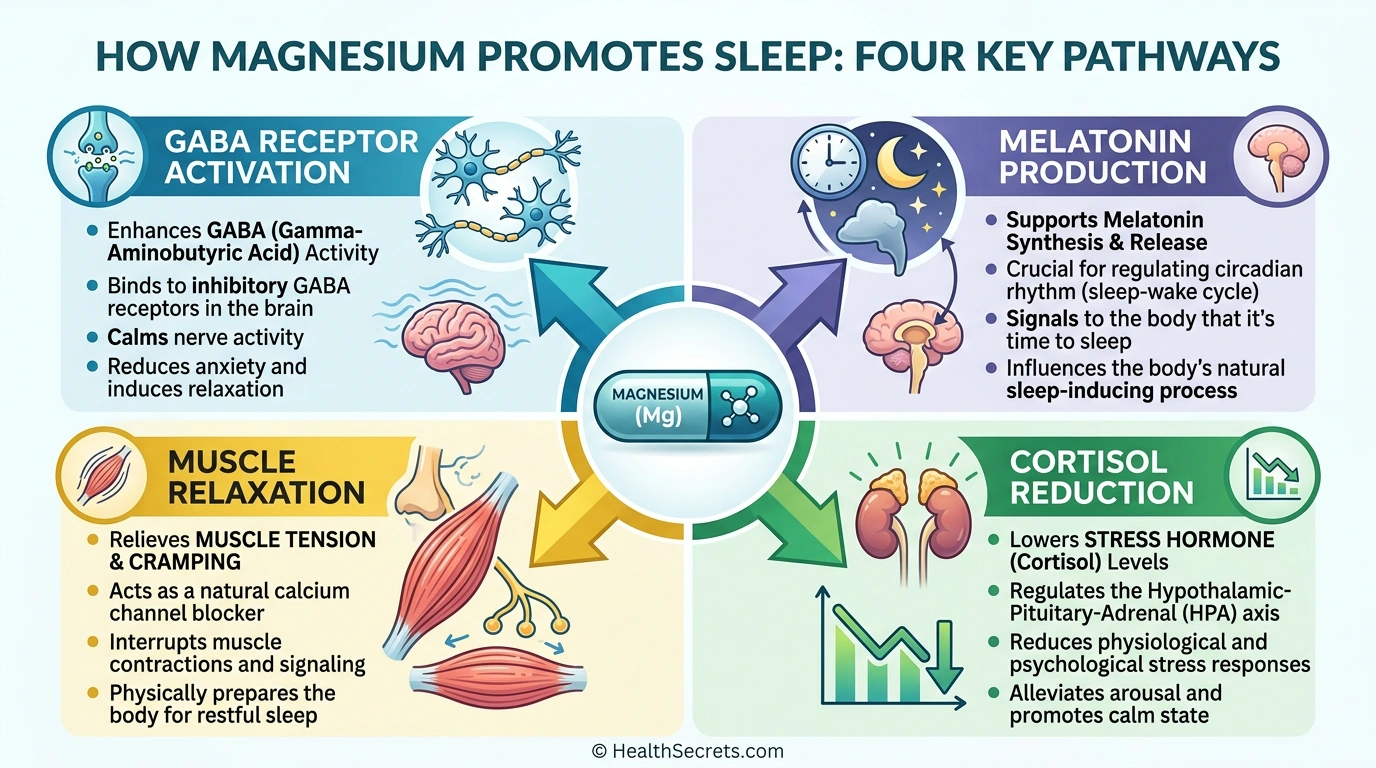
Not all magnesium supplements are created equal. Organic forms like magnesium glycinate, L-threonate, and citrate are significantly better absorbed than inorganic forms like magnesium oxide [20]. The form you choose determines how much magnesium actually reaches your cells and, critically for sleep, how much reaches your brain.
Why Is Magnesium Glycinate the Gold Standard for Sleep?
Magnesium glycinate (also called bisglycinate) combines magnesium with the amino acid glycine, which itself has calming and sleep-promoting properties. A 2026 randomized, placebo-controlled trial found that magnesium bisglycinate significantly reduced insomnia severity scores compared to placebo, with greater improvements seen in participants with lower baseline dietary magnesium intake. This form is also exceptionally gentle on the stomach, making it ideal for nightly use.
What Makes Magnesium L-Threonate Unique for Sleep?
Magnesium L-threonate (branded as Magtein) is the only form clinically shown to cross the blood-brain barrier and increase brain magnesium concentrations. A landmark 2024 RCT published in Sleep Medicine: X found that just three weeks of supplementation significantly improved deep sleep scores, REM sleep scores, mood, energy, and daytime alertness compared to placebo, as measured by Oura ring data and subjective questionnaires [3]. This form is particularly promising for those whose sleep issues stem from cognitive overactivity or mental fatigue.
Should You Avoid Magnesium Oxide for Sleep?
Magnesium oxide contains the highest percentage of elemental magnesium by weight but has the poorest absorption — studies show bioavailability as low as 4% [9]. While it's inexpensive and widely available, most of an oral dose passes through your digestive tract unabsorbed, which is why it's primarily used as a laxative or antacid rather than a therapeutic sleep supplement.
| Form | Absorption | Best For | GI Tolerance |
|---|---|---|---|
| Glycinate | High | Sleep + relaxation | Excellent |
| L-Threonate | High (brain) | Sleep + cognition | Good |
| Citrate | Moderate-High | General + budget | May cause looseness |
| Oxide | Low (~4%) | Laxative/antacid | Poor |
How Much Magnesium Should You Take for Better Sleep?
The optimal dose for sleep support is 200–400 mg of elemental magnesium taken 30–60 minutes before bedtime. Start at the lower end (200 mg) and increase gradually over 1–2 weeks. The recommended daily allowance is 310–320 mg for adult women and 400–420 mg for adult men, but therapeutic doses for sleep may require supplementation beyond dietary intake.
Important dosing notes:
- Elemental magnesium is what matters — a "400 mg magnesium glycinate" capsule may contain only 50–80 mg of elemental magnesium. Always check the Supplement Facts panel for elemental magnesium content.
- Timing: Take your dose 30–60 minutes before your target bedtime for optimal effect.
- Start low: Begin with 200 mg elemental magnesium and increase to 400 mg if needed after 1–2 weeks.
- Split doses if taking more than 300 mg to improve absorption and reduce GI side effects.
- Consistency matters: Magnesium builds up in tissues over time — daily use for 2–4 weeks is typically needed before significant sleep improvements become apparent.
For magnesium L-threonate specifically, the clinically studied dose is 2,000 mg of magnesium L-threonate (providing approximately 144 mg of elemental magnesium), typically divided into a morning and evening dose.
What Foods Are Highest in Magnesium for Sleep Support?
Dark leafy greens, nuts, seeds, legumes, and whole grains are the richest dietary sources of magnesium. Pumpkin seeds lead the pack at 150 mg per ounce, followed by chia seeds at 111 mg per ounce and almonds at 80 mg per ounce. Prioritizing these foods can meaningfully boost your magnesium intake alongside supplementation.

Top magnesium-rich foods for sleep:
- Pumpkin seeds (hulled, roasted): 150 mg per ounce
- Chia seeds: 111 mg per ounce
- Almonds (roasted): 80 mg per ounce
- Cashews (roasted): 72 mg per ounce
- Spinach (cooked): 78 mg per ½ cup
- Black beans (cooked): 60 mg per ½ cup
- Edamame (shelled): 50 mg per ½ cup
- Dark chocolate (70–85%): 65 mg per ounce
- Avocado: 58 mg per medium fruit
- Banana: 32 mg per medium fruit
A strategic evening snack combining magnesium-rich foods with sleep-promoting nutrients — such as a handful of pumpkin seeds with tart cherry juice — can complement your supplement routine. However, reaching therapeutic doses through diet alone is difficult for most people, which is why targeted supplementation remains the most practical approach.
Is Magnesium Safe to Take Every Night for Sleep?
Magnesium is generally very safe for nightly use in recommended doses (200–400 mg elemental) for adults with healthy kidney function. The most common side effect is loose stools or diarrhea, particularly with magnesium citrate or oxide forms. Serious adverse effects are rare and typically associated with excessive doses or impaired kidney function.

Safety considerations:
- Kidney disease: Impaired kidneys cannot efficiently excrete excess magnesium. Consult your doctor before supplementing if you have any degree of kidney dysfunction.
- Medication interactions: Magnesium can interfere with absorption of antibiotics (tetracyclines, fluoroquinolones), bisphosphonates, and certain blood pressure medications. Take magnesium at least 2 hours apart from these medications.
- Tolerable Upper Intake Level: The NIH sets the UL for supplemental magnesium at 350 mg/day for adults. This applies to supplements only, not dietary magnesium [13].
- Pregnancy: Magnesium needs increase during pregnancy (350–360 mg/day), but supplementation should be guided by a healthcare provider.
- GI side effects: If loose stools occur, switch to magnesium glycinate (the gentlest form) or reduce your dose.
What Results Can You Realistically Expect from Magnesium for Sleep?
Most people notice gradual improvements in sleep quality within 1–4 weeks of consistent daily supplementation, not overnight [4] [8]. Clinical trials show modest but meaningful benefits including reduced time to fall asleep, improved sleep efficiency, and increased deep sleep duration. Magnesium is not a sedative — it works by correcting underlying deficiency and supporting your body's natural sleep mechanisms.

Realistic timeline:
- Week 1: You may notice subtle muscle relaxation and reduced physical tension at bedtime. Some people feel calmer within the first few days.
- Weeks 2–3: Sleep onset latency often begins to improve [18]. You may fall asleep faster and experience fewer nighttime awakenings.
- Weeks 4–8: Full benefits typically emerge, including improved sleep efficiency, longer time in deep sleep, and better morning energy. A 2024 RCT found significant improvements in deep sleep and REM sleep scores after just three weeks of magnesium L-threonate.
- Ongoing: Benefits are maintained with continued use. Magnesium is not habit-forming and does not cause tolerance or withdrawal.
Who benefits most: Research consistently shows that people with lower baseline magnesium intake or more severe sleep issues tend to experience the greatest improvements. If your diet is already rich in magnesium and your sleep issues are primarily driven by factors like sleep apnea, chronic pain, or shift work, magnesium alone may not be sufficient.
What Is the Best Step-by-Step Plan to Start Using Magnesium for Sleep?
Start with 200 mg of elemental magnesium glycinate taken 30–60 minutes before bedtime, increase to 400 mg after two weeks if needed, and combine with magnesium-rich evening foods for maximum benefit. Track your sleep quality using a journal or wearable device to objectively measure improvements over the first month.
Phase 1 — Foundation (Weeks 1–2):
- Choose magnesium glycinate as your starting form
- Begin with 200 mg elemental magnesium 30–60 minutes before bed
- Start a simple sleep journal tracking: time to fall asleep, nighttime awakenings, morning energy (1–10 scale)
- Add 1–2 magnesium-rich foods to your evening routine (pumpkin seeds, dark chocolate, spinach)
Phase 2 — Optimization (Weeks 3–4):
- If sleep improvements are minimal, increase to 300–400 mg elemental magnesium
- Consider adding magnesium L-threonate (2,000 mg) if cognitive overactivity is a primary issue
- Review your sleep journal for trends — look for patterns in sleep onset time and morning energy
- Ensure you're taking magnesium at least 2 hours apart from any interacting medications
Phase 3 — Maintenance (Month 2+):
- Continue your optimal dose consistently
- Incorporate 3–4 magnesium-rich meals per week to reduce supplement dependence
- Reassess every 3 months with your healthcare provider
- Combine with complementary sleep practices: consistent sleep schedule, cool bedroom (65–68°F), limited evening screens