Imagine a mushroom that could actually help your brain grow new neurons. It sounds like science fiction, but lion's mane mushroom has been used in traditional Chinese medicine for over 1,000 years — and modern research is finally catching up to ancient wisdom.
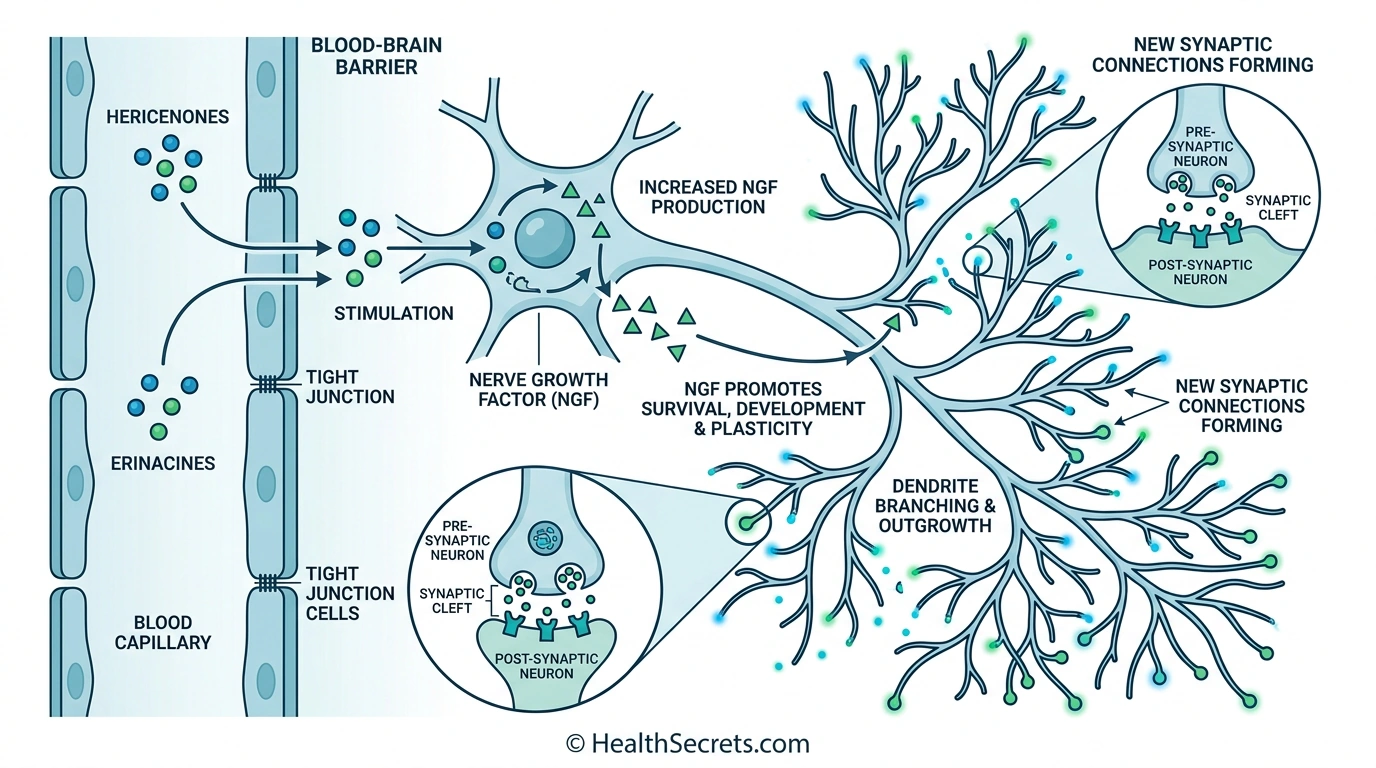
Hericium erinaceus, with its distinctive cascading white spines, contains unique compounds called hericenones and erinacines that cross the blood-brain barrier and stimulate your brain to produce more nerve growth factor. No other natural food can do this.
In this guide, you'll learn exactly how lion's mane works, what the clinical evidence actually shows, proper dosing for different goals, how to choose a quality supplement, and what realistic results to expect. Whether you're interested in cognitive support, neuroprotection, or mental wellness, this complete guide covers everything you need to know.
Related reading: mental wellness guide · gut-brain axis · brain health supplements
What Is Lion's Mane Mushroom and What Does It Do?
Lion's mane mushroom (Hericium erinaceus) is an edible medicinal mushroom containing unique bioactive compounds — hericenones and erinacines — that stimulate nerve growth factor synthesis in the brain. Used in Chinese and Japanese medicine for over 1,000 years, it is now extensively studied for cognitive enhancement, neuroprotection, and mental health support.
Also known as yamabushitake (Japanese), hou tou gu (Chinese), or bearded tooth fungus, lion's mane grows naturally on hardwood trees across North America, Europe, and Asia. Its distinctive appearance — white, cascading spines resembling a lion's mane — makes it one of the most recognizable medicinal mushrooms.
What are the active compounds in lion's mane?
Lion's mane contains two families of compounds that set it apart from every other mushroom:
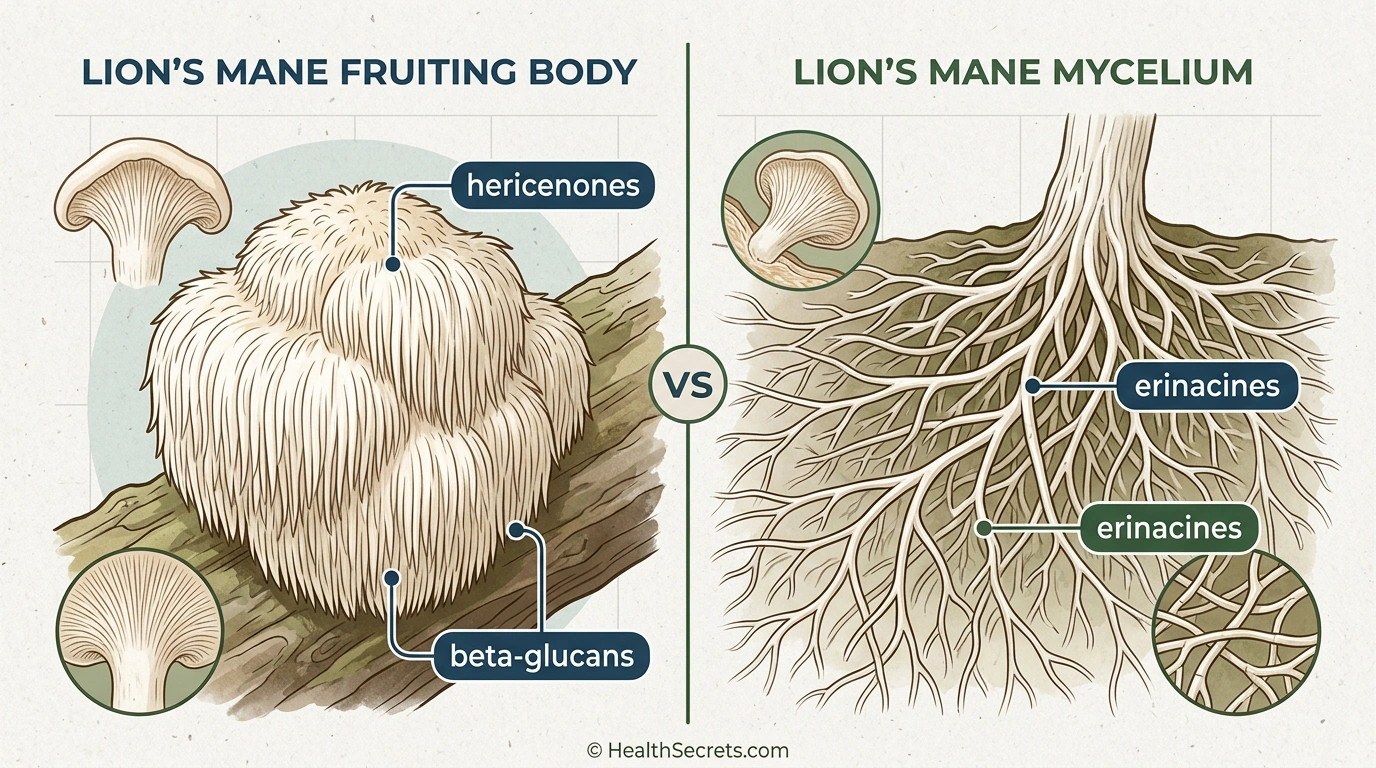
- Hericenones — found primarily in the fruiting body (the visible mushroom), these compounds stimulate NGF synthesis and have been shown to cross the blood-brain barrier [1]
- Erinacines — found primarily in the mycelium (root-like structure), these smaller molecules are even more potent NGF stimulators with superior blood-brain barrier penetration [2]
- Beta-glucans — polysaccharides that modulate immune function and reduce inflammation
- Antioxidant compounds — phenols and flavonoids that protect neurons from oxidative stress [14]
Beyond brain health, lion's mane has also been studied for digestive health (gastritis, ulcers), immune modulation, cardiovascular support, and anti-cancer properties — though brain and nerve health remain its most well-researched applications.
How Does Lion's Mane Mushroom Work in the Body?
Lion's mane works through multiple complementary mechanisms: stimulating nerve growth factor (NGF) production, promoting neurogenesis (new neuron formation), enhancing neuroplasticity (synaptic connections), and reducing neuroinflammation. These combined effects support cognitive function, memory, mood, and long-term brain health.
How does lion's mane stimulate nerve growth factor (NGF)?
NGF is a neurotrophin protein essential for the growth, survival, and maintenance of neurons — particularly cholinergic neurons in the basal forebrain that drive learning and memory. NGF production naturally declines with age, contributing to cognitive decline and neurodegenerative disease risk.
Lion's mane is unique because its hericenones and erinacines can cross the blood-brain barrier and stimulate the brain's own NGF production. Preclinical research demonstrated that lion's mane extract significantly increased NGF levels in the hippocampus, the brain region critical for memory formation [3]. A 2023 University of Queensland study identified specific lion's mane compounds (NDPIH) that promoted neurite outgrowth and enhanced memory formation in animal models [6].
This NGF-stimulating ability is significant because exogenous NGF cannot be given orally (it's digested) and cannot cross the blood-brain barrier when injected. Lion's mane provides a practical oral pathway to boost the brain's endogenous NGF production.
How does lion's mane support neurogenesis and neuroplasticity?
Neurogenesis — the formation of new neurons — occurs primarily in the hippocampus during adulthood but declines with age. Lion's mane stimulates hippocampal neurogenesis through NGF-mediated neural stem cell differentiation. A 2019 study in aged mice showed that two months of lion's mane supplementation increased hippocampal neurogenesis and improved cognitive performance on behavioral tests [7].
Lion's mane also enhances neuroplasticity — the brain's ability to form and reorganize synaptic connections. Research shows it increases dendrite branching and elevates expression of synaptic proteins including synaptophysin and PSD-95 [8].
How does lion's mane reduce neuroinflammation and oxidative stress?
Chronic neuroinflammation is a key driver of cognitive decline and neurodegenerative diseases. Lion's mane reduces pro-inflammatory cytokines (IL-6, TNF-alpha, IL-1β) through NF-kB pathway modulation [9]. Its antioxidant compounds — including ergothioneine and phenolic acids — protect neurons from oxidative damage. Preclinical studies show lion's mane reduces beta-amyloid plaque accumulation (an Alzheimer's marker) by 30–40% and supports myelin sheath repair in nerve injury models [23].

The Vagal Reset Breathing Cards
Four cut-out breathing protocols with count patterns and the situation each one fits, a session log, and the medical situations where breathwork is the wrong tool.
How Well Is Lion's Mane Mushroom Absorbed?
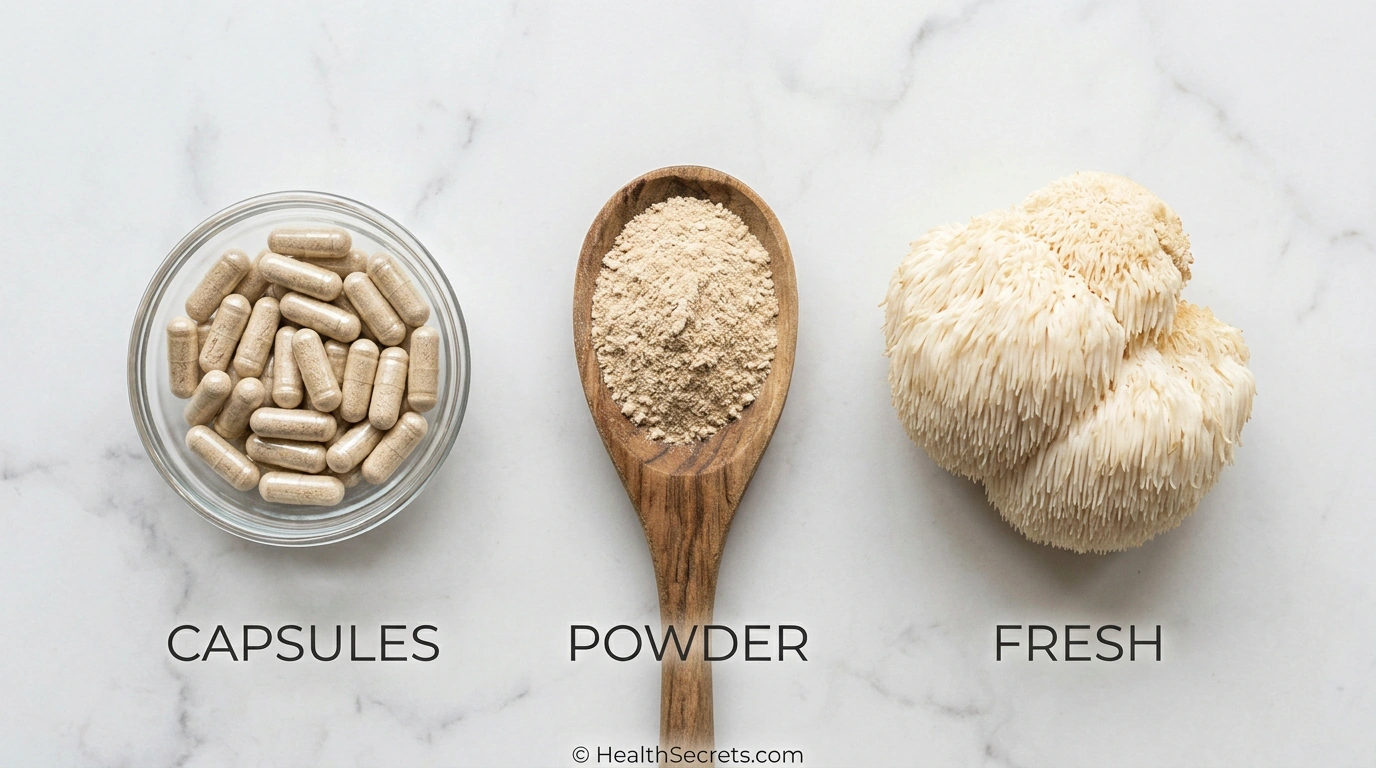
Lion's mane bioavailability depends heavily on the preparation method. Dual-extracted (water + alcohol) products capture both water-soluble beta-glucans and alcohol-soluble hericenones and erinacines, providing the most complete bioactive profile. Hot-water extraction alone misses key terpene compounds.
Extract vs. whole mushroom powder
- Concentrated extracts (10:1 or higher) deliver standardized levels of active compounds in smaller doses (500–1,000mg)
- Whole mushroom powder provides full-spectrum compounds but requires higher doses (1–3g) and has more variable potency
- Dual extraction (water + alcohol) captures the broadest range of compounds — this is the gold standard
What enhances absorption?
- Taking with food improves absorption of fat-soluble terpene compounds and reduces GI upset
- Fruiting body products contain higher hericenone concentrations, while mycelium products are richer in erinacines
- Heat processing (hot-water extraction) breaks down chitin cell walls, making beta-glucans more bioavailable
- Avoid grain-grown mycelium unless the grain substrate has been separated — grain filler dilutes active compound concentration
How Much Lion's Mane Mushroom Should You Take?
Research supports 500–3,000mg daily depending on your goals and product form. The most-cited clinical trial used 3g (3,000mg) daily of whole mushroom powder for 16 weeks with significant cognitive improvements. Extract forms are effective at lower doses (500–1,000mg) due to concentration.
| Goal | Form | Daily Dose | Duration |
|---|---|---|---|
| General brain health | Extract | 500–1,000mg | Ongoing |
| Mild cognitive impairment | Whole powder | 3,000mg (3g) | 16+ weeks |
| Anxiety and mood support | Extract or powder | 1,000–2,000mg | 4+ weeks |
| Neuroprotection (40+) | Extract | 500–1,000mg | Ongoing |
| Timing: Take with meals (morning or afternoon). Lion's mane is not sedating and does not need to be taken at bedtime. |
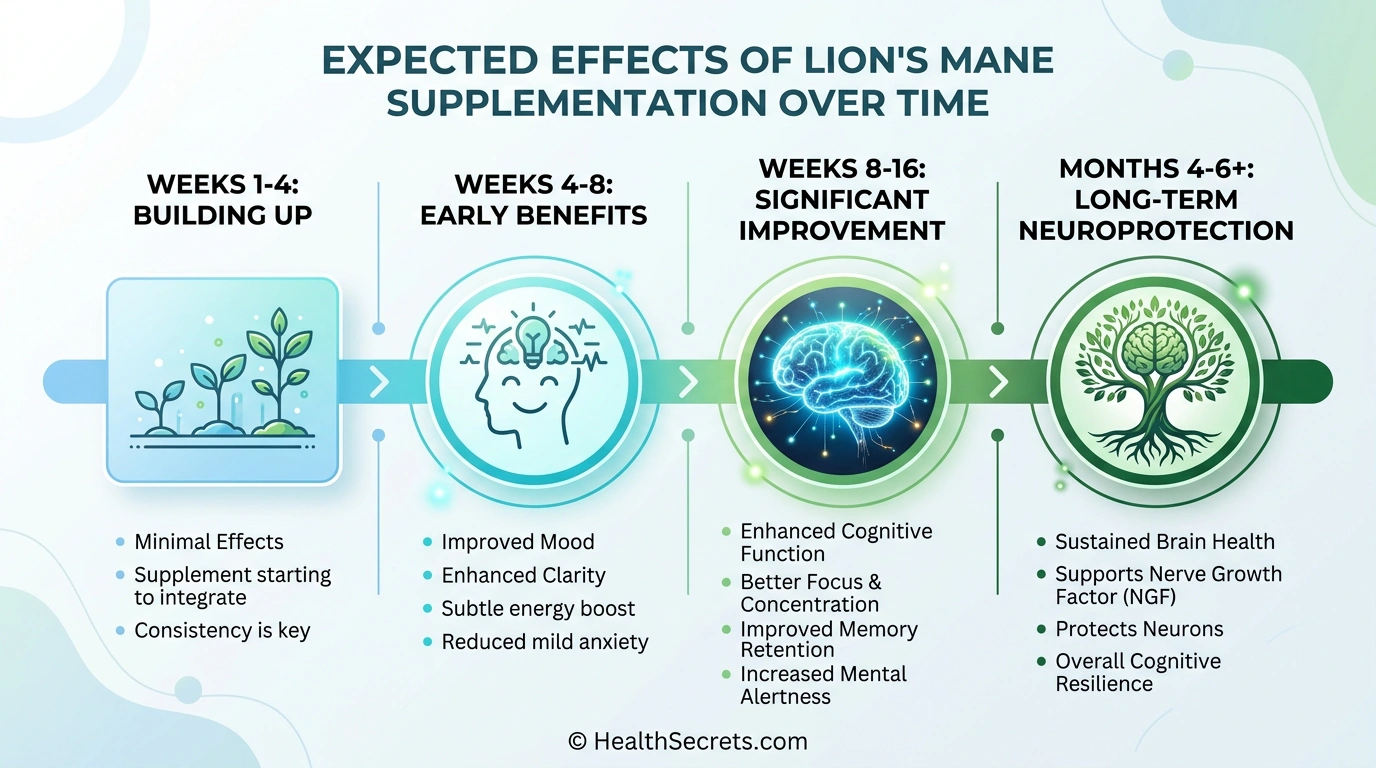
Onset: Effects are cumulative, not immediate. Most people notice subtle improvements in focus and clarity within 2–4 weeks, with more significant cognitive and mood benefits emerging at 8–16 weeks. In the landmark Mori et al. trial, benefits declined after supplementation stopped, suggesting ongoing use is needed to maintain effects [3].
Start low: Begin with 500mg extract or 1g powder for the first week to assess tolerance, then increase to your target dose.
Can You Get Enough Lion's Mane from Food?
While fresh lion's mane mushroom is edible and nutritious with a seafood-like flavor (often compared to lobster or crab), food sources alone may not deliver therapeutic levels of hericenones and erinacines. Supplementation provides standardized, concentrated amounts that match clinical study dosages.
Fresh lion's mane can be sautéed, roasted, or added to soups and stir-fries. It provides B vitamins, potassium, zinc, and fiber. However, the concentration of active neuroactive compounds varies significantly between wild mushrooms, making reliable dosing from food alone impractical.
A balanced approach: Enjoy lion's mane as a culinary ingredient for its nutritional benefits and flavor, while using a standardized supplement for targeted brain health support. Cooking does not destroy all bioactive compounds, but heat processing during extraction concentrates them far more effectively.

Is Lion's Mane Mushroom Safe?
Lion's mane is generally recognized as safe and well-tolerated. Clinical studies using up to 3g daily for 16 weeks reported no serious adverse effects, and traditional use spanning over 1,000 years supports its long-term safety profile. However, supplement-specific safety data remains limited.
Side effects (rare):
- Mild GI upset (nausea, stomach discomfort) in fewer than 10% of users — typically resolved by taking with food or reducing dose [19]
- Allergic reactions (skin rash, difficulty breathing) — rare, primarily in those with mushroom allergies
Contraindications:
- Mushroom allergy — if allergic to other mushrooms, start with a very small dose to test tolerance
- Pregnancy and breastfeeding — insufficient safety data; avoid until more research is available
- Surgery — discontinue 2 weeks before surgery due to theoretical anticoagulant effects (no documented cases)
Drug interactions:
- No well-documented drug interactions Drugs.com[22]
- Theoretical caution with anticoagulants (warfarin, aspirin) — lion's mane may have mild blood-thinning properties
- Theoretical caution with diabetes medications — lion's mane may lower blood sugar in preclinical studies
- Always consult your healthcare provider if you take any medications
What Can Lion's Mane Mushroom Actually Do for You?
Lion's mane offers genuine promise for cognitive support and neuroprotection, but it's important to set realistic expectations. The strongest human evidence supports mild cognitive improvement over months, not dramatic overnight brain enhancement. Most neuroprotection data comes from animal studies that may not fully translate to humans.
What lion's mane CAN do (evidence-based):
- Improve cognitive test scores in mild cognitive impairment (25% improvement, 16 weeks, human trial) [3]
- Reduce anxiety and depression symptoms (30% improvement, 4 weeks, human trial) [4]
- Improve speed of cognitive performance and reduce stress in young adults [5]
- Support nerve regeneration after injury (preclinical evidence)
- Provide antioxidant and anti-inflammatory neuroprotection (preclinical evidence)
What lion's mane WON'T do:
- Cure or reverse Alzheimer's disease or dementia
- Produce noticeable effects within hours or days (takes 4–16 weeks)
- Replace medical treatment for neurological conditions
- Work as a "limitless pill" for dramatic cognitive enhancement
Individual variation: Responses vary based on baseline cognitive status, age, diet, sleep quality, and overall health. People with existing cognitive concerns or those over 40 (when NGF production naturally declines) may notice more pronounced benefits. Healthy young adults may experience subtler improvements in focus and stress resilience.
Timeline:
- Weeks 1–4: Building up; minimal noticeable effects for most people
- Weeks 4–8: Subtle improvements in mood, stress response, and mental clarity may emerge
- Weeks 8–16: More significant cognitive benefits; this is when clinical studies measured meaningful improvement
- Months 4–6+: Long-term neuroprotective benefits (theoretical based on preclinical data)
Action Plan
What Should You Do First to Start Using Lion's Mane for Brain Health?
Follow the sequence below, work through each phase in order, and use the checklist as your practical implementation guide.
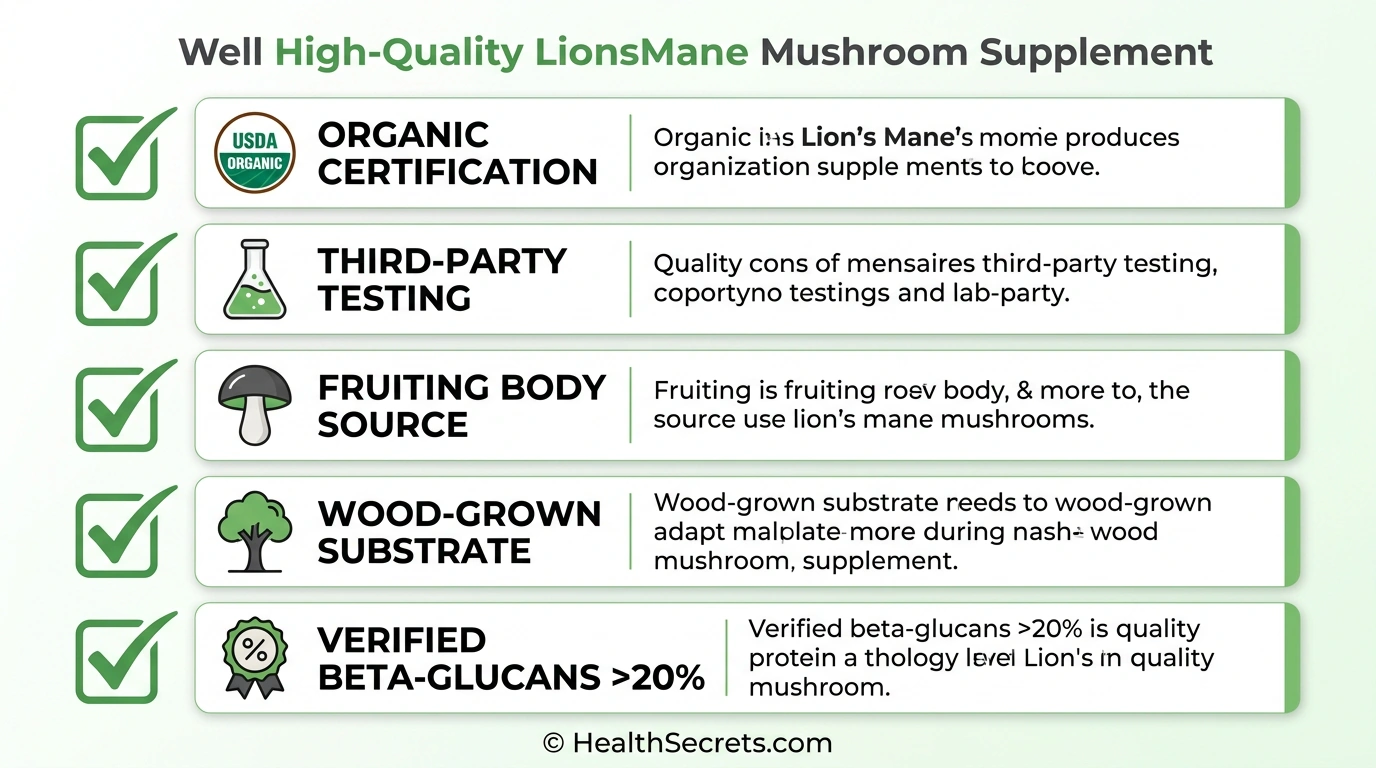
The best starting point is choosing a high-quality lion's mane supplement (organic, fruiting body, third-party tested), beginning at 500mg daily with food, and committing to consistent use for at least 8–16 weeks while supporting your brain health with lifestyle fundamentals like exercise, sleep, and an anti-inflammatory diet.
Phase 1 — Preparation (Week 1):
- Confirm no contraindications (mushroom allergy, pregnancy, anticoagulant medications)
- Choose a quality supplement: organic, fruiting body or dual extract, third-party tested, >20% beta-glucans
- Start with 500mg extract or 1g powder daily with breakfast
Phase 2 — Ramp Up (Weeks 2–4):
- Increase to target dose: 1,000mg extract or 2–3g powder daily
- Take consistently with meals (morning or split morning/afternoon)
- Track baseline: note current focus, memory, mood, and energy levels
Phase 3 — Optimization (Weeks 4–12):
- Continue daily supplementation at target dose
- Support with lifestyle: exercise 150 min/week, 7–9 hours sleep, Mediterranean-style diet
- Note any changes in focus, memory, mood, or stress response
Phase 4 — Long-Term Maintenance (Months 3+):
- Maintain daily supplementation (benefits require ongoing use)
- Consider adding synergistic supplements: omega-3 (2g DHA), B vitamins
- Annual cognitive check-in with healthcare provider if 50+