If you've been dealing with chronic back pain or stiff, achy joints, you've probably tried just about everything — from over-the-counter painkillers to heating pads to that weird stretching routine your neighbor swore by. But here's something most people haven't considered: an ancient African herb that's been quietly outperforming some prescription painkillers in clinical trials. [4] [16]
Devil's claw (Harpagophytum procumbens) isn't some trendy wellness fad [1] [8]. The San people of southern Africa's Kalahari Desert have relied on this plant's secondary root tubers for centuries to manage pain, reduce fevers, and support digestion. And now, modern science is catching up to what traditional healers have known all along — this stuff actually works.
The active compounds, called harpagosides, inhibit the same inflammatory enzymes that drugs like ibuprofen target [19]. But unlike NSAIDs, devil's claw does it without wrecking your stomach lining. Studies show it can reduce lower back pain by 23–50% and improve osteoarthritis symptoms by 25–35%, which is genuinely impressive for a plant extract.
If you're dealing with chronic inflammation or looking for natural joint pain relief, devil's claw might be exactly what you've been missing. This guide covers everything you need to know — from the science behind its anti-inflammatory mechanisms to practical dosing, safety considerations, and the best products available today.
What Is Devil's Claw and What Does It Do for Pain?
Devil's claw is a flowering plant native to the Kalahari Desert of southern
Africa — primarily Namibia, Botswana, and
South Africa — whose secondary root tubers contain potent anti-inflammatory and analgesic compounds called harpagosides. It's one of the most well-researched herbal remedies for musculoskeletal pain, with clinical evidence supporting its use for lower back pain, osteoarthritis, and rheumatoid arthritis [14].
Where Does the Name "Devil's Claw" Come From?
The name refers to the plant's distinctive hook-shaped fruits with claw-like appendages — not to its pain-relieving properties. These barbed fruits catch onto animals' hooves and fur, which helps disperse seeds across the desert landscape. The medicinal part is actually the secondary root tuber, not the fruit.
How Have Traditional Healers Used Devil's Claw?
The San people (also called Khoisan) of southern Africa have used devil's claw for centuries as a traditional remedy for pain, fever, digestive complaints, and even to assist during childbirth. German colonists introduced it to Western medicine in the early 1900s, and it's been the subject of clinical research ever since. Today, it's one of Africa's most commercially important medicinal plants.
What Are the Active Compounds?
The primary active compounds are harpagosides — a group of iridoid glycosides, with harpagoside being the most abundant at 0.5–3% of the dried root's weight. Other beneficial compounds include beta-sitosterol, flavonoids (quercetin, kaempferol), and phenolic acids (caffeic acid, cinnamic acid), which contribute additional anti-inflammatory and antioxidant effects. Standardized extracts containing 1–3% harpagosides ensure consistent therapeutic potency.
Why Does Sustainable Harvesting Matter?
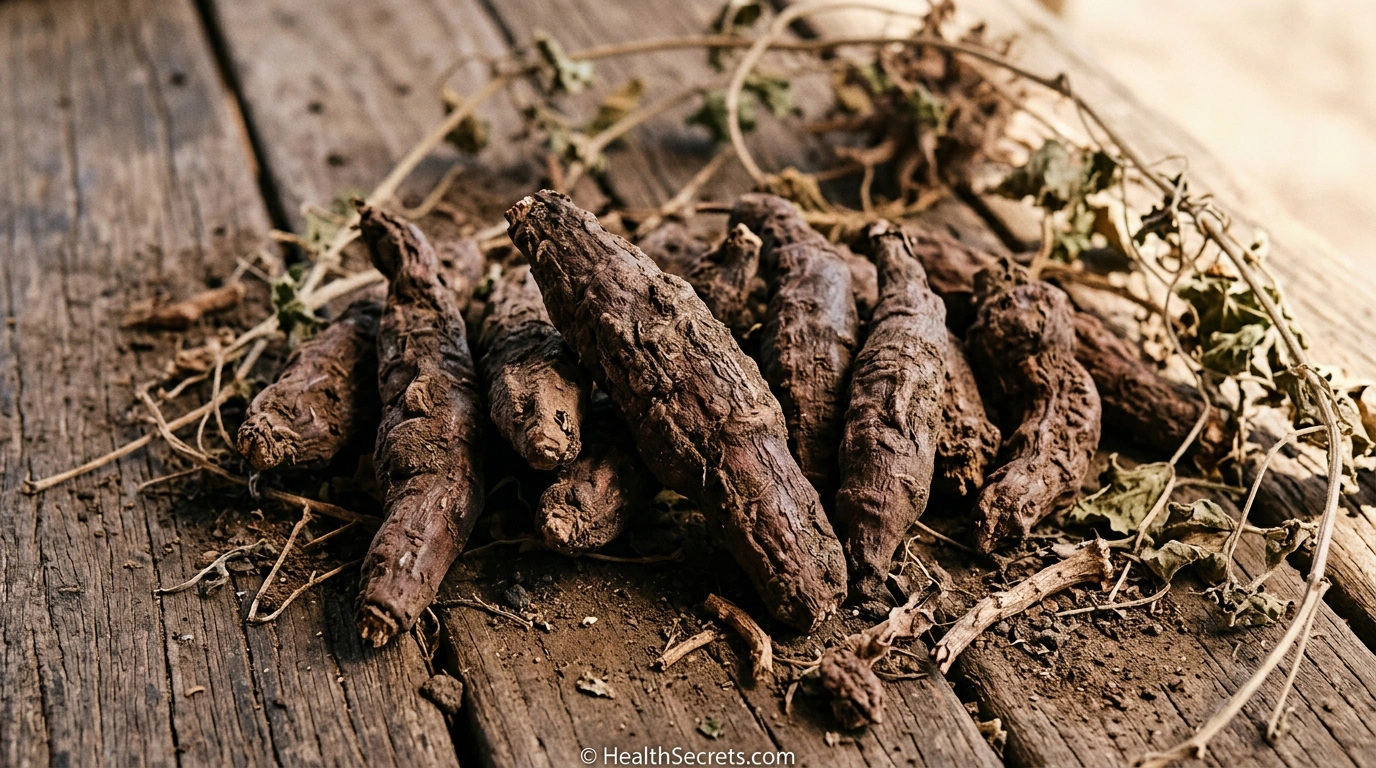
Only the secondary (lateral) root tubers are used medicinally — the primary root is left intact so the plant can regenerate. However, growing global demand has led to overharvesting concerns, with some wild populations declining. Look for products that are sustainably sourced, Fair Trade certified, or organically grown to support conservation efforts and local communities.

Are You Unknowingly Inflaming Your Body?
Get the free Health Vitals & Nutrient Checklist — the daily guide that shows you which habits and supplements are silently triggering inflammation.
How Does Devil's Claw Work to Reduce Pain and Inflammation?
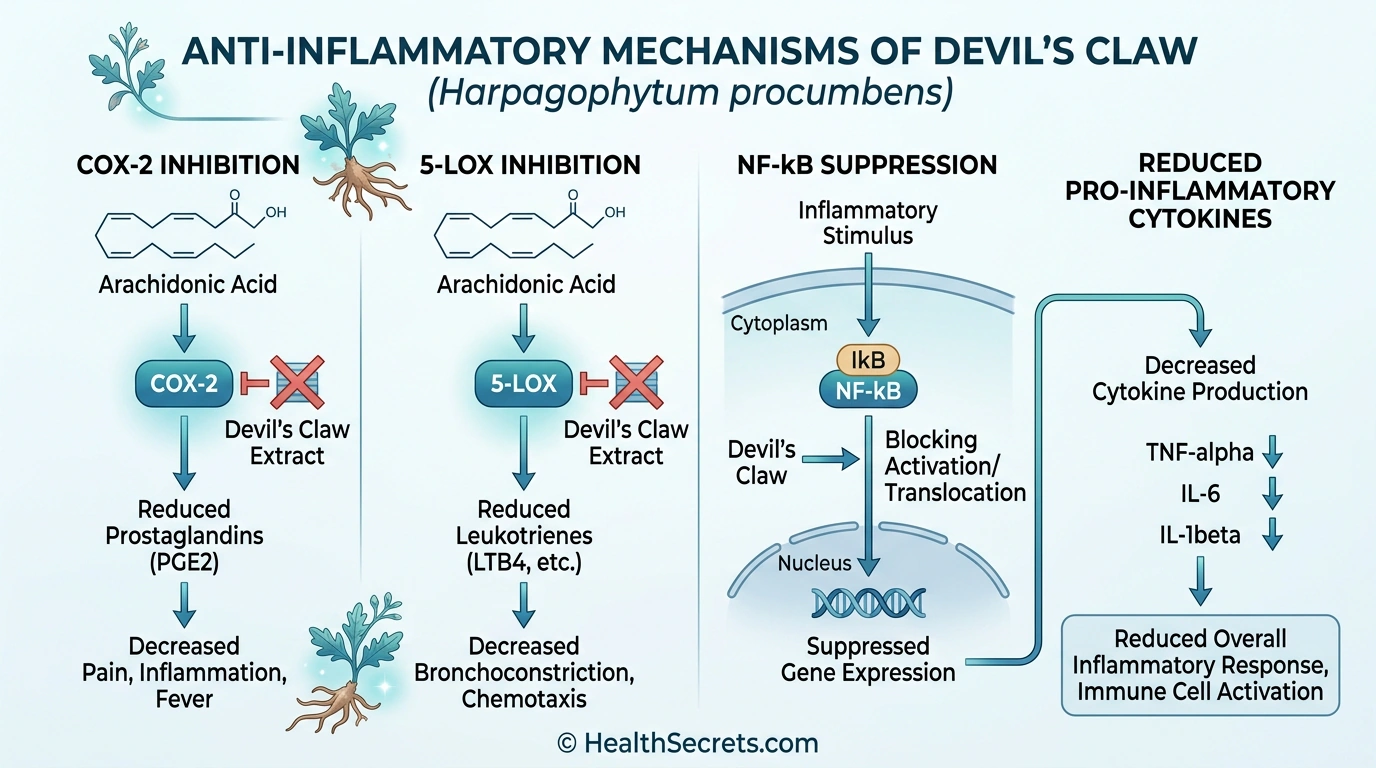
Devil's claw reduces pain through multiple anti-inflammatory mechanisms, primarily by inhibiting COX-2 and 5-LOX enzymes (which produce pain-causing prostaglandins and leukotrienes), suppressing pro-inflammatory cytokines like TNF-alpha and IL-6 by 20–30%, and blocking NF-kB — a master switch for inflammatory gene expression. This multi-pathway approach is why it's often compared to NSAIDs but with a gentler side-effect profile.
How Does Devil's Claw Inhibit COX-2?
Harpagoside acts as a selective COX-2 (cyclooxygenase-2) inhibitor, reducing production of prostaglandin E2 (PGE2) — one of the primary mediators of pain and inflammation. Molecular docking studies confirm that harpagoside binds to the active site of COX-2 with a binding energy of approximately −9.13 kcal/mol, stabilized through seven hydrogen bonds. This selectivity for COX-2 over COX-1 means less gastrointestinal damage compared to non-selective NSAIDs.
Does Devil's Claw Also Block the 5-LOX Pathway?
Yes — and this dual inhibition is what makes devil's claw particularly effective. By inhibiting 5-lipoxygenase (5-LOX), it reduces production of leukotriene B4 (LTB4), another potent inflammatory mediator. This dual COX-2/5-LOX inhibition provides a broader anti-inflammatory effect similar to boswellia, covering inflammatory pathways that single-target drugs miss.
How Does Devil's Claw Affect Inflammatory Cytokines?
Devil's claw reduces levels of several pro-inflammatory cytokines: interleukin-6 (IL-6), tumor necrosis factor-alpha (TNF-α), and interleukin-1 beta (IL-1β) — all by approximately 20–30%. It accomplishes this partly by inhibiting NF-κB (nuclear factor kappa B), a transcription factor that acts as a master regulator of inflammatory gene expression. When NF-κB activation is suppressed, the entire downstream inflammatory cascade is dampened.
Does Devil's Claw Have Antioxidant Properties?
The flavonoids and phenolic acids in devil's claw — including quercetin, kaempferol, and caffeic acid — provide significant antioxidant activity, neutralizing free radicals and reducing oxidative stress. Since oxidative stress drives chronic inflammation, this antioxidant effect complements the direct anti-inflammatory mechanisms and supports overall tissue health.

Anti-Inflammatory Pantry & Meal Builder
Build a flexible, plant-forward pantry without restrictive food lists or expensive specialty ingredients.
How Well Is Devil's Claw Absorbed by the Body?
Devil's claw extracts are reasonably well-absorbed when taken orally, with harpagoside reaching peak plasma concentrations within 1–2 hours. Bioavailability is enhanced when taken with food, which also reduces the GI irritation that can occur from the plant's bitter compounds. Standardized extracts in capsule or tablet form generally provide more consistent absorption than raw powder or tea preparations.
Does the Form of Devil's Claw Matter?
Absolutely. Standardized dry extracts (1–3% harpagosides) deliver the most consistent and predictable dosing. Liquid tinctures offer faster initial absorption but are harder to dose precisely. Teas made from dried root provide the traditional preparation method but contain lower and more variable harpagoside concentrations. For therapeutic use in pain management, standardized capsules or tablets are the most reliable option.
What Enhances Devil's Claw Absorption?
Taking devil's claw with meals improves absorption and reduces the bitter-compound-related GI upset that some users experience. Some formulations combine devil's claw with black pepper extract (piperine) or turmeric for potential synergistic anti-inflammatory effects, though direct bioavailability enhancement studies for these combinations are limited.
How Much Devil's Claw Should You Take for Pain?
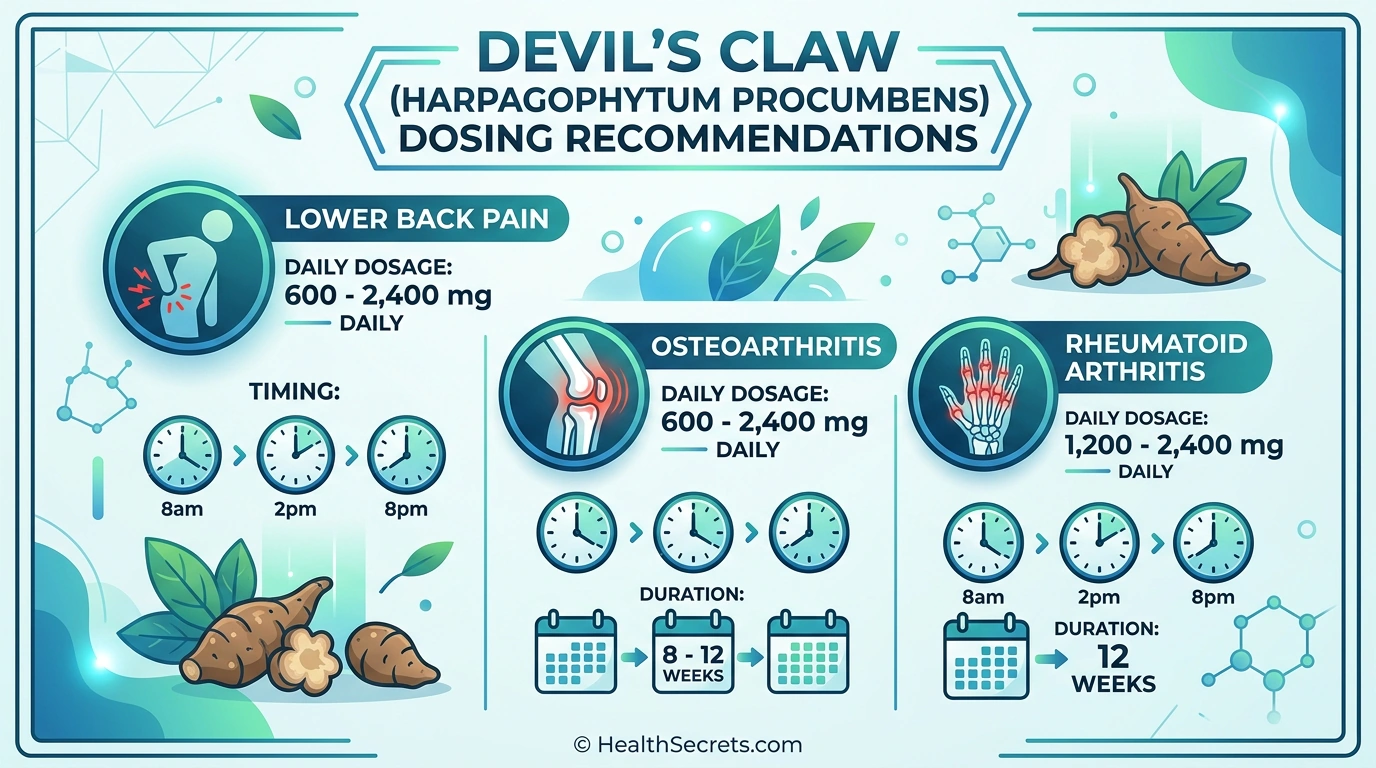
Most clinical studies use 600–2,400 mg of standardized devil's claw extract daily, providing 50–100 mg of harpagosides. The specific dose depends on your condition: lower back pain typically responds to 600–2,400 mg daily, osteoarthritis requires 600–2,400 mg daily for 8–12 weeks, and rheumatoid arthritis may need higher doses of 1,200–2,400 mg daily. Always choose products standardized to 1–3% harpagosides.
| Condition | Daily Dose | Harpagosides | Duration |
|---|---|---|---|
| Lower Back Pain | 600–2,400 mg | 50–100 mg | 4–8 weeks min |
| Osteoarthritis | 600–2,400 mg | 50–100 mg | 8–12 weeks min |
| Rheumatoid Arthritis | 1,200–2,400 mg | 50–100 mg | 12 weeks min |
| General Joint Support | 600–1,200 mg | 30–50 mg | Ongoing |
| Timing: Take with meals to reduce GI upset and improve absorption. Divide the total daily dose into 2–3 servings (e.g., 600 mg three times daily or 1,200 mg twice daily). |
Duration: Anti-inflammatory effects are cumulative and gradual — expect 4–8 weeks of consistent use before noticing significant improvement. Devil's claw can be continued long-term if well-tolerated, making it a safer alternative to chronic NSAID use.
Standardization is critical: Always check labels for harpagoside content. Non-standardized products have highly variable potency, which means unpredictable results and wasted money.
Can You Get Devil's Claw Benefits from Food Sources?
Devil's claw is not a food crop — it's exclusively a medicinal herb, so there are no dietary food sources that provide harpagosides. The only way to get therapeutic doses of devil's claw's active compounds is through supplements (capsules, tablets, tinctures) or traditional tea preparations made from the dried secondary root tuber.
That said, you can support devil's claw's anti-inflammatory effects through dietary choices. An anti-inflammatory diet rich in omega-3 fatty acids (fatty fish, walnuts, flaxseed), polyphenols (berries, green tea, dark chocolate), and spices like turmeric and ginger provides complementary anti-inflammatory activity through different pathways. Think of devil's claw as one tool in a broader anti-inflammatory toolkit that includes both supplementation and dietary strategies.
Is Devil's Claw Safe? What Are the Side Effects and Risks?
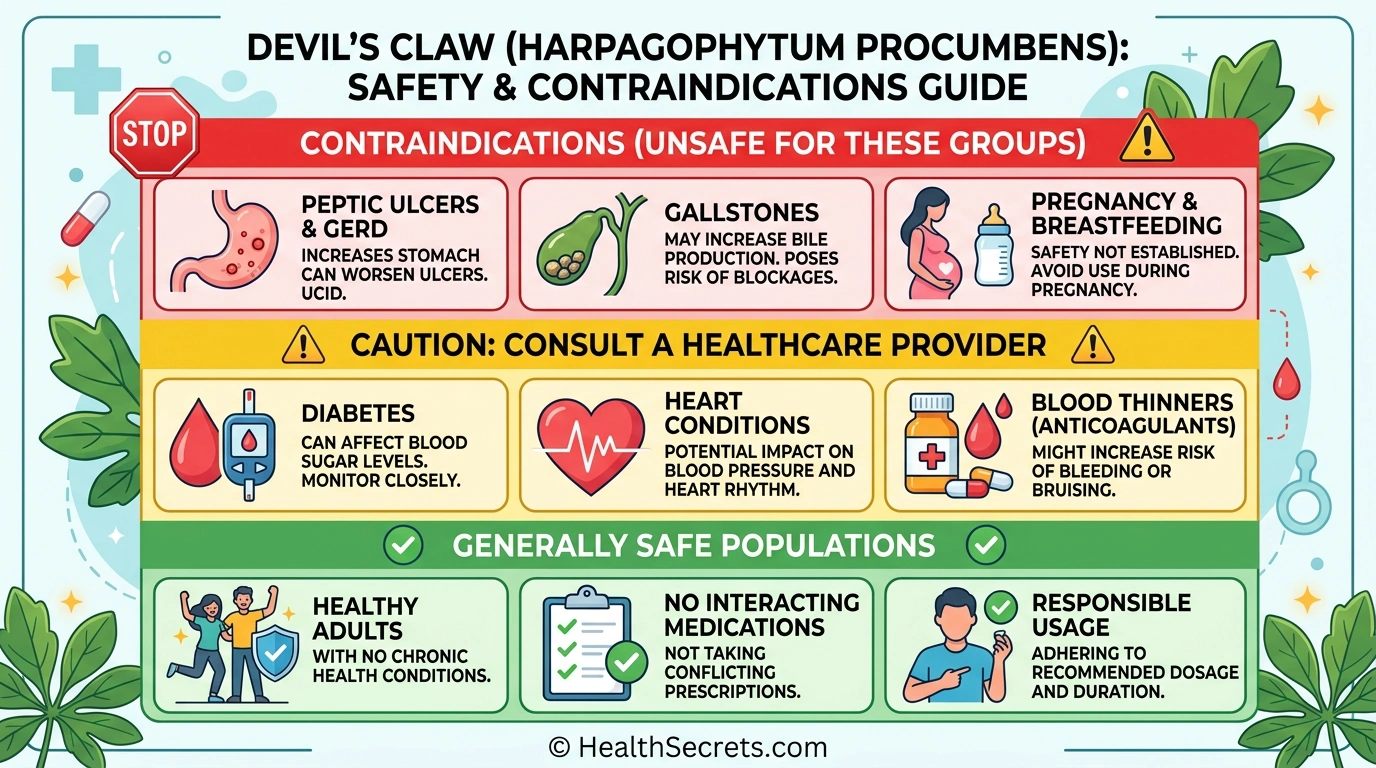
Devil's claw is generally well-tolerated in clinical studies, with most adverse effects being mild and related to its bitter compounds stimulating digestive secretions. The most common side effect is gastrointestinal upset (diarrhea, nausea, or abdominal discomfort) in approximately 5–10% of users. However, there are specific populations who should avoid devil's claw entirely, and several drug interactions to be aware of.

What Are the Most Common Side Effects?
- GI upset (5–10% of users): Diarrhea, nausea, or abdominal pain — usually manageable by taking with food
- Headache (rare): Typically resolves with dose reduction
- Allergic reactions (rare): Skin rash or itching — discontinue immediately if this occurs
- Loss of taste (rare): Temporary, resolves after stopping
- Abnormal heart rhythm (very rare): Reported in isolated cases — consult a doctor if you have heart conditions
Who Should NOT Take Devil's Claw?
- Peptic ulcers or gastritis: Devil's claw stimulates gastric acid production, which can worsen ulcers and GERD symptoms
- Gallstones: It stimulates bile production, potentially triggering a gallbladder attack
- Pregnancy and breastfeeding: Insufficient safety data — traditionally used to stimulate uterine contractions during childbirth, so it should be avoided during pregnancy
- Children: Most research involves adults; consult a pediatrician before use
What Drug Interactions Should You Know About?
- Blood thinners (warfarin/Coumadin): Devil's claw may enhance anticoagulant effects — monitor INR closely
- Diabetes medications: May lower blood sugar further — monitor glucose levels
- Blood pressure medications: May enhance hypotensive effects — monitor blood pressure
- NSAIDs: Can be combined but monitor for additive GI side effects
- Stomach acid reducers (PPIs, H2 blockers): Devil's claw may decrease their effectiveness by stimulating acid production
- CYP3A4 and CYP2C19 substrates: Devil's claw may alter metabolism of medications processed by these liver enzymes
What Can Devil's Claw Actually Do for Your Pain?
Devil's claw is a legitimate, evidence-backed anti-inflammatory herb that can meaningfully reduce chronic musculoskeletal pain — but it's not a magic bullet. Expect gradual improvement over 4–8 weeks of consistent use, with clinical studies showing pain reduction of 23–50% for lower back pain and 22–35% for osteoarthritis. It works best as part of a comprehensive approach that includes exercise, weight management, and an anti-inflammatory diet.
What devil's claw CAN do:
- Reduce chronic lower back pain comparable to some NSAIDs with fewer GI side effects
- Improve osteoarthritis pain, stiffness, and mobility over 8–12 weeks
- Serve as a GI-friendly long-term alternative to daily NSAID use
- Support rheumatoid arthritis management as an adjunct to conventional treatment (not a replacement for DMARDs)
What devil's claw CANNOT do:
- Provide instant pain relief like ibuprofen or acetaminophen
- Replace disease-modifying drugs for autoimmune conditions
- Reverse structural joint damage or repair cartilage
- Work effectively at inconsistent or sub-therapeutic doses
- Overcome the limitations of a poor diet and sedentary lifestyle
Individual variation matters. Some people respond strongly within 2–3 weeks, while others need the full 8–12 week timeline. Quality of the product is the single biggest variable — standardized extracts (1–3% harpagosides) from reputable brands consistently outperform cheap, non-standardized alternatives.
Action Plan
What Should You Do First If You Want to Try Devil's Claw?
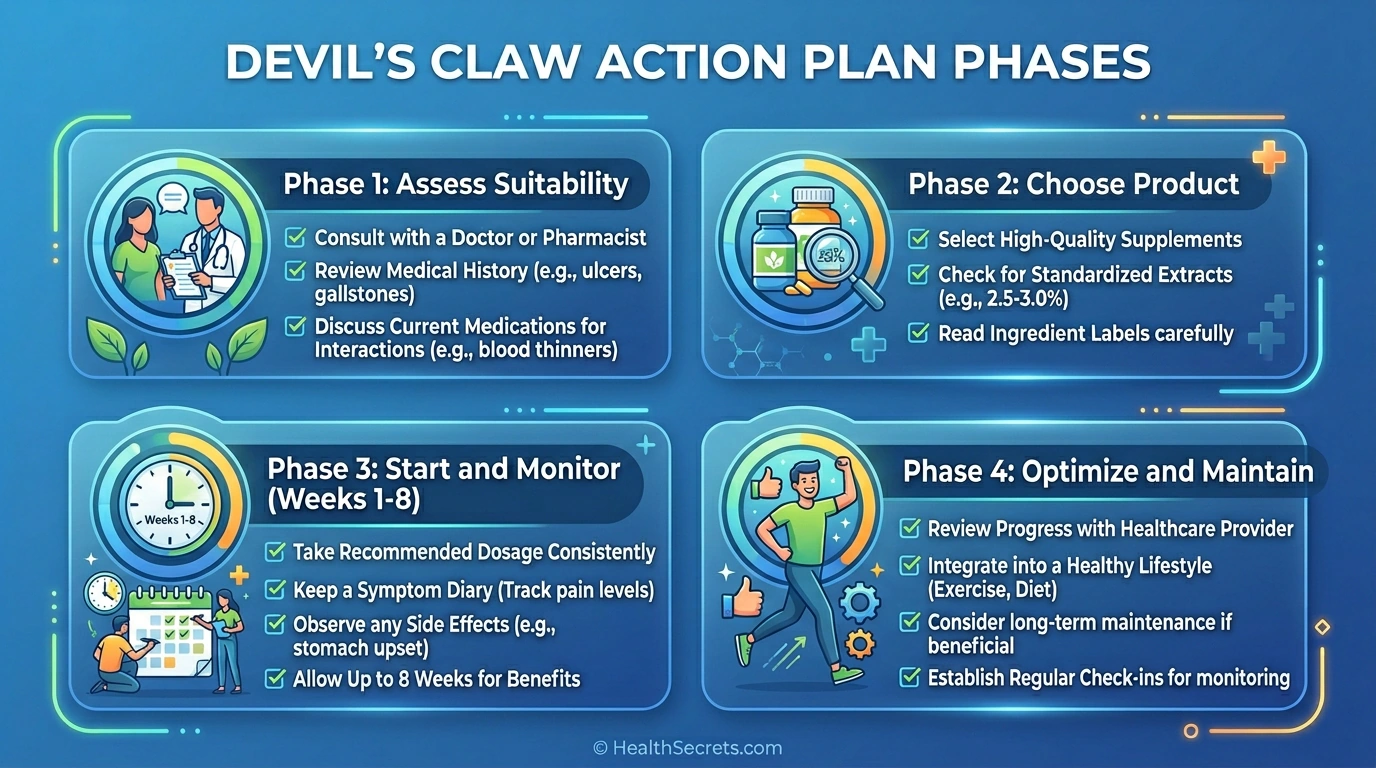
Follow the sequence below, work through each phase in order, and use the checklist as your practical implementation guide.
Start by confirming devil's claw is appropriate for your situation (no ulcers, gallstones, or contraindicated medications), then choose a standardized extract with 1–3% harpagosides from a reputable brand. Begin at 600 mg three times daily with meals, commit to at least 4–8 weeks of consistent use, and track your pain levels weekly to measure progress.
Phase 1 — Assess Suitability (Before Starting)
- Confirm you don't have peptic ulcers, gastritis, or gallstones
- Review current medications for interactions (warfarin, diabetes drugs, blood pressure meds)
- Consult your doctor if you have heart conditions, diabetes, or take prescription medications
- Set realistic expectations: 4–8 weeks for noticeable improvement
Phase 2 — Choose Your Product (Week 1)
- Select a standardized extract with 1–3% harpagosides (check the label)
- Look for third-party testing (NSF, USP, or equivalent)
- Prefer sustainably sourced or organically certified products
- Avoid non-standardized or bulk powder products with unverified potency
Phase 3 — Start and Monitor (Weeks 1–8)
- Begin at 600 mg three times daily with meals (1,800 mg total)
- Track pain levels weekly (1–10 scale) in a journal or app
- Monitor for GI side effects — take with food if nausea or discomfort occurs
- If no improvement by week 4, increase toward the upper range (2,400 mg daily)
Phase 4 — Optimize and Maintain (Weeks 8+)
- Assess overall pain reduction and functional improvement
- If effective, continue at the maintenance dose long-term
- Complement with exercise, anti-inflammatory foods, and weight management
- If pain hasn't improved after 8 weeks, consult your doctor for further evaluation