

Your vagus nerve is the longest cranial nerve in your body — a superhighway connecting your brain to your heart, lungs, and entire digestive system [1]. Often called the "wandering nerve," it plays a central role in calming your body after stress, regulating digestion, controlling inflammation, and even shaping your mood. When your vagus nerve functions well, you feel calm, resilient, and balanced. When it doesn't, you may struggle with anxiety, digestive issues, chronic inflammation, and brain fog. [9]
The good news? You can naturally stimulate your vagus nerve with simple, science-backed techniques that take just minutes a day. This guide walks you through the most effective methods, step by step, so you can activate your parasympathetic nervous system and start feeling the benefits. [13] [14]
Related reading: Complete Guide to Gut Health · Gut-Brain Axis and Mental Health · Natural IBS Relief Strategies · Best Probiotics for Gut Health [16]
What Is the Vagus Nerve and Why Does Stimulating It Matter?
The vagus nerve is the tenth cranial nerve and the longest nerve in the autonomic nervous system. It originates in the brainstem and travels through the neck, chest, and abdomen, innervating the heart, lungs, stomach, intestines, and other vital organs. It serves as the primary communication highway between your brain and your gut — the foundation of the gut-brain axis [11].
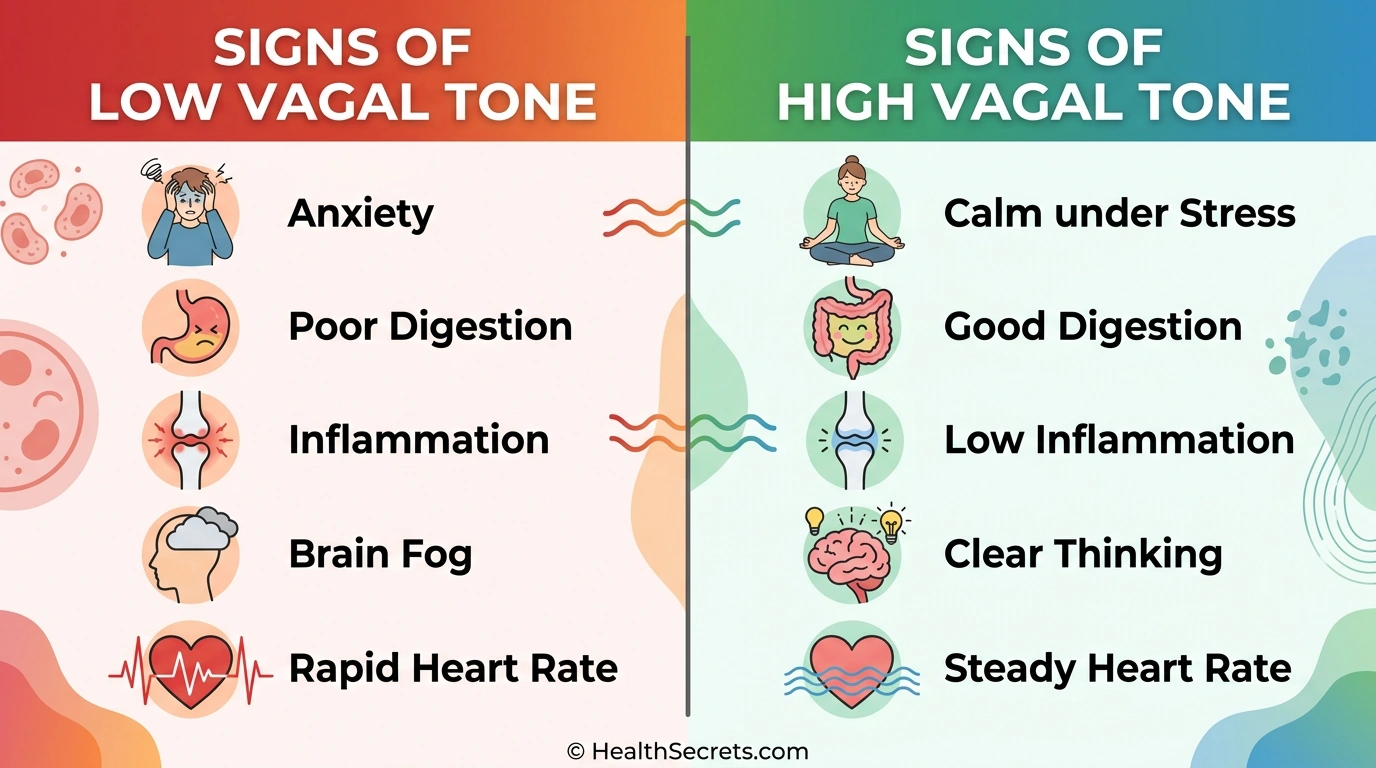
Vagal tone refers to the activity level of your vagus nerve. High vagal tone means your body can efficiently shift from a stressed state to a relaxed state, supporting better digestion, lower inflammation, improved mood, and stronger immune function. Low vagal tone is associated with digestive problems, anxiety, depression, chronic inflammation, and poor stress recovery. Research published in Frontiers in Neuroscience (2023) confirms that interventions targeting vagal tone can improve both mental and physical health outcomes.
Dr. Stephen Porges' polyvagal theory describes three nervous system states: ventral vagal (safe and connected), sympathetic (fight or flight), and dorsal vagal (shutdown) [2]. The goal of vagus nerve stimulation is to help you spend more time in the ventral vagal state — feeling calm, socially engaged, and resilient.

The Vagal Reset Breathing Cards
Four cut-out breathing patterns with exact counts and the moment each fits, a ten-session log that averages your before-and-after tension, and when breathwork is the wrong tool.
How Does Deep Breathing Stimulate the Vagus Nerve?
Slow, diaphragmatic breathing is the most accessible and well-researched vagus nerve stimulation technique. When you breathe deeply into your belly and extend your exhale, you directly activate the vagus nerve, shifting your body into parasympathetic mode. A 2023 study in Cell Reports Medicine found that structured breathwork improved mood and reduced physiological stress markers more effectively than mindfulness meditation alone [6].
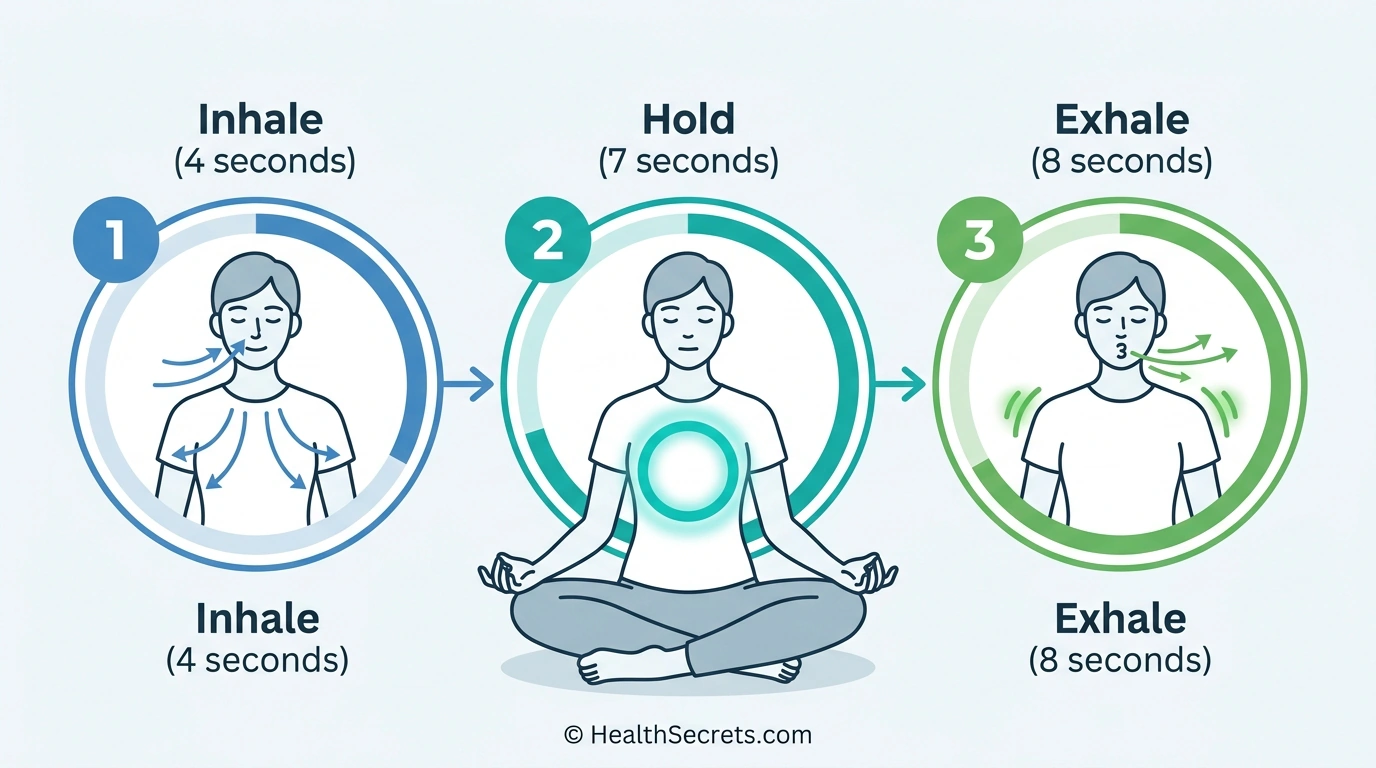
4-7-8 Breathing Technique
- Sit or lie comfortably with one hand on your chest and one on your belly
- Inhale slowly through your nose for 4 seconds, feeling your belly rise
- Hold your breath gently for 7 seconds
- Exhale slowly through your mouth for 8 seconds, pursing your lips slightly
- Repeat for 4–8 cycles
Box Breathing (4-4-4-4)
- Inhale for 4 seconds
- Hold for 4 seconds
- Exhale for 4 seconds
- Hold for 4 seconds
- Repeat for 5–10 minutes
Practice frequency: 2–3 times daily, especially upon waking and before bed. Even 5 minutes of focused breathing produces measurable changes in heart rate variability.
Can Cold Exposure Activate the Vagus Nerve?
Cold exposure is one of the most powerful and immediate vagus nerve stimulators. When cold water contacts your face, it triggers the mammalian dive reflex — an involuntary response that slows your heart rate and activates parasympathetic pathways through the vagus nerve. Research in the European Journal of Applied Physiology (2023) demonstrates that regular cold exposure increases vagal tone and improves autonomic nervous system regulation over time.
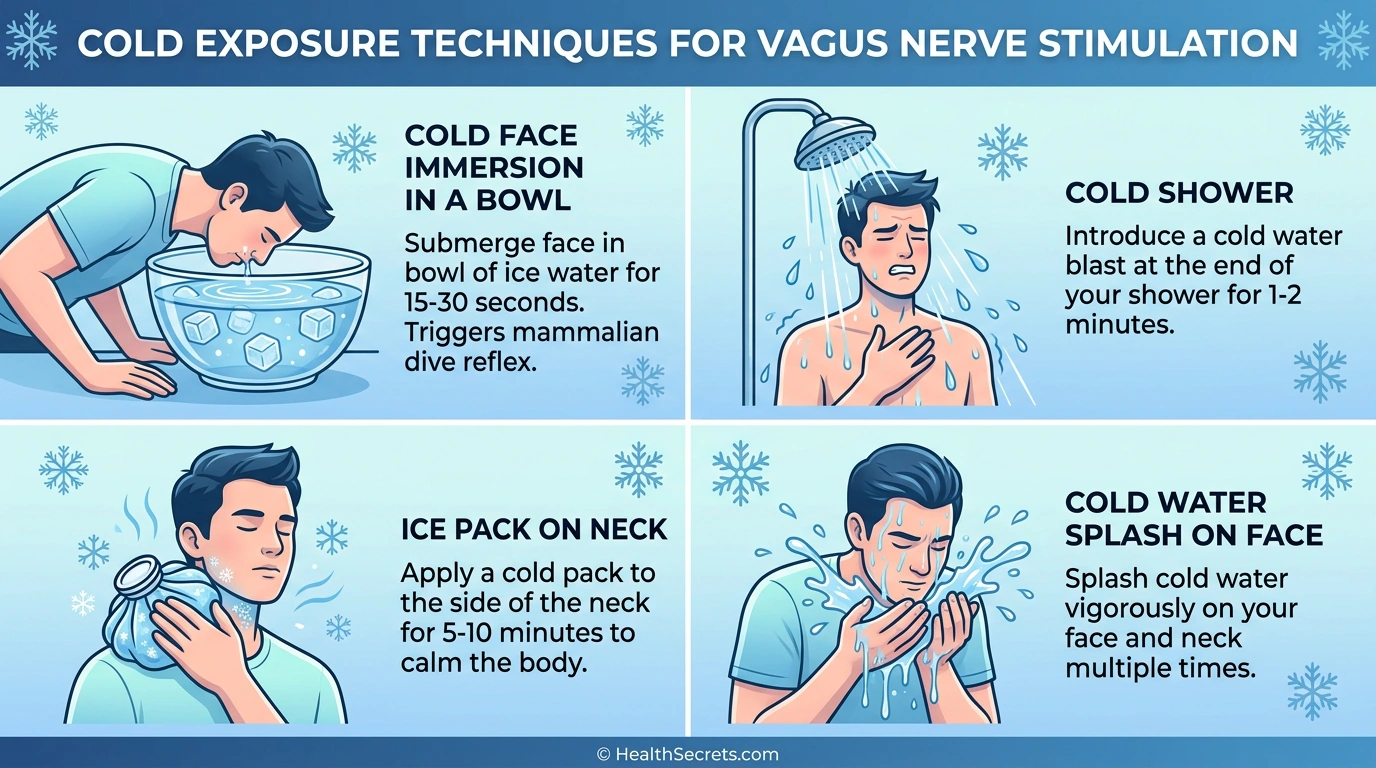
Cold Exposure Techniques
- Cold face immersion: Fill a bowl with cold water (50–60°F / 10–15°C) and submerge your face for 15–30 seconds. This directly triggers the dive reflex.
- Cold showers: End your regular shower with 30–90 seconds of cold water. Start with 15 seconds and gradually increase.
- Ice pack application: Apply a cold pack wrapped in a thin cloth to the sides of your neck (where the vagus nerve runs) for 1–2 minutes.
- Cold water splash: Simply splash cold water on your face and neck — effective even when you don't have time for a full cold shower.
Safety note: Avoid cold exposure if you have Raynaud's disease, uncontrolled heart conditions, or cold urticaria. Always start gradually.
How Do Humming and Singing Stimulate the Vagus Nerve?
The vagus nerve passes directly through the muscles of the throat and larynx.
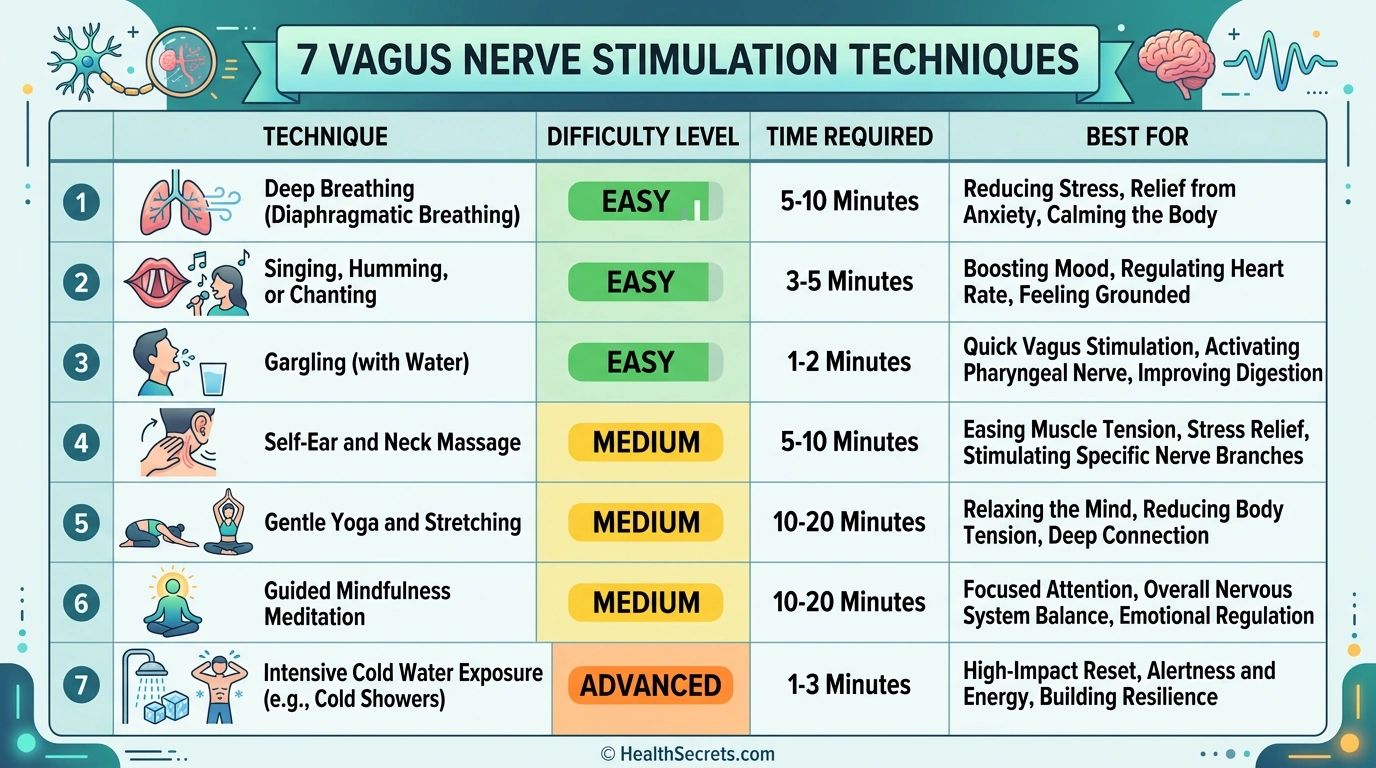
Vocalization — humming, singing, chanting, and even gargling — creates vibrations that mechanically stimulate these vagal fibers. A 2024 study in Scientific Reports found that humming for just 5 minutes significantly increased heart rate variability and reduced cortisol levels compared to silent breathing.
Effective Vocalization Techniques
- Humming: Hum a low, resonant note (like "mmm") for 5–10 minutes. Focus on feeling the vibration in your throat and chest.
- "Om" chanting: Slowly chant "Om" extending the "mmm" sound. The vibration frequency directly stimulates the vagus nerve.
- Singing: Sing loudly and with enthusiasm — the louder you sing, the stronger the vagal stimulation. Singing in a group amplifies the benefits.
- Gargling: Gargle water vigorously for 30–60 seconds, 2–3 times daily. This contracts the muscles at the back of the throat, stimulating the vagus nerve.
What Types of Meditation Best Activate the Vagus Nerve?
Meditation, particularly loving-kindness (metta) meditation, has been shown to increase vagal tone significantly. A landmark study by Kok et al. in Psychological Science demonstrated that loving-kindness meditation improved vagal tone over a 9-week period, creating an "upward spiral" of positive emotions and physical health [3]. The key is consistent daily practice rather than occasional long sessions.
Loving-Kindness Meditation (10 minutes)
- Sit comfortably, close your eyes, and take several deep breaths
- Silently repeat: "May I be happy. May I be healthy. May I be safe."
- Visualize someone you love and repeat: "May you be happy. May you be healthy. May you be safe."
- Extend this to neutral people, then gradually to difficult people
- End by extending loving-kindness to all beings
Body Scan Meditation
Systematically focus attention on each body part from toes to head, releasing tension as you go. This activates interoception — your brain's awareness of internal body signals — which strengthens vagal pathways.
How Does Massage Stimulate the Vagus Nerve?
Gentle massage — especially of the neck, ears, and abdomen — directly stimulates branches of the vagus nerve [4]. The auricular branch of the vagus nerve runs through the ear, making ear massage a particularly effective technique. Research in Pain Medicine (2023) shows that auricular vagus nerve stimulation reduces pain perception and improves autonomic balance.
Self-Massage Techniques
- Neck massage: Gently massage the sides of your neck in slow, circular motions for 2–3 minutes. Focus on the area between your ear and collarbone.
- Ear massage: Gently massage the outer rim of your ears (the tragus and concha) with your thumb and forefinger for 1–2 minutes. Apply gentle pressure and circular motions.
- Abdominal massage: Massage your abdomen in clockwise circles (following the direction of digestion) for 3–5 minutes. This supports gut motility and vagal activity.
- Foot reflexology: Massage the soles of your feet, particularly the arch area. Studies show foot massage boosts vagal activity and lowers blood pressure.
Can Yoga and Gentle Movement Improve Vagal Tone?
Yoga is one of the most studied interventions for improving vagal tone. Specific poses that involve gentle inversions, twists, and forward folds stimulate the vagus nerve through mechanical compression and stretching. A 2023 systematic review in Complementary Therapies in Medicine confirmed that regular yoga practice significantly increases heart rate variability and vagal tone [12].
Best Yoga Poses for Vagus Nerve Stimulation
- Legs up the wall (Viparita Karani): Lie on your back with legs extended up against a wall for 5–10 minutes. This gentle inversion calms the nervous system.
- Child's pose (Balasana): Kneel and fold forward, resting your forehead on the ground. The gentle abdominal compression stimulates the vagus nerve.
- Cat-cow (Marjaryasana-Bitilakasana): Move between arching and rounding your spine, coordinating with breath. This stimulates vagal fibers through spinal movement.
- Supine twist (Supta Matsyendrasana): Lying on your back, gently twist your knees to one side. Spinal twists compress and release abdominal organs.
How Do Social Connection and Lifestyle Practices Support Vagal Tone?
Polyvagal theory emphasizes that social connection is fundamental to vagal health. Face-to-face interaction, eye contact, and physical touch all signal safety to your nervous system and activate the ventral vagal pathway. Additionally, several lifestyle practices complement the active techniques above.
Social and Lifestyle Practices
- Face-to-face connection: Prioritize in-person social interactions. Eye contact and attuned conversation activate the social engagement system of the vagus nerve.
- Laughter: Genuine laughter stimulates the vagus nerve and releases endorphins. Watch comedy, play with pets, or spend time with people who make you laugh.
- Moderate exercise: Walking, swimming, and cycling at moderate intensity improve HRV and vagal tone. Avoid chronic overtraining, which suppresses vagal function.
- Sleep optimization: Quality sleep is essential for vagal recovery. Aim for 7–9 hours in a cool, dark room.
- Probiotics: Specific probiotic strains communicate with the brain through the vagus nerve. Research shows Lactobacillus rhamnosus and Bifidobacterium longum support vagal signaling and the gut-brain connection.
- Intermittent fasting: Time-restricted eating may enhance vagal tone by giving the digestive system periods of rest. Start with a 12-hour overnight fast.
What Is the Best Daily Routine for Vagus Nerve Activation?
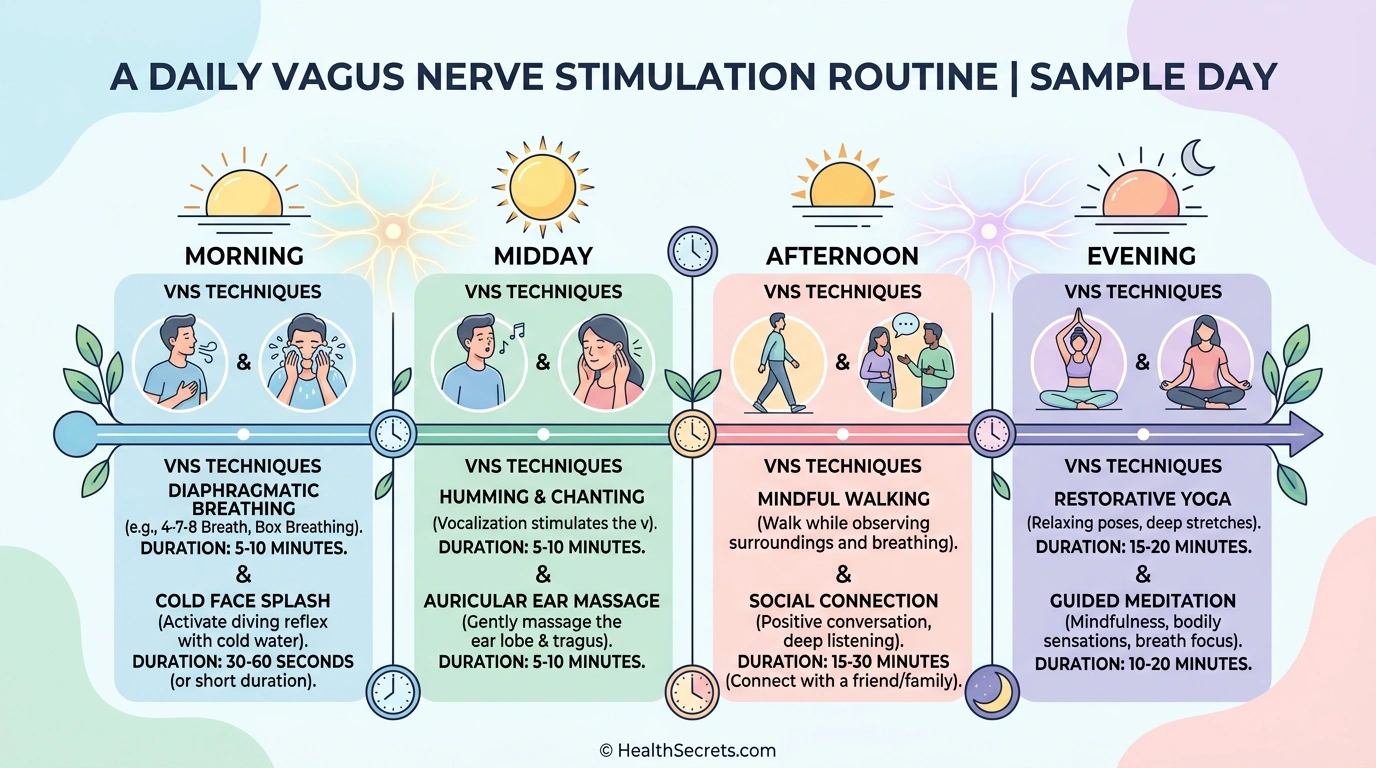
Consistency matters more than intensity when it comes to vagus nerve stimulation. Building a simple daily routine with 2–3 techniques produces cumulative benefits over 4–6 weeks. Start small and add techniques gradually as they become habitual.
Sample Daily Vagus Nerve Routine
| Time | Practice | Duration |
|---|---|---|
| Morning | 4-7-8 breathing + cold face splash | 5–7 min |
| Midday | Humming or gargling + ear massage | 3–5 min |
| Afternoon | 5-minute walk + social connection | 10–15 min |
| Evening | Yoga (legs up the wall) + loving-kindness meditation | 10–15 min |
| Tracking progress: Use an HRV tracking app or device (Apple Watch, Oura Ring, or Welltory app) to monitor your heart rate variability over time. An increasing HRV trend indicates improving vagal tone. Expect noticeable changes within 2–4 weeks of consistent practice. |
When Should You See a Doctor About Vagus Nerve Dysfunction?
While natural vagus nerve stimulation techniques are generally safe for most people, certain symptoms warrant professional evaluation. Persistent low vagal tone may indicate underlying conditions that require medical attention, and some individuals may benefit from clinical vagus nerve stimulation devices [17] [18].
Red Flags to Watch For
- Persistent fainting or near-fainting episodes (vasovagal syncope)
- Chronic gastroparesis or severe digestive motility issues
- Heart rate irregularities or unexplained palpitations
- Severe, treatment-resistant depression or anxiety
- Difficulty swallowing or persistent voice changes
Medical Vagus Nerve Stimulation (VNS)
For individuals with epilepsy, treatment-resistant depression, or post-stroke rehabilitation, FDA-approved vagus nerve stimulation devices deliver controlled electrical impulses to the vagus nerve. These are prescribed and monitored by healthcare providers. Non-invasive transcutaneous VNS devices (applied to the ear) are also emerging as clinical tools.
What Is the Best Step-by-Step Plan to Start Stimulating Your Vagus Nerve?
Starting a vagus nerve stimulation practice doesn't require expensive equipment or major lifestyle changes. Begin with one or two techniques, build consistency over two weeks, then gradually expand your routine. Most people notice improved stress resilience, better digestion, and calmer mood within 4–6 weeks.
Phase 1: Foundation (Weeks 1–2)
- Practice 4-7-8 breathing twice daily (morning and evening)
- Splash cold water on your face each morning
- Hum for 2–3 minutes during your morning routine
- Track baseline HRV if you have a wearable device
Phase 2: Expansion (Weeks 3–4)
- Add gargling for 30–60 seconds twice daily
- Begin a 5-minute loving-kindness meditation before bed
- Practice ear self-massage during work breaks
- Try legs-up-the-wall pose for 5 minutes in the evening
Phase 3: Integration (Weeks 5+)
- Incorporate cold shower endings (30–90 seconds)
- Maintain the full daily routine (morning, midday, evening practices)
- Add probiotic-rich fermented foods to support the gut-brain axis
- Review HRV trends and adjust techniques based on what works best for you

