
Choosing the best probiotics for gut health can feel overwhelming — with thousands of products on the market, each claiming to transform your digestion, it's hard to know which ones actually deliver. The truth is, not all probiotics are created equal. Strain specificity, CFU count, delivery technology, and clinical evidence all matter when selecting a supplement that will genuinely support your microbiome.
We spent over 200 hours researching clinical studies, analyzing third-party lab results, and consulting microbiome experts to identify the 12 best probiotics for gut health in 2026. Whether you're managing IBS, recovering from antibiotics, or simply optimizing your digestive wellness, this guide will help you find the right probiotic for your specific needs.
What Should You Look for When Choosing the Best Probiotics for Gut Health?
The best probiotics for gut health contain clinically studied strains at effective doses, use delivery technology that protects bacteria from stomach acid, and are verified by third-party testing. Focus on strain specificity, CFU count, storage requirements, and the manufacturer's transparency about clinical evidence.
How Important Are Specific Probiotic Strains?
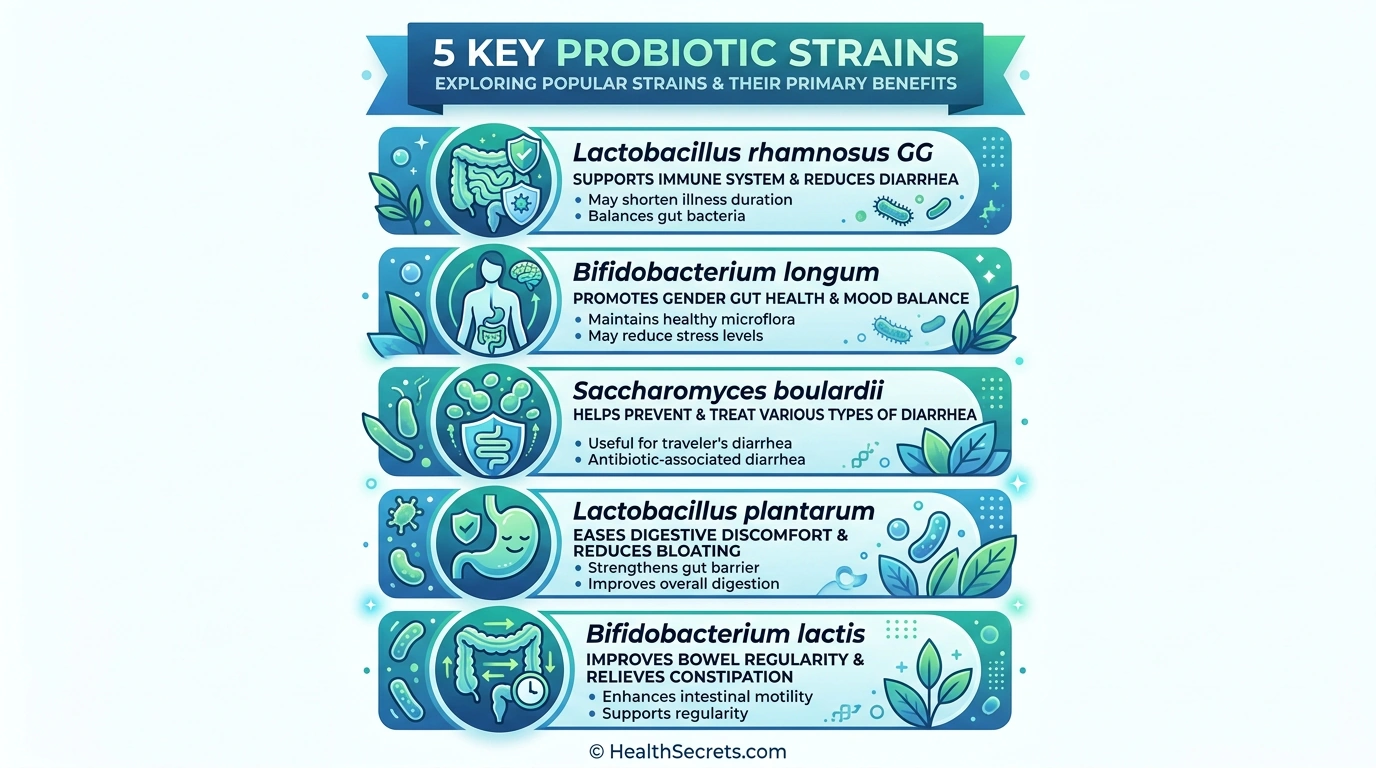
Strain specificity is the single most important factor when choosing a probiotic. Benefits are strain-specific, not species-wide — Lactobacillus rhamnosus GG has over 300 clinical trials supporting digestive health, while other L. rhamnosus strains may have minimal evidence [1]. Look for products that list strains by their full designation (genus, species, and strain identifier).
Key clinically validated strains include:
- Lactobacillus rhamnosus GG — diarrhea prevention, immune support, general gut health [1]
- Bifidobacterium longum BB536 — IBS symptom relief, immune modulation [2]
- Saccharomyces boulardii CNCM I-745 — antibiotic-associated diarrhea, C. difficile prevention [3]
- Lactobacillus plantarum 299v — IBS bloating and abdominal pain relief [4]
- Bifidobacterium lactis HN019 — improved gut transit time, reduced bloating [5]
What CFU Count Do You Actually Need?
For most adults, 10–50 billion CFUs per day provides optimal therapeutic benefit. A 2023 meta-analysis in Nutrients found that doses above 50 billion CFUs did not significantly improve outcomes compared to moderate doses, but did increase the likelihood of initial GI discomfort [6]. More important than raw CFU count is the number of viable organisms that survive transit to the intestines — this is where delivery technology matters.
Why Does Delivery Technology Matter for Probiotics?
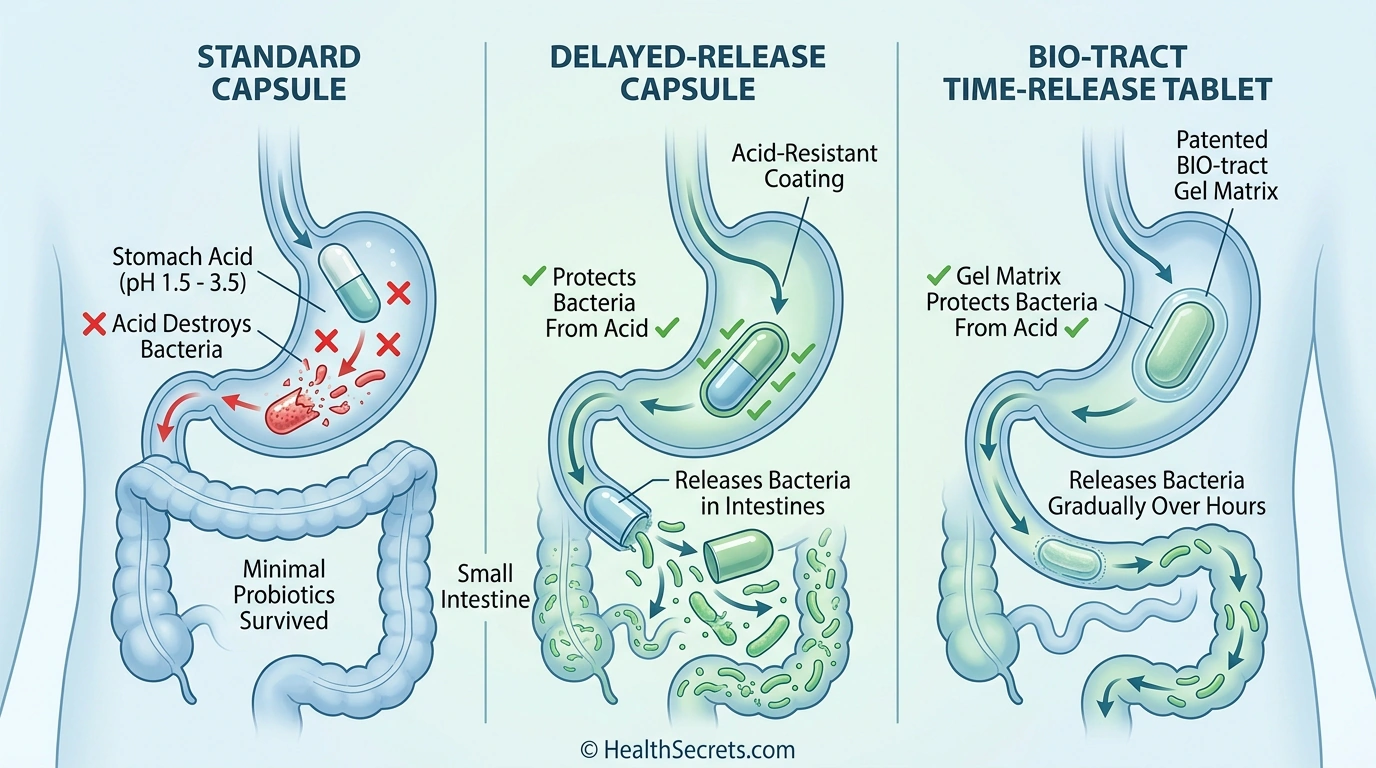
Stomach acid destroys up to 99% of unprotected probiotic bacteria before they reach the intestines [7]. Delayed-release capsules, enteric coating, and microencapsulation technologies dramatically improve survival rates. BIO-tract, DRcaps, and acid-resistant vegetable capsules are among the most effective delivery systems available in consumer probiotics.
Should You Choose Shelf-Stable or Refrigerated Probiotics?
Both can be effective when properly manufactured. Shelf-stable probiotics use freeze-drying and moisture-protective packaging to maintain viability at room temperature. Refrigerated probiotics may contain more fragile strains but can lose potency during shipping. The key is to check for "guaranteed potency through expiration date" on the label — not just "at time of manufacture" [8].

Is Your Gut Ruining Your Day?
Get the free printable tracker thousands of readers use to pinpoint exactly what's causing their gut issues — no restrictive diets required.
How Did We Evaluate and Rank These Probiotics for Gut Health?
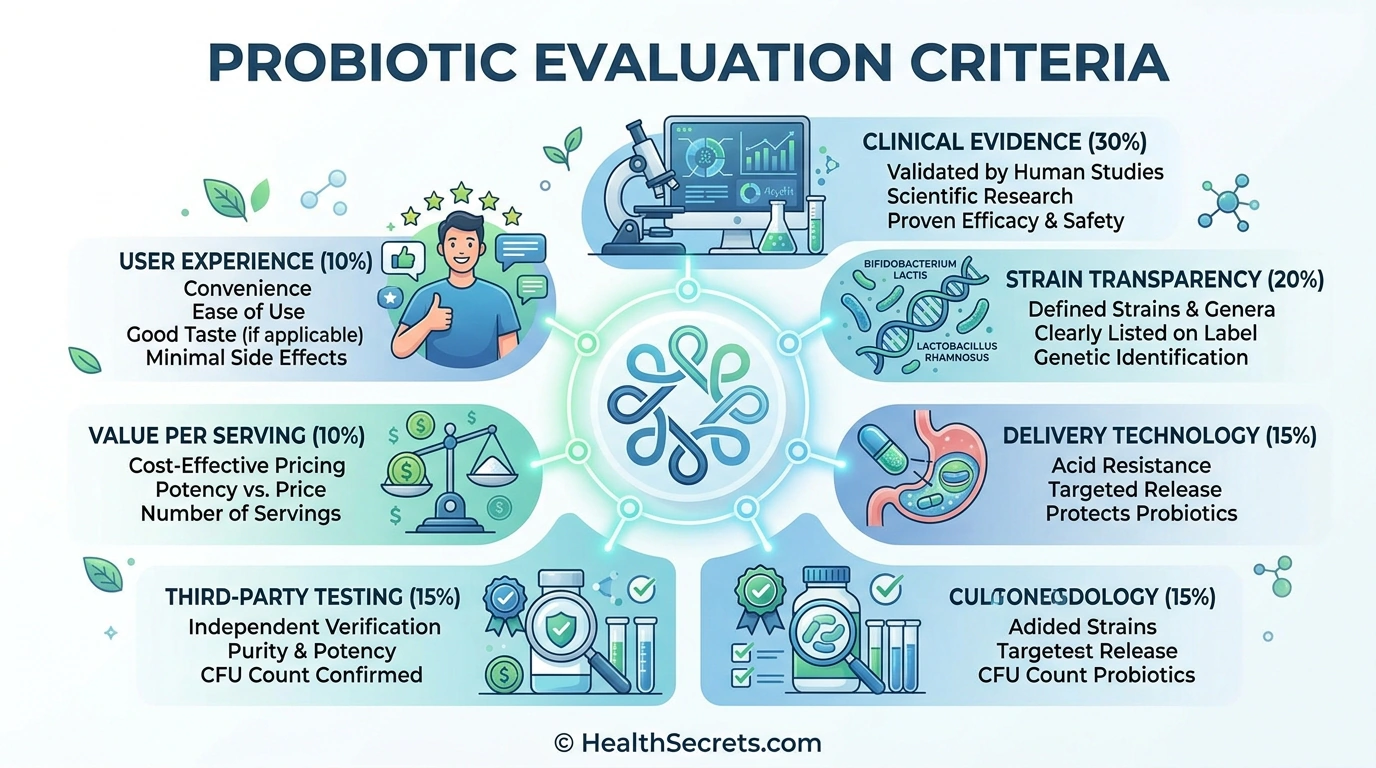
We evaluated over 60 probiotic supplements across eight criteria: clinical evidence for strains, CFU count accuracy, delivery technology, third-party testing, ingredient transparency, value per serving, user reviews, and brand reputation. Products were scored on a 100-point scale with clinical evidence weighted most heavily.
| Criteria | Weight | What We Assessed |
|---|---|---|
| Clinical evidence | 30% | Published studies on specific strains used |
| Strain transparency | 20% | Full strain designations listed on label |
| Delivery technology | 15% | Acid-resistant capsules, enteric coating |
| Third-party testing | 15% | USP, NSF, ConsumerLab verification |
| Value per serving | 10% | Cost per billion CFUs |
| User experience | 10% | Verified reviews, tolerability reports |
We also consulted with three gastroenterologists and two microbiome researchers to validate our methodology and final rankings. Products making unsubstantiated health claims or lacking transparent labeling were automatically disqualified.

Evidence-Based Supplement Organizer & Safety Log
Track your daily intake, verify third-party certifications, and prepare clear questions for your clinician.
How Do You Use Probiotics Effectively for Maximum Gut Health Benefits?
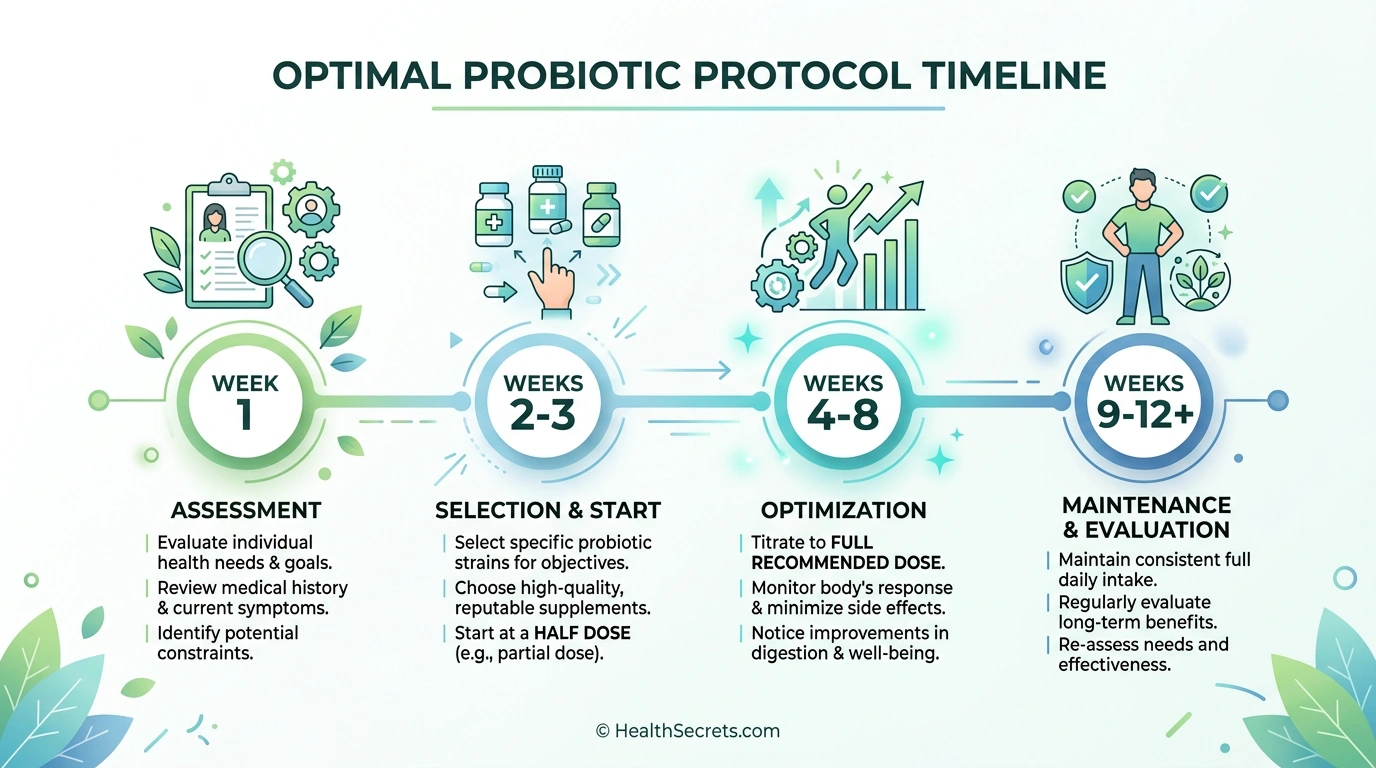
For best results, take your probiotic consistently at the same time each day, ideally 20–30 minutes before a meal or with food containing some fat. Most people experience initial improvements within 2–4 weeks, with full microbiome benefits developing over 8–12 weeks of continuous use [9].
When Is the Best Time to Take Probiotics?
Research published in Beneficial Microbes found that probiotic survival rates were highest when taken 30 minutes before a meal or with food, compared to 30 minutes after eating [10]. The slight increase in stomach pH during a meal creates a more favorable environment for bacterial survival. Consistency matters more than exact timing — choose a time you'll remember daily.
Can You Take Probiotics with Other Supplements?
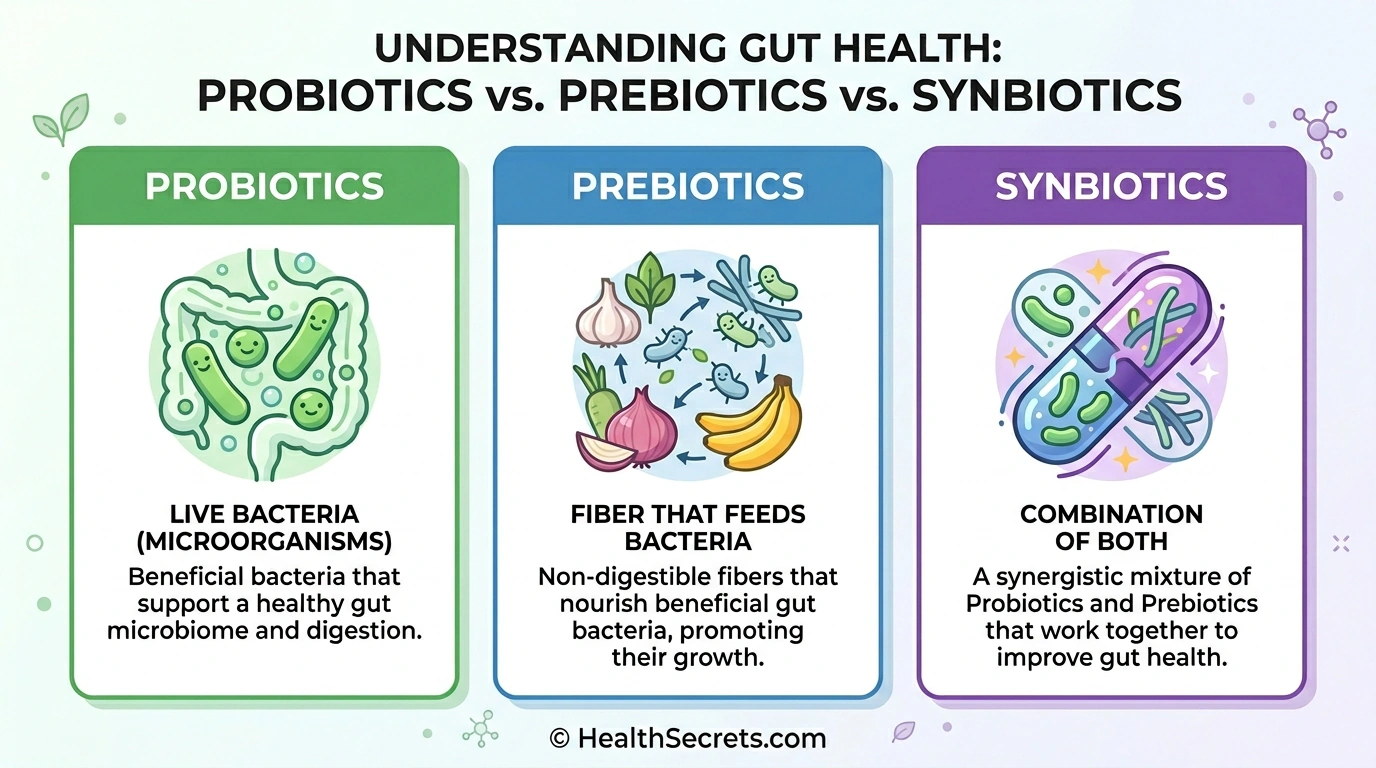
Yes, probiotics are generally safe to combine with most supplements. Taking them alongside prebiotic fiber (inulin, FOS, or GOS) significantly improves colonization — a 2022 study in Gut Microbes showed a 37% increase in beneficial Bifidobacterium populations when probiotics were paired with prebiotics [11]. However, space probiotics at least 2 hours apart from antibiotics to prevent the antibiotics from killing the probiotic organisms.
How Long Should You Take Probiotics?
Most clinical trials showing significant benefits use 8–12 week protocols. For chronic conditions like IBS, ongoing daily supplementation may be beneficial. For general wellness, some experts recommend cycling between different multi-strain formulas every 3–6 months to expose your gut to diverse bacterial strains and prevent microbiome stagnation [12].
Are There Any Safety Concerns with Probiotic Supplements?
Probiotics are generally recognized as safe (GRAS) for most healthy adults. The most common side effects are temporary gas, bloating, and changes in bowel patterns during the first 1–2 weeks as your microbiome adjusts. However, certain populations should exercise caution or avoid probiotics entirely [13].
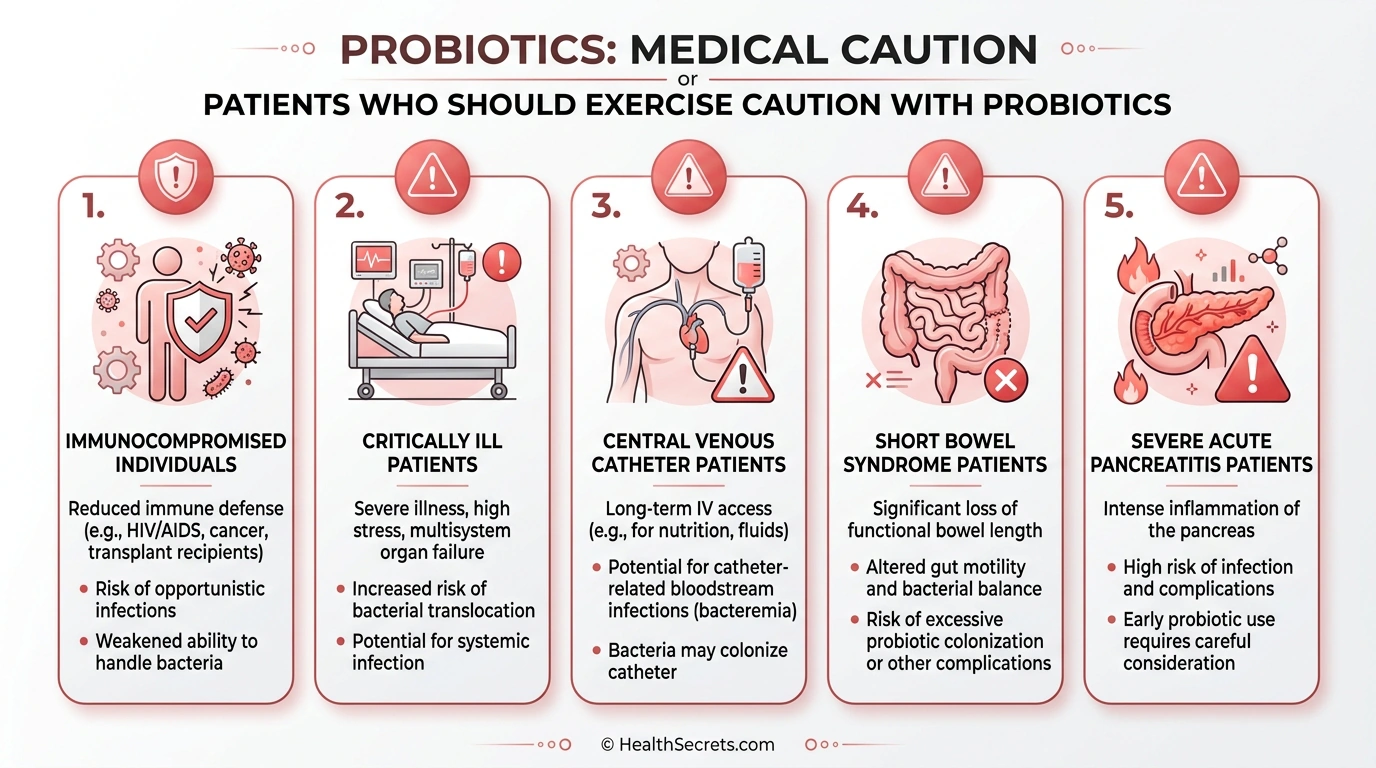
Who Should Avoid or Be Cautious with Probiotics?
- Immunocompromised individuals — risk of bacteremia or fungemia with Saccharomyces species [13]
- Critically ill patients — case reports of probiotic-associated infections in ICU settings
- People with central venous catheters — increased infection risk
- Short bowel syndrome patients — risk of D-lactic acidosis with Lactobacillus species [14]
- Those with severe acute pancreatitis — the PROPATRIA trial showed increased mortality with probiotics [15]
Can Probiotics Cause SIBO or Make It Worse?
This is debated in the literature. A 2018 study in Clinical and Translational Gastroenterology suggested that probiotic use might contribute to D-lactic acidosis and brain fogginess in some patients with SIBO [16]. However, a 2024 systematic review found that specific strains (L. rhamnosus GG, S. boulardii) may actually help manage SIBO when used as adjunct therapy with antibiotics. If you suspect SIBO, work with a gastroenterologist before starting probiotics.
Action Plan
What Steps Should You Take First to Improve Your Gut Health with Probiotics?
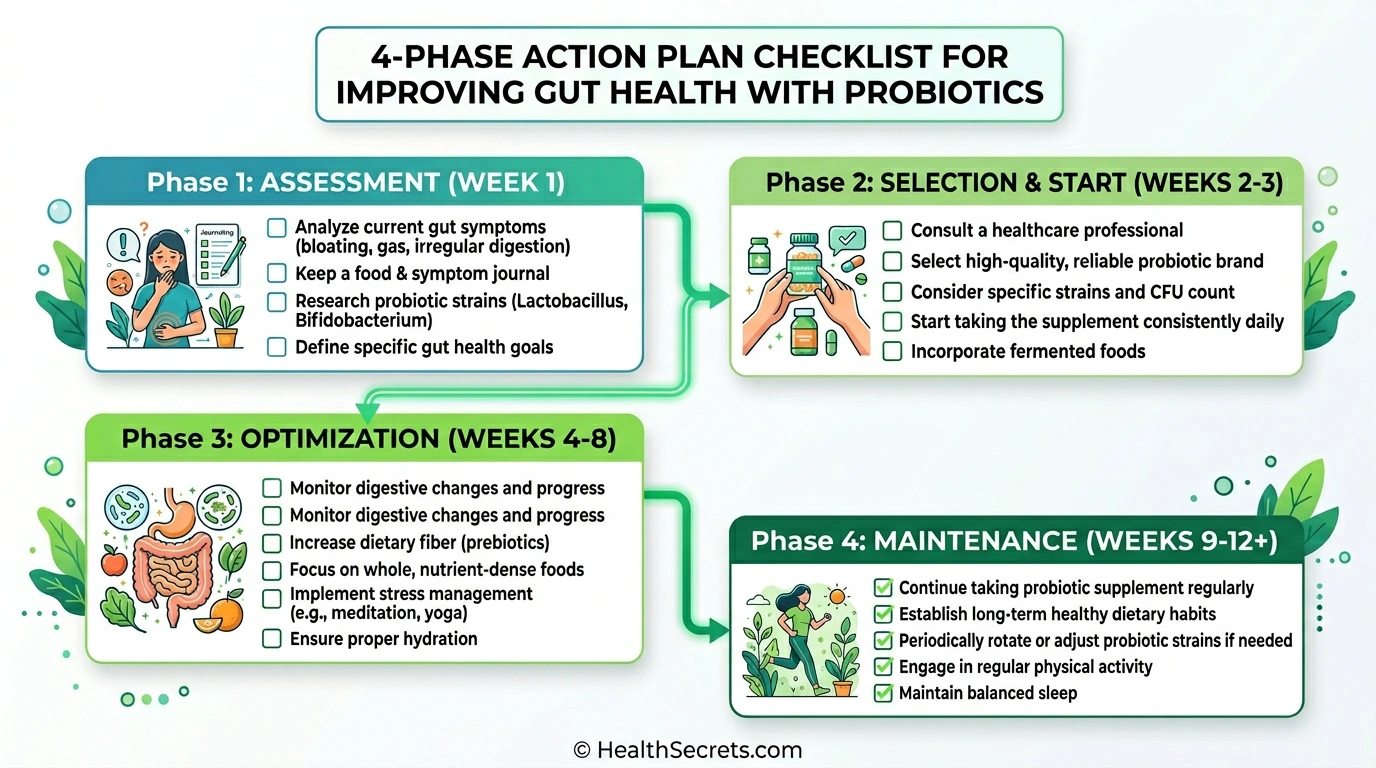
Follow the sequence below, work through each phase in order, and use the checklist as your practical implementation guide.
Start by identifying your primary gut health goal (general wellness, IBS relief, post-antibiotic recovery, or immune support), choose a clinically validated probiotic matched to that goal, and commit to a consistent 8–12 week protocol while supporting colonization with prebiotic-rich foods.
Phase 1: Assessment (Week 1)
- Track current digestive symptoms for 7 days (bloating, gas, bowel regularity, energy)
- Identify your primary goal: general wellness, IBS relief, antibiotic recovery, or immune support
- Consult your healthcare provider, especially if you have underlying conditions
- Review our complete guide to gut health for foundational knowledge
Phase 2: Selection & Start (Weeks 2–3)
- Choose a probiotic from our recommendations matched to your goal
- Start at half the recommended dose for 3–5 days to minimize initial GI adjustment
- Take consistently 20–30 minutes before breakfast or with your first meal
- Add 1–2 servings of prebiotic foods daily (garlic, onions, bananas, oats)
Phase 3: Optimization (Weeks 4–8)
- Increase to full recommended dose after initial adjustment period
- Track symptom improvements weekly in a journal or app
- Incorporate fermented foods 3–4 times per week for additional strain diversity
- Maintain adequate hydration (8+ glasses of water daily)
Phase 4: Maintenance (Weeks 9–12+)
- Evaluate progress against your initial symptom baseline
- Consider consulting a gut health specialist if symptoms haven't improved
- Plan strain rotation every 3–6 months for microbiome diversity
- Continue prebiotic and fermented food intake as ongoing support
Seed DS-01 Daily Synbiotic
Editor's ChoiceSeed DS-01 · Comprehensive daily microbiome support and gut barrier health

Culturelle Digestive Daily Probiotic
Best Single-StrainCulturelle Digestive · General digestive health, diarrhea prevention, first-time probiotic users

Align Extra Strength Probiotic
Best for IBSAlign Extra · IBS symptom management (bloating, pain, irregular bowels)

Visbiome High Potency Probiotic
Best High-PotencyVisbiome High · Therapeutic use, ulcerative colitis support, severe dysbiosis

Garden of Life Dr. Formulated Probiotics Once Daily 30 Billion
Best OrganicGarden of · Health-conscious consumers seeking organic, clean-label probiotics

Renew Life Ultimate Flora Extra Care 50 Billion
Best ValueRenew Life · Budget-conscious consumers wanting high-potency multi-strain support

NOW Foods Probiotic-10 25 Billion
Best Strain DiversityNOW Foods · Daily maintenance and broad microbiome diversity on a budget

Jarrow Formulas Jarro-Dophilus EPS 5 Billion
Best Shelf-StableJarrow Formulas · Travelers, office use, anyone needing reliable room-temperature storage

Florastor Daily Probiotic Supplement
Best for Antibiotic RecoveryFlorastor Daily · Antibiotic-associated diarrhea prevention, C. difficile recurrence, travel diarrhea

Thorne FloraPro-LP Probiotic
Best Targeted FormulaThorne FloraPro-LP · Athletes, quality-focused consumers, gut barrier support

Hyperbiotics PRO-15 Advanced Strength
Best Time-ReleaseHyperbiotics PRO-15 · Those who prefer slow-release delivery and sustained gut support throughout the day
Ritual Synbiotic+
Best SynbioticRitual Synbiotic+ · Consumers seeking a comprehensive pre/pro/postbiotic in one formula
Read the detailed review cards below before opening any retailer link
Top Recommended Products
Seed DS-01
Seed DS-01 Daily Synbiotic
Seed DS-01 leads the consumer probiotic market in clinical transparency and delivery innovation, making it our top choice for anyone seeking comprehensive, evidence-based microbiome support.
Pros
- + Broadest clinical evidence among consumer synbiotic products
- + Innovative delivery system with measurable survival data
- + Transparent about strain designations and research methodology
Cons
- - Premium monthly subscription price with no single-purchase option
- - Only available direct from Seed website
- - not on Amazon
Why we included it: Seed DS-01 leads the consumer probiotic market in clinical transparency and delivery innovation, making it our top choice for anyone seeking comprehensive, evidence-based microbiome support.
As an Amazon Associate, Health Secrets earns from qualifying purchases. Product links open on Amazon, where current pricing and availability are displayed. We only feature products discussed in our editorial guides.
Culturelle Digestive
Culturelle Digestive Daily Probiotic
With the strongest evidence base of any single probiotic strain and a gentle, well-tolerated formula, Culturelle is the safest starting point for anyone new to probiotics or dealing with acute digestive issues.
Pros
- + Unmatched clinical evidence for the LGG strain specifically
- + Excellent tolerability profile
- + suitable for sensitive stomachs
- + Affordable entry point for probiotic beginners
Cons
- - Single-strain formula provides narrower microbiome coverage than multi-strain options
- - 10 billion CFUs may be insufficient for therapeutic use in severe dysbiosis
Why we included it: With the strongest evidence base of any single probiotic strain and a gentle, well-tolerated formula, Culturelle is the safest starting point for anyone new to probiotics or dealing with acute digestive issues.
As an Amazon Associate, Health Secrets earns from qualifying purchases. Product links open on Amazon, where current pricing and availability are displayed. We only feature products discussed in our editorial guides.
Align Extra
Align Extra Strength Probiotic
For people specifically managing IBS symptoms, Align's strain-specific clinical evidence and gastroenterologist endorsement make it the most targeted, research-backed choice available.
Pros
- + Clinical trials specifically demonstrate IBS symptom improvement
- + Dose matches research protocols exactly
- + Individual blister packs protect each capsule from moisture and air
Cons
- - Single-strain formula focused exclusively on IBS
- - not broad gut health
- - Higher cost per capsule compared to multi-strain alternatives
Why we included it: For people specifically managing IBS symptoms, Align's strain-specific clinical evidence and gastroenterologist endorsement make it the most targeted, research-backed choice available.
As an Amazon Associate, Health Secrets earns from qualifying purchases. Product links open on Amazon, where current pricing and availability are displayed. We only feature products discussed in our editorial guides.
Visbiome High
Visbiome High Potency Probiotic
For those needing high-potency therapeutic support, especially under gastroenterologist guidance for IBD or severe gut issues, Visbiome offers unmatched clinical credentials and dosing flexibility.
Pros
- + Highest CFU count available with peer-reviewed clinical evidence
- + One of very few probiotics with gastroenterology clinical trial data for IBD
- + Flexible dosing from 1–8 capsules allows titration
Cons
- - Requires refrigeration to maintain potency — not travel-friendly
- - Higher price point reflects pharmaceutical-grade manufacturing
Why we included it: For those needing high-potency therapeutic support, especially under gastroenterologist guidance for IBD or severe gut issues, Visbiome offers unmatched clinical credentials and dosing flexibility.
As an Amazon Associate, Health Secrets earns from qualifying purchases. Product links open on Amazon, where current pricing and availability are displayed. We only feature products discussed in our editorial guides.
Garden of
Garden of Life Dr. Formulated Probiotics Once Daily 30 Billion
For consumers who prioritize clean, organic ingredients and third-party certifications alongside effective probiotic support, Garden of Life delivers excellent diversity and transparency.
Pros
- + Excellent strain diversity in a single daily capsule
- + Strong third-party certifications (USDA
- + Non-GMO
- + NSF)
- + Includes prebiotic fiber for synbiotic benefit
Cons
- - Contains trace amounts of soy and milk from fermentation process
- - Strain-level clinical evidence is less robust than Culturelle or Align
Why we included it: For consumers who prioritize clean, organic ingredients and third-party certifications alongside effective probiotic support, Garden of Life delivers excellent diversity and transparency.
As an Amazon Associate, Health Secrets earns from qualifying purchases. Product links open on Amazon, where current pricing and availability are displayed. We only feature products discussed in our editorial guides.
Renew Life
Renew Life Ultimate Flora Extra Care 50 Billion
Renew Life delivers the best value in high-potency probiotics — 50 billion CFUs of 12 strains at a price that makes daily gut health support accessible to everyone.
Pros
- + Best CFU-per-dollar ratio among reputable brands
- + Strong strain diversity across both major probiotic genera
- + Consistent quality from an established digestive health brand
Cons
- - Individual strain designations not always listed beyond species level
- - Less clinical evidence on the specific multi-strain combination used
Why we included it: Renew Life delivers the best value in high-potency probiotics — 50 billion CFUs of 12 strains at a price that makes daily gut health support accessible to everyone.
As an Amazon Associate, Health Secrets earns from qualifying purchases. Product links open on Amazon, where current pricing and availability are displayed. We only feature products discussed in our editorial guides.
NOW Foods
NOW Foods Probiotic-10 25 Billion
NOW Probiotic-10 combines trusted quality, broad strain diversity, and unbeatable value, making it an ideal daily maintenance probiotic for the whole family.
Pros
- + Exceptional value with broad strain diversity
- + DRcaps technology provides genuine acid resistance
- + Trusted manufacturing with transparent testing protocols
Cons
- - Requires refrigeration after opening for optimal potency
- - 25 billion CFUs may not be sufficient for therapeutic applications
Why we included it: NOW Probiotic-10 combines trusted quality, broad strain diversity, and unbeatable value, making it an ideal daily maintenance probiotic for the whole family.
As an Amazon Associate, Health Secrets earns from qualifying purchases. Product links open on Amazon, where current pricing and availability are displayed. We only feature products discussed in our editorial guides.
Jarrow Formulas
Jarrow Formulas Jarro-Dophilus EPS 5 Billion
For anyone who needs a probiotic that performs reliably without refrigeration — travelers, professionals, or those in warm climates — Jarro-Dophilus EPS offers proven stability and delivery.
Pros
- + Industry-leading shelf stability with published data
- + Individual blister packing protects each dose
- + Excellent for travel without cold chain concerns
Cons
- - Lower CFU count (5 billion) prioritizes survival over raw potency
- - EnteroGuard coating makes capsules slightly larger than standard
Why we included it: For anyone who needs a probiotic that performs reliably without refrigeration — travelers, professionals, or those in warm climates — Jarro-Dophilus EPS offers proven stability and delivery.
As an Amazon Associate, Health Secrets earns from qualifying purchases. Product links open on Amazon, where current pricing and availability are displayed. We only feature products discussed in our editorial guides.
Florastor Daily
Florastor Daily Probiotic Supplement
Florastor is non-negotiable for anyone on antibiotics — it's the only probiotic proven to work alongside antibiotic therapy while significantly reducing diarrhea risk and protecting against C. difficile.
Pros
- + Can be taken simultaneously with antibiotics (unique among probiotics)
- + Strongest clinical evidence for antibiotic-associated diarrhea prevention
- + Well-tolerated across all age groups
Cons
- - Single-strain yeast
- - does not provide bacterial diversity for general gut health
- - Contraindicated in immunocompromised patients and those with central venous catheters
Why we included it: Florastor is non-negotiable for anyone on antibiotics — it's the only probiotic proven to work alongside antibiotic therapy while significantly reducing diarrhea risk and protecting against C. difficile.
As an Amazon Associate, Health Secrets earns from qualifying purchases. Product links open on Amazon, where current pricing and availability are displayed. We only feature products discussed in our editorial guides.
Thorne FloraPro-LP
Thorne FloraPro-LP Probiotic
For athletes and quality-obsessed consumers who demand pharmaceutical-grade standards and third-party sport certification, Thorne FloraPro-LP delivers clean, targeted gut barrier support.
Pros
- + NSF Certified for Sport makes it safe for tested athletes
- + Batch-specific Certificate of Analysis available online
- + Pharmaceutical-grade quality from a trusted clinical brand
Cons
- - Single-strain formula limits microbiome diversity benefits
- - Lower overall CFU count compared to multi-strain competitors
Why we included it: For athletes and quality-obsessed consumers who demand pharmaceutical-grade standards and third-party sport certification, Thorne FloraPro-LP delivers clean, targeted gut barrier support.
As an Amazon Associate, Health Secrets earns from qualifying purchases. Product links open on Amazon, where current pricing and availability are displayed. We only feature products discussed in our editorial guides.
Hyperbiotics PRO-15
Hyperbiotics PRO-15 Advanced Strength
Hyperbiotics PRO-15's BIO-tract technology solves the biggest challenge in probiotics — actually getting live bacteria past stomach acid — while delivering 15 strains in one tiny, easy-to-swallow pearl.
Pros
- + Unique time-release technology provides sustained delivery throughout the day
- + Tiny pearl format is easy to swallow for those with capsule aversion
- + Excellent survival rate data compared to standard capsule formats
Cons
- - Cannot be opened or split — must be swallowed whole
- - BIO-tract tablet contains trace amounts of cellulose-based matrix
Why we included it: Hyperbiotics PRO-15's BIO-tract technology solves the biggest challenge in probiotics — actually getting live bacteria past stomach acid — while delivering 15 strains in one tiny, easy-to-swallow pearl.
As an Amazon Associate, Health Secrets earns from qualifying purchases. Product links open on Amazon, where current pricing and availability are displayed. We only feature products discussed in our editorial guides.
Ritual Synbiotic+
Ritual Synbiotic+
Ritual Synbiotic+ represents the future of gut health supplementation — combining probiotics, prebiotics, and postbiotics with radical transparency and published clinical evidence in one daily capsule.
Pros
- + Only mainstream supplement combining all three biotics (pre + pro + post)
- + Full supply chain transparency with visible sourcing
- + Published clinical trial on the specific strain combination
Cons
- - Premium subscription-only pricing with no single-bottle purchase
- - Lower CFU count (11 billion) compared to potency-focused competitors
Why we included it: Ritual Synbiotic+ represents the future of gut health supplementation — combining probiotics, prebiotics, and postbiotics with radical transparency and published clinical evidence in one daily capsule.
As an Amazon Associate, Health Secrets earns from qualifying purchases. Product links open on Amazon, where current pricing and availability are displayed. We only feature products discussed in our editorial guides.
Further Reading
Further Reading
"The Good Gut: Taking Control of Your Weight, Your Mood, and Your Long-Term Health"
by Justin Sonnenburg, PhD & Erica Sonnenburg, PhD
Understanding of how the Western diet has depleted microbiome diversity; practical dietary strategies for feeding beneficial gut bacteria; scientific framework for understanding probiotic and prebiotic mechanisms
Why it adds value here
Written by two of the world's leading microbiome scientists, this book provides the foundational knowledge that makes all probiotic decisions more informed and effective.
Best for: Anyone wanting to understand the science behind gut health before choosing a probiotic
View book detailsFurther Reading
"Gut: The Inside Story of Our Body's Most Underrated Organ"
by Giulia Enders, MD
Complete understanding of how the digestive system works; clear explanation of the gut-brain connection and its health implications; practical guidance on food choices, probiotics, and common digestive issues
Why it adds value here
This accessible bestseller makes complex gut science enjoyable to learn, giving readers the foundational knowledge to make smarter probiotic and dietary choices.
Best for: Beginners who want an engaging, easy-to-read introduction to gut health science
View book detailsFurther Reading
"The Mind-Gut Connection: How the Hidden Conversation Within Our Bodies Impacts Our Mood, Our Choices, and Our Overall Health"
by Emeran Mayer, MD
Deep understanding of the gut-brain axis and bidirectional communication; evidence linking gut bacteria to mood, anxiety, and cognitive function; practical protocols for optimizing the gut-brain connection through diet and probiotics
Why it adds value here
Understanding the gut-brain axis is essential for appreciating why probiotic supplementation can impact mental wellness, immune function, and overall health beyond digestion.
Best for: Readers interested in the gut-brain connection and how probiotics influence mental health
View book detailsAEO FAQ
Frequently Asked Questions
12 common questions answered
For overall gut health, Seed DS-01 Daily Synbiotic offers the broadest clinical evidence with 24 strains and innovative delivery technology. For a budget-friendly alternative, Renew Life Ultimate Flora Extra Care 50 Billion delivers excellent strain diversity at a lower price. The best choice depends on your specific goals, budget, and whether you prefer multi-strain or targeted single-strain support. See our complete gut health guide for more context.
Most adults benefit from 10–50 billion CFUs per day. Research shows doses above 50 billion don't significantly improve outcomes but may increase initial bloating [6]. More important than raw CFU count is delivery technology — a 5 billion CFU product with enteric coating may deliver more live bacteria than a 100 billion CFU product in a standard capsule.
Research suggests taking probiotics 30 minutes before a meal or with food provides the best survival rates [10]. The slight pH increase during eating creates a more favorable environment for bacterial transit. Consistency matters more than exact timing — choose a time you'll remember daily.
Yes, daily probiotic use is generally safe for most healthy adults. Many clinical trials use 8–12 week protocols, and some gastroenterologists recommend ongoing supplementation for chronic conditions like IBS. For general wellness, consider cycling between different formulas every 3–6 months for broader microbiome diversity [12].
Yes, specific strains have strong clinical evidence for reducing bloating. Bifidobacterium longum 35624 (Align) and Lactobacillus plantarum 299v are among the most studied for IBS-related bloating [2][4]. Note that probiotics may temporarily increase gas during the first 1–2 weeks as your microbiome adjusts.
Probiotics are live beneficial microorganisms (bacteria or yeast) that colonize your gut. Prebiotics are non-digestible fibers (like inulin, FOS, and GOS) that feed existing beneficial bacteria. Both work synergistically — taking a probiotic with prebiotic fiber increases colonization by up to 37% [11]. Learn more in our probiotics and prebiotics supplement guide.
Not necessarily. Both can be effective when properly manufactured. Shelf-stable products use freeze-drying and moisture-protective packaging, while refrigerated products may contain more fragile strains. The key indicator of quality is "guaranteed potency through expiration date" — not storage method [8].
The most common side effects are temporary gas, bloating, and changes in bowel patterns during the first 1–2 weeks [13]. These usually resolve as your gut adjusts. Start at half the recommended dose for 3–5 days to minimize initial discomfort. Serious side effects are rare but possible in immunocompromised individuals.
Saccharomyces boulardii (Florastor) is the only probiotic you can take simultaneously with antibiotics because it's a yeast, naturally resistant to antibacterial agents [3]. For bacterial probiotics, space them at least 2 hours apart from antibiotic doses. Continue probiotics for at least 2–4 weeks after completing antibiotic therapy.
Bifidobacterium longum 35624 (in Align) has the strongest IBS-specific clinical evidence, followed by Lactobacillus plantarum 299v for bloating and abdominal pain, and Saccharomyces boulardii for IBS-D [2][4]. Multi-strain formulas like Visbiome have evidence for IBS symptom reduction at higher doses. See our natural IBS relief guide for comprehensive strategies.
Most people notice initial improvements in digestive comfort within 2–4 weeks of consistent daily use [9]. Full microbiome benefits, including improved immune function and gut barrier integrity, typically develop over 8–12 weeks. If you don't notice any improvement after 4 weeks, consider trying a different strain or multi-strain formula.
Some strains show modest effects on body composition. Lactobacillus gasseri SBT2055 reduced abdominal fat by 8.5% over 12 weeks in a 2013 Japanese study. However, probiotics are not a weight loss solution on their own — they work best as part of a comprehensive approach including diet, exercise, and lifestyle changes.
Evidence-Based Supplement Organizer & Safety Log
Track your daily intake, verify third-party certifications, and prepare clear questions for your clinician.
What's Inside This Complete Digital System:
Instant PDF download • Lifetime updates • 60-day money-back guarantee
Test Your Knowledge
Take our Gut Health Quiz and see how much you really know about gut health.
Was this article helpful?
Researched & Fact-Checked
Author
Health Secrets Editorial TeamThe Health Secrets editorial team researches, writes and fact-checks every guide against the primary studies and clinical guidelines it cites.
Fact-Checked By
Health Secrets Editorial TeamAll content is evidence-based, checked against peer-reviewed research, and updated regularly. Our editorial team follows strict guidelines for accuracy and transparency.
References & Citations
18 sources cited
Medical Disclaimer
The information provided in this article is for educational and informational purposes only and is not intended as a substitute for professional medical advice, diagnosis, or treatment. Always seek the advice of your physician or other qualified health provider with any questions you may have regarding a medical condition or before starting any new supplement regimen. Never disregard professional medical advice or delay in seeking it because of something you have read on this website. If you think you may have a medical emergency, call your doctor or emergency services immediately. HealthSecrets does not recommend or endorse any specific tests, physicians, products, procedures, opinions, or other information that may be mentioned on this site. Reliance on any information provided by HealthSecrets, its writers, or other contributors is solely at your own risk.
The Complete Guide to Gut Health
Explore our foundational comprehensive guide covering all clinical protocols, dietary strategies, and evidence for gut health.
You Might Also Like
L-Glutamine for Gut Health: Complete Guide
L-glutamine is the most abundant amino acid in the human body and the primary fuel source for the cells lining your intestinal tract. This comprehensive supplement guide covers how L-glutamine supports gut barrier function, the research behind its use for leaky gut and IBS, evidence-based dosing protocols, and the best L-glutamine supplements available.
→Gut Health Meal Plan: 7-Day Anti-Inflammatory Menu
This 7-day gut health meal plan features anti-inflammatory recipes, fermented foods, 30+ plant foods, a complete shopping list, and meal prep strategies to transform your microbiome and support digestive health.
→Anti-Inflammatory Foods for Gut Health
Discover the 30 best anti-inflammatory foods that heal your gut, reduce intestinal inflammation, and support a thriving microbiome — backed by science and easy to add to your daily meals.
→Discussion
0No comments yet
Be the first to share your thoughts, clinical insights, or questions about this protocol.