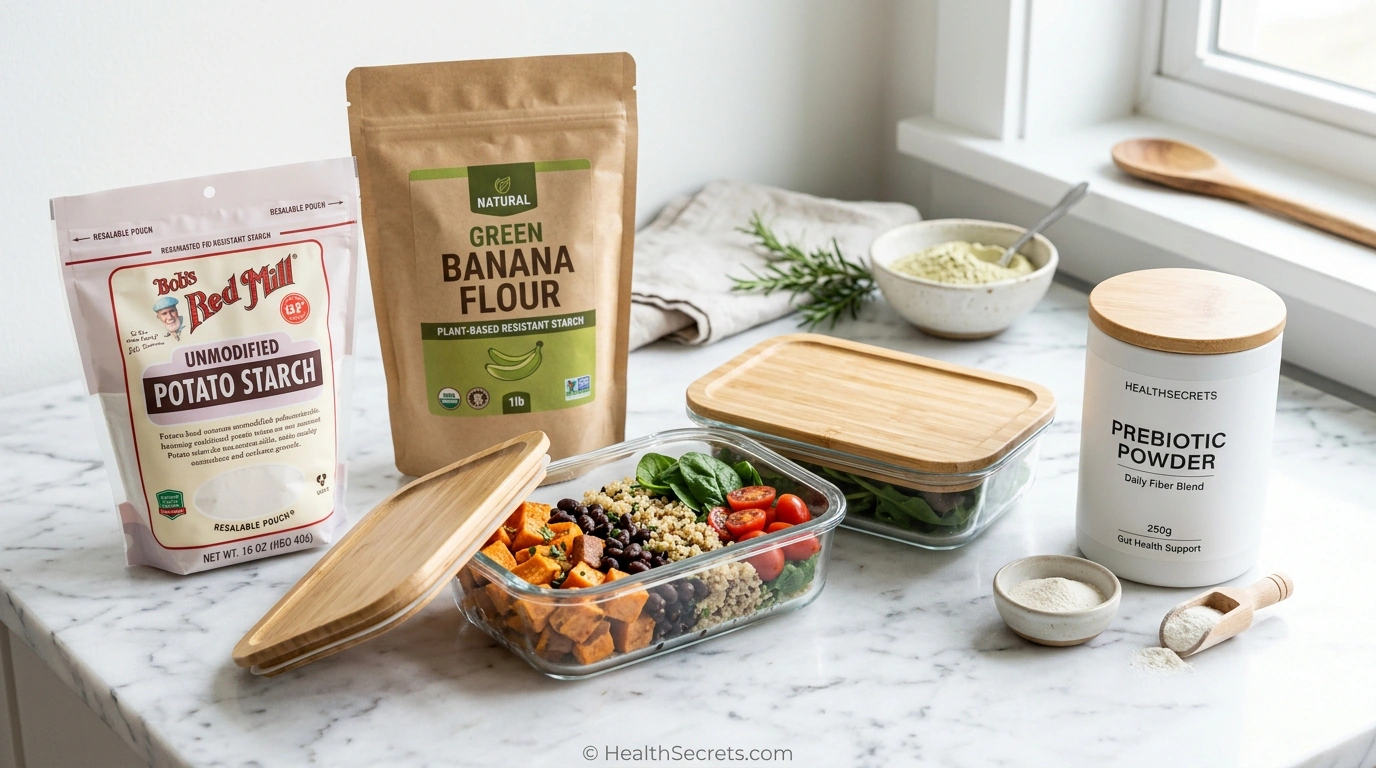
Here's something that might surprise you: not all starch gets digested. Some of it — resistant starch — slips right past your small intestine completely intact. And that's actually a good thing. A really good thing, in fact.
Resistant starch acts like a prebiotic, feeding the trillions of beneficial bacteria in your colon and triggering the production of butyrate, a short-chain fatty acid that researchers keep finding new reasons to get excited about. From strengthening your gut lining to improving insulin sensitivity to potentially lowering colon cancer risk, the benefits are stacking up fast.
The best part? You're probably already eating foods that contain resistant starch — you just might not be getting enough of it. The average Western diet provides only about 3–8 grams per day, while researchers suggest 15–20 grams is closer to optimal. And sometimes, something as simple as cooking your potatoes or rice and then cooling them down can dramatically increase the resistant starch content.
In this guide, you'll learn exactly what resistant starch is, how the four types (RS1–RS4) differ, what the science says about its benefits, and — most importantly — how to get more of it into your meals without overhauling your entire diet.
For more on gut health fundamentals, see our complete guide to gut health. If you're exploring prebiotics broadly, our prebiotic foods guide covers the full landscape.
What Is Resistant Starch and Why Does It Matter for Your Gut?
Resistant starch is a type of starch that "resists" digestion in the small intestine, passing intact to the colon where gut bacteria ferment it into beneficial short-chain fatty acids — especially butyrate. Unlike regular starch that breaks down into glucose and spikes blood sugar, resistant starch behaves more like a soluble fiber, feeding your microbiome instead of raising blood glucose levels.
To understand why this matters, think about how normal starch digestion works. When you eat bread, potatoes, or rice, enzymes in your small intestine break the starch molecules into glucose, which gets absorbed into your bloodstream. Resistant starch, however, has a molecular structure that these enzymes can't efficiently break apart. So it travels all the way to your large intestine — and that's where things get interesting.
Once resistant starch reaches the colon, your gut bacteria go to work fermenting it. This fermentation process produces short-chain fatty acids (SCFAs), primarily butyrate [2], along with propionate and acetate.
These SCFAs are critically important for gut health and overall metabolic function.
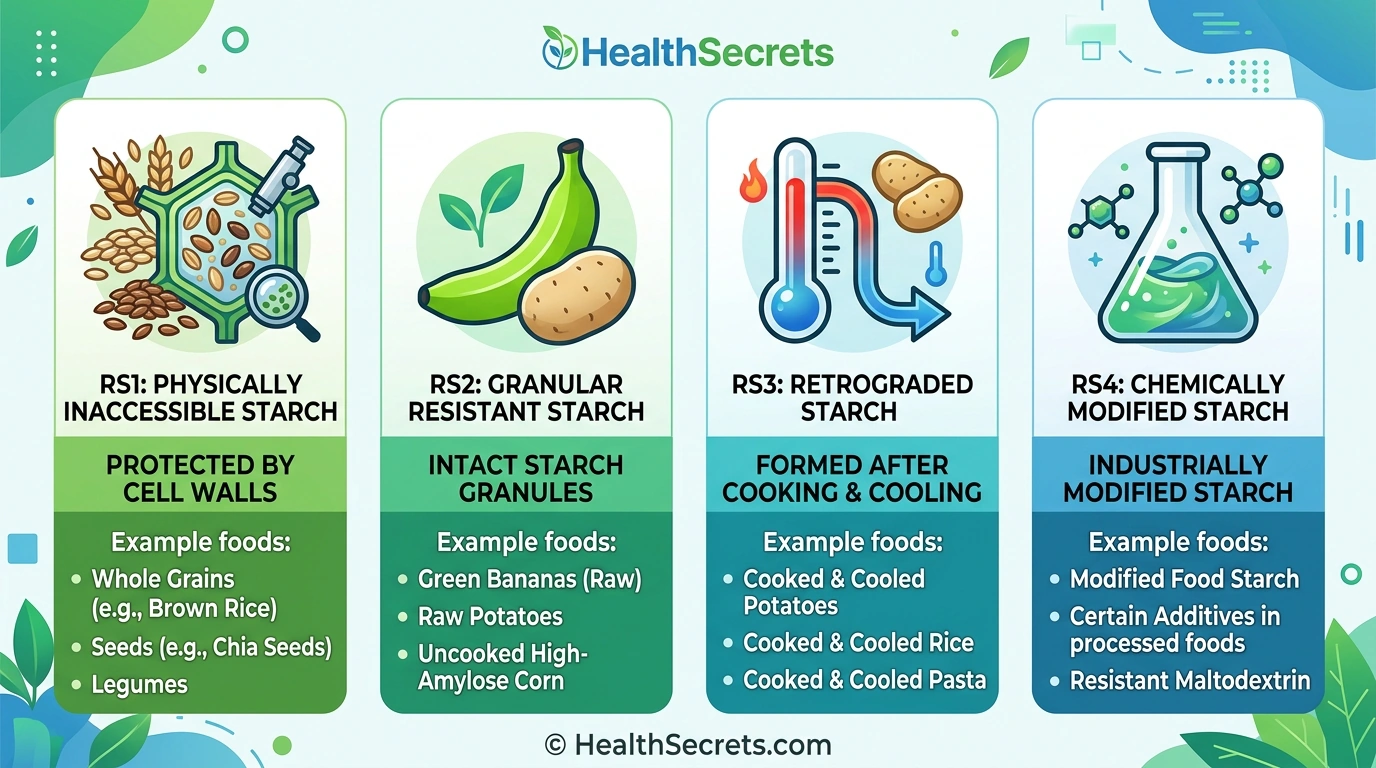
The four types of resistant starch are classified by why they resist digestion:
What Are the Four Types of Resistant Starch (RS1–RS4)?
Each type resists digestion through a different mechanism, and understanding the differences helps you maximize your intake from a variety of food sources.
| Type | What It Is | Food Sources | Heat Stable? |
|---|---|---|---|
| RS1 | Physically trapped in fibrous cell walls | Whole grains, seeds, legumes | Partially |
| RS2 | Raw starch granules that resist enzymes | Green bananas, raw potato starch, plantains | No — lost when cooked |
| RS3 | Retrograded starch from cooking then cooling | Cooled potatoes, rice, pasta, bread | Yes — survives reheating |
| RS4 | Chemically modified starch | Hi-maize starch, modified food starch | Yes |
| RS1 is found in intact whole grains, seeds, and legumes where the starch is physically protected inside cell walls. Grinding or processing reduces RS1 content. |
- RS2 exists in raw, uncooked starchy foods — green bananas are the classic example. Heat destroys RS2 by gelatinizing the starch granules.
- RS3 is the "cooling trick" type: when you cook starchy foods and then cool them, the starch molecules realign into tight crystalline structures that resist digestion. RS3 is remarkably heat-stable, so you can reheat cooled potatoes and still retain most of the resistant starch.
- RS4 is manufactured through chemical or enzymatic modification and is mostly found in processed foods and supplements.
How Does Resistant Starch Work in Your Body?
Resistant starch works primarily through bacterial fermentation in the colon. When gut bacteria break down resistant starch, they produce short-chain fatty acids — especially butyrate — that serve as the primary energy source for colonocytes (colon cells), reduce intestinal inflammation, strengthen the gut barrier, and send metabolic signals throughout the body that improve insulin sensitivity and lipid profiles.
How Does Resistant Starch Produce Butyrate?
The fermentation process is straightforward: bacteria like Bifidobacterium, Ruminococcus, and Faecalibacterium prausnitzii break down resistant starch into SCFAs. Butyrate is the star here — it provides roughly 70% of the energy [3] that colon cells need to function properly. Without adequate butyrate, the gut lining weakens, inflammation increases, and the risk of conditions like leaky gut and colorectal cancer rises.
Beyond fueling colon cells, butyrate also:
- Reduces inflammation by inhibiting NF-κB, a key inflammatory signaling pathway
- Strengthens gut barrier integrity by upregulating tight junction proteins
- Lowers colon pH, creating an environment that discourages harmful bacteria and promotes beneficial species
- Improves mineral absorption of calcium and magnesium in the colon

Why Does Resistant Starch Improve Blood Sugar?
Because resistant starch bypasses normal glucose absorption in the small intestine, it doesn't trigger the blood sugar spikes associated with regular starch. But the benefits go further. Research shows that resistant starch consumption improves insulin sensitivity through multiple mechanisms: SCFA signaling increases GLP-1 secretion (a hormone that enhances insulin response), modulates hepatic glucose production, and improves peripheral insulin sensitivity [8]. Perhaps most fascinating is the "second meal effect" — eating resistant starch at one meal can actually improve glucose response at your next meal, hours later.

The Cooking Oil & Smoke Point Chart
Smoke point, refining and fatty-acid profile for fifteen everyday oils, matched to a cooking-method decision table so the right fat meets the right pan temperature.
What Are the Key Health Benefits of Resistant Starch?
Resistant starch delivers a broad range of health benefits spanning gut health, metabolic function, weight management, and colon cancer prevention. The evidence is strongest for its prebiotic effects and blood sugar regulation, with growing research supporting benefits for body composition and cardiovascular health.
Does Resistant Starch Improve Gut Health and Microbiome Diversity?
Yes — resistant starch is one of the most effective prebiotics for increasing beneficial bacteria populations and microbial diversity. A 2024 review in the journal Food Chemistry found that resistant starch selectively promotes the growth [2] of Bifidobacterium and Lactobacillus species while increasing overall SCFA production. The butyrate generated supports mucosal barrier function and reduces endotoxin influx from the intestinal tract, which may help address leaky gut and systemic inflammation [1]. Resistant starch also improves bowel regularity by increasing stool bulk and promoting healthy transit time.
Can Resistant Starch Help Control Blood Sugar and Insulin Resistance?
A systematic review and meta-analysis published in Nutrition & Diabetes confirmed that resistant starch supplementation significantly improves fasting glucose, fasting insulin, and insulin resistance [5], particularly in individuals with overweight, obesity, or type 2 diabetes. Another meta-analysis of 22 randomized controlled trials found that RS2 supplementation (≥8 grams per day) produced meaningful improvements in glycemic markers [6] across diverse populations. The effect is especially pronounced when resistant starch replaces rapidly digestible carbohydrates in the diet.
Does Resistant Starch Support Weight Loss?
A landmark 2024 study published in Nature Metabolism found that resistant starch supplementation over 8 weeks led to a mean weight loss of 2.8 kg [4] in participants with overweight or obesity, alongside improved insulin resistance. The weight loss was linked to changes in gut microbiota composition — specifically, increases in Bifidobacterium adolescentis. Resistant starch also increases satiety (keeping you fuller longer), results in fewer calories absorbed (since it isn't digested), and may reduce fat storage through SCFA-mediated metabolic signaling.
Is Resistant Starch Good for Heart and Colon Health?
Emerging research links resistant starch consumption to improved lipid profiles and reduced triglycerides [9]. The SCFA propionate, produced alongside butyrate during fermentation, has been shown to lower inflammation and improve immune function. For colon health specifically, butyrate lowers colon pH (creating a protective acidic environment), acts as an anti-proliferative agent against cancerous cells, and supports healthy colonocyte turnover [3]. Epidemiological data suggests populations with higher resistant starch intake have lower rates of colorectal cancer.
Are There Any Risks or Side Effects of Resistant Starch?
Resistant starch is generally safe for most people, but introducing it too quickly can cause gas, bloating, and abdominal discomfort due to increased bacterial fermentation in the colon. Starting with small amounts (5 grams per day) and gradually increasing over 2–4 weeks allows your gut bacteria to adapt and minimizes digestive upset.
The most common side effects include:
- Gas and bloating — the most frequently reported issue, caused by bacterial fermentation producing hydrogen and methane gases
- Abdominal cramping — typically mild and temporary, resolving as your microbiome adapts
- Changes in stool consistency — increased bulk and frequency, which is generally beneficial
Who should be cautious:
- SIBO (Small Intestinal Bacterial Overgrowth): Resistant starch may worsen symptoms by feeding bacteria in the wrong location. Consult a gastroenterologist before increasing intake.
- IBS sufferers: Start with very small amounts (2–3 grams) and monitor symptoms carefully. Some people with IBS tolerate RS3 (cooked and cooled starches) better than RS2 (raw potato starch).
- Digestive disorders: Anyone with Crohn's disease, ulcerative colitis, or other inflammatory bowel conditions should work with a healthcare provider before significantly increasing resistant starch.
To minimize side effects: start low (5 grams per day), increase by 2–3 grams every few days, drink plenty of water, and spread intake across meals rather than consuming it all at once. Most people adapt within 2–4 weeks.
How Do You Increase Resistant Starch in Your Diet?
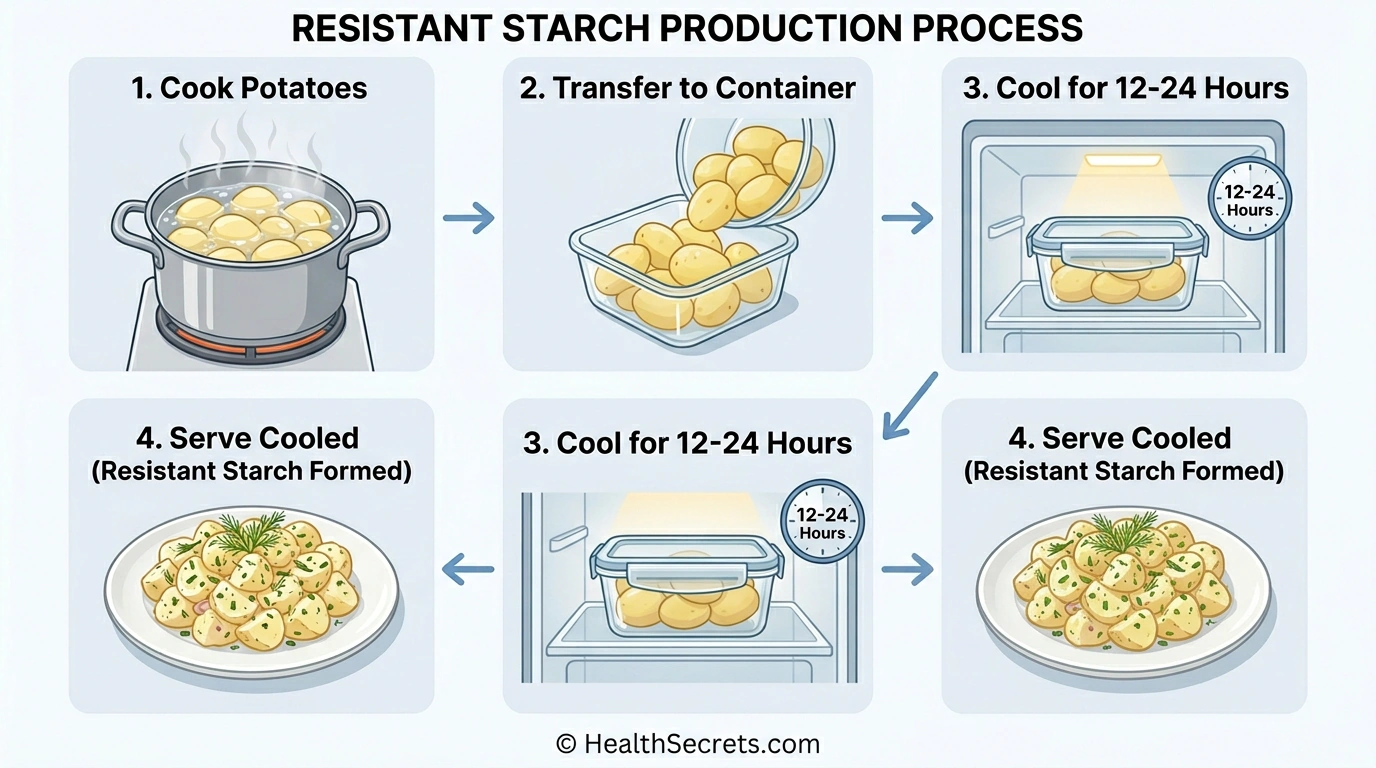
The easiest way to increase resistant starch is through the "cook and cool" method — cooking starchy foods like potatoes, rice, or pasta, then refrigerating them for 12–24 hours before eating. This creates RS3 (retrograded starch), which remains stable even when reheated. You can also add raw potato starch to smoothies or choose naturally high-RS foods like green bananas and legumes.
The Cook-and-Cool Method (Creating RS3)
- Cook starchy foods normally — boil potatoes, steam rice, or cook pasta
- Cool completely in the refrigerator for 12–24 hours (longer cooling = more RS3 formation)
- Eat cold or reheat — RS3 survives reheating, so warm it up if you prefer
Research shows that cold storage increases resistant starch content significantly [12]. For potatoes, RS content increases from about 3.3% to 5.2% (starch basis) after cooling. Each additional day of chilling (up to about four days) further increases the RS percentage.
Best Food Sources of Resistant Starch
| Food | RS Type | RS Content (per 100g) | Preparation Tips |
|---|---|---|---|
| Raw potato starch | RS2 | ~75g | Mix into smoothies; do not heat |
| Green banana flour | RS2 | 17–38g | Add to smoothies, baking |
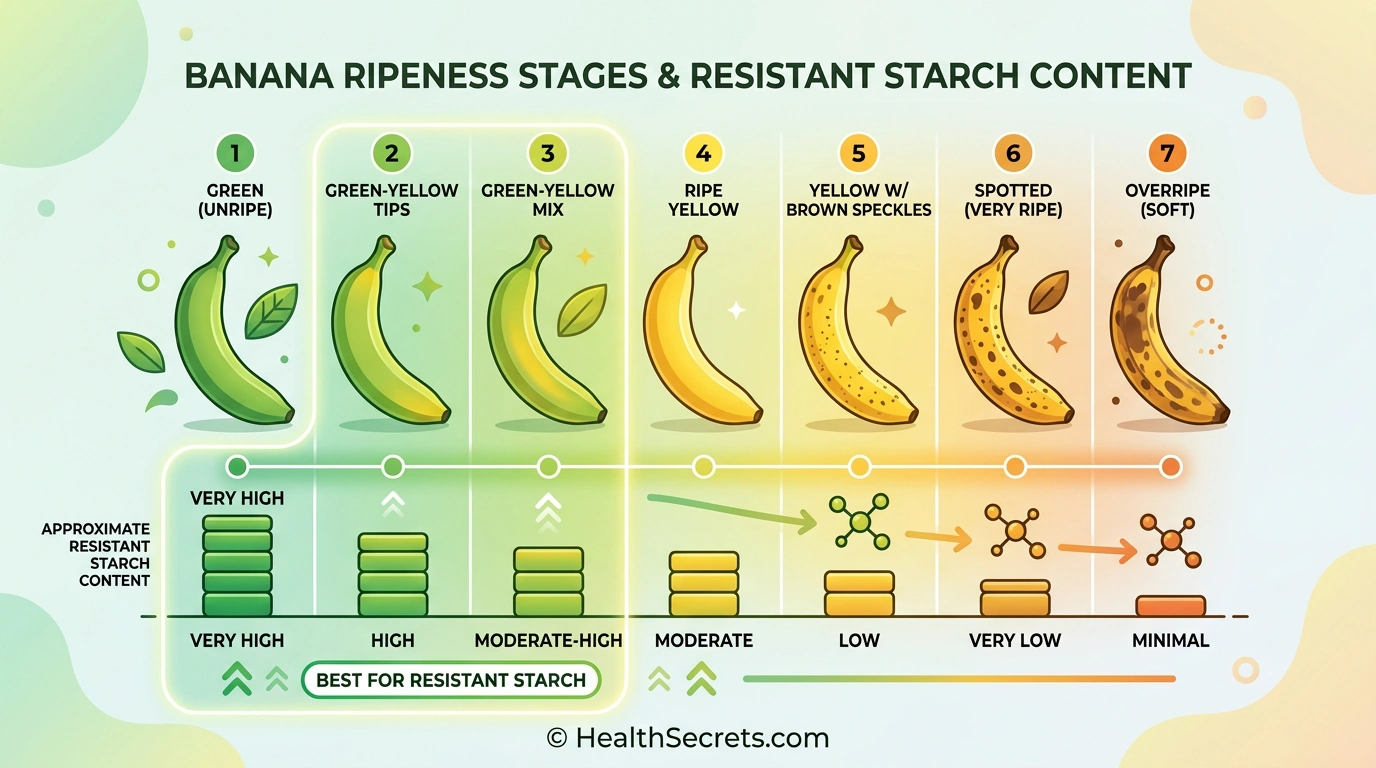
| Green (unripe) bananas | RS2 | 4.7–34g (varies by ripeness) | Eat slightly underripe |
| Cooked and cooled potatoes | RS3 | 3–5g | Cool 12–24 hrs; reheat OK |
| Cooked and cooled rice | RS3 | 1–3g | Refrigerate overnight; reheat OK |
| Oats (raw or cooled) | RS1/RS3 | 3–4g | Overnight oats maximize RS |
| Legumes (lentils, chickpeas) | RS1/RS3 | 2–5g | Cook and cool for salads |
| Cashews | RS1 | ~13g | Eat raw as snack |
Practical Ways to Add More Resistant Starch
- Start your day with overnight oats — soaking raw oats overnight preserves RS1 and forms some RS3
- Make potato salad or cold rice dishes — the cooling process creates RS3
- Snack on slightly green bananas — the greener, the more RS2 they contain
- Add 1–2 tablespoons of raw potato starch to smoothies — a concentrated RS2 source (start with 1 tablespoon)
- Prep beans and lentils for cold salads — cooking then cooling maximizes their RS3 content
- Use green banana flour in baking — partially replaces regular flour while adding RS2
- Batch-cook rice and potatoes for the week — meal prep naturally creates RS3
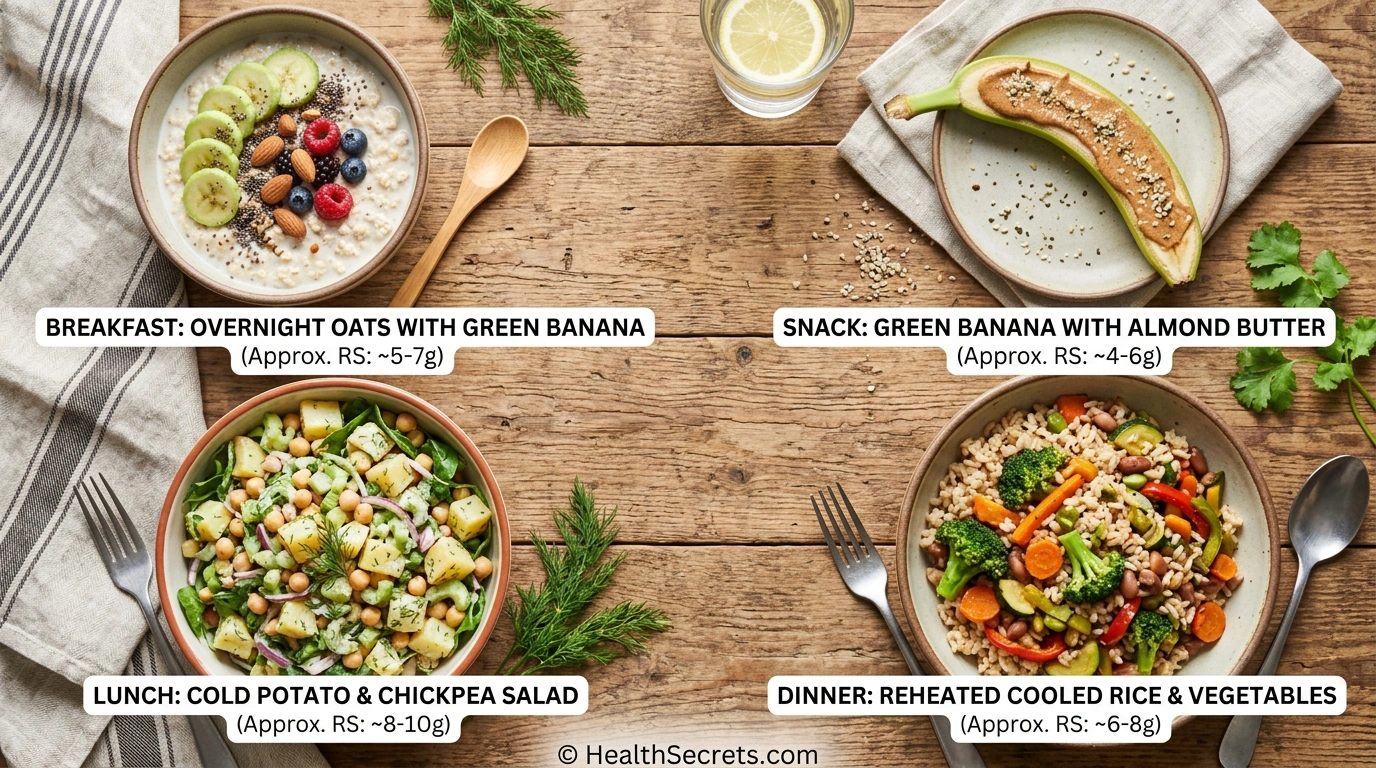
Sample High-Resistant-Starch Day (~20g RS)
- Breakfast: Overnight oats with sliced green banana and chia seeds (~5g RS)
- Lunch: Cold potato and chickpea salad with olive oil dressing (~6g RS)
- Snack: Slightly green banana with almond butter (~4g RS)
- Dinner: Reheated cooled rice with grilled chicken and vegetables (~3g RS)
- Evening: Smoothie with 1 tbsp raw potato starch (~8g RS bonus if desired)
What Diet and Lifestyle Changes Support Resistant Starch Benefits?
To maximize the benefits of resistant starch, combine it with a diverse, fiber-rich diet that supports overall microbiome health. Eating a variety of prebiotic and probiotic foods alongside resistant starch creates a synergistic effect — the diverse bacterial populations work more efficiently to ferment RS and produce beneficial SCFAs.
Dietary strategies:
- Eat a variety of RS types — don't rely on just one source. Combine RS1 foods (legumes, whole grains), RS2 foods (green bananas, potato starch), and RS3 foods (cooled starches) for maximum microbiome diversity.
- Include other prebiotics — resistant starch works well alongside inulin, FOS, and GOS. Each prebiotic feeds slightly different bacterial populations, and variety matters for gut health.
- Consume probiotic foods — fermented foods like yogurt, kefir, sauerkraut, and kimchi provide the beneficial bacteria that eat resistant starch. Learn more in our probiotics guide.
- Eat adequate fiber overall — aim for 25–35 grams of total fiber per day from vegetables, fruits, whole grains, nuts, and seeds alongside your resistant starch.
Lifestyle factors that support gut health:
- Manage stress — chronic stress disrupts the gut microbiome and reduces SCFA production
- Prioritize sleep — 7–9 hours supports healthy microbial diversity
- Stay hydrated — water supports digestion and helps resistant starch move through the GI tract
- Exercise regularly — moderate exercise increases microbial diversity and SCFA production
For more on gut-healing foods and the microbiome, see our detailed guide. If you're interested in how gut health connects to weight, explore our article on gut health and weight loss.
What Should You Do First to Start Getting More Resistant Starch?
Start by incorporating the cook-and-cool method into your existing meal prep routine — cook extra potatoes or rice, refrigerate overnight, and eat them cold or reheated the next day. This is the easiest, lowest-cost way to boost your resistant starch intake without buying new foods or supplements.
Phase 1 (Week 1–2): Start Simple
- Cook and cool potatoes or rice for 2–3 meals this week
- Try overnight oats for breakfast (2–3 days)
- Choose slightly green bananas at the store
- Track any digestive changes (gas, bloating — normal at first)
Phase 2 (Week 3–4): Build Variety
- Add cold bean or lentil salads to your lunch rotation
- Try 1 tablespoon raw potato starch in a smoothie
- Include at least one RS-rich food at every meal
- Aim for 10–15 grams of resistant starch daily
Phase 3 (Week 5+): Optimize
- Increase to 15–20 grams resistant starch daily
- Experiment with green banana flour in baking
- Combine RS with other prebiotics (inulin, FOS) for diversity
- Notice improvements in digestion, satiety, and energy levels