
Create Five-Minute Recovery Rituals You Can Actually Repeat
This A4 workbook helps you test brief breathing, movement, sensory, connection, and transition habits within the rhythms of a real day. It offers a compassionate record of what supports a pause without presenting self-care worksheets as clinical care for a mental-health condition.

Why Most Advice Leaves You More Confused
What’s Inside the Complete System
Every section is authored to provide concrete, fillable tools rather than theoretical filler.
Personal Stress-Pattern Baseline
The baseline names common cues, time windows, body sensations, responsibilities, and available supports without asking you to label a diagnosis. It includes a quick function and safety check to identify when self-guided tracking is not enough. The outcome is a compassionate starting point grounded in your actual day.
Seven Five-Minute Micro-Habit Cards
The cards offer brief options such as paced breathing, a sensory reset, a short walk, gentle mobility, a transition ritual, connection, and quiet attention. Each card includes a minimum version, a stop cue, and a place to note setting rather than promising a particular feeling. You can choose the least demanding option available.
30-Day Cue and Routine Tracker
The tracker records the cue, practice selected, approximate duration, and a neutral after-note in a few lines. It allows a missed day and includes a context field for sleep, workload, caregiving, or travel. The practical outcome is pattern recognition instead of a streak-based judgment.
Nervous-System-Friendly Environment Map
This map identifies small changes to transitions, notifications, lighting, movement breaks, social support, and recovery space. It separates what you can control from what needs a conversation with another person or professional. The result is an environmental plan, not a promise to regulate every response.
Barrier and Compassionate Reset Worksheet
The worksheet asks what interrupted a practice and offers a smaller next version, such as one breath, one stretch, or one request for help. It helps replace all-or-nothing thinking with a practical adjustment while respecting limits and symptoms. You leave with a plan for re-entry rather than a punishment for stopping.
Clinician and Support Conversation Sheet
The summary organizes duration, sleep, concentration, mood, safety concerns, substances, medications, and support questions for a professional conversation. It includes a place to record referrals or next steps supplied by the care team. This makes it easier to ask for help before the story becomes too difficult to explain.
Is This System Right for You?
- Busy adults who want small, low-cost pauses that can be practiced at a desk, at home, or between responsibilities.
- People who dislike streaks and performance scores and would rather test a few compassionate, repeatable routines.
- Caregivers, students, parents, and shift workers who need a flexible plan that acknowledges unpredictable days.
- Anyone preparing to discuss stress, sleep, concentration, mood, or support needs with a qualified professional.
- It is not psychotherapy, crisis support, or a clinical care plan for depression, anxiety, trauma, or another mental-health condition.
- It is not appropriate as the only support when there is immediate risk, severe impairment, or a safety concern.
- It is not a promise that breathing, movement, or another micro-habit will resolve a person's symptoms.
Clinical Evidence & Scientific Grounding
The workbook is consistent with behavioral sleep and stress literature that values regular routines, brief behavioral experiments, and attention to environmental and social context. It also fits the AHA's broader lifestyle emphasis on movement, sleep, connection, and manageable behavior change, while avoiding the clinical claim that a worksheet can address a mental-health diagnosis.
A dated record can improve a shared conversation by showing timing, function, barriers, and the person's own priorities. The evidence-informed rationale is therefore organizational: it supports reflection and referral, leaves care decisions to qualified professionals, and encourages urgent help when safety or functioning is significantly affected.
Want a Free Printable Quick-Start?
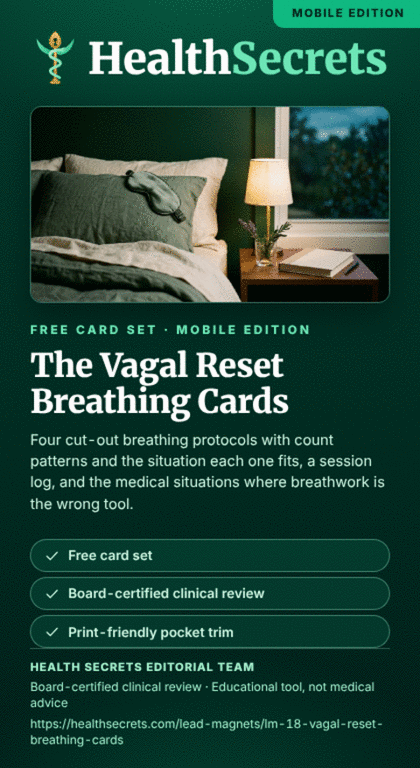
Four cut-out breathing protocols with count patterns and the situation each one fits, a session log, and the medical situations where breathwork is the wrong tool.
Frequently Asked Questions
Ready to Bring Structure to Your Health?
Instant download. Lifetime digital access. Fully printable on A4 paper and fillable on tablets.