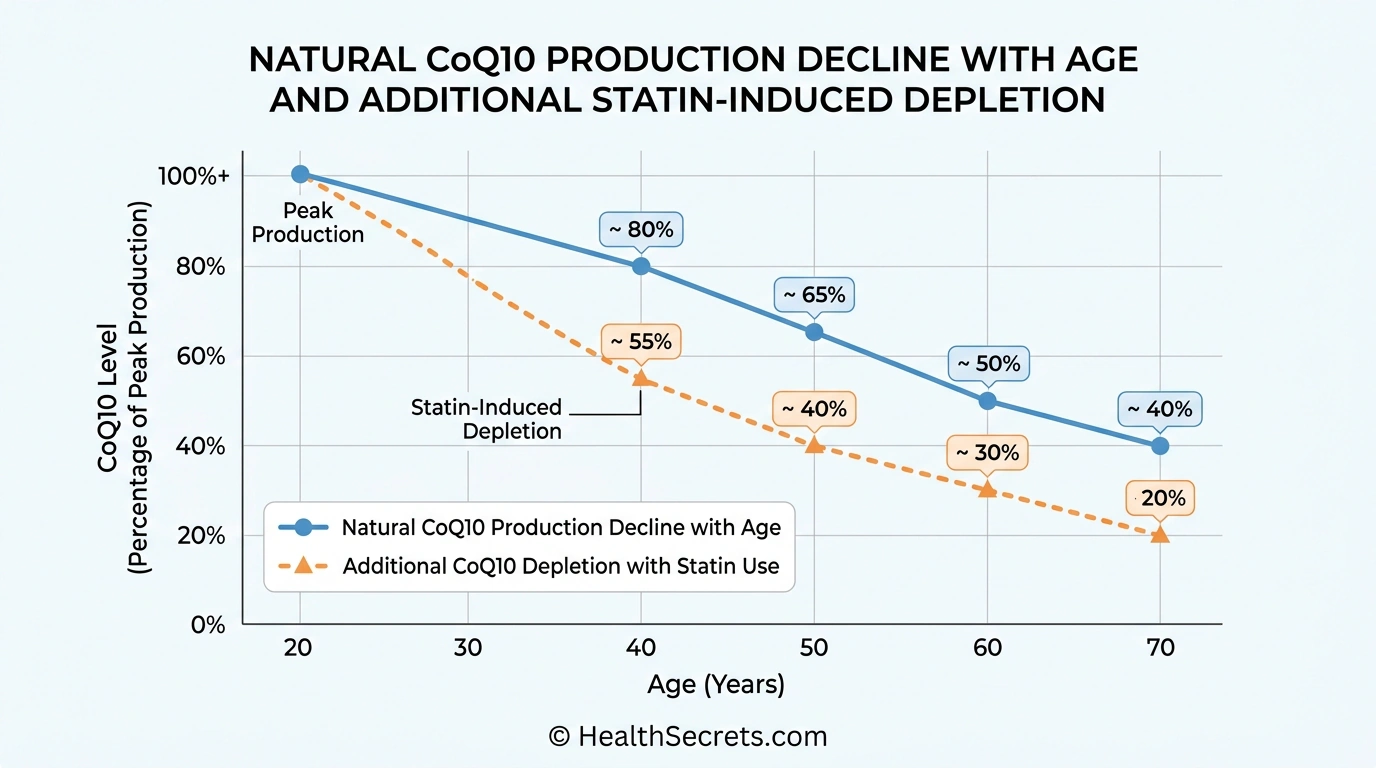
Your body runs on cellular energy — and CoQ10 is the spark plug that makes it happen. Present in every cell, coenzyme Q10 is a fat-soluble compound essential for mitochondrial ATP production, antioxidant defense, and cardiovascular health. Yet natural CoQ10 levels decline by 30–40% by age 40 and over 50% by age 60, leaving millions of adults running on a depleted energy supply.
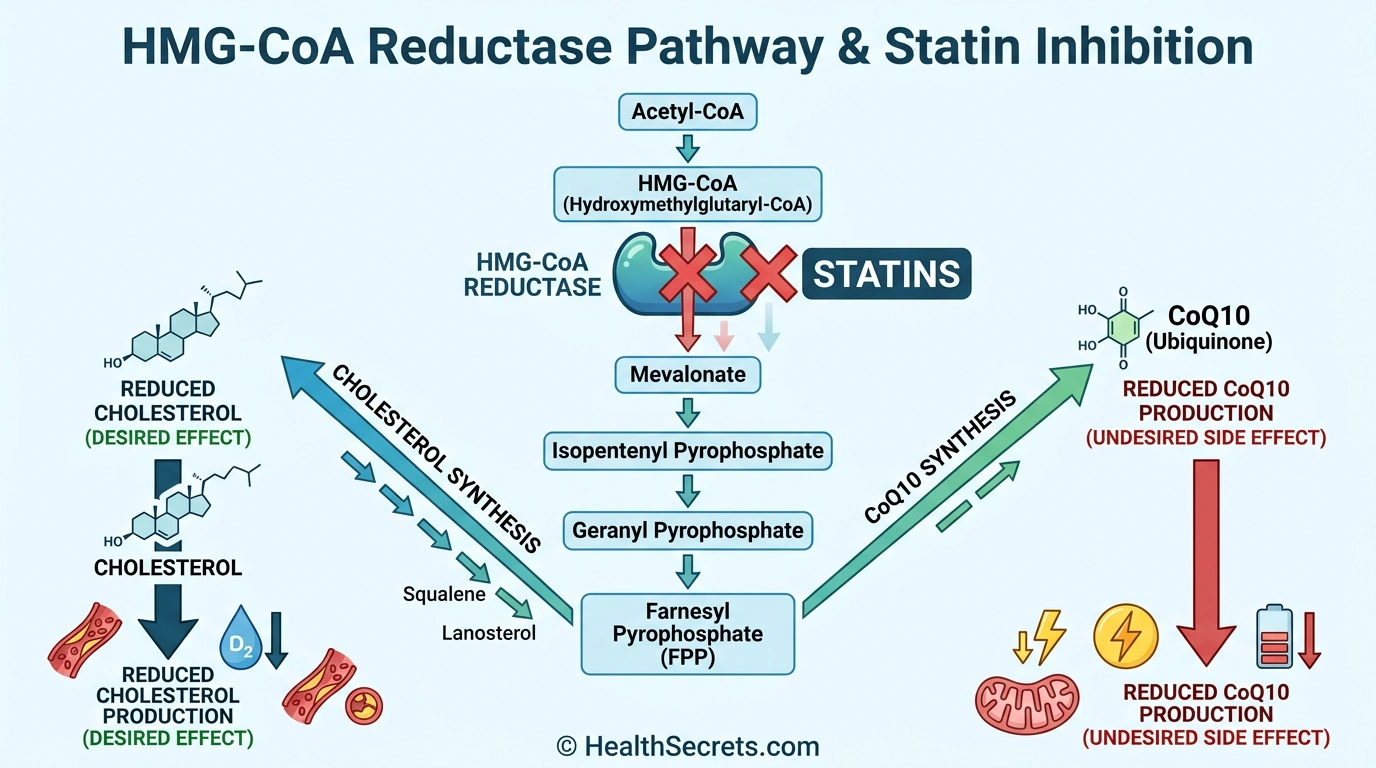
For the estimated 40 million Americans taking statin medications, the situation is even more urgent. Statins block the same metabolic pathway that produces both cholesterol and CoQ10, depleting levels by an additional 25–50% and often triggering muscle pain, fatigue, and exercise intolerance.
Whether you're over 40, taking statins, managing a heart condition, or simply want to optimize your cellular energy, this comprehensive CoQ10 supplement guide gives you everything you need: the science behind both forms (ubiquinone and ubiquinol), evidence-based dosing for specific conditions, absorption optimization strategies, and our top product recommendations — all backed by peer-reviewed research from PubMed and major medical journals.
If you're exploring supplements for heart health and cellular energy, see our guides on glutathione — the master antioxidant, the detox and cleansing guide, and the immune system ultimate guide.
- CoQ10 is essential for mitochondrial ATP production and is found in every cell, with the highest concentrations in the heart, liver, and kidneys
- Natural CoQ10 production declines 30–40% by age 40 and over 50% by age 60, making supplementation increasingly important with age
- All statin users should consider CoQ10 supplementation since statins deplete CoQ10 by 25–50% through the shared HMG-CoA reductase pathway
- Ubiquinol (reduced form) offers 2–3x better bioavailability than ubiquinone and is preferred for adults over 40 and statin users
- A 2024 meta-analysis confirmed CoQ10 reduces all-cause mortality and hospitalization in heart failure patients without major adverse effects
- Standard dosing ranges from 100–200 mg daily for general health to 100–300 mg for cardiovascular conditions, always taken with a fatty meal
- CoQ10 supplementation at 100–300 mg daily reduced migraine frequency by approximately 1.5 attacks per month in clinical trials
- Softgel capsules dissolved in oil provide significantly better absorption than dry powder capsules or tablets
What Is CoQ10 and Why Is It Essential for Every Cell in Your Body?
Coenzyme Q10 (CoQ10) is a fat-soluble, vitamin-like compound naturally present in every cell membrane, where it plays an irreplaceable role in mitochondrial energy production and antioxidant defense. Also known as ubiquinone — named for its ubiquitous presence throughout the body — CoQ10 is concentrated most heavily in organs with the greatest energy demands: the heart, liver, kidneys, and brain.
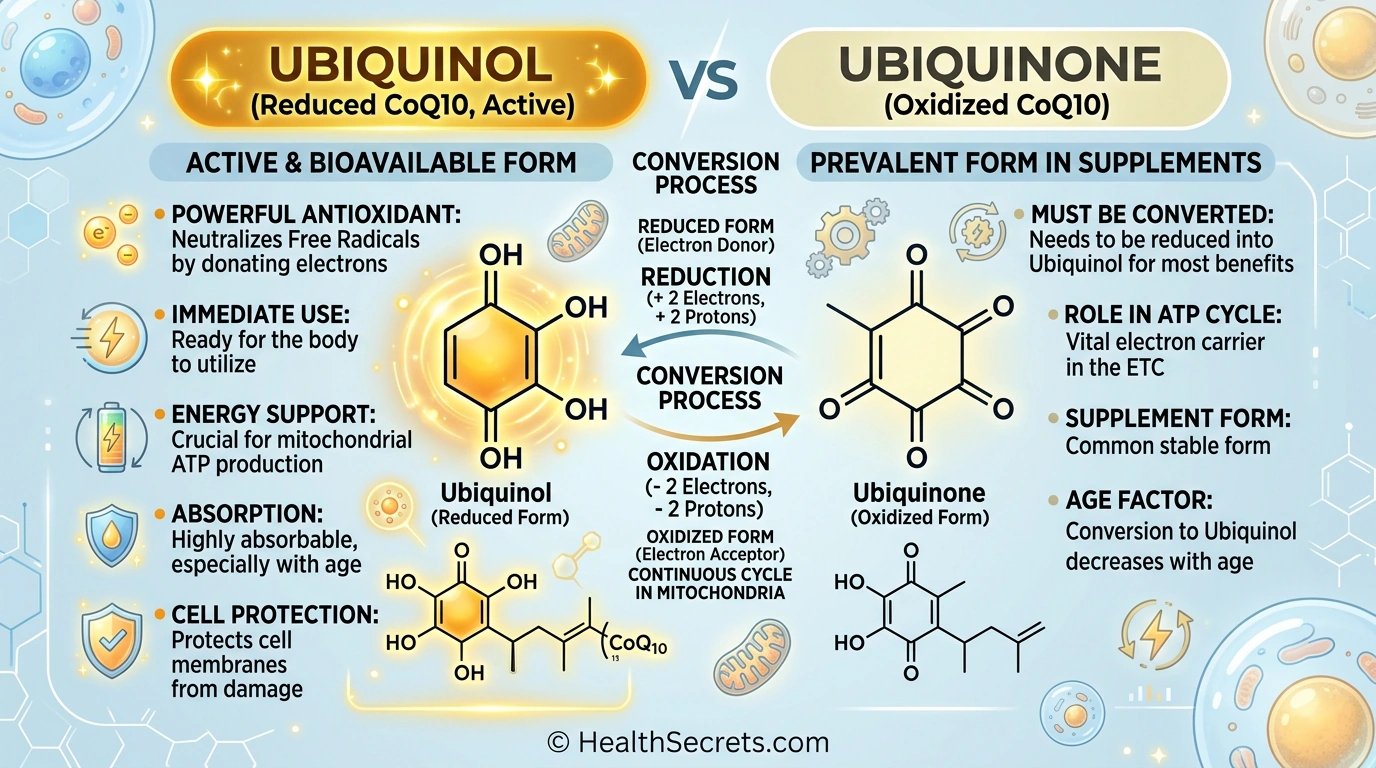
Your body synthesizes CoQ10 endogenously through the mevalonate pathway, the same biochemical route that produces cholesterol. CoQ10 exists in two interconvertible forms: ubiquinone (the oxidized form) and ubiquinol (the reduced, active form). In blood plasma, 90–95% of circulating CoQ10 is in the ubiquinol form, ready for immediate antioxidant and energy-producing activity.
The age-related decline is significant:
- Peak production occurs in your 20s
- By age 40: 30–40% reduction in CoQ10 synthesis
- By age 60: 50–60% reduction
- Statin medications accelerate this decline by an additional 25–50%
Dietary sources — including organ meats, fatty fish, and nuts — provide only 3–6 mg of CoQ10 daily, far below the 100–200 mg therapeutic range. This makes supplementation the only practical way to achieve clinically meaningful levels for most adults over 40.
How Does CoQ10 Work in the Body to Produce Energy and Protect Cells?
CoQ10 functions through three primary mechanisms that are fundamental to cellular health: ATP energy production, antioxidant defense, and cardiovascular protection. Understanding these mechanisms explains why CoQ10 deficiency affects virtually every organ system.
How Does CoQ10 Power Mitochondrial Energy Production?
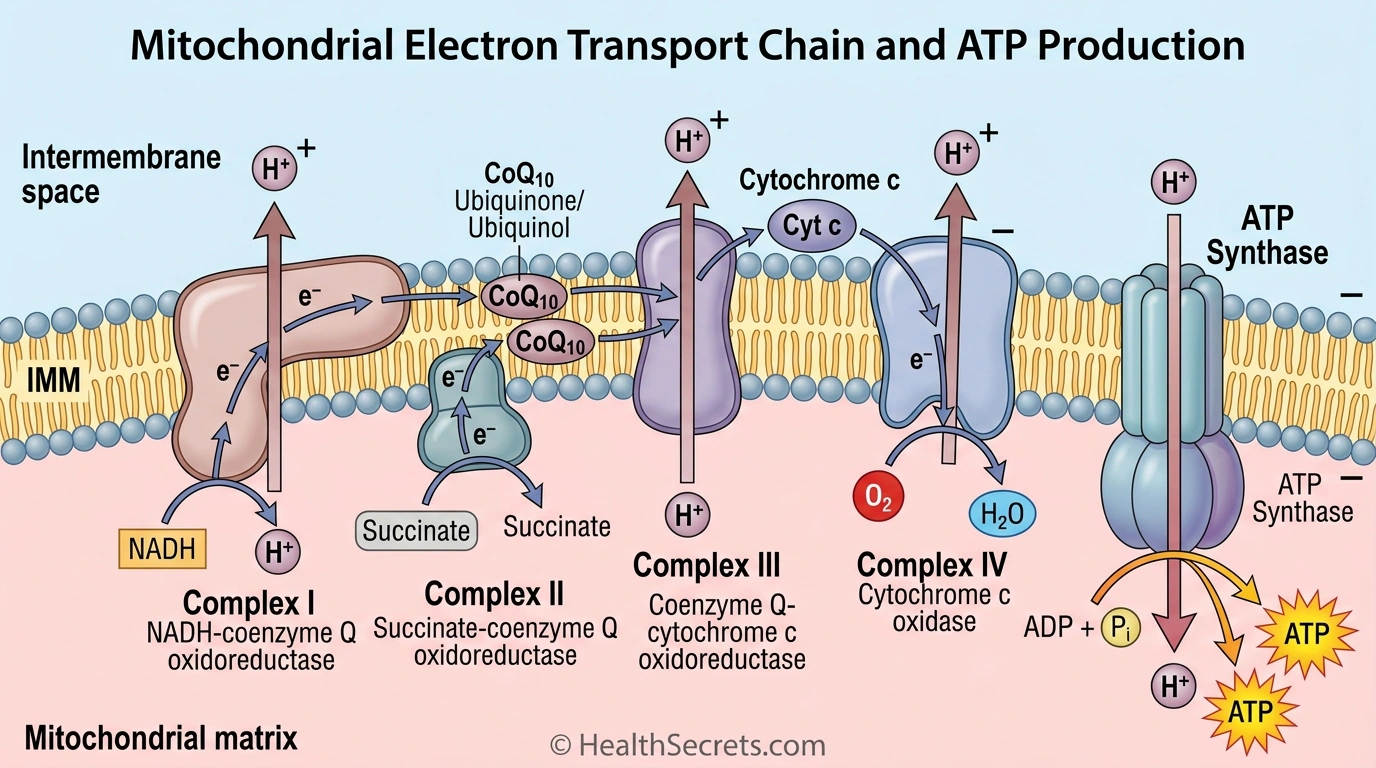
CoQ10 serves as an essential electron carrier in the mitochondrial electron transport chain, specifically shuttling electrons between Complex I/II and Complex III. Without adequate CoQ10, cells cannot efficiently produce adenosine triphosphate (ATP) — the universal energy currency that powers every biological process. The heart alone requires enormous quantities of ATP, cycling through roughly 6 kg of ATP daily to maintain continuous contraction [1].
Organs with the highest energy demands — the heart, brain (which consumes 20% of total body energy despite being only 2% of body weight), liver, and kidneys — contain the highest CoQ10 concentrations and are most vulnerable to CoQ10 depletion.
How Does CoQ10 Protect Against Oxidative Damage?
As a potent lipid-soluble antioxidant, CoQ10 neutralizes free radicals generated as byproducts of mitochondrial energy production. It protects cell membrane lipids from peroxidation, prevents LDL cholesterol oxidation (a key step in atherosclerotic plaque formation), and regenerates vitamin E — another critical antioxidant. In vitro analysis has demonstrated that CoQ10 inhibits LDL oxidation more effectively than β-carotene or α-tocopherol [23].
What Cardiovascular Benefits Does CoQ10 Provide?
The cardiovascular evidence for CoQ10 is the most robust of any application. The landmark Q-SYMBIO trial — a randomized, double-blind study of 420 patients with chronic heart failure — found that CoQ10 supplementation (100 mg three times daily) reduced major adverse cardiovascular events by 43%, cardiovascular mortality by 42%, and all-cause mortality by 42% over two years [2].
A comprehensive 2024 meta-analysis of randomized controlled trials confirmed that CoQ10 supplementation reduces all-cause mortality, hospitalization for heart failure, and brain natriuretic peptide levels while improving left ventricular ejection fraction and 6-minute walk test results — all without major adverse effects [1].
For hypertension, a 2026 systematic review and meta-analysis found that CoQ10 supplementation is an effective adjunctive therapy for reducing systolic blood pressure, especially at doses below 200 mg/day with longer treatment durations [4]. An earlier meta-analysis documented systolic reductions of up to 17 mmHg and diastolic reductions of up to 10 mmHg [5].
How Does CoQ10 Counteract Statin-Induced Muscle Pain?
Statins inhibit HMG-CoA reductase — the enzyme that produces both cholesterol and CoQ10. This shared pathway means statin therapy reduces circulating CoQ10 by an average of 0.44 μmol/L, a statistically significant depletion [25]. A 2024 systematic review of randomized controlled trials confirmed that CoQ10 supplementation significantly ameliorates statin-associated myopathy, with all included RCTs showing improvement in muscle symptoms [6]. A meta-analysis of 12 RCTs (575 patients) found CoQ10 supplementation significantly reduced muscle pain, weakness, cramps, and tiredness compared to placebo [7].
How Well Is CoQ10 Absorbed and Which Form Works Best?
CoQ10 bioavailability varies dramatically depending on the form (ubiquinone vs ubiquinol), the delivery vehicle, and individual factors like age and digestive health. Because CoQ10 is a large, highly lipophilic molecule, absorption has historically been a challenge — but modern formulations have largely solved this problem.
Ubiquinol vs Ubiquinone Absorption:
The bioavailability debate remains nuanced. A cell-culture study found that ubiquinol achieved greater micellarization during digestion and significantly higher cellular uptake than ubiquinone [13]. A 2026 randomized crossover pharmacokinetic trial confirmed that ubiquinol achieves higher absorption than ubiquinone [16]. However, some studies in healthy younger volunteers found no significant difference when using well-formulated softgels [14]. The consensus: ubiquinol shows the greatest absorption advantage in older adults and those with compromised antioxidant status — precisely the populations most likely to need CoQ10.
Formulation matters enormously:
- Softgels with oil (soybean, olive, MCT) provide the best absorption — CoQ10 is pre-dissolved, bypassing a major absorption bottleneck
- Dry powder capsules/tablets offer significantly lower bioavailability
- Liposomal formulations show enhanced single-dose absorption but may not offer advantages over oil-based softgels taken with meals [17]
| Factor | Ubiquinone (Oxidized) | Ubiquinol (Reduced) |
|---|---|---|
| Bioavailability | Moderate (age-dependent) | High (2–3x better in elderly) |
| Conversion Required | Yes (body must reduce) | No (already active) |
| Stability | Very stable (long shelf life) | Less stable (needs N₂ packaging) |
| Cost | $ (less expensive) | $$$ (2–3x more) |
| Best For | Under 40, budget-conscious | Over 40, statin users, elderly |
| Maximize absorption: Take CoQ10 with a meal containing 20–30 g of fat (eggs, avocado, nuts, olive oil). Split doses above 100 mg into two servings. Choose softgel formulations over powders. |
How Much CoQ10 Should You Take for Your Specific Needs?
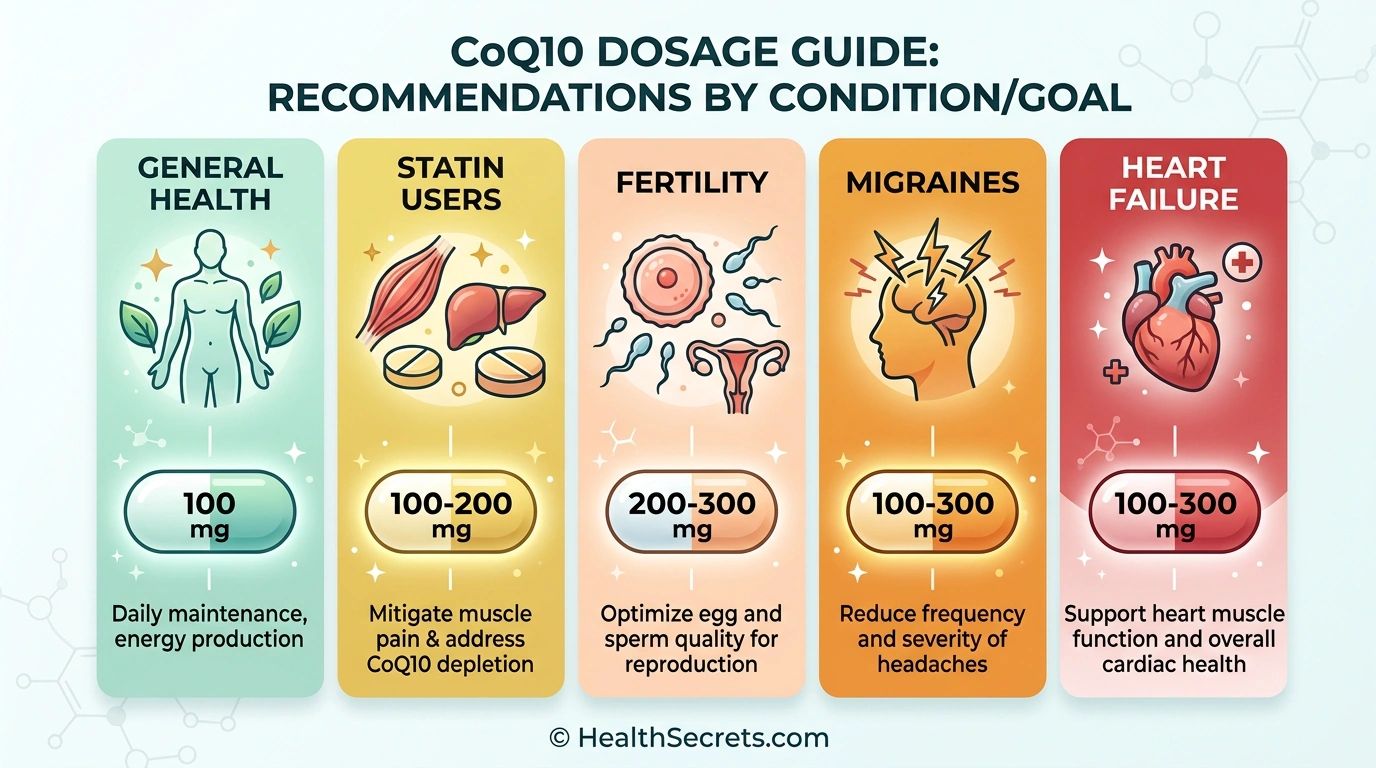
There is no official Recommended Dietary Allowance for CoQ10 since the body produces it endogenously. However, extensive clinical research has established evidence-based dosing ranges for specific conditions and goals. Always take CoQ10 with a fat-containing meal and divide doses above 100 mg for optimal absorption.
| Condition/Goal | Dosage | Form | Duration |
|---|---|---|---|
| General health (under 40) | 50–100 mg/day | Ubiquinone or ubiquinol | Ongoing |
| General health (over 40) | 100–200 mg/day | Ubiquinol preferred | Ongoing |
| Statin users | 100–200 mg/day | Ubiquinol recommended | As long as on statins |
| Heart failure | 100–300 mg/day (divided) | Ubiquinol | Ongoing (medical supervision) |
| Hypertension | 100–200 mg/day | Either form | 8+ weeks minimum |
| Migraine prevention | 100–300 mg/day | Either form | 3+ months for full effect |
| Male fertility | 200–300 mg/day | Either form | 3–6 months |
| Female fertility (35+) | 100–300 mg/day | Ubiquinol | 3–6 months |
| Chronic fatigue | 100–300 mg/day | Ubiquinol | 8–12 weeks minimum |
| Important dosing notes: |
- Doses above 100 mg should be split into morning and lunch servings
- Take with breakfast or lunch containing fat — avoid evening doses if you experience an energizing effect
- CoQ10 is not stored long-term, so consistent daily dosing is essential
- Generally safe up to 500 mg daily; doses above 300 mg should be medically supervised
- Allow 4–8 weeks for noticeable benefits to develop
Can You Get Enough CoQ10 from Food Alone?
While CoQ10 is found in a variety of foods, dietary intake typically provides only 3–6 mg daily — far below the 100–200 mg therapeutic range needed for meaningful health benefits. Achieving therapeutic levels from food alone would require consuming approximately 20–30 servings of beef heart daily, making supplementation the only practical option for most people.
| Food | Serving Size | CoQ10 (mg) | Feasibility |
|---|---|---|---|
| Beef heart | 3 oz (85 g) | 11.3 | Highest source, rarely eaten |
| Chicken heart | 3 oz (85 g) | 9.2 | Uncommon in Western diet |
| Beef liver | 3 oz (85 g) | 3.9 | Good, acquired taste |
| Herring | 3 oz (85 g) | 2.3 | Good, widely available |
| Pork | 3 oz (85 g) | 2.4 | Common protein source |
| Mackerel | 3 oz (85 g) | 1.1 | Good omega-3 source too |
| Peanuts | 1 oz (28 g) | 0.8 | Easy snack, small amount |
| A balanced diet rich in organ meats, fatty fish, and nuts provides a modest CoQ10 foundation but cannot replace supplementation for anyone seeking cardiovascular, neurological, or energy-related benefits — particularly adults over 40 or statin users. For a structured eating plan that emphasizes nutrient-dense whole foods, explore our 7-day detox diet plan. |
Is CoQ10 Safe and What Are the Potential Side Effects?
CoQ10 has an excellent safety profile supported by decades of clinical research, with side effects being rare and typically mild even at high doses. It is generally well-tolerated at doses up to 500 mg daily, with clinical trials safely using doses up to 1,200 mg under medical supervision.
Rare side effects (usually at doses above 300 mg): mild digestive upset (nausea, diarrhea), insomnia if taken late in the day due to its energizing effect, and very rarely skin rash or headache.
Important drug interactions:
- Warfarin (blood thinners): CoQ10 is structurally similar to vitamin K and may reduce warfarin effectiveness — monitor INR closely and consult your doctor
- Chemotherapy drugs: CoQ10's antioxidant properties may theoretically interfere with certain chemotherapy agents — always consult your oncologist
- Blood pressure medications: CoQ10 may enhance blood-pressure-lowering effects — monitor BP and adjust medication as needed
- Diabetes medications: CoQ10 may improve blood sugar — monitor glucose levels
Who should use caution: Pregnant or breastfeeding individuals (insufficient safety data), anyone scheduled for surgery (stop 2 weeks prior due to theoretical bleeding risk), and patients undergoing chemotherapy.
What Can CoQ10 Realistically Do for Your Health?
CoQ10 supplementation offers genuine, evidence-based benefits — but setting realistic expectations is essential for satisfaction and long-term adherence. Here is an honest assessment of what CoQ10 can and cannot do based on the current research.
What CoQ10 can do (strong evidence):
- Reduce all-cause mortality and hospitalization in heart failure (moderate-quality evidence from multiple meta-analyses)
- Ameliorate statin-induced muscle pain, weakness, and cramps
- Modestly reduce systolic blood pressure (especially at doses under 200 mg/day)
- Reduce migraine frequency by approximately 1.5 attacks per month
- Improve sperm quality parameters (motility, morphology, density) in infertile men
What CoQ10 may help with (emerging evidence):
- Subjective energy levels and fatigue (especially in those with low baseline CoQ10)
- Female fertility and egg quality (particularly women over 35 undergoing IVF)
- Exercise performance (more benefit in older adults or those with deficiency)
What CoQ10 will not do:
- Cure heart failure, Parkinson's disease, or any chronic condition on its own
- Replace prescribed medications for cardiovascular disease
- Produce overnight results — expect 4–8 weeks for noticeable benefits, 3+ months for migraine prevention
Individual variation is real: CoQ10 response varies significantly between individuals based on genetics, baseline CoQ10 levels, age, digestive health, and concurrent medications. Those with the greatest deficiency typically experience the most benefit.
What Should You Do First to Start Benefiting from CoQ10?
Follow this phased action plan to implement CoQ10 supplementation safely and effectively. Start with Phase 1 and progress at your own pace, consulting your healthcare provider if you take medications.
Phase 1: Assess Your Need (Week 1)
- Determine your risk category: statin user, over 40, heart condition, migraine sufferer, fertility concerns, or general health
- Review your current medications for interactions (warfarin, BP meds, diabetes drugs)
- Consult your doctor if you have a medical condition or take prescription medications
Phase 2: Choose Your Form and Product (Week 1–2)
- Select ubiquinol if you're over 40, taking statins, or want maximum absorption
- Select ubiquinone if you're under 40, healthy, and budget-conscious
- Choose a softgel formulation dissolved in oil (avoid dry powder capsules)
- Look for third-party testing (USP, NSF, ConsumerLab) and Kaneka ubiquinol if choosing ubiquinol
Phase 3: Start Supplementation (Weeks 2–4)
- Begin at 100 mg daily with a fatty breakfast or lunch
- If your target dose is above 100 mg, split into two daily doses after 1 week
- Take consistently every day — CoQ10 is not stored long-term
Phase 4: Evaluate and Optimize (Weeks 4–12)
- Assess energy levels, exercise capacity, and any specific symptoms at 4–8 weeks
- For migraine prevention, continue for a full 3 months before evaluating
- If taking statins, note any changes in muscle pain or weakness
- Consider combining with magnesium and omega-3 fatty acids for cardiovascular synergy