Here's something most people don't realize until it's too late: the supplement sitting in your medicine cabinet might not contain what the label says it does. Studies have found that roughly 20–30% of dietary supplements fail independent quality testing — meaning they contain too little of the active ingredient, too much, the wrong ingredient entirely, or dangerous contaminants like heavy metals and undeclared pharmaceuticals.
The supplement industry generates over $50 billion annually in the United States alone, and it's growing fast. But unlike prescription drugs, dietary supplements don't require FDA approval before reaching store shelves. Under the Dietary Supplement Health and Education Act of 1994 (DSHEA), supplements are regulated as foods — not drugs. Manufacturers are responsible for their own product safety and labeling accuracy, and the FDA can only step in after a product is already on the market and proven unsafe or mislabeled.
That's a lot of trust placed in companies you've probably never heard of.
The good news? You don't need a chemistry degree to separate the trustworthy from the questionable. Three factors matter most: third-party testing (independent verification that what's on the label matches what's in the bottle), GMP certification (proof that the manufacturing facility meets quality standards), and bioavailability (whether the supplement form your body can actually absorb). Master these three concepts, and you'll make smarter choices than 90% of supplement buyers.
This guide walks you through everything you need to know — from decoding certification seals to spotting red flags that scream "skip this one." Whether you're choosing your first multivitamin or optimizing an existing supplement stack, these principles apply to every product on every shelf. For a broader look at evidence-based natural health approaches, see our complete natural remedies guide. If you're already taking supplements and want to optimize timing, check out our guide on supplement timing and absorption.
What Is Supplement Quality and Why Does It Matter?
Supplement quality refers to the accuracy of ingredient labeling, absence of contaminants, proper manufacturing practices, and bioavailability of the nutrient forms used — and it matters because a supplement that fails on any of these fronts is at best a waste of money and at worst a genuine health risk.
The concept of "quality" in supplements encompasses four distinct dimensions.
- Label accuracy means the product contains exactly what it claims — the right ingredients in the right amounts.
- Purity means the product is free from contaminants like heavy metals (lead, arsenic, mercury, cadmium), microbes (bacteria, mold), pesticides, and undeclared pharmaceuticals.
- Manufacturing integrity means the product was made in a facility following standardized quality control procedures. And bioavailability means the nutrient forms used can actually be absorbed and utilized by your body.
Why can't you just trust what's on the label?
The regulatory framework creates an inherent trust gap. Under DSHEA, supplements are classified as foods rather than drugs. This means manufacturers don't need to prove their products work — or even that they contain what the label says — before selling them.
The FDA can take enforcement action only after problems are reported, products are tested, and violations are confirmed. This process can take months or years.
Independent testing has repeatedly documented the scope of this problem. ConsumerLab.com [3], which has tested thousands of supplements since 1999, regularly finds products that fail for incorrect ingredient amounts, contamination, or failure to dissolve properly. A 2023 review in Frontiers in Sports and Active Living found contamination rates between 12% and 58% across studies of nutritional supplements, with undeclared anabolic steroids, stimulants, and pharmaceuticals among the most common adulterants.
One study examining supplements available in the UAE found that out of 251 imported Chinese herbal remedies tested in California, 36 contained an average of 14.6 ppm arsenic, 24 had at least 10 ppm lead, and 35 contained an average of 1,046 ppm mercury. While these represent extreme cases concentrated in traditional medicine products, they illustrate why independent verification matters.
The bottom line: supplement quality isn't guaranteed by regulation. It's guaranteed by the specific verification steps a manufacturer voluntarily takes — and by your ability to recognize which steps matter.

The Supplement Seal Verifier
What six certification programs each test, the label claims that test nothing, and a ten-bottle audit sheet that counts your verified products.
How Does the Supplement Regulatory System Actually Work?
The U.S. supplement industry operates under a post-market regulatory model where manufacturers bear primary responsibility for product safety and labeling, while the FDA monitors the market and enforces violations after products are already being sold to consumers.
How did DSHEA change supplement regulation?
The Dietary Supplement Health and Education Act of 1994 established the current framework. Before DSHEA, there was ongoing debate about whether supplements should be regulated as drugs (requiring pre-market approval) or as foods (requiring only post-market surveillance). DSHEA sided with the food model, classifying supplements as a special category of food.
Under this framework, manufacturers must ensure their products are safe and accurately labeled, but they do not need to submit evidence of safety or efficacy to the FDA before selling. The FDA issued final GMP regulations for dietary supplements in 2007 (21 CFR Part 111), establishing minimum manufacturing requirements. These cover personnel qualifications, facility standards, quality control testing, labeling procedures, and record-keeping.
What role does the FDA actually play?
The FDA's role is primarily reactive rather than proactive. The agency can inspect manufacturing facilities for GMP compliance, issue warning letters for violations, seize products that are unsafe or mislabeled, and pursue legal action against companies making illegal health claims. The FDA also maintains the MedWatch system for consumers and healthcare providers to report adverse events.
However, the FDA does not "certify" or "approve" any supplement. Any product claiming to be "FDA approved" is making a false claim — that's actually a red flag. The agency's enforcement resources are limited relative to the size of the industry, which means many non-compliant products remain on shelves for extended periods.
What are structure/function claims versus disease claims?
Supplements can make structure/function claims like "supports immune health" or "promotes joint comfort," but they cannot make disease claims like "treats arthritis" or "prevents cancer." Every supplement with a structure/function claim must include the DSHEA disclaimer: "This statement has not been evaluated by the Food and Drug Administration. This product is not intended to diagnose, treat, cure, or prevent any disease."
What Are the Key Benefits of Choosing Quality-Verified Supplements?
Choosing quality-verified supplements ensures you receive the nutrients you're paying for in forms your body can use, free from contaminants — translating directly into better health outcomes, fewer adverse reactions, and genuine value for your investment.
Does third-party testing actually make supplements safer?
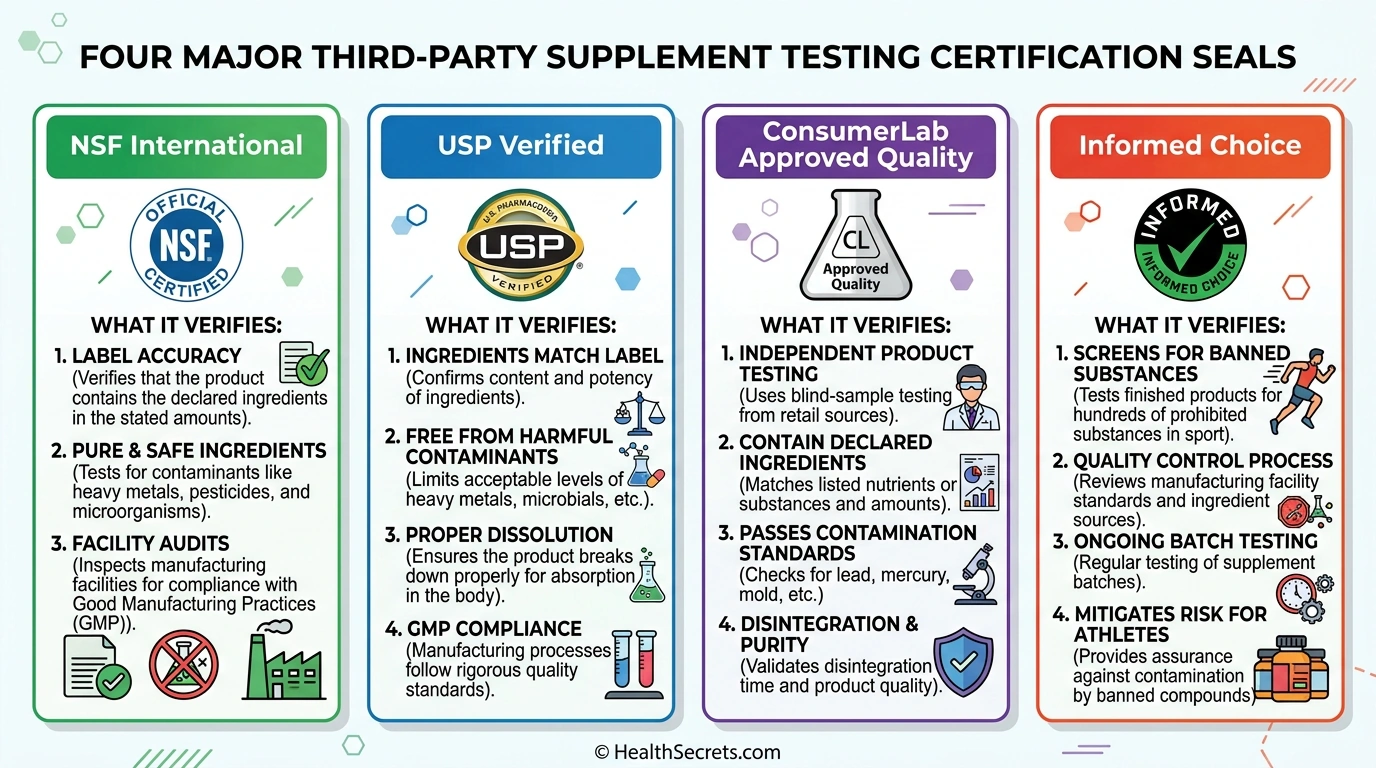
Third-party testing is the single most reliable indicator of supplement quality. Organizations like NSF International, USP (United States Pharmacopeia), and ConsumerLab.com [3] independently verify that products contain what they claim, are free from harmful contaminants, and were manufactured under proper conditions.
- NSF International is the only independent organization that conducts true laboratory testing of dietary supplements rather than simply evaluating manufacturer-submitted data. NSF tests every batch or random batches (depending on the program), checks for label accuracy and over 270 contaminants, and conducts annual facility audits. Their Certified for Sport program is the gold standard for athletes, testing for banned substances on the World Anti-Doping Agency (WADA) list.
- USP (United States Pharmacopeia) operates the USP Verified program, which tests for label accuracy, purity, proper dissolution (whether the supplement breaks down properly in your body), and GMP compliance. USP purchases products at random from retail stores rather than accepting samples from manufacturers, adding an extra layer of independence.
- ConsumerLab.com [3] independently purchases and tests supplements from retail stores, publishing detailed pass/fail results. Their testing covers label accuracy, contaminants, and dissolution. Full access requires a subscription, but they represent the most comprehensive consumer-facing testing database available.
How does GMP certification protect you?
GMP (Good Manufacturing Practices) certification ensures that supplements are produced in facilities meeting specific quality standards. Under 21 CFR Part 111, manufacturers must maintain qualified personnel, quality control procedures, proper equipment, raw material and finished product testing, proper labeling, record-keeping, and complaint handling systems.
While FDA requires manufacturers to follow cGMP, the agency doesn't "certify" compliance — manufacturers self-certify, and FDA conducts periodic inspections. Third-party GMP certifications from NSF, NPA (Natural Products Association), or international bodies like TGA (Australia) or Health Canada provide additional assurance that a company voluntarily submits to independent quality audits.
Why does bioavailability matter for supplement effectiveness?
Two supplements can contain identical amounts of the same nutrient on their labels — yet deliver dramatically different amounts to your cells. Bioavailability refers to the proportion of a nutrient that your body actually absorbs and uses. Choosing highly bioavailable forms means you get more benefit per dose, potentially at lower cost.
Research published in Nutrients (2022) demonstrated that liposomal mineral supplements showed improved absorption of iron and magnesium compared to standard formulations in a randomized crossover trial. A 2023 follow-up pharmacokinetic study confirmed that liposomal multivitamin formulations enhanced short-term bioavailability of multiple vitamins and minerals.
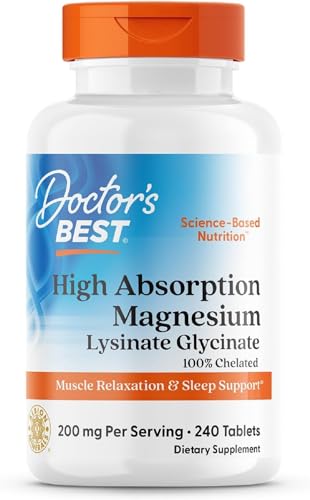
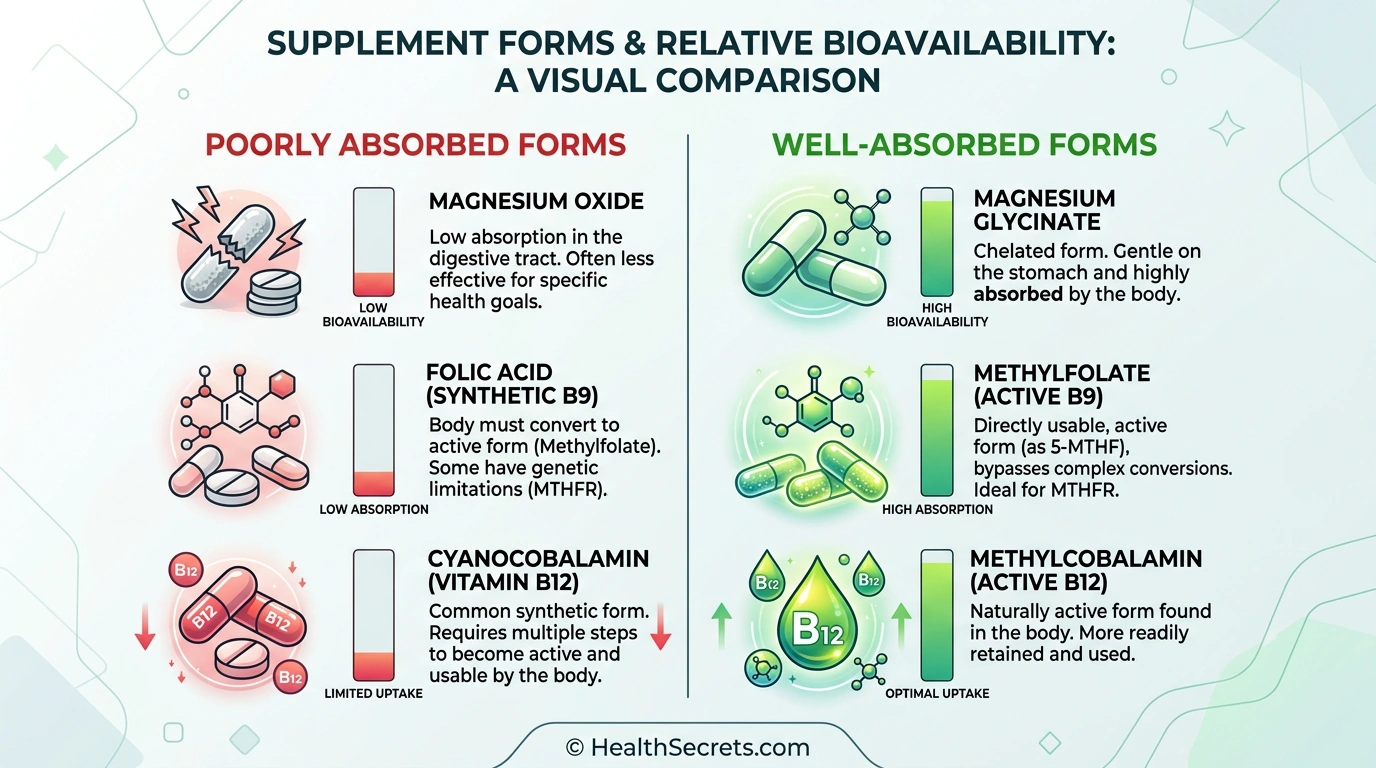
For minerals specifically, chelated forms (where the mineral is bound to amino acids) absorb significantly better than oxide or carbonate forms. Magnesium glycinate, for example, is far better absorbed than magnesium oxide, which has roughly 4% bioavailability. For B vitamins, methylated forms (methylcobalamin for B12, methylfolate for folate) are essential for the estimated 20–40% of the population with MTHFR gene variants.
Can quality supplements save you money long-term?
A higher-quality supplement at a higher price point often delivers better value than a cheap alternative. If a budget magnesium oxide supplement delivers only 4% of its stated dose to your cells, while a mid-priced magnesium glycinate delivers 20–30%, the "expensive" option is actually cheaper per milligram absorbed. Factor in the avoided risk of contaminants, and the value equation shifts even further toward quality.
What Are the Risks of Choosing Low-Quality Supplements?
Low-quality supplements pose risks ranging from simple ineffectiveness — wasting money on products that don't deliver meaningful nutrient doses — to genuine safety hazards including heavy metal toxicity, undeclared drug interactions, and allergic reactions from hidden allergens.
What contaminants have been found in supplements?
The contamination landscape is broader than most consumers realize. Independent testing has identified several categories of contaminants in dietary supplements:
Heavy metals — lead, arsenic, mercury, and cadmium — are among the most commonly detected contaminants. A 2020 study published in the International Journal of Environmental Research and Public Health analyzed dietary supplements and found detectable levels of multiple heavy metals, with some products exceeding safe daily consumption limits. A 2023 study in Biology found widespread lead and nickel contamination in adaptogenic herbal supplements, with lead concentrations exceeding permissible limits by up to 235% in some processed forms.
Undeclared pharmaceuticals are particularly dangerous in weight loss, sexual enhancement, and bodybuilding supplements.
The FDA has issued hundreds of warnings about supplements secretly containing prescription drugs like sibutramine (banned for cardiovascular risks), sildenafil (Viagra), and anabolic steroids.
Microbial contamination (bacteria, mold), pesticide residues, and undeclared allergens (milk, soy, gluten) round out the contamination picture.
What happens when supplements don't contain what the label says?
Label inaccuracy cuts both ways. Some products contain significantly less of the active ingredient than claimed, rendering them therapeutically useless. Others contain more than labeled, creating overdose risks — particularly concerning for fat-soluble vitamins (A, D, E, K) and minerals like iron, which can accumulate to toxic levels.
Proprietary blends represent a structural form of label opacity. These blends list a total amount for a group of ingredients but don't disclose individual amounts. A "1,000 mg proprietary blend" of five ingredients could contain 996 mg of the cheapest ingredient and token amounts of the rest. Without individual amounts, it's impossible to evaluate whether you're getting effective doses.
How Do You Identify a Quality Supplement Before Buying?
Identifying a quality supplement requires checking for third-party certification seals, reading the Supplement Facts panel carefully, evaluating the specific nutrient forms used, and verifying the manufacturer's reputation — a process that takes about two minutes once you know what to look for.
What should you look for on the label?
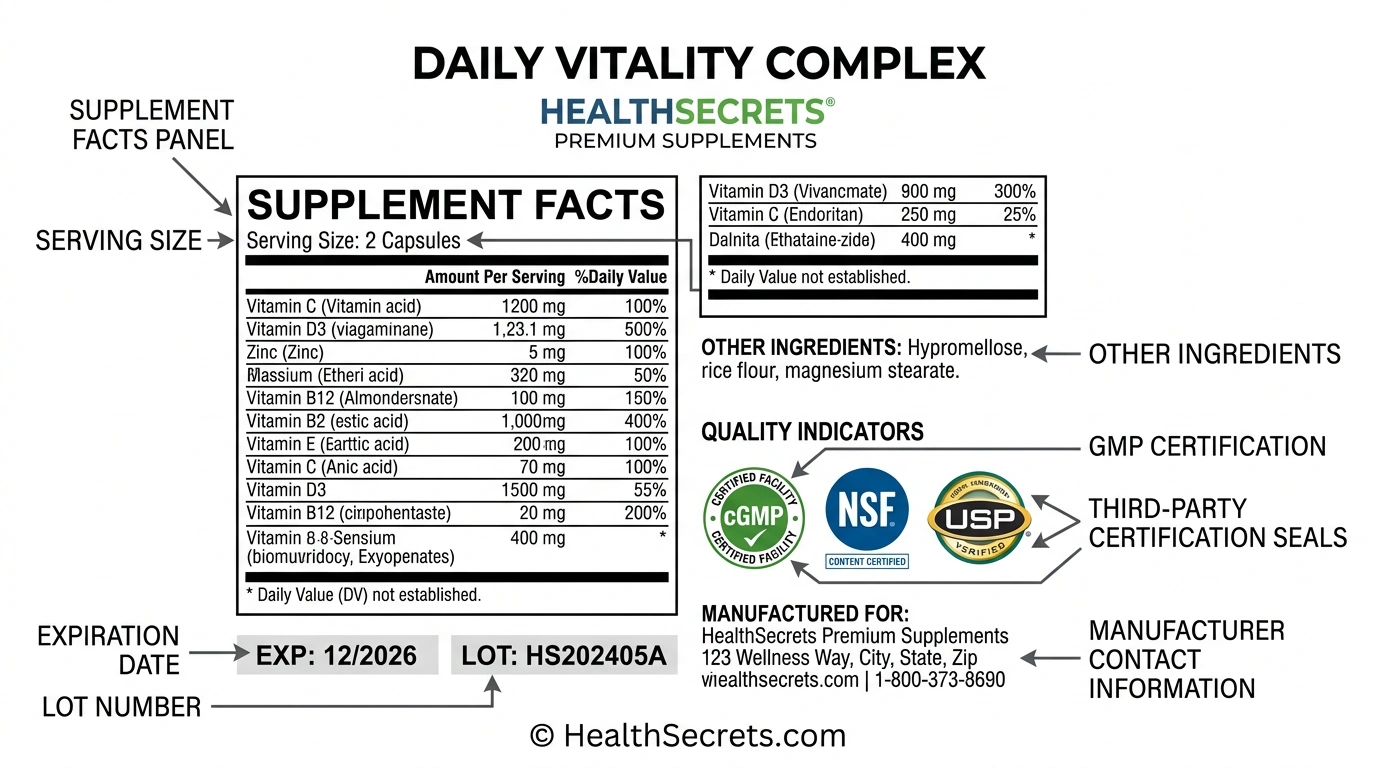
Start with the Supplement Facts panel, which lists all ingredients, amounts per serving, and percentage of Daily Value. Check the serving size — some products require multiple capsules per serving, making them less convenient and potentially more expensive than they appear.
Review "Other Ingredients" for unnecessary fillers. Common acceptable fillers include microcrystalline cellulose (plant fiber), stearic acid (flow agent), silicon dioxide (anti-caking agent), and cellulose (capsule material). Be cautious of artificial colors (FD&C dyes), artificial sweeteners (aspartame, sucralose), titanium dioxide, and carrageenan if you're sensitive.
Look for third-party certification seals: NSF, USP Verified, ConsumerLab Approved Quality, or Informed Choice/Informed Sport. Also look for mention of GMP certification — "Manufactured in a GMP-certified facility" or a third-party GMP certification mark.
Check the expiration date, lot number (for traceability), and manufacturer contact information (address, phone, website). Reputable companies make themselves easy to reach.
Which nutrient forms should you choose?
For minerals, prioritize chelated forms: magnesium glycinate over magnesium oxide, zinc picolinate over zinc oxide, calcium citrate over calcium carbonate. Citrate, malate, and glycinate forms are well-absorbed. Oxide and carbonate forms are the cheapest but the poorest absorbed.
For vitamins, look for: vitamin D3 (cholecalciferol) over D2 (ergocalciferol), natural vitamin E (d-alpha-tocopherol) over synthetic (dl-alpha-tocopherol), vitamin K2 as MK-7 for longer half-life, methylated B vitamins (methylcobalamin, methylfolate) for better utilization, and liposomal vitamin C for enhanced absorption.
For delivery systems, consider liposomal formulations (2–5x better absorption for many nutrients), enteric-coated capsules (protect probiotics and fish oil from stomach acid), and time-release formulations (better for water-soluble vitamins the body excretes quickly).
What are the biggest red flags to avoid?
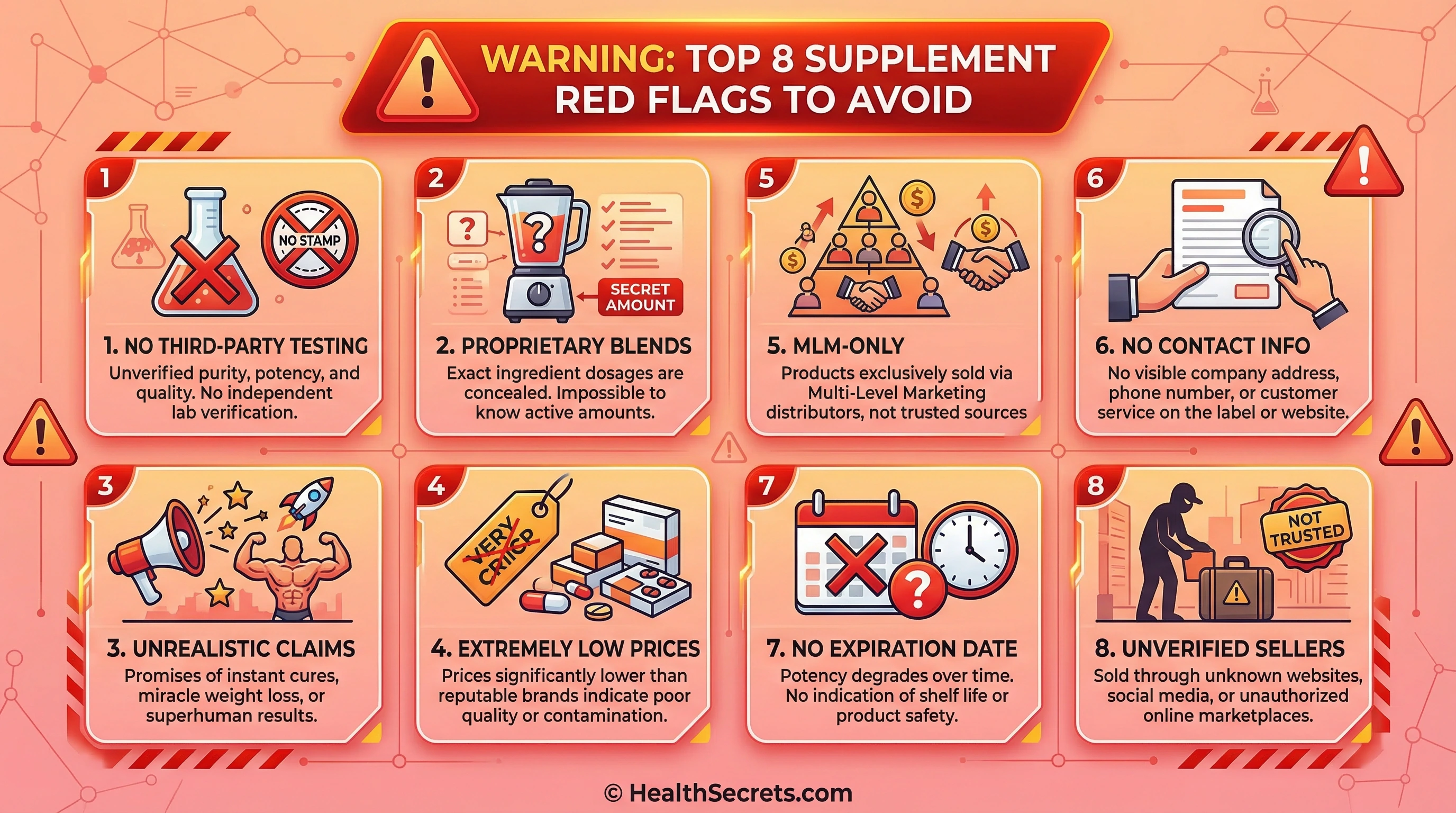
- No third-party testing certification — no NSF, USP, ConsumerLab, or equivalent seal
- Proprietary blends — hiding individual ingredient amounts
- Unrealistic claims — "miracle cure," "FDA approved," or dramatic weight loss promises
- Extremely low prices — quality raw materials, testing, and manufacturing cost money
- MLM-only distribution — often overpriced with questionable quality
- No contact information — reputable companies are transparent and accessible
- No expiration date — supplements degrade over time; this is required by law
- Unverified online sellers — counterfeit supplements are common on third-party marketplace sellers
What Other Factors Affect How Well Your Supplements Work?
Beyond the supplement itself, factors like timing of intake, what you eat alongside it, proper storage conditions, and your individual health status all significantly influence whether the nutrients actually reach your cells in usable form.
Does it matter when and how you take supplements?
Absolutely.
- Fat-soluble vitamins (A, D, E, K) and supplements like CoQ10, curcumin, and fish oil absorb dramatically better when taken with a meal containing fat. Taking them on an empty stomach can reduce absorption by 50% or more.
- Mineral interactions are real: calcium and iron compete for absorption, so take them at separate times. High-dose zinc (over 40mg) can deplete copper over time. Magnesium is best taken in the evening (it promotes relaxation), while energizing B vitamins are better in the morning.
- Probiotics generally work best on an empty stomach or with a light meal, though some strains are designed for food-based delivery. Check the label for specific timing recommendations.
For a complete guide to optimizing when you take each supplement, see our supplement timing and absorption guide. To understand which supplements shouldn't be combined, read our supplement interactions guide.
How should you store supplements properly?
Store supplements in a cool, dry place away from direct sunlight — the bathroom medicine cabinet is actually one of the worst spots due to heat and humidity from showers. Keep products in their original containers with lids tightly closed.
Refrigerate probiotics, liquid fish oil, and flaxseed oil as directed. Discard any supplements past their expiration date, as potency decreases and degradation products may form. And always keep supplements out of reach of children — iron supplements and fat-soluble vitamins can be toxic in large doses.
When should you consult a healthcare provider?
Always consult a healthcare provider before starting supplements if you are pregnant or breastfeeding, take prescription medications, have a chronic medical condition, or plan to give supplements to children. Many supplements interact with medications — St. John's wort affects dozens of drugs, vitamin K interferes with blood thinners, and calcium can reduce thyroid medication absorption. A healthcare provider can also recommend appropriate doses based on lab testing and individual needs. For more on supplement safety principles, see our supplement safety guide.
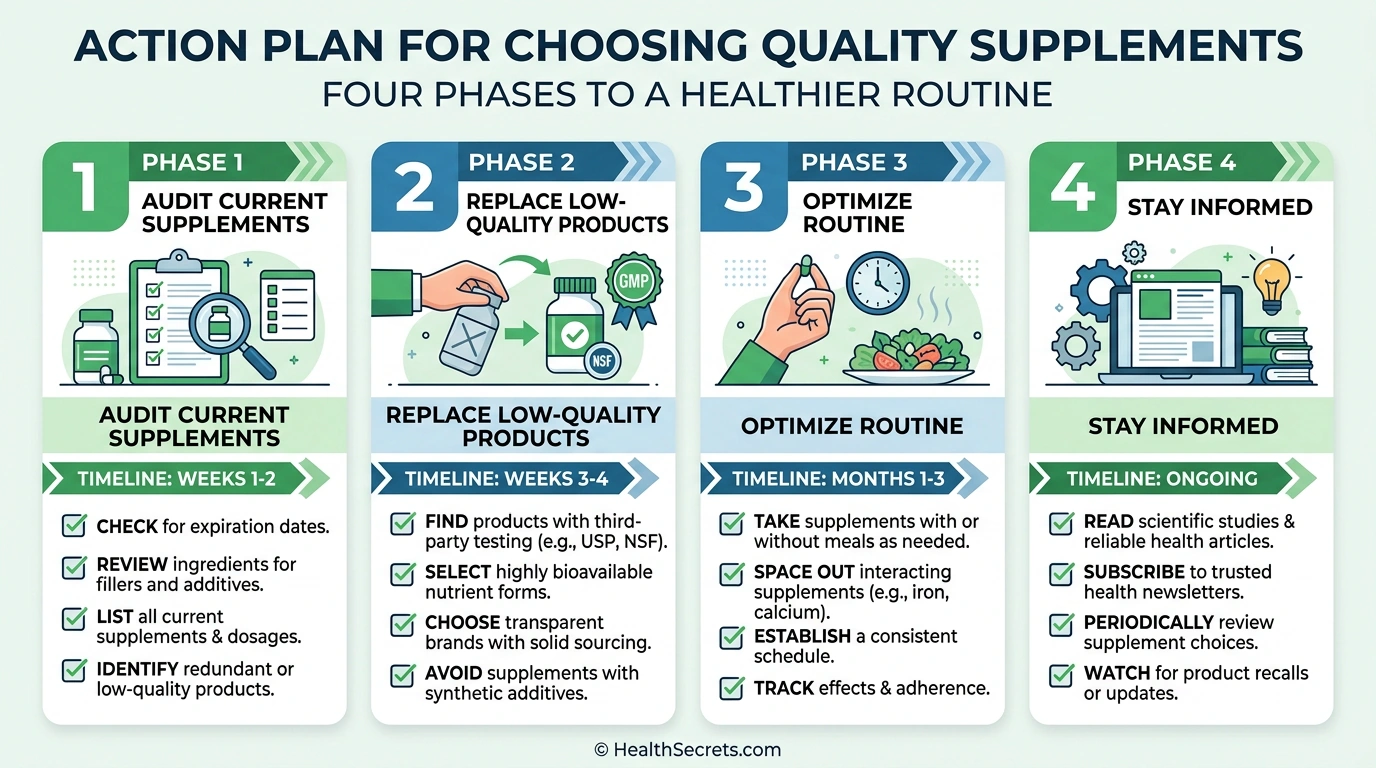
Action Plan
What Should You Do First to Start Choosing Better Supplements?
Follow the sequence below, work through each phase in order, and use the checklist as your practical implementation guide.
Start by auditing your current supplements against the quality checklist below, replace any products that fail critical criteria, and then use these standards for every future purchase — the entire process takes less than an hour and pays dividends for years.
Phase 1: Audit Your Current Supplements (This Week)
- Check every current supplement for third-party testing seals (NSF, USP, ConsumerLab)
- Look for GMP certification on labels or manufacturer websites
- Check expiration dates and discard expired products
- Review ingredient forms (are you taking oxide minerals? synthetic vitamins?)
- Note any products with proprietary blends
Phase 2: Replace Low-Quality Products (Weeks 1–2)
- Replace oxide-form minerals with chelated forms (glycinate, citrate, picolinate)
- Switch to methylated B vitamins if you haven't been tested for MTHFR
- Choose products with third-party testing from NSF, USP, or ConsumerLab
- Buy only from authorized retailers or directly from manufacturers
Phase 3: Optimize Your Routine (Weeks 2–4)
- Take fat-soluble supplements with meals containing healthy fats
- Separate competing minerals (calcium and iron at different times)
- Store all supplements properly (cool, dry, sealed, out of sunlight)
- Schedule a healthcare provider consultation to review your full supplement plan
Phase 4: Stay Informed (Ongoing)
- Bookmark ConsumerLab.com [3] for ongoing product testing results
- Check FDA MedWatch for supplement safety alerts
- Re-evaluate your supplement needs annually with lab testing