You've probably heard the word "adaptogens" thrown around in wellness circles — on supplement labels, in smoothie bars, all over social media. But here's the thing most of those sources won't tell you: the science behind adaptogens is actually more interesting than the marketing. These aren't just trendy herbs. They're a pharmacological category with a specific definition, real clinical evidence, and meaningful differences between individual plants.
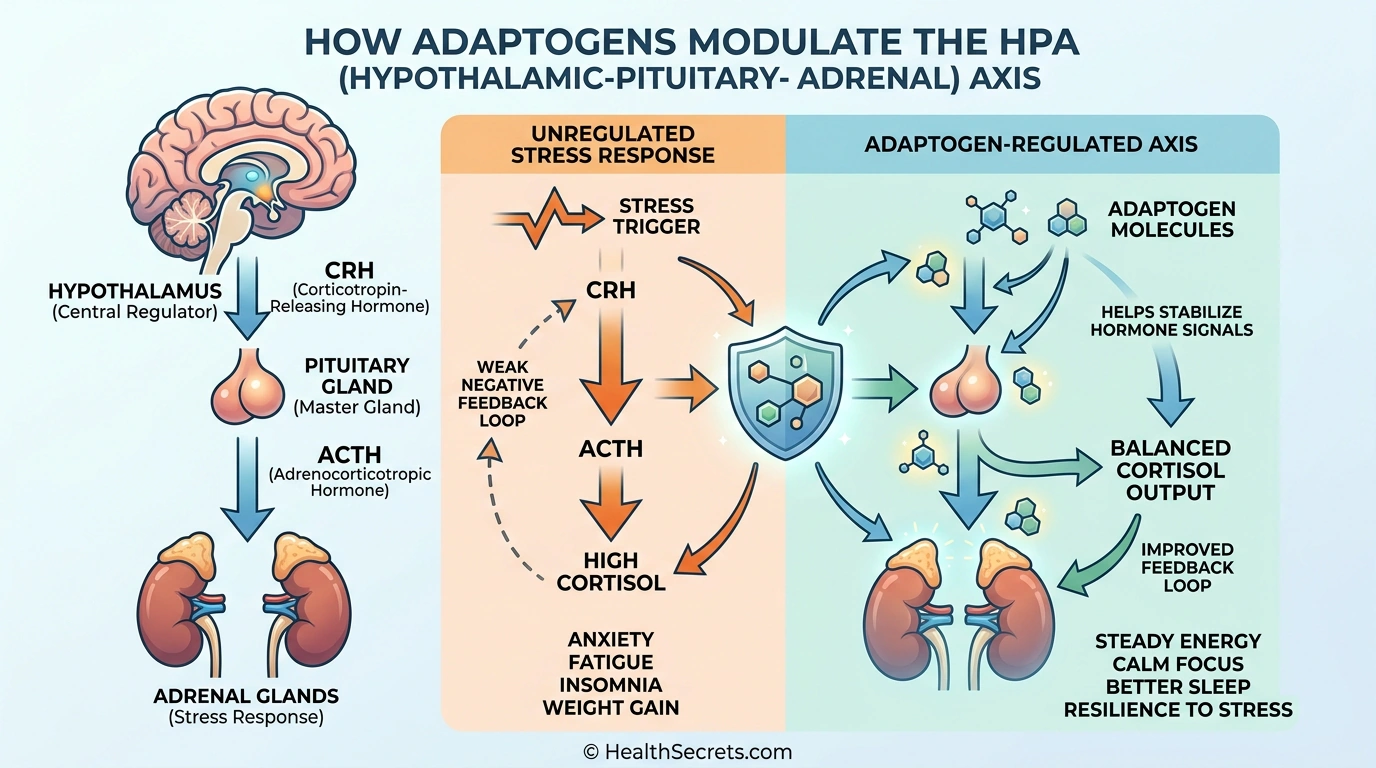
Adaptogens are herbs and mushrooms that help your body adapt to physical, mental, and emotional stress by modulating the hypothalamic-pituitary-adrenal (HPA) axis — the system that controls your cortisol response. The term was coined by Soviet scientist Nikolai Lazarev in 1947, and the criteria were formalized by Brekhman and Dardymov in 1969: a true adaptogen must increase resistance to a broad range of stressors, have a normalizing effect (raising what's low, lowering what's high), and be non-toxic for long-term use.
The clinical evidence has grown substantially. A 2026 systematic review and meta-analysis of 15 studies (873 patients) found ashwagandha supplementation significantly reduced anxiety, stress, and cortisol levels at 8 weeks ([1]). Rhodiola rosea has demonstrated improvements in endurance performance, VO2max, and time to exhaustion in a 2026 meta-analysis ([10]). Holy basil (tulsi) reduced cortisol by up to 36% in randomized, double-blind, placebo-controlled trials ([12]).
This guide reviews the best adaptogen supplements on the market, explains what separates quality products from overpriced fillers, and walks you through how to use them effectively based on your specific needs.
For related reading, explore our mental wellness complete guide and sleep optimization guide.
What Should You Look for When Buying Adaptogen Supplements?
The most important factor in choosing an adaptogen supplement is standardized extract potency — meaning the product guarantees a specific percentage of active compounds per dose. Without standardization, you're essentially guessing how much of the active ingredient you're actually getting, which makes consistent results impossible.
Here's what matters for each major adaptogen:
Which ashwagandha extract is best?
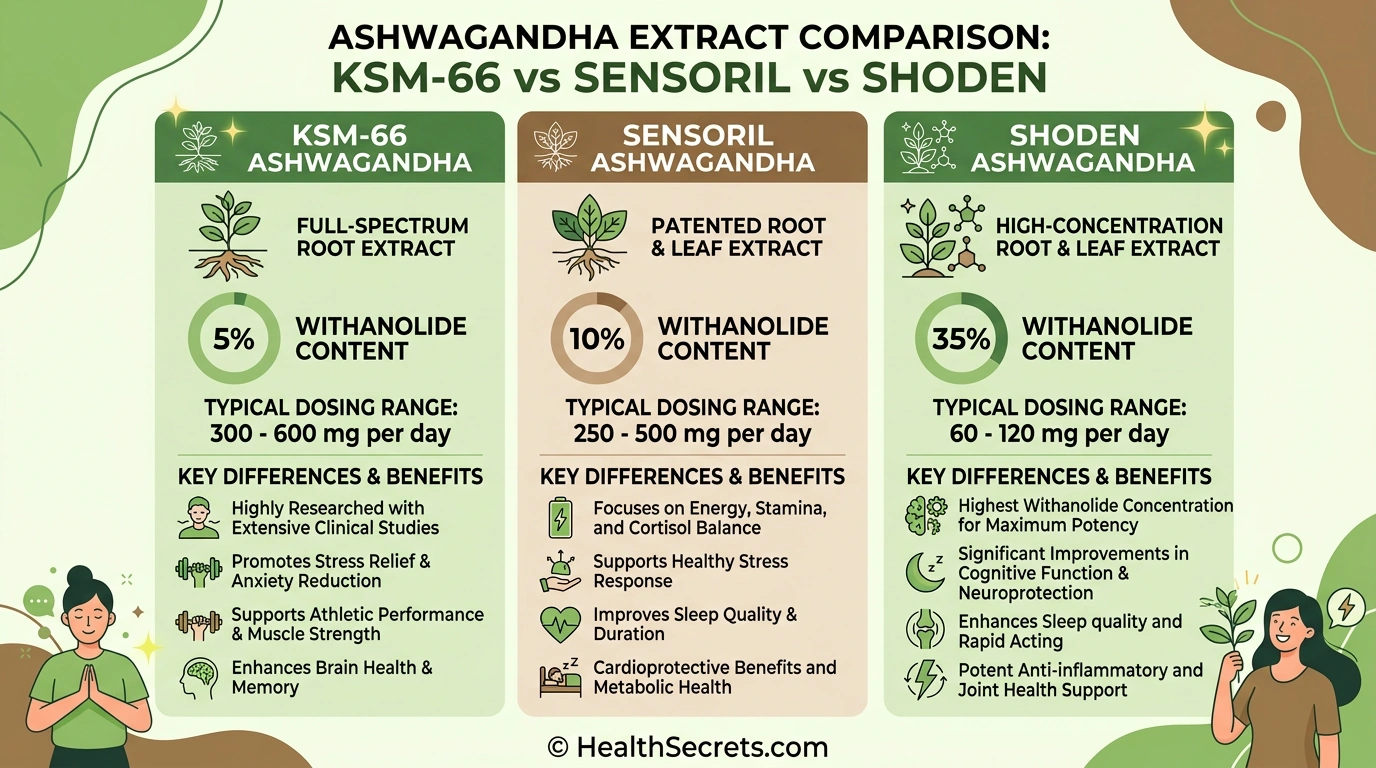
Ashwagandha supplements come in three main patented extract forms, each with different potency profiles:
- KSM-66 — Full-spectrum root extract, 5% withanolides. The most clinically studied form with 24+ gold-standard clinical trials. Dose: 300–600mg daily.
- Sensoril — Root and leaf extract, 10% withanolides, higher withaferin A content. Dose: 125–250mg daily.
- Shoden — Root and leaf extract, 35% withanolide glycosides. Highly potent, lower doses needed. Dose: 60–120mg daily.
All three have clinical evidence. KSM-66 has the broadest research base; Sensoril and Shoden deliver higher potency per milligram.
What should you look for in rhodiola supplements?
Rhodiola quality depends on the rosavin-to-salidroside ratio. The gold standard is 3% rosavins and 1% salidroside (the 3:1 ratio found naturally in the root). The most studied extract is SHR-5. Watch out for products that list "rhodiola" but don't specify standardization — they may contain minimal active compounds.
General quality markers for all adaptogen supplements:
- Standardized extracts with verified active compound percentages on the label
- Third-party testing — NSF International, USP Verified, or ConsumerLab certification
- Organic certification where available (reduces pesticide and heavy metal exposure)
- No proprietary blends — you should know exactly how much of each ingredient you're getting
- GMP manufacturing — ensures consistent quality and purity
- Clear dosing information aligned with clinical trial dosages

Can't Sleep Through the Night?
Download the free Sleep Audit & Recovery Guide — used by our readers to identify the exact bedroom triggers and stress habits wrecking their rest.
How Did We Evaluate These Adaptogen Supplements?
We evaluated adaptogen supplements across five criteria, weighted by importance for real-world effectiveness and safety. Our goal was to recommend products that deliver clinically relevant doses of verified active compounds at fair prices.
Our evaluation criteria:
- Extract standardization (30%) — Does the product use a standardized, patented extract with verified active compound percentages? Products using KSM-66, Sensoril, Shoden, SHR-5, or other clinically studied extracts scored highest.
- Clinical evidence alignment (25%) — Does the dose match what was used in clinical trials? A 300mg KSM-66 ashwagandha capsule aligns with research; a 50mg proprietary blend does not.
- Third-party testing and certifications (20%) — NSF, USP, ConsumerLab verification, organic certification, GMP compliance.
- Value (15%) — Cost per clinically effective daily serving, not just cost per capsule.
- Transparency (10%) — Clear labeling, no proprietary blends, honest marketing claims.
We cross-referenced product claims with published clinical trials and verified that recommended doses align with the research literature. Products that use generic, unstandardized extracts or hide behind proprietary blends were excluded.

Stress Recovery Micro-Habits Workbook
A 30-day experiment framework of 5-minute restorative practices to support nervous system regulation.
How Do You Use Adaptogen Supplements Effectively?
Adaptogens work cumulatively — meaning they build up their effects over weeks of consistent daily use, not with a single dose. Most clinical trials showing significant benefits ran for 4–8 weeks minimum, so patience and consistency matter more than megadosing.
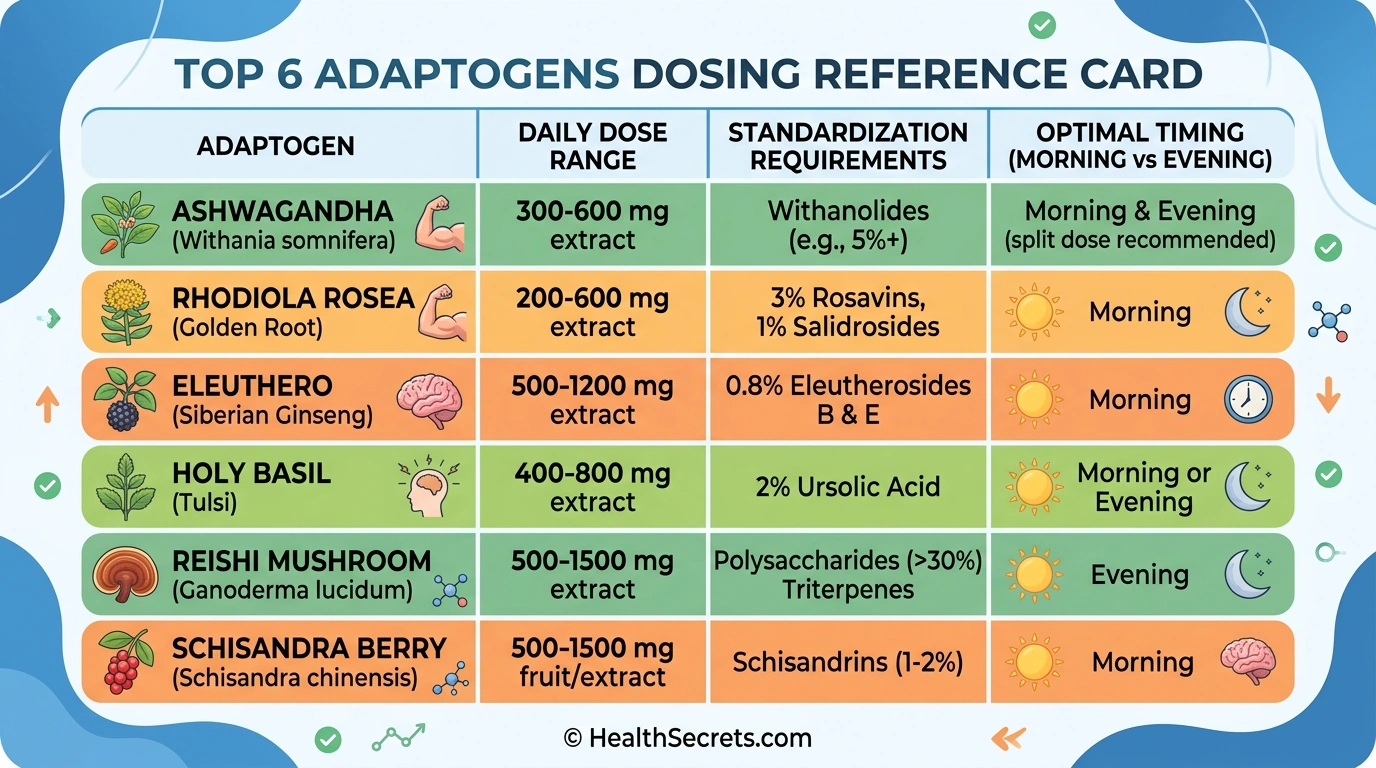
Dosing guidelines by adaptogen:
| Adaptogen | Daily Dose | Standardization | Timing |
|---|---|---|---|
| Ashwagandha (KSM-66) | 300–600mg | 5% withanolides | Morning or evening |
| Rhodiola rosea | 200–600mg | 3% rosavins, 1% salidroside | Morning (stimulating) |
| Holy basil (tulsi) | 300–600mg | 2.5% ursolic acid | Morning or evening |
| Asian ginseng | 200–400mg | 4–7% ginsenosides | Morning (stimulating) |
| Schisandra | 500–2000mg | 9% schisandrins (extract) | Any time |
Cycling adaptogens:
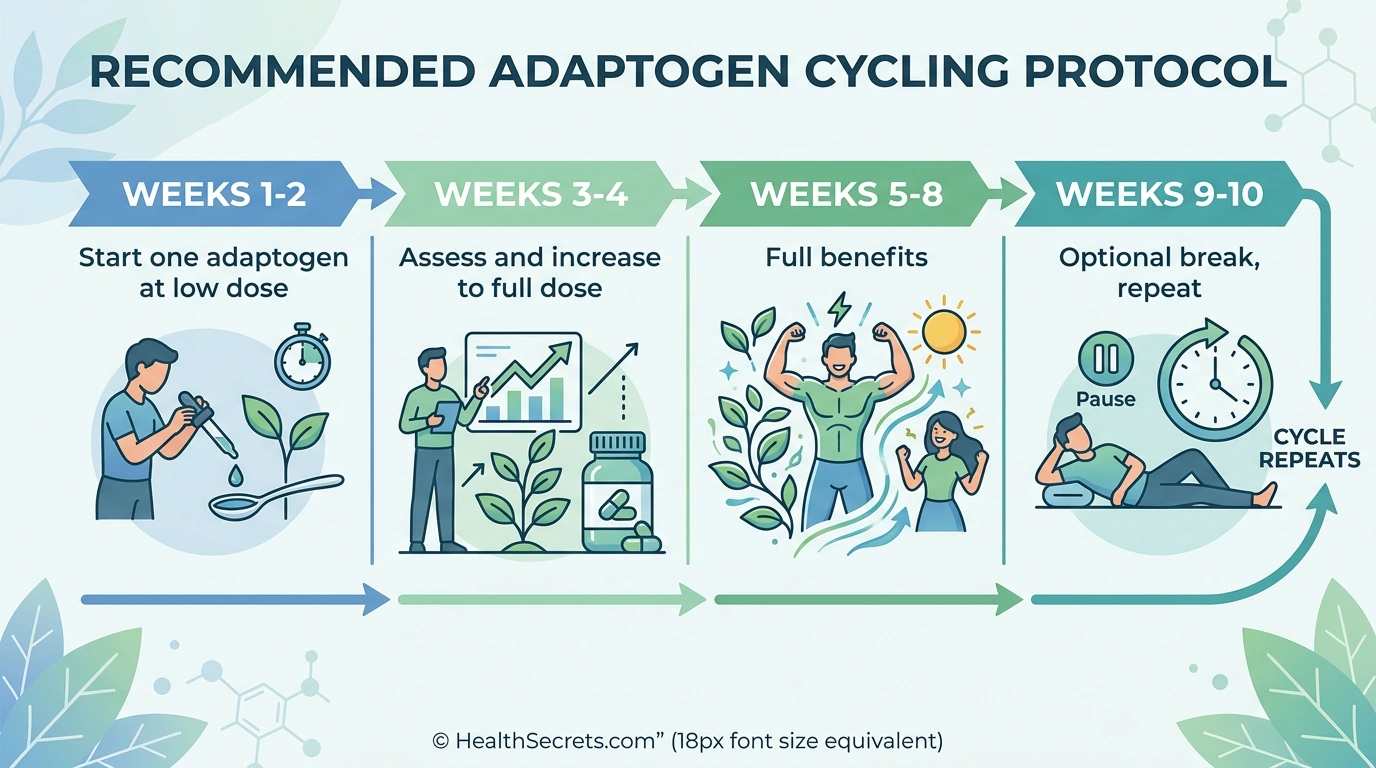
Some practitioners recommend cycling — taking adaptogens for 6–8 weeks, then pausing for 1–2 weeks. Others advocate continuous use. There's no strong clinical evidence mandating either approach.
A practical approach: use daily for 8–12 weeks, then take a 1–2 week break to reassess how you feel without them.
Combining adaptogens:
You can safely combine adaptogens that serve different functions.
A common and well-tolerated stack:
- Ashwagandha (evening, for stress and sleep) + Rhodiola (morning, for energy and focus)
- Start with one adaptogen at a time for 2 weeks to assess individual tolerance before adding a second.
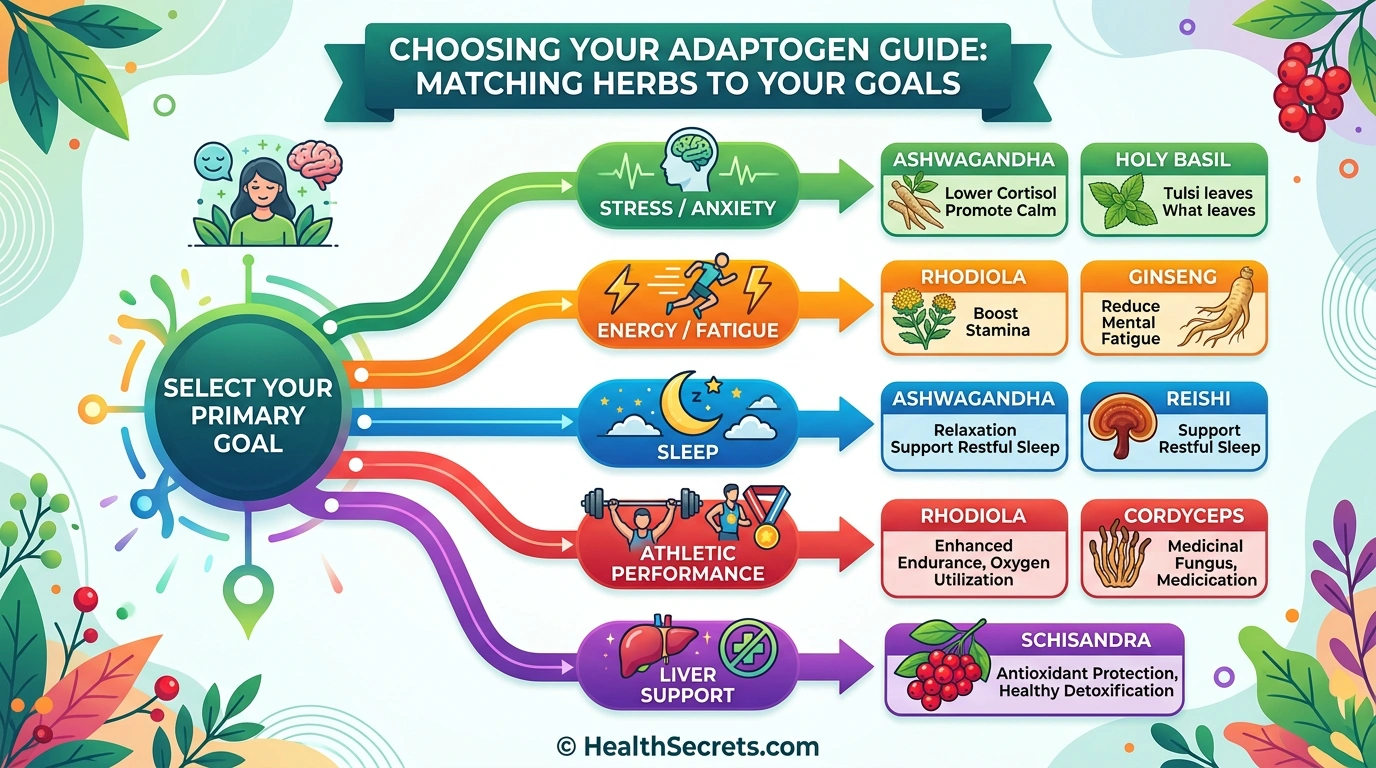
Matching adaptogens to your needs:
- Stress and anxiety: Ashwagandha, holy basil, reishi
- Energy and fatigue: Rhodiola, Asian ginseng, cordyceps, eleuthero
- Mental performance: Rhodiola, Asian ginseng, schisandra
- Sleep: Ashwagandha, reishi
- Athletic performance: Rhodiola, cordyceps, eleuthero
- Liver support: Schisandra, holy basil
- Hormone balance: Ashwagandha, maca
Are There Safety Concerns with Adaptogen Supplements?
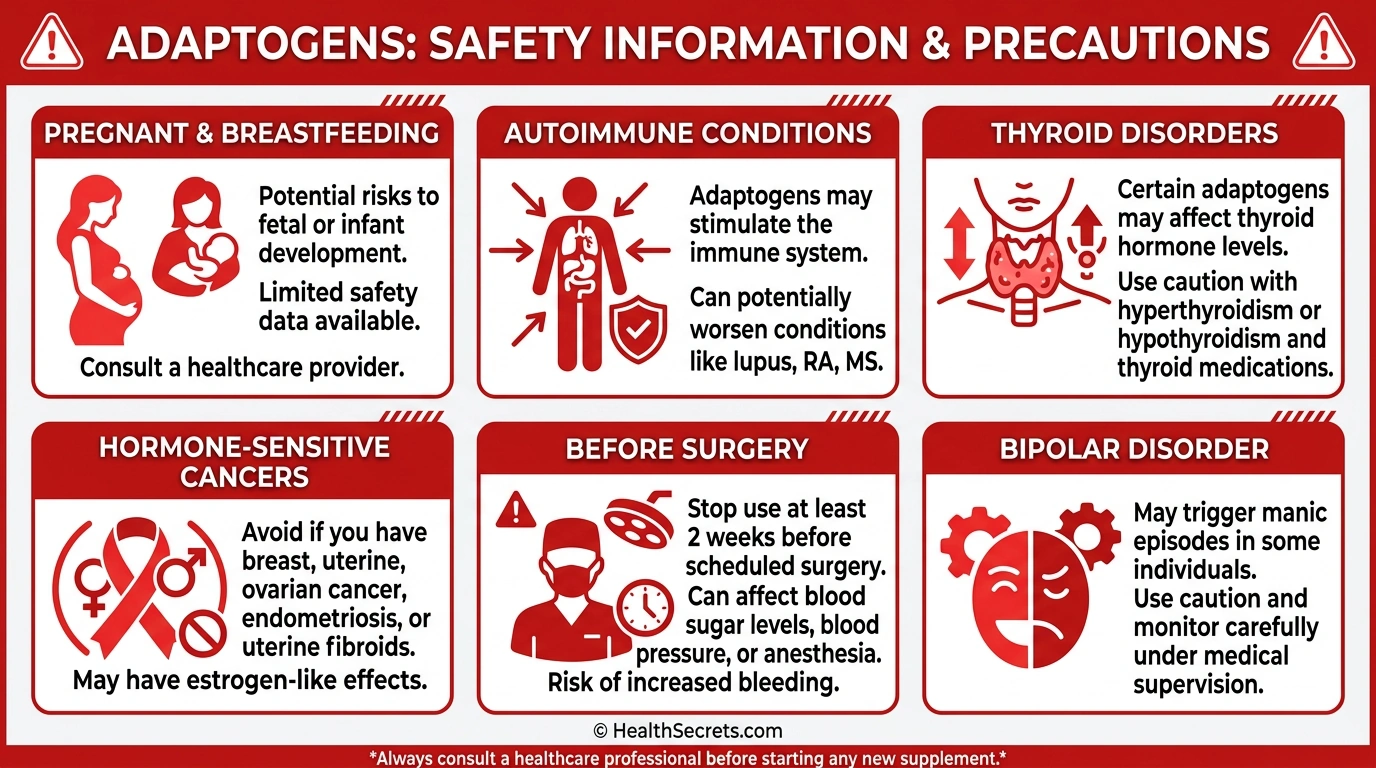
Adaptogens are generally well-tolerated at recommended doses, with most clinical trials reporting minimal adverse events. However, they are biologically active compounds that interact with hormonal, immune, and neurological systems — which means certain populations need to exercise caution or avoid them entirely.
Who should avoid or use caution with adaptogens:
- Pregnant or breastfeeding: Most adaptogens lack adequate safety data; some (ashwagandha, holy basil) may cause uterine contractions or affect hormones
- Autoimmune conditions: Ashwagandha, Asian ginseng, and eleuthero may stimulate the immune system, potentially worsening autoimmune conditions
- Thyroid disorders: Ashwagandha may increase thyroid hormones — beneficial for hypothyroidism, but dangerous for hyperthyroidism
- Hormone-sensitive cancers: Asian ginseng may have estrogenic effects; consult your oncologist
- Bleeding disorders or pre-surgery: Holy basil and ginseng may slow blood clotting; stop 1–2 weeks before surgery
- Bipolar disorder: Rhodiola may trigger manic episodes in susceptible individuals
Common drug interactions:
- Sedatives and sleep medications: Ashwagandha may enhance sedative effects
- Thyroid medications: Ashwagandha may alter thyroid hormone levels
- Blood thinners (warfarin): Ginseng and holy basil may affect clotting
- Blood sugar medications: Several adaptogens affect insulin sensitivity
- Immunosuppressants: Immune-stimulating adaptogens may counteract these drugs
- MAOIs and antidepressants: Rhodiola may interact with these medications
Side effects are typically mild and may include digestive upset (most common), drowsiness (ashwagandha), jitteriness or insomnia (rhodiola, ginseng if taken late in the day), and headache (rare).
Always start with the lower end of the dosing range, introduce one adaptogen at a time, and consult your healthcare provider if you take any medications.
Action Plan
What Should You Do First When Starting Adaptogen Supplements?
Follow the sequence below, work through each phase in order, and use the checklist as your practical implementation guide.
Start by identifying your primary goal — stress reduction, energy, mental performance, or sleep — and choose a single adaptogen that matches. Begin at the lower end of the dosing range and give it 4–8 weeks of consistent daily use before evaluating results or adding a second adaptogen.
Phase 1 (Weeks 1–2): Choose and Start
- Identify your primary goal (stress, energy, focus, sleep)
- Select one adaptogen based on your goal (see matching guide above)
- Start at the lower end of the dosing range
- Take at the optimal time (morning for stimulating, evening for calming)
Phase 2 (Weeks 3–4): Assess Tolerance
- Note any side effects or changes in how you feel
- If well-tolerated, increase to full dose if needed
- Keep a brief daily journal of energy, mood, and sleep
Phase 3 (Weeks 5–8): Evaluate and Expand
- Assess whether you're experiencing benefits from the first adaptogen
- If desired, add a complementary second adaptogen (e.g., ashwagandha evening + rhodiola morning)
- Continue journaling to track combined effects
Phase 4 (Months 3+): Optimize
- Consider cycling (8 weeks on, 1–2 weeks off) to reassess baseline
- Adjust doses based on response
- Discuss your regimen with your healthcare provider at your next appointment