There's something almost universally miserable about a sore throat. That scratchy, raw feeling when you swallow — you know the one. Maybe it crept in overnight, or maybe you woke up and it hit you all at once. Either way, you want relief, and you want it fast.
Here's the good news: some of the most effective natural remedies for sore throat are probably already sitting in your kitchen. A 2020 systematic review in BMJ Evidence-Based Medicine found that honey was superior to usual care for upper respiratory tract symptoms — particularly cough severity and frequency [16]. Salt water gargling has been shown to reduce the incidence of upper respiratory infections by 36% in a randomized trial [2]. And zinc lozenges, when started within 24 hours of symptoms, can shorten colds by roughly 33% in adults [3].
Most sore throats — around 80–90% — are caused by viral infections like the common cold, flu, or COVID-19. They typically resolve on their own within 3–7 days. The remaining 10–20% are bacterial (most commonly strep throat), and those do require antibiotics. Knowing the difference matters, and we'll cover that too.
If you're dealing with a persistent cough alongside your sore throat, check out our guide on natural remedies. For immune support strategies, explore our immune system guide. And if you think your sore throat might be tied to a detox protocol, our detox and cleansing guide covers that angle.
What Do You Need to Know Before Treating a Sore Throat Naturally?
Before reaching for any remedy, it helps to understand what you're dealing with. Most sore throats are caused by viral infections and will resolve within 3–7 days with supportive care. Natural remedies work best for these viral sore throats, providing symptom relief while your immune system does the heavy lifting.
Pharyngitis — the medical term for sore throat — is inflammation of the pharynx, the tissue at the back of your throat. Symptoms typically include pain, scratchiness, difficulty swallowing, and sometimes swollen glands or a low-grade fever. Adults experience 2–3 sore throats per year on average, with peak incidence during fall and winter months.
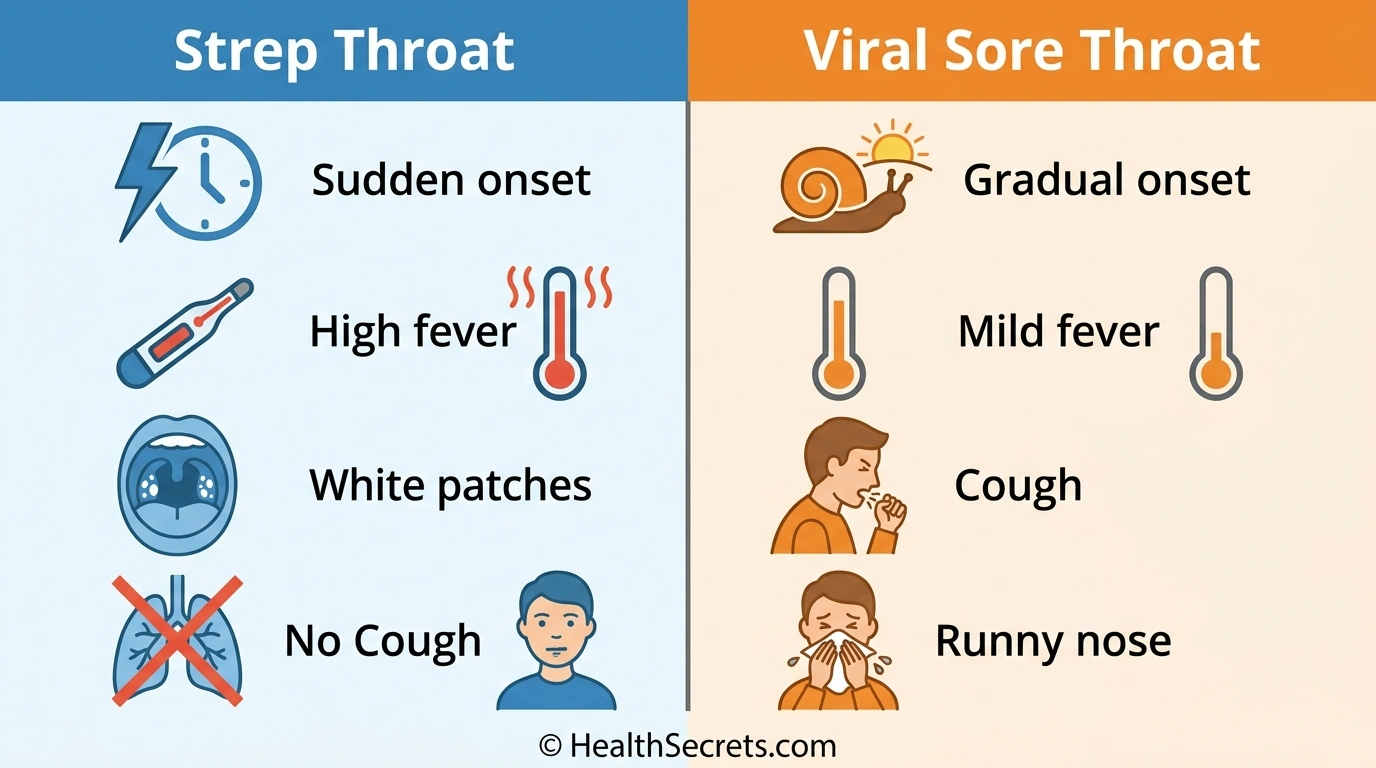
The critical prerequisite is ruling out strep throat. If you have sudden-onset severe pain, fever above 101°F, white patches on your tonsils, swollen lymph nodes, and notably no cough or runny nose — those are classic strep indicators. Strep requires a rapid test and antibiotics to prevent complications like rheumatic fever. Natural remedies can complement antibiotic treatment for strep, but they cannot replace it.
For viral sore throats, the remedies in this guide have genuine research backing. The timeline is straightforward: most people notice relief within hours of starting treatment, and symptoms typically resolve within a week. Gather your supplies — honey, salt, herbal teas — and let's get started.

Are You Unknowingly Inflaming Your Body?
Get the free Health Vitals & Nutrient Checklist — the daily guide that shows you which habits and supplements are silently triggering inflammation.
How Do You Use Honey to Soothe a Sore Throat?
Honey is one of the most effective natural sore throat remedies available. A systematic review of 14 studies found that honey improved combined symptom scores for upper respiratory infections significantly better than usual care, reducing cough frequency and severity [1]. Its thick consistency coats and protects irritated throat tissue, while its antimicrobial properties help fight infection.
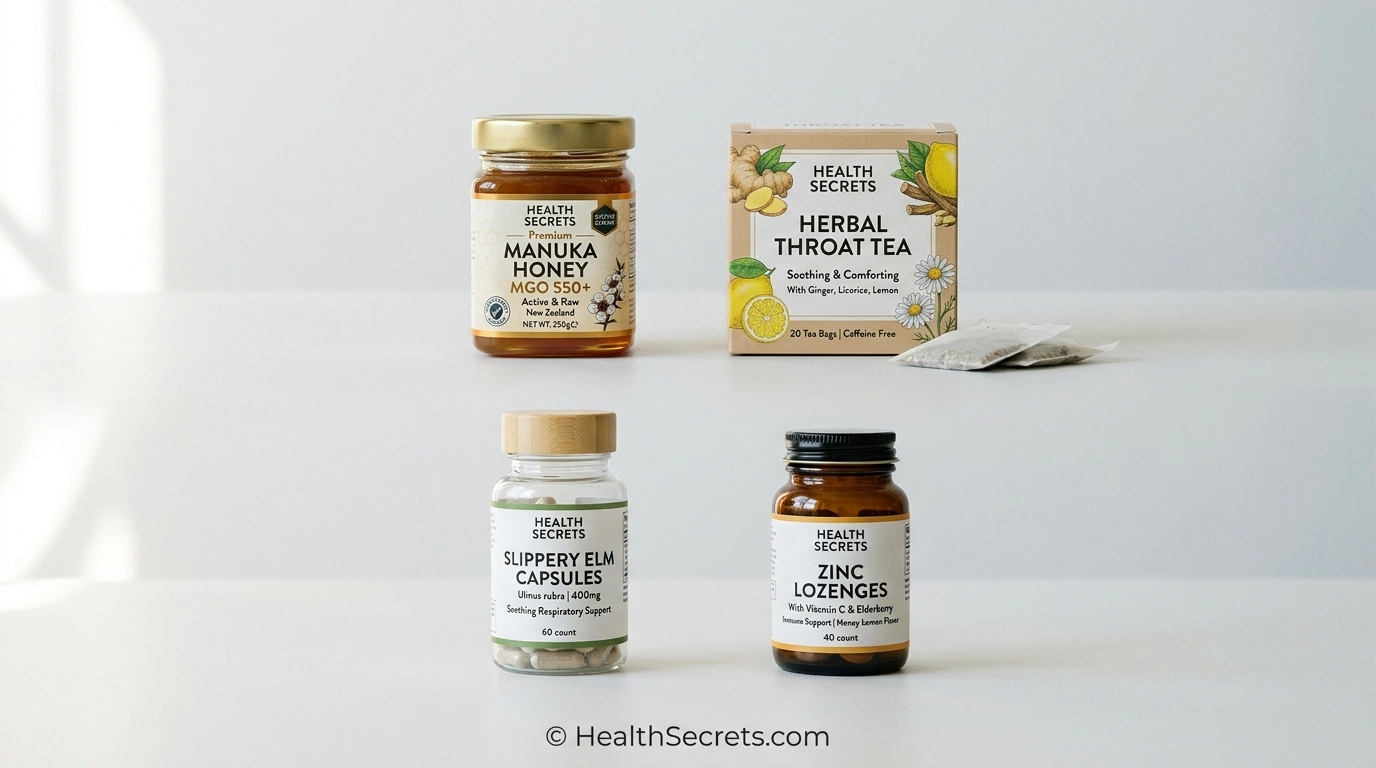
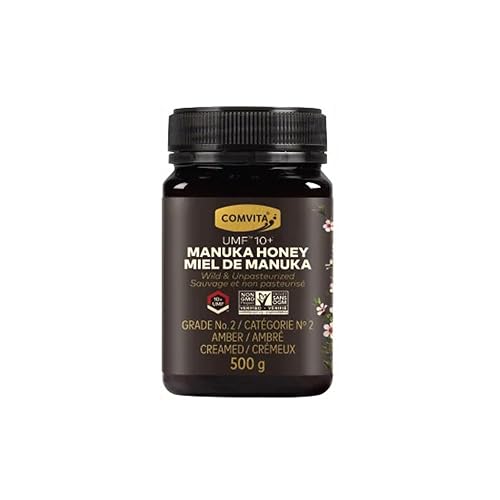
Take 1–2 teaspoons of honey straight, or stir it into warm (not hot) water or herbal tea. You can repeat this every few hours as needed — many people find it especially helpful before bed, since honey reduces nighttime cough and improves sleep quality. Manuka honey, rated UMF 10+ or higher, has demonstrated stronger antimicrobial activity than regular honey, though standard raw honey is also effective.
For children ages 1–5, use half a teaspoon. Children 6–11 can take one teaspoon.
Never give honey to infants under 1 year due to the risk of infant botulism.
Honey pairs well with other remedies. The classic ginger-honey-lemon tea combines honey's demulcent and antimicrobial properties with ginger's anti-inflammatory benefits and lemon's vitamin C and astringent effects. Steep 1–2 inches of fresh grated ginger in hot water for 10 minutes, then add a tablespoon of honey and the juice of half a lemon.


Evidence-Based Supplement Organizer & Safety Log
Track your daily intake, verify third-party certifications, and prepare clear questions for your clinician.
How Do You Gargle Salt Water for Throat Pain Relief?
Salt water gargling is perhaps the simplest and cheapest sore throat remedy. A Japanese randomized trial involving 387 healthy volunteers found that regular water gargling reduced the incidence of upper respiratory tract infections by 36% compared to controls [2]. The osmotic effect of salt water draws excess fluid from inflamed tissue, reducing swelling and pain.
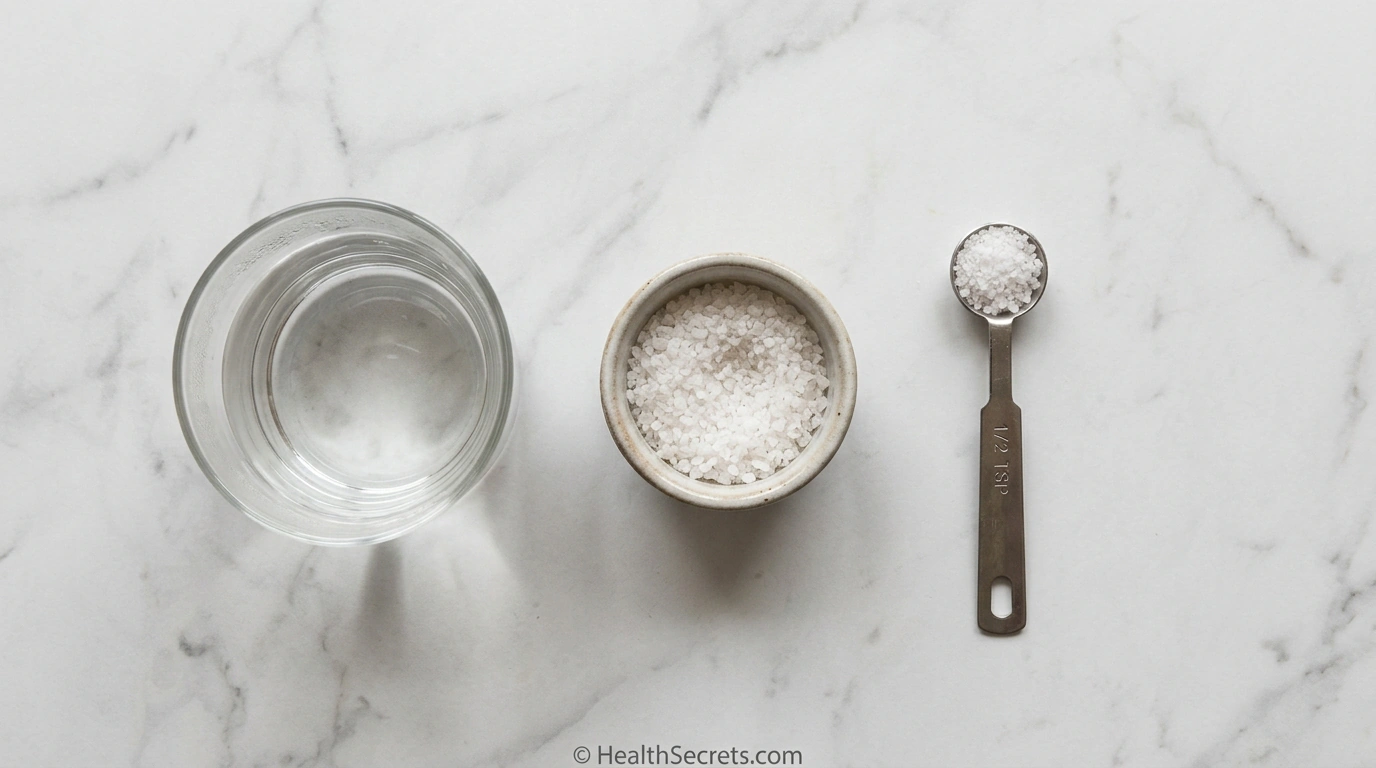
Dissolve 1/2 teaspoon of non-iodized salt in 8 ounces of warm water. Tilt your head back slightly, take a mouthful, gargle for 30 seconds, and spit. Repeat 2–3 times per session. You can gargle 2–3 times daily as a minimum, or hourly if pain is severe — there's no practical upper limit since it's completely safe.
Salt water also loosens mucus, gently cleanses the throat of irritants and allergens, and has mild antimicrobial activity. Children aged 6 and older can usually gargle safely, though younger children who can't avoid swallowing should skip this remedy.
How Do Demulcent Herbs Like Marshmallow Root and Slippery Elm Coat Your Throat?
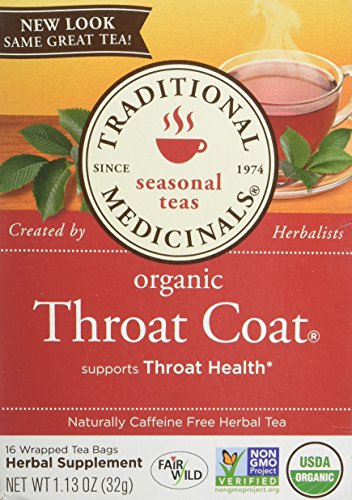
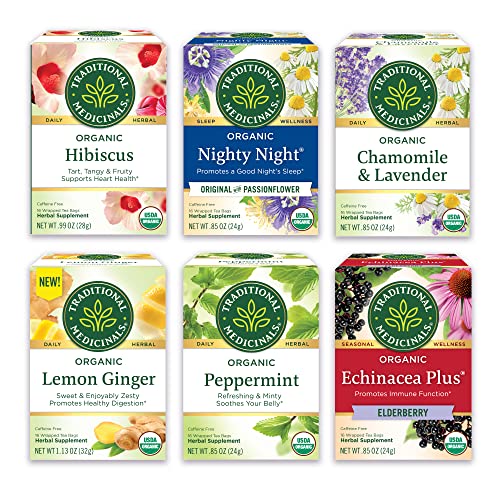
Demulcent herbs work through a purely physical mechanism — they contain mucilage, a thick gel-like substance that literally coats your throat and creates a protective barrier over irritated tissue. A randomized controlled trial of Throat Coat tea (containing licorice root, slippery elm bark, and marshmallow root) found it significantly more effective than placebo for reducing sore throat pain [7]. Marshmallow root (Althaea officinalis) has also demonstrated anti-inflammatory and antioxidant effects in laboratory studies [8].
For marshmallow root tea, steep 1–2 teaspoons of dried root in 8 ounces of hot water for 10–15 minutes. Drink 2–3 cups daily. Cold infusions actually extract more mucilage — soak the root in cold water for several hours for maximum coating effect.
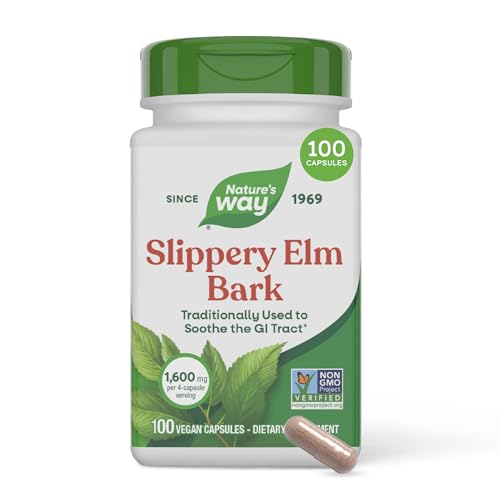
Slippery elm (Ulmus rubra) works similarly. Lozenges are the most practical form since they dissolve slowly and coat the throat directly. You can also mix slippery elm powder with honey to create a soothing paste. The USDA notes that clinical research supports slippery elm as a safe and effective treatment for sore throat pain [9].
Both herbs are well-tolerated and safe for children and adults. One caution: demulcents may slow absorption of other medications, so take them 1–2 hours apart from any drugs.

How Do Zinc Lozenges Shorten a Cold-Related Sore Throat?
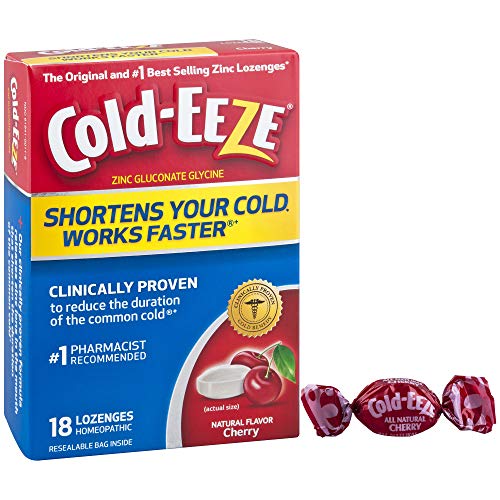
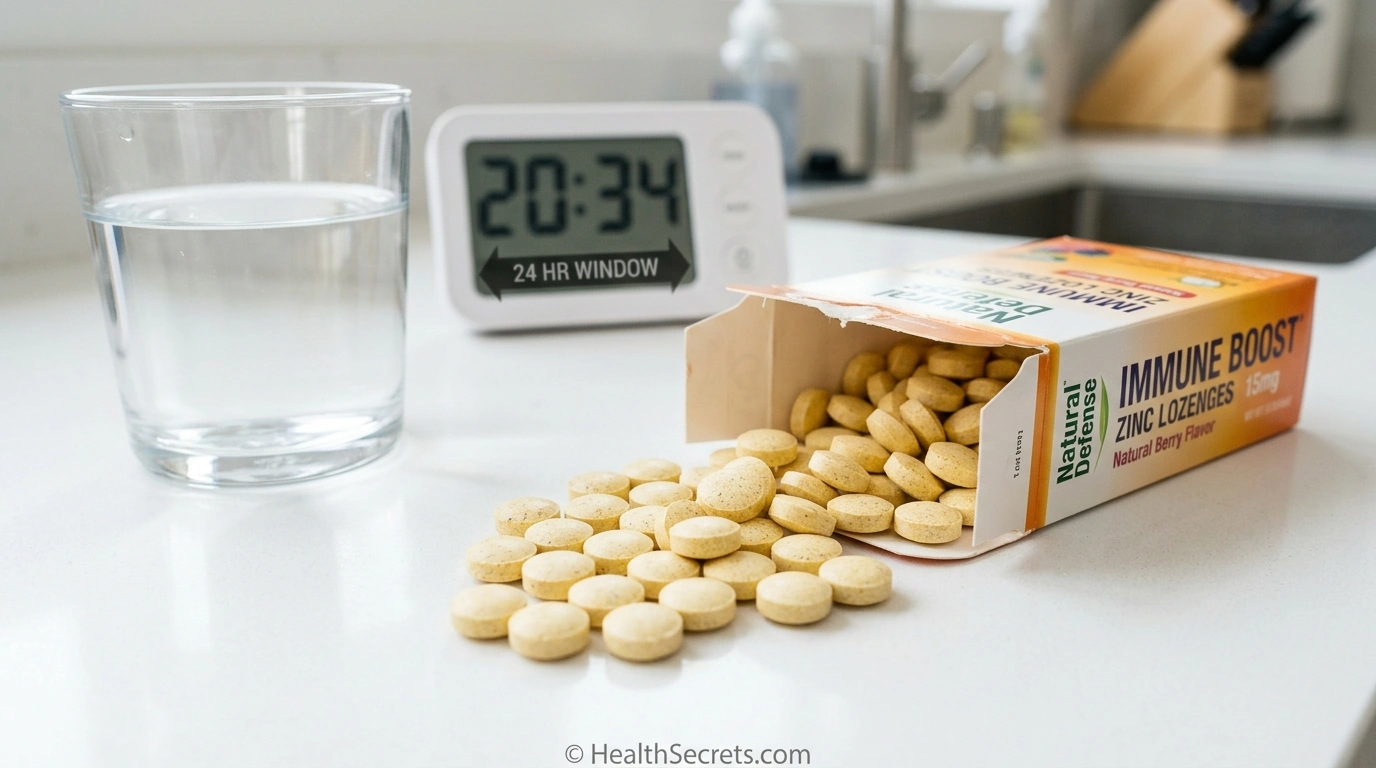
Zinc lozenges are uniquely effective for viral sore throats because they deliver zinc directly to the throat tissue where respiratory viruses replicate. A meta-analysis of seven trials found that zinc lozenges reduced common cold duration by an average of 33%, with zinc acetate lozenges showing a 40% reduction and zinc gluconate a 28% reduction [3]. A separate analysis found that high-dose zinc acetate lozenges specifically reduced sore throat duration by 18% and throat-related symptoms significantly [4].
The key is starting early — within 24 hours of symptom onset. Take one lozenge (13–23 mg zinc) every 2–3 hours while awake, not exceeding 100 mg of zinc daily. Let each lozenge dissolve slowly in your mouth rather than chewing it.
Common side effects include metallic taste and mild nausea. Limit use to 2 weeks maximum, since prolonged high-dose zinc can deplete copper levels. A 2024 Cochrane review confirmed that zinc may reduce cold duration by about two days, though the evidence quality varied across studies [5]. Avoid zinc nasal sprays entirely — they've been linked to permanent loss of smell.
How Do Sage Tea and Licorice Root Fight Sore Throat Infection?
Sage (Salvia officinalis) and licorice root (Glycyrrhiza glabra) bring antimicrobial firepower to sore throat treatment. A study testing 13 herbal infusions against Streptococcus pyogenes (the bacteria causing strep throat) found that licorice root exhibited the lowest minimum inhibitory concentration, with strong bactericidal effects [11]. A randomized double-blind trial found that an echinacea/sage spray was as effective as a chlorhexidine/lidocaine spray for treating acute sore throats [12].
For sage tea, steep 1–2 teaspoons of dried sage in 8 ounces of hot water for 10 minutes. Drink or use as a gargle 2–3 times daily. Sage's rosmarinic acid provides anti-inflammatory and astringent effects that reduce throat swelling.
Licorice root tea offers a triple action: it coats the throat (demulcent), reduces inflammation, and its glycyrrhizin compound has demonstrated antiviral activity against multiple respiratory viruses [13]. Steep 1–2 teaspoons of dried root for 10 minutes, 2–3 cups daily.
Licorice root containing glycyrrhizin can raise blood pressure and cause fluid retention. Limit use to 1–2 weeks, avoid during pregnancy, and choose DGL (deglycyrrhizinated licorice) for longer-term use. People with high blood pressure, heart disease, or kidney disease should avoid regular licorice root.
How Do Supportive Strategies Like Humidifiers and Voice Rest Speed Recovery?
Beyond active remedies, several supportive strategies make a meaningful difference in sore throat recovery. Warm liquids — herbal tea, broth, warm water with honey — soothe throat tissue, maintain hydration, and help thin mucus. Aim for 8–10 cups of fluid daily, avoiding caffeine and alcohol, which are dehydrating.
A cool-mist humidifier in your bedroom prevents dry air from further irritating your throat, especially during winter when heating systems strip moisture from indoor air. Maintain humidity between 30–50%, clean the device daily to prevent mold growth, and use distilled water.
Voice rest is underrated but important. Talking strains your vocal cords and inflamed throat tissue. Counterintuitively, whispering is actually harder on your throat than speaking softly. Minimize talking as much as possible, and absolutely avoid shouting or singing.
Finally, avoid irritants: cigarette smoke (including secondhand), strong perfumes, cleaning product fumes, and cold dry air. If you must go outside in cold weather, wear a scarf loosely over your mouth and nose to warm and humidify the air you breathe.
What Are the Most Common Mistakes When Treating a Sore Throat Naturally?
The biggest mistake people make with natural sore throat remedies is misidentifying strep throat as a simple viral infection. If you have sudden-onset severe pain, high fever, white patches on your tonsils, and no cough — get tested for strep. Natural remedies alone won't prevent strep complications like rheumatic fever.
Other common pitfalls include starting zinc lozenges too late (they're most effective within the first 24 hours), using honey that's too hot (which destroys some beneficial compounds — let your tea cool slightly first), and over-gargling with saltwater solution that's too concentrated (stick to 1/2 teaspoon per 8 ounces).
Don't give honey to infants under 1 year. Don't use zinc nasal sprays. Don't take licorice root for more than 1–2 weeks without medical guidance. And don't ignore symptoms that worsen after initial improvement — that "double worsening" pattern can indicate a bacterial superinfection.
Is It Safe to Treat a Sore Throat with Natural Remedies? When Should You Stop?
Natural sore throat remedies are generally very safe when used appropriately. Honey, salt water, marshmallow root, and slippery elm have excellent safety profiles for adults and children (honey for ages 1+, gargling for ages 6+). Side effects are rare and mild — zinc lozenges may cause metallic taste or nausea, and licorice root may affect blood pressure with extended use.
Seek immediate medical attention if you experience any of these red flags:
- Difficulty breathing or swallowing (drooling, stridor)
- Fever above 101°F lasting more than 2 days
- White patches or pus on tonsils
- Very tender, swollen lymph nodes
- Rash (possible scarlet fever)
- Symptoms lasting more than 1 week without improvement
- Difficulty opening your mouth (trismus)
- Muffled "hot potato" voice
- Severe one-sided throat pain
These could indicate peritonsillar abscess, epiglottitis, or other conditions requiring emergency care. When in doubt, call your doctor.
Action Plan
What Should You Do First When You Get a Sore Throat?
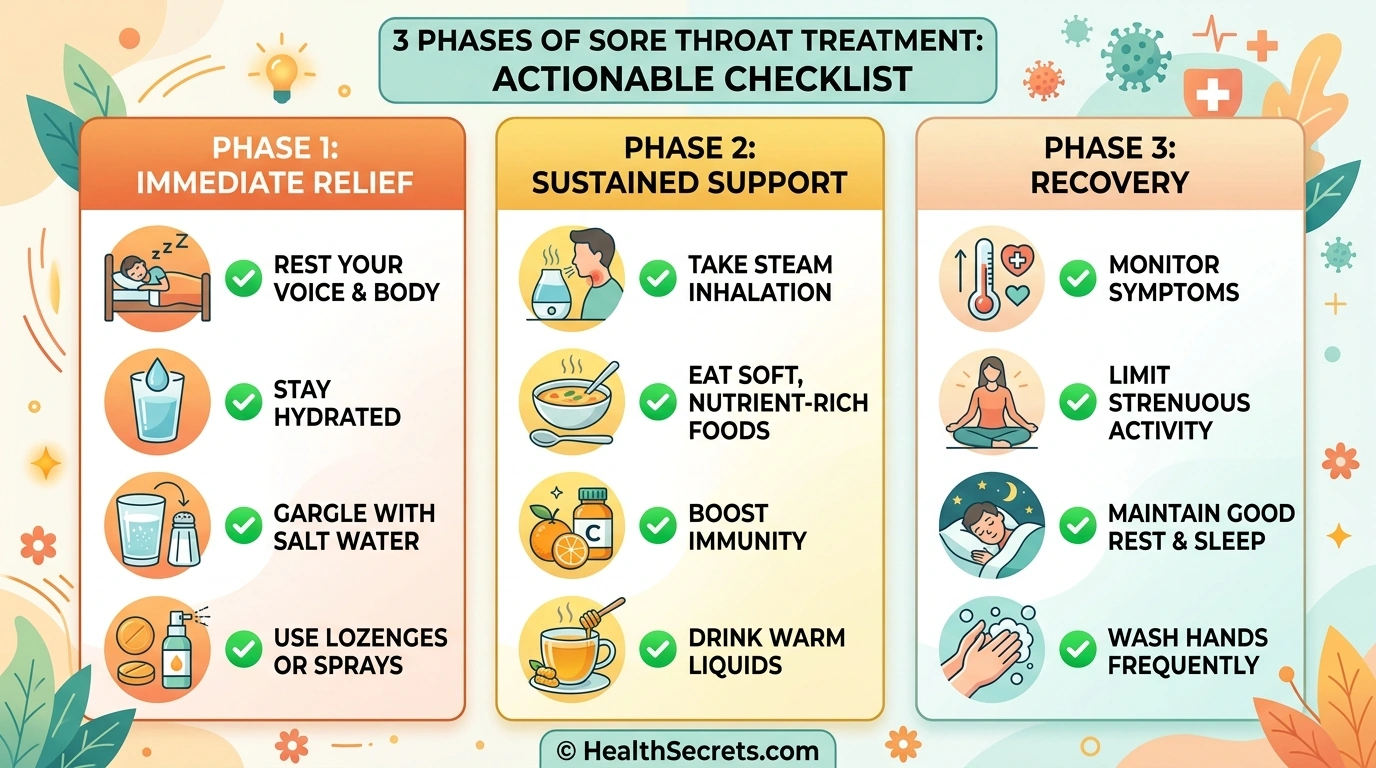
Follow the sequence below, work through each phase in order, and use the checklist as your practical implementation guide.
Start with the remedies that have the strongest evidence and the fastest onset of relief. Honey and salt water gargling can provide noticeable improvement within minutes, while zinc lozenges work best when started within the first 24 hours. Here's your phased action plan.
Phase 1: Immediate Relief (Hours 0–24)
- Take 1–2 teaspoons of honey straight or in warm tea (repeat every few hours)
- Gargle with salt water (1/2 tsp salt in 8 oz warm water) — 2–3 times today
- Start zinc lozenges if you're within 24 hours of symptom onset (13–23 mg every 2–3 hours)
- Run a cool-mist humidifier in your bedroom
- Drink warm liquids throughout the day (herbal tea, broth, honey-lemon water)
Phase 2: Sustained Support (Days 1–3)
- Add demulcent herbs — marshmallow root or slippery elm tea/lozenges
- Try sage tea or licorice root tea for antimicrobial support (2–3 cups daily)
- Continue honey and salt water gargling
- Rest your voice — minimize talking, avoid whispering
- Avoid irritants (smoke, strong odors, cold dry air)
Phase 3: Recovery (Days 3–7)
- Continue effective remedies as needed
- Maintain hydration (8–10 cups fluid daily)
- Monitor for improvement — viral sore throats should start improving by day 3–5
- If not improving or worsening by day 7, see a doctor
Strep Alert — See a Doctor If:
- Sudden onset severe pain with fever above 101°F and white patches (no cough)
- Difficulty swallowing or breathing
- Symptoms worsening after initial improvement