
You sit down to work, open your laptop, and within minutes your phone buzzes, a notification pops up, and suddenly you're scrolling through emails instead of tackling your most important task. Sound familiar? You're not alone — research shows that the average person checks their phone 96 times per day, and it takes a full 23 minutes to refocus after a single interruption.
The good news is that focus isn't a fixed trait you either have or don't. Like a muscle, your ability to concentrate strengthens with deliberate practice. A 2024 meta-analysis found that simple strategies like eliminating distractions can boost productivity by up to 40%, while meditation improves sustained attention by 30% after just eight weeks of practice [5].
In this guide, you'll discover 12 evidence-based strategies to sharpen your focus, from quick wins you can implement today to long-term habits that rewire your brain for sustained concentration. Whether you're a student, professional, or anyone who wants to get more done with less mental strain, these techniques will help you reclaim your attention. For broader mental wellness strategies, explore our complete guide.
What Do You Need to Know Before Improving Your Focus?
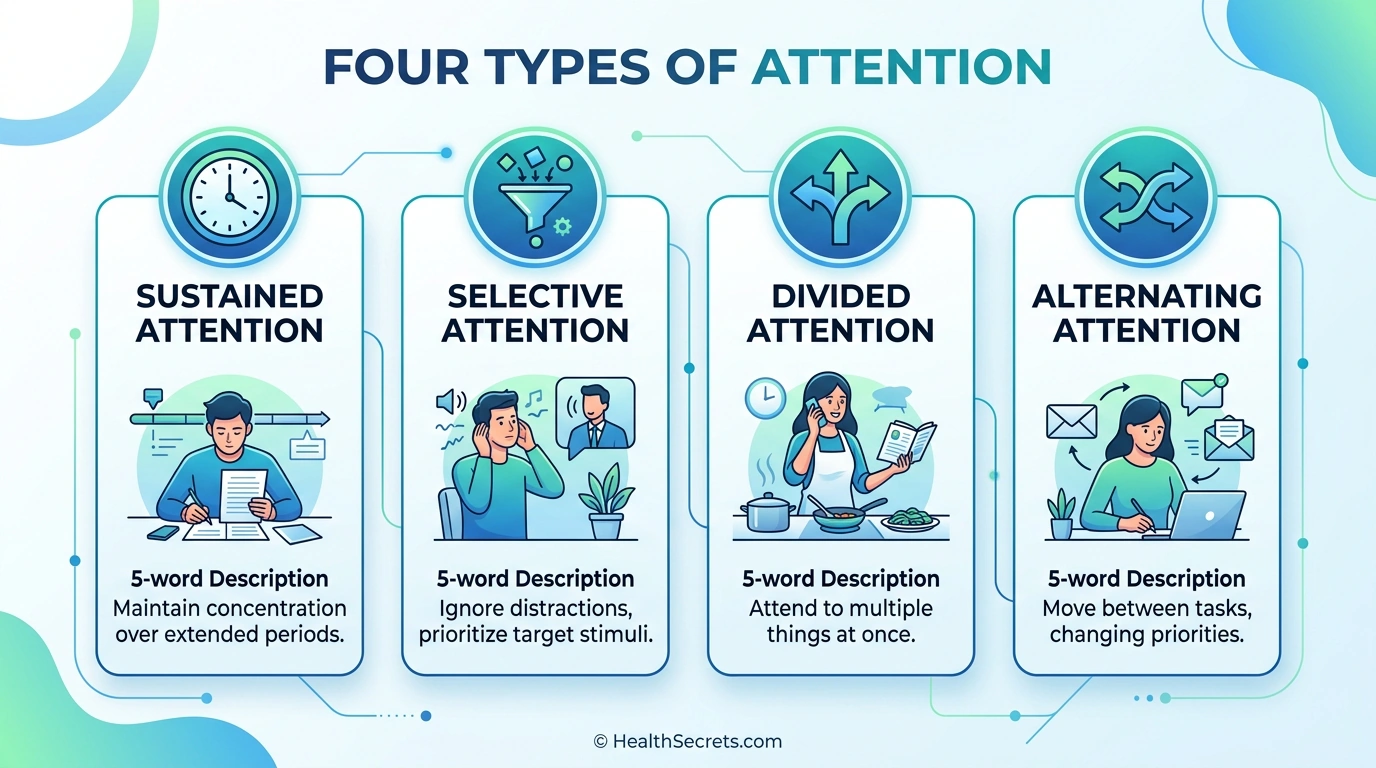
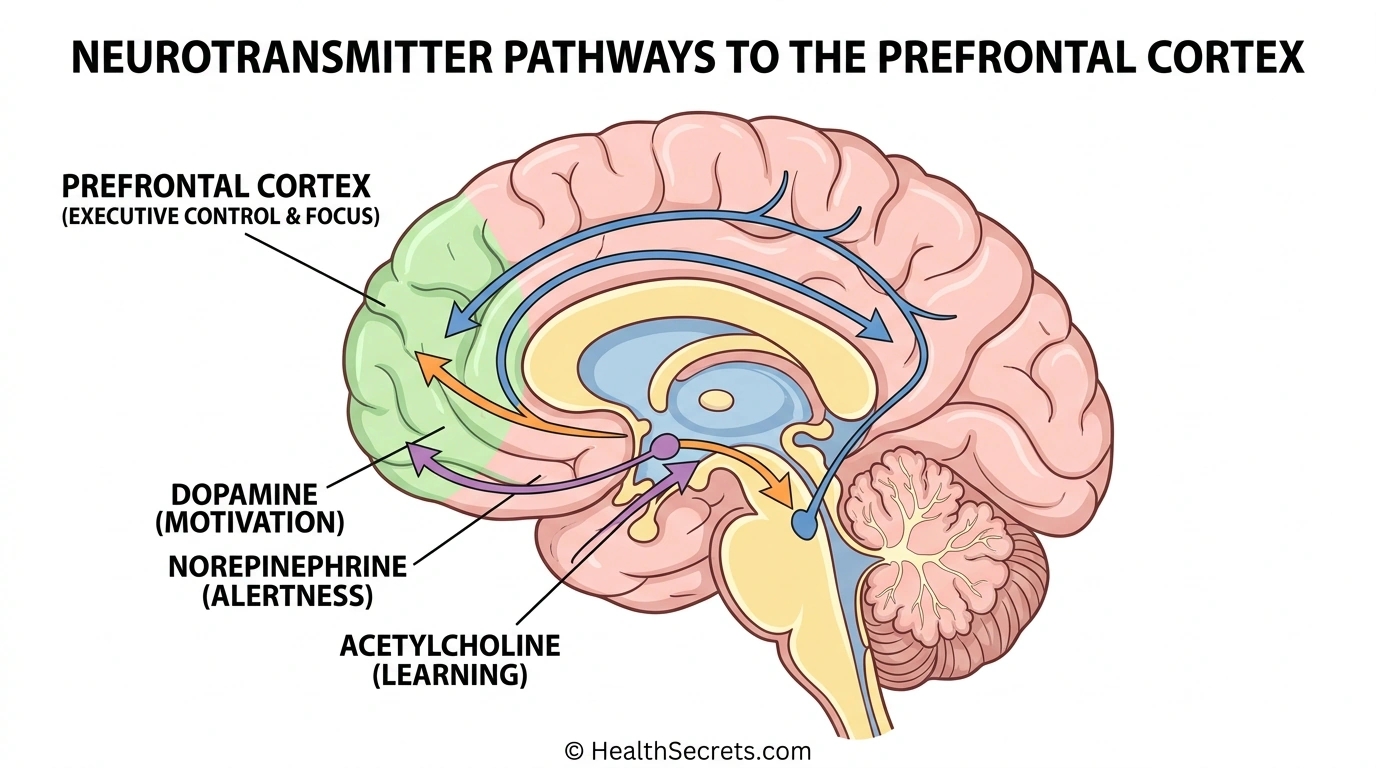
Before diving into specific strategies, understanding how attention works in your brain helps you target the right approaches. Focus involves your prefrontal cortex (executive control), neurotransmitters like dopamine and norepinephrine (motivation and alertness), and four types of attention: sustained, selective, divided, and alternating. The most common focus killers are digital distractions, sleep deprivation, chronic stress, poor nutrition, sedentary behavior, and mental fatigue.
What Types of Attention Does Your Brain Use?
Your brain deploys different attention systems depending on the task.
- Sustained attention (vigilance) maintains focus over extended periods — like reading a book or writing a report — and typically lasts 20–45 minutes before fatigue sets in.
- Selective attention filters relevant information while ignoring distractions, like focusing on a conversation in a noisy room.
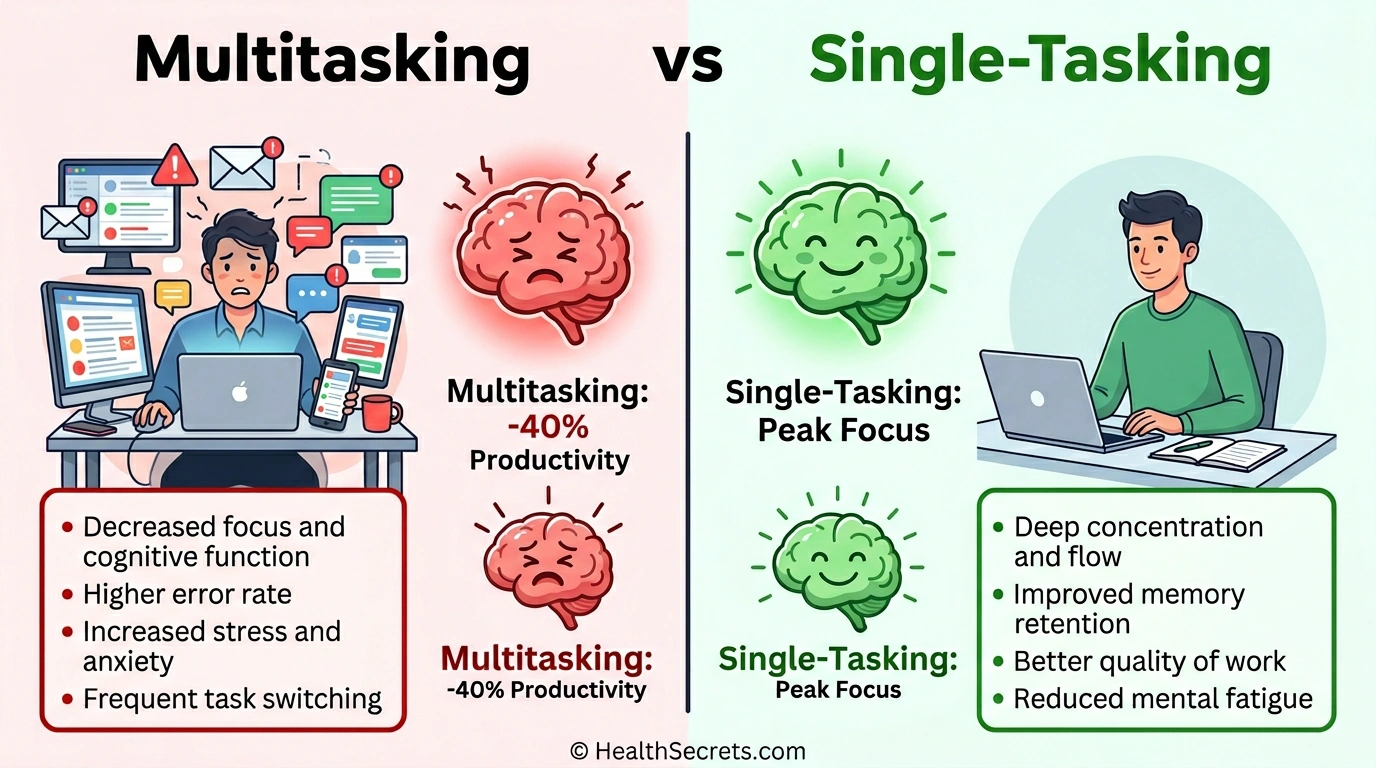
- Divided attention (multitasking) attempts to handle multiple tasks simultaneously, but research from the American Psychological Association shows this actually involves rapid switching that costs up to 40% of productive time [1].
- Alternating attention shifts focus between tasks, with each switch carrying a cognitive reorientation cost.
Why Do Most People Struggle to Focus?
Modern life bombards your brain with focus-destroying inputs. Digital distractions top the list — the mere presence of your smartphone reduces cognitive capacity even when it's turned off, according to research from the University of Texas [9]. Sleep deprivation below 7 hours impairs cognitive and motor performance equivalent to a blood alcohol concentration of 0.05% [2]. Chronic stress floods your brain with cortisol, impairing prefrontal cortex function. Poor nutrition causes blood sugar crashes that tank your concentration, while even mild dehydration (2%) impairs cognition by up to 20%.

The Bedroom Sleep Audit Checklist
Sixteen checks across temperature, light, sound and air with target ranges, a score sheet that counts what to fix first, and the one-change-at-a-time rule.
How Do You Eliminate Distractions for Maximum Focus?
Removing distractions is the single most powerful focus strategy, capable of boosting productivity by up to 40%. The key is creating a distraction-free environment before you begin working, not relying on willpower to resist interruptions once they appear. Research shows that each interruption costs an average of 23 minutes to fully refocus [1].
Digital distraction elimination:
- Put your phone in another room or a locked drawer (not just face-down on your desk)
- Turn off all non-essential notifications on your computer
- Close all browser tabs unrelated to your current task
- Use app blockers like Freedom or Forest during deep work sessions
- Set your device to "Do Not Disturb" or airplane mode
Physical environment:
- Find a quiet space — library, private office, or use noise-canceling headphones
- Clear your desk of everything except what you need for the current task
- Close your door or use a visual signal that you're not available
How Does the Pomodoro Technique Boost Concentration?
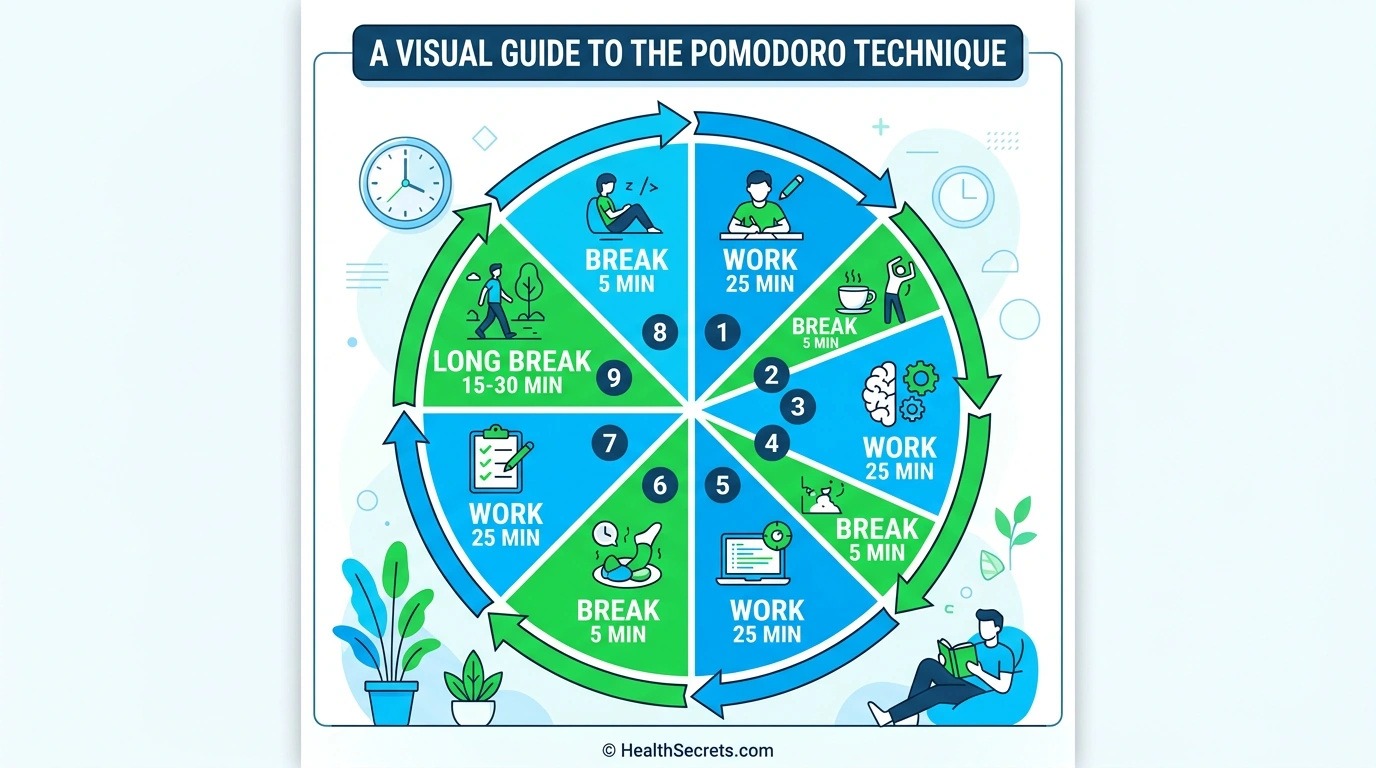
The Pomodoro Technique structures your work into focused 25-minute intervals separated by 5-minute breaks, increasing task completion by approximately 25% while preventing mental fatigue. This method works because it creates manageable time pressure (a natural focus trigger) and ensures regular mental recovery before exhaustion sets in.
How to use the Pomodoro Technique:
- Choose a single, specific task (not "work on project" but "write introduction section")
- Set a timer for 25 minutes
- Work with complete focus — if a distraction thought arises, jot it down for later
- Take a 5-minute break (stretch, walk, hydrate — avoid phone or social media)
- After 4 Pomodoros (2 hours), take a 15–30 minute break
Recommended apps: Focus Keeper, Forest (gamifies focus by growing virtual trees), Pomodone
Why Is Single-Tasking More Effective Than Multitasking?
Single-tasking — focusing on one activity at a time until completion — reverses the 40% productivity loss caused by multitasking. Your brain doesn't actually perform multiple cognitive tasks simultaneously; it rapidly switches between them, with each switch costing time, cognitive energy, and accuracy [8].
Research from Stanford University found that heavy multitaskers performed worse on simple memory tasks and had more difficulty filtering irrelevant information [9]. The American Psychological Association notes that switching costs can consume as much as 40% of someone's productive time APA, Multitasking: Switching Costs.
Single-tasking strategy:
- Complete one task before moving to the next
- Batch similar tasks together (check emails 2–3 times daily, not constantly)
- Use time blocking to schedule specific tasks in your calendar
How Does Meditation Train Your Brain to Focus Better?
Meditation strengthens your prefrontal cortex — the brain's attention control center — improving sustained attention by approximately 30% after 8 weeks of consistent practice. A 2024 randomized controlled trial found that just four weeks of focused attention meditation (three 20-minute sessions per week) significantly improved sustained attention accuracy in community-dwelling adults [6].
A systematic review of neuroimaging studies confirmed that meditation practice increases functional connectivity in the prefrontal cortex, enhancing cognition, self-awareness, attention, and memory [7]. Mindfulness training also preserves the anticorrelation between the default-mode network (mind-wandering) and the dorsolateral prefrontal cortex (focused attention) [5].
How to start meditating for focus:
- Begin with 10 minutes daily and work up to 20 minutes
- Practice focused attention meditation: concentrate on your breath, and when your mind wanders, gently return your attention — this "returning" is the exercise that builds focus
- Use guided meditation apps: Headspace, Calm, or Insight Timer
- Consistency matters more than duration — daily practice outperforms occasional long sessions
For more mindfulness techniques, see our sleep optimization guide.
How Does Exercise Improve Focus and Cognitive Function?
Aerobic exercise (150 minutes per week) increases brain-derived neurotrophic factor (BDNF), boosts cerebral blood flow, and elevates dopamine and norepinephrine — improving attention and cognitive function by approximately 20%. A 2023 prospective cohort study found that regular aerobic exercise significantly improved cognitive function scores while increasing BDNF levels, which could explain nearly 60% of the variance in cognitive performance [10].
Optimal exercise for focus:
- 150 minutes per week of moderate aerobic exercise (brisk walking, cycling, swimming)
- Morning exercise improves focus for the entire day
- A single session provides acute cognitive benefits for 2–4 hours (plan important work after exercise)
- Even a 20-minute walk — especially in nature — restores attentional capacity
Why Is Sleep the Foundation of Focus?
Sleep deprivation below 7 hours impairs attention, working memory, and executive function equivalent to alcohol intoxication. A landmark study found that after 17–19 hours without sleep, cognitive performance was equivalent to or worse than a blood alcohol concentration of 0.05%, with response speeds up to 50% slower [2].
Sleep optimization for focus:
- Get 7–9 hours consistently (same bedtime and wake time daily)
- Keep your bedroom dark, cool (65–68°F / 18–20°C), and quiet
- Avoid screens 1–2 hours before bed (blue light suppresses melatonin)
- Limit caffeine after 2 PM (half-life is 5–6 hours)
For a comprehensive sleep protocol, see our sleep optimization guide.
What Should You Eat and Drink for Optimal Brain Function?
A protein-rich breakfast stabilizes blood sugar for sustained mental energy, omega-3 fatty acids support brain structure and function, and staying hydrated prevents the 20% cognitive impairment caused by even mild (2%) dehydration. Blood sugar crashes from refined carbohydrates are one of the most common yet overlooked causes of afternoon focus collapse.
Brain-fueling nutrition:
- Protein breakfast: Eggs, Greek yogurt, or protein smoothie (amino acids support neurotransmitter production)
- Omega-3 (DHA): Fatty fish 2–3 times per week or 1–2g DHA supplement daily (60% of brain fat is DHA)
- Complex carbohydrates: Whole grains, vegetables, legumes for steady energy
- B vitamins: B6, B12, and folate support dopamine and norepinephrine synthesis
- Hydration: 8–10 cups of water daily — keep a water bottle at your desk
Avoid: Refined sugars, processed foods, and excessive caffeine (which creates a crash-and-crave cycle).
How Does Time Blocking Protect Your Focus Time?
Time blocking schedules specific tasks into dedicated calendar slots — treating your most important cognitive work like unmissable appointments. This approach reduces decision fatigue ("what should I work on?"), protects your peak focus hours from interruptions, and batches shallow work to prevent task-switching losses.
Time blocking implementation:
- Morning deep work (2–4 hours): Schedule your most cognitively demanding tasks when focus is naturally highest
- Afternoon shallow work: Emails, meetings, administrative tasks when mental energy is lower
- Protect your blocks: Decline meetings during deep work time and communicate your schedule to colleagues
- Batch similar tasks: Check email 2–3 times daily in dedicated windows, not continuously
How Does Your Physical Environment Affect Concentration?
Environmental factors including lighting, temperature, plants, and ergonomics significantly influence your ability to concentrate. Research shows that the presence of indoor plants improves attention by approximately 15%, natural light enhances alertness through circadian rhythm regulation, and optimal temperature (65–70°F / 18–21°C) maximizes cognitive performance.
Environment optimization checklist:
- Natural light: Sit near a window or use a 10,000 lux light therapy box in the morning
- Plants: Add 1–2 plants to your workspace (biophilia effect reduces stress and improves focus)
- Temperature: Maintain 65–70°F / 18–21°C (too warm causes drowsiness)
- Ergonomics: Comfortable chair with lumbar support, monitor at eye level
- Noise control: Noise-canceling headphones, white noise, or a quiet space
Why Are Strategic Breaks Essential for Sustained Focus?
Your brain's capacity for sustained attention is finite — performance declines after approximately 90 minutes of continuous focus. Regular breaks restore attentional capacity and prevent the diminishing returns of mental fatigue. Research shows that a 20-minute walk in nature restores attention more effectively than an urban walk or indoor rest [17].
Break strategy:
- Micro-breaks (5 minutes every 25–50 minutes): Stretch, walk, hydrate — physical movement, not phone scrolling
- Longer breaks (15–30 minutes every 90–120 minutes): Walk outdoors, especially in nature
- Lunch away from your desk: Complete mental separation from work
- Power nap (20 minutes): If needed and doesn't interfere with nighttime sleep
Which Supplements Improve Focus Naturally?
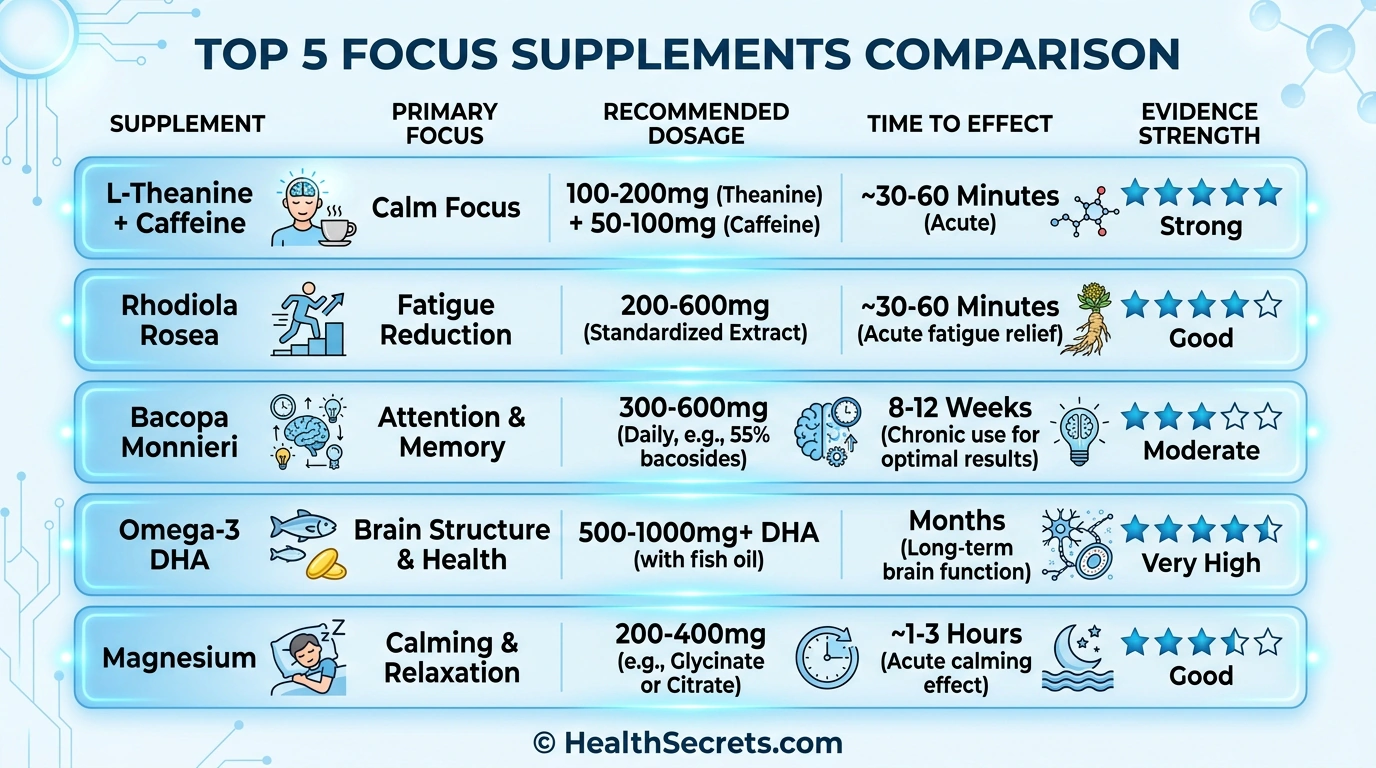
L-theanine combined with caffeine (100mg + 50mg) is the most evidence-backed natural focus supplement, improving attention and reducing reaction time while eliminating caffeine jitters. A systematic review confirmed that this combination improves short-term sustained attention, overall cognition, and inhibitory control [3].
| Supplement | Dose | Key Benefit | Evidence Level |
|---|---|---|---|
| L-Theanine + Caffeine | 100–200mg + 50–100mg | Calm focus, reduced jitters | Strong |
| Rhodiola Rosea | 200–600mg | Reduces mental fatigue | Moderate |
| Bacopa Monnieri | 300mg | Attention, processing speed | Moderate (8–12 weeks) |
| Omega-3 (DHA) | 1–2g daily | Brain structure, attention support | Moderate |
| Magnesium Glycinate | 300–500mg | Calms nervous system, improves focus | Moderate |
Rhodiola rosea (200–600mg, standardized to 3% rosavins) is an adaptogen that reduces mental fatigue and improves cognitive performance under stress. A 2024 clinical evidence review confirmed that Rhodiola supplementation progressively improves all fatigue subscales, with significant improvements seen within one week [11].
For a comprehensive nootropics guide, see our nootropics and natural brain boosters guide.
How Do You Achieve Flow State for Peak Concentration?
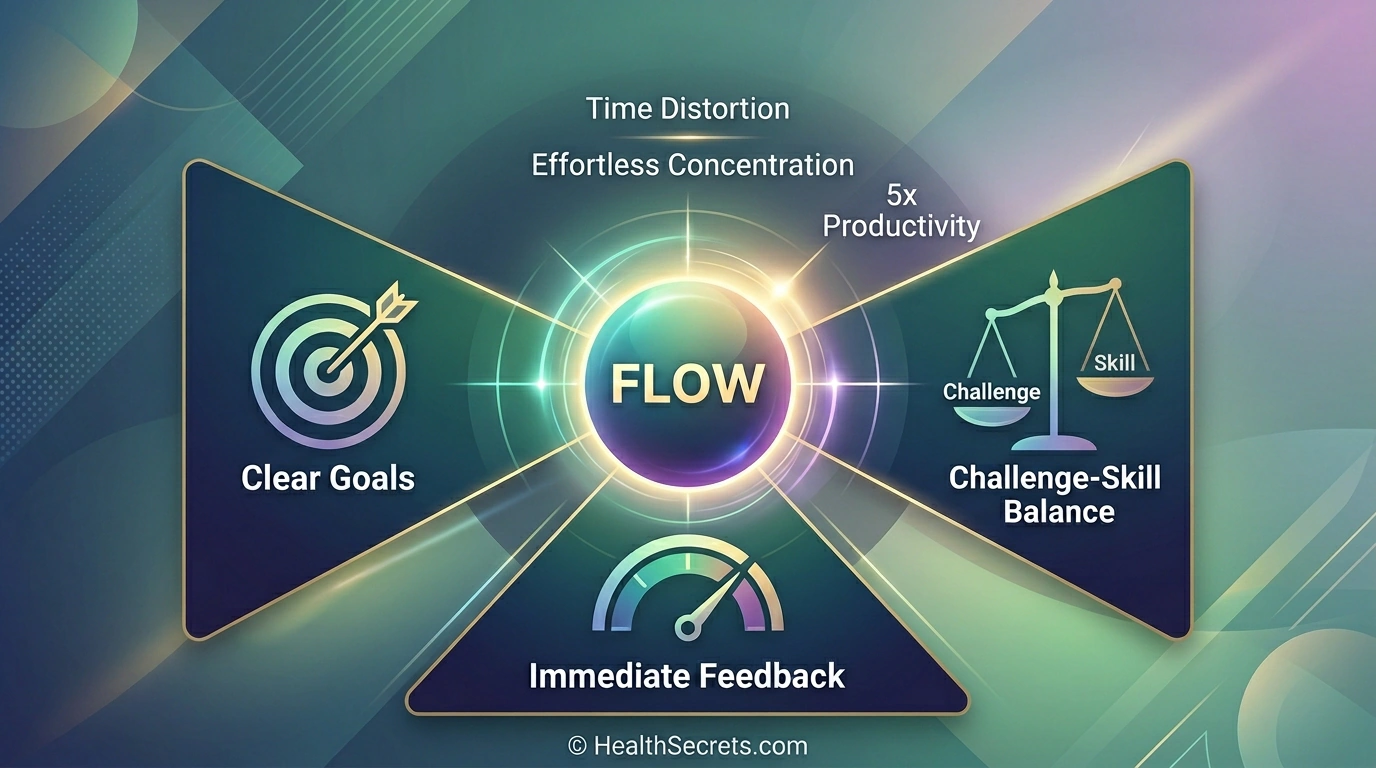
Flow state — coined by psychologist Mihaly Csikszentmihalyi — is a state of complete absorption where time seems to distort, concentration feels effortless, and productivity can increase up to 5x. Achieving flow requires clear goals, immediate feedback, and a challenge-skill balance where the task is approximately 4% beyond your current ability — challenging enough to engage you, but not so difficult it creates anxiety.
How to trigger flow state:
- Choose a challenging task slightly beyond your current skill level
- Eliminate all distractions (deep work environment — phone away, notifications off)
- Set clear goals for the session (know exactly what "done" looks like)
- Block 90–120 minutes uninterrupted (flow takes 15–20 minutes to enter)
- Single-task with complete focus on one cognitively demanding activity
- Build progressively — start with 30–60 minute deep work sessions and gradually increase
Cal Newport's concept of "deep work" — distraction-free concentration that pushes your cognitive capabilities to their limit — is essentially the practice of creating conditions for flow. Newport recommends a maximum of 4 hours of deep work daily, as it's mentally exhausting and requires consistent practice to build capacity.
What About ADHD and Focus?
Attention Deficit Hyperactivity Disorder (ADHD) affects 5–10% of adults and is a neurobiological condition — not a lack of willpower. People with ADHD have lower dopamine levels and an underactive prefrontal cortex, making focus strategies even more important but potentially insufficient alone.
All 12 strategies in this guide can help people with ADHD, especially structure (time blocking), exercise (natural dopamine boost), meditation (attention training), and distraction elimination. However, if these strategies don't provide adequate improvement, professional evaluation is recommended. Medication (stimulants or non-stimulants), cognitive behavioral therapy, and coaching can be transformative in combination with lifestyle strategies.
What Are the Most Common Focus Mistakes to Avoid?
Even with the best strategies, common mistakes can undermine your concentration efforts. Avoiding these pitfalls is just as important as implementing the 12 strategies above — many people unknowingly sabotage their focus through habits they believe are harmless or even productive.
Top focus mistakes:
- Checking phone during breaks: Scrolling social media during Pomodoro breaks floods your brain with dopamine, making it harder to return to focused work — walk or stretch instead
- Skipping breakfast or eating sugar: Blood sugar crashes mid-morning tank your concentration — eat protein within an hour of waking
- "Just one more email" before deep work: This primes your brain for reactive, shallow processing — start with your most important task first
- Working through fatigue: Pushing past 90 minutes without a break produces diminishing returns — take a 15-minute walk instead
- Expecting instant results from meditation: Attention training takes 4–8 weeks of consistent practice — start with 10 minutes and be patient
- Using caffeine as a sleep substitute: Coffee masks fatigue but doesn't restore prefrontal cortex function — prioritize 7–9 hours of sleep
- Optimizing environment last: Your physical space has an outsized impact on focus — invest in noise-canceling headphones, proper lighting, and a clean desk before trying supplements
Is It Safe to Use Focus Supplements? When Should You See a Doctor?
The lifestyle strategies in this guide (meditation, exercise, sleep, nutrition) are safe for virtually everyone. Focus supplements like L-theanine, rhodiola, and magnesium are generally well-tolerated but have some considerations. L-theanine is extremely safe with no known serious side effects. Caffeine should be limited to 400mg daily and avoided after 2 PM. Rhodiola may interact with antidepressants, blood thinners, and diabetes medications — consult your doctor if you take any medications.
See a doctor if:
- Focus problems significantly impact your work, relationships, or daily functioning
- You suspect you may have undiagnosed ADHD (persistent inattention since childhood)
- Concentration difficulties appeared suddenly or worsened rapidly
- You experience focus problems along with mood changes, fatigue, or weight changes (may indicate thyroid issues)
- Lifestyle strategies and supplements don't provide meaningful improvement after 8–12 weeks
- You're pregnant or breastfeeding (consult before taking any supplements)
Action Plan
What Should You Do First to Improve Your Focus Today?
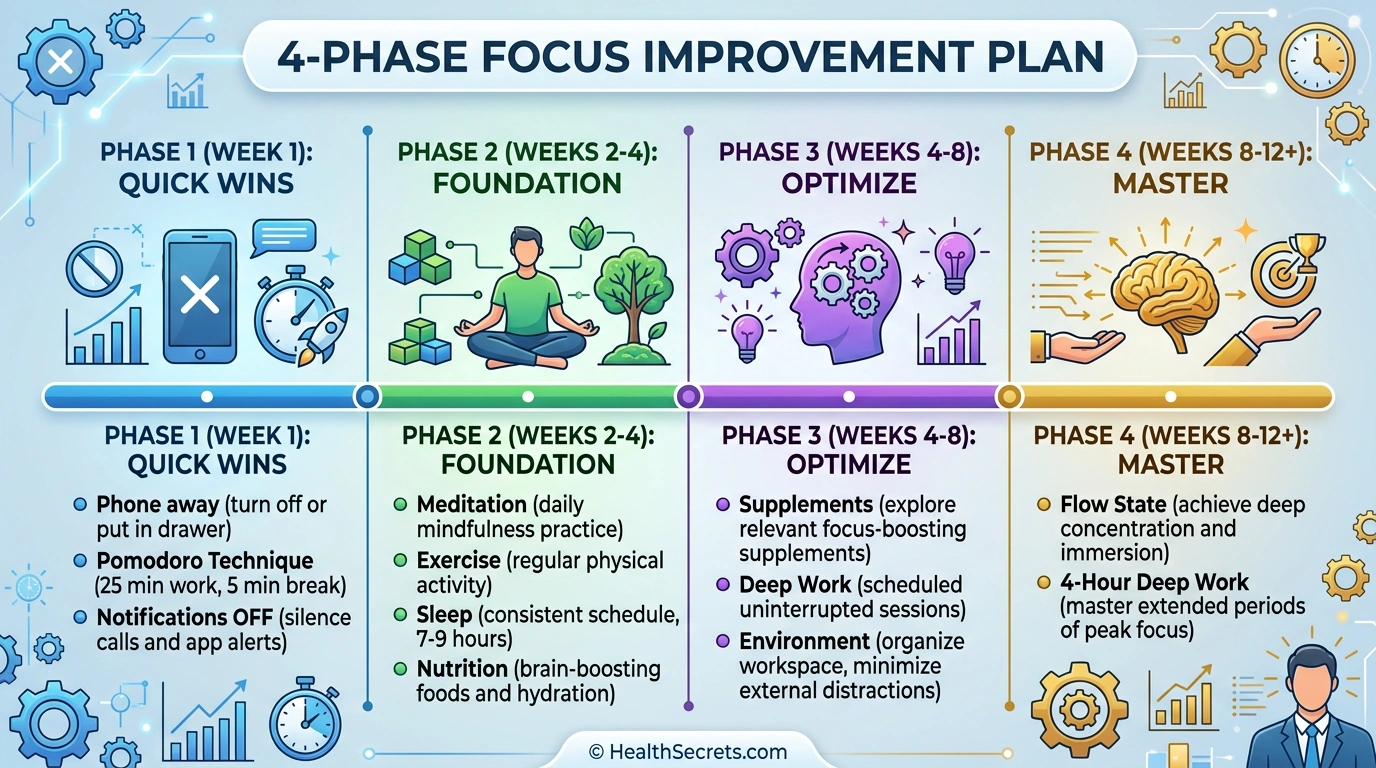
Follow the sequence below, work through each phase in order, and use the checklist as your practical implementation guide.
Start with the highest-impact, lowest-effort strategies first, then layer in habits that take longer to build. This phased approach ensures you see immediate results while building a sustainable focus practice that compounds over weeks and months.
Phase 1 — Quick Wins (Week 1):
- Put phone in another room during work (40% productivity boost)
- Try one Pomodoro session (25 min work, 5 min break)
- Turn off all non-essential notifications
- Clear desk of visual clutter
- Drink 8 cups of water throughout the day
Phase 2 — Build Foundation (Weeks 2–4):
- Start 10-minute daily meditation (work up to 20 minutes)
- Begin exercising 150 minutes per week (brisk walking counts)
- Optimize sleep to 7–9 hours with consistent schedule
- Eat protein breakfast daily
- Implement time blocking for deep work
Phase 3 — Optimize (Weeks 4–8):
- Try L-theanine + caffeine (100mg + 50mg) before focused work
- Practice single-tasking and batch email to 2–3 daily checks
- Optimize your workspace (plants, lighting, temperature, ergonomics)
- Build deep work sessions from 30 minutes to 90–120 minutes
Phase 4 — Master (Weeks 8–12+):
- Pursue flow state with challenge-skill balanced tasks
- Sustain 2–4 hours of daily deep work
- Add rhodiola rosea if needed for mental fatigue
- Track cognitive improvement with attention tests

Sports Research L-Theanine + Caffeine
Editor's ChoiceSports Research · Calm, focused alertness without caffeine jitters

NOW Foods Rhodiola Rosea 500mg
Best ValueNOW Foods · Reducing mental fatigue and improving stamina under stress

Nordic Naturals Ultimate Omega
Best Omega-3Nordic Naturals · Brain structure support and long-term cognitive health

Doctor's Best High Absorption Magnesium Glycinate 200mg
Best for Calm FocusDoctor's Best · Reducing anxiety-driven distraction and nervous system support
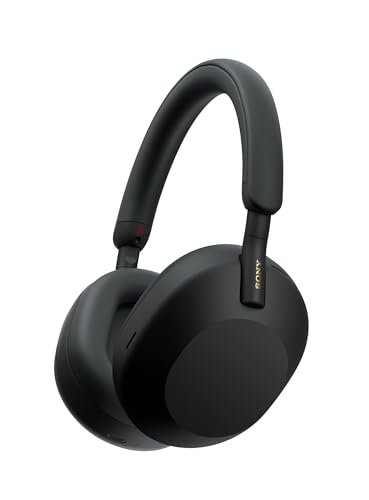
Sony WH-1000XM5 Noise-Canceling Headphones
Best Focus ToolSony WH-1000XM5 · Eliminating auditory distractions in open offices or noisy environments
Read the detailed review cards below before opening any retailer link
Top Recommended Products
Sports Research
Sports Research L-Theanine + Caffeine
Uses the clinically validated Suntheanine form of L-theanine in the research-backed 2:1 ratio with caffeine, delivering the calm focus enhancement shown in systematic reviews to improve sustained attention and inhibitory control.
Pros
- + Clinically studied Suntheanine form
- + ideal 2:1 ratio
- + smooth energy without crash
- + convenient single softgel
Cons
- - Contains coconut oil (allergen for some)
Why we included it: Uses the clinically validated Suntheanine form of L-theanine in the research-backed 2:1 ratio with caffeine, delivering the calm focus enhancement shown in systematic reviews to improve sustained attention and inhibitory control.
As an Amazon Associate, Health Secrets earns from qualifying purchases. Product links open on Amazon, where current pricing and availability are displayed. We only feature products discussed in our editorial guides.
NOW Foods
NOW Foods Rhodiola Rosea 500mg
Delivers the clinically studied standardized rhodiola extract at an affordable price point, with proper 3:1 rosavin-to-salidroside ratio shown to reduce mental fatigue within one week of supplementation.
Pros
- + Proper standardization ratio (3% rosavins / 1% salidroside)
- + affordable
- + trusted brand with GMP manufacturing
- + well-tolerated
Cons
- - Some users find 500mg too stimulating (can split dose)
Why we included it: Delivers the clinically studied standardized rhodiola extract at an affordable price point, with proper 3:1 rosavin-to-salidroside ratio shown to reduce mental fatigue within one week of supplementation.
As an Amazon Associate, Health Secrets earns from qualifying purchases. Product links open on Amazon, where current pricing and availability are displayed. We only feature products discussed in our editorial guides.
Nordic Naturals
Nordic Naturals Ultimate Omega
Provides therapeutic-dose DHA in the superior triglyceride form with USP verification for purity, supporting the brain structure and attention improvements demonstrated in omega-3 research.
Pros
- + USP verified purity
- + high DHA for brain health
- + triglyceride form absorbs better
- + no fishy aftertaste
- + sustainably sourced
Cons
- - Higher price than store brands
- - requires 2 softgels per serving
Why we included it: Provides therapeutic-dose DHA in the superior triglyceride form with USP verification for purity, supporting the brain structure and attention improvements demonstrated in omega-3 research.
As an Amazon Associate, Health Secrets earns from qualifying purchases. Product links open on Amazon, where current pricing and availability are displayed. We only feature products discussed in our editorial guides.
Doctor's Best
Doctor's Best High Absorption Magnesium Glycinate 200mg
Magnesium glycinate is the preferred form for cognitive and nervous system benefits — the chelated form maximizes absorption while minimizing the digestive issues common with cheaper magnesium oxide.
Pros
- + Highly absorbable glycinate form
- + gentle on stomach
- + calming without sedation
- + excellent value per serving
Cons
- - Requires 2 tablets per serving
- - tablets are large
Why we included it: Magnesium glycinate is the preferred form for cognitive and nervous system benefits — the chelated form maximizes absorption while minimizing the digestive issues common with cheaper magnesium oxide.
As an Amazon Associate, Health Secrets earns from qualifying purchases. Product links open on Amazon, where current pricing and availability are displayed. We only feature products discussed in our editorial guides.
Sony WH-1000XM5
Sony WH-1000XM5 Noise-Canceling Headphones
Eliminating auditory distractions is one of the highest-impact focus interventions — these headphones provide industry-leading noise cancellation that creates a portable deep work environment anywhere.
Pros
- + Best-in-class noise cancellation
- + 30-hour battery life
- + lightweight and comfortable for all-day wear
- + multipoint Bluetooth connection
Cons
- - Premium price point
- - no IP rating for water resistance
Why we included it: Eliminating auditory distractions is one of the highest-impact focus interventions — these headphones provide industry-leading noise cancellation that creates a portable deep work environment anywhere.
As an Amazon Associate, Health Secrets earns from qualifying purchases. Product links open on Amazon, where current pricing and availability are displayed. We only feature products discussed in our editorial guides.
Further Reading
Further Reading
"Deep Work: Rules for Focused Success in a Distracted World"
by Cal Newport
A compelling case for why deep work is rare and valuable; four actionable rules for building deep work habits; strategies for quitting social media and draining shallow work; real-world examples from high performers
Why it adds value here
Newport's concept of deep work is the foundation of Strategy 12 and the intellectual backbone of this entire guide — this book transforms focus from an abstract goal into a daily practice with concrete rituals and rules.
Best for: Knowledge workers, students, and professionals who want a systematic approach to distraction-free concentration
View book detailsFurther Reading
"Flow: The Psychology of Optimal Experience"
by Mihaly Csikszentmihalyi
The definitive explanation of flow state and its conditions; research on what makes activities intrinsically rewarding; strategies for finding flow in work, creativity, and everyday life; understanding of the challenge-skill balance
Why it adds value here
Csikszentmihalyi's research is the scientific foundation for flow state (Strategy 12) and provides the psychological framework for why focused concentration is not just productive but deeply fulfilling.
Best for: Anyone who wants to understand the science of complete absorption, peak performance, and intrinsic motivation
View book detailsAEO FAQ
Frequently Asked Questions
12 common questions answered
You can see immediate results from distraction elimination (40% productivity boost on day one) and the Pomodoro Technique. Meditation takes 4–8 weeks of consistent practice to measurably improve sustained attention. Exercise benefits begin within 2–4 hours of a single session, with cumulative improvements over 4–8 weeks. Supplements like L-theanine + caffeine work within 30–60 minutes, while bacopa monnieri requires 8–12 weeks.
Yes. Research from the American Psychological Association shows that task-switching costs can consume as much as 40% of productive time. Your brain doesn't actually perform multiple cognitive tasks simultaneously — it rapidly switches between them, with each switch requiring time to reorient and reactivate the relevant mental context.
A 2:1 ratio of L-theanine to caffeine (100–200mg L-theanine with 50–100mg caffeine) is the most studied and effective combination. This ratio provides enhanced attention and alertness while L-theanine smooths out caffeine's jittery side effects and promotes calm, focused alpha brain wave activity.
Meditation is active attention training, not passive relaxation. Neuroimaging studies show it increases gray matter in the prefrontal cortex and strengthens functional connectivity in attention networks. A randomized controlled trial found that just four weeks of focused attention meditation significantly improved sustained attention accuracy on cognitive tests.
After 17–19 hours without sleep, cognitive performance is equivalent to or worse than a blood alcohol concentration of 0.05%. Response speeds can be up to 50% slower. Being awake for 24 hours produces impairment equivalent to a BAC of 0.10%, which is above the legal driving limit in most countries.
Deep work is a practice of distraction-free concentration on cognitively demanding tasks — it's the deliberate creation of conditions for focused work. Flow state is a psychological experience of complete absorption that can emerge during deep work when challenge-skill balance, clear goals, and immediate feedback align. Deep work is the method; flow is the potential outcome.
L-theanine and magnesium glycinate are generally safe for daily use with minimal side effects. Caffeine should be limited to 400mg daily and avoided after 2 PM. Rhodiola rosea is well-tolerated but may interact with certain medications — consult your doctor if you take antidepressants, blood thinners, or diabetes medications.
ADHD is characterized by persistent inattention, hyperactivity, or impulsivity that has been present since childhood and significantly impairs functioning across multiple areas of life. If focus problems are situational (only at work, only when bored) and improve with the strategies in this guide, it's more likely a habit issue. If they're pervasive and persistent despite lifestyle optimization, seek professional evaluation.
The Pomodoro Technique structures work into 25-minute focused intervals separated by 5-minute breaks, with a longer 15–30 minute break after four cycles. It works because the time constraint creates urgency (a natural focus trigger), regular breaks prevent mental fatigue, and the clear structure reduces decision-making about when to work and when to rest.
Exercise directly improves focus through multiple brain mechanisms. Aerobic exercise increases BDNF (brain-derived neurotrophic factor) which supports neuroplasticity and learning, elevates dopamine and norepinephrine (focus neurotransmitters), increases cerebral blood flow, and reduces cortisol (stress hormone that impairs prefrontal cortex function). Even a single exercise session improves attention for 2–4 hours.
Aim for 8–10 cups (2–2.5 liters) of water daily, more if you exercise or live in a hot climate. Even mild dehydration at 2% body water loss impairs attention, working memory, and mood. Use urine color as a guide — pale yellow indicates proper hydration, while dark yellow signals dehydration that may already be affecting your cognitive performance.
Absolutely. The most powerful focus strategies are all lifestyle-based: eliminating distractions (40% productivity boost), the Pomodoro Technique (25% more task completion), single-tasking, meditation (30% attention improvement), exercise, sleep optimization, and nutrition. Supplements are secondary enhancers — lifestyle changes should always be the foundation.

Better Sleep Environment Workbook
Heat, light, sound and air measured against their targets, a bedroom audit that counts itself, fixes at three price points, and two 14-day experiments that show which change helped you.
What is inside:
PDF e-book + free online edition • 60-day money-back guarantee
Test Your Knowledge
Take our Mental Wellness Quiz and see how much you really know about mental wellness.
Was this article helpful?
Researched & Fact-Checked
Author
Health Secrets Editorial TeamThe Health Secrets editorial team researches, writes and fact-checks every guide against the primary studies and clinical guidelines it cites.
Fact-Checked By
Health Secrets Editorial TeamAll content is evidence-based, checked against peer-reviewed research, and updated regularly. Our editorial team follows strict guidelines for accuracy and transparency.
References & Citations
18 sources cited
Medical Disclaimer
This article is for informational purposes only and does not constitute medical advice. Read the full medical disclaimer. Always consult with a qualified healthcare provider before starting any new supplement, treatment, or major dietary change.
Mental Wellness Guide: Natural Strategies for Mind Health
Mental wellness goes far beyond the absence of mental illness—it's the daily practice of nurturing your brain, emotions, and cognitive function through evidence-based natural strategies. This comprehensive guide covers nutrition, sleep, stress management, the gut-brain axis, key supplements, and lifestyle changes that support lasting emotional balance and brain health.
You Might Also Like
Mental Wellness Guide: Natural Strategies for Mind Health
Mental wellness goes far beyond the absence of mental illness—it's the daily practice of nurturing your brain, emotions, and cognitive function through evidence-based natural strategies. This comprehensive guide covers nutrition, sleep, stress management, the gut-brain axis, key supplements, and lifestyle changes that support lasting emotional balance and brain health.
→Memory Improvement: 15 Science-Backed Strategies
Memory improvement is possible at any age thanks to neuroplasticity. This evidence-based guide covers 15 science-backed strategies — from spaced repetition and active recall to exercise, nutrition, and targeted supplements — that can meaningfully sharpen your recall, learning speed, and long-term brain health.
→Ginkgo Biloba for Brain Health: Ancient Remedy Review
Ginkgo biloba is one of the most extensively studied herbal supplements for brain health, with strong evidence supporting its use in mild dementia and vascular cognitive impairment. This evidence-based review covers clinical research, standardized extracts like EGb 761, critical bleeding risks with blood thinners, proper dosing, and the best ginkgo supplements available.
→Discussion
0No comments yet
Be the first to share your thoughts, clinical insights, or questions about this protocol.