You've probably seen acetyl-L-carnitine marketed as a "brain booster" that sharpens memory, fights mental fatigue, and even reverses age-related cognitive decline. The supplement shelves are packed with ALCAR products promising everything from laser focus to dementia prevention. But what does the science actually say? [4] [7]
The truth is more nuanced — and more interesting — than the marketing suggests. ALCAR has some genuinely compelling research behind it, particularly for mood support and age-related cognitive changes. But it's also surrounded by overhyped claims that don't hold up under scrutiny. A 2019 Cochrane review found no convincing evidence that L-carnitine improves cognitive function in healthy adults, while other research shows promising results for specific populations dealing with depression and mild cognitive impairment [2]. [8]
In this guide, we'll cut through the noise and examine what ALCAR can — and can't — do for your brain health, based on the best available evidence from clinical trials, systematic reviews, and expert analysis. [10] [12]
If you're exploring brain health more broadly, check out our Mental Wellness Complete Guide and our guide to Brain Health Supplements for a wider view of evidence-based options. [13]
What Is Acetyl-L-Carnitine and Why Does It Matter for Brain Health?
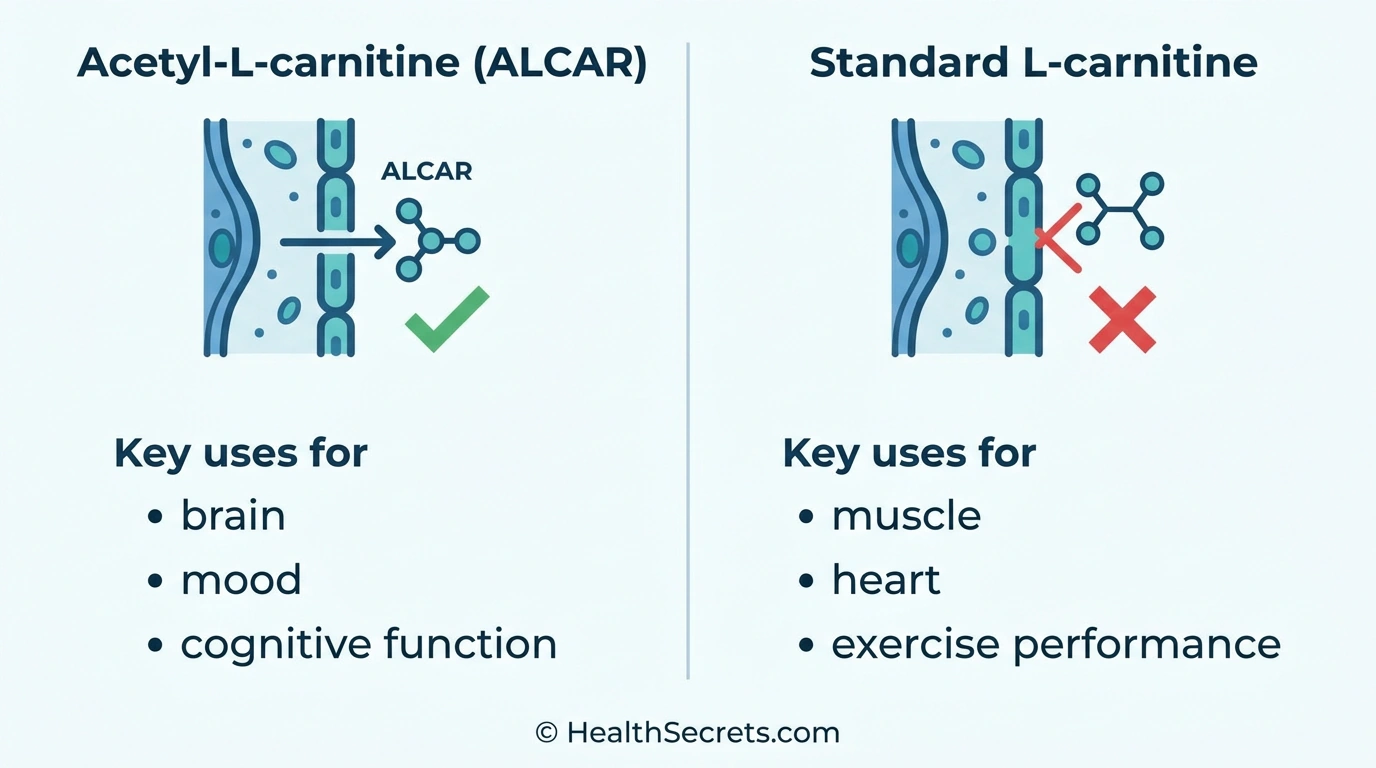
Acetyl-L-carnitine (ALCAR) is the acetylated form of L-carnitine, an amino acid derivative naturally produced in the body from lysine and methionine. Unlike standard L-carnitine, ALCAR's acetyl group allows it to cross the blood-brain barrier efficiently, making it uniquely suited for neurological and cognitive applications.
Your body naturally produces L-carnitine primarily in the liver and kidneys, with the highest concentrations found in skeletal muscle, heart, and brain tissue. ALCAR plays a critical role in transporting fatty acids into mitochondria for energy production — a process that's especially important in the brain, which consumes roughly 20% of your body's total energy despite being only 2% of your body weight.
How Is ALCAR Different from Regular L-Carnitine?
The key distinction is bioavailability in the brain. Standard L-carnitine primarily supports energy metabolism in muscles and the heart but has limited ability to cross the blood-brain barrier. ALCAR, with its acetyl group, passes through this barrier readily and also serves as a donor of acetyl groups for acetylcholine synthesis — one of the brain's most important neurotransmitters for memory and learning.
Other forms of carnitine you may encounter include:
- L-Carnitine L-Tartrate (LCLT) — primarily used for exercise recovery and muscle soreness
- Propionyl-L-Carnitine (PLC) — focused on cardiovascular and peripheral vascular support
- ALCAR — the preferred form for brain and nervous system support
Who Might Benefit from ALCAR Supplementation?
Research suggests ALCAR may be most relevant for older adults experiencing age-related cognitive changes, individuals with depression (particularly treatment-resistant depression), people with mild cognitive impairment, and those with conditions affecting mitochondrial function. It is also being studied in populations with diabetic neuropathy and chronic fatigue.

Can't Sleep Through the Night?
Download the free Sleep Audit & Recovery Guide — used by our readers to identify the exact bedroom triggers and stress habits wrecking their rest.
How Does Acetyl-L-Carnitine Support Brain Function?
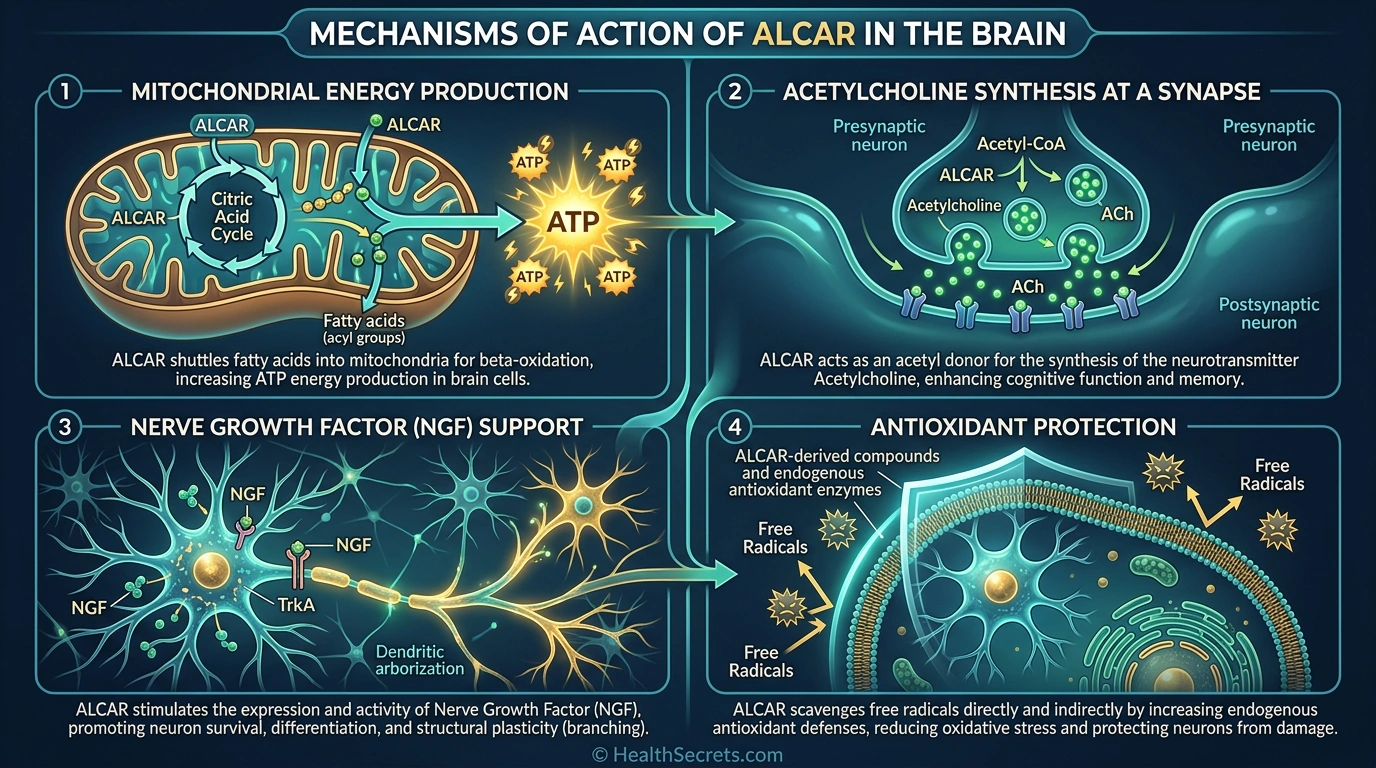
ALCAR supports brain health through four interconnected mechanisms: mitochondrial energy production, neurotransmitter synthesis, nerve growth factor modulation, and antioxidant protection. These pathways work together to maintain neuronal health, support cognitive processes, and protect against age-related neurodegeneration.
How Does ALCAR Boost Brain Energy Production?
ALCAR's primary role is shuttling long-chain fatty acids across the inner mitochondrial membrane for beta-oxidation — the process that generates ATP, your cells' energy currency. In the brain, this mitochondrial support is critical because neurons are highly energy-dependent and particularly vulnerable to mitochondrial dysfunction.
Age-related decline in mitochondrial function is one of the leading theories of cognitive aging. Research published in Neurochemical Research shows that ALCAR supplementation can partially restore mitochondrial membrane potential and electron transport chain activity in aged animal models, suggesting a mechanism by which it may support cognitive function in older adults.
How Does ALCAR Influence Neurotransmitter Production?
ALCAR donates its acetyl group to coenzyme A, which is used in the synthesis of acetylcholine — the neurotransmitter most closely associated with memory formation, learning, and attention. Acetylcholine deficiency is a hallmark of Alzheimer's disease and is the target of cholinesterase inhibitor medications like donepezil.
Beyond acetylcholine, ALCAR has been shown to modulate:
- Serotonin and norepinephrine — helping explain its antidepressant effects observed in clinical trials
- Glutamate — the brain's primary excitatory neurotransmitter, important for synaptic plasticity
- GABA — the primary inhibitory neurotransmitter, important for calm focus and sleep
What Role Does ALCAR Play in Neuroprotection?
ALCAR has demonstrated neuroprotective properties through several pathways. It supports nerve growth factor (NGF) activity, which is essential for the survival, maintenance, and regeneration of neurons. It also acts as an antioxidant, helping to neutralize reactive oxygen species that damage neuronal membranes and DNA.
A 2020 critical review in Frontiers in Neuroscience (PMC7284336) noted that ALCAR's multi-target mechanism — combining energy support, neurotransmitter modulation, and antioxidant activity — makes it a uniquely versatile compound for brain health, though the authors emphasized that more rigorous clinical trials are needed to confirm these mechanisms translate to meaningful cognitive benefits in humans [1].

Healthy Aging Annual Planning Binder
An annual audit, the screening and vaccine schedule for your age, a 12-week strength and balance program, and four quarter plans, with your care team and directives in the back.
How Well Does Your Body Absorb Acetyl-L-Carnitine?
ALCAR has good oral bioavailability, with absorption rates ranging from approximately 54–86% depending on the dose and individual factors. Its acetylated structure gives it a significant advantage over standard L-carnitine for brain-related applications because it crosses the blood-brain barrier via organic cation transporters.
What Factors Affect ALCAR Absorption?
Several factors influence how well your body absorbs and utilizes ALCAR:
- Dose size — Bioavailability tends to decrease with higher single doses; splitting doses throughout the day may improve total absorption
- Food intake — ALCAR can be taken with or without food, though some research suggests taking it with a small meal may reduce GI discomfort
- Age — Older adults tend to have lower baseline carnitine levels and may benefit more from supplementation
- Kidney function — The kidneys play a major role in carnitine homeostasis; impaired kidney function can alter ALCAR metabolism
- Gut microbiome — Intestinal bacteria can convert carnitine to trimethylamine (TMA), which is further converted to TMAO in the liver — a compound associated with cardiovascular risk at elevated levels
Does ALCAR Form Raise Any TMAO Concerns?
The TMAO (trimethylamine N-oxide) question is worth addressing directly. Research has linked elevated TMAO levels to increased cardiovascular risk, and carnitine from food (especially red meat) is a known precursor. However, studies suggest that supplemental ALCAR at standard doses (500–2,000 mg/day) produces significantly less TMAO than dietary carnitine from red meat, particularly in individuals who don't regularly consume large amounts of red meat [15]. That said, individuals with existing cardiovascular risk factors should discuss this with their healthcare provider.
How Much Acetyl-L-Carnitine Should You Take for Brain Health?
For general brain health support, most evidence supports 500–2,000 mg of ALCAR daily, divided into two doses. Clinical trials for cognitive impairment and depression have used higher doses of 1,500–3,000 mg daily, though these higher doses should be used under medical supervision.
What Do Clinical Trials Tell Us About ALCAR Dosing?
| Purpose | Dose Range | Duration | Evidence Level |
|---|---|---|---|
| General brain support | 500–1,000 mg/day | Ongoing | Low–Moderate |
| Mild cognitive impairment | 1,500–2,000 mg/day | 12–24 weeks | Moderate |
| Depression support | 1,000–3,000 mg/day | 8–12 weeks | Moderate |
| Alzheimer's/Dementia | 1,500–3,000 mg/day | 24–52 weeks | Mixed |
| Neuropathy support | 1,500–3,000 mg/day | 12–52 weeks | Moderate |
- Split your dose — Take ALCAR in two divided doses (morning and early afternoon) rather than one large dose to improve absorption and maintain steady levels
- Timing — Take in the morning and early afternoon; ALCAR can have mild stimulatory effects that may interfere with sleep if taken late in the day
- Start low — Begin with 500 mg/day and increase gradually over 2–4 weeks to assess tolerance
- Consistency matters — Clinical benefits in studies typically appeared after 8–12 weeks of consistent use
- With or without food — Either works; taking with a light meal may reduce any GI discomfort
Can You Get Enough Acetyl-L-Carnitine from Food?
While several foods contain L-carnitine, obtaining therapeutic amounts of ALCAR specifically from diet alone is not practical. Food sources provide L-carnitine, which the body can partially convert to ALCAR, but the conversion rate is limited and unlikely to produce the blood levels achieved through direct ALCAR supplementation.
Which Foods Are Highest in L-Carnitine?
| Food Source | L-Carnitine (mg per serving) | Serving Size |
|---|---|---|
| Beef steak | 56–162 mg | 3 oz cooked |
| Ground beef | 80–87 mg | 3 oz cooked |
| Pork | 20–24 mg | 3 oz cooked |
| Chicken breast | 3–5 mg | 3 oz cooked |
| Milk (whole) | 8 mg | 8 oz |
| Non-meat eaters typically consume 10–12 mg of carnitine daily from diet, compared to 60–180 mg for omnivores. Since the body produces about 10–20 mg of carnitine per day on its own, most healthy adults maintain adequate baseline levels. However, therapeutic brain-health doses (500–2,000 mg ALCAR) far exceed what diet and endogenous production can provide, making supplementation the practical route for those seeking specific cognitive or neurological benefits. |

Is Acetyl-L-Carnitine Safe? What Are the Side Effects?
ALCAR is generally well-tolerated at standard supplemental doses of 500–2,000 mg per day. The most common side effects are mild and gastrointestinal in nature. However, there are important interactions and contraindications that require attention, particularly for individuals on certain medications.
What Are the Most Common Side Effects of ALCAR?
- Gastrointestinal symptoms — Nausea, stomach cramps, diarrhea, and vomiting (most common, usually dose-dependent)
- Fishy body odor — A distinctive side effect caused by trimethylamine production; reducing the dose usually resolves it
- Restlessness or insomnia — Due to mild stimulatory effects, especially at higher doses or when taken late in the day
- Headache — Occasionally reported, typically transient
What Drug Interactions Should You Be Aware Of?
- Thyroid medications (levothyroxine) — ALCAR may inhibit thyroid hormone action; individuals with hypothyroidism should use caution and consult their physician
- Blood thinners (warfarin) — ALCAR may enhance anticoagulant effects, increasing bleeding risk
- Seizure medications — ALCAR may lower seizure threshold in some individuals; those with epilepsy should consult a neurologist
- Acenocoumarol and other anticoagulants — Similar concerns as warfarin
Who Should Avoid ALCAR?
- Individuals with untreated hypothyroidism or thyroid disorders (without physician approval)
- People with a history of seizures (without neurologist guidance)
- Pregnant or breastfeeding women (insufficient safety data)
- Individuals on dialysis (altered carnitine metabolism)
What Can You Realistically Expect from ALCAR Supplementation?
ALCAR is not a cognitive miracle pill, and expectations should be calibrated to the evidence. For healthy young adults, the research does not support meaningful cognitive enhancement. For older adults and specific clinical populations, the evidence is more encouraging but still modest in scope.
What Does the Evidence Actually Support?
Stronger evidence (moderate confidence):
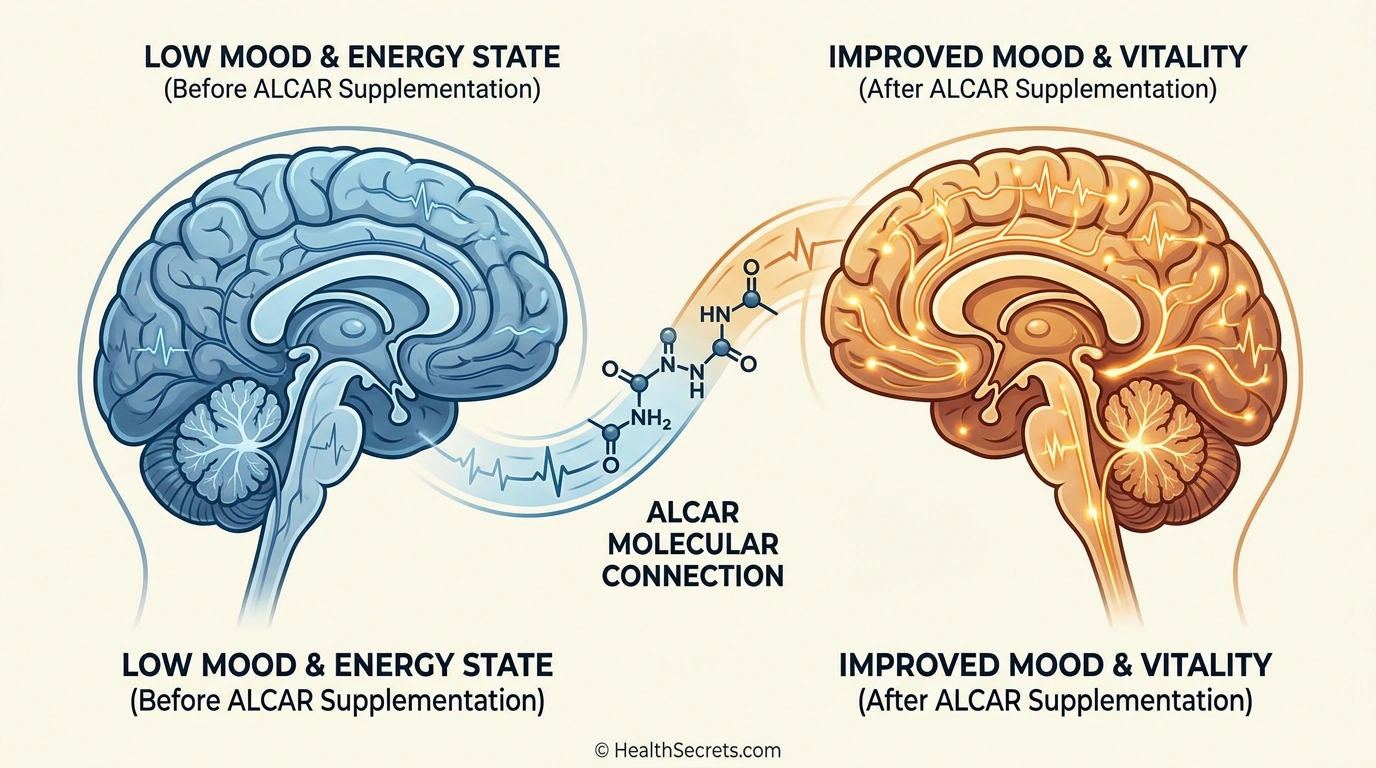
- Mood improvement and antidepressant effects, particularly in older adults and those with treatment-resistant depression
- Mild cognitive improvement in patients with existing mild cognitive impairment (MCI) or early dementia, especially vascular cognitive impairment
- Neuropathy symptom reduction (particularly diabetic and chemotherapy-induced neuropathy)
Weaker evidence (low confidence):
- Cognitive enhancement in healthy adults — a 2019 Cochrane review (PMC6464592) found no convincing evidence for improvements in reaction time, vigilance, or memory in healthy populations
- Prevention of Alzheimer's disease or major neurodegenerative conditions
- Significant improvements in moderate-to-severe dementia
What's a Realistic Timeline?
Don't expect overnight results. Clinical trials showing benefits for mood typically required 8–12 weeks. Studies on cognitive impairment showed results at 12–24 weeks. A 1996 multicenter study ran for a full year before observing reduced decline in Alzheimer's patients [9].
- Weeks 1–4: Possible mild increase in mental energy and alertness. Some people notice improved mood within 2–3 weeks.
- Weeks 4–12: Mood-related benefits become more noticeable if they're going to occur. Subtle improvements in mental clarity may emerge.
- Weeks 12–24: Cognitive benefits, if present, typically become apparent in this window. This is when clinical trials for MCI showed measurable improvements.
If you've been taking ALCAR consistently for 12 weeks at an appropriate dose without noticing any benefits, it may not be the right supplement for your situation.
What's the Best Step-by-Step Plan to Try ALCAR for Brain Health?
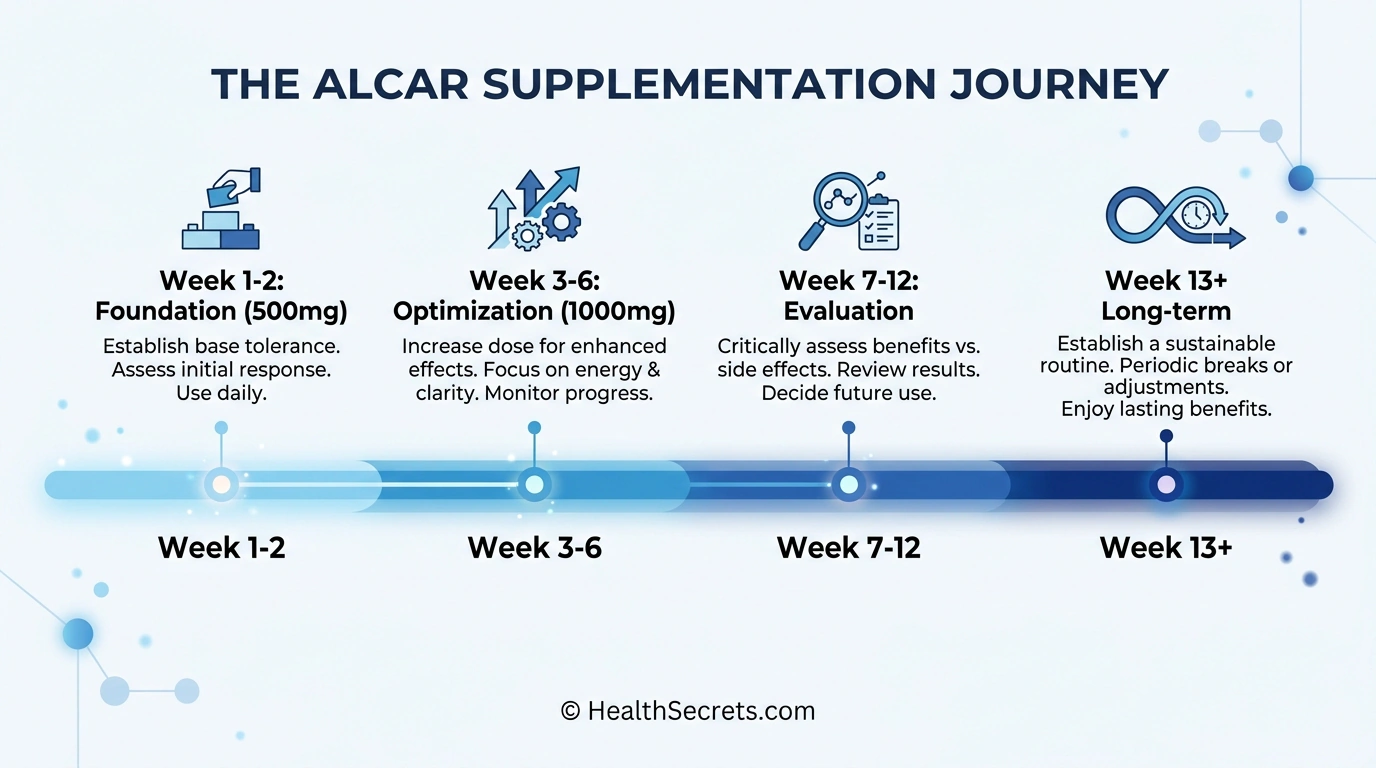
A phased approach helps you assess tolerance, find your effective dose, and evaluate whether ALCAR is actually working for you. Start conservatively, track your response carefully, and adjust based on what you observe over 12–16 weeks.
Phase 1: Foundation (Weeks 1–2)
- Consult your healthcare provider, especially if you take thyroid medication, blood thinners, or seizure medications
- Choose a reputable ALCAR supplement (look for USP, NSF, or GMP certification)
- Start with 500 mg once daily in the morning
- Track baseline: note current energy levels, mood, focus, and memory in a simple journal
- Monitor for any GI discomfort or side effects
Phase 2: Dose Optimization (Weeks 3–6)
- If tolerating well, increase to 500 mg twice daily (morning and early afternoon)
- Continue daily tracking of mood, energy, focus, and sleep quality
- If GI side effects occur, reduce back to 500 mg/day and try increasing again after a week
- Ensure you're not taking ALCAR after 3 PM to avoid potential sleep disruption
Phase 3: Evaluation (Weeks 7–12)
- Maintain consistent dosing at 1,000 mg/day (or up to 1,500 mg/day if well-tolerated and needed)
- Compare your tracking data against your baseline
- Look for improvements in mood, mental energy, and focus — these are the most likely benefits
- If no noticeable benefits by week 12, consider whether continuing is worthwhile
Phase 4: Long-Term Strategy (Week 13+)
- If benefits are present, continue at the effective dose
- Schedule periodic check-ins with your healthcare provider
- Combine with complementary brain-health habits: regular exercise, Mediterranean-style diet, quality sleep, and stress management
- Consider periodic breaks (1 week off every 3 months) to reassess