You forgot a name at a party. You walked into a room and blanked on why. You spent ten minutes searching for your phone—while holding it.
Sound familiar? If you're worried about cognitive aging, you're not alone. Millions of people assume that losing mental sharpness is just part of getting older—something inevitable, like gray hair or creaky knees.
But here's the thing: cognitive decline is not inevitable.
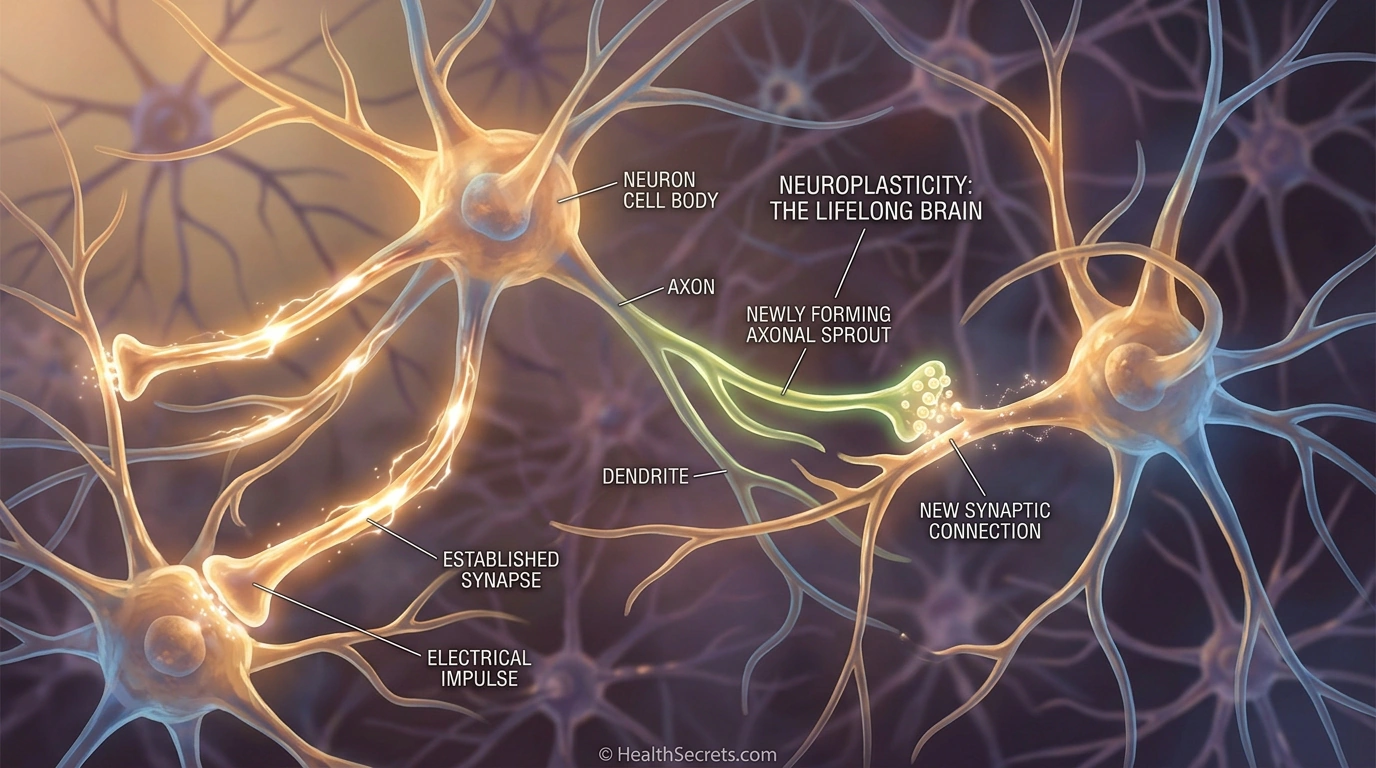
Your brain remains plastic throughout your entire life. It can form new connections, build new pathways, and adapt to new challenges at 60, 70, even 80. The science on this is remarkably clear. Neuroplasticity—the brain's ability to reorganize and rewire itself—doesn't stop at age 25. It continues until the day you die [1], [2].
The problem? Modern life often works against your brain. Sedentary jobs. Ultra-processed food. Social isolation. Chronic stress. Screen addiction. These aren't just lifestyle inconveniences—they're accelerants of brain aging.
The good news is that the same research showing how lifestyle damages the brain also shows how to protect it. And the interventions are surprisingly powerful. Exercise alone reduces dementia risk by 30–40%. The Mediterranean diet does the same. Lifelong learning cuts Alzheimer's risk by nearly 40%. Social isolation, on the other hand, increases dementia risk by 50% [4].
This guide walks you through every evidence-based strategy for keeping your brain young—step by step. What actually works, what's overhyped, and what you should start doing today.
For more on the longevity connection, check out our longevity and anti-aging guide and our guide on inflammation and pain relief.
What Do You Need to Know Before Starting a Brain-Health Protocol?
Before changing anything, you need to understand how your brain actually ages—and why that process varies so wildly from person to person. Normal cognitive aging involves mild slowing in processing speed and occasional word-finding difficulties, but it doesn't significantly impair daily function. Pathological aging—dementia—is fundamentally different.
What Changes Are Normal as Your Brain Ages?
Your brain does change with age. Some volume loss in the prefrontal cortex and hippocampus. White matter changes. Slightly reduced neurotransmitter production. You might need a bit more time to learn new information, and multitasking gets harder.
But—and this is critical—the variation between individuals is enormous. Genetics, lifestyle, education, and overall health all shape your trajectory. Some 80-year-olds have sharper minds than some 50-year-olds. Brain aging is not a single, fixed path [2].
When Should You Worry?
Normal aging: You occasionally forget a name but recall it later.
Pathological aging: You progressively forget recent events, get confused in familiar places, and can't manage daily tasks. Mild cognitive impairment (MCI) sits in between—not everyone with MCI develops dementia.
Alzheimer's accounts for 60–70% of dementia cases, followed by vascular dementia. If you notice progressive worsening, functional impairment, or your family expresses concerns, seek evaluation promptly.
What Is Cognitive Reserve and Why Does It Matter?
Some people develop Alzheimer's pathology—plaques and tangles in their brains—but never show symptoms. Why? Cognitive reserve. They've built enough neural connections and compensatory pathways that their brain works around the damage. Education, lifelong learning, mentally stimulating work, and social engagement all build this reserve [5].
Think of cognitive reserve as a savings account for your brain. The more you invest throughout life, the more you have to draw on when aging or disease challenges your cognition.

The Bedroom Sleep Audit Checklist
Sixteen checks across temperature, light, sound and air with target ranges, a score sheet that counts what to fix first, and the one-change-at-a-time rule.
How Do You Use Exercise to Protect Your Brain from Cognitive Aging?
If you could only do one thing to keep your brain young, exercise would be it. Physical activity is the single most powerful intervention for maintaining cognitive health as you age—and the evidence is overwhelming [3].
How Does Exercise Change Your Brain?
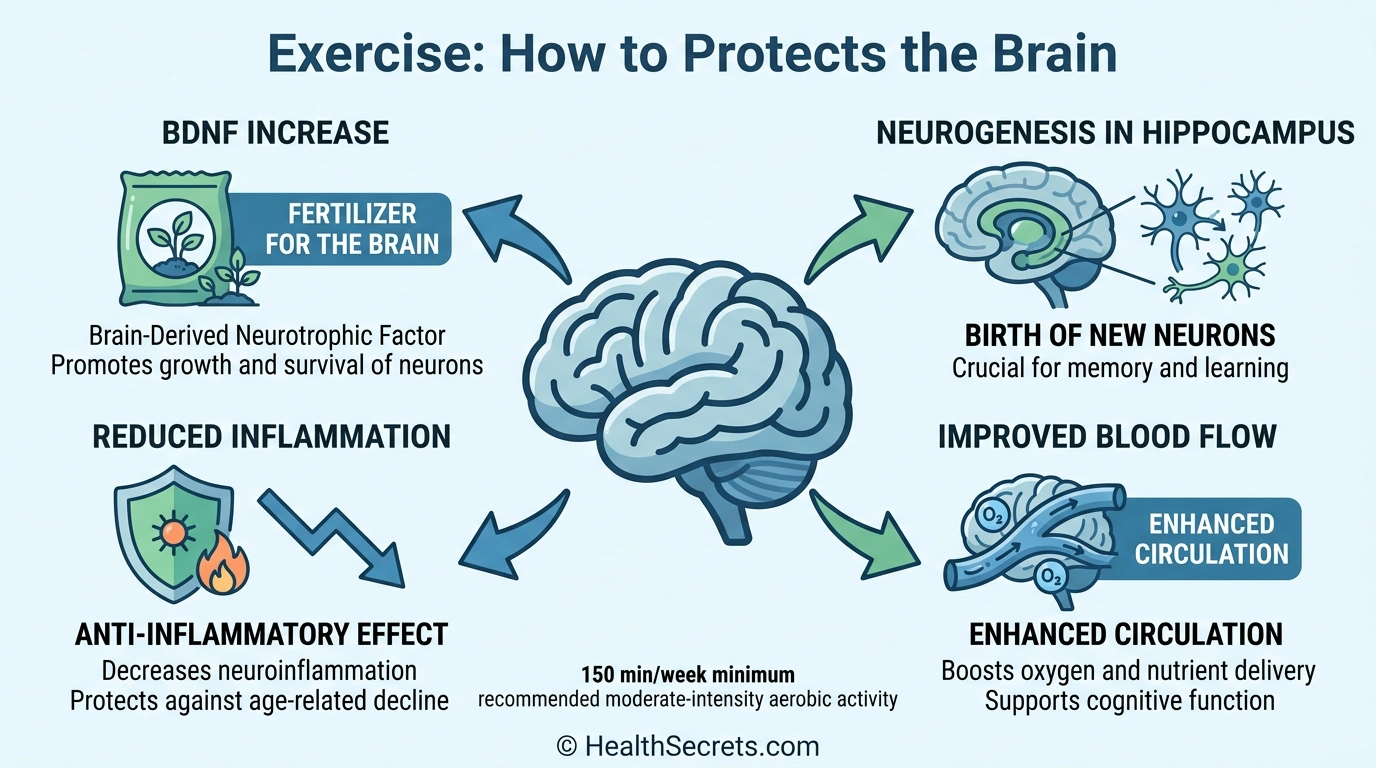
Exercise increases brain-derived neurotrophic factor (BDNF)—a protein that acts like fertilizer for neurons. BDNF promotes neurogenesis (new neuron growth) in the hippocampus, strengthens existing connections, and protects against neurodegeneration [1].
Exercise also improves blood flow (delivering more oxygen to the brain), reduces neuroinflammation, and lowers dementia risk by 30–40% across multiple large studies [9].
What Type and How Much?
Aerobic exercise has the best evidence—walking, jogging, cycling, swimming. Minimum: 150 minutes per week (30 minutes, 5 days).
Optimal: 200–300 minutes weekly.
Strength training (2–3 sessions per week) also benefits the brain through improved metabolic health and reduced inflammation [10].
Dance deserves special mention—it combines physical activity, learning choreography, social interaction, and music. Multiple brain benefits in one activity.
Consistency matters far more than intensity. Even 15 minutes of daily walking reduces dementia risk by 14%. And it's never too late to start—studies show benefits even when exercise begins in your 60s, 70s, or 80s.
How Does the Mediterranean Diet Keep Your Brain Young?
Diet profoundly affects brain health. The Mediterranean diet has the strongest evidence for protecting cognitive function and reducing dementia risk—cutting it by 30–40% in multiple large studies [6], [8].
The MIND diet—a variation designed specifically for brain health—may reduce risk by up to 53% with strict adherence.
What Should You Eat?
- Leafy greens daily (salads, spinach, kale)—6+ servings per week
- Berries several times per week (especially blueberries)—rich in polyphenols
- Fatty fish 2–3 times per week (salmon, sardines, mackerel)—omega-3 DHA and EPA
- Extra virgin olive oil as your primary cooking fat
- Nuts daily (walnuts, almonds)—5+ servings per week
- Whole grains and legumes regularly

What Should You Avoid?
Processed foods (inflammatory and nutrient-poor), excess sugar (insulin resistance damages the brain), trans fats (inflammatory), and excessive alcohol (neurotoxic). These aren't just unhealthy for your body—they directly accelerate brain aging [7].
The gut-brain axis plays a role too. Fiber and polyphenols from this eating pattern support a healthy microbiome, which influences brain health through the gut-brain connection.
How Does Lifelong Learning Build Cognitive Reserve Against Cognitive Aging?
Education and continued learning are among the most protective factors against cognitive decline. A 2026 study found that lifelong intellectual stimulation cuts Alzheimer's risk by nearly 40% [11], [5].
Your brain at 70 can still form new connections and learn new skills. Neuroplasticity doesn't have an expiration date.
What Counts as Brain-Building Learning?
- New languages—one of the best cognitive workouts available
- Musical instruments—combines motor, auditory, and cognitive skills
- Art, dance, crafts—creativity plus fine motor skills
- Formal classes and courses—online or in-person
- Challenging reading—fiction builds empathy and theory of mind
The key is novelty and challenge. Doing the same crossword daily provides less benefit than learning something entirely new. Novelty forces new connections; challenge strengthens them.
Retirement is risky if it means mental disengagement. Stay active. Take classes. Volunteer in roles that stretch you. Learning in social settings (classes, groups) combines cognitive stimulation with social engagement—double benefit.

Why Is Social Engagement Critical for Preventing Cognitive Decline?
Social isolation is a major—and often underestimated—risk factor for cognitive decline. Loneliness increases dementia risk by approximately 50%, making it as harmful as smoking 15 cigarettes per day [4], [19].
Conversation and social interaction stimulate multiple brain regions simultaneously—language, memory, emotional processing, theory of mind. Relationships also buffer stress, reduce depression, and provide purpose.
How Do You Build Protective Social Connections?
Quality matters more than quantity. A few close, meaningful relationships where you feel understood and valued are more protective than dozens of acquaintances.
- Regular contact with family and friends
- Community involvement (clubs, organizations, volunteering)
- Group activities (classes, sports, hobbies)
- Mentoring or teaching
If you're isolated, start small: join a group based on an interest, volunteer at a local organization, or take a class. In-person interaction is ideal, but video calls help maintain connections when mobility is limited.

How Do You Optimize Sleep to Protect Your Aging Brain?
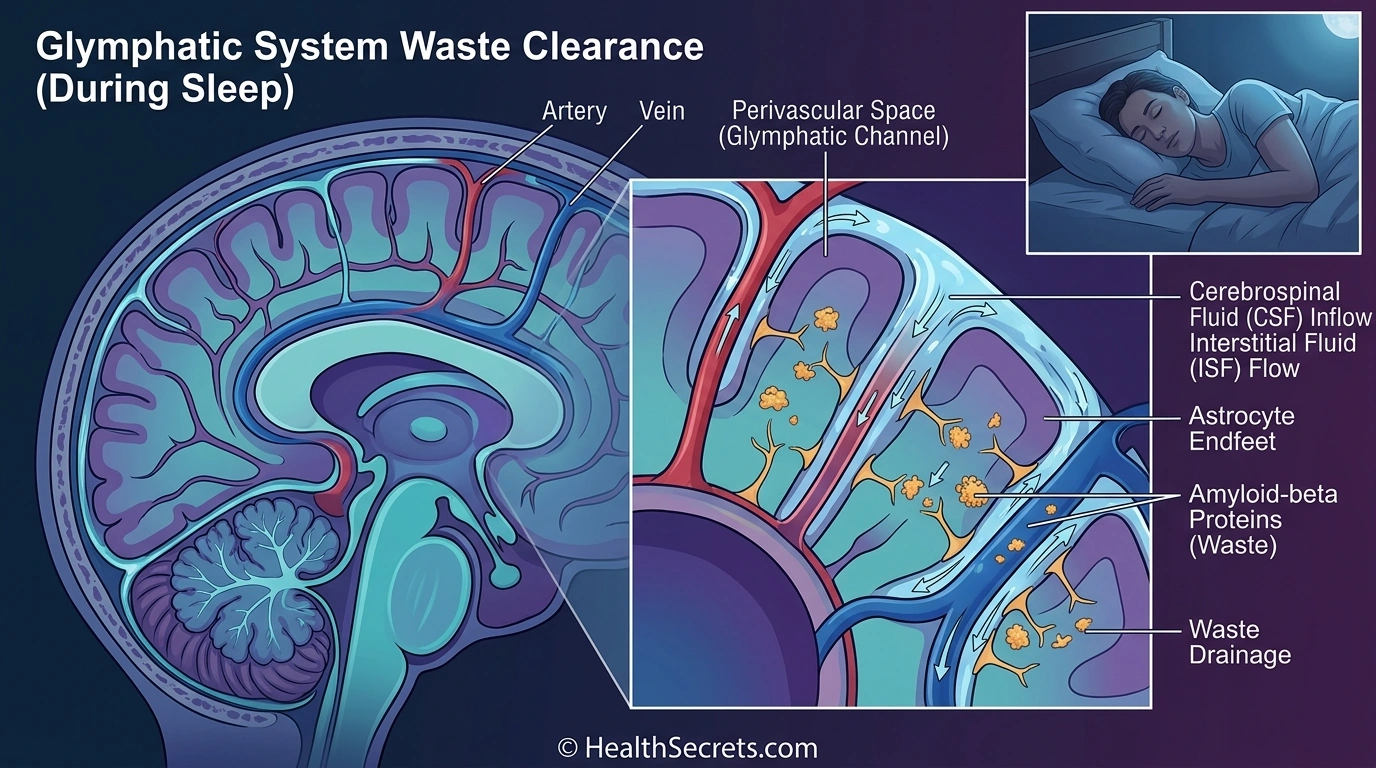
Sleep is when your brain consolidates memories and clears toxic waste. Chronic sleep deprivation accelerates cognitive decline—and the mechanism is more specific than you might think [15].
During sleep—especially deep sleep—the glymphatic system flushes amyloid-beta and tau proteins from the brain. These are the proteins that accumulate in Alzheimer's disease. Poor sleep means impaired clearance and toxic buildup.
What Does Good Sleep for Brain Health Look Like?
- 7–9 hours per night (both too little and too much are associated with cognitive decline)
- Consistent schedule—same bedtime and wake time daily, including weekends
- Quality over quantity—fragmented sleep isn't restorative even if you're in bed 8 hours

Sleep Hygiene Essentials:
- Dark, cool (65–68°F), quiet bedroom
- No screens 1–2 hours before bed
- No caffeine after 2pm
- Avoid alcohol (it disrupts sleep architecture)
- Regular exercise (but not right before bed)
If you snore loudly, wake gasping, or feel exhausted despite adequate sleep time, get evaluated for sleep apnea. It's a major—and treatable—risk factor for cognitive decline. Check out our sleep optimization guide for the full protocol.
How Does Managing Stress Protect Your Brain from Accelerated Cognitive Aging?
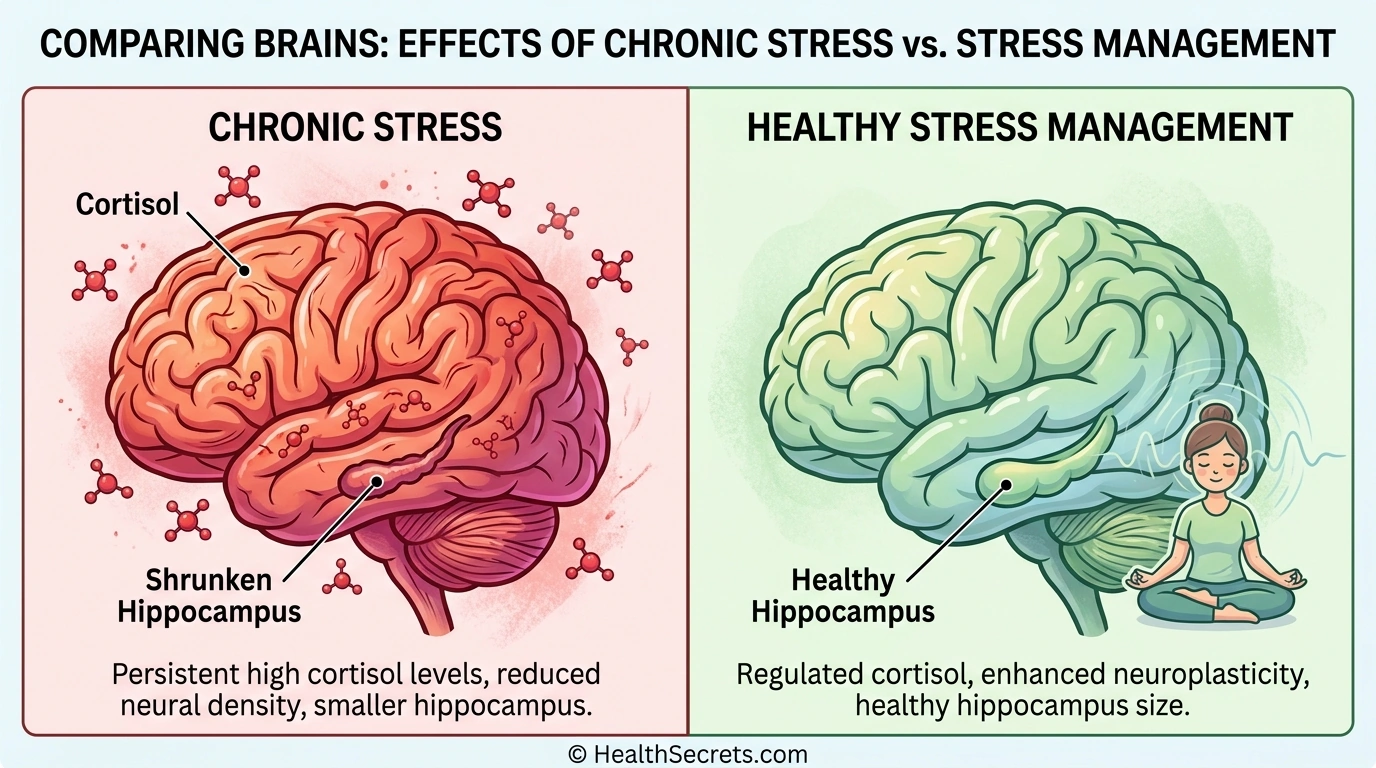
Chronic stress is brain poison—particularly for the hippocampus, your memory center. Sustained cortisol elevation shrinks the hippocampus, impairs memory formation, accelerates brain aging, and increases dementia risk.
The damage is measurable. MRI studies show people with chronic stress have observably smaller hippocampi.
What Are the Most Effective Stress Management Strategies?
- Meditation and mindfulness: Regular practice increases gray matter in brain regions involved in memory, learning, and emotional regulation. Even 10–20 minutes daily provides benefits.
- Physical activity: Exercise is one of the best stress reducers—it lowers cortisol and raises endorphins.
- Time in nature: Even 20 minutes in a park reduces stress hormones and improves mood.
- Purpose and meaning: People with a strong sense of purpose—what the Japanese call ikigai—have lower dementia risk, even when brain pathology is present. Volunteering, meaningful work, creative pursuits, mentoring—these aren't just nice activities. They're neurologically protective.
If you're stuck in a chronically stressful situation—toxic job, caregiving burden, difficult relationship—address it. The cognitive cost is real and measurable.
How Does Cardiovascular Health Affect Cognitive Aging?
Your brain uses 20% of your blood flow and oxygen despite being only 2% of your body weight. What's good for your heart is good for your brain—and the reverse is also true [12].
Hypertension, diabetes, high cholesterol, obesity, and smoking all increase dementia risk. Vascular dementia—the second most common type—is caused directly by impaired blood flow to the brain.
What Should You Control?
- Blood pressure (under 120/80 ideal)
- Blood sugar (prevent or manage diabetes)
- Cholesterol levels
- Weight
- Smoking (quit if you do)
Cardiovascular risk factors are modifiable. Controlling them in midlife dramatically reduces late-life dementia risk.
Don't ignore hearing and vision. Hearing loss is one of the largest modifiable risk factors for dementia. Treat it with hearing aids. Correct vision with glasses. Sensory input keeps your brain engaged with the world.
Which Supplements Actually Support Brain Health During Cognitive Aging?
Lifestyle interventions have the strongest evidence. Supplements are secondary—but some have decent research support. Be honest about what they can and can't do.
- Omega-3 fatty acids (DHA and EPA): Best evidence among supplements. DHA is a major structural component of the brain. Observational studies associate higher intake with lower dementia risk. Dose: 1,000–2,000mg combined EPA+DHA daily from fish oil or algae oil.
- B vitamins (B6, B12, folate): Important for brain health, but supplementation only helps if you're deficient. Get blood levels checked.
- Vitamin D: Deficiency is associated with cognitive decline. Most people need 1,000–2,000 IU daily.
- Curcumin: Anti-inflammatory, some evidence for cognitive benefits, but bioavailability is poor. Look for enhanced-absorption formulations.
- What doesn't work: Most "brain-boosting" supplements lack evidence. Prevagen is heavily marketed with no good evidence. Most nootropic stacks are unproven and potentially risky. Ginkgo biloba has weak, inconsistent results.
Omega-3s are worth taking if you don't eat fatty fish regularly. Vitamin D and B vitamins if deficient. Beyond that, focus on diet and lifestyle—they're more powerful than any pill.
What Are the Most Common Mistakes People Make When Trying to Prevent Cognitive Decline?
The biggest mistake is relying on brain games instead of lifestyle interventions. Brain training apps can improve performance on the trained tasks, but those improvements often don't transfer to real-world cognitive function. You get better at the game, not at remembering where you parked your car.
The ACTIVE trial—the largest study on cognitive training—showed modest, task-specific benefits. Real-world learning (languages, instruments, complex skills) provides far broader cognitive benefits because it engages multiple cognitive systems simultaneously.
Other common mistakes:
- Expecting supplements to replace lifestyle: No pill compensates for a sedentary lifestyle and poor diet.
- Weekend warrior exercise: Consistency beats intensity. Walking 30 minutes daily is better than one intense Saturday workout.
- Ignoring sleep: People sacrifice sleep for productivity, not realizing they're accelerating brain aging.
- Social withdrawal in retirement: Disengagement is one of the riskiest things you can do for your brain.
- Waiting until symptoms appear: Brain health is a decades-long investment. Start in your 30s and 40s—but it's never too late.
Is It Safe to Start a Brain-Health Protocol? When Should You See a Doctor?
The lifestyle interventions in this guide—exercise, diet, learning, social engagement, sleep optimization, stress management—are safe for the vast majority of people. These aren't experimental therapies. They're well-established, evidence-based habits with minimal risk and substantial benefit.
However, consult your healthcare provider before starting if you:
- Have existing heart conditions or mobility limitations (especially before beginning exercise)
- Take diabetes medications (dietary changes may affect blood sugar)
- Are on blood thinners (omega-3 supplements may interact)
- Experience progressive cognitive symptoms
When to seek immediate evaluation:
- Progressive memory loss that worsens over months
- Getting lost in familiar places
- Inability to manage finances or daily tasks that were previously routine
- Personality changes noticed by family members
- Confusion about time, place, or people
Normal cognitive aging doesn't significantly impair daily function. If it does, that's a signal something more is going on—and early evaluation matters.
Realistic expectations: These strategies can slow cognitive decline and significantly reduce dementia risk, but they can't stop aging entirely. Individual variation is enormous. Genetics play a role. The goal isn't perfection—it's consistent, sustainable investment in your brain health over decades.
Action Plan
What Should You Do First to Protect Your Brain from Cognitive Aging?
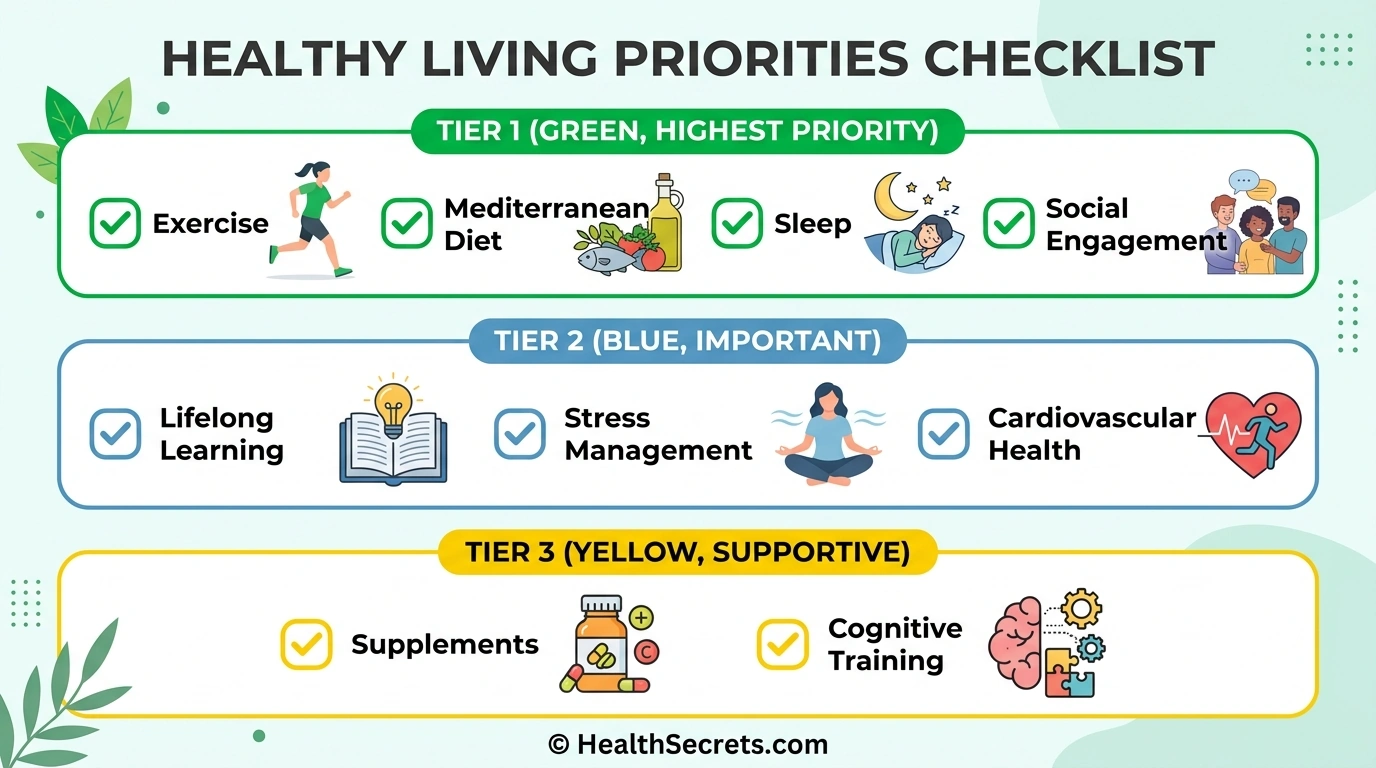
Follow the sequence below, work through each phase in order, and use the checklist as your practical implementation guide.
Start with the highest-impact interventions and build from there. You don't need to overhaul your entire life overnight—small, consistent changes compound dramatically over time. Pick 2–3 items from Tier 1, master those habits, then expand.
Tier 1 — Highest Priority (Proven, Powerful):
- Begin 150+ minutes of aerobic exercise per week (start with daily 30-minute walks)
- Add 2–3 strength training sessions per week
- Shift toward a Mediterranean eating pattern (olive oil, fish, leafy greens, berries, nuts)
- Establish consistent 7–9 hour sleep schedule (same bedtime and wake time daily)
- Schedule regular social activities and maintain meaningful relationships
Tier 2 — Important (Strong Evidence):
- Start learning something new (language, instrument, online course)
- Begin a daily stress management practice (10–20 minutes meditation, nature time)
- Get cardiovascular risk factors checked and controlled (blood pressure, blood sugar, cholesterol)
- Schedule hearing and vision tests
Tier 3 — Supportive (Weaker Evidence):
- Add omega-3 supplement (1,000–2,000mg EPA+DHA) if not eating fatty fish regularly
- Check and supplement vitamin D and B12 if deficient
- Engage in mentally stimulating activities you enjoy (puzzles, challenging reading)