
With probiotic-rich yogurt lining grocery store shelves and multi-billion CFU supplements crowding the wellness aisle, the question most gut health newcomers ask is straightforward: should I eat probiotic foods or take supplements?
The answer isn't either/or. Both probiotic foods and supplements deliver live beneficial bacteria to your gut, but they do so through different mechanisms, with different advantages. Fermented foods like yogurt, kefir, sauerkraut, and kimchi deliver diverse bacterial strains alongside vitamins, minerals, and bioactive compounds created during fermentation. Supplements deliver standardized, targeted strains at precise CFU counts for specific health conditions.
A landmark Stanford study found that a diet high in fermented foods increased microbiome diversity and reduced inflammatory markers more effectively than a high-fiber diet alone [1]. Meanwhile, meta-analyses consistently show that targeted probiotic supplements reduce antibiotic-associated diarrhea by 42% and IBS symptoms significantly [2]. The science supports both approaches — the key is knowing when each one shines.
This guide compares probiotic foods and probiotic supplements head-to-head across effectiveness, safety, cost, and convenience, then shows you exactly how to combine both for optimal gut health.
What Is the Real Difference Between Probiotic Foods and Supplements?
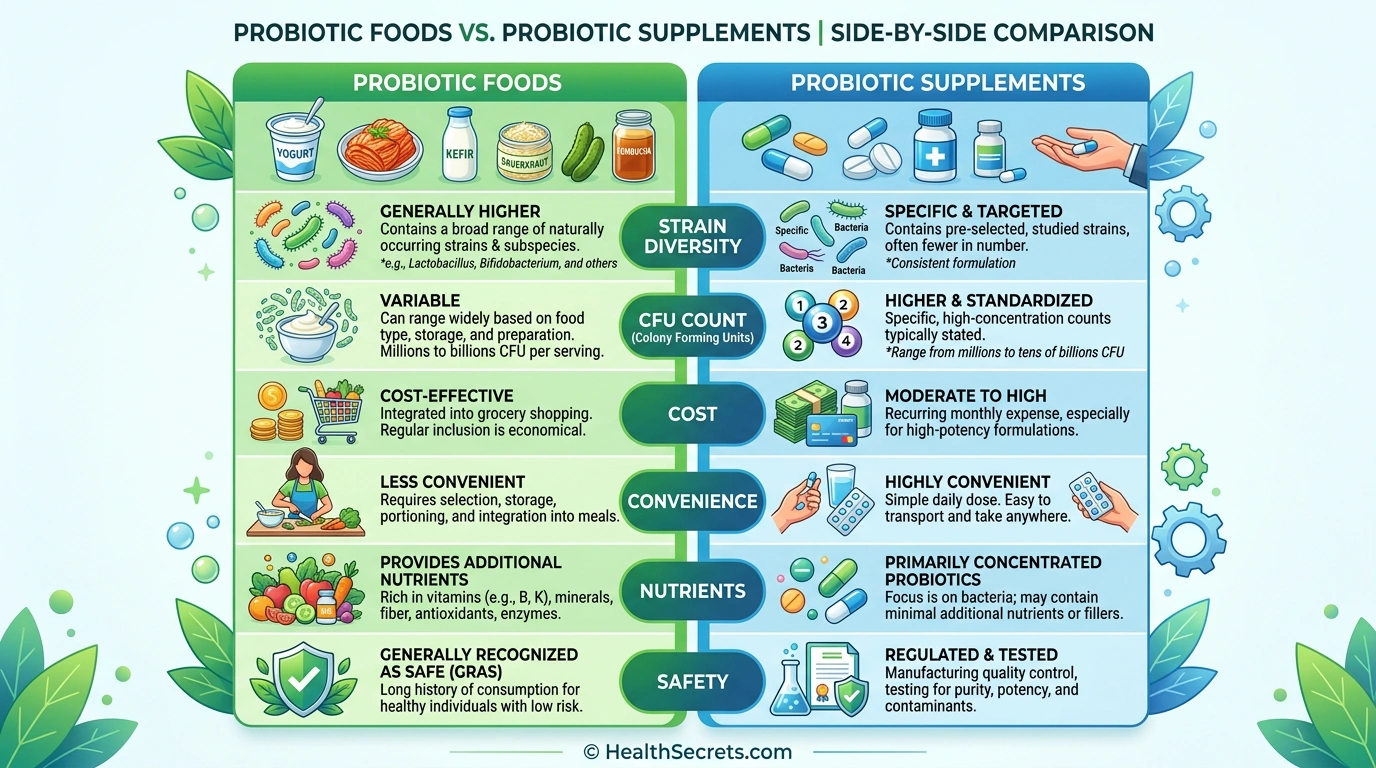
Probiotic foods are fermented products (yogurt, kefir, sauerkraut, kimchi) that naturally contain diverse live bacteria plus additional nutrients from fermentation. Probiotic supplements are concentrated doses of specific bacterial strains in capsule, powder, or tablet form with standardized CFU counts. Both deliver live beneficial bacteria, but through fundamentally different delivery systems.
| Feature | Probiotic Foods | Probiotic Supplements |
|---|---|---|
| Strain diversity | 10–34+ strains per serving | 5–15 strains typical |
| CFU count | Variable (millions to billions) | Standardized (1–100+ billion) |
| Additional nutrients | Vitamins, minerals, postbiotics | Bacteria only |
| Cost per serving | $0.25–$1.50 | $0.50–$2.00 |
| Strain specificity | Low (varies by batch) | High (labeled strains) |

Is Your Gut Ruining Your Day?
Get the free printable tracker thousands of readers use to pinpoint exactly what's causing their gut issues — no restrictive diets required.
What Are Probiotic Foods and How Do They Work?
Probiotic foods are fermented products that contain live beneficial microorganisms created through natural fermentation, where bacteria convert sugars into lactic acid, preserving the food while generating diverse bacterial communities and bioactive postbiotic compounds that directly benefit gut health. They represent humanity's oldest form of probiotic delivery.
Which Probiotic Foods Contain the Most Beneficial Bacteria?
The richest probiotic food sources include:
- Kefir — 10–34 different strains, ~10 billion CFU per cup; the most diverse natural probiotic source
- Yogurt — Lactobacillus bulgaricus, Streptococcus thermophilus plus added strains; ~1–5 billion CFU per serving
- Sauerkraut (raw, unpasteurized) — Lactobacillus species; also rich in vitamin C and vitamin K
- Kimchi — multiple Lactobacillus and Leuconostoc strains; packed with antioxidants [3]
- Kombucha — bacteria and yeast (SCOBY); provides organic acids and B vitamins
- Miso — Aspergillus oryzae plus bacteria; rich in protein and isoflavones
- Tempeh — fermented soybeans; high in protein, B12, and beneficial fungi

Why Does the Food Matrix Matter for Probiotic Survival?
One of the most significant advantages of probiotic foods is the food matrix effect. The food itself — its fats, proteins, sugars, and fibers — acts as a protective buffer that helps bacteria survive stomach acid and reach the intestines alive. A 2014 review found that food-delivered probiotics had higher survival rates through the GI tract compared to supplement-form bacteria in several comparative studies [4]. Additionally, fermented foods deliver postbiotic compounds (organic acids, short-chain fatty acids, bacteriocins) that benefit gut health even when the bacteria themselves don't survive [5].

Evidence-Based Supplement Organizer & Safety Log
Track your daily intake, verify third-party certifications, and prepare clear questions for your clinician.
What Are Probiotic Supplements and How Do They Work?
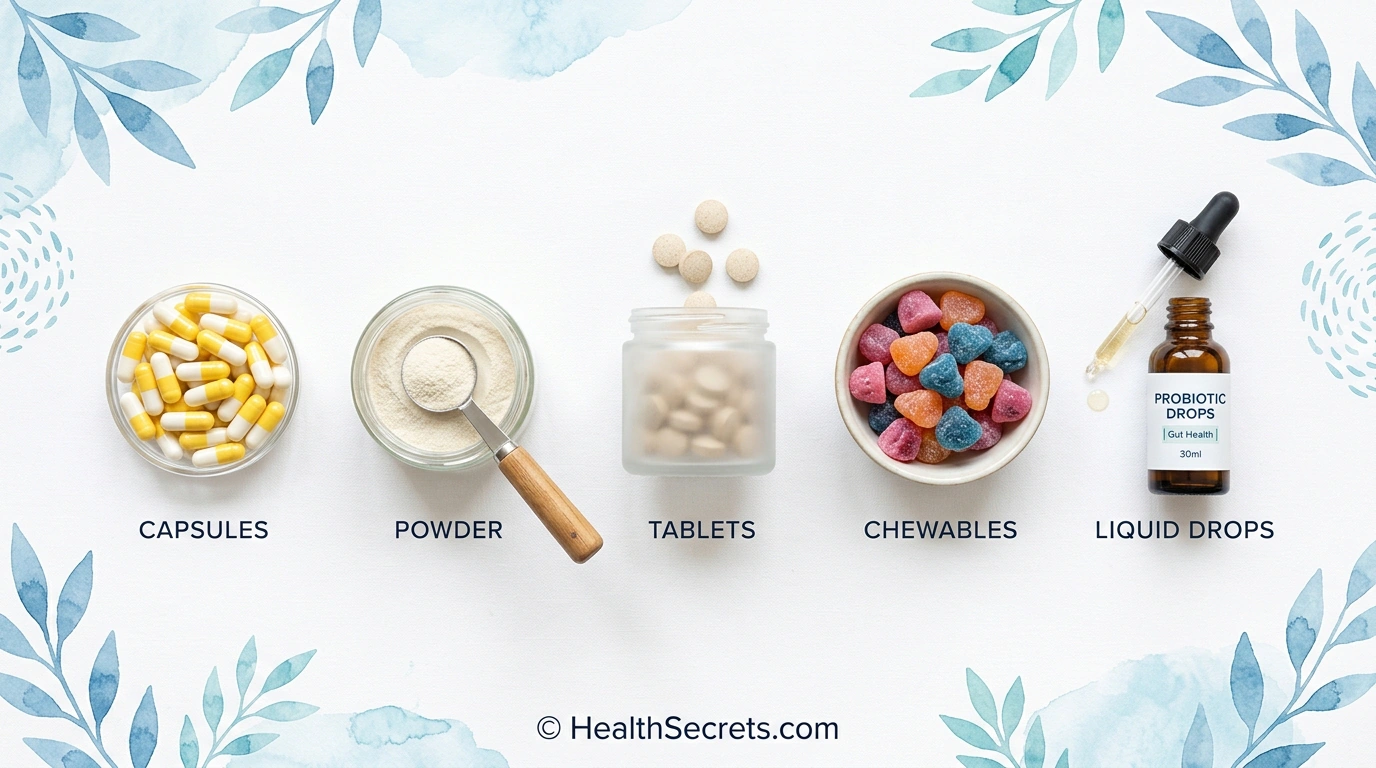
Probiotic supplements are concentrated formulations of specific, clinically studied bacterial strains delivered in capsules, powders, tablets, or liquids at standardized CFU counts. They allow precise dosing of targeted strains for specific health conditions and offer convenience, shelf stability, and consistency that food-based probiotics cannot match.
What Types of Probiotic Supplements Are Available?
- Multi-strain capsules — 5–15 different species, the most common format for general gut health
- Single-strain therapeutics — one clinically studied strain at therapeutic dose (e.g., S. boulardii for diarrhea)
- Spore-based (soil-based) — Bacillus species that survive stomach acid in spore form; no refrigeration needed
- Enteric-coated — protective coating delays release until intestines, improving survival
- Powders — flexible dosing, can mix into drinks; popular for children
- Time-release — gradual release throughout the GI tract
Which Supplement Strains Have the Strongest Evidence?
Key clinically studied strains include:
- Lactobacillus rhamnosus** GG** — antibiotic-associated diarrhea, pediatric gastroenteritis (most studied strain) [2]
- Saccharomyces boulardii — C. difficile infection, traveler's diarrhea, IBD support [6]
- Bifidobacterium infantis** 35624** — IBS symptom relief [7]
- Lactobacillus plantarum** 299v** — IBS bloating, iron absorption [8]
- Bacillus coagulans — digestive comfort, IBS, spore-forming survivability
- VSL#3 / Visbiome — ulcerative colitis maintenance (prescription-strength, 450 billion CFU)
Which Is More Effective for Gut Health: Probiotic Foods or Supplements?
Both are effective, but for different goals. Fermented foods are superior for building long-term microbiome diversity and reducing systemic inflammation, while supplements are more effective for treating specific conditions like IBS, antibiotic-associated diarrhea, and C. difficile infection where targeted strains at therapeutic doses are needed [1][2].
- For microbiome diversity: A Stanford study randomized 36 healthy adults to either a high-fermented-food or high-fiber diet for 10 weeks. The fermented food group showed significantly increased microbiome diversity and decreased levels of 19 inflammatory proteins, including interleukin-6. The fiber group showed no such change [1].
- For specific conditions: Meta-analyses consistently show targeted supplement strains reduce antibiotic-associated diarrhea risk by ~42%, prevent traveler's diarrhea by ~15%, and significantly reduce IBS symptom severity [2][7]. These therapeutic effects require specific strains at specific doses — something fermented foods can't guarantee.
- For general gut maintenance: Fermented foods are arguably better because they deliver bacteria alongside postbiotic metabolites, vitamins, and prebiotic fibers that create a more hospitable environment for beneficial bacteria to thrive [5].
Which Has Fewer Side Effects: Probiotic Foods or Supplements?
Probiotic foods generally have fewer side effects because they deliver lower bacterial doses within a food matrix, making them gentler on the digestive system. Supplements, especially high-dose formulas (50–100+ billion CFU), are more likely to cause temporary bloating, gas, or digestive discomfort — particularly during the first week of use.
Probiotic food considerations:
- Mild digestive adjustment (1–3 days) when first increasing fermented food intake
- Histamine content may be problematic for those with histamine intolerance (aged cheeses, sauerkraut, kombucha)
- Dairy-based options problematic for lactose intolerance (though fermentation reduces lactose by 20–80%)
- Sugar content in flavored yogurts and kombucha
Supplement considerations:
- More pronounced initial bloating and gas at high doses
- Rare die-off (Herxheimer) reactions
- Some strains produce histamine (L. casei, L. rhamnosus) — problematic for histamine-sensitive individuals
- Quality control concerns — studies have found some supplements don't contain what's on the label [9]
Both are generally safe for healthy adults. Immunocompromised individuals should consult a healthcare provider before taking either concentrated probiotics or large amounts of fermented foods.
Which Is More Affordable: Probiotic Foods or Supplements?
Probiotic foods are significantly more affordable, especially if you make them at home. Homemade sauerkraut costs approximately $0.25 per serving and homemade kefir about $0.30, while quality probiotic supplements range from $0.50 to $2.00 per daily dose. Over a year, the cost difference can exceed $500.
| Approach | Monthly Cost | Annual Cost |
|---|---|---|
| Homemade fermented foods | $8–$15 | $96–$180 |
| Store-bought probiotic foods | $30–$60 | $360–$720 |
| Basic supplement (10–30B CFU) | $15–$30 | $180–$360 |
| Premium supplement (50–100B+) | $30–$60 | $360–$720 |
| Best value approach: Make your own fermented foods (kefir, sauerkraut) for daily probiotics and add a targeted supplement only when needed (during antibiotics, travel, illness). |

Which Is Easier to Use: Probiotic Foods or Supplements?
Supplements win on convenience — one capsule takes seconds, requires no refrigeration (many formulas), and travels easily. Probiotic foods require shopping, storage, preparation, and taste adaptation. However, foods integrate into your existing meals and provide sustained benefits through enjoyable daily eating.
Supplements excel when:
- Traveling or on the go
- Following a strict medical protocol
- Taste-sensitive or dislike fermented flavors
- Need exact, reproducible dosing
Foods excel when:
- Building a long-term gut health lifestyle
- Want additional nutritional benefits
- Cooking and eating are enjoyable activities
- Budget is a primary consideration
Should You Choose Probiotic Foods, Supplements, or Both?
For most people, the ideal approach is combining both: use fermented foods daily as your foundation for microbiome diversity and nutrition, and add targeted supplements when you need therapeutic intervention for specific conditions. This gives you the breadth of food-based probiotics with the precision of supplement-based strains.
Choose probiotic foods if:
- Your goal is general gut health maintenance and prevention
- You're budget-conscious and enjoy cooking
- You want the additional vitamins, minerals, and postbiotics from fermentation
- You prefer a whole-foods approach to health
Choose supplements if:
- You have a specific condition (IBS, antibiotic recovery, SIBO, C. difficile)
- You need a clinically studied strain at a therapeutic dose
- You travel frequently and need portable, shelf-stable options
- You have histamine intolerance or dietary restrictions that limit fermented food options
Use both if:
- You want comprehensive, optimal gut health
- You have a condition requiring targeted treatment AND want long-term diversity
- You're recovering from antibiotics and rebuilding your microbiome
Sample combination approach:
- Morning: Kefir or yogurt with breakfast (diversity + calcium + B vitamins)
- Lunch or dinner: Side of sauerkraut or kimchi (diversity + vitamin C + K)
- Daily: Targeted probiotic supplement for your specific needs
- As desired: Kombucha, miso soup, or tempeh for additional variety

Action Plan
What Steps Should You Take to Start Using Probiotics for Gut Health?
Follow the sequence below, work through each phase in order, and use the checklist as your practical implementation guide.
Start by adding one serving of fermented food daily for the first week, then gradually increase variety while evaluating whether a targeted supplement would benefit your specific health needs. Consistency matters more than volume — even small daily doses build lasting microbiome diversity over time.
Phase 1: Foundation (Weeks 1–2)
- Add one serving of probiotic food daily (yogurt, kefir, or sauerkraut)
- Track any digestive changes (bloating, bowel regularity, energy)
- Identify which fermented foods you enjoy most
- Research whether your health goals require a targeted supplement strain
Phase 2: Expand Variety (Weeks 3–4)
- Increase to 2–3 different fermented foods throughout the week
- Try new probiotic foods: kimchi, miso soup, kombucha, tempeh
- If needed, start a targeted probiotic supplement at half dose
- Pair probiotic foods with prebiotic fiber to feed beneficial bacteria
Phase 3: Optimize (Weeks 5–8)
- Establish your daily probiotic food routine (foods you enjoy + convenient)
- Increase supplement to full dose if well tolerated
- Consider making homemade fermented foods to reduce costs
- Compare digestive symptoms to your baseline
Phase 4: Maintenance (Ongoing)
- Maintain 1–2 servings of fermented foods daily as your foundation
- Continue targeted supplement if addressing a specific condition
- Rotate fermented food types for maximum strain diversity
- Reassess supplement needs every 3–6 months with your healthcare provider


