Sauna has been used for thousands of years — from ancient Finnish traditions to Roman steam baths — as a way to relax, recover, and cleanse the body. Today, "sauna detox" is one of the most searched wellness topics, with over 5,400 monthly searches from people wondering whether sweating can actually flush toxins from the body. [1] [2]
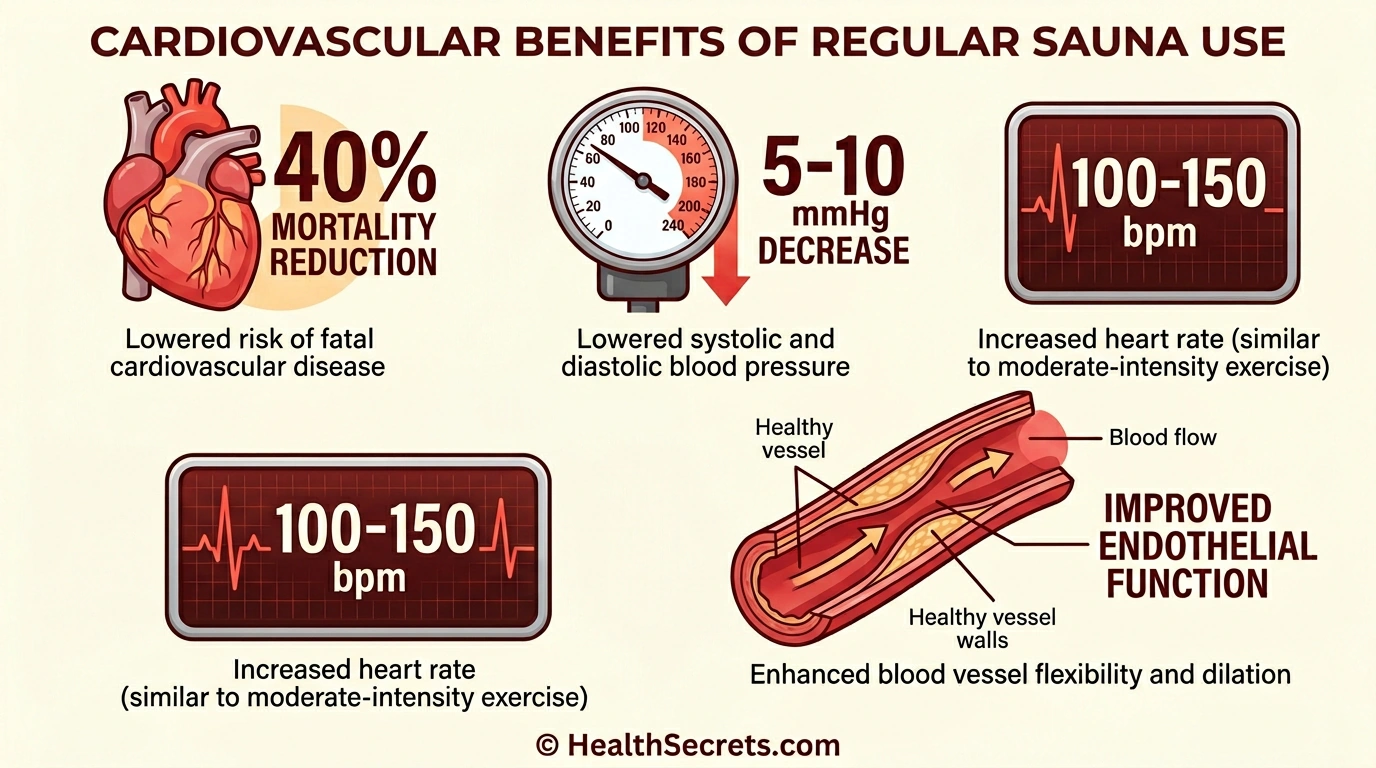
Here's the honest truth: the cardiovascular benefits of regular sauna use are remarkably well-established, with research showing up to a 40% reduction in all-cause mortality for frequent sauna bathers. But the detoxification claims? The evidence is far more mixed than most wellness websites will tell you. Your kidneys and liver handle over 99% of toxin excretion — sweat plays a very minor supporting role at best. [9] [10]
That doesn't mean sauna isn't worth your time. Far from it. In this guide, you'll learn exactly how to use sauna safely for real, evidence-backed health benefits — cardiovascular improvement, stress reduction, pain relief, better sleep — while understanding what sauna can and can't do for detoxification [3] [16].
If you're exploring other ways to support your body's natural detoxification pathways, check out our complete detox and cleanse guide and learn how to support your liver naturally. [12] [13]
What Is Sauna Detox and Does Sweating Actually Remove Toxins?
Sauna detox refers to the practice of using heat therapy to induce sweating with the goal of eliminating toxins through the skin. While sauna bathing delivers well-established cardiovascular, relaxation, and pain relief benefits, the evidence for sweating as a meaningful detoxification pathway remains mixed — your kidneys and liver are your body's true detox powerhouses, handling over 99% of toxin elimination [11]. [15]
Sauna is one of the oldest forms of heat therapy, with Finnish sauna traditions dating back over 2,000 years. When you sit in a sauna, your core body temperature rises, triggering your thermoregulation system to cool you through sweating. Your heart rate increases to 100–150 bpm — similar to moderate exercise — which is where the real health benefits begin [17]. [18]
What Does Sweat Actually Contain?
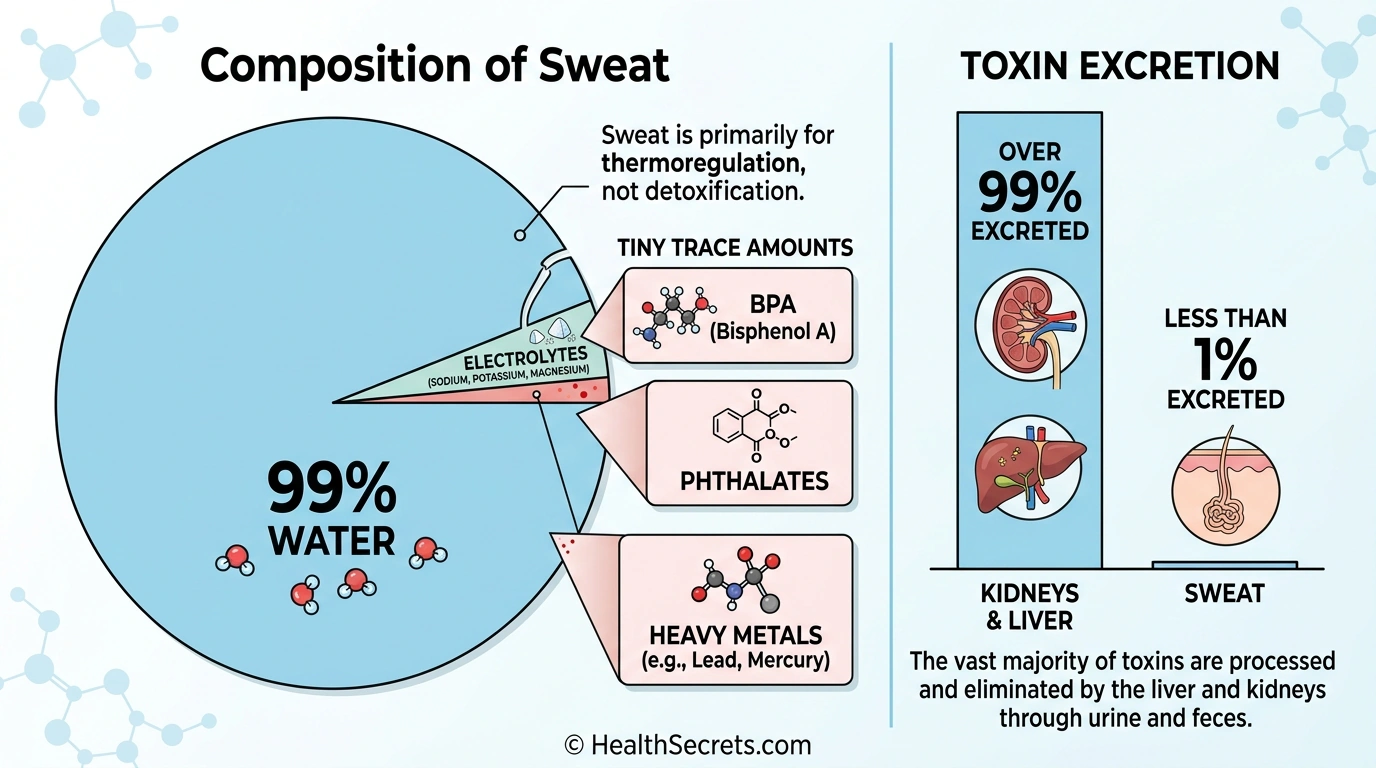
Sweat is approximately 99% water, mixed with electrolytes (sodium, potassium, chloride, magnesium) and trace amounts of other substances. Studies have detected BPA, phthalates, and heavy metals like lead, mercury, and cadmium in sweat, but at very low concentrations — nanograms to micrograms per milliliter.
Your kidneys filter approximately 200 quarts of blood daily and excrete water-soluble toxins through urine [5] [6]. Your liver performs Phase I and Phase II detoxification, metabolizing toxins and excreting them through bile into feces. Sweat contributes less than 1% of total toxin excretion — it's a minor supporting player, not the star of the show.
That said, some research suggests infrared sauna may help mobilize fat-soluble toxins (PCBs, dioxins, BPA) stored in adipose tissue, though the clinical significance of this remains unclear and requires more study. For a deeper dive into how your kidneys support detoxification, see our guide on kidney detox support.
Infrared vs. Traditional Sauna: Which Is Better?
Traditional Finnish saunas heat the air to 150–195°F with 10–20% humidity, penetrating about 0.25 inches into skin. Infrared saunas use far-infrared wavelengths (5–15 microns) to heat your body directly at lower temperatures (120–140°F), penetrating approximately 1.5 inches deeper into subcutaneous tissue.
Both types deliver cardiovascular benefits and relaxation. Infrared may have a slight edge for mobilizing fat-soluble compounds due to deeper tissue penetration and is generally better tolerated by heat-sensitive individuals. Traditional saunas produce more intense sweating due to higher temperatures. Ultimately, the best sauna is the one you'll use consistently.

Want Everyday Habits That Actually Stick?
Download the free printable habit checklist — evidence-backed clinical frameworks for daily energy, cellular recovery, and longevity.
How Do You Choose the Right Sauna Type for Your Detox Goals?
Choosing the right sauna depends on your budget, space, health goals, and heat tolerance. Traditional Finnish saunas offer the most studied cardiovascular benefits at higher temperatures, infrared saunas provide deeper tissue penetration at more comfortable temperatures, and portable infrared saunas deliver legitimate benefits at an affordable price point for home use.

- Traditional Finnish Sauna: Dry heat at 150–195°F, 10–20% humidity. Available at most gyms and spas. Home installation costs $2,000–$10,000+. Best for those who enjoy intense heat and have access through a gym membership.
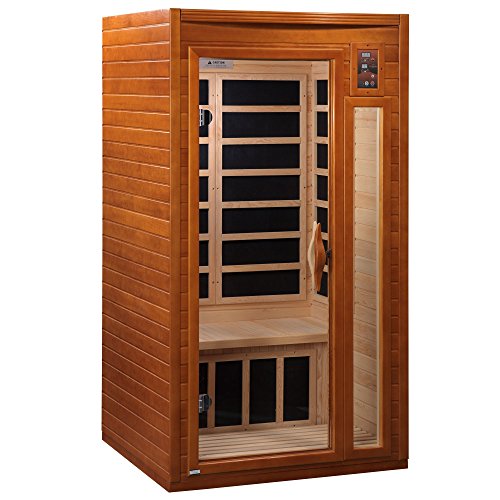
- Infrared Sauna: Far-infrared at 120–140°F, dry heat. Penetrates 1.5 inches into tissue. Home units cost $1,000–$5,000. Best for heat-sensitive individuals and those wanting deeper tissue warming.
- Portable Infrared Sauna: Tent-style or blanket designs at $100–$300. Convenient home use, sets up in minutes, folds for storage. Effective for cardiovascular benefits and sweating, though less immersive than full saunas [4].
- Steam Room: Wet heat at 110–120°F, 100% humidity. Available at gyms. Best for respiratory benefits (loosens mucus, improves breathing).
- Your action: Evaluate your budget and access. If you have gym access, start with the traditional sauna there. For home use on a budget, a portable infrared sauna ($100–$300) is the most practical starting point.

Metabolic Health Habit Dashboard
A private spreadsheet and printable weekly review to track sleep, movement, and nutrition without score anxiety.
How Should You Prepare Your Body Before a Sauna Session?
Proper preparation before a sauna session centers on hydration and timing. Drink 16–32 ounces of water one to two hours before your session to prehydrate, avoid alcohol completely, eat a light meal at least one hour prior, and choose appropriate clothing or a towel to sit on for hygiene.

Hydration is the single most important preparation step. Sauna sessions cause you to lose 0.5–1 liter of sweat, and entering a session already dehydrated dramatically increases your risk of dizziness, nausea, and heat-related complications.
Pre-sauna checklist:
- Drink 16–32 oz water 1–2 hours before
- Avoid alcohol entirely (impairs thermoregulation and increases dehydration risk)
- Eat a light meal at least 1 hour before (avoid heavy meals)
- Bring a clean towel to sit on
- Remove jewelry and metal accessories (they conduct heat)
- Check with your doctor if you take medications (diuretics, blood pressure meds, antihistamines)
For more on how hydration supports your body's natural processes, see our guide on hydration and immune health.
What Is the Safest Way to Start Your First Sauna Sessions?
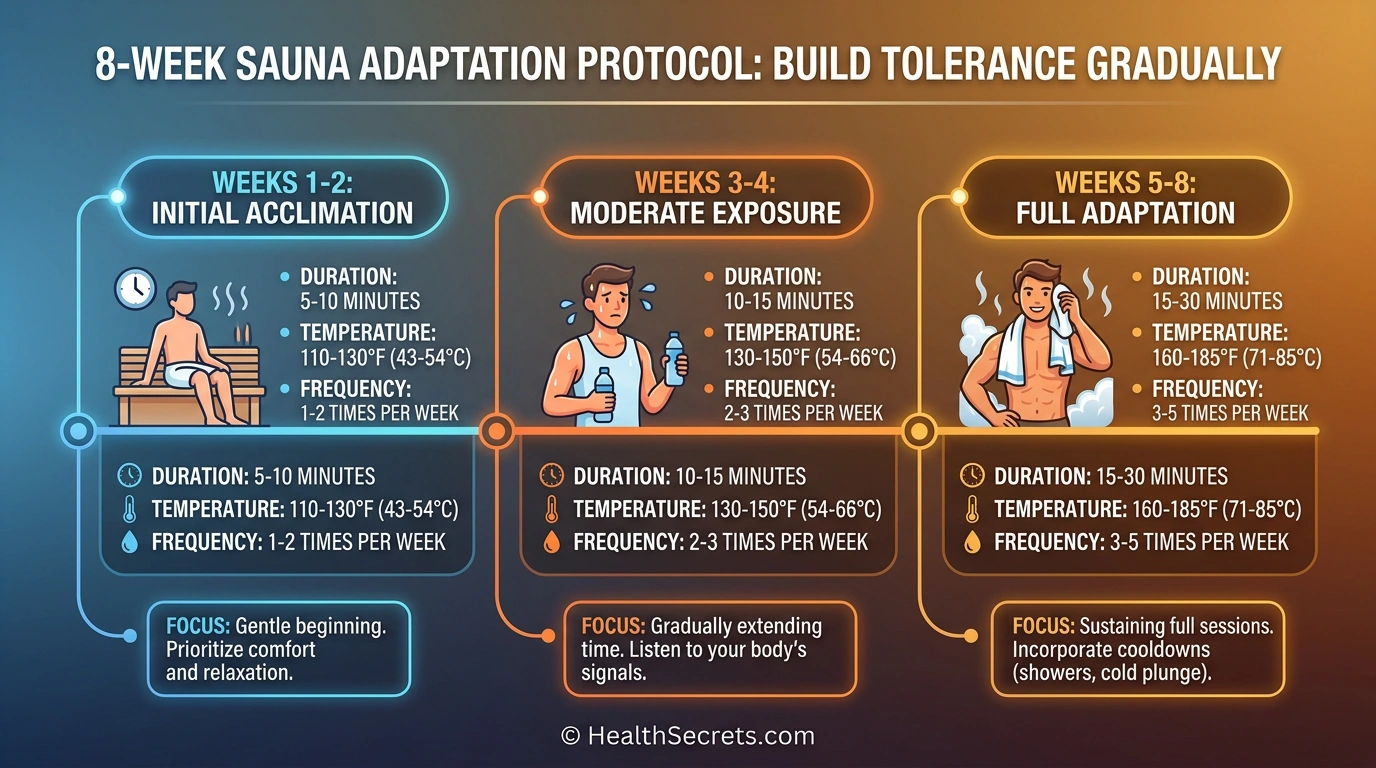
Begin with short sessions of 5–10 minutes at the lower end of the temperature range, then gradually increase duration by 2–5 minutes per session over several weeks. Your body needs time to adapt to heat stress — pushing too hard too fast increases the risk of dehydration, dizziness, and cardiovascular strain.
Week 1–2 (Adaptation phase):
- Duration: 5–10 minutes per session
- Temperature: Traditional 150–170°F (lower end) or infrared 120–130°F
- Frequency: 1–2 times per week
- Focus: Assess your tolerance — exit immediately if you feel dizzy, nauseous, or lightheaded
Week 3–4 (Building phase):
- Duration: 10–15 minutes per session
- Temperature: Traditional 170–185°F or infrared 130–140°F
- Frequency: 2–3 times per week
- Focus: Monitor how you feel during and after sessions
Week 5–8 (Target phase):
- Duration: 15–30 minutes (traditional 15–20 min, infrared 20–30 min)
- Temperature: Traditional 185–195°F or infrared 140°F
- Frequency: 4–7 times per week for optimal cardiovascular benefits
The landmark Finnish study showing 40% reduced all-cause mortality used a frequency of 4–7 sessions per week — but those participants had years of adaptation. Be patient with the process.
How Do You Properly Hydrate and Replenish Electrolytes After Sauna?
After every sauna session, drink 16–32 ounces of water immediately and replenish electrolytes — sodium, potassium, and magnesium — which are lost through sweat. Inadequate post-sauna rehydration is the most common cause of headaches, fatigue, muscle cramps, and dizziness that people mistakenly attribute to "detox reactions."
Your sweat rate during a sauna session ranges from 0.5 to 1 liter, depending on temperature, duration, and individual factors. That fluid loss needs to be replaced, along with the electrolytes it carried.
Post-sauna hydration protocol:
- Drink 16–32 oz water immediately after exiting
- Add electrolytes after sessions longer than 15 minutes or with intense sweating
- Options: electrolyte powder (like LMNT), coconut water, or a pinch of sea salt with lemon in water
- Monitor urine color — pale yellow indicates adequate hydration, dark yellow means you need more fluids
Key electrolytes to replenish:
- Sodium: Primary electrolyte lost in sweat (20–80 mmol/L in sweat)
- Potassium: Supports muscle and nerve function (bananas, coconut water)
- Magnesium: Prevents muscle cramps and supports recovery (nuts, leafy greens, supplements)
Signs of electrolyte deficiency to watch for: muscle cramps, fatigue, headache, irregular heartbeat, brain fog. If these occur regularly after sauna, increase your electrolyte intake.
What Is the Correct Way to Cool Down After a Sauna Session?
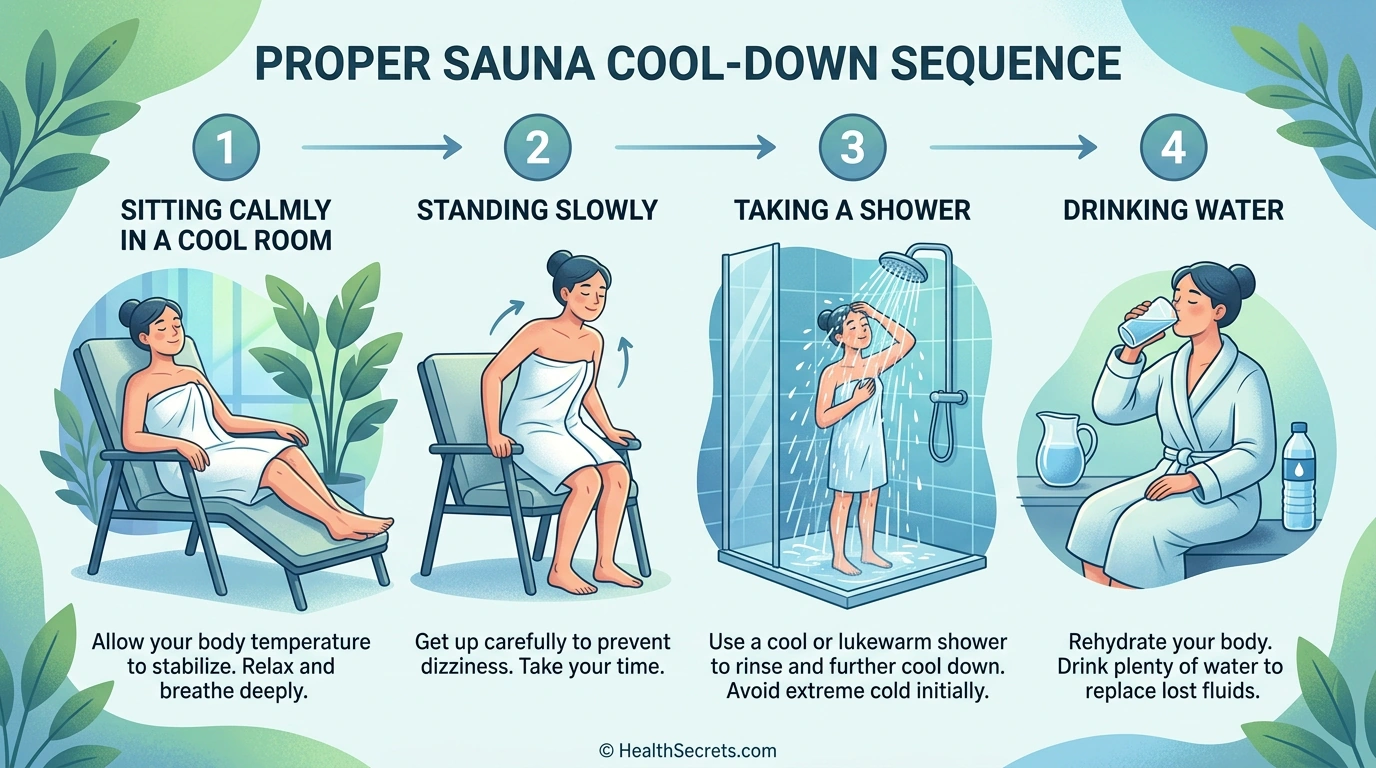
Cool down gradually by sitting quietly for 2–5 minutes after exiting the sauna, then stand slowly to prevent orthostatic hypotension — a sudden blood pressure drop that can cause dizziness or fainting. Follow with a lukewarm-to-cool shower to rinse sweat from your skin and help your body temperature normalize.

Cool-down protocol:
- Sit for 2–5 minutes in a cool area immediately after exiting (this allows heart rate and blood pressure to normalize)
- Stand slowly — your blood vessels are dilated from the heat, and standing too quickly can cause dizziness
- Take a lukewarm shower — rinse sweat from your skin (some practitioners theorize this prevents reabsorption of excreted substances, though evidence is limited)
- Continue hydrating — sip water or electrolyte drink during your cool-down
- Rest for 10–15 minutes before any strenuous activity
Critical safety rule: Never fall asleep in a sauna. Set a timer on your phone before every session. Falling asleep creates serious risk of hyperthermia and severe dehydration.
How Do You Build a Long-Term Sauna Routine for Maximum Benefits?
For optimal cardiovascular and relaxation benefits, aim for 4–7 sauna sessions per week at 15–30 minutes each, paired with consistent hydration and electrolyte replenishment. The Finnish research suggests a clear dose-response relationship — more frequent use correlates with greater health benefits, with the sweet spot being 4–7 sessions weekly.
Optimal long-term routine:
- Frequency: 4–7 times per week (cardiovascular benefits), minimum 2–3 times per week (general health)
- Duration: 15–20 minutes (traditional) or 20–30 minutes (infrared)
- Timing: Post-workout for recovery (increases blood flow, removes metabolic waste) or evening for relaxation (2–3 hours before bed improves sleep quality through the post-cooling effect)
- Hydration: 16–32 oz water before AND after every single session — no exceptions
- Electrolytes: Replenish after every session longer than 15 minutes
Pair sauna with a healthy lifestyle for best results. Sauna is a powerful complement to — not a replacement for — regular exercise, nutrient-dense nutrition, quality sleep, and stress management. The cardiovascular benefits are real and well-documented, but sauna works best as part of a holistic approach. For strategies to reduce environmental toxin exposure (which is far more effective than trying to sweat them out), see our guide on environmental toxins.
What Are the Best Tips to Maximize Your Sauna Health Benefits?
To get the most from your sauna practice, focus on consistency over intensity, pair sessions with proper nutrition, and set realistic expectations about what sauna can and can't do. The biggest mistake people make is chasing extreme heat or marathon sessions when moderate, regular use delivers the strongest research-backed benefits.
- Consistency beats intensity. Four 15-minute sessions per week is more beneficial than one 60-minute session. The cardiovascular adaptations come from regular, repeated heat exposure.
- Time it right. Evening sauna sessions (2–3 hours before bed) leverage the post-cooling effect — your body temperature drops after the session, which triggers sleepiness and improves deep sleep quality.
- Breathe through your nose. Nasal breathing in the sauna helps humidify and warm the air before it reaches your lungs, reducing airway irritation.
- Use a skin brush before sauna. Dry brushing before your session helps exfoliate dead skin cells and may improve circulation. Brush toward the heart using gentle, long strokes.
- Track your response. Keep a simple log of session duration, temperature, and how you feel afterward. This helps you find your personal sweet spot and notice improvement over time.
- Don't chase the "detox" feeling. Feeling terrible after a sauna session isn't a sign of toxins leaving your body — it's a sign of dehydration or overexposure. A good sauna session should leave you feeling relaxed and refreshed, not wiped out.
- Set realistic expectations. Cardiovascular benefits, stress reduction, pain relief, and better sleep are all well-supported by research. Weight loss from sauna is just water weight that returns with rehydration. Detoxification through sweat is a minor contribution at best.
Who Should Avoid Sauna and What Are the Key Safety Precautions?
Sauna is contraindicated for people with unstable cardiovascular conditions, during pregnancy, while under the influence of alcohol, and for those taking certain medications like diuretics or blood pressure drugs without medical clearance. While sauna is generally safe for healthy adults, knowing the contraindications and warning signs can prevent serious complications.
Absolute contraindications — do NOT use sauna without medical clearance:
- Unstable angina or recent heart attack (within 6 months)
- Uncontrolled high blood pressure (>180/110 mmHg)
- Pregnancy — hyperthermia poses risk to fetal development, especially during the first trimester
- Alcohol intoxication — impairs thermoregulation and judgment, dramatically increases dehydration and hyperthermia risk
- Acute illness with fever — sauna worsens the condition and increases dehydration risk
Medications requiring medical consultation:
- Diuretics (increase fluid loss and dehydration risk)
- Blood pressure medications (sauna lowers BP, may cause hypotension)
- Antihistamines (impair sweating, increase hyperthermia risk)
- Beta-blockers (affect heart rate response to heat)
Warning signs to exit immediately:
- Dizziness or lightheadedness
- Nausea or vomiting
- Chest pain or pressure
- Shortness of breath
- Headache or visual changes
- Rapid or irregular heartbeat
- Confusion or disorientation
Children under 12 should generally avoid sauna use, as their thermoregulation systems are immature. If permitted, use lower temperatures (120–130°F), shorter durations (5–10 minutes), and close adult supervision.

Action Plan
What Should You Do First to Start a Safe and Effective Sauna Routine?
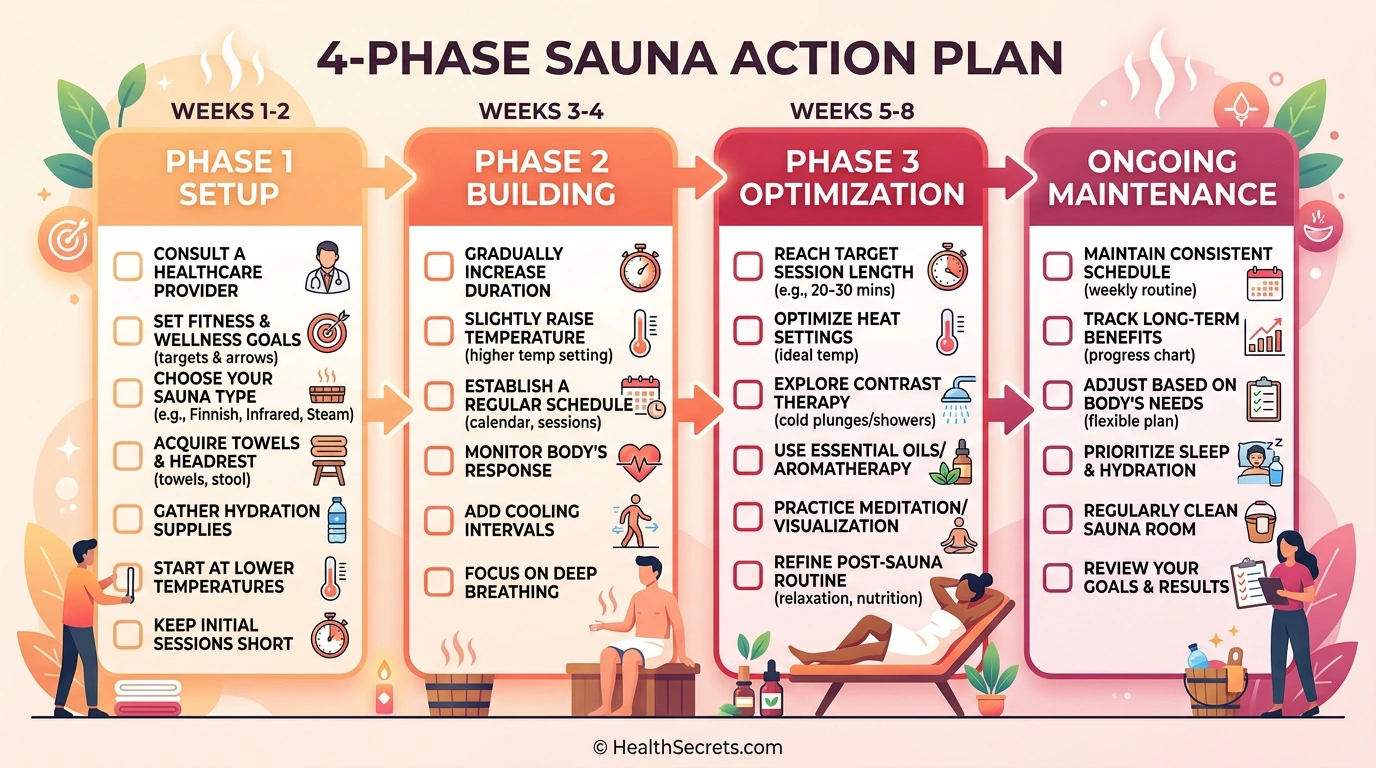
Follow the sequence below, work through each phase in order, and use the checklist as your practical implementation guide.
Begin by choosing an accessible sauna type, scheduling your first session with proper hydration preparation, and committing to the gradual adaptation protocol outlined below. Start conservatively and build consistency — the cardiovascular benefits compound over weeks and months of regular practice.
Phase 1 — Weeks 1–2 (Setup and Adaptation):
- Choose your sauna type: gym traditional, home portable infrared ($100–$300), or infrared blanket
- Consult your doctor if you have any cardiovascular conditions, take medications, or are pregnant
- Stock up on electrolyte powder and a large water bottle
- First session: 5–10 minutes at lower temperature range
- Hydrate: 16–32 oz water before and after
- Frequency: 1–2 sessions this week
Phase 2 — Weeks 3–4 (Building):
- Increase to 10–15 minutes per session
- Raise temperature slightly (traditional 170–185°F, infrared 130–140°F)
- Add electrolyte replenishment after sessions
- Increase frequency to 2–3 sessions per week
- Begin tracking how you feel pre- and post-sauna
Phase 3 — Weeks 5–8 (Optimization):
- Target duration: 15–30 minutes per session
- Full temperature: traditional 185–195°F, infrared 140°F
- Frequency: 4–7 sessions per week for cardiovascular benefits
- Establish consistent timing (post-workout or evening)
- Practice full cool-down protocol after every session
Ongoing Maintenance:
- Maintain 4–7 sessions per week (or minimum 2–3 for general health)
- Never skip hydration — 16–32 oz before AND after, every single session
- Replenish electrolytes consistently
- Listen to your body — exit immediately if you experience warning signs
- Pair with healthy diet, regular exercise, quality sleep, and stress management