Activated charcoal has become one of the most talked-about "detox" supplements, appearing in everything from juice cleanses to capsule protocols marketed as full-body purifiers. With over 8,100 monthly searches for "activated charcoal detox," it's clear that interest is high — but so is the misinformation.
Here's what most wellness influencers won't tell you: activated charcoal has real, FDA-approved medical uses in acute poisoning emergencies, where it can reduce toxin absorption by 50–70% when administered within one hour. It also shows modest benefits for gas and bloating. But the popular claims that it "detoxifies" your body, removes toxins from your bloodstream, or cures hangovers?
None of these are supported by scientific evidence.
Your liver and kidneys already handle detoxification naturally. Activated charcoal works only in the gastrointestinal tract, only before toxins are absorbed, and it binds to medications, vitamins, and minerals just as readily as it binds to toxins.
In this guide, you'll learn exactly what activated charcoal can and cannot do, how to use it safely for evidence-based purposes, critical timing rules to protect your medications and nutrients, and why most "charcoal detox" products are a waste of money.
What Is Activated Charcoal and What Does It Do?
Activated charcoal is a fine, odorless black powder made from carbon-rich materials — typically coconut shells, wood, or peat — that has been heated to extremely high temperatures (600–900°C) in an oxygen-free environment. This "activation" process creates an extraordinarily porous structure with a surface area of 800–3,500 square meters per gram, giving it a powerful ability to trap chemicals and toxins through a process called adsorption.
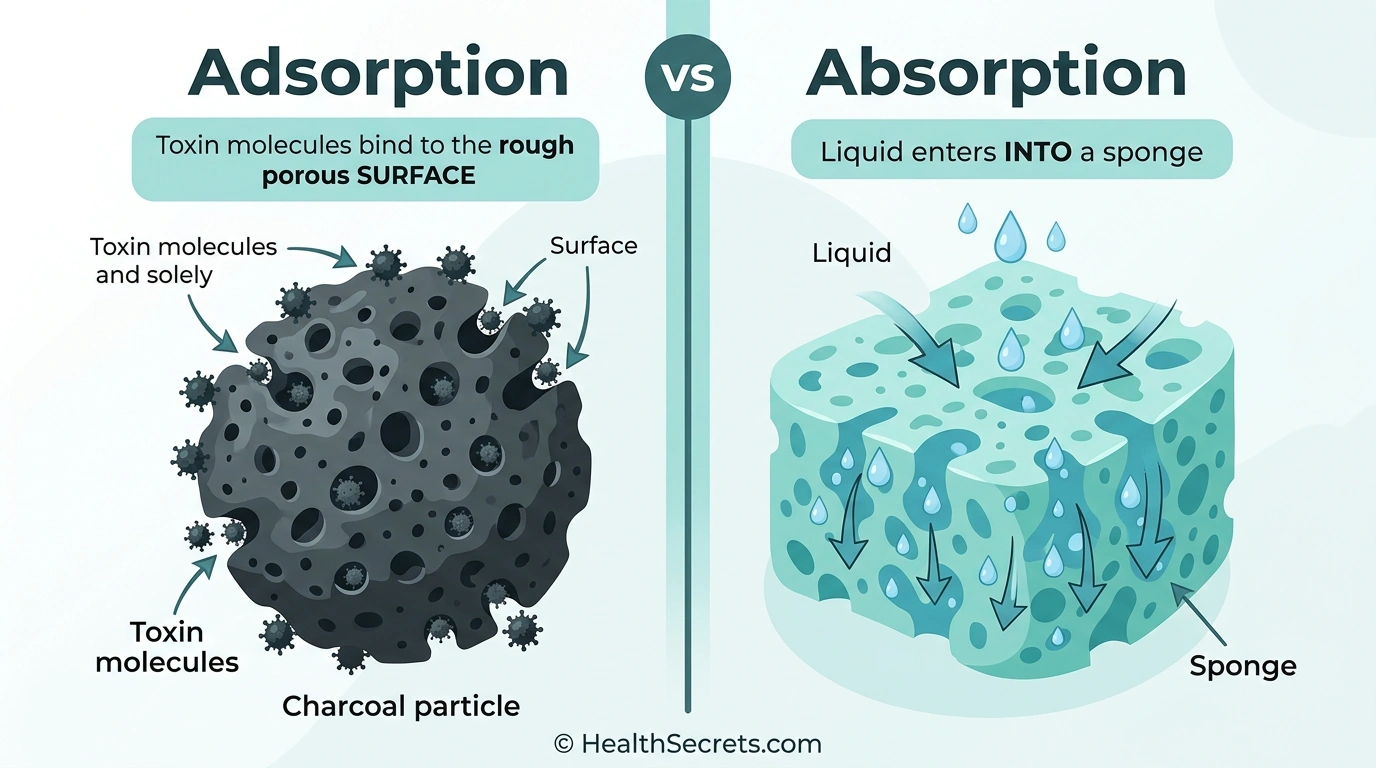
The key distinction that most people miss is between adsorption and absorption. Absorption means one substance enters into another (like a sponge soaking up water). Adsorption means toxins bind to the surface of the charcoal through electrostatic attraction — the charcoal's negatively charged surface attracts positively charged toxin molecules ([1]).
How Does Adsorption Differ from Absorption?
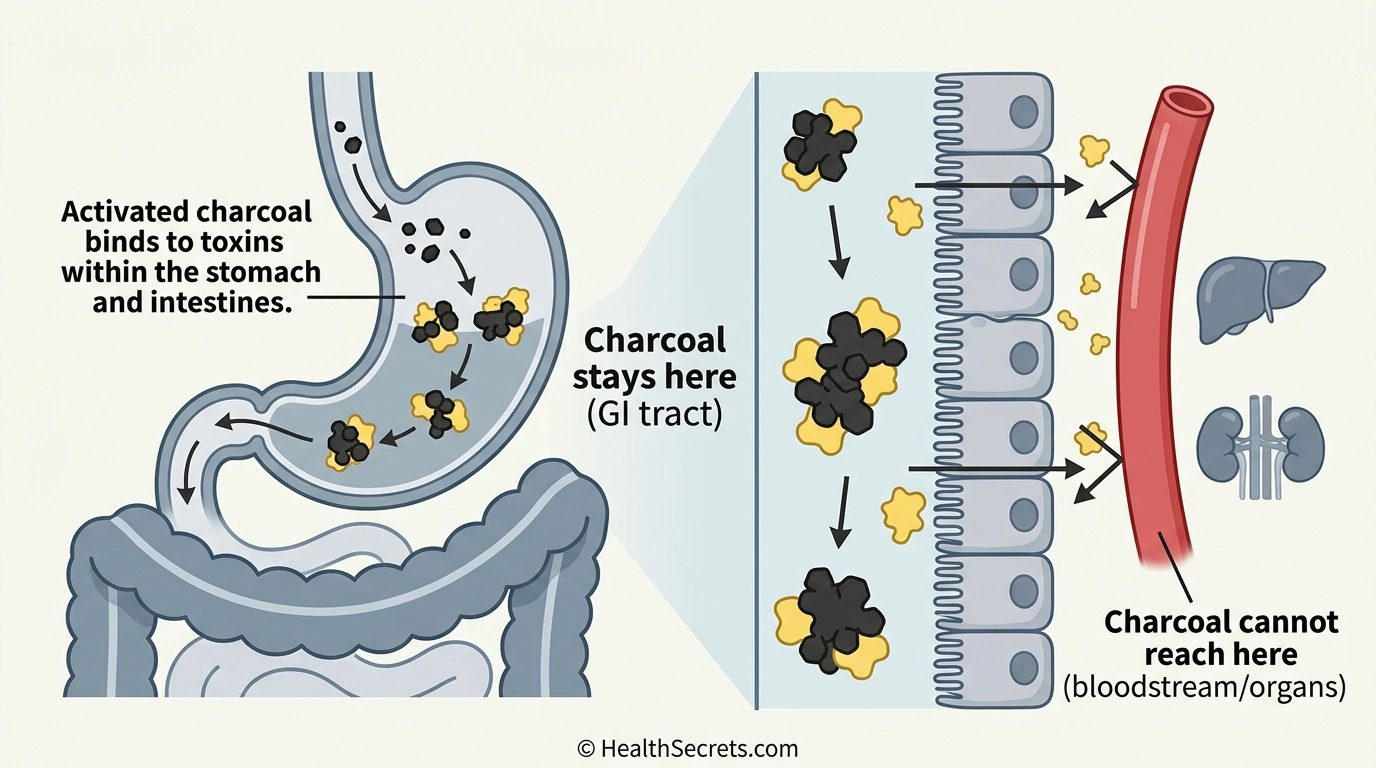
Adsorption is a surface-binding process where toxins cling to the exterior of activated charcoal's porous structure, while absorption involves one substance entering into another. This distinction matters because activated charcoal never enters your bloodstream — it stays entirely within the GI tract and is excreted in stool along with whatever it has bound.
This means activated charcoal can only bind toxins that are still in your stomach or intestines before they've been absorbed into your blood. Once a substance has crossed the intestinal lining into your bloodstream, activated charcoal cannot reach it ([2]).
What Is Activated Charcoal FDA-Approved For?
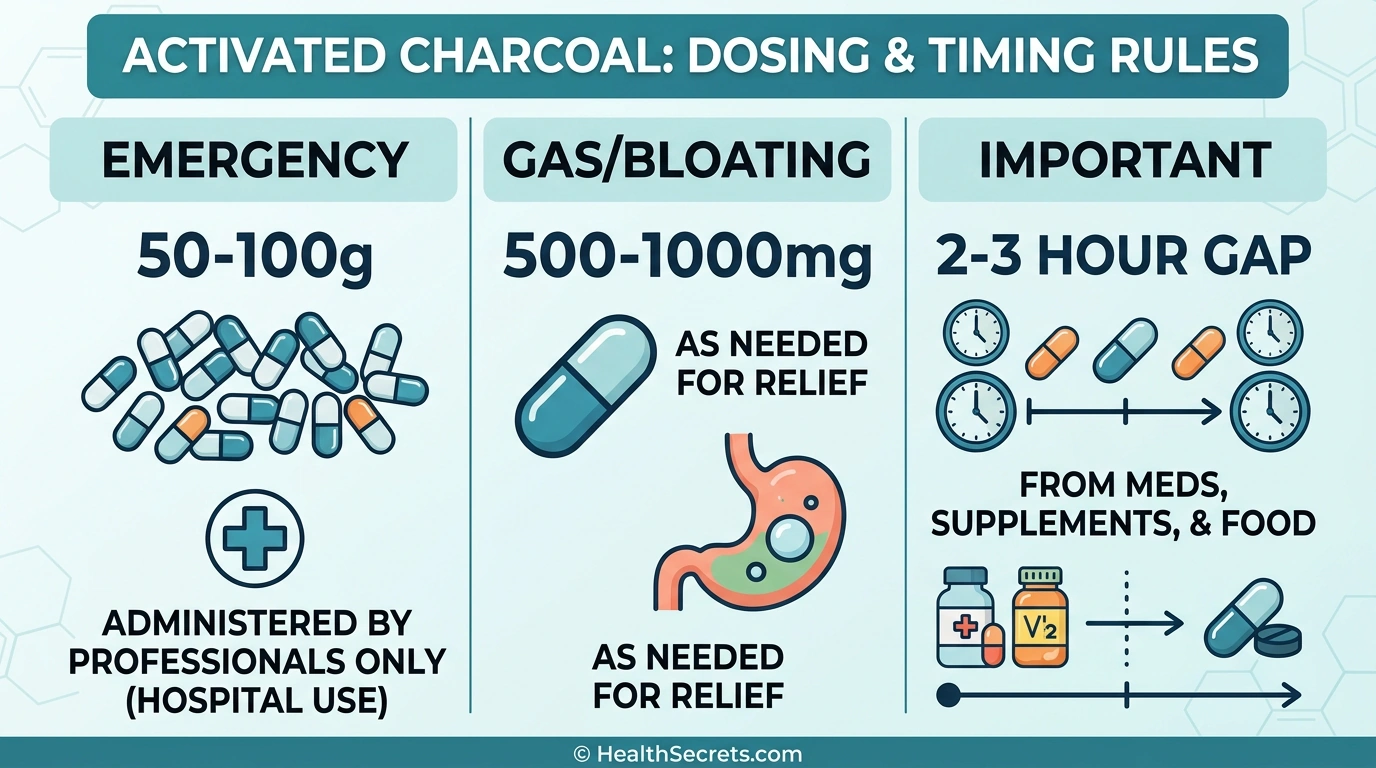
Activated charcoal is FDA-approved for acute poisoning and drug overdose as an emergency gastrointestinal decontamination agent. In hospital settings, a single dose of 50–100g (adults) or 0.5–1g per kg body weight (children) is administered as a slurry, ideally within 30–60 minutes of ingestion. Studies show this can reduce absorption by 50–70% when given promptly ([3]).
It is not FDA-approved for general detoxification, weight loss, skin health, hangover prevention, or any of the other popular wellness claims.
How Does Activated Charcoal Work in the Body?
Activated charcoal works exclusively within the gastrointestinal tract by binding dissolved toxins to its vast porous surface through electrostatic attraction, preventing their absorption through the intestinal lining into the bloodstream. It does not enter the blood, does not reach organs, and is excreted unchanged in the stool along with whatever substances it has trapped.
How Does the Porous Structure Enable Toxin Binding?
The activation process creates millions of microscopic pores that dramatically increase surface area. A single gram of superactivated charcoal can have a surface area equivalent to more than half a football field. This massive surface area, combined with the charcoal's negative electrical charge, creates strong electrostatic attraction for positively charged molecules including many drugs, chemicals, and toxins ([23]).
Why Can't Activated Charcoal Remove Toxins Already in Your Blood?
Because orally administered activated charcoal does not cross the intestinal lining, it has zero access to your bloodstream, liver, kidneys, fat cells, or any other tissue. It can only interact with substances present in the GI lumen. This is the fundamental reason why "detox" claims are scientifically invalid — the charcoal simply cannot reach toxins that have already been absorbed ([1]).
The one exception is enterohepatic recirculation — some drugs are excreted by the liver back into the intestines, where activated charcoal can bind them during a second pass. This is the basis for multiple-dose activated charcoal (MDAC) protocols used in hospitals for specific poisonings ([7]).
What Substances Does Activated Charcoal NOT Bind?
Activated charcoal is ineffective against several categories of substances due to their physical and chemical properties. It does not bind alcohols (ethanol, methanol, ethylene glycol), strong acids or alkalis, iron, lithium, petroleum products, or organic solvents. This is why activated charcoal is useless for alcohol poisoning or hangover prevention — and why specific antidotes or chelation agents are needed for certain toxins ([2]).

The Emergency Wallet Medical ID
Two cut-to-size CR-80 cards — conditions, allergies, medications, implants and two emergency contacts — plus the phone-lock medical ID text to copy into your device.
How Well Is Activated Charcoal Absorbed?
Activated charcoal is not absorbed at all — and that is by design. It remains entirely within the gastrointestinal tract and is excreted in the stool, which is why stools turn black during use. Its effectiveness depends not on absorption but on contact time with toxins in the GI lumen and the timing of administration relative to toxin ingestion.
Does the Form of Activated Charcoal Affect Effectiveness?
The source material (coconut shell, wood, peat) and activation method influence the surface area and binding capacity. Coconut shell-derived charcoal generally produces the highest surface area and is considered the gold standard for supplement-grade products. "Superactivated" charcoal preparations used in hospitals can reach surface areas of 3,500 m²/g compared to standard products at 800–1,200 m²/g ([10]).
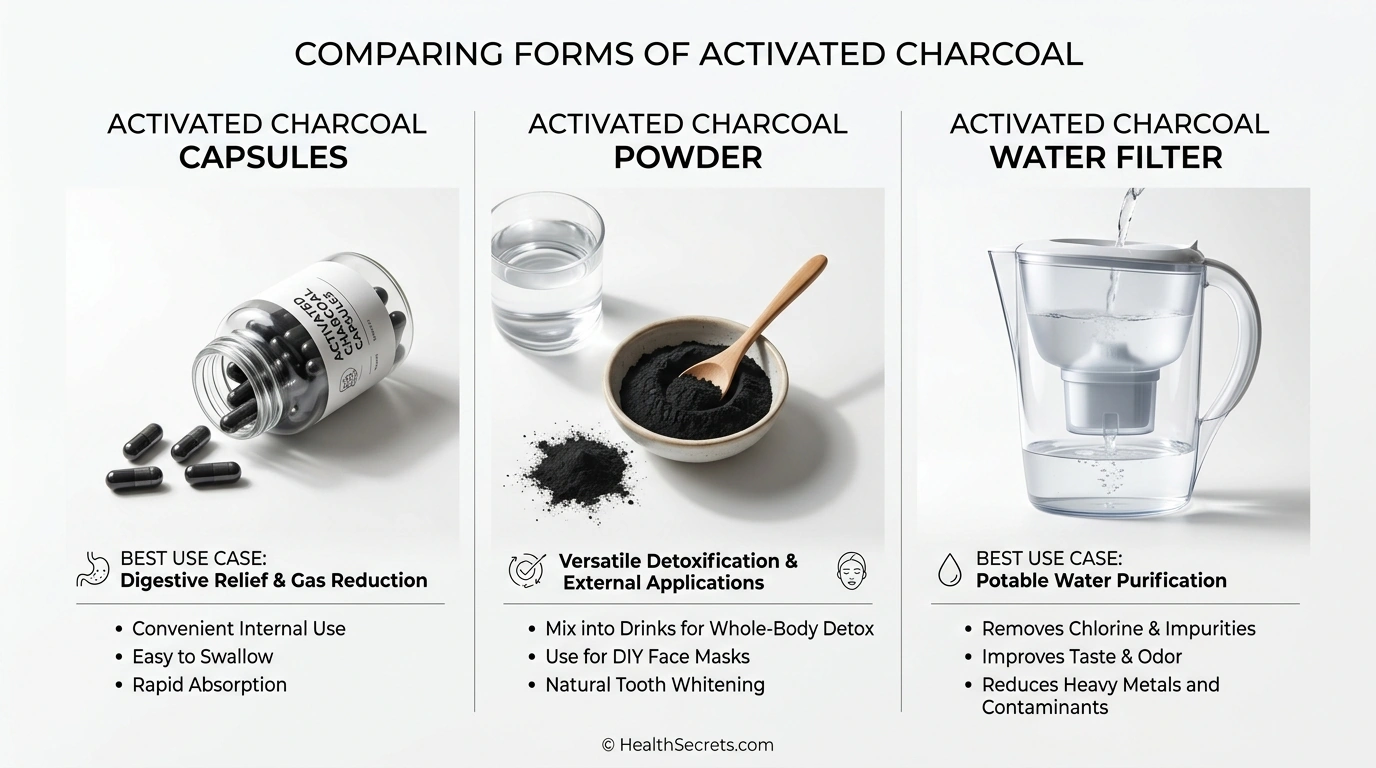
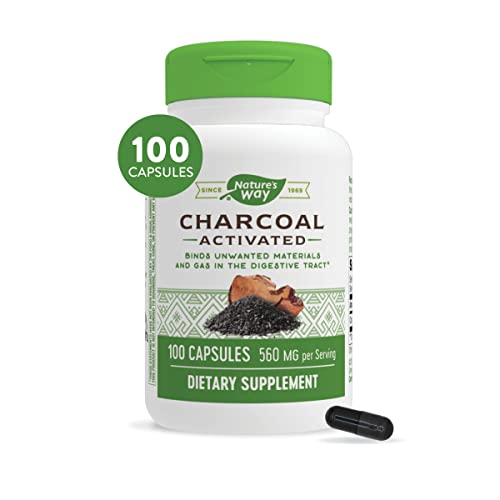
- Capsules (500–1,000mg) are the most convenient form for occasional gas and bloating use.
- Powder mixed with water allows higher doses but has an unpleasant gritty texture.
- Slurry preparations are used exclusively in hospital emergency settings.
What Enhances or Reduces Activated Charcoal's Effectiveness?
Timing is the single most important factor. Effectiveness drops dramatically with time — from 50–70% absorption reduction within 1 hour of toxin ingestion to as little as 18% at 6 hours ([8]). Taking charcoal on an empty stomach maximizes contact with target substances. Food in the stomach reduces effectiveness by competing for binding sites.
How Much Activated Charcoal Should You Take?
Dosing depends entirely on the intended use. For acute poisoning emergencies, hospital doses range from 50–100g for adults administered within one hour. For occasional gas and bloating relief, 500–1,000mg as needed before meals is the typical over-the-counter dose. All non-emergency use should be limited to 3–7 days maximum.
| Use | Dose | Frequency | Duration |
|---|---|---|---|
| Acute Poisoning (Adults) | 50–100g | Single dose (or every 4–6 hrs for MDAC) | Hospital supervision only |
| Acute Poisoning (Children) | 0.5–1g per kg | Single dose | Hospital supervision only |
| Gas & Bloating | 500–1,000mg | As needed or before meals | 3–7 days max |
| Diarrhea (Short-term) | 500–1,000mg | 2–3x daily | 3–7 days max |
When Should You Take Activated Charcoal Relative to Meals and Medications?
Timing is the most critical safety factor with activated charcoal. Because it binds nonselectively, it will adsorb medications, supplements, and nutrients from food just as readily as toxins. You must take it at least 2–3 hours away from all medications (including birth control, antidepressants, blood pressure, thyroid, and diabetes medications), all supplements, and ideally on an empty stomach or 2–3 hours after meals.
The only exception is gas/bloating use, where taking charcoal just before a gas-producing meal may be beneficial — but you must still maintain the 2–3 hour gap from medications and supplements (WebMD [14]).
Can You Get Enough Activated Charcoal from Food?
Activated charcoal is not a nutrient found in food — it is a manufactured product created through high-temperature processing of carbon-rich materials. There is no dietary equivalent, and the trendy "charcoal foods" (black ice cream, charcoal lattes, charcoal bread) contain negligible amounts that provide no therapeutic benefit whatsoever.
These food products typically contain 250mg or less of activated charcoal per serving — roughly 100–200 times less than a single emergency department dose. At these amounts, activated charcoal cannot meaningfully bind toxins, but it can still interfere with the absorption of nutrients from your meal and any medications you've taken (Consumer Reports).
Are Charcoal-Infused Beverages and Smoothies Worth It?
Charcoal juices, smoothies, and lattes are marketing gimmicks with no demonstrated health benefit. They provide subtherapeutic doses of activated charcoal while potentially reducing the absorption of beneficial nutrients from the ingredients they're mixed with. Your money is better spent on whole fruits, vegetables, and adequate hydration — which actually support your body's natural detoxification systems (Ohio State University Wexner Medical Center).
Is Activated Charcoal Safe?
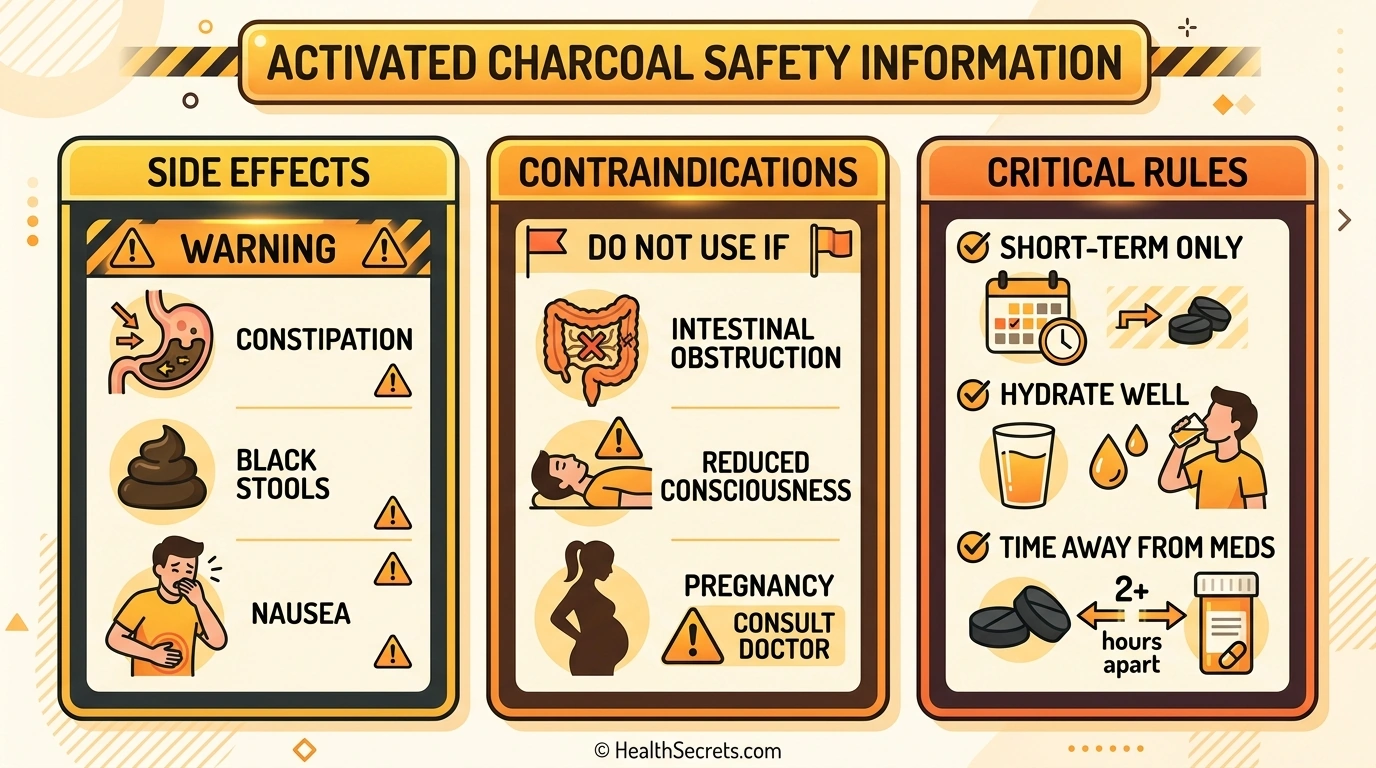
Activated charcoal is likely safe when used short-term for evidence-based purposes, but it carries meaningful risks that are often downplayed in wellness marketing. The most common side effect is constipation (because it adsorbs water), and the most serious risks include intestinal blockage, nutrient depletion with long-term use, and dangerous medication interactions if timing rules are ignored.
What Are the Most Common Side Effects?
- Constipation is the most frequently reported side effect, caused by activated charcoal adsorbing water and hardening stool. Prevention requires drinking 8–10 cups of water daily during use.
- Black stools are a normal, harmless cosmetic effect of the charcoal passing through.
- Nausea and vomiting can occur with larger doses due to the gritty texture. In rare cases, severe constipation combined with dehydration can cause intestinal blockage requiring emergency medical care (Healthline [15]).
Who Should NOT Take Activated Charcoal?
Activated charcoal is contraindicated in people with intestinal obstruction or perforation (it cannot pass through and worsens the condition), those with reduced consciousness (aspiration risk — charcoal in the lungs can cause pneumonia or death), people with chronic constipation, and during pregnancy or breastfeeding due to insufficient safety data. If you take any medications — particularly birth control, thyroid medications, antidepressants, or blood pressure drugs — consult your doctor before use, as activated charcoal can reduce their effectiveness ([1]).
Does Long-Term Use Cause Nutrient Deficiencies?
Yes. Daily activated charcoal use beyond 3–7 days can bind and deplete essential vitamins and minerals including vitamin A, B vitamins (B1, B2, B3, B6, B12, folate), calcium, magnesium, iron, and zinc. This can lead to anemia, fatigue, weakened immunity, and bone loss over time. Long-term use also disrupts gut function by binding beneficial bacteria and digestive enzymes. Short-term use (3–7 days) carries minimal risk because the body has adequate nutrient stores ([18]).
What Can Activated Charcoal Actually Do for You?
Activated charcoal is a legitimate, evidence-based tool for two specific situations: emergency poisoning treatment under medical supervision, and short-term relief of occasional gas and bloating. Everything beyond these uses — general detox, hangover cure, weight loss, skin health, organ cleansing — is unsupported by science and often contradicted by basic physiology.
What Results Can You Realistically Expect?
For gas and bloating: Modest symptom reduction within 1–2 hours of taking 500–1,000mg before or after a gas-producing meal. Results are inconsistent — some people notice clear improvement, others don't. A systematic approach using a low-FODMAP diet or digestive enzymes may be more effective long-term (UCLA Health).
For "detox": Zero results, because the premise is scientifically invalid. Your liver performs Phase I and Phase II detoxification. Your kidneys filter blood. Your colon eliminates waste. These organs function continuously without help from activated charcoal, which cannot even reach them (INTEGRIS Health).
What Will Activated Charcoal NOT Do?
- Not remove toxins from your bloodstream — it only works in the GI tract before absorption
- Not bind alcohol — alcohol absorbs within 30–60 minutes, making charcoal useless for hangovers
- Not remove heavy metals from your body — chelation therapy (EDTA, DMSA) is a completely different process
- Not "cleanse" your organs — liver, kidneys, and colon function normally without supplemental help
- Not promote weight loss — no evidence supports this claim
- Not improve skin health — oral charcoal does not reach skin tissue
Action Plan
What Should You Do First If You Want to Try Activated Charcoal?
Follow the sequence below, work through each phase in order, and use the checklist as your practical implementation guide.
Start by identifying your specific goal and confirming whether activated charcoal is actually appropriate for it. For most "detox" purposes, activated charcoal is not the right tool. For occasional gas and bloating, a short trial with proper timing and hydration protocols is reasonable. For poisoning emergencies, call Poison Control immediately.
Phase 1: Assess Whether Activated Charcoal Is Right for Your Goal (Day 1)
- Identify your specific reason for wanting activated charcoal
- If "general detox" or "cleanse" — skip activated charcoal; focus on hydration, whole foods, fiber, and supporting liver/kidney health naturally
- If hangover prevention — skip activated charcoal; it does not bind alcohol once absorbed
- If gas/bloating relief — proceed to Phase 2
- If acute poisoning emergency — call Poison Control at 1-800-222-1222 or 911 immediately
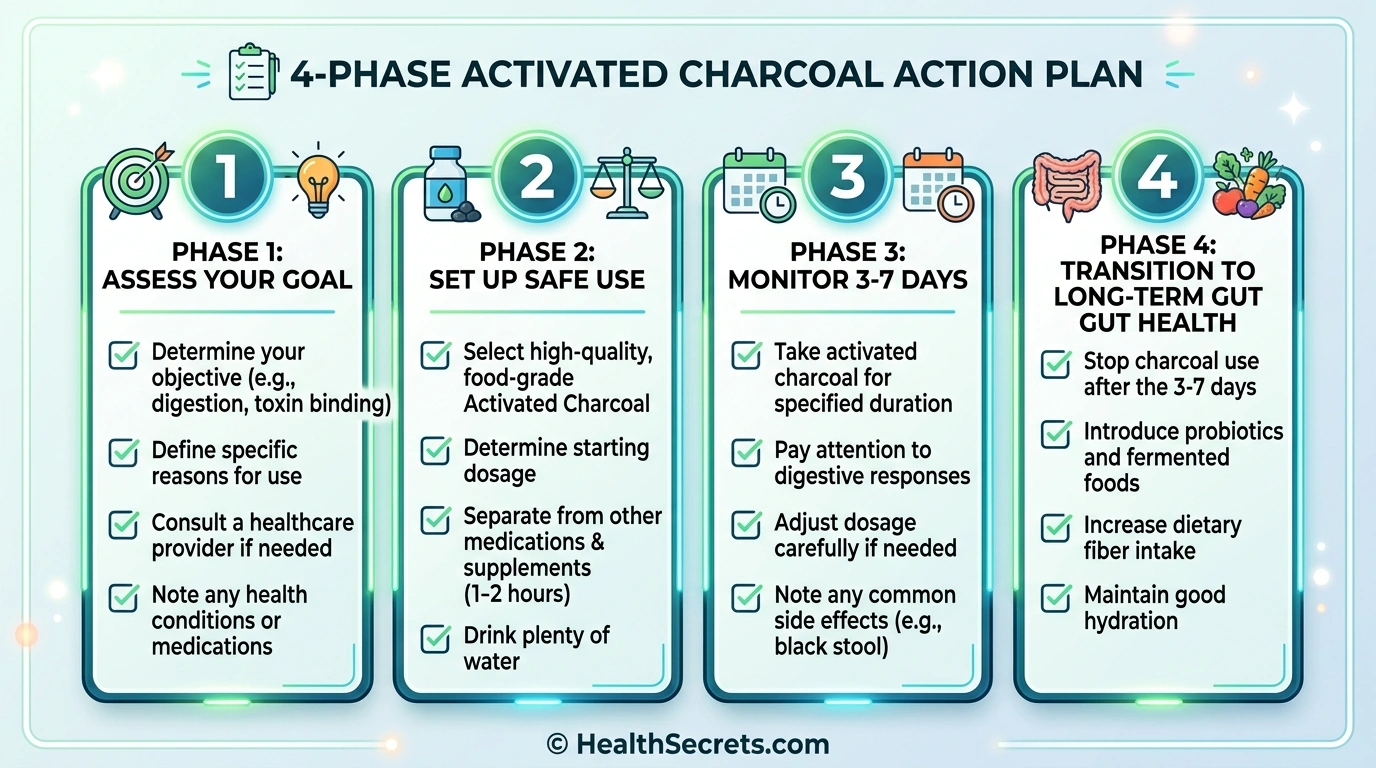
Phase 2: Set Up Safe Use for Gas and Bloating (Days 1–3)
- Choose a food-grade, coconut shell-sourced activated charcoal (500mg capsules)
- Check all current medications — consult your doctor if you take birth control, thyroid meds, antidepressants, blood pressure meds, or diabetes medications
- Plan timing: 2–3 hours away from all medications, supplements, and meals
- Increase water intake to 8–10 cups daily to prevent constipation
- Take 500–1,000mg before anticipated gas-producing meals
Phase 3: Monitor and Evaluate (Days 3–7)
- Track symptom improvement (bloating, gas frequency, discomfort)
- Monitor for side effects: constipation, nausea, abdominal pain
- Discontinue if severe constipation occurs or if no improvement after 5–7 days
- Do not extend beyond 7 days without medical guidance
- Consider alternatives: digestive enzymes, probiotics, low-FODMAP diet, increased fiber
Phase 4: Long-Term Gut Health Strategy (Week 2+)
- Transition to sustainable gut health approaches: gut detox protocol, probiotics and prebiotics
- Increase dietary fiber gradually (25–35g daily)
- Maintain adequate hydration (8–10 cups daily)
- If symptoms persist, consult a gastroenterologist for evaluation