
Turn Nutrition Facts Panels Into Calm, Comparable Grocery Decisions
This A4 workbook teaches a repeatable way to normalize serving sizes, compare similar products, read ingredient lists, and question front-of-package claims. It gives you a household reference for informed shopping without labeling foods as universally good, bad, or medically appropriate for everyone.
You are purchasing Food Label Decoder Workbook — a downloadable digital publication (36-page printable vector PDF). Upon checkout, you will receive instant online access and an immediate download link sent to your email address. This is a 100% digital product. No physical books, binders, jars, or equipment will be shipped to your address.

Why Most Advice Leaves You More Confused
Everything Included in Your Digital Download
Instant digital access to your complete printable PDF collection, actionable tools, and guided protocols.

What’s Inside the Complete System
Every section is authored to provide concrete, fillable tools rather than theoretical filler.
Nutrition Facts Panel Orientation
The orientation pages walk through serving size, servings per container, calories, nutrients, percent daily value, and the order in which to compare a label. They explain what the panel can and cannot tell you about a whole eating pattern. The outcome is a consistent reading sequence rather than a reaction to one bold number.
Serving-Size Normalization Worksheet
This worksheet converts two products to the amount your household actually eats and records the arithmetic transparently. It includes fields for package size, cost, and number of portions so value and nutrition are considered together. You can compare like with like without requiring a daily tracking app.
Ingredient List and Allergen Scan
A checklist prompts you to identify the first ingredients, added sweeteners, oils, fortification, and required allergen statements relevant to your household. It leaves a question field for a professional when an ingredient is unfamiliar or medically important. The practical outcome is informed curiosity, not fear of a long ingredient list.
Front-of-Pack Claim Credibility Guide
The guide helps you translate marketing words into a question about the regulated panel, serving, or ingredient list. It includes a claim-to-evidence grid and a reminder that a true claim does not automatically make a product right for every person. You gain a calm way to resist both health halos and alarmist headlines.
Grocery Pocket Reference Card
The pocket card condenses the comparison order, serving reminder, label fields, and personal priorities you choose with your care team. It is designed for a quick glance in a store rather than a full lesson at the shelf. The result is less mental load during routine shopping.
Clinician and Dietitian Question Log
The log saves a product example, the question that came up, the date, and the professional's explanation. It helps you distinguish a label-reading question from an individualized nutrition issue. You can bring one or two representative pages to a visit without sharing your entire shopping history.
Is This System Right for You?
- Shoppers who want a simple, evidence-aware way to compare similar packaged foods without relying on front-label promises.
- Parents, caregivers, and households balancing budget, allergies, preferences, and nutrition questions at one grocery trip.
- People who want to learn label literacy once and use a printable reference rather than subscribe to another scoring app.
- Anyone preparing a food question for a clinician or dietitian and wanting to bring an actual product example.
- It is not a personalized medical diet, allergen diagnosis, or guarantee that a product is safe for a particular person.
- It is not a substitute for a clinician's advice about a diagnosed condition, prescribed nutrition plan, or severe allergy.
- It is not intended to turn ordinary shopping into obsessive nutrient surveillance or fear of food.
Clinical Evidence & Scientific Grounding
The reading sequence follows the FDA Nutrition Facts label framework and the USDA Dietary Guidelines' emphasis on overall patterns, nutrient density, and informed choices rather than a single front-of-package message. The AHA's dietary guidance also supports attention to sodium, added sugars, fiber, fats, and food quality in context; side-by-side comparisons make those questions easier to ask.
A label can describe a product but cannot determine an individual's allergy, medication interaction, or clinical nutrition need. This workbook therefore uses evidence-informed literacy and documentation as its rationale: it improves comparison and communication while leaving diagnosis, safety decisions, and individualized recommendations with qualified professionals.
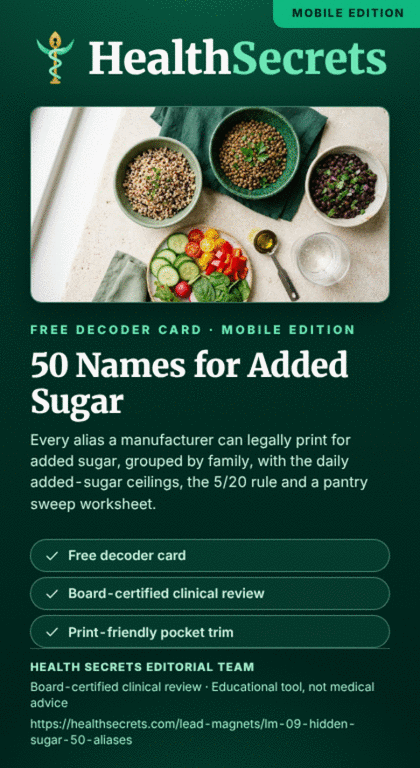
Want a Free Printable Quick-Start?
Every alias a manufacturer can legally print for added sugar, grouped by family, with the daily added-sugar ceilings, the 5/20 rule and a pantry sweep worksheet.
Frequently Asked Questions
Ready to Bring Structure to Your Health?
Instant digital download. Immediate access to your complete printable PDF collection. Fully formatted for A4 home printing or tablet note-taking.