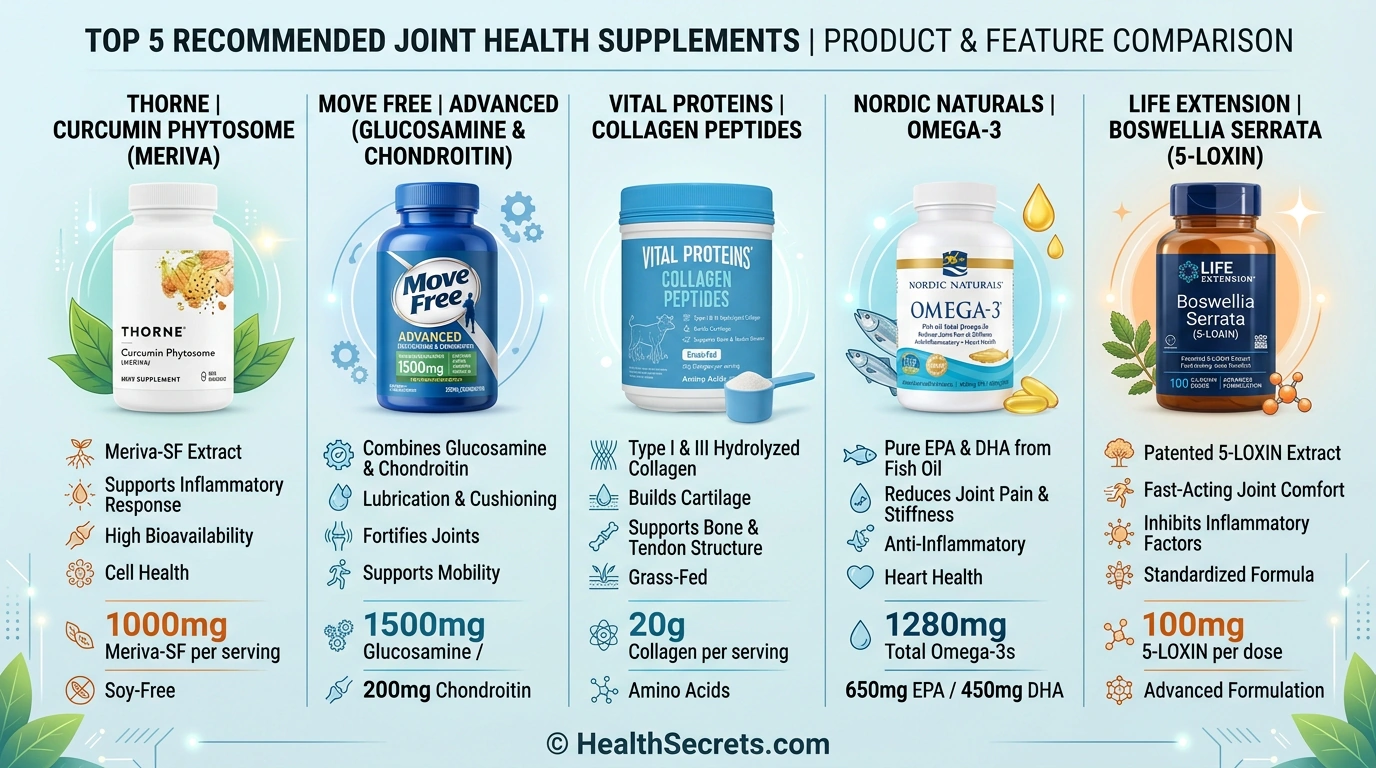
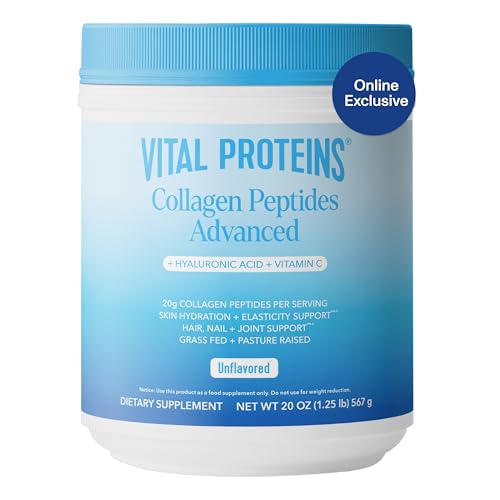
Let me be straight with you — if you've spent any time searching for joint health supplements, you've probably noticed the shelves are packed with options. Glucosamine bottles here, turmeric capsules there, collagen powders everywhere. It gets overwhelming fast.
And honestly? Not all of them deliver what they promise.
But here's the good news: clinical research has identified several supplements that genuinely help. A 2026 systematic review confirmed that glucosamine and chondroitin are generally effective and well-tolerated for managing osteoarthritis and joint pain, with over 90% of efficacy studies reporting positive outcomes. Meanwhile, curcumin and boswellia showed encouraging evidence for pain reduction and improved function. The key is knowing which ones actually work, at what dose, and for what type of joint issue.
That's exactly what this guide covers. We've reviewed the clinical evidence for eight major joint supplements, tested leading products, and built this complete resource to help you make informed decisions about your joint health.
For foundational supplement knowledge, see our complete supplements guide and our guide to supplement safety. If inflammation is a primary concern, explore our inflammation and pain relief guide.
What Should You Look for When Choosing Joint Health Supplements?
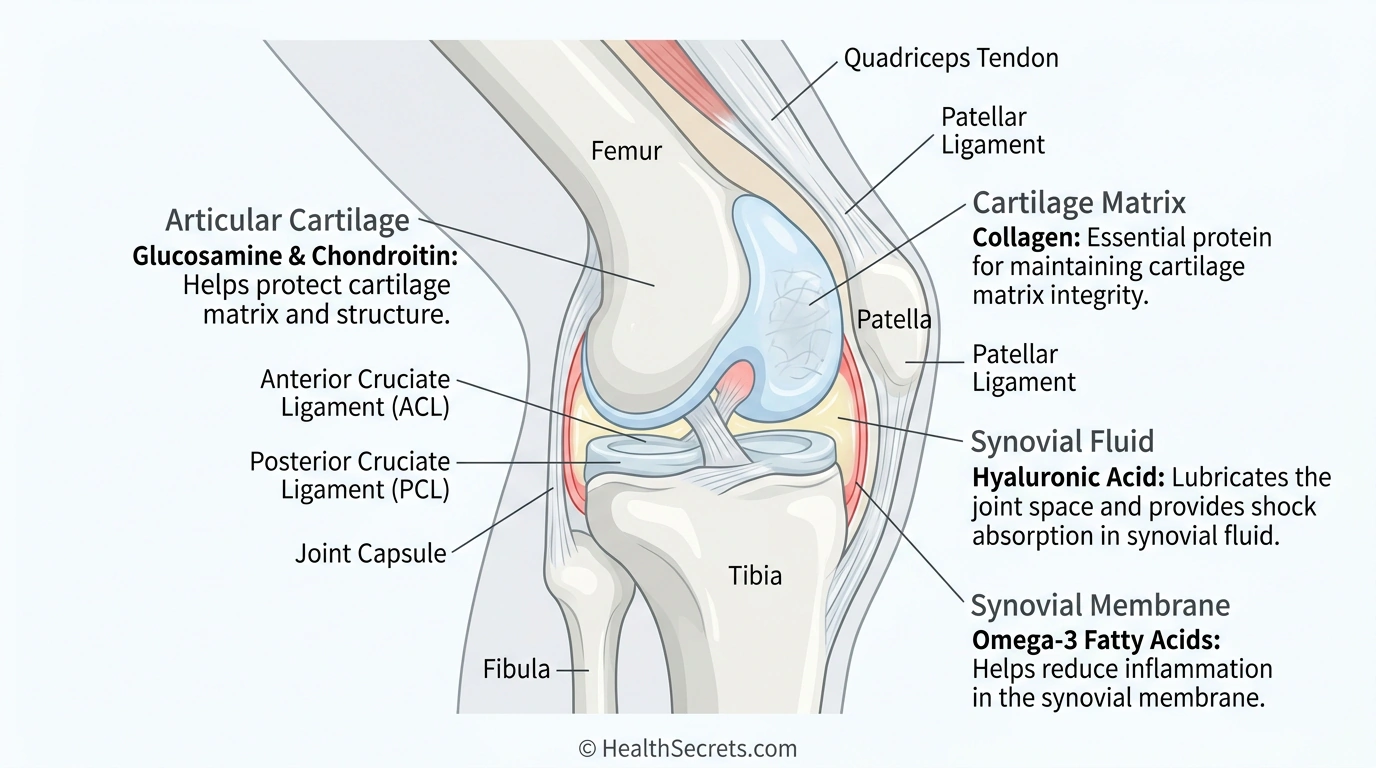
The most important factors when selecting joint supplements are evidence-based ingredients at clinical doses, bioavailable formulations, and third-party quality verification. Look for specific forms like glucosamine sulfate (not hydrochloride), curcumin with piperine or phytosome technology, and UC-II or hydrolyzed collagen — these deliver measurably better results than generic alternatives.
Which Forms and Doses Have the Strongest Evidence?
The form of a supplement matters enormously for joint health. Glucosamine sulfate at 1,500mg daily has stronger evidence than glucosamine hydrochloride. Curcumin with enhanced bioavailability (Meriva phytosome or BioPerine) absorbs up to 29 times better than standard curcumin. For collagen, UC-II (undenatured type II collagen at 40mg) works through a different immune-modulating mechanism than hydrolyzed collagen peptides (10g), and both have clinical support.
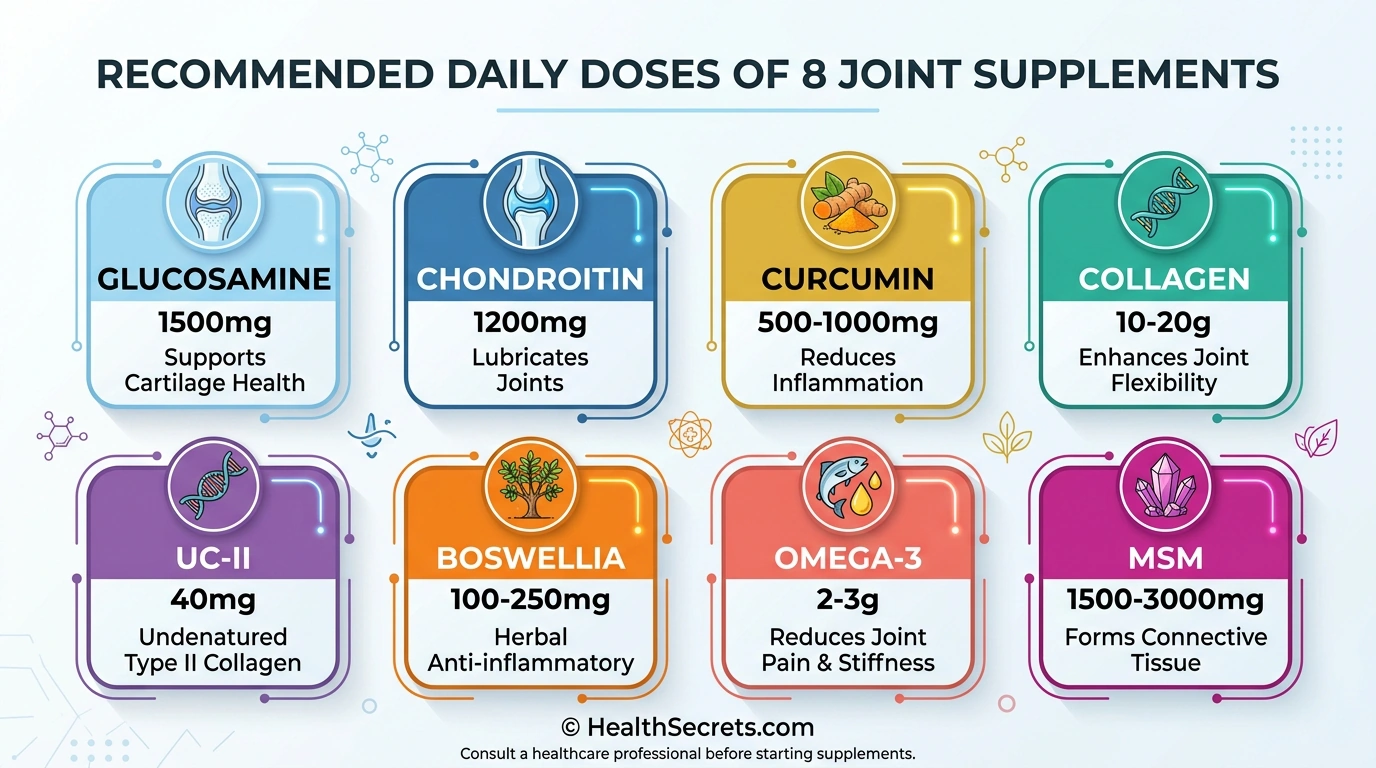
Key evidence-based doses:
- Glucosamine sulfate: 1,500mg daily
- Chondroitin sulfate: 1,200mg daily
- Curcumin (enhanced form): 500–1,000mg daily
- Boswellia serrata (AKBA-enriched): 100–250mg daily
- UC-II collagen: 40mg daily
- Hydrolyzed collagen peptides: 10–20g daily
- Omega-3 (EPA+DHA): 2–3g daily
- MSM: 1,500–3,000mg daily
How Do You Verify Supplement Quality?
Third-party testing is non-negotiable. Look for certifications from NSF International, USP (United States Pharmacopeia), or ConsumerLab.com [18]. These organizations independently verify that products contain what the label claims, are free from contaminants like heavy metals, and meet manufacturing quality standards. A 2026 review noted that supplement quality varies significantly, with contamination and inaccurate labeling affecting 20–50% of products tested.
What About Combination Products vs. Single Ingredients?
Combination products can be convenient, but they often contain sub-clinical doses of individual ingredients. Check that each ingredient meets its evidence-based dose. A glucosamine/chondroitin combo with 1,500mg/1,200mg respectively is properly dosed. A "joint health complex" with 500mg glucosamine, 200mg chondroitin, and five other ingredients at micro-doses is unlikely to deliver meaningful results.

Are You Unknowingly Inflaming Your Body?
Get the free Health Vitals & Nutrient Checklist — the daily guide that shows you which habits and supplements are silently triggering inflammation.
How Did We Evaluate These Joint Health Supplements?
We evaluated joint supplements based on five criteria: clinical evidence strength, ingredient form and bioavailability, third-party testing verification, value per effective dose, and real-world user experience. Products with published clinical trials, verified certifications, and transparent labeling scored highest in our assessment.
Our Evaluation Criteria
- Clinical Evidence: Priority given to ingredients with randomized controlled trials and systematic reviews published in peer-reviewed journals (PubMed, NIH databases)
- Dosing Accuracy: Each product must contain clinically studied doses — not token amounts in proprietary blends
- Bioavailability: Enhanced absorption forms (phytosome, piperine-enhanced, chelated) preferred where evidence supports them
- Third-Party Testing: Products verified by NSF, USP, or ConsumerLab receive priority
- Transparency: Clear ingredient sourcing, manufacturing practices, and company track record
- Value: Cost per effective daily dose, not just cost per pill

30-Day Walking & Mobility Planner
Build an accessible, personally tailored walking consistency routine with gentle mobility breaks and joint-safe progressions.
How Should You Take Joint Supplements for Best Results?
For optimal results, take glucosamine and chondroitin with meals to reduce gastrointestinal discomfort, split larger doses across morning and evening, and allow 8–12 weeks before evaluating effectiveness. Fat-soluble supplements like curcumin and omega-3s absorb significantly better when taken with a meal containing dietary fat.
What Is the Optimal Timing and Dosing Schedule?
- Glucosamine (1,500mg): Take with food, either as a single dose or split into 500mg three times daily. Consistent daily use for at least 8 weeks is needed before evaluating results.
- Chondroitin (1,200mg): Take with food alongside glucosamine. Some studies used 400mg three times daily.
- Curcumin (500–1,000mg): Take with a fat-containing meal for better absorption. Enhanced forms (Meriva, with BioPerine) require lower doses than standard curcumin.
- Collagen peptides (10g): Take on an empty stomach or with vitamin C to support collagen synthesis. Morning is generally preferred.
- UC-II collagen (40mg): Take once daily, ideally on an empty stomach before bed.
- Boswellia (100–250mg): Take with meals. Look for AKBA-enriched extracts.
- Omega-3 (2–3g EPA+DHA): Take with the largest meal of the day to maximize absorption and minimize fishy aftertaste.
- MSM (1,000–3,000mg): Split into two or three doses with meals. Start with 1,000mg and gradually increase.
Can You Combine Multiple Joint Supplements?
Yes, and research suggests certain combinations may provide synergistic benefits. Glucosamine plus chondroitin is the most studied combination, with the GAIT trial showing the pair was effective for moderate-to-severe knee pain. Pairing curcumin with boswellia targets inflammation through complementary pathways. Collagen plus vitamin C supports collagen synthesis naturally.
However, avoid taking everything at once — space supplements throughout the day and start with one or two, adding others after 4–6 weeks to track individual responses. For more on combining supplements effectively, see our supplement stacking guide.
Are Joint Health Supplements Safe, and What Are the Risks?
Most joint supplements have favorable safety profiles when used at recommended doses. Glucosamine and chondroitin have been used safely in clinical trials lasting up to three years, with side effects generally limited to mild gastrointestinal discomfort. However, specific populations need caution — particularly those on blood thinners, people with shellfish allergies (for glucosamine), and individuals with diabetes.
Who Should Avoid or Use Caution With Joint Supplements?
- Blood thinner users: Chondroitin may have mild blood-thinning effects. Omega-3s, turmeric, and boswellia also affect blood clotting. Consult your doctor before combining these with warfarin, aspirin, or other anticoagulants.
- Shellfish allergy: Some glucosamine is derived from shellfish. Choose vegetarian glucosamine (from corn fermentation) if you have a shellfish allergy.
- Diabetes: Glucosamine may affect blood sugar levels in some individuals. Monitor blood glucose more closely when starting glucosamine supplementation.
- Pregnant or breastfeeding: Limited safety data for most joint supplements during pregnancy. Consult your healthcare provider.
- Before surgery: Stop omega-3s, turmeric, and boswellia at least 2 weeks before scheduled surgery due to blood-thinning effects.
- Autoimmune conditions: UC-II collagen works through immune modulation — consult your rheumatologist if you have an autoimmune condition.

What Are Common Side Effects?
Side effects are generally mild and may include nausea, diarrhea, constipation, or stomach upset. Turmeric can cause digestive discomfort at high doses. Fish oil may cause fishy burps (enteric-coated or emulsified forms reduce this). MSM occasionally causes headaches or insomnia when starting. If you experience persistent or severe side effects, stop the supplement and consult your healthcare provider.
What Is the Best Step-by-Step Plan for Improving Joint Health with Supplements?
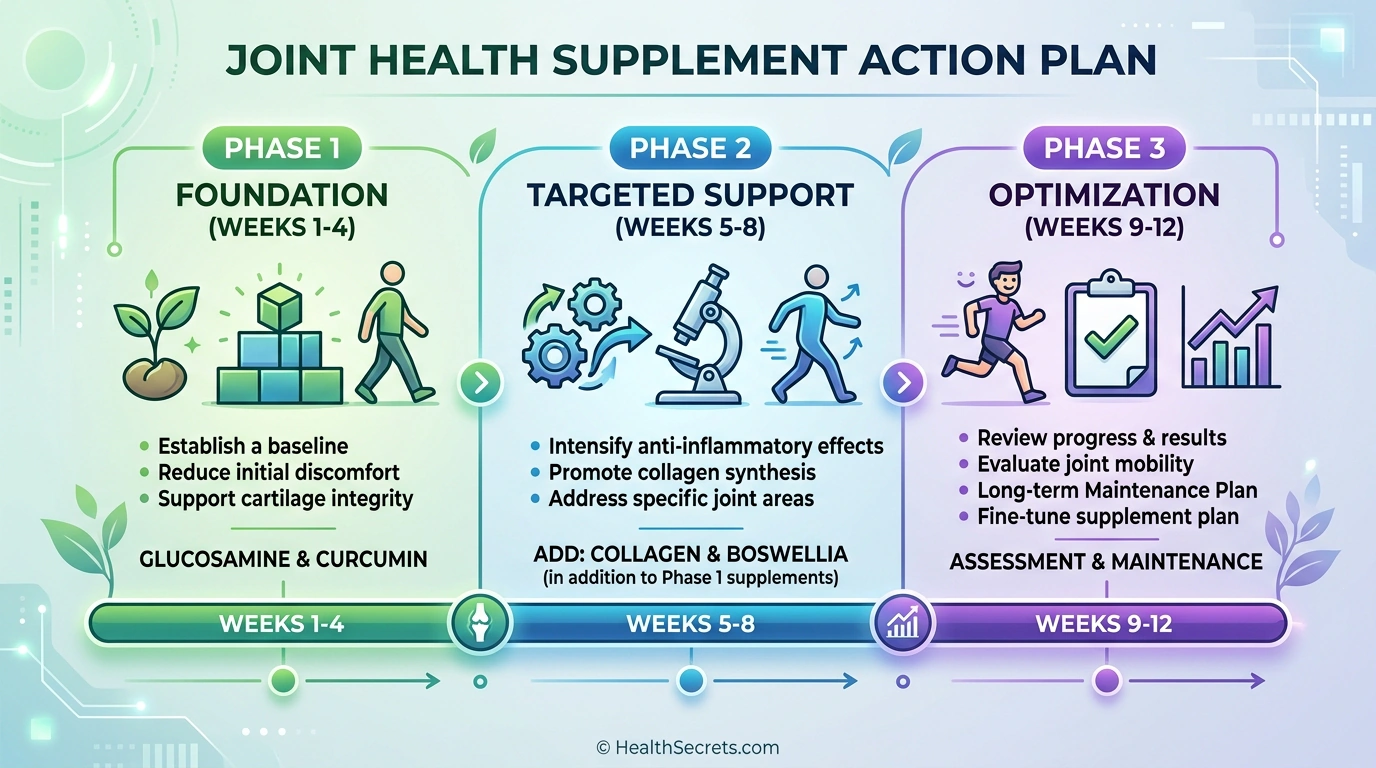
Start with a medical evaluation to identify the cause of your joint pain, then implement a phased supplement plan alongside lifestyle changes. Phase 1 focuses on foundation supplements with the strongest evidence (weeks 1–4), Phase 2 adds targeted support (weeks 5–8), and Phase 3 involves optimization and reassessment (weeks 9–12).
Phase 1: Foundation (Weeks 1–4)
- See a healthcare provider to evaluate joint pain and rule out conditions requiring specific treatment
- Start glucosamine sulfate (1,500mg) + chondroitin sulfate (1,200mg) daily with meals
- Add curcumin (500mg enhanced bioavailability form) with a fat-containing meal
- Begin anti-inflammatory dietary changes (increase omega-3 rich foods, reduce processed foods and added sugars)
- Start low-impact exercise (swimming, cycling, walking — 150 minutes per week)
Phase 2: Targeted Support (Weeks 5–8)
- Add collagen peptides (10g daily) or UC-II (40mg daily) based on your primary concern
- Consider boswellia (100–250mg) if inflammation remains a primary issue
- Increase omega-3 supplementation if dietary intake is insufficient (2–3g EPA+DHA)
- Incorporate strength training to support joint stability (2–3 sessions per week)
- Track pain levels, stiffness, and mobility using a daily journal or app
Phase 3: Optimization (Weeks 9–12)
- Evaluate which supplements are providing noticeable benefit
- Discontinue any supplements that haven't produced improvement after 8–12 weeks
- Consider adding MSM (1,500–3,000mg) for additional anti-inflammatory support
- Reassess with your healthcare provider — discuss progress and adjust plan
- Establish a long-term maintenance protocol with your most effective supplements