Calcium is by far the most talked-about mineral when it comes to bone health — and rightly so, since 99% of your body's calcium resides in your skeleton. But here's what most people miss: calcium supplementation alone has a surprisingly modest effect on fracture prevention. The real story of bone health is about an entire ecosystem of nutrients and lifestyle factors working together.
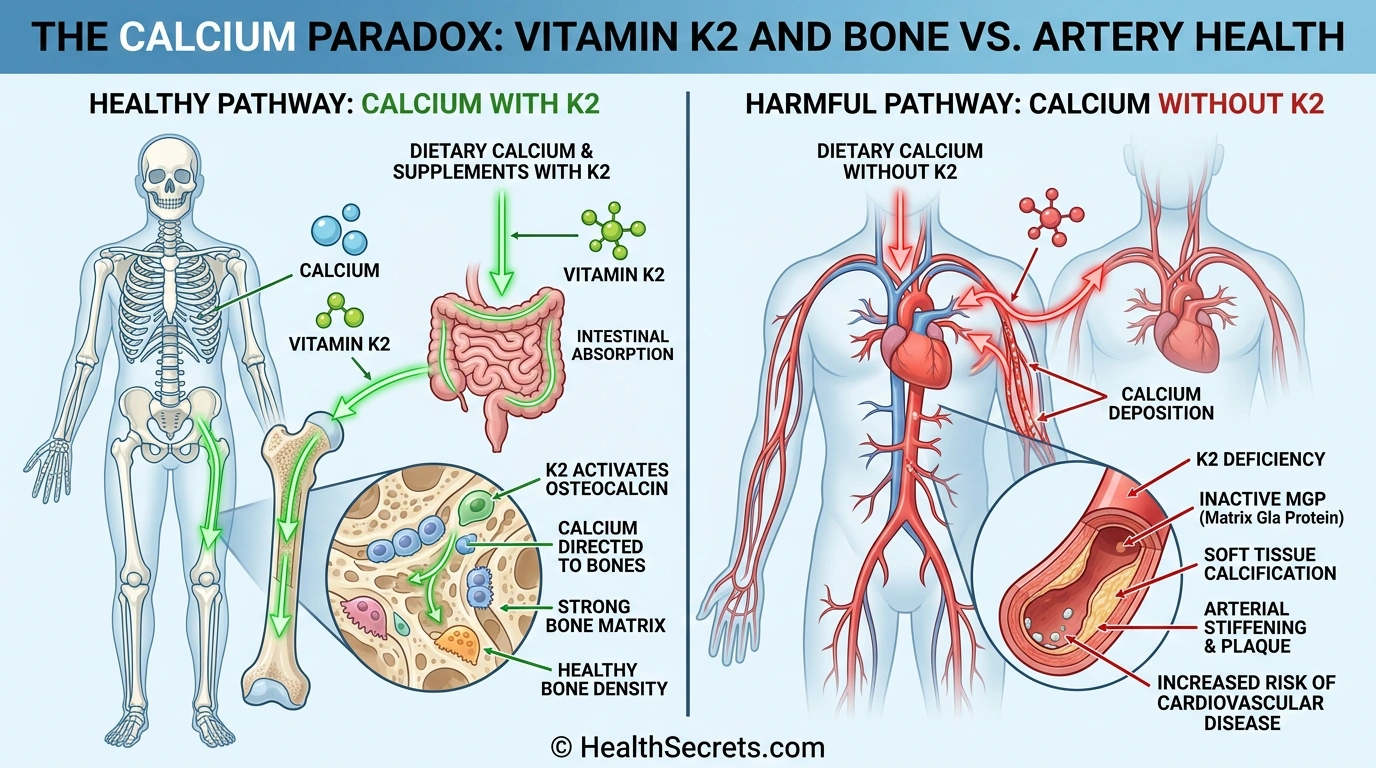
The calcium supplement landscape is also more complicated than picking up a bottle at the pharmacy. Different forms (citrate vs. carbonate) absorb differently, your body can only process about 500 mg at a time, timing matters, and there's an ongoing scientific debate about whether high-dose calcium supplements may carry cardiovascular risks. Meanwhile, critical cofactors like vitamin K2 — which directs calcium into bones and away from arteries — are overlooked by most supplement regimens.
This guide cuts through the confusion with evidence-based answers on calcium forms, dosing, cofactors, food sources, safety concerns, and the best products to support lifelong bone health.
What Is Calcium and Why Is It Critical for Bone Health?
Calcium is an essential mineral and the most abundant in the human body, with 1–2 kg stored primarily in bones and teeth as hydroxyapatite crystals that provide structural rigidity. The remaining 1% circulates in blood, muscles, and nerves where it performs critical functions including muscle contraction, nerve transmission, blood clotting, and cellular signaling.
Your skeleton functions as a calcium bank. When dietary intake is insufficient, your body withdraws calcium from bones to maintain blood calcium levels within a narrow range — regulated tightly by parathyroid hormone (PTH) and vitamin D. Chronic withdrawals without adequate deposits lead to progressive bone weakening: first osteopenia (low bone mass), then osteoporosis (porous, fragile bones) [1].
Key calcium facts:
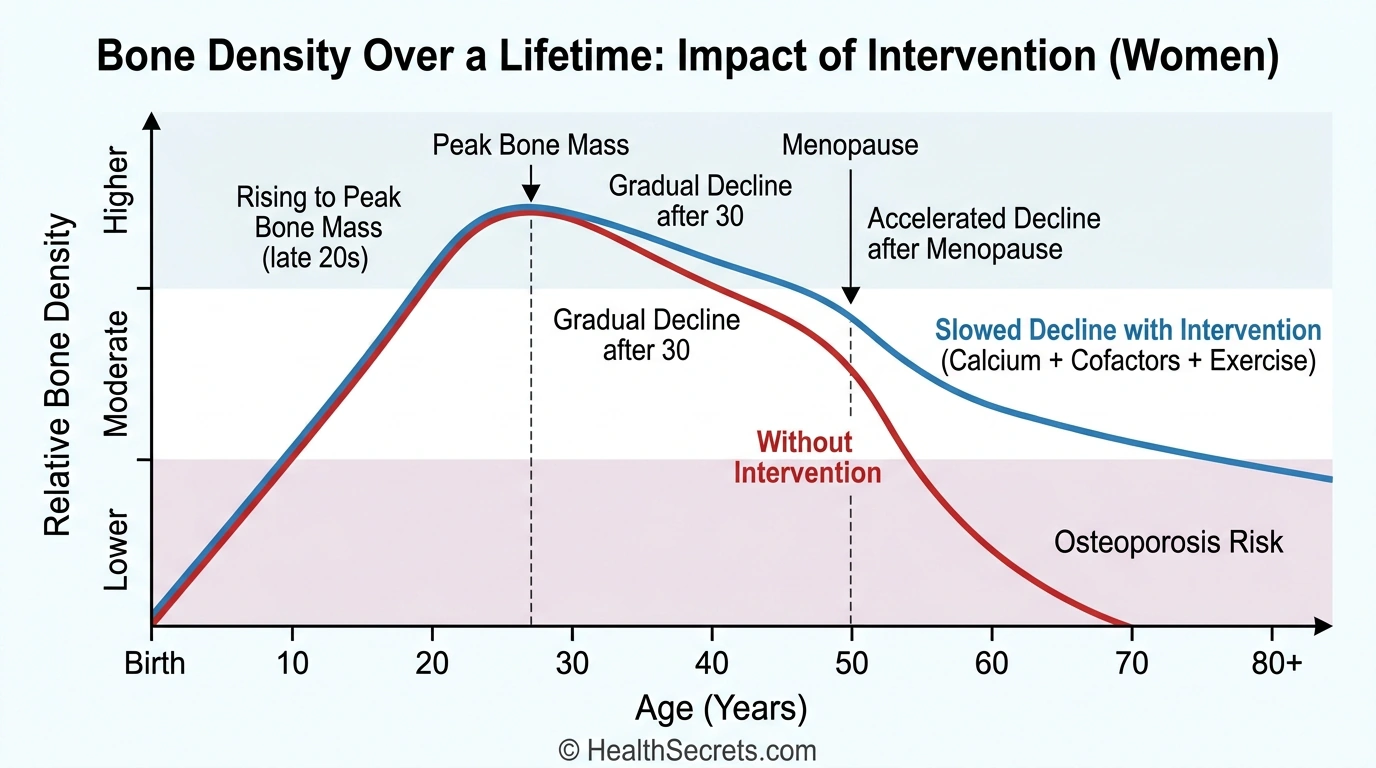
- Peak bone mass is reached in the late 20s — building strong bones early is critical
- After age 30, bone loss begins at 0.5–1% per year
- Postmenopausal women lose 2–3% per year for 5–10 years due to estrogen decline
- 50% of women and 25% of men over 50 will experience an osteoporosis-related fracture
- Hip fractures carry a 20% mortality rate within one year [2]
Calcium's roles extend well beyond bones. It triggers every muscle contraction (including heartbeat), enables nerve impulse transmission, activates blood clotting cascades, and serves as a second messenger in cellular signaling pathways that regulate everything from enzyme activity to hormone secretion.

Are You Unknowingly Inflaming Your Body?
Get the free Health Vitals & Nutrient Checklist — the daily guide that shows you which habits and supplements are silently triggering inflammation.
How Does Calcium Work to Build and Maintain Strong Bones?
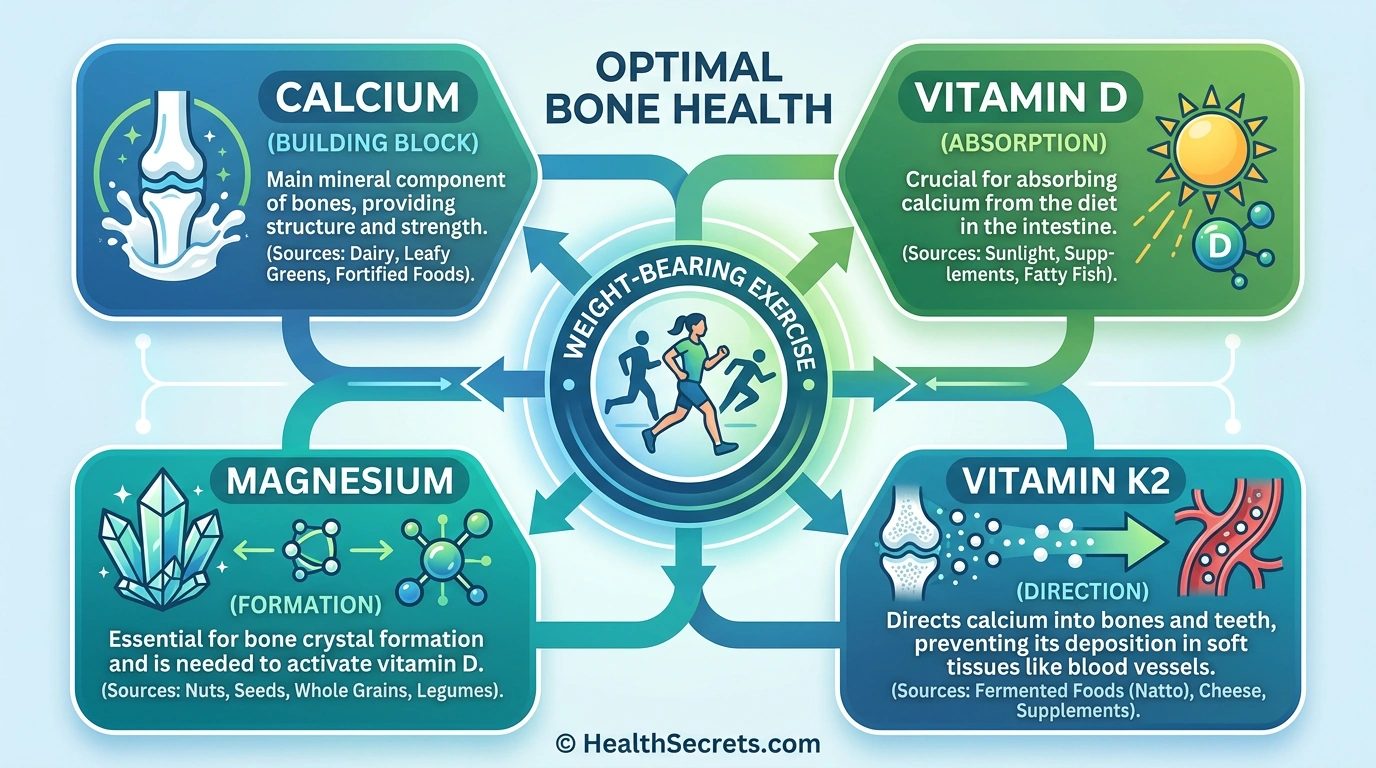
Calcium's bone-building mechanism involves a continuous remodeling cycle where osteoclasts break down old bone and osteoblasts deposit new bone matrix. Adequate calcium supply ensures osteoblasts have the raw material needed to maintain bone density. But calcium cannot work alone — it requires a team of cofactors to be properly absorbed, transported, and deposited.
Why Is Vitamin D Essential for Calcium Absorption?
Without adequate vitamin D, your body absorbs only 10–15% of dietary calcium. With sufficient vitamin D, absorption increases to 30–40% — a 2–3× improvement. Vitamin D stimulates the production of calcium-binding proteins in the intestinal wall that actively transport calcium into the bloodstream [3].
A 2026 systematic review and meta-analysis of randomized controlled trials confirmed that combined calcium and vitamin D supplementation significantly improved bone mineral density at the lumbar spine and hip in postmenopausal women with osteoporosis, outperforming calcium alone [4]. Always pair calcium with 1,000–2,000 IU of vitamin D3 daily.
How Does Vitamin K2 Direct Calcium to Your Bones Instead of Arteries?
Vitamin K2 (particularly the MK-7 form) activates two critical proteins: osteocalcin, which incorporates calcium into bone tissue, and matrix Gla protein (MGP), which prevents calcium from depositing in arterial walls. Without K2, supplemental calcium may accumulate in soft tissues rather than bones — a phenomenon called the "calcium paradox" [5].
A three-year randomized clinical trial of 244 postmenopausal women showed that daily MK-7 supplementation (180 μg) not only prevented arterial stiffening but actually improved vascular elasticity, while the placebo group experienced progressive arterial calcification [6]. Separate research confirmed MK-7 significantly decreased age-related bone mineral density decline in healthy postmenopausal women [7]. Take 100–200 mcg of vitamin K2 (MK-7) daily with calcium.
Why Is Magnesium Required for Bone Formation?
Magnesium activates vitamin D, regulates parathyroid hormone, and is directly incorporated into bone crystal structure — 60% of your body's magnesium resides in bones. Without adequate magnesium, vitamin D remains inactive and calcium metabolism is impaired. Yet roughly 50% of the population is magnesium-deficient [8]. See our magnesium complete guide for detailed supplementation guidance. Take 300–400 mg daily.
Why Is Weight-Bearing Exercise Non-Negotiable for Bone Health?
Bones respond to mechanical stress by becoming denser and stronger — a principle known as Wolff's Law. Calcium without exercise is significantly less effective for bone health. Weight-bearing activities (walking, jogging, resistance training, dancing) performed 30–60 minutes, 4–5 times weekly, provide the mechanical stimulus bones need to maintain and build density. Research consistently shows that exercise combined with adequate nutrition produces substantially better bone outcomes than nutrition alone [9].

Evidence-Based Supplement Organizer & Safety Log
Track your daily intake, verify third-party certifications, and prepare clear questions for your clinician.
How Well Is Calcium Absorbed and Which Form Should You Choose?
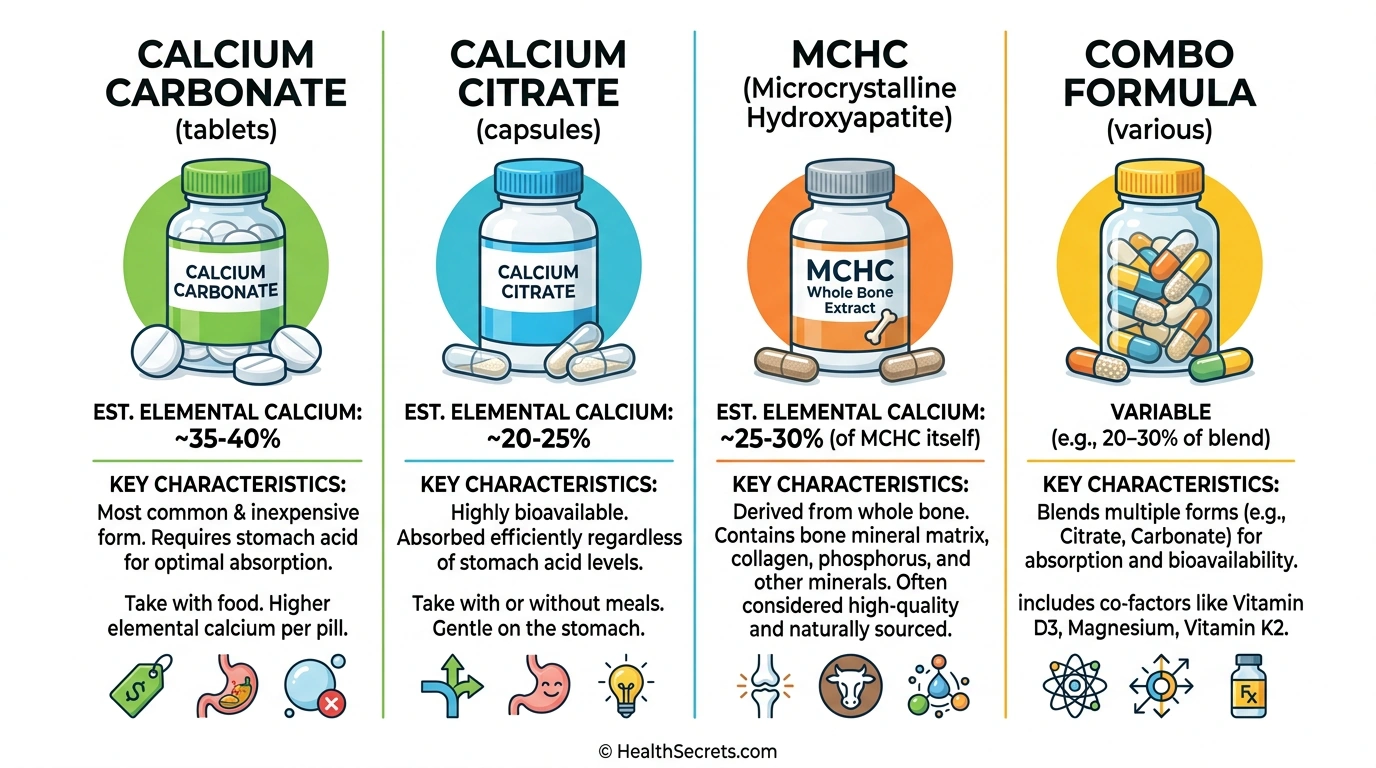
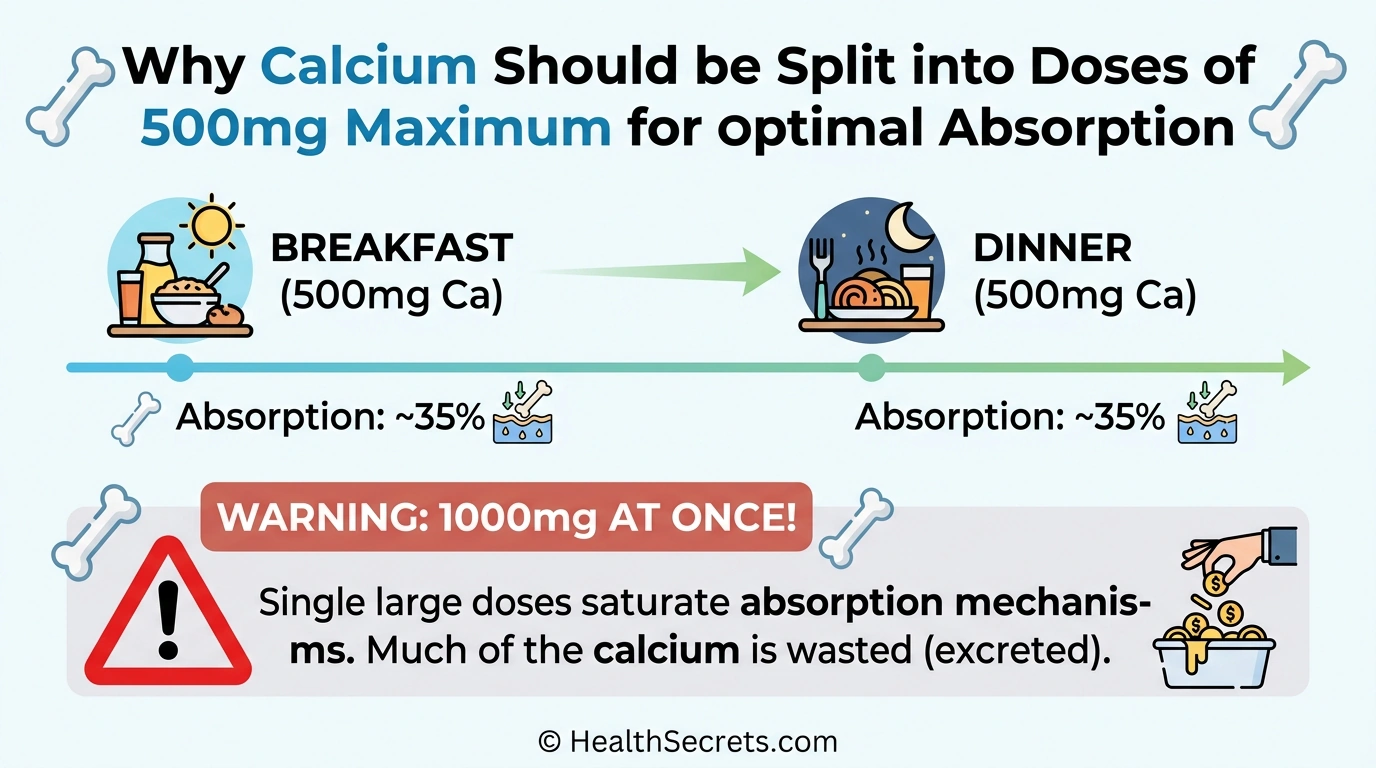
Calcium absorption varies dramatically by form, dose, stomach acidity, and what you eat alongside it. Your body can absorb a maximum of approximately 500 mg per dose — anything beyond that passes through largely unabsorbed. This single fact makes dosing strategy as important as total daily intake.
| Form | Elemental Ca % | Absorption | Needs Acid? | Best For |
|---|---|---|---|---|
| Calcium Carbonate | 40% | Good (with food) | Yes | Budget, take with meals |
| Calcium Citrate | 21% | Excellent | No | Elderly, PPI users (preferred) |
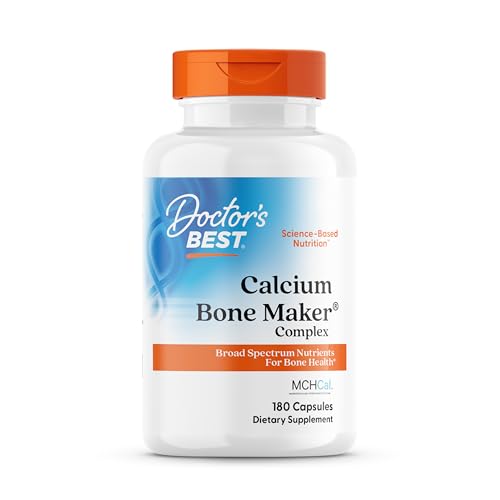
| MCHC | ~25% | Excellent | No | Comprehensive bone support |
| Calcium Lactate | 13% | Good | No | Sensitive stomachs |
| Calcium Gluconate | 9% | Good | No | Very sensitive (many pills needed) |
| A meta-analysis comparing calcium citrate and carbonate found that citrate was absorbed approximately 22–27% better than carbonate, both on an empty stomach and with meals [10]. A 2024 randomized crossover trial in bariatric surgery patients further confirmed that calcium citrate was significantly superior in bioavailability and calcium absorption compared to carbonate [11]. |
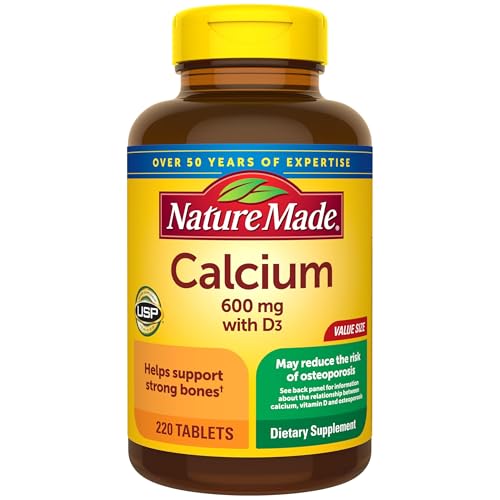
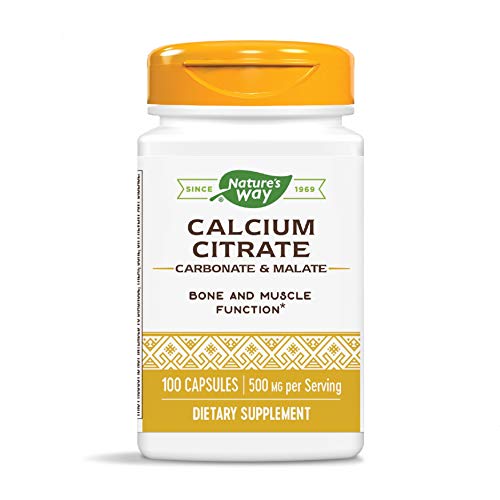
Our recommendation: Calcium citrate is the preferred form for most people. It absorbs well regardless of stomach acid levels, can be taken with or without food, and causes less constipation than carbonate. The only advantage of carbonate is higher elemental calcium per pill (fewer pills needed) and lower cost.
How Much Calcium Should You Take Daily?
The optimal calcium dose depends on your age, sex, dietary intake, and risk factors. The critical principle is food first, supplement the gap — calculate how much calcium you get from diet, then supplement only the difference to reach your daily target.
| Population | Total Daily Target | Typical Supplement Dose | Essential Cofactors |
|---|---|---|---|
| Adults 19–50 | 1,000 mg | 400–600 mg | D3, K2, Mg |
| Women 51+ | 1,200 mg | 500–800 mg | D3, K2, Mg |
| Men 51–70 | 1,000 mg | 400–600 mg | D3, K2, Mg |
| Men 71+ | 1,200 mg | 500–800 mg | D3, K2, Mg |
| Osteoporosis | 1,200–1,500 mg | 600–1,000 mg | D3, K2, Mg + medical supervision |
| Critical dosing rules: |
- Maximum 500 mg per dose — split larger amounts into 2–3 servings
- Carbonate: Always with meals (requires stomach acid)
- Citrate: Anytime (with or without food)
- Separate from iron and zinc by 2 hours (they compete for absorption)
- Separate from thyroid medication by 4 hours
- Separate from bisphosphonates by 2 hours
- Bedtime dose may help, as bone resorption is highest overnight
- Do not exceed 1,500 mg total daily without medical supervision [12]
Can You Get Enough Calcium from Food Alone?
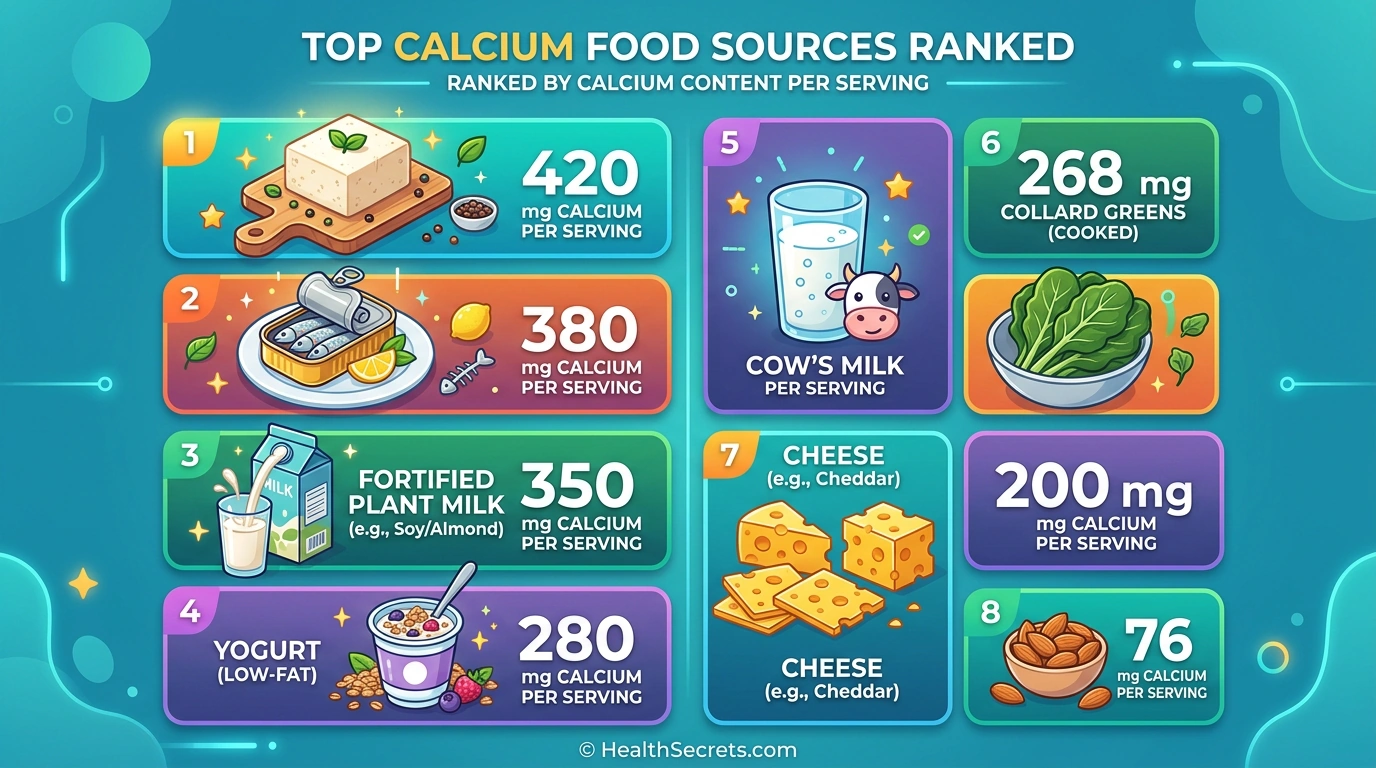
Yes — and food-sourced calcium is actually preferred over supplements. Dietary calcium is absorbed more gradually, comes packaged with synergistic nutrients, and has not been linked to the cardiovascular concerns associated with high-dose supplementation. Aim for 600–800 mg from food, then supplement only the remaining gap.
| Food | Serving | Calcium (mg) | % RDA |
|---|---|---|---|
| Yogurt (plain) | 1 cup | 300–450 | 30–45% |
| Sardines (with bones) | 3 oz | 325 | 33% |
| Milk | 1 cup | 300 | 30% |
| Fortified plant milk | 1 cup | 300 | 30% |
| Collard greens (cooked) | 1 cup | 268 | 27% |
| Important notes on food sources: |
- Spinach is high in calcium but also high in oxalates, which bind calcium and prevent absorption — it's a poor practical source
- Dairy provides the most bioavailable calcium plus vitamin D, protein, and lactose (which enhances absorption)
- Fortified foods (plant milks, orange juice, cereals) can match dairy calcium levels — shake well before pouring, as calcium settles
- Calcium-set tofu provides 250–750 mg per half cup (check labels)
Research consistently shows that dietary calcium is associated with better bone health outcomes and lower cardiovascular risk than supplemental calcium [13].
Is Calcium Supplementation Safe and What Are the Risks?
Calcium supplements are generally safe at recommended doses, but there are real concerns at high intakes that deserve attention — particularly regarding cardiovascular health, kidney stones, and drug interactions.
Some studies have linked high-dose calcium supplements (≥1,000 mg/day without K2) to modestly increased cardiovascular risk, potentially because supplemental calcium causes rapid blood calcium spikes that may promote arterial calcification. However, a 2023 meta-analysis of randomized trials found that calcium supplements were not associated with significant risk for coronary heart disease, stroke, or all-cause mortality [14]. The UK Biobank cohort study (over 500,000 participants) similarly found no association between calcium/vitamin D supplementation and ischemic cardiac events [15].
Current consensus:
- Dietary calcium: Safe, no cardiovascular concerns
- Calcium supplements with D3 and K2: Likely safe
- Calcium supplements alone at high doses: Use caution, stay under 1,000–1,200 mg supplemental
- Always include vitamin K2 to direct calcium to bones, not arteries
Kidney stones: Dietary calcium actually reduces stone risk by binding oxalates in the gut. Supplemental calcium taken between meals may increase risk. Always take calcium supplements with food [16].
Drug interactions:
- Bisphosphonates (alendronate, risedronate) — separate by 2+ hours
- Thyroid medications (levothyroxine) — separate by 4 hours
- Antibiotics (tetracyclines, fluoroquinolones) — separate by 2–3 hours
- Iron and zinc — separate by 2 hours
- Thiazide diuretics — may raise blood calcium; monitor levels
Common side effects: Constipation (especially carbonate), gas, bloating. Switch to citrate and increase water/fiber intake if these occur.
What Can Calcium Supplements Actually Do for Your Bones?
Calcium supplementation provides a necessary foundation for bone health, but expectations should be realistic. A meta-analysis of 15 trials found that calcium supplementation alone produced a positive BMD change of approximately 1.6–2% at various skeletal sites, with a trend toward reduced vertebral fractures but unclear effects on non-vertebral fractures [17]. The real benefits emerge when calcium is combined with its essential cofactors.
What calcium reliably does:
- Slows age-related bone mineral density loss
- Provides raw material for bone remodeling
- Supports muscle contraction, nerve function, and blood clotting
- Combined with D3, K2, and exercise: significantly reduces fracture risk
What calcium alone won't do:
- Prevent fractures on its own (modest effect without cofactors)
- Reverse established osteoporosis (requires medical treatment)
- Replace the need for weight-bearing exercise
- Build bone mass after peak bone mass is reached (it maintains, not builds)
Timeline:
- Bone density changes: Measurable at 6–12 months on DEXA scan
- Deficiency correction: Muscle cramps and symptoms may improve in 1–4 weeks
- Long-term protection: Requires consistent, lifelong daily intake
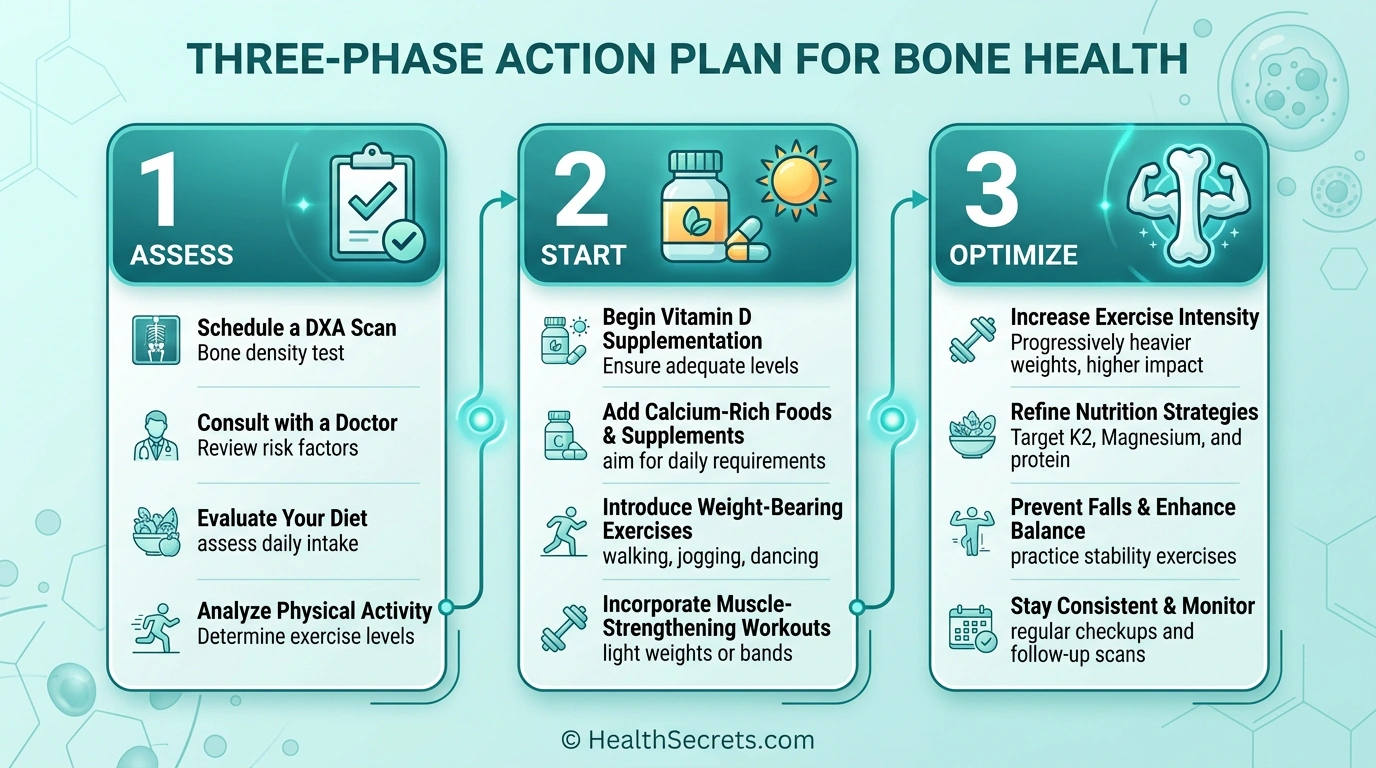
Action Plan
What Should You Do First to Protect Your Bone Health?
Follow the sequence below, work through each phase in order, and use the checklist as your practical implementation guide.
Bone health is a lifelong investment. This phased action plan covers assessment, supplementation setup, and long-term optimization.
Phase 1 — Assess (Days 1–7):
- Calculate your daily dietary calcium intake (dairy, leafy greens, fortified foods)
- Identify risk factors: postmenopausal, family history, smoking, sedentary, medications (PPIs, corticosteroids)
- Request a DEXA scan if you are a woman over 65, a man over 70, or have risk factors
- Check vitamin D levels (blood test: 25-hydroxyvitamin D)
Phase 2 — Start (Weeks 2–4):
- Increase dietary calcium to 600–800 mg through food sources
- Supplement the gap: choose calcium citrate (preferred) or carbonate (with meals)
- Add essential cofactors: vitamin D3 (1,000–2,000 IU), K2 MK-7 (100–200 mcg), magnesium (300–400 mg)
- Split calcium doses (max 500 mg per dose)
- Begin weight-bearing exercise (walking, resistance training, 30–60 min, 4–5× weekly)
Phase 3 — Optimize (Months 2+):
- Total target: 1,000–1,200 mg daily (diet + supplement)
- Ensure adequate protein (0.8–1.2 g/kg), consider collagen for bone matrix
- Separate calcium from iron, zinc, and thyroid medications by 2–4 hours
- Avoid smoking and limit alcohol to <2 drinks/day
- Re-test bone density every 2 years if osteopenia detected
- Maintain consistent intake — bone health is lifelong