Here's something that caught me off guard when I first started digging into this topic—around 80% of visible facial aging comes from sun exposure, not just the passage of time. Eighty percent. That means most of the wrinkles, age spots, and texture changes people associate with "getting older" are actually preventable. [16] [18]
And yet... most people don't start thinking about anti-aging skin care until the damage is already visible. Sound familiar?
The good news? Whether you're 25 and want to get ahead of things, or 55 and noticing changes you'd like to address—there's solid science behind what actually works [15]. We're talking retinoids that can reduce wrinkles by 40–60%, vitamin C serums that boost collagen synthesis by up to 30%, and daily sunscreen that prevents the vast majority of photoaging [6] [13].
But here's what a lot of people miss: anti-aging skin care isn't just about what you put on your skin. What you eat, how you sleep, whether you manage stress—these inside-out factors matter just as much as any serum or cream [14]. Maybe more.
In this guide, you'll learn exactly how to build an evidence-based anti-aging routine, step by step. No fluff, no miracle claims—just what the research actually supports.
If you're exploring longevity strategies beyond skincare, check out our complete longevity and anti-aging guide for the bigger picture. For supplement-based approaches, our evidence-based supplements guide covers what actually works.
What Do You Need to Know Before Starting Anti-Aging Skin Care?
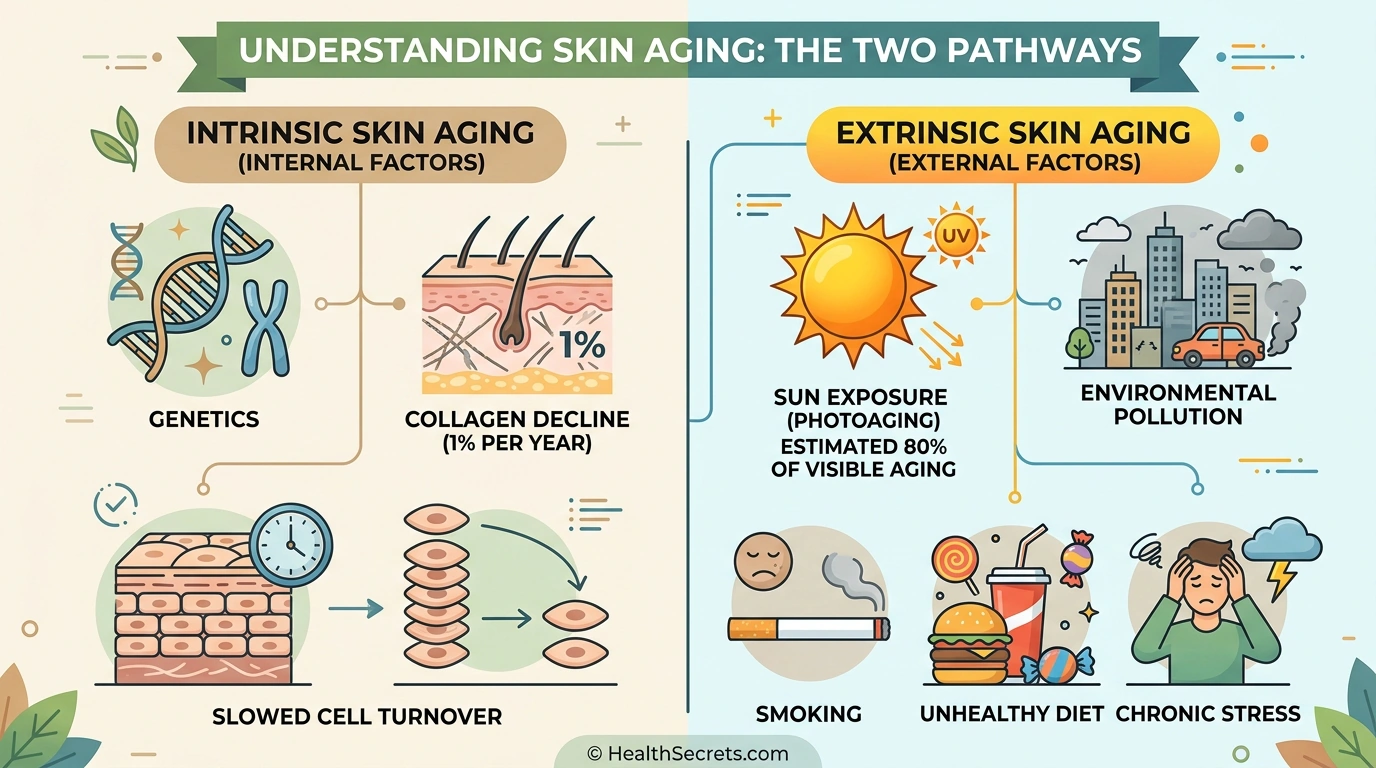
Before you invest in products or build a routine, understanding why skin ages helps you target the right strategies. Skin aging happens through two pathways—and one of them is largely within your control.
Intrinsic aging is the natural, genetic component. After age 30, your skin loses roughly 1% of its collagen each year. Cell turnover slows from about 28 days in your twenties to 40–60 days by your fifties. Estrogen decline during menopause accelerates collagen loss by up to 30% in the first five years. You can't stop intrinsic aging entirely, but you can absolutely slow it down.
Extrinsic aging—that's the part you can control. UV radiation from the sun accounts for approximately 80% of visible facial aging, including deep wrinkles, age spots, rough texture, and broken capillaries. A landmark Australian randomized controlled trial found that daily sunscreen use resulted in 24% less skin aging over 4.5 years compared to discretionary use. Pollution, smoking, poor diet, chronic stress, and inadequate sleep also accelerate extrinsic aging significantly.
The bottom line? Your anti-aging strategy needs to address both pathways: protect against external damage (sunscreen, antioxidants) while supporting your skin's internal repair systems (retinoids, collagen, nutrition, sleep).
Who this guide is for: Anyone looking to prevent or reduce signs of skin aging using evidence-based methods. Whether you're building your first routine or refining an existing one, the steps below are organized from most important to supplementary.
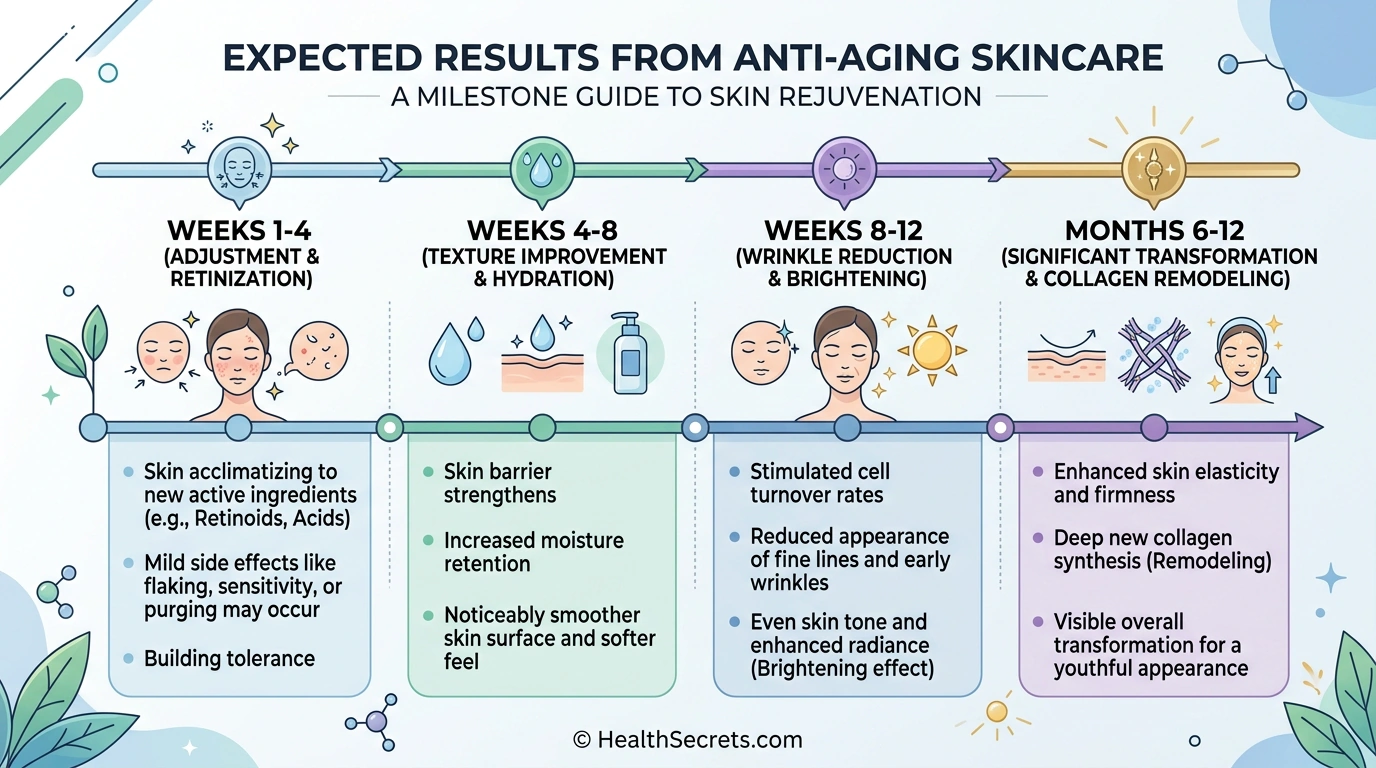
Expected timeline: Visible improvement in 8–12 weeks with consistent use. Significant transformation over 6–12 months.
How Do You Protect Your Skin from Sun Damage Every Day?
Daily sunscreen is the single most impactful anti-aging step you can take. Full stop. No retinoid, serum, or treatment can overcome ongoing, unprotected sun exposure. Research published in the Annals of Internal Medicine showed that daily broad-spectrum sunscreen use prevented detectable increases in skin aging over 4.5 years—participants showed 24% less aging compared to those who used sunscreen only occasionally [1] [2].
What type of sunscreen should you choose?
Mineral (physical) sunscreens use zinc oxide or titanium dioxide to reflect UV rays. They're gentle, effective immediately upon application, and suitable for sensitive skin. The downside? Some leave a white cast, especially on darker skin tones.
Chemical sunscreens (avobenzone, octinoxate, homosalate) absorb UV radiation and convert it to heat. They're lightweight and cosmetically elegant, but require 15–20 minutes to activate and may irritate sensitive skin.
Either type works—the best sunscreen is the one you'll actually wear daily.
How to apply sunscreen correctly
- Use SPF 30–50, broad spectrum (UVA + UVB)
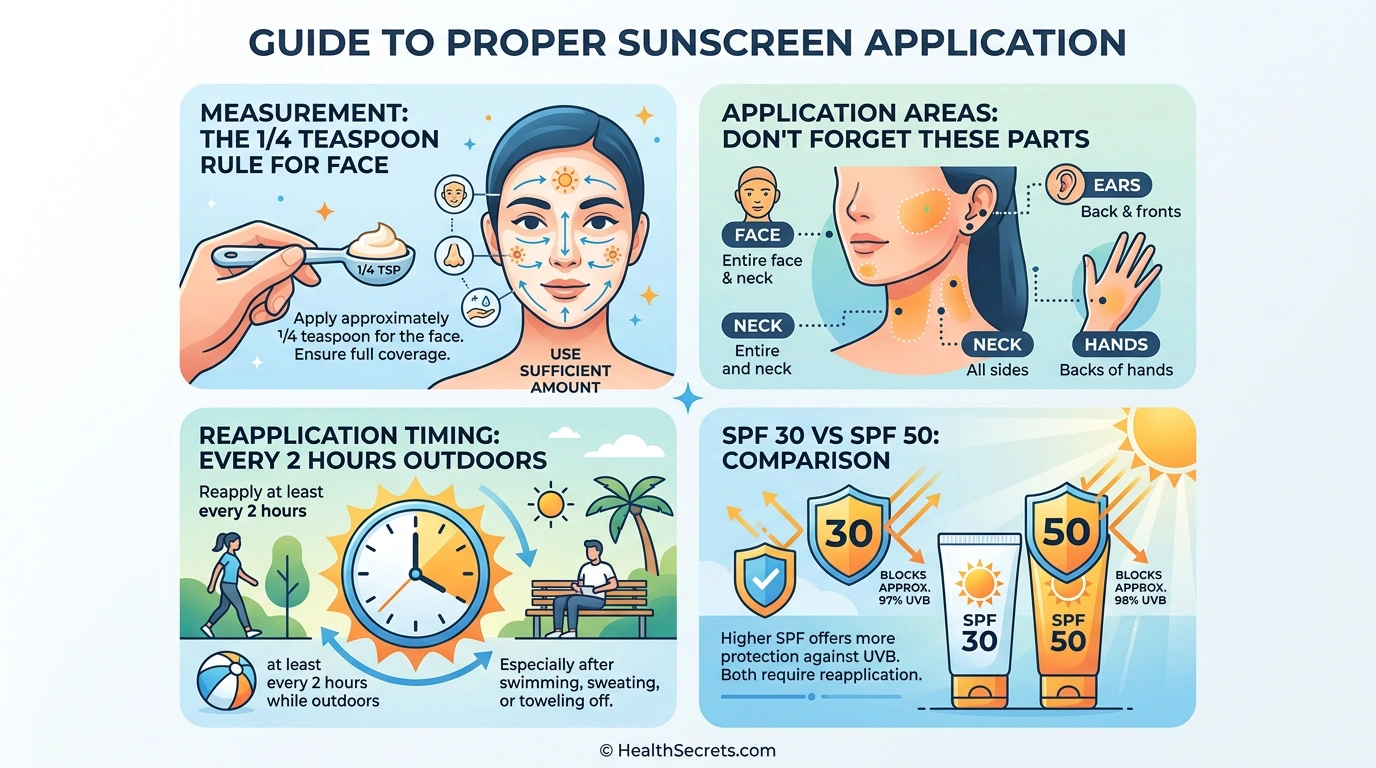
- Apply 1/4 teaspoon for your face and neck—most people use far too little
- Apply as the last step in your morning skincare routine, before makeup
- Reapply every 2 hours when outdoors, or after swimming or sweating
- Wear sunscreen every day, even on cloudy days—UVA rays penetrate clouds and windows
Beyond sunscreen: seek shade during peak hours (10 AM–4 PM), wear wide-brimmed hats and UV-protective clothing, and use sunglasses to protect the delicate eye area.

Healthy Aging Annual Planning Binder
Bring your longevity priorities, preventive screening schedules, and strength routines into one organized quarterly system.
How Do You Start Using Retinoids for Wrinkle Reduction?
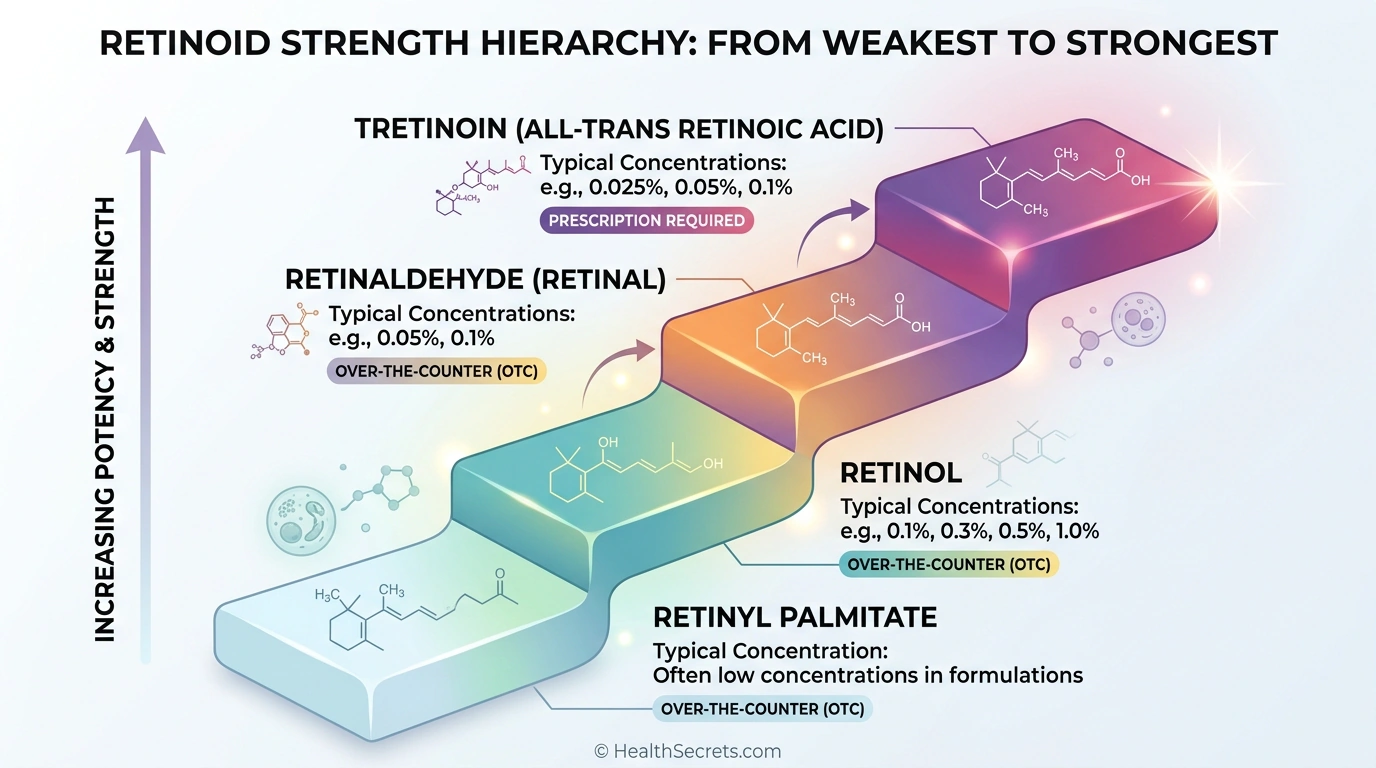
Retinoids are the most researched and proven topical anti-aging ingredient available. A systematic review of randomized controlled trials confirmed that tretinoin (0.025–0.1%) significantly improved wrinkling, hyperpigmentation, and overall skin texture after 12–24 weeks of use [10]. Retinoids work by increasing collagen production, speeding cell turnover, and inhibiting the enzymes (MMPs) that break down collagen.
Which retinoid should you use?
- Tretinoin (Retin-A): Prescription, strongest option (0.025–0.1%). Gold standard with the most clinical evidence
- Retinaldehyde: Over-the-counter, converts to retinoic acid in one step—stronger than retinol but gentler than tretinoin
- Retinol: Over-the-counter (0.25–1%), converts to retinoic acid in two steps. Effective but requires higher concentration and longer timeframe
- Retinyl palmitate: Weakest option—converts in three steps, minimal evidence for anti-aging
How to start retinoids safely
- Begin with a low concentration: 0.025% tretinoin or 0.25–0.5% retinol
- Start 2–3 nights per week only—not nightly
- Apply a pea-sized amount to your entire face after cleansing in the evening
- Buffer if needed: Apply moisturizer first, then retinoid on top to reduce irritation
- Increase gradually over 4–8 weeks: move to every other night, then nightly if tolerated
- Expect retinization: Mild redness, peeling, and dryness for the first 2–4 weeks is normal—your skin is adapting
- Always pair with morning sunscreen—retinoids increase sun sensitivity
Important: Retinoids are contraindicated during pregnancy and breastfeeding. Evening use only—retinoids degrade in sunlight.
How Do You Add Vitamin C to Your Anti-Aging Routine?
Topical vitamin C is your morning antioxidant defense. L-ascorbic acid (the most effective form) boosts collagen synthesis, neutralizes free radicals from UV and pollution exposure, and brightens hyperpigmentation. Research shows that 10–20% L-ascorbic acid formulations increase collagen production and reduce visible signs of photoaging.
A comprehensive review in the Journal of Clinical and Aesthetic Dermatology notes that vitamin C provides measurable photoprotection when used underneath sunscreen—the combination is more effective than either alone.
What to look for in a vitamin C serum
- L-ascorbic acid at 10–20% concentration (the gold standard form)
- pH below 3.5 for proper skin penetration
- Vitamin E + ferulic acid in the formula—these stabilize vitamin C and create synergistic antioxidant protection
- Opaque, airtight packaging—vitamin C oxidizes when exposed to light and air (if it's turned dark brown or orange, it's gone bad)
How to use vitamin C
- Morning routine: After cleansing, before moisturizer and sunscreen
- 3–5 drops for face and neck
- Wait 1–2 minutes before applying the next product
- Store in a cool, dark place (refrigerator extends shelf life)
- Some tingling is normal due to the acidic pH—reduce concentration if irritation occurs
How Do You Support Collagen Production from the Inside Out?
Topical treatments work on the surface, but collagen support from within can complement your routine. A systematic review and meta-analysis published in 2023 found that oral collagen peptides (2.5–10g daily) improved skin elasticity, hydration, and wrinkle depth after 8–12 weeks—though the authors noted that study quality varied and industry-funded studies showed stronger effects than independent ones.
Oral collagen peptides
- Dose: 5–10g hydrolyzed collagen peptides daily (most studied range)
- Types: Marine collagen (type I—predominant in skin), bovine collagen (types I and III)
- How: Mix powder into coffee, smoothies, or water
- Timeline: 8–12 weeks minimum for noticeable results
- Keep perspective: Promising but not definitive—more high-quality independent research is needed
Collagen-supporting nutrients
- Vitamin C (oral): Essential cofactor for collagen synthesis—500–1,000mg daily
- Zinc: Supports collagen production and wound healing (oysters, pumpkin seeds, red meat)
- Copper: Helps cross-link collagen fibers (shellfish, nuts, seeds)
- Protein: Provides amino acid building blocks—glycine, proline, lysine
- Omega-3 fatty acids: Support skin barrier and reduce inflammation (fatty fish 2–3x/week)
Anti-aging nutrition basics
- Eat colorful fruits and vegetables daily (antioxidants protect against free radical damage)
- Include healthy fats (olive oil, avocados, nuts, fatty fish)
- Minimize sugar and processed foods—advanced glycation end products (AGEs) damage collagen
- Stay well-hydrated (8–10 cups water daily supports skin moisture from within)
How Do You Build a Complete Morning and Evening Routine?
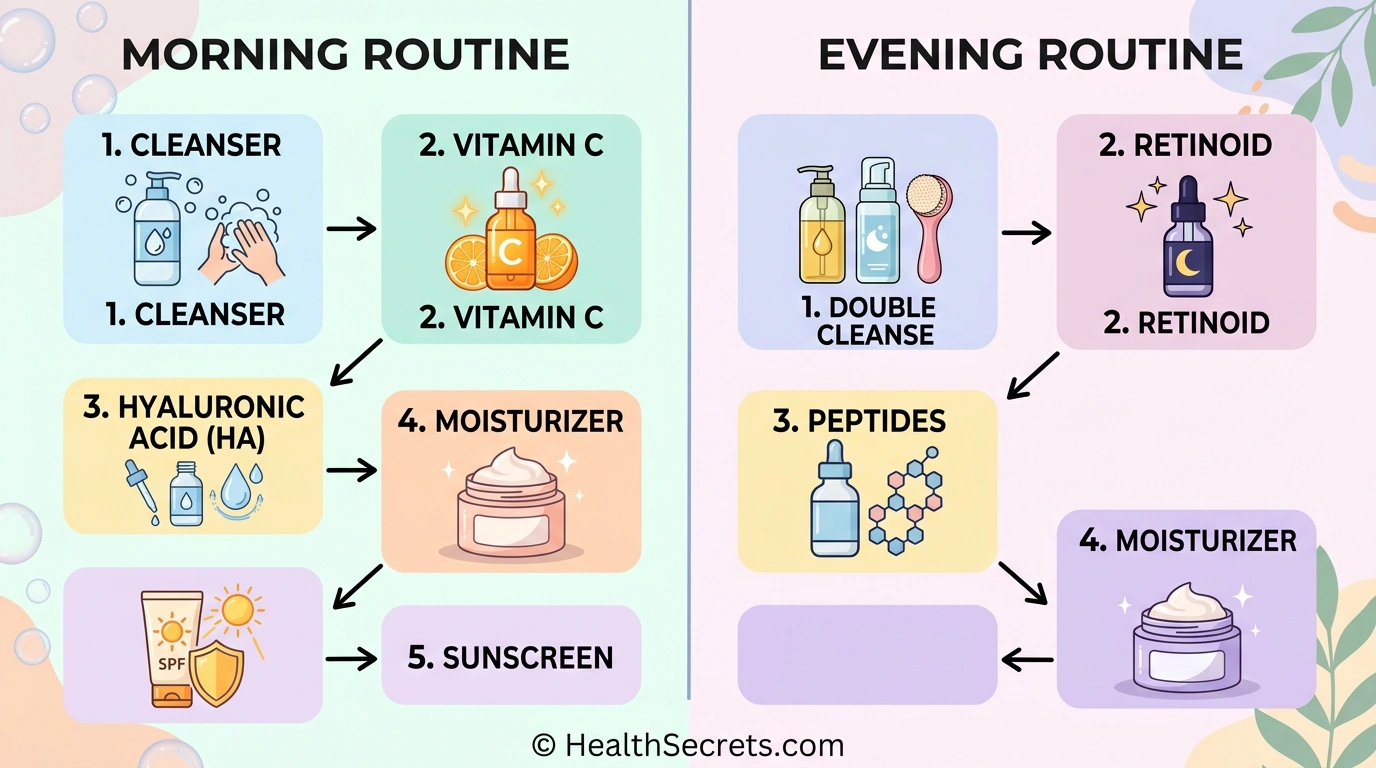
Once you have your core products, layering them correctly maximizes their effectiveness. The general rule: apply thinnest to thickest, with active ingredients going on clean skin first.

Morning routine
- Gentle cleanser (cream or gel, pH-balanced)
- Vitamin C serum (3–5 drops, wait 1–2 minutes)
- Hyaluronic acid (optional—apply to damp skin for hydration)
- Moisturizer (lightweight, with ceramides or niacinamide)
- Sunscreen SPF 30–50 (1/4 teaspoon, broad spectrum—non-negotiable)
Evening routine
- Double cleanse (oil cleanser to remove sunscreen/makeup, then water-based cleanser)
- Retinoid (pea-sized amount, 2–7 nights per week based on tolerance)
- Peptide serum (optional—on nights without retinoid, or after retinoid)
- Moisturizer (richer than morning—cream or oil-based)
- Eye cream (optional—caffeine or peptides for under-eye area)
Weekly additions
- Chemical exfoliant (AHA): 1–2 times per week on non-retinoid nights. Glycolic acid (5–10%) or lactic acid improves texture and tone. Do not use on the same night as retinoids
- Hydrating mask: 1–2 times per week for extra moisture
The most important principle: Consistency beats complexity. A simple three-product routine (cleanser, retinoid, sunscreen) done daily outperforms a ten-step routine done sporadically. Start with the basics and add products gradually over weeks.
How Do Lifestyle Factors Affect Skin Aging?
What happens off your bathroom counter matters enormously. These lifestyle factors directly impact your skin's aging trajectory.
Sleep (7–9 hours nightly)
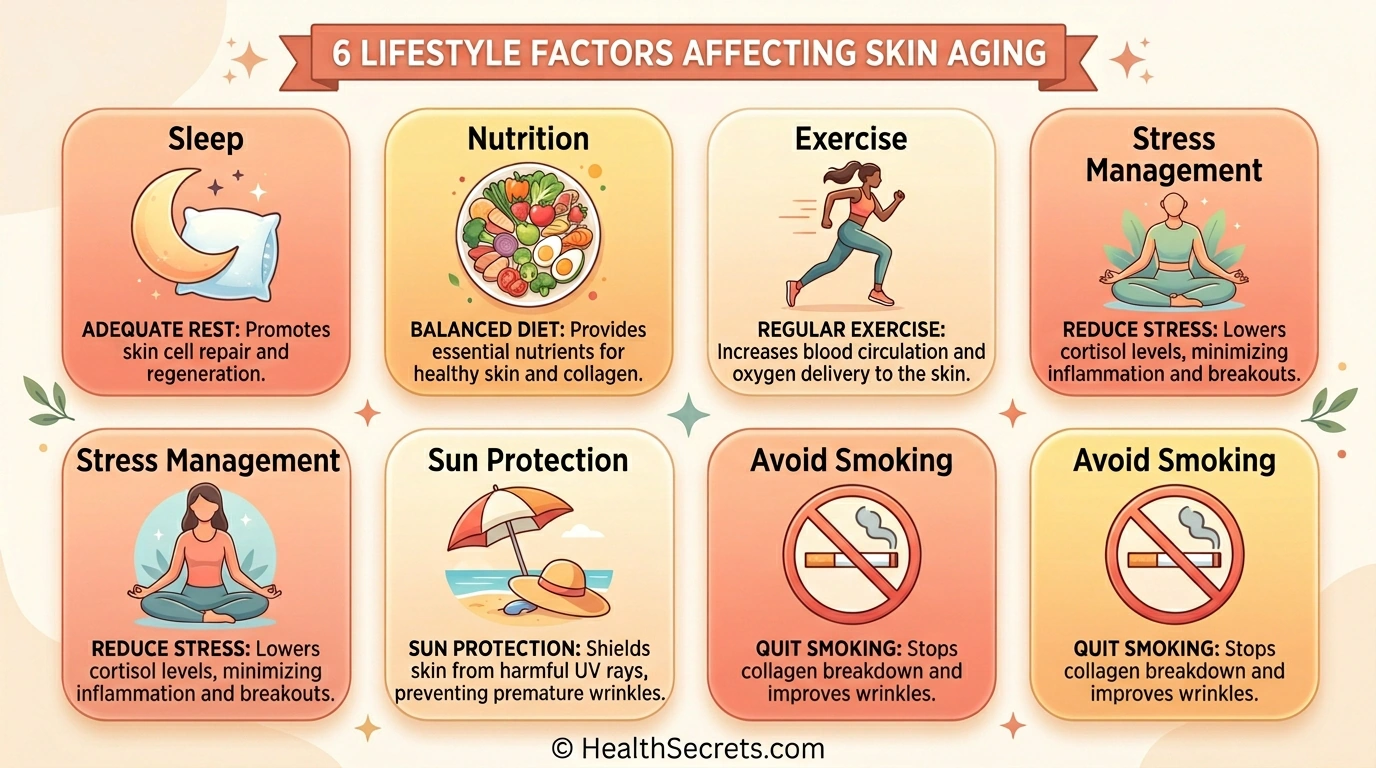
Growth hormone—critical for skin repair and collagen synthesis—is released during deep sleep. Research has linked poor sleep quality with increased signs of aging and slower skin barrier recovery. A silk pillowcase and back sleeping position can also reduce mechanical wrinkle formation.
Stress management
Chronic stress elevates cortisol, which actively breaks down collagen and impairs skin repair. Even 10–20 minutes daily of meditation, deep breathing, yoga, or time in nature can meaningfully lower cortisol levels.
Exercise (150 minutes/week)
Regular exercise increases blood flow, delivering oxygen and nutrients to skin cells [5] [9]. Research suggests that exercise stimulates fibroblast activity and may directly support collagen production. Aim for 150 minutes of moderate activity plus 2–3 resistance training sessions weekly.
Avoid smoking and excess alcohol
Smoking accelerates skin aging by 10–20 years—it reduces blood flow, breaks down collagen via MMP activation, and generates massive free radical damage. Alcohol dehydrates skin, increases inflammation, and disrupts sleep quality. If you smoke, quitting is the single best thing you can do for your skin after sunscreen.

The Preventive Screening Timeline
USPSTF screening ages and intervals for average-risk adults in one age-ordered table, the questions that move you out of average risk, and a personal due-date tracker.
What Are the Most Common Anti-Aging Skincare Mistakes to Avoid?
Even well-intentioned routines can go wrong. These are the mistakes that dermatologists see most often—and they're all fixable.
- Starting retinoids too aggressively. Jumping straight to nightly use or high concentrations causes unnecessary irritation, peeling, and often leads people to quit entirely. Start low, go slow.
- Skipping sunscreen on cloudy days or indoors. UVA rays penetrate clouds and glass. If daylight reaches your face, you need protection.
- Using too many active ingredients at once. Layering retinoids, AHAs, vitamin C, and niacinamide simultaneously can compromise your skin barrier [4] [12]. Introduce one new active every 2–4 weeks.
- Not applying enough sunscreen. Most people use 25–50% of the recommended amount, dramatically reducing effectiveness. A full 1/4 teaspoon for your face—measure it out once to see what that looks like.
- Expecting overnight results. Skin cell turnover takes 4–6 weeks. Collagen remodeling takes months. Give any product a minimum 8–12 week trial before judging effectiveness.
- Neglecting the neck and hands. These areas age just as quickly as the face but are often forgotten. Extend your routine to your neck, chest, and the backs of your hands.
- Ignoring the inside-out factors. No topical product can fully compensate for chronic sleep deprivation, poor nutrition, or unmanaged stress.
Is Anti-Aging Skincare Safe? When Should You See a Dermatologist?
Most over-the-counter anti-aging products are safe for general use, but there are important considerations. Retinoids are the most likely to cause irritation—redness, peeling, and dryness during the retinization period are normal and usually resolve within 2–4 weeks. If irritation persists or worsens, reduce frequency or concentration.
See a dermatologist if you experience:
- Persistent redness, burning, or rash that doesn't improve with reduced use
- Suspicious moles or skin lesions (annual skin cancer screenings are recommended for high-risk individuals)
- Severe acne, rosacea, or eczema that isn't responding to over-the-counter treatment
- You want prescription-strength tretinoin for faster, more dramatic results
Professional treatments like chemical peels, microneedling, and laser resurfacing can complement your at-home routine but should only be performed by qualified professionals.
Pregnancy and breastfeeding: Avoid all retinoids (topical and oral). Vitamin C, hyaluronic acid, and mineral sunscreen are generally considered safe—but always confirm with your healthcare provider.
Action Plan
What Should You Do First to Start Anti-Aging Skin Care?
Follow the sequence below, work through each phase in order, and use the checklist as your practical implementation guide.
The most effective approach is to build your routine gradually over 8–12 weeks, starting with the highest-impact steps first. Here's your phased action plan.
Phase 1 — Foundation (Weeks 1–2):
- Start using SPF 30–50 broad-spectrum sunscreen every morning without exception
- Establish gentle cleansing morning and evening
- Add a basic moisturizer (with ceramides or niacinamide)
- Take baseline photos (front, both sides) to track progress
Phase 2 — Active Ingredients (Weeks 3–6):
- Introduce vitamin C serum in the morning (10–20% L-ascorbic acid)
- Start retinoid in the evening (0.025% tretinoin or 0.25% retinol, 2–3x/week)
- Add hyaluronic acid on damp skin if desired
Phase 3 — Optimization (Weeks 7–12):
- Gradually increase retinoid frequency to every other night, then nightly if tolerated
- Consider adding oral collagen peptides (5–10g daily)
- Add AHA exfoliation 1–2x/week on non-retinoid nights
- Optimize sleep (7–9 hours), nutrition (antioxidant-rich foods), and stress management
Phase 4 — Maintenance (Month 3+):
- Take progress photos and compare to baseline
- Adjust products based on skin response
- Consider adding peptides or niacinamide serum
- Continue daily sunscreen and nightly retinoid as the non-negotiable core