Here's something most people don't realize about SAMe depression treatment: your body already makes this compound [4]. Every single cell produces S-adenosyl methionine from the amino acid methionine and ATP. It's not some exotic herb from a remote mountain — it's a molecule you've been synthesizing since before you were born. [5]
So why would you need to supplement something your body already produces?
Because production drops. Age chips away at it. B vitamin deficiencies sabotage the manufacturing process. Depression itself tanks SAMe levels — creating a vicious cycle where low SAMe worsens mood, and worsened mood further depletes SAMe. [6] [10]
The clinical evidence here is genuinely compelling. A 2024 systematic review and meta-analysis of 23 randomized controlled trials (N = 2,183) assessed SAMe's efficacy and acceptability for treating depression, finding that SAMe monotherapy may be effective and well-accepted [1] [8]. Clinical trials have specifically examined SAMe's safety and effectiveness in major depression, and research confirms comparable efficacy to prescription antidepressants like imipramine and escitalopram — with fewer side effects [2].
But SAMe comes with two catches that stop many people cold. First, it's expensive — $30 to $60+ per month at therapeutic doses. Second, there's an absolute contraindication: if you have bipolar disorder, SAMe can trigger manic episodes. Not "might" — can. [11] [12]
If you're exploring natural approaches to mood support, you may also want to read our Mental Wellness Guide for a broader perspective, or our guide on 5-HTP for mood and serotonin support. [14] [15]
What Is SAMe and Why Does It Matter for Depression?
SAMe (S-adenosyl methionine, pronounced "sammy") is a naturally occurring compound found in every cell of your body that serves as the primary methyl donor for over 100 critical biochemical reactions — including the synthesis of mood-regulating neurotransmitters like serotonin, dopamine, and norepinephrine. Depression is consistently associated with low SAMe levels, and supplementation can bypass the metabolic bottlenecks that reduce natural production.
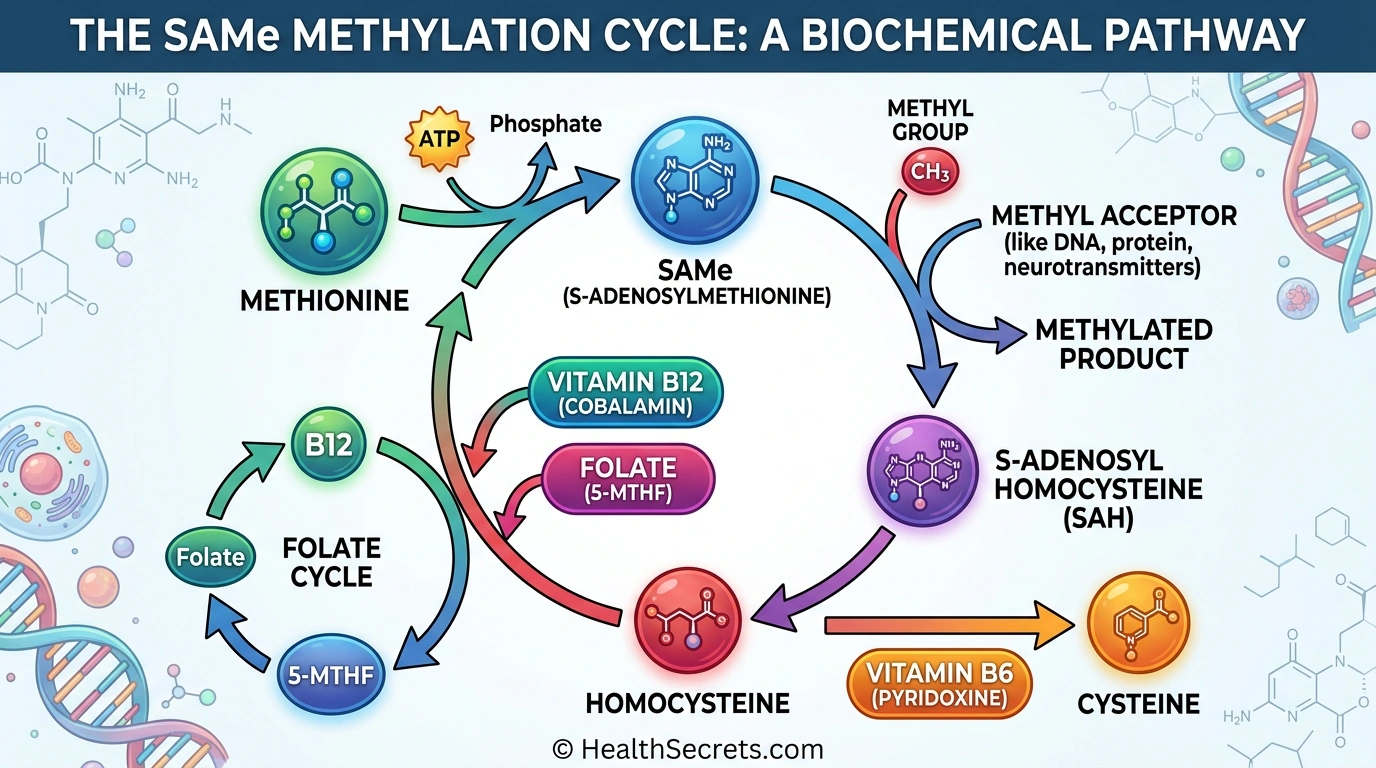
Your body synthesizes SAMe from two building blocks: methionine (an essential amino acid from dietary protein) and ATP (your cellular energy currency). This reaction also requires adequate vitamin B12, folate (B9), and vitamin B6. When any of these cofactors run low, SAMe production takes a hit.
Once produced, SAMe acts as a universal methyl donor — it hands off methyl groups (CH3) to other molecules in reactions that regulate:
- DNA expression: Turning genes on and off through epigenetic methylation
- Neurotransmitter synthesis: Manufacturing serotonin, dopamine, norepinephrine, and melatonin
- Cell membrane maintenance: Keeping neuronal membranes fluid and receptors functional
- Detoxification: Supporting liver function and homocysteine metabolism
- Antioxidant defense: Producing glutathione, the body's master antioxidant
SAMe levels decline with age, B vitamin deficiency, genetic variations (particularly MTHFR mutations that impair methylation capacity), chronic liver or kidney disease, and — critically — depression itself [9]. People with major depressive disorder consistently show lower SAMe levels in cerebrospinal fluid compared to non-depressed controls [3] [7].
Supplementing with SAMe bypasses the need for optimal B vitamin status and directly provides the active compound your methylation pathways need.

The Supplement Seal Verifier
What six certification programs each test, the label claims that test nothing, and a ten-bottle audit sheet that counts your verified products.
How Does SAMe Work for Depression in the Body?
SAMe combats depression through at least five distinct mechanisms: it fuels neurotransmitter synthesis, increases receptor sensitivity, maintains neuronal membrane fluidity, boosts glutathione production, and exerts direct anti-inflammatory effects on the brain. This multi-target approach may explain why some research suggests SAMe works faster than conventional antidepressants.
How Does SAMe Support Neurotransmitter Production?
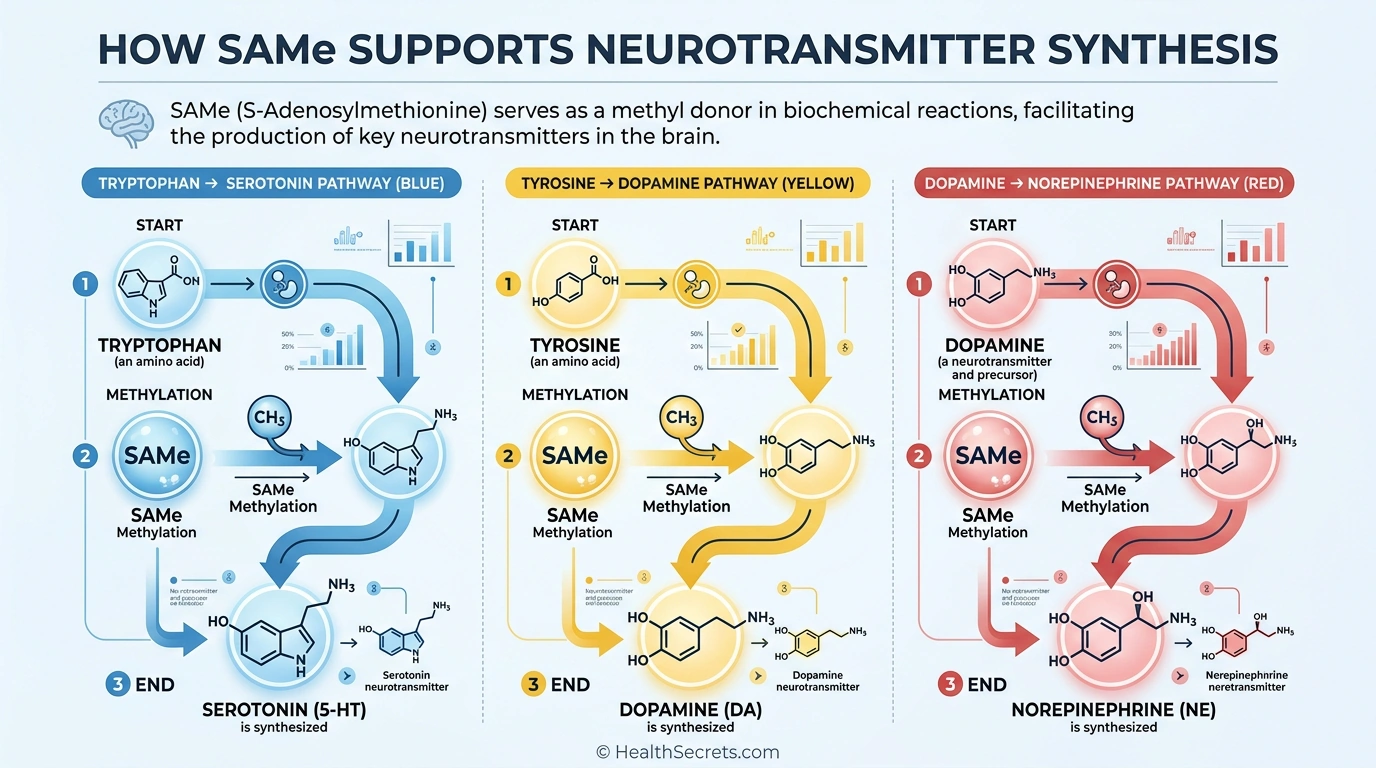
SAMe provides the methyl groups required for synthesizing serotonin (from tryptophan), dopamine (from tyrosine), and norepinephrine (from dopamine). Without adequate methylation, production of these mood-regulating neurotransmitters slows — a key mechanism linking undermethylation to depression.
Does SAMe Improve How Your Brain Responds to Neurotransmitters?
SAMe doesn't just increase neurotransmitter production — it enhances receptor sensitivity. By supporting phospholipid methylation in neuronal cell membranes, SAMe keeps membranes fluid and receptors responsive. Depression is associated with rigid, less fluid neuronal membranes where neurotransmitter signaling becomes sluggish. SAMe directly counteracts this.
How Does SAMe Reduce Brain Inflammation and Oxidative Stress?
SAMe is a precursor to glutathione — your body's master antioxidant. Depression is consistently associated with elevated oxidative stress, neuroinflammation, and low glutathione levels. SAMe also has direct anti-inflammatory effects, reducing inflammatory cytokines like IL-6 and TNF-alpha that contribute to depressive symptoms.
Why Might SAMe Work Faster Than Traditional Antidepressants?
Research suggests SAMe may have a relatively faster onset of action than conventional antidepressants. Some people report improvement within 1–2 weeks, compared to the 4–6 weeks typically required for SSRIs. This faster onset may relate to SAMe's direct provision of methyl groups rather than the indirect receptor-modulation approach of most prescription antidepressants.
How Well Is SAMe Absorbed as a Supplement?
Oral SAMe has relatively low bioavailability — roughly 1–5% of an oral dose reaches systemic circulation — which is precisely why therapeutic doses are high (800–1,600 mg daily) and why enteric coating, empty-stomach dosing, and quality manufacturing matter enormously for effectiveness.
SAMe is inherently unstable. Stomach acid degrades it rapidly, which is why enteric-coated tablets are non-negotiable — the coating protects SAMe until it reaches the more alkaline environment of the small intestine where absorption occurs.
Factors that enhance absorption:
- Empty stomach: Take SAMe 30–60 minutes before meals. Food can reduce absorption significantly
- Enteric coating: Protects the compound from stomach acid degradation
- Blister packaging: SAMe degrades with heat, moisture, and light exposure. Blister packs protect individual tablets far better than open bottles
- Fresh product: Check manufacture dates — SAMe potency declines over time even with proper storage
The two main supplemental forms —
SAMe tosylate disulfate (most common and most studied) and
SAMe butanedisulfonate (alternative salt form) — show similar efficacy. The tosylate form has the largest body of clinical evidence behind it, but both are effective when properly manufactured and stored.
One practical note: SAMe's low oral bioavailability is actually well-established in the clinical trials showing efficacy. The studied doses (200–1,600 mg/day) already account for this limitation. You don't need to worry about "boosting" absorption beyond following the basic guidelines above.
How Much SAMe Should You Take for Depression?
Clinical research shows SAMe dosing for depression ranges from 200 to 1,600 mg per day, with 800 mg being the most commonly studied dose and 1,600 mg (divided into two daily doses) used in the majority of antidepressant trials. Start low at 200–400 mg daily and increase gradually over several weeks.
Recommended Dosing Protocol
| Phase | Dose | Duration | Notes |
|---|---|---|---|
| Starting | 200–400 mg/day | Weeks 1–2 | Assess tolerance, single morning dose |
| Building | 800 mg/day | Weeks 3–4 | 400 mg twice daily (AM + early PM) |
| Therapeutic | 1,200–1,600 mg/day | Week 5+ | 600–800 mg twice daily if needed |
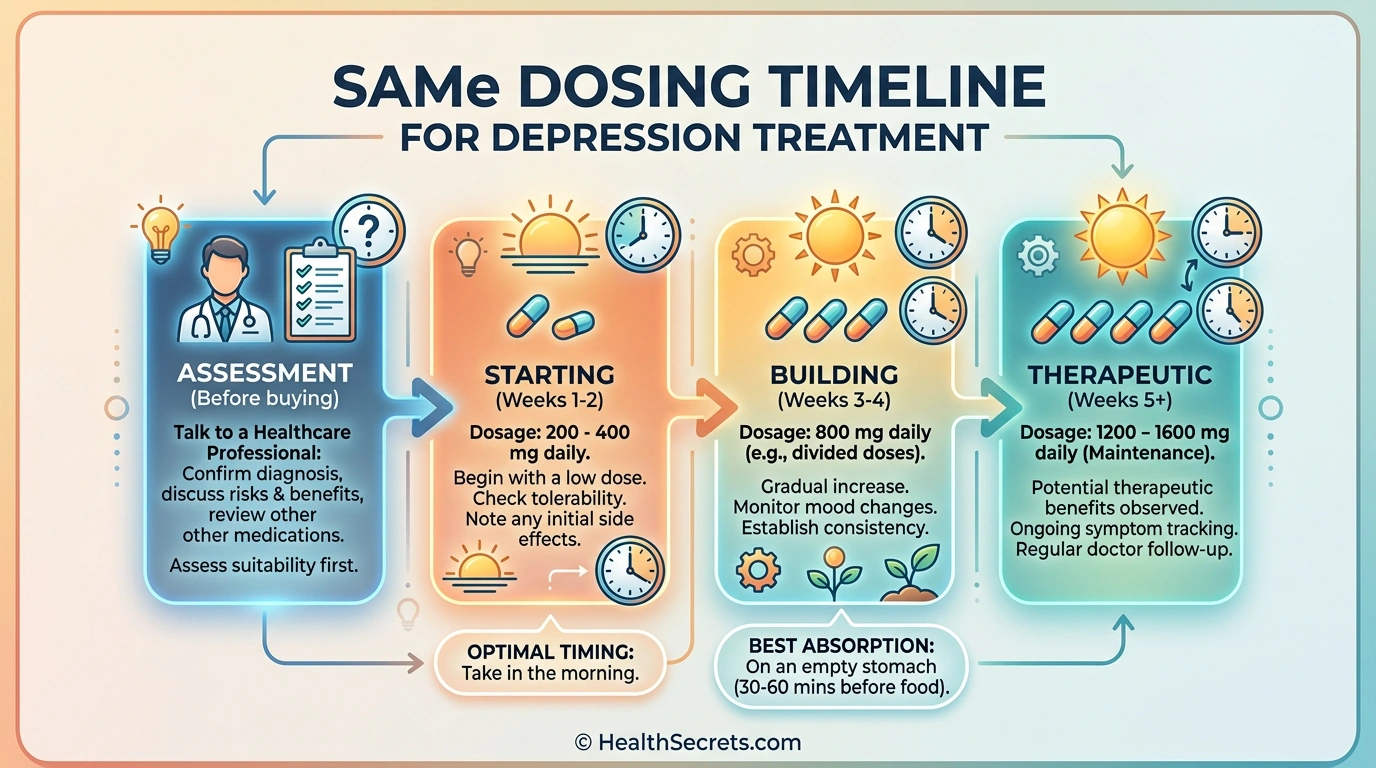
- Morning and early afternoon: SAMe can be activating — take the first dose upon waking and the second by early afternoon
- Avoid evening dosing: May cause insomnia or restlessness
- Empty stomach: 30–60 minutes before meals for optimal absorption
- Consistency: Daily use is essential. SAMe's benefits build over time
How Long Until It Works?
- Some people: Notice improvement within 1–2 weeks
- Most people: 2–4 weeks for noticeable effects
- Full benefits: 4–6 weeks of consistent use
- If no improvement after 6–8 weeks at 1,200–1,600 mg daily, SAMe may not be effective for you — consult your healthcare provider about alternatives
Can You Get Enough SAMe from Food Alone?
You cannot meaningfully supplement SAMe through diet because it's synthesized internally rather than absorbed directly from food. However, you can support your body's natural SAMe production by eating foods rich in methionine, folate, vitamin B12, and vitamin B6 — the essential building blocks and cofactors for SAMe synthesis.
Methionine-rich foods (SAMe's amino acid precursor):
- Eggs, fish, poultry, and lean meats
- Brazil nuts, sesame seeds
- Dairy products
Folate-rich foods (critical cofactor):
- Dark leafy greens (spinach, kale)
- Lentils, chickpeas, black beans
- Asparagus, broccoli, avocado
Vitamin B12 sources (required for methylation):
- Fish, shellfish, meat
- Eggs, dairy
- Fortified nutritional yeast (for plant-based diets)
Vitamin B6 sources:
- Chickpeas, potatoes, bananas
- Poultry, fish
- Fortified cereals
A diet rich in these nutrients supports the methylation cycle and maximizes your body's natural SAMe production. However, if you have genetic variations (MTHFR mutations), age-related decline, or depression-associated SAMe depletion, dietary optimization alone is typically insufficient to reach therapeutic levels — which is where supplementation fills the gap.
Is SAMe Safe and What Are the Side Effects?
SAMe is generally well-tolerated with fewer side effects than prescription antidepressants, but it carries one absolute contraindication (bipolar disorder), several serious drug interactions (particularly with antidepressants), and common mild side effects that are usually manageable with dose adjustment.
Common Side Effects (Usually Mild)
- Digestive: Nausea, diarrhea, stomach upset, gas — often manageable by reducing dose or taking with a small amount of food (though this reduces absorption)
- Nervous system: Anxiety or jitteriness (especially at higher doses), insomnia if taken too late in the day, headache, restlessness — reduce dose and take earlier
- Other: Dry mouth, sweating
The Bipolar Contraindication — Absolute, Not Optional
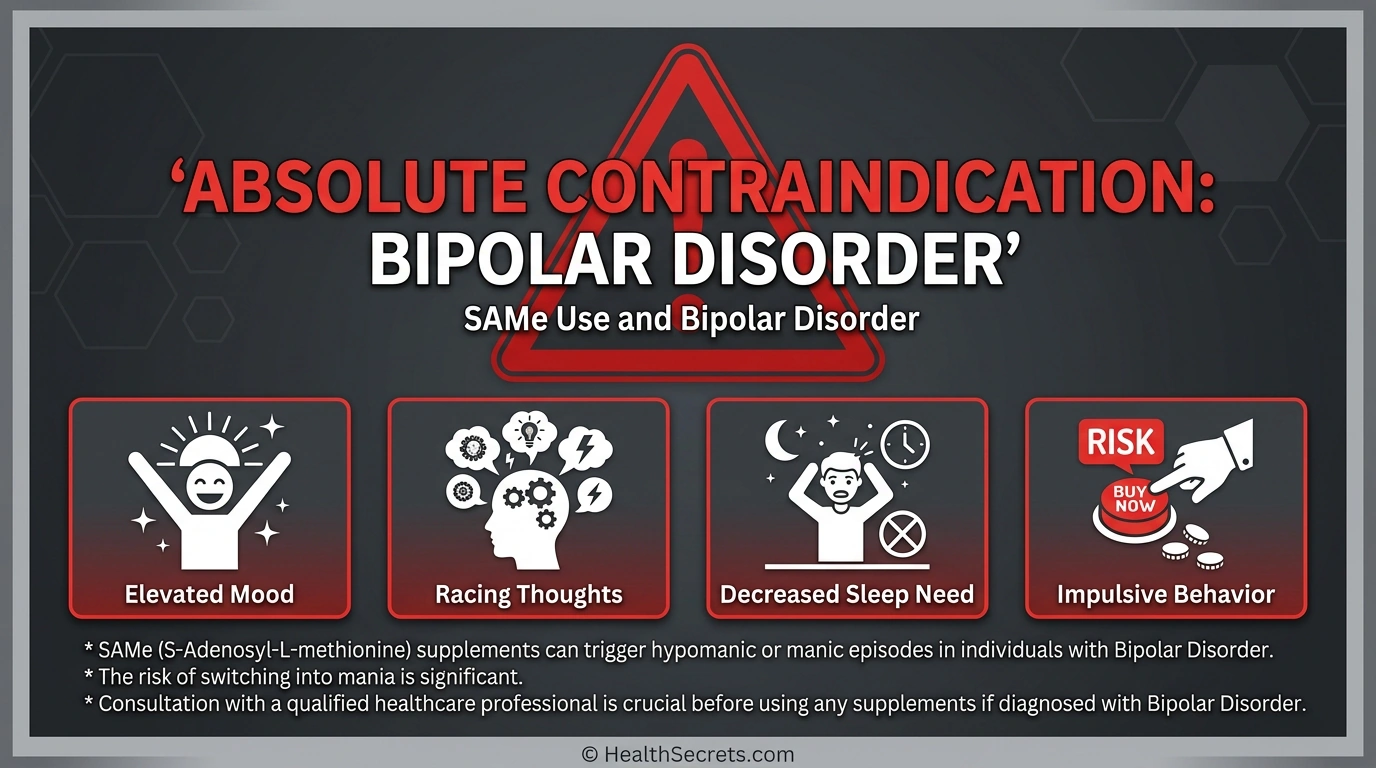
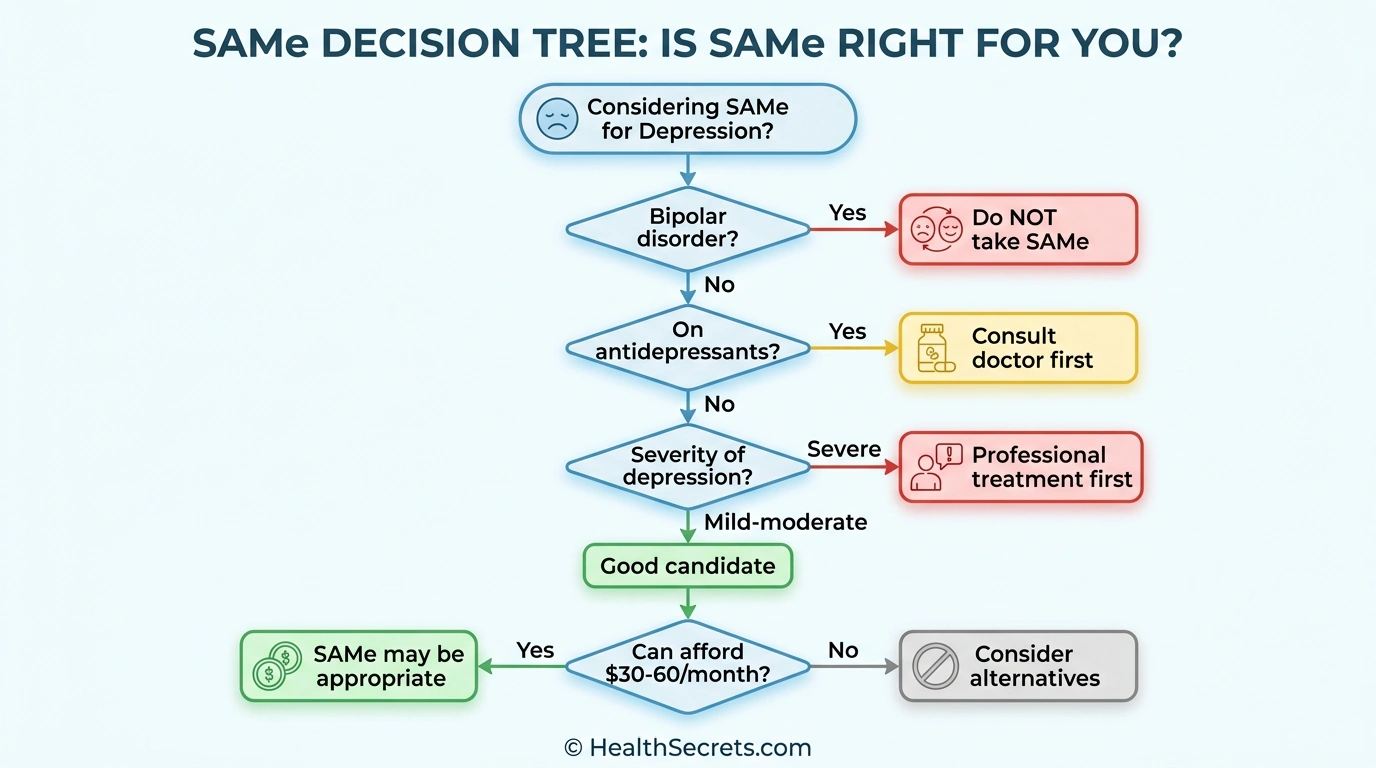
SAMe should NOT be used in patients with bipolar depression due to reports of increased anxiety and mania. This is an absolute contraindication — not a caution, not a "use with care." SAMe can trigger full manic episodes by increasing neurotransmitter activity and destabilizing mood regulation.
If you've experienced periods of unusually elevated mood, decreased need for sleep, racing thoughts, or impulsive behavior during "high" periods — get evaluated by a psychiatrist before taking SAMe. You may have undiagnosed bipolar disorder.
Critical Drug Interactions
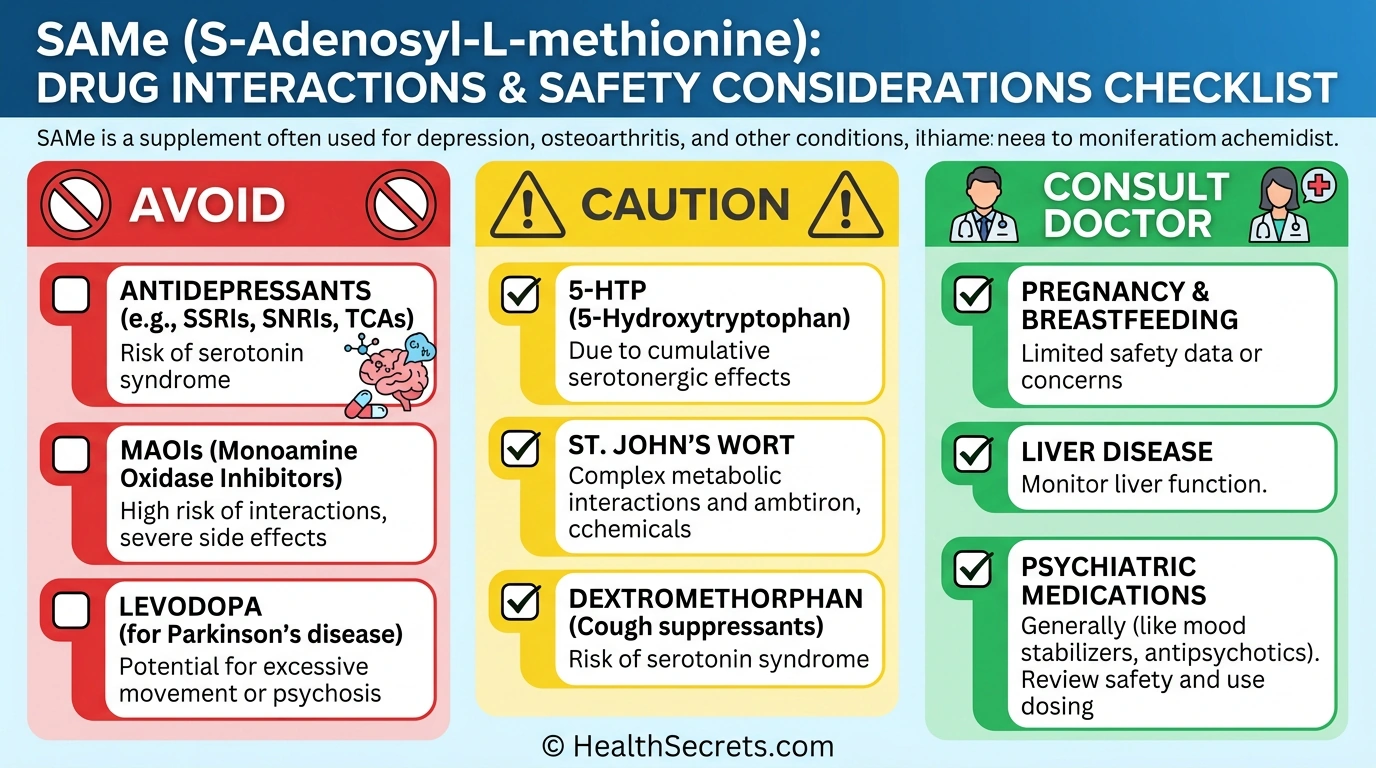
- Antidepressants (SSRIs, SNRIs, MAOIs): Risk of serotonin syndrome — potentially life-threatening. Do NOT combine without physician supervision
- Levodopa (Parkinson's medication): SAMe may reduce levodopa's effectiveness
- Dextromethorphan (cough medicine): Increased serotonin syndrome risk
- 5-HTP, St. John's Wort, tryptophan: All increase serotonin — risk compounds with SAMe
Who Should Consult a Doctor First
Anyone taking antidepressants, Parkinson's medications, or any psychiatric medication. Anyone with a personal or family history of bipolar disorder. Anyone pregnant or breastfeeding (insufficient safety data). Anyone with liver or kidney disease.
What Can SAMe Actually Do for Depression?
SAMe can meaningfully improve mild to moderate depression symptoms with efficacy comparable to some prescription antidepressants and fewer side effects — but it's not a cure, doesn't work for everyone (estimated 50–70% response rate), costs $30–$60+ monthly, and works best as part of a comprehensive treatment approach that includes therapy and lifestyle changes.
What SAMe Can Realistically Deliver
- Moderate improvement in depression symptoms for responsive individuals
- Fewer side effects than SSRIs (particularly sexual side effects)
- Potentially faster onset (1–2 weeks vs. 4–6 weeks)
- Support for overall methylation, brain function, and liver health
What SAMe Cannot Do
- Cure severe depression (professional treatment is essential)
- Work for everyone — individual response varies considerably
- Replace therapy, exercise, sleep optimization, or social connection
- Be affordable for everyone at therapeutic doses
The Honest Hierarchy of Depression Treatment
- Therapy and lifestyle interventions — most important foundation
- Medication or SAMe — if additional support is needed
- Combination approach — often the most effective overall
SAMe is a tool in the toolbox. A good one, with real evidence behind it. But it's most effective when it's part of something larger — not when it's the entire strategy.
Action Plan
What Should You Do First If You're Considering SAMe for Depression?
Follow the sequence below, work through each phase in order, and use the checklist as your practical implementation guide.
Start by confirming you're a good candidate (no bipolar disorder, not on antidepressants without supervision), then choose a quality enteric-coated supplement, begin at 200–400 mg daily, and build slowly to therapeutic doses over 4–6 weeks while tracking your mood response.
Phase 1 — Assessment (Before You Buy)
- Confirm no personal or family history of bipolar disorder
- Review current medications with healthcare provider (especially antidepressants)
- Set realistic expectations — SAMe helps 50–70% of people with mild-moderate depression
- Budget for $30–$60+ monthly at therapeutic doses
Phase 2 — Starting (Weeks 1–2)
- Choose enteric-coated SAMe tosylate from a reputable brand (third-party tested, blister packs)
- Begin at 200–400 mg daily, taken in the morning on an empty stomach
- Track mood, energy, sleep, and any side effects daily
- Ensure adequate B12, folate, and B6 intake through diet or supplementation
Phase 3 — Building (Weeks 3–6)
- Increase to 800 mg daily (400 mg twice daily — morning and early afternoon)
- If well-tolerated and needed, increase to 1,200–1,600 mg daily by week 5
- Continue mood tracking — look for trends over weeks, not daily fluctuations
- Combine with therapy, exercise, and sleep optimization for best results
Phase 4 — Evaluation (Week 6–8)
- Assess overall response — has mood, energy, or motivation improved?
- If significant improvement, continue at effective dose
- If no improvement at 1,200–1,600 mg after 6–8 weeks, consult healthcare provider
- Consider whether SAMe is cost-effective for your situation long-term