Your brain isn't hardwired. For decades, scientists believed the adult brain was essentially fixed — that after childhood, your neural architecture was set in stone. That belief has been spectacularly overturned. Modern neuroscience has revealed that your brain continuously reshapes itself throughout your entire life, forming new connections, growing new neurons, and even reorganizing entire regions in response to what you do, think, and experience.
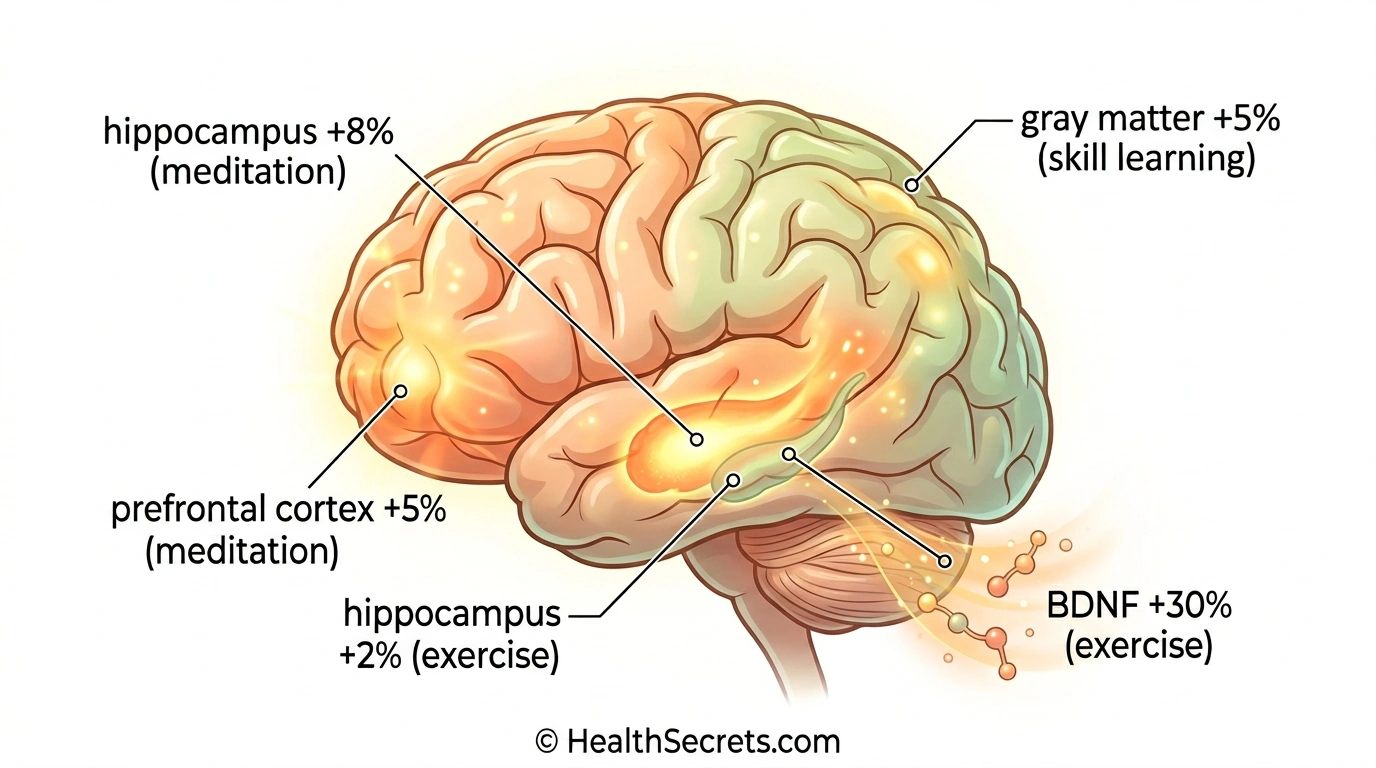
This process — neuroplasticity — is arguably the most empowering discovery in brain science. It means that the way you spend your time literally sculpts your brain's physical structure. Learning a new language can increase gray matter density by 5%. Meditating for 20 minutes daily can enlarge your hippocampus by 8% in just eight weeks. Regular aerobic exercise can boost brain-derived neurotrophic factor (BDNF) — sometimes called "Miracle-Gro for the brain" — by 30%.
Whether you're 25 or 75, your brain retains the capacity to change. The question isn't whether it can — it's whether you're giving it the right signals.
In this guide, you'll learn exactly what neuroplasticity is, how it works at the cellular level, the evidence-based strategies that enhance it, and how to build a practical brain-rewiring protocol that fits your life.
What Is Neuroplasticity and Why Does It Matter for Your Brain?
Neuroplasticity — also called brain plasticity — is the nervous system's ability to change its activity in response to intrinsic or extrinsic stimuli by reorganizing its structure, functions, or connections. It encompasses everything from the formation of new neurons to the strengthening and weakening of existing synaptic connections, and it continues throughout your entire lifespan.
The concept dates back to Donald Hebb's landmark 1949 theory: "neurons that fire together, wire together." But it wasn't until the late 1990s — when Eriksson and colleagues discovered that new neurons form in the adult hippocampus — that the neuroscience community fully embraced the idea of lifelong brain plasticity [1].
What Are the Two Main Types of Neuroplasticity?
There are two broad categories, and both are essential for a brain that adapts well.
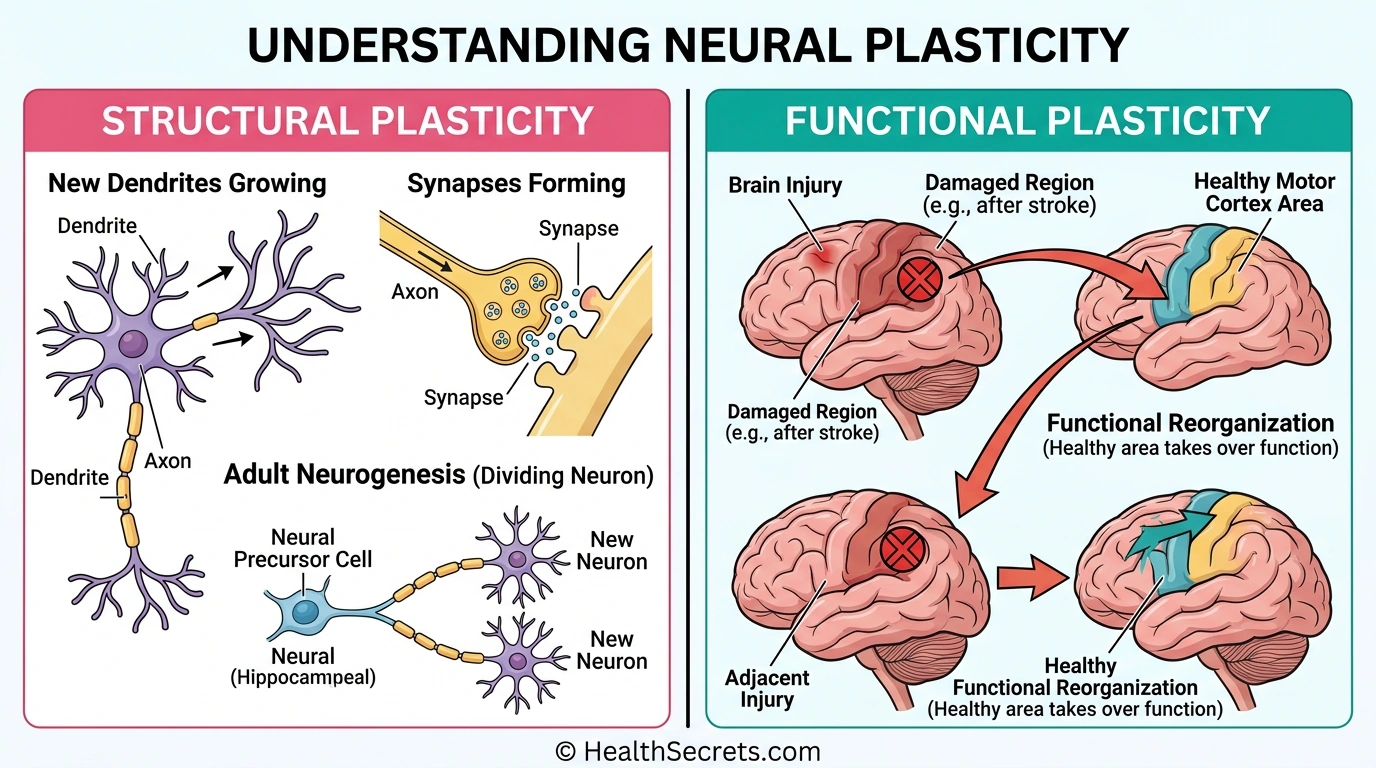
Structural plasticity involves physical changes to the brain's architecture. This includes neurogenesis (the birth of new neurons), synaptogenesis (new synaptic connections), dendrite branching, and axon sprouting. When you learn to juggle or study a new language, MRI scans can detect measurable increases in gray matter density in the relevant brain regions [2].
Functional plasticity is the brain's ability to shift functions from damaged areas to healthy ones. This is especially critical after stroke or traumatic brain injury, where unaffected brain regions can gradually take over the responsibilities of injured areas through intensive rehabilitation [12].
How Does Neuroplasticity Work in Your Brain?
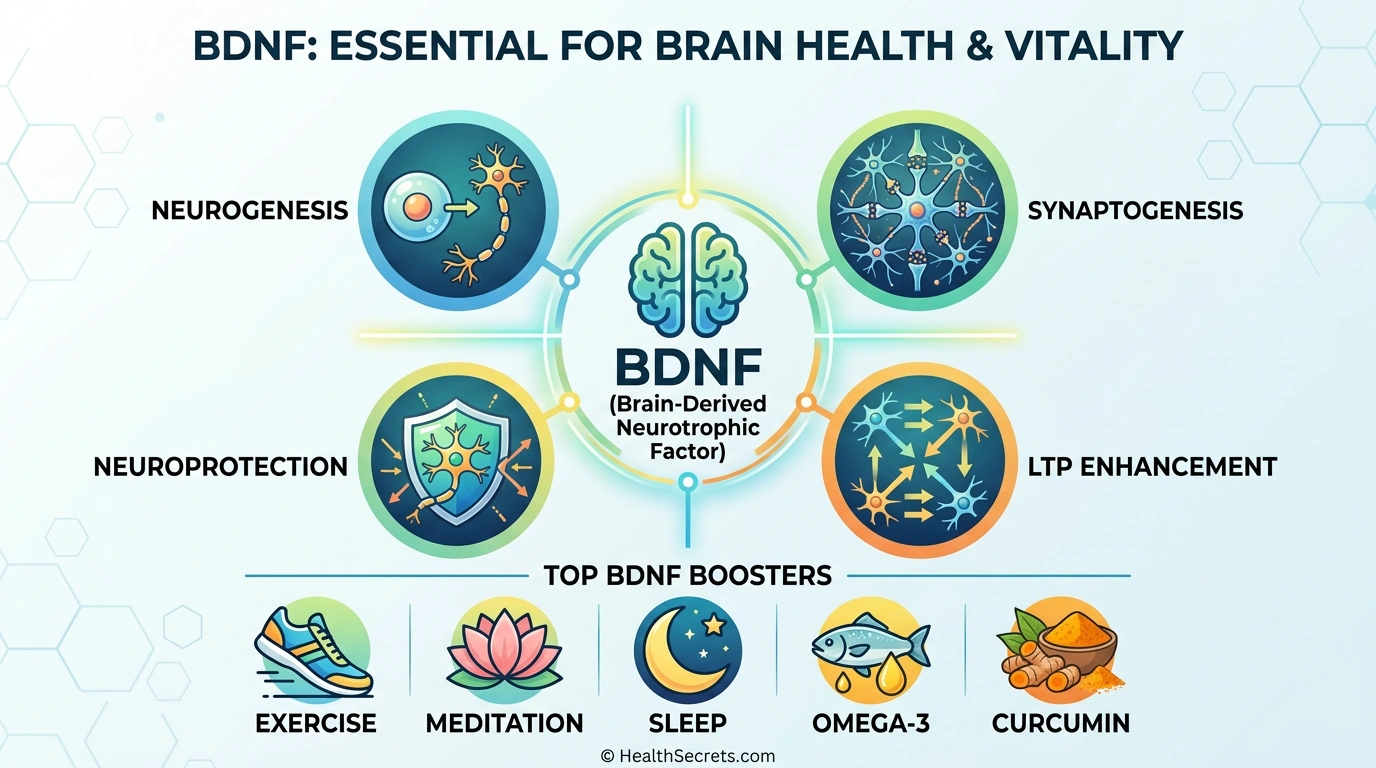
Neuroplasticity operates through several interconnected cellular and molecular mechanisms that strengthen, weaken, create, or eliminate neural connections based on your experiences. The most critical mechanisms include long-term potentiation, synaptic pruning, neurogenesis, myelination, and BDNF signaling — each playing a distinct role in how your brain adapts.
What Is Long-Term Potentiation and Why Is It the Foundation of Learning?
Long-term potentiation (LTP) is the persistent strengthening of a synapse based on recent patterns of activity. When a presynaptic neuron repeatedly stimulates a postsynaptic neuron, the connection between them becomes more efficient — the postsynaptic neuron grows more receptors, the synapse enlarges, and more neurotransmitter is released. LTP in the hippocampus is widely regarded as the primary cellular mechanism underlying learning and memory [5].
The complementary process — long-term depression (LTD) — weakens connections that go unused, following the "use it or lose it" principle. Together, LTP and LTD refine neural circuits for maximum efficiency.
How Does Synaptic Pruning Shape Your Brain?
Synaptic pruning is the elimination of weak, unused connections. It peaks during childhood and adolescence but continues throughout adulthood. During sleep, your brain actively prunes unnecessary synapses while strengthening important ones — consolidating the day's learning into long-term memory [14].
Can Your Brain Really Grow New Neurons as an Adult?
Yes — adult neurogenesis occurs primarily in the hippocampus (the memory and learning center) and the olfactory bulb. While the rate declines with age, it doesn't stop entirely. Aerobic exercise is the most potent stimulator of hippocampal neurogenesis, followed by novel learning experiences and enriched social environments [10].
What Is BDNF and Why Is It Called "Miracle-Gro for the Brain"?
Brain-derived neurotrophic factor (BDNF) is a protein that promotes neuron survival, growth, and differentiation. It stimulates neurogenesis, supports synaptogenesis, enhances LTP, and protects existing neurons from damage. BDNF is sometimes called the brain's "Miracle-Gro" because of its powerful role in enabling neuroplastic change. Aerobic exercise increases BDNF levels by approximately 30%, and meditation, adequate sleep, and certain nutrients (omega-3, curcumin, polyphenols) also boost its production [13].
Myelination — the process of insulating axons with a fatty sheath to speed neural transmission — also increases with practice. Musicians, for example, show more myelination in motor pathways than non-musicians, which helps explain their faster and more precise movements.

The 10-Minute Morning Mobility Routine
Eight joint-by-joint mobility drills in a fixed ten-minute order with dose tables, a stop-pain rule, and a thirty-day consistency grid built for stiff mornings rather than gym sessions.
What Are the Key Benefits of Enhancing Neuroplasticity?
Enhancing neuroplasticity can improve cognitive function, protect against age-related decline, support recovery from brain injury, and improve mental health outcomes. The benefits span virtually every aspect of brain performance — from sharper memory and faster learning to greater emotional resilience and reduced risk of neurodegenerative disease.
Does Learning New Skills Actually Change Brain Structure?
Absolutely. Research consistently demonstrates that learning novel, complex skills — particularly languages, musical instruments, and dance — produces measurable increases in gray matter density of approximately 5% in task-relevant brain regions. Bilingualism has been shown to delay dementia onset by 4–5 years, while dance reduces dementia risk by up to 76% because it combines physical, cognitive, and social demands simultaneously [2].
Can Meditation Physically Enlarge Your Brain?
Studies using MRI have found that mindfulness meditation practiced for 20 minutes daily over 8 weeks increases hippocampal volume by up to 8% and prefrontal cortex thickness by approximately 5%. Long-term meditators show increased gray matter in multiple regions associated with attention, emotional regulation, and self-awareness. Meditation also lowers cortisol — the stress hormone that shrinks the hippocampus — creating a protective double benefit [3].
How Does Aerobic Exercise Boost Brain Plasticity?
Aerobic exercise is arguably the most powerful single intervention for neuroplasticity. A landmark study found that 150 minutes per week of moderate aerobic activity increased hippocampal volume by 2% and raised BDNF levels by 30%. Exercise also improves cerebral blood flow, reduces neuroinflammation, and stimulates neurogenesis in the hippocampus. Meta-analyses suggest exercise reduces dementia risk by approximately 30% [19].
Can Neuroplasticity Help Recovery After Brain Injury?
Neuroplasticity is the foundation of stroke and traumatic brain injury (TBI) rehabilitation. Intensive therapy — including constraint-induced movement therapy, which forces use of an affected limb — can drive functional reorganization where healthy brain regions take over functions of damaged areas. The greatest window of plasticity occurs in the first 3–6 months post-stroke, though improvement can continue for years [16].
Does Neuroplasticity Play a Role in Mental Health?
Yes — neuroplasticity-based interventions show significant promise for depression, anxiety, PTSD, and addiction. Depression is associated with hippocampal atrophy, but meditation and exercise can reverse this shrinkage. Mindfulness reduces amygdala reactivity (the brain's fear center) and increases prefrontal cortex activity, improving anxiety regulation. EMDR therapy for PTSD works by facilitating memory reconsolidation through neuroplastic change [15].
Are There Any Risks or Downsides to Neuroplasticity?
Neuroplasticity is inherently neutral — the brain adapts to whatever signals it receives, whether positive or negative. Maladaptive plasticity can reinforce chronic pain pathways, entrench addiction patterns, or consolidate traumatic memories. Understanding this dual nature helps you direct plasticity intentionally toward beneficial outcomes.
Maladaptive plasticity occurs when the brain's adaptation works against you. Chronic pain conditions can involve sensitized pain circuits that amplify signals. Phantom limb pain after amputation reflects the brain map for the missing limb remaining active. Addiction hijacks dopamine-driven reward pathways through repeated exposure.
Overtraining and burnout can impair plasticity. Chronic stress elevates cortisol, which directly damages hippocampal neurons and reduces BDNF production. Sleep deprivation — even partial — impairs neuroplasticity and learning by up to 40% [18].
The takeaway: neuroplasticity requires intentional direction. Random stimulation won't help. Chronic negative patterns actively harm. The strategies in this guide are designed to drive plasticity in beneficial directions.
How Do You Actively Rewire Your Brain for Better Cognitive Performance?
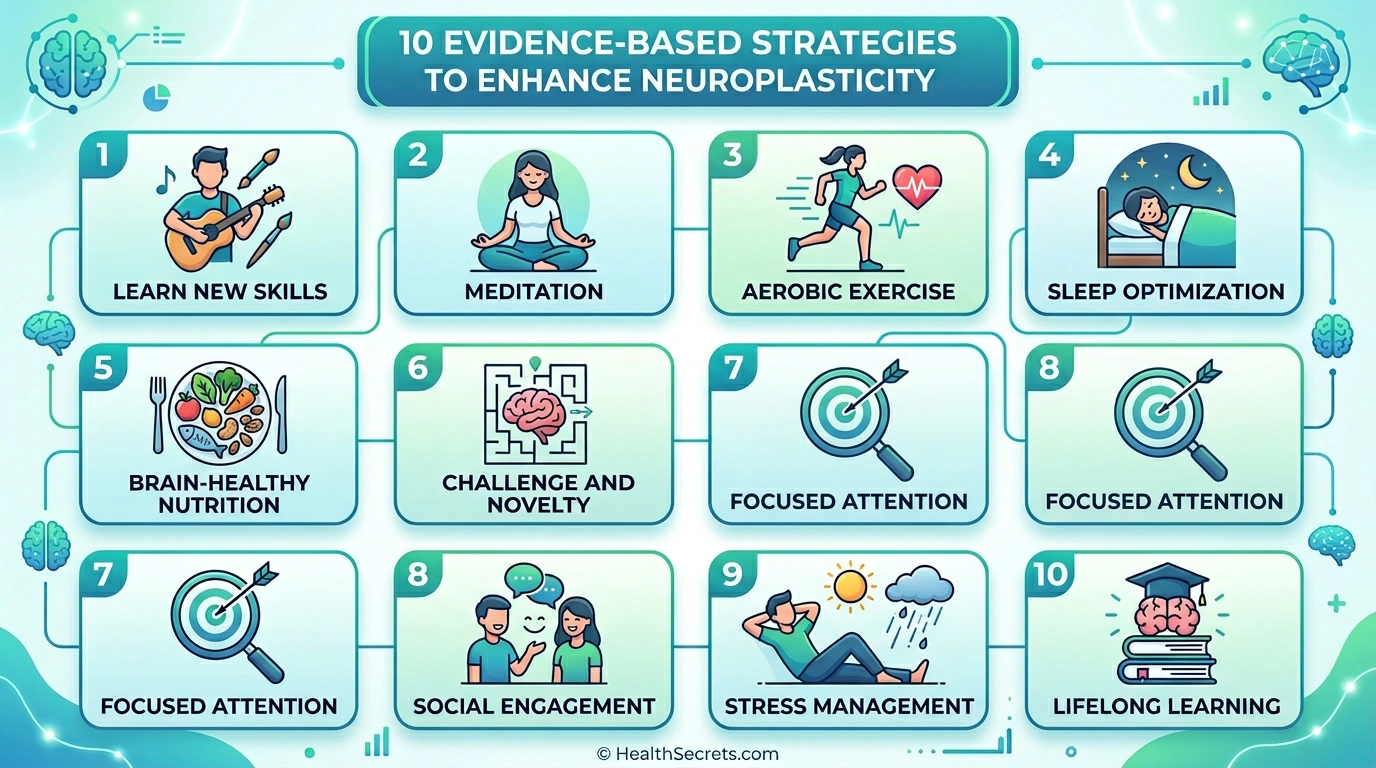
You can rewire your brain by consistently engaging in activities that challenge, stimulate, and support neuroplastic change — particularly learning new complex skills, practicing meditation, exercising aerobically, optimizing sleep, and managing stress. The key principles are novelty, progressive challenge, focused attention, and consistency.
What's the Single Most Effective Strategy for Neuroplasticity?
Learning a genuinely new, complex skill is the most potent driver of neuroplastic change. The activity should be novel (not something you already know), complex (engaging multiple brain systems), and progressively challenging (increasing in difficulty over time).
Top choices backed by research:
- Language learning — engages verbal, auditory, memory, and executive systems; delays dementia 4–5 years
- Musical instruments — engages motor, auditory, visual, and cognitive systems simultaneously
- Dance — combines physical movement, cognitive sequencing, and social interaction; reduces dementia risk 76%
- Art and crafts — engages visual-spatial processing, fine motor control, and creativity
Aim for 30–60 minutes daily of focused, distraction-free practice. The "sweet spot" of challenge is approximately 4% beyond your current ability — hard enough to stimulate growth but not so hard you disengage.
Do Commercial Brain Training Games Actually Work?
The evidence is mixed and mostly disappointing. Brain training games improve performance on the specific game, but research shows limited transfer to general cognitive function. A more effective approach is real-world skill learning (languages, instruments, hobbies) that engages multiple brain systems and has intrinsic motivational value. That said, brain training games aren't harmful — they're simply not the best use of your neuroplasticity time.
How Important Is Focused Attention for Rewiring Your Brain?
Critical. Hebbian learning — "neurons that fire together, wire together" — requires focused, intentional activation. Scattered, distracted attention produces weak, diffuse connections rather than strong, targeted ones. Practice single-tasking: one cognitively demanding task at a time, 90–120 minutes of uninterrupted focus ("deep work"), with phone notifications disabled and distractions eliminated.
What Diet and Lifestyle Changes Support Neuroplasticity?
A brain-optimized diet rich in omega-3 fatty acids, antioxidants, and polyphenols — combined with consistent aerobic exercise, quality sleep, stress management, and strong social connections — creates the ideal environment for neuroplastic change. Each factor contributes through distinct but synergistic biological pathways.
Which Foods Fuel Neuroplasticity?
- Omega-3 fatty acids (DHA): DHA comprises 60% of brain fat and directly supports BDNF production and synaptic membrane fluidity. Sources: fatty fish (salmon, sardines, mackerel) 2–3 times per week, or 1–2g DHA supplementation daily. See our omega-3 supplements guide for detailed recommendations.
- Polyphenol-rich foods: Blueberries, dark chocolate (70%+ cocoa), green tea, and grapes enhance BDNF and promote neurogenesis. Aim for a colorful plate with 5–9 servings of fruits and vegetables daily.
- Curcumin: The active compound in turmeric crosses the blood-brain barrier, reduces neuroinflammation, and increases BDNF. Take 500–1,000mg daily with black pepper (piperine) for enhanced absorption.
- B vitamins: B6, B12, and folate support neurotransmitter synthesis and reduce homocysteine, which at high levels impairs cognition.

How Does Sleep Affect Your Brain's Ability to Rewire?
Sleep is when neuroplasticity consolidates. During deep sleep, your brain transfers memories from the hippocampus to the cortex for long-term storage, prunes weak synaptic connections, strengthens important ones, and clears metabolic waste (including beta-amyloid) through the glymphatic system. Sleep deprivation impairs learning by up to 40%. Aim for 7–9 hours nightly with a consistent schedule. See our sleep optimization guide for a complete protocol.
Why Is Stress Management Critical for Brain Plasticity?
Chronic stress keeps cortisol elevated, which directly damages hippocampal neurons, reduces neurogenesis, and suppresses BDNF. The hippocampus — your brain's learning and memory center — is particularly vulnerable. Effective stress-reduction strategies include daily meditation (20 minutes), regular exercise, adequate sleep, social connection, and time in nature (20–30 minutes reduces cortisol by approximately 20%). See our cortisol management guide for detailed strategies.
Does Social Engagement Protect Your Brain?
Strong social connections build cognitive reserve — the brain's resilience against age-related decline. Research shows that high social engagement reduces dementia risk by approximately 50%. Conversations and relationships are inherently cognitively complex, engaging language processing, emotional regulation, perspective-taking, and memory simultaneously. Prioritize regular in-person social interaction, group activities, and community involvement.
Action Plan
What Should You Do First to Start Rewiring Your Brain?
Follow the sequence below, work through each phase in order, and use the checklist as your practical implementation guide.
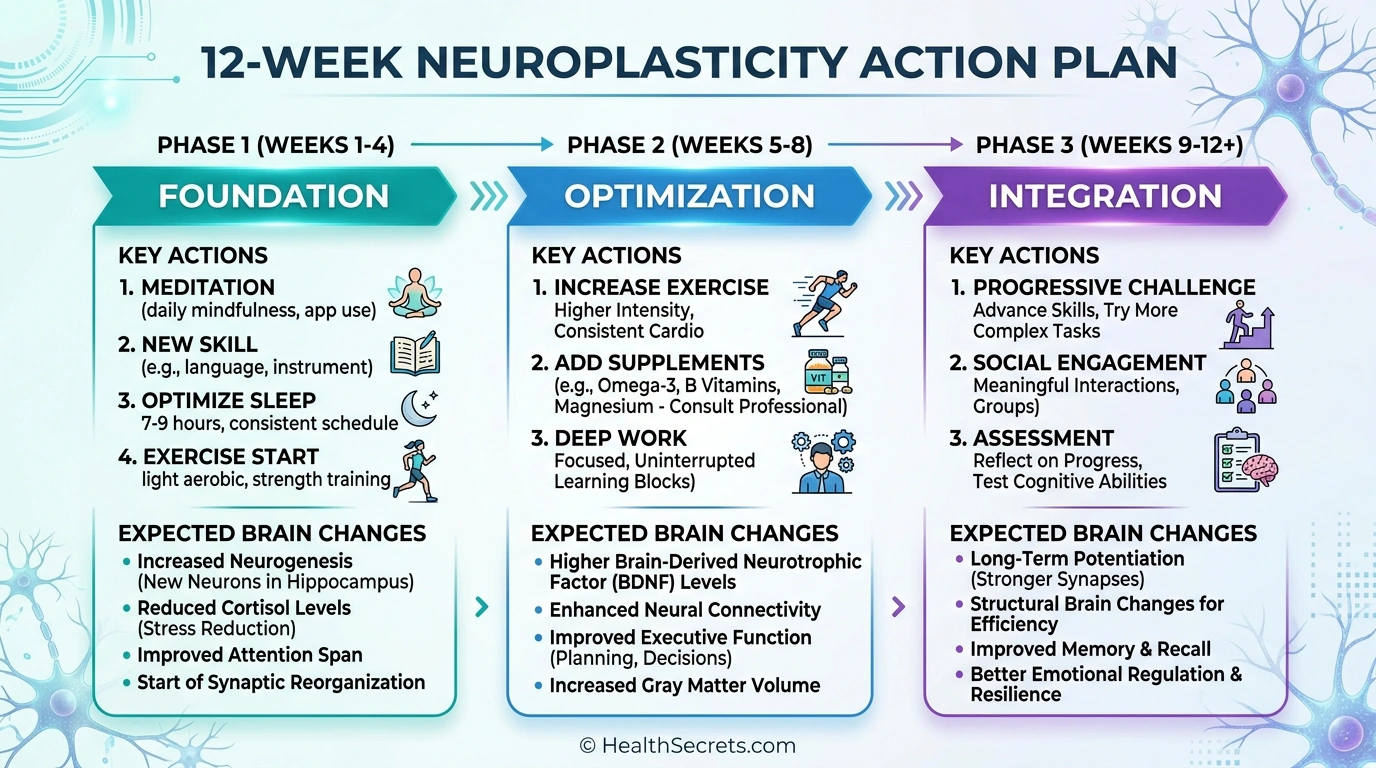
Start with one high-impact habit — daily meditation or a new skill — and layer additional strategies over 12 weeks. Trying to overhaul everything simultaneously leads to burnout. A phased approach allows each habit to take root through the very neuroplastic mechanisms you're trying to enhance.
Phase 1 — Foundation (Weeks 1–4):
- Start a new complex skill: language, instrument, or dance (30–60 min daily)
- Begin meditation practice (start with 10 min, build to 20 min daily)
- Establish consistent sleep schedule (7–9 hours, same time daily)
- Add aerobic exercise (3 sessions per week, 30 min each)
Phase 2 — Optimization (Weeks 5–8):
- Increase exercise to 150 min per week moderate aerobic activity
- Add omega-3 supplementation (1–2g DHA daily) or fatty fish 2–3x weekly
- Incorporate polyphenol-rich foods daily (berries, green tea, dark chocolate)
- Practice deep work: 90 min focused, distraction-free sessions daily
Phase 3 — Integration (Weeks 9–12+):
- Increase skill difficulty progressively (4% beyond current ability)
- Expand social engagement (join group, class, or community activity)
- Add curcumin (500–1,000mg with piperine) if desired
- Assess progress and adjust: meditation consistency, sleep quality, exercise routine
Expected timeline: Noticeable cognitive improvements in 4–8 weeks. Measurable structural brain changes (gray matter density, hippocampal volume) by 8–12 weeks. Long-term cognitive reserve building from 3–6 months onward.