Protein supplements have become one of the most widely used nutritional products worldwide, with the global market exceeding $25 billion annually. Whether you are an athlete pushing for peak performance, someone recovering from surgery, or simply trying to meet daily protein needs on a busy schedule, the sheer variety of protein powders, bars, and shakes can feel overwhelming. From whey isolates and casein blends to plant-based formulas and collagen peptides, each type offers distinct advantages depending on your goals, dietary restrictions, and health profile.
This evidence-based guide cuts through the marketing noise to help you choose the right protein supplement for your body. We review the science behind protein absorption, compare animal-based and plant-based options head to head, examine third-party testing results (including concerning heavy metal findings), and recommend the top products that deliver on purity, efficacy, and value. Every recommendation is backed by peer-reviewed research and real-world testing criteria so you can invest confidently in your health.
- Most healthy adults need 0.7–1.0 g of protein per pound of body weight daily for optimal muscle protein synthesis and recovery.
- Whey protein isolate remains the gold standard for fast-absorbing, leucine-rich protein with the strongest research backing.
- Plant-based proteins have improved dramatically — look for blends with added leucine that match whey for muscle building.
- A 2024 Clean Label Project report found 47% of tested protein powders exceeded California Prop 65 thresholds for toxic metals — third-party testing is non-negotiable.
- The "anabolic window" is wider than once believed — total daily protein intake matters more than precise post-workout timing.
- Casein protein before bed can support overnight muscle protein synthesis and reduce muscle breakdown during sleep.
- New research shows consuming up to 100g of protein in a single meal still stimulates a robust anabolic response, challenging the "30g per meal" myth.
- Always check for NSF Certified for Sport or Informed Sport certifications to avoid banned substances and contaminants.
- Digestive enzymes (protease, lactase) in protein powders can significantly reduce bloating and improve absorption.
- Price per gram of protein — not price per container — is the most accurate way to compare value across brands.
What Should You Look for When Buying a Protein Supplement?
Choosing the right protein supplement starts with understanding your goals, dietary needs, and quality standards. Look for products with third-party certifications like NSF Certified for Sport or Informed Sport, a short and transparent ingredient list, at least 20–25 grams of protein per serving, and minimal added sugars (under 3 grams). The source of protein matters — whey isolate offers the highest bioavailability, while pea-rice blends lead the plant-based category.
How Do Different Protein Types Compare for Muscle Building?
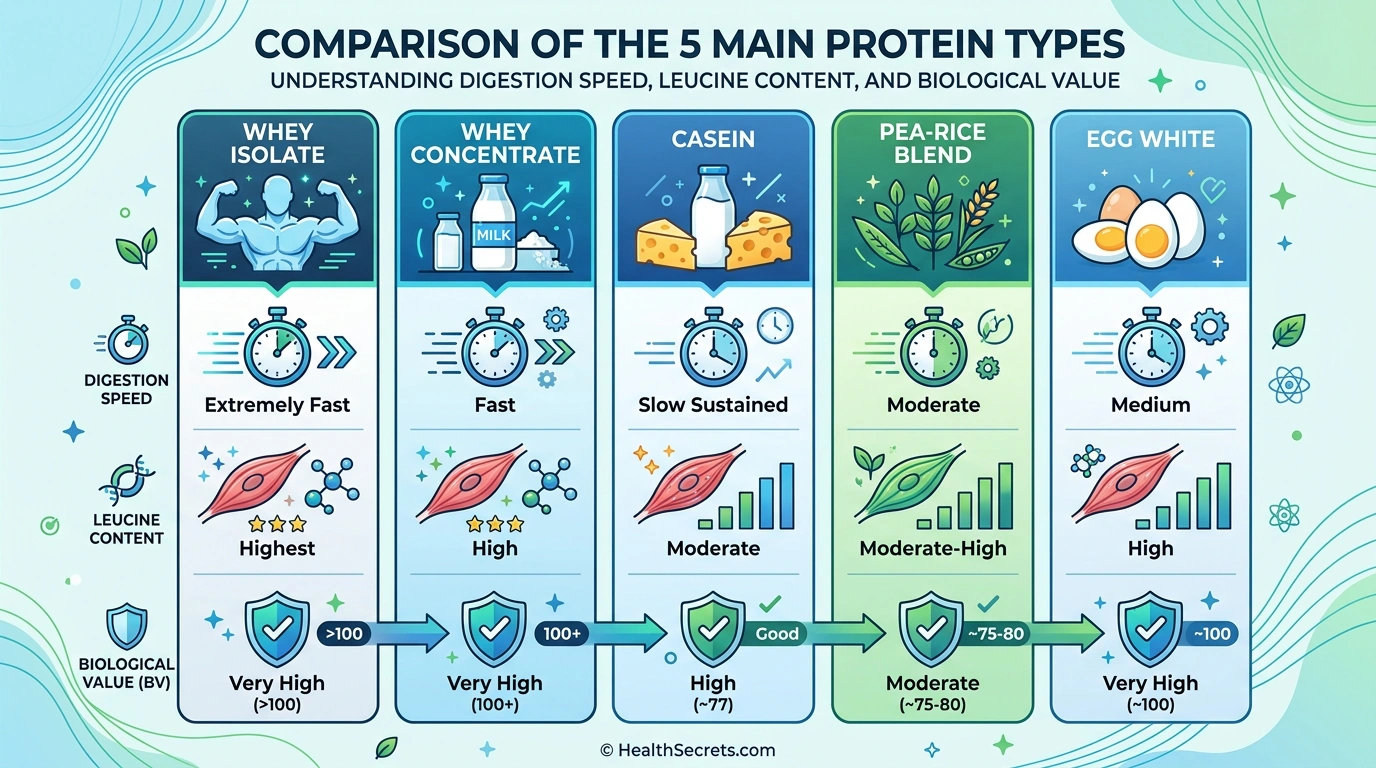
Not all protein sources are created equal. The biological value, leucine content, and digestion speed of a protein determine how effectively it stimulates muscle protein synthesis (MPS). Whey protein has a biological value of 104 and contains approximately 11% leucine, making it the most efficient trigger for MPS. Casein digests slowly over 6–8 hours, making it ideal for sustained amino acid delivery during sleep or between meals. Plant-based proteins historically scored lower, but recent research published in Sports Medicine (2024) demonstrates that pea-rice blends supplemented with leucine can match whey for MPS when total leucine content is equalized [1].
| Protein Type | Bio Value | Leucine % | Digestion | Best For |
|---|---|---|---|---|
| Whey Isolate | 104 | ~11% | Fast (30–60 min) | Post-workout, lean muscle |
| Whey Concentrate | 104 | ~10% | Moderate (1–2 hr) | General use, budget |
| Casein | 77 | ~9% | Slow (6–8 hr) | Before bed, sustained release |
| Pea + Rice Blend | 65–80 | ~8% | Moderate (2–3 hr) | Vegan, dairy-free |
| Egg White | 100 | ~9% | Moderate (2–3 hr) | Dairy-free, whole food |
Why Does Third-Party Testing Matter for Protein Powders?
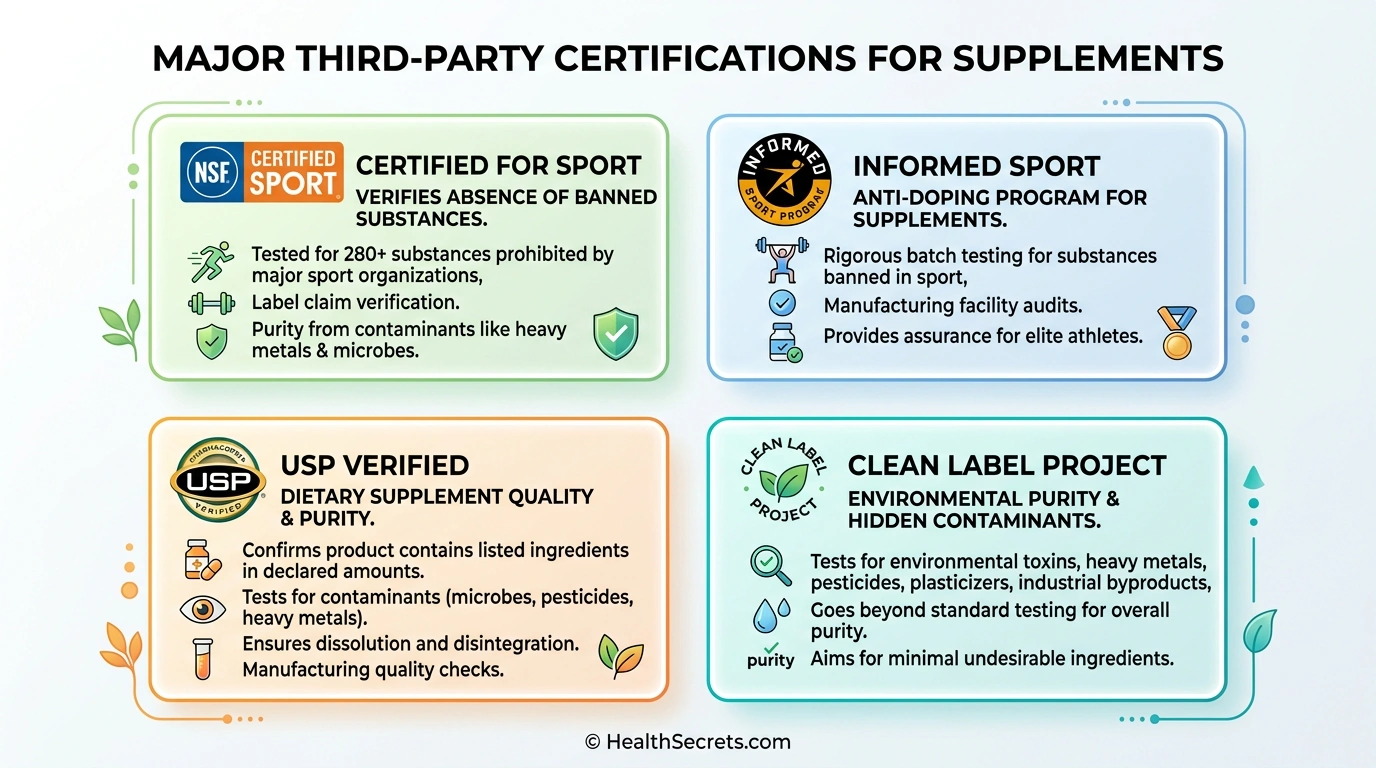
Third-party testing is critical because protein supplements are not regulated by the FDA before they hit shelves. The Clean Label Project's 2024–2026 report tested 134 top-selling protein powders and found that 47% exceeded California Proposition 65 thresholds for at least one toxic metal, including lead, arsenic, and cadmium [2]. Plant-based proteins contained on average 3 times more lead than whey-based products, likely due to heavy metal accumulation in crops like rice and pea. Certifications to look for include:
- NSF Certified for Sport — tests for 270+ banned substances and verifies label accuracy
- Informed Sport — batch-tested for WADA-prohibited substances
- USP Verified — tests for purity, potency, and contaminants
- Clean Label Project Purity Award — screens for heavy metals, pesticides, and plasticizers
What Is the Difference Between Whey Isolate and Whey Concentrate?
Whey isolate undergoes additional filtration to remove most lactose and fat, yielding 90–95% protein by weight compared to concentrate's 70–80%. This makes isolate the better choice for lactose-intolerant individuals and those seeking maximum protein per calorie. Concentrate retains more naturally occurring growth factors and immunoglobulins, and typically costs 20–30% less. For most people without dairy sensitivities, concentrate offers excellent value, while isolate is worth the premium for competitive athletes tracking macros precisely or those with digestive issues from lactose [3].
How Did We Test and Evaluate These Protein Supplements?
We evaluated over 30 protein supplements across eight criteria: protein content accuracy, amino acid profile, third-party certifications, heavy metal testing results, taste and mixability, ingredient transparency, value per gram of protein, and user reviews from verified purchasers. Products that failed to meet label claims or lacked any third-party testing were eliminated. We prioritized real-world usability alongside lab data.
Our Testing Criteria
- 1. Protein Content Accuracy — We compared label claims against third-party lab results where available. Products with more than 5% deviation were flagged.
- 2. Amino Acid Profile — We verified leucine content (minimum 2.5g per serving) and complete essential amino acid profiles. For plant-based products, we checked for complementary protein blending.
- 3. Third-Party Certifications — NSF Certified for Sport, Informed Sport, USP Verified, or Clean Label Project certification earned top marks.
- 4. Heavy Metal Screening — We cross-referenced products against Clean Label Project data and independent lab reports for lead, arsenic, cadmium, and mercury levels.
- 5. Ingredient Transparency — We favored products with short ingredient lists, no proprietary blends, and clearly disclosed protein sources, sweeteners, and additives.
- 6. Taste & Mixability — Evaluated across multiple flavor options. Products should dissolve fully in a shaker bottle without clumping.
- 7. Value Per Gram of Protein — Calculated cost per gram of actual protein (not per serving or per container) to enable fair comparison across brands.
- 8. User Reviews — Analyzed patterns across 500+ verified reviews per product, focusing on digestive tolerance, consistency, and flavor accuracy.

The Complete Plant Protein Matrix
Grams of protein per cooked portion for twenty-eight plant sources with limiting amino acids, a twenty-five to thirty gram meal builder, and the tolerance-prep note each source needs.
How Much Protein Supplement Should You Take Per Day?
Most adults benefit from 0.7–1.0 grams of protein per pound of body weight daily from all sources combined, with protein supplements filling the gap between dietary intake and target. For a 170-pound person, this means 119–170 grams total daily protein, of which 1–2 scoops (25–50 grams) from supplements is typical. Spreading protein across 3–5 meals optimizes muscle protein synthesis throughout the day.
When Is the Best Time to Take Protein Supplements?
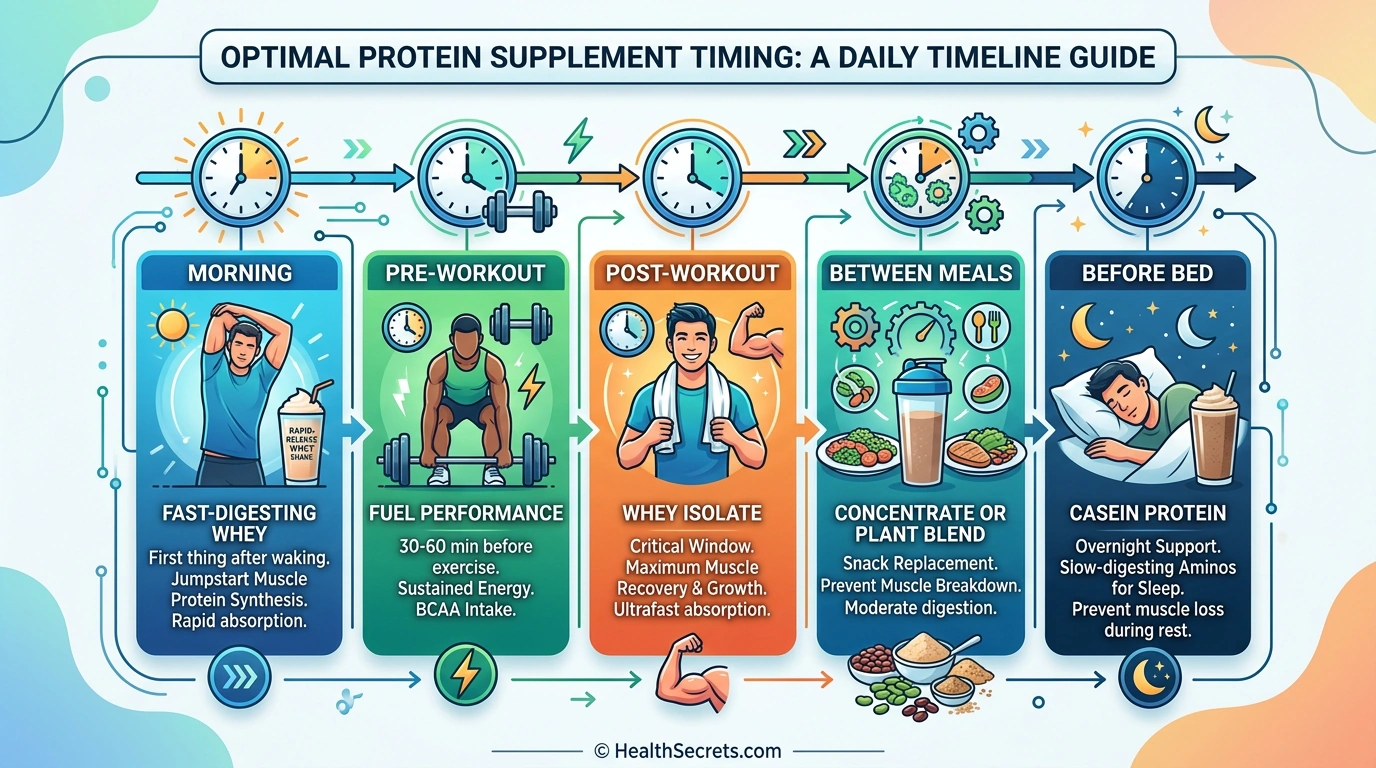
The optimal timing depends on your protein type and goals, but total daily intake matters more than any single "window." A landmark 2013 meta-analysis in the Journal of the International Society of Sports Nutrition found that the so-called "anabolic window" extends far beyond the previously believed 30–60 minutes post-exercise — consuming adequate protein within 4–6 hours around training is sufficient for most people [4]. Strategic timing tips:
- Post-workout (within 2 hours): Whey isolate or hydrolysate for rapid MPS stimulation
- Before bed: Casein protein (30–40g) to sustain overnight amino acid delivery — a 2012 study in Medicine & Science in Sports & Exercise showed 40g casein before sleep increased overnight MPS by ~22% [5]
- Morning: Any fast-digesting protein to break the overnight fast
- Between meals: Whey concentrate or plant-based blend to maintain elevated amino acid levels
Can You Build Muscle With 100 Grams of Protein in One Meal?
Recent groundbreaking research challenges the longstanding "30g per meal" protein myth. A 2024 study published in Cell Reports Medicine demonstrated that consuming 100g of protein in a single meal produced a sustained anabolic response lasting over 12 hours, with continued elevation of muscle protein synthesis well beyond what was previously believed possible [6]. While spreading protein across meals remains practical for appetite and digestion, this research confirms that your body can effectively use large protein doses.
How Should You Mix Protein Powder for Best Results?
For optimal mixability, add 6–10 oz of cold liquid first, then add one scoop of protein powder, and shake vigorously for 15–20 seconds. Cold water or milk produces fewer clumps than room temperature liquids. For smoothies, blend with frozen fruit, ice, and liquid for 30–45 seconds. Avoid mixing protein powder into hot liquids above 160°F, as excessive heat can denature the protein structure and create an unpleasant texture (though denaturation does not reduce nutritional value).
Are Protein Supplements Safe for Long-Term Use?
Protein supplements are generally safe for healthy adults when used within recommended ranges (up to 1.0g per pound of body weight daily from all sources). A 2018 systematic review in the British Journal of Sports Medicine found no adverse effects on kidney function, bone health, or liver markers in healthy individuals consuming high-protein diets for up to one year [7]. However, individuals with pre-existing kidney disease should consult a nephrologist before supplementing.
What Are the Most Common Side Effects of Protein Powder?
The most common side effects are digestive in nature — bloating, gas, and stomach cramps — and are usually caused by lactose in whey concentrate, artificial sweeteners, or insufficient digestive enzyme production. Roughly 65% of the global population has reduced lactose digestion capacity after infancy [8]. Switching to whey isolate (nearly lactose-free), choosing products with added digestive enzymes, or opting for plant-based alternatives typically resolves these issues. Other considerations:
- Artificial sweeteners: Sucralose and acesulfame potassium may cause GI distress — look for stevia or monk fruit options
- Heavy metals: Long-term daily use of contaminated products can lead to cumulative toxic metal exposure [2]
- Kidney concerns: Healthy kidneys handle high protein loads efficiently, but those with Stage 3+ chronic kidney disease should limit intake under medical supervision [9]
- Caloric surplus: Protein supplements add calories — factor them into your total daily intake
Can Protein Supplements Cause Kidney Damage?
There is no evidence that protein supplements cause kidney damage in healthy individuals. A comprehensive 2018 meta-analysis in the Journal of Nutrition confirmed that protein intakes up to 2.2g/kg/day had no negative effect on kidney function in people without pre-existing renal disease [10]. However, if you have existing kidney issues, high protein intake can worsen your condition — always get medical clearance first.
Action Plan
What Is the Best Action Plan for Starting Protein Supplements?
Follow the sequence below, work through each phase in order, and use the checklist as your practical implementation guide.
Start by calculating your daily protein target based on body weight and activity level, audit your current dietary intake to find the gap, then introduce one serving of a third-party tested protein supplement daily. Increase gradually over 2–4 weeks while monitoring digestion and adjusting timing based on your training schedule and goals.
Phase 1: Assessment (Week 1)
- Calculate your daily protein target (0.7–1.0g per pound of body weight)
- Track current dietary protein intake for 3–5 days using a food diary or app
- Identify your daily protein gap (target minus dietary intake)
- Determine any dietary restrictions (dairy-free, vegan, allergens)
- Set a budget for monthly protein supplement spending
Phase 2: Selection (Week 2)
- Choose your protein type based on goals (whey isolate, casein, plant-based)
- Verify third-party certification (NSF, Informed Sport, USP, Clean Label Project)
- Calculate cost per gram of protein for your top 3 options
- Purchase a single container to trial before committing to bulk orders
- Get a quality shaker bottle or blender for mixing
Phase 3: Introduction (Weeks 3–4)
- Start with one serving (20–25g protein) daily for the first week
- Time your serving strategically (post-workout or morning)
- Monitor digestion — note any bloating, gas, or discomfort
- Adjust serving size or switch products if digestive issues persist
- Increase to 2 servings daily if your protein gap exceeds 40g
Phase 4: Optimization (Month 2+)
- Experiment with timing (pre-bed casein, post-workout whey)
- Track strength and recovery improvements over 4–8 weeks
- Re-assess protein needs quarterly as body composition changes
- Rotate flavors and brands periodically to prevent palate fatigue
- Consider adding creatine monohydrate for synergistic muscle-building benefits