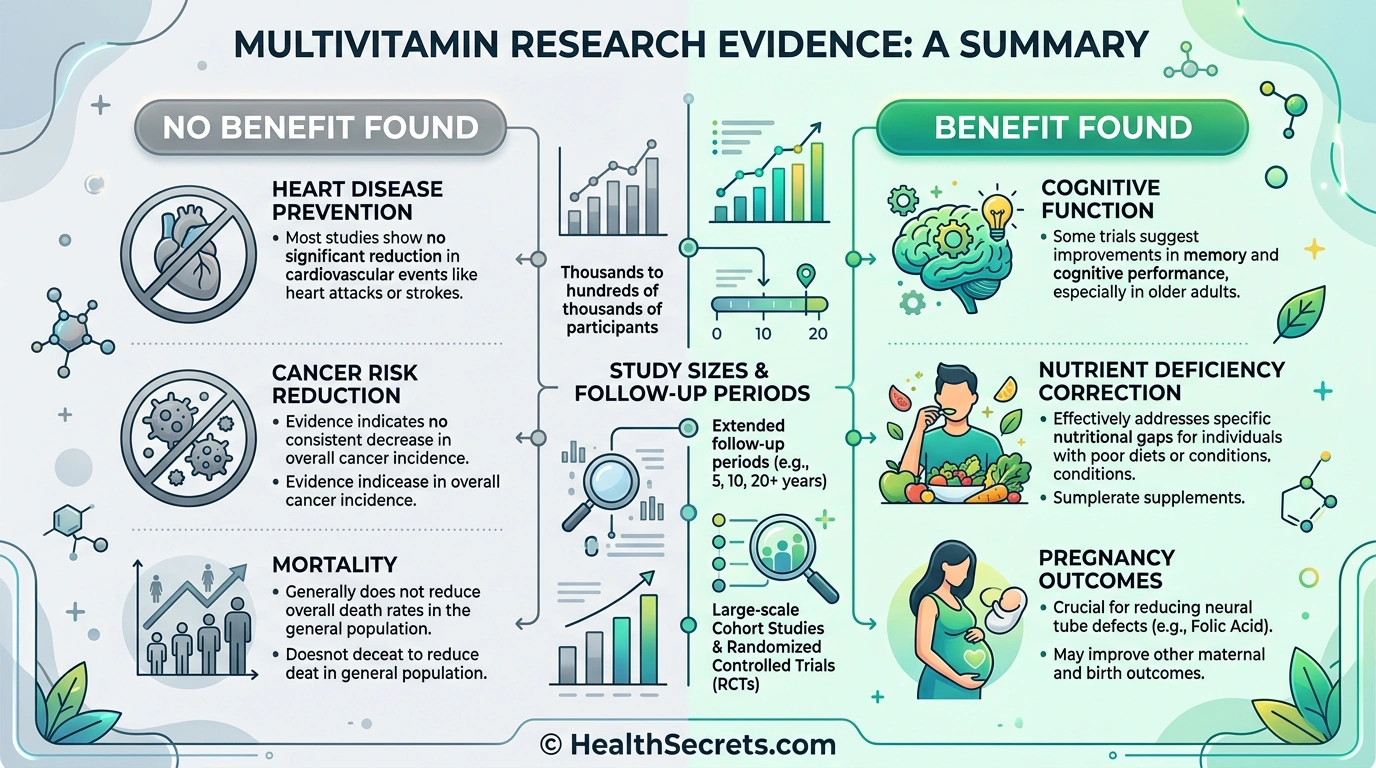
Here's the uncomfortable truth about multivitamins: roughly one in three American adults takes one daily, the global market exceeds $30 billion, and yet the scientific evidence for their most-advertised benefits is… weak. At best. Multiple large-scale analyses — including a 2024 cohort study of nearly 400,000 adults followed for over 20 years — found no association between daily multivitamin use and lower risk of death [1].
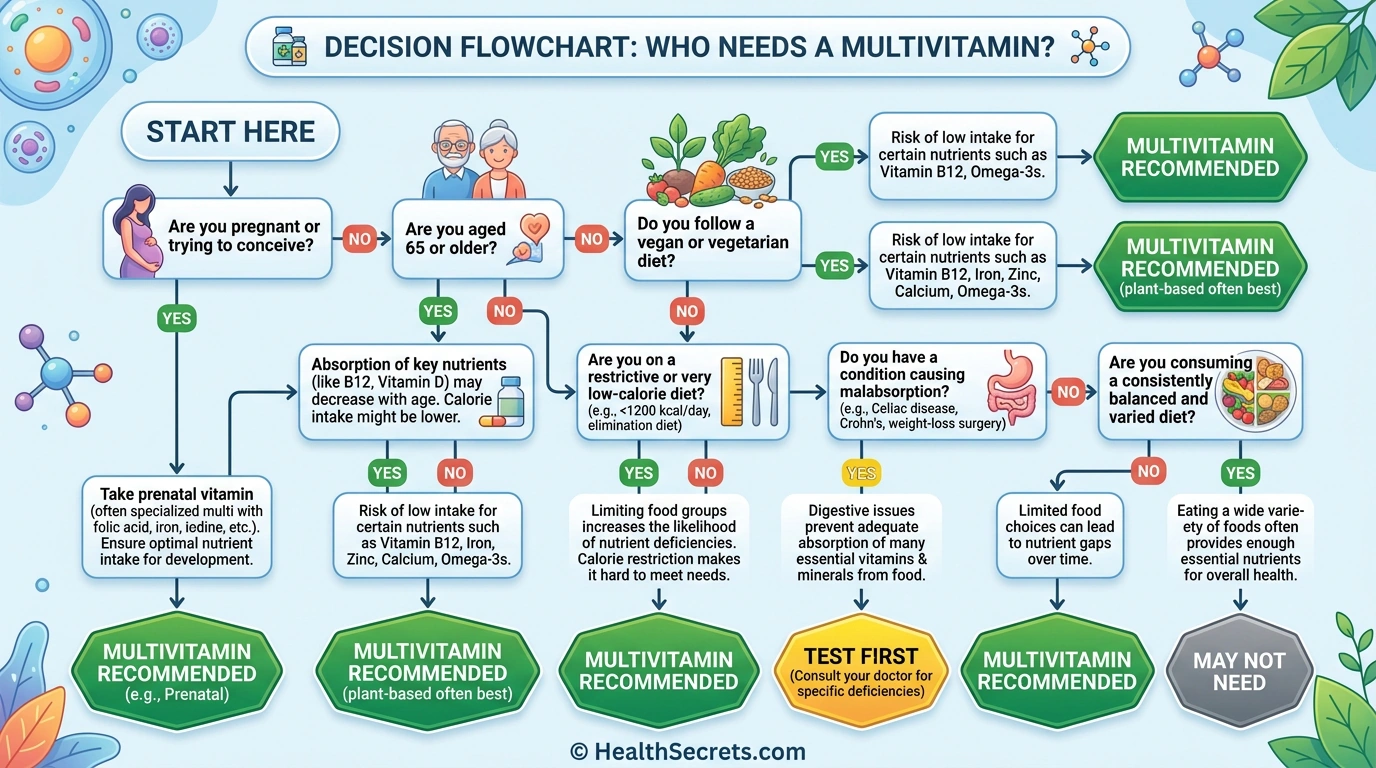
So why does anyone take them? Because the picture is more nuanced than the headlines suggest. While multivitamins don't appear to prevent heart disease or cancer in healthy, well-nourished adults, they do serve as a genuine safety net for people with nutrient gaps — and that's a larger group than you might think. Older adults with declining absorption. Pregnant individuals with dramatically increased nutrient needs. Vegans missing critical B12. Anyone on a restrictive diet or dealing with malabsorption.
And then there's the cognitive angle. The landmark COSMOS trial found that daily multivitamin use improved episodic memory and slowed cognitive aging by the equivalent of roughly two years in older adults [2]. That's not nothing.
This guide cuts through the marketing noise. We'll walk you through what the research actually shows, who genuinely benefits from a multivitamin, what separates a quality product from an expensive placebo, and our top-tested picks across every category. Whether you're trying to build a complete supplement strategy or just figure out if you're wasting $30 a month — keep reading.
⚠️ This article is for educational purposes only. Always consult a healthcare provider before starting any supplement regimen, especially if you take medications or have existing health conditions.
What Should You Look for in a Quality Multivitamin?
The difference between a well-formulated multivitamin and a cheap drugstore brand is enormous — and it comes down to nutrient forms, dosing, and independent verification. Most consumers have no idea that the same vitamin can come in forms that differ dramatically in absorption and effectiveness.
Which Vitamin and Mineral Forms Actually Get Absorbed?
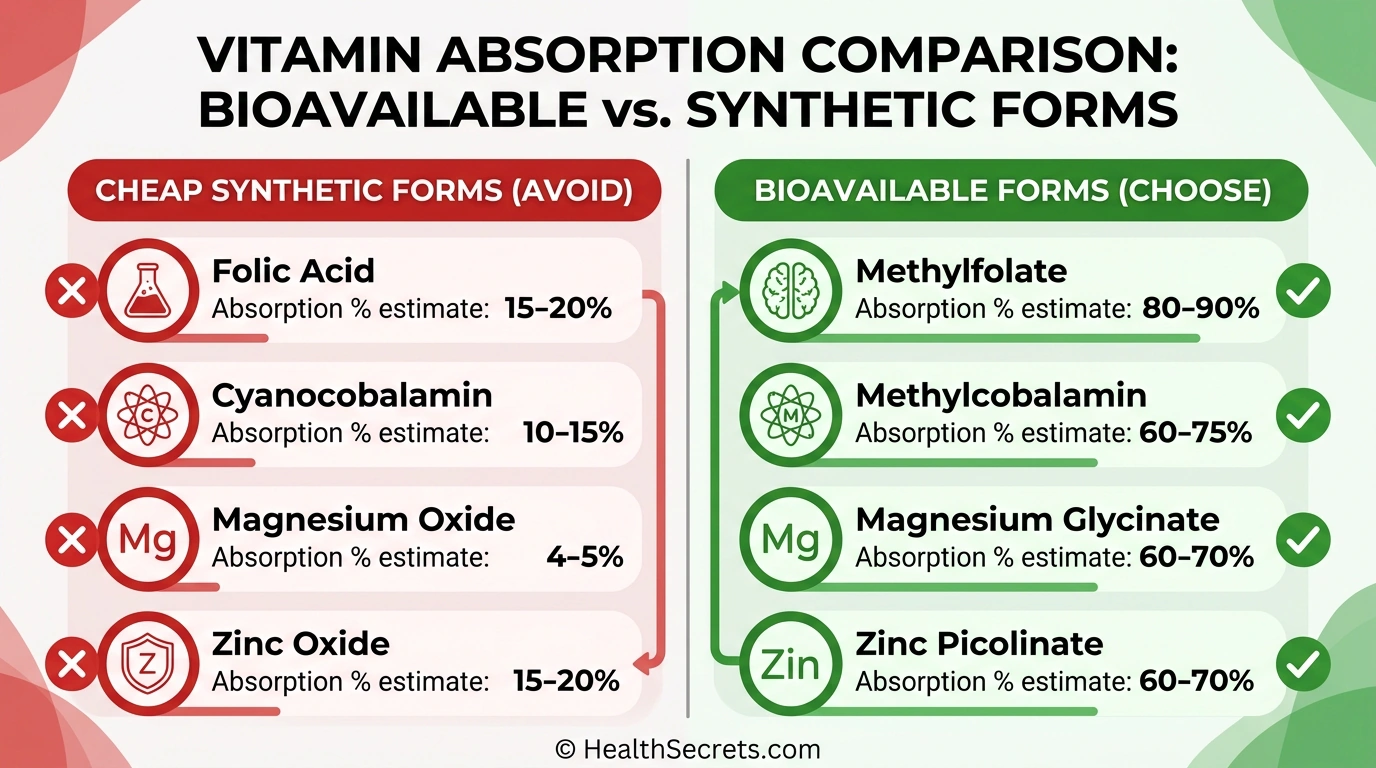
Bioavailability — how well your body can absorb and use a nutrient — is the single most important quality factor. A multivitamin packed with poorly absorbed forms is essentially expensive waste.
B vitamins (the biggest differentiator):
- Folate: Choose methylfolate (5-MTHF) over folic acid. Roughly 40–60% of the population carries MTHFR gene variants that impair folic acid conversion [10]. Methylfolate bypasses this entirely.
- B12: Choose methylcobalamin or adenosylcobalamin over cyanocobalamin. The active forms don't require conversion and are better retained.
Minerals (chelated vs. oxide):
- Choose: Magnesium glycinate, zinc picolinate or glycinate, iron bisglycinate, calcium citrate
- Avoid: Magnesium oxide, zinc oxide, iron sulfate, calcium carbonate — poorly absorbed and more likely to cause GI distress
Fat-soluble vitamins:
- Vitamin D: D3 (cholecalciferol), never D2 — D3 is significantly more effective at raising blood levels
- Vitamin K: Look for K2 (MK-7), which directs calcium to bones rather than arteries
- Vitamin E: d-alpha-tocopherol (natural) or mixed tocopherols, not dl-alpha-tocopherol (synthetic)
How Do You Spot Red Flags on a Supplement Label?
Knowing what to avoid is just as important as knowing what to look for. Here's your checklist:
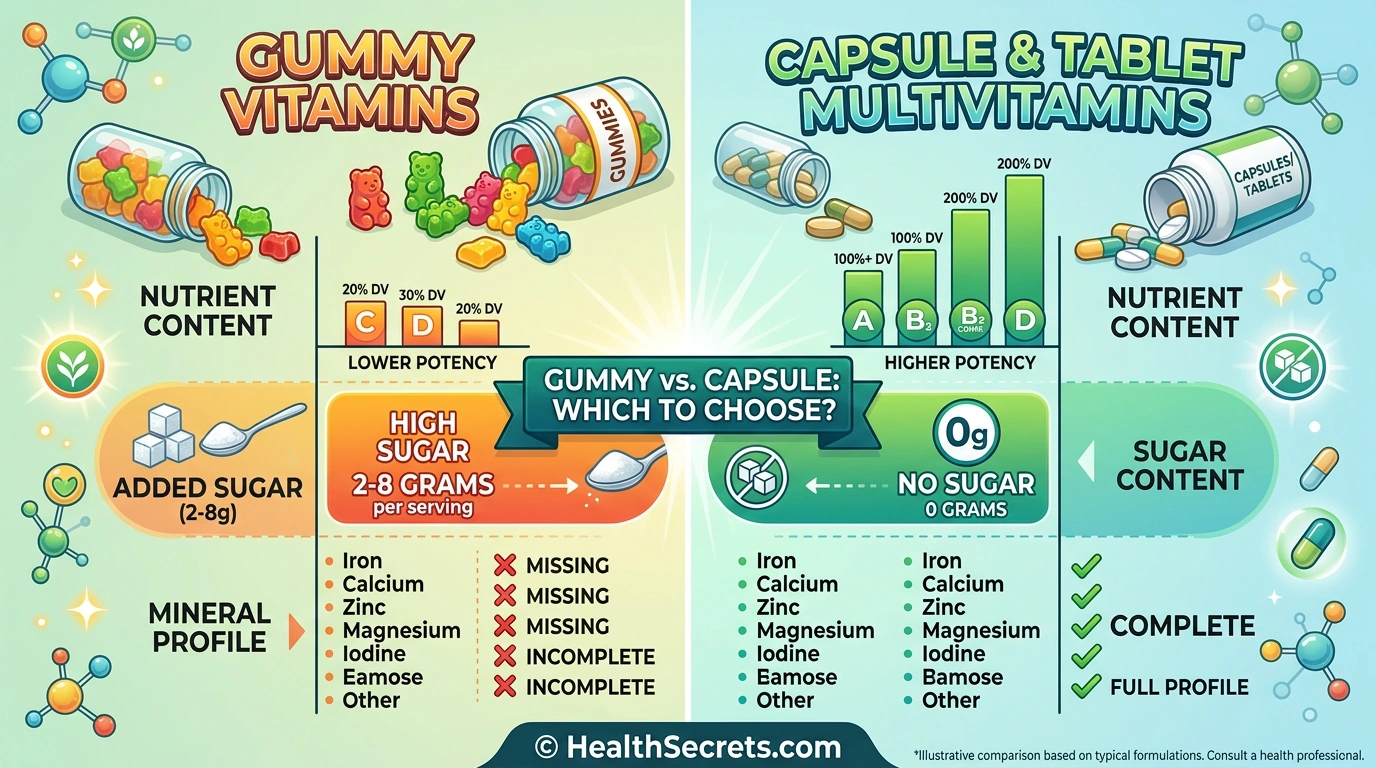
- Avoid megadoses: More than 100–200% DV of fat-soluble vitamins (A, D, E, K) can accumulate and cause toxicity. Excessive B vitamins (>1,000% DV) are unnecessary — you'll just excrete them.
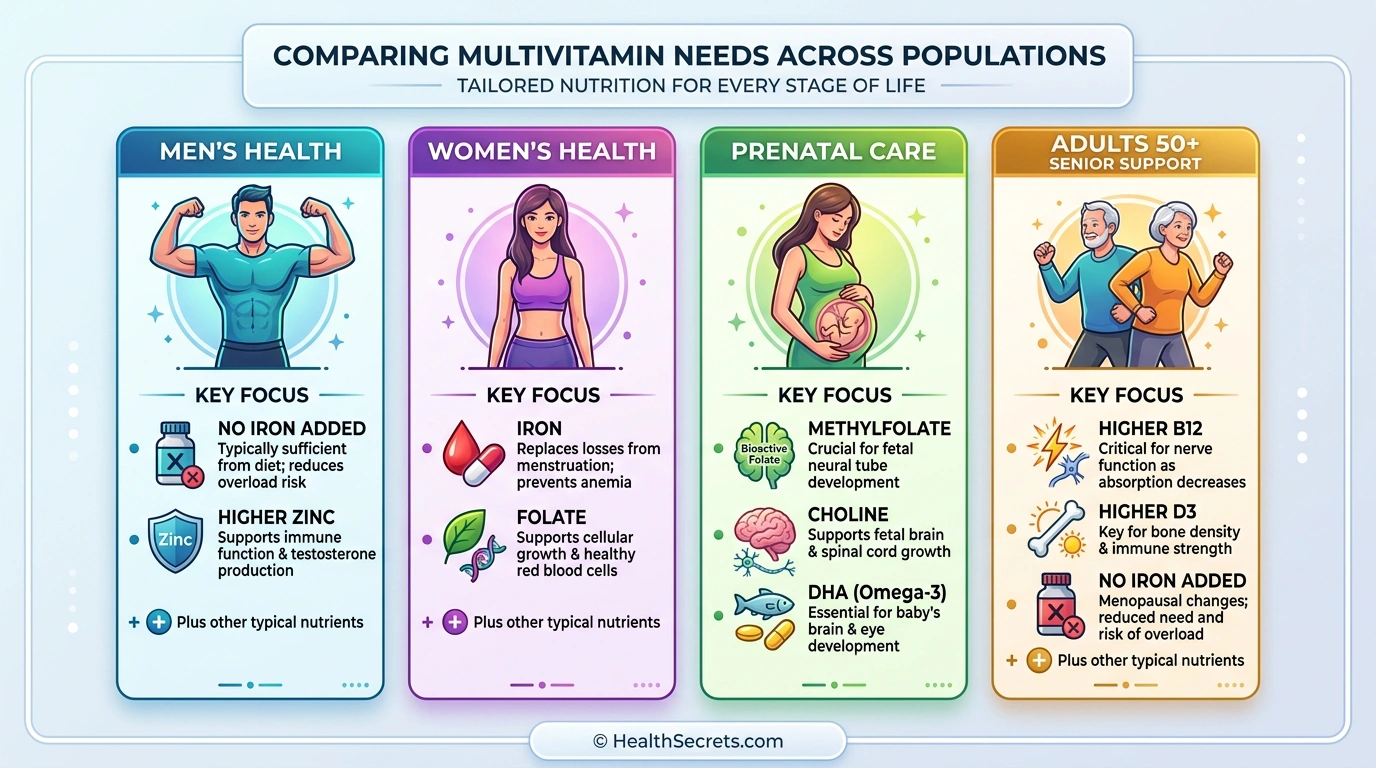
- Watch for unnecessary iron: Men and postmenopausal women generally don't need supplemental iron. Excess iron increases oxidative stress and, in rare cases, can contribute to iron overload.
- Skip proprietary blends: If the label doesn't tell you exactly how much of each nutrient is included, the manufacturer is hiding something.
Demand third-party testing:
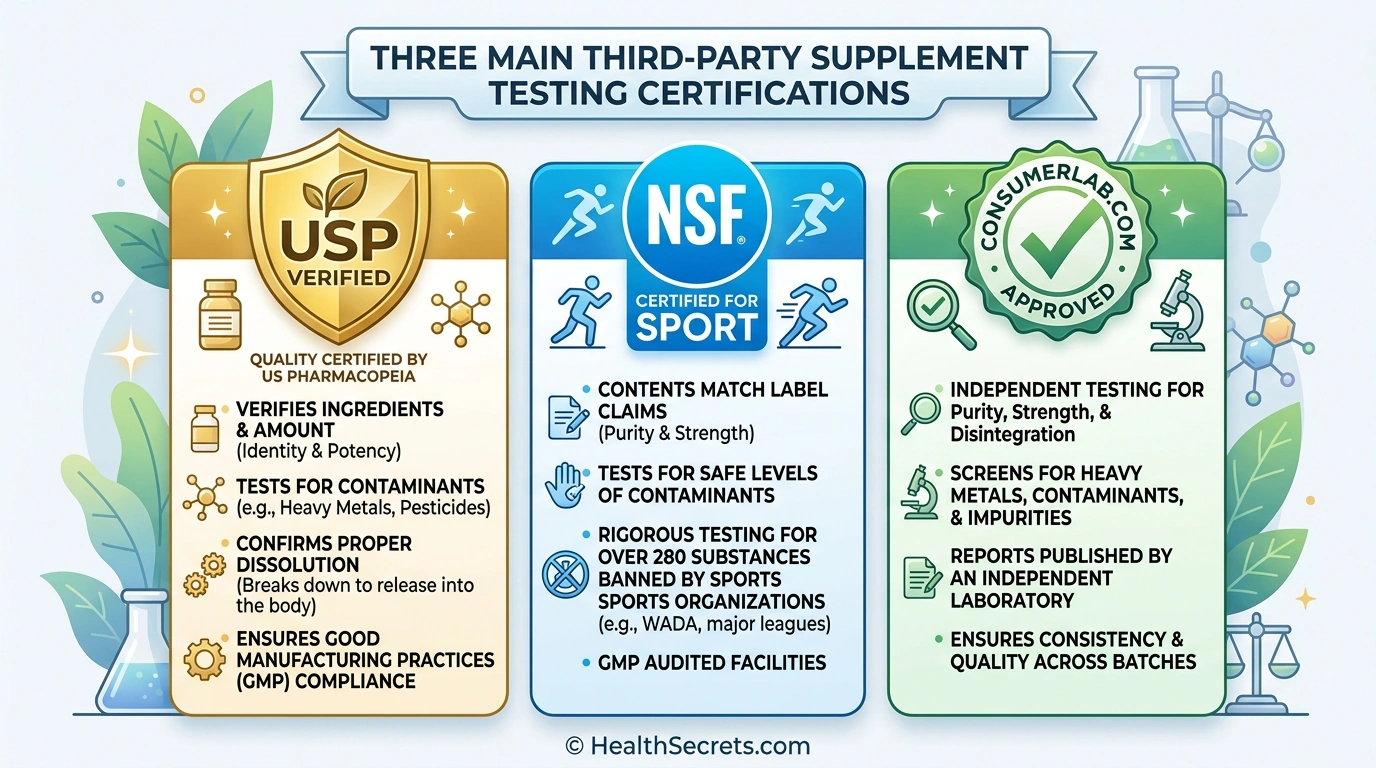
- USP Verified: Tests potency, purity, and dissolution
- NSF Certified for Sport: Verifies no banned substances
- ConsumerLab approved: Independent purity and label accuracy testing
| Nutrient | Avoid This Form | Choose This Form | Why It Matters |
|---|---|---|---|
| Folate (B9) | Folic acid | Methylfolate (5-MTHF) | 40–60% of people can't convert folic acid efficiently |
| B12 | Cyanocobalamin | Methylcobalamin | Active form, no conversion needed, better retained |
| Vitamin D | D2 (ergocalciferol) | D3 (cholecalciferol) | D3 raises blood levels 40–70% more effectively |
| Magnesium | Oxide | Glycinate or citrate | Oxide has only ~4% absorption; glycinate ~80% |
| Zinc | Oxide | Picolinate or glycinate | Significantly better absorption, less nausea |

Are You Unknowingly Inflaming Your Body?
Get the free Health Vitals & Nutrient Checklist — the daily guide that shows you which habits and supplements are silently triggering inflammation.
How Did We Evaluate These Multivitamins?
We assessed over 40 multivitamin products across six weighted criteria to identify the best options for each population. Our evaluation prioritized what actually matters for your health — not marketing claims or brand recognition.
Our evaluation criteria:
- Nutrient forms (30% weight): Are B vitamins methylated? Are minerals chelated? Is vitamin D in D3 form? We rejected any product using folic acid instead of methylfolate as a primary folate source.
- Dosing appropriateness (20% weight): Are doses within therapeutic ranges without exceeding safe upper limits? We penalized megadoses of fat-soluble vitamins and rewarded formulas that stayed in the 100–200% DV sweet spot.
- Third-party testing (20% weight): USP, NSF, or ConsumerLab certification was strongly preferred. Products without any independent verification were ranked lower.
- Population-specific formulation (15% weight): Does the men's formula exclude iron? Does the women's formula include adequate iron and folate? Does the 50+ formula boost B12 and D3?
- Clean label (10% weight): Minimal artificial colors, flavors, and unnecessary fillers. No proprietary blends.
- Value (5% weight): Cost per day relative to quality. Expensive doesn't always mean better.
We cross-referenced our findings with published research, ConsumerLab reports, and NIH Office of Dietary Supplements guidelines [7] to ensure our recommendations align with current evidence.

Evidence-Based Supplement Organizer & Safety Log
Track your daily intake, verify third-party certifications, and prepare clear questions for your clinician.
How Do You Use a Multivitamin Effectively?
Taking a multivitamin correctly can meaningfully affect how well you absorb its nutrients. Most people just pop a pill in the morning without thinking about it — but a few simple habits make a real difference.
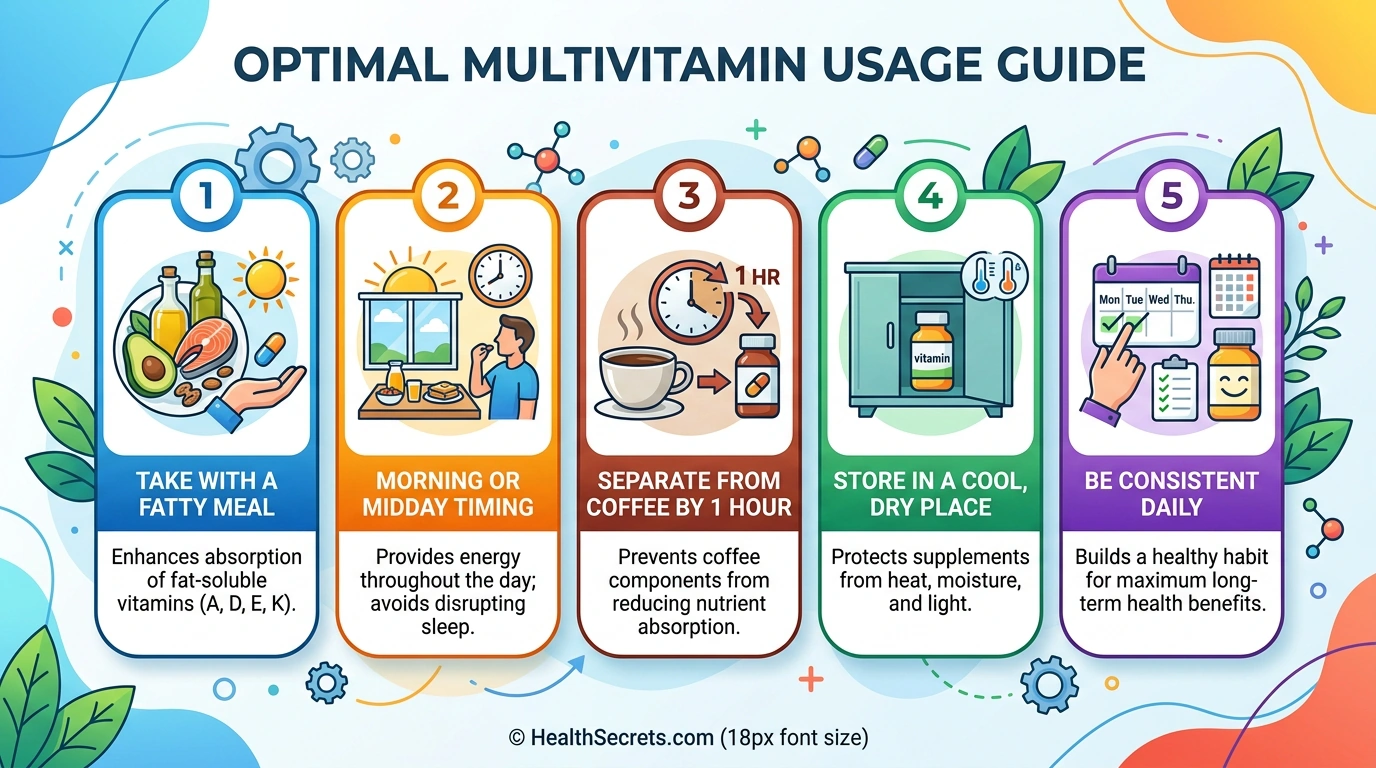
- Take with food containing fat. Fat-soluble vitamins (A, D, E, K) require dietary fat for absorption. Taking your multivitamin with breakfast or lunch that includes some healthy fat — avocado, eggs, olive oil, nuts — significantly boosts uptake.
- Morning or midday, not evening. B vitamins can be mildly stimulating. Taking your multivitamin in the evening may interfere with sleep for some people.
- Split doses when possible. If your product is a twice-daily formula, take one serving with breakfast and one with dinner. Smaller amounts of water-soluble vitamins are absorbed more efficiently than one large dose.
- Separate from certain beverages. Coffee and tea contain tannins and polyphenols that can reduce iron and mineral absorption. If your multivitamin contains iron, separate it from coffee by at least an hour.
- Be consistent. The benefits of multivitamins come from sustained, daily use over months — not occasional supplementation. Set a reminder if needed.
- Test, don't guess. Before committing to a multivitamin long-term, consider testing your levels of vitamin D, B12, iron (ferritin), and magnesium. You might discover you only need targeted supplementation rather than a full multivitamin — which is often more effective and less expensive.
Are There Any Safety Concerns with Multivitamins?
For most people at recommended doses, multivitamins are very safe. The USPSTF's 2022 review found insufficient evidence of harm from standard multivitamin use [5]. But "safe" doesn't mean "risk-free for everyone."
Iron overload risk: Men and postmenopausal women taking iron-containing multivitamins unnecessarily can accumulate excess iron over time. People with hereditary hemochromatosis (iron storage disorder) are at particular risk.
Fat-soluble vitamin accumulation: Vitamins A, D, E, and K are stored in body fat and can accumulate to toxic levels with prolonged megadosing. Vitamin A is the biggest concern — chronic intake above 10,000 IU can cause liver damage.
Drug interactions:
- Blood thinners (warfarin): Vitamin K in multivitamins can interfere with anticoagulation
- Thyroid medications (levothyroxine): Calcium and iron reduce absorption — separate by 4 hours
- Antibiotics (tetracyclines, fluoroquinolones): Minerals reduce antibiotic absorption
- Levodopa (Parkinson's): Iron and B6 can interfere
Nausea and GI upset: Common with iron-containing formulas, especially on empty stomach. Switch to iron bisglycinate forms or take with food.
The "more is better" trap: Taking multiple supplements alongside a multivitamin risks exceeding upper limits. Audit your total intake from all sources — food, fortified foods, individual supplements, and multivitamin combined.

Action Plan
What Should You Do First to Decide If You Need a Multivitamin?
Follow the sequence below, work through each phase in order, and use the checklist as your practical implementation guide.
Rather than blindly adding a multivitamin to your routine, follow this evidence-based decision framework to determine whether you actually need one — and if so, which type.
Phase 1: Assess Your Actual Need (Week 1)
- Evaluate your diet honestly: Do you eat 5+ servings of fruits and vegetables daily? Variety of proteins? Whole grains?
- Identify risk factors: Are you pregnant, 65+, vegan/vegetarian, on a restrictive diet, or taking nutrient-depleting medications?
- Check: Are you already taking individual supplements (D3, B12, magnesium, iron)? A multivitamin may duplicate what you're already covered on
Phase 2: Test for Deficiencies (Week 1–2)
- Request blood tests for vitamin D (25-OH-D), B12, ferritin (iron stores), and RBC magnesium
- Consider a comprehensive metabolic panel for calcium and electrolytes
- Review results with your healthcare provider
Phase 3: Choose the Right Product (Week 2–3)
- Match formula to your demographics: gender-specific, age-appropriate, life-stage relevant
- Verify bioavailable forms: methylfolate, methylcobalamin, chelated minerals, D3
- Confirm third-party testing (USP, NSF, or ConsumerLab)
- Check that doses are appropriate (100–200% DV, no megadoses of fat-soluble vitamins)
Phase 4: Optimize and Monitor (Month 1–3)
- Take consistently with a fat-containing meal
- Continue prioritizing nutrient-dense whole foods — the multivitamin supplements your diet, not the other way around
- Retest deficient nutrients after 3 months to confirm improvement
- Reassess annually: your needs change with age, diet, and health status