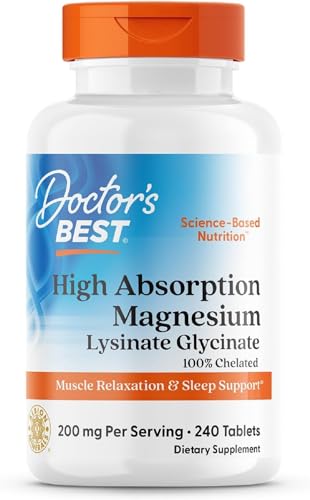
If you've been searching for a natural way to calm anxiety, magnesium may be one of the most underrated options available. It's not a trendy adaptogen or a new supplement — it's an essential mineral that up to 50% of Americans don't get enough of. And that deficiency directly affects your brain's ability to stay calm. [5] [7]
A 2017 systematic review found that magnesium supplementation was associated with reduced anxiety in individuals with low magnesium status, and subsequent studies have reinforced this finding. The mechanism is straightforward: magnesium is required for GABA receptor function — the same neurotransmitter system that anti-anxiety medications like benzodiazepines target. [8]
This guide answers the question directly, explains the science, and gives you practical guidance on which form, how much, and how long to take magnesium for anxiety relief.
Related reading: Natural Anxiety Relief: Complete Guide · Waking Up at 3am: Causes and Fixes
Does Magnesium Actually Help with Anxiety?
Yes. Clinical evidence supports magnesium supplementation for anxiety, particularly in people with suboptimal magnesium status — which includes roughly half the population. A 2017 systematic review published in Nutrients analyzed 18 studies and concluded that magnesium supplementation may be beneficial for subjective anxiety in individuals vulnerable to magnesium deficiency [1] [2]. A subsequent 2017 randomized trial found that 248 mg of magnesium daily significantly reduced anxiety symptoms.
The effect is most pronounced for chronic background anxiety (persistent worry, tension, and stress reactivity) rather than acute panic. If you're constantly feeling "on edge," have trouble relaxing, experience muscle tension, or find it hard to wind down at night, magnesium deficiency may be a significant contributing factor.
How Strong Is the Evidence?
The evidence is moderate-to-strong for mild-to-moderate anxiety in people with low magnesium status. It's not as robust as the evidence for SSRIs or CBT for diagnosed anxiety disorders, but it's meaningful — particularly because it addresses a root nutritional cause rather than masking symptoms. Magnesium is best positioned as a first-line natural intervention and an excellent complement to therapy or medication.

The Vagal Reset Breathing Cards
Four cut-out breathing patterns with exact counts and the moment each fits, a ten-session log that averages your before-and-after tension, and when breathwork is the wrong tool.
How Does Magnesium Reduce Anxiety in the Brain?
Magnesium reduces anxiety through three primary mechanisms: enhancing GABA receptor function (promoting calm), blocking NMDA glutamate receptors (reducing excitatory brain activity), and modulating the HPA axis stress response (lowering cortisol) [4]. Together, these mechanisms shift your nervous system from a state of hyperactivation toward balance and calm.
How Does Magnesium Affect GABA?
GABA (gamma-aminobutyric acid) is your brain's primary inhibitory (calming) neurotransmitter. Magnesium is required for GABA receptors to function properly. When magnesium is low, GABA receptors become less responsive, meaning your brain's natural calming system is impaired. This is the same system that benzodiazepines (Xanax, Valium, Ativan) enhance — but magnesium supports it naturally without addiction or withdrawal risks.
How Does Magnesium Block Glutamate?
Glutamate is GABA's opposite — it's the brain's primary excitatory neurotransmitter. Excess glutamate causes the racing thoughts, hypervigilance, and "can't turn off my brain" feeling common in anxiety. Magnesium sits in the NMDA glutamate receptor channel, acting as a natural blocker. When magnesium is deficient, glutamate receptors become overactive, driving anxiety, insomnia, and stress sensitivity [6].

How Does Magnesium Affect Cortisol?
Magnesium helps regulate the HPA (hypothalamic-pituitary-adrenal) axis — your body's central stress response system [3]. Studies show that magnesium deficiency leads to elevated cortisol, while supplementation helps normalize cortisol levels. This reduces the chronic stress response that fuels anxiety.
What Type of Anxiety Does Magnesium Help Most?
Magnesium is most effective for chronic background anxiety (persistent worry, tension, difficulty relaxing), stress-related anxiety (elevated cortisol and HPA axis activation), physical anxiety symptoms (muscle tension, restlessness, heart palpitations), and anxiety-related insomnia. It's less effective as a standalone treatment for severe panic disorder or PTSD, though it can be a valuable complement.

Which Form of Magnesium Is Best for Anxiety?
Magnesium glycinate is the gold standard for anxiety because:
- Glycinate (glycine) is itself an inhibitory neurotransmitter with calming properties
- It has the highest bioavailability among common magnesium forms
- It causes no GI distress (unlike magnesium citrate or oxide)
- The dual action of magnesium + glycine provides a stronger anxiolytic effect than magnesium alone
Other acceptable forms:
- Magnesium threonate — Crosses the blood-brain barrier effectively; good for cognitive anxiety and brain fog
- Magnesium taurate — Taurine has mild anxiolytic properties; good for anxiety with heart palpitations
Forms to avoid for anxiety:
- Magnesium oxide — Very low absorption (4%); primarily a laxative
- Magnesium citrate — Decent absorption but causes loose stools at anxiolytic doses
How Much Magnesium Should You Take for Anxiety?
The effective dose for anxiety is 200–400 mg of elemental magnesium daily (as magnesium glycinate). Start with 200 mg before bed and increase to 400 mg if well-tolerated. Taking it before bed serves double duty: it reduces anxiety AND improves sleep quality, since both share the GABA mechanism.
Are There Any Risks or Side Effects of Magnesium for Anxiety?
Magnesium glycinate is one of the safest supplements available. Side effects are rare and mild — occasionally slight drowsiness (which is beneficial if taken before bed) or mild GI comfort at high doses. The most important consideration is kidney function: people with severe kidney disease should avoid magnesium supplements because the kidneys regulate magnesium excretion.
When Should You NOT Take Magnesium for Anxiety?
- Severe kidney disease — Impaired magnesium excretion can cause dangerous accumulation
- Taking certain antibiotics (fluoroquinolones, tetracyclines) — Magnesium can reduce absorption
- Taking bisphosphonates for osteoporosis — Separate by at least 2 hours
- Already taking high-dose magnesium from other sources — Total intake shouldn't exceed 350 mg supplemental (RDA upper limit, though many practitioners use higher doses safely)
How Do You Start Taking Magnesium for Anxiety?
Start tonight with 200 mg of magnesium glycinate taken 30–60 minutes before bed. Maintain this dose for one week, then increase to 400 mg if anxiety symptoms persist. Track your anxiety symptoms, sleep quality, and muscle tension in a journal to assess improvement over the first 4–6 weeks.

What Does an Effective Magnesium Protocol Look Like?
- Week 1: 200 mg magnesium glycinate before bed. Note any changes in sleep quality and muscle tension.
- Weeks 2–4: Increase to 400 mg if well-tolerated. Begin noticing reduced background anxiety, improved stress resilience, and better sleep.
- Weeks 4–6: Assess overall anxiety improvement. Most people notice meaningful changes by this point. If no improvement, magnesium deficiency may not be your primary anxiety driver — consider other interventions.
What Signs Suggest Magnesium Deficiency Is Driving Your Anxiety?
If you have several of these alongside anxiety, magnesium deficiency is likely contributing:
- Muscle cramps, twitches, or tension (especially calves and jaw clenching)
- Difficulty falling or staying asleep
- Heart palpitations or racing heart
- Irritability and low stress tolerance
- Restless legs
- Chocolate cravings (cacao is high in magnesium)
- History of low magnesium intake (few green vegetables, nuts, seeds)
What Foods Are High in Magnesium for Anxiety Support?
While supplementation provides the most reliable therapeutic doses, dietary magnesium from food supports overall intake. The best food sources include pumpkin seeds (156 mg per oz), dark chocolate 70%+ (65 mg per oz), spinach (157 mg per cup cooked), almonds (80 mg per oz), avocado (58 mg per fruit), black beans (120 mg per cup), and Swiss chard (150 mg per cup cooked).
What Depletes Magnesium and Worsens Anxiety?
- Chronic stress — The #1 magnesium depleter; stress burns through magnesium rapidly
- Alcohol — Increases magnesium excretion through the kidneys
- Caffeine excess — Increases magnesium loss
- Processed food diet — Refined grains have 80–97% less magnesium than whole grains
- Medications — PPIs (proton pump inhibitors), diuretics, and some antibiotics deplete magnesium
- Intense exercise — Magnesium is lost through sweat
Action Plan
What Should You Do First If You Want to Try Magnesium for Anxiety?
Follow the sequence below, work through each phase in order, and use the checklist as your practical implementation guide.
Start tonight: take 200 mg of magnesium glycinate 30–60 minutes before bed. This single action addresses anxiety, sleep, and muscle tension simultaneously with minimal cost and virtually no risk. If you notice improvement within 1–2 weeks, you've likely identified a meaningful contributing factor to your anxiety.
Tonight's Checklist:
- Take 200 mg magnesium glycinate 30–60 minutes before bed
- Rate your anxiety level (1–10) and note sleep quality as a baseline
- Avoid caffeine after noon and alcohol before bed
This Week's Checklist:
- Continue 200 mg magnesium glycinate nightly
- Track anxiety, sleep, and muscle tension daily
- Add magnesium-rich foods to meals: pumpkin seeds, spinach, dark chocolate, almonds
- Increase to 400 mg after one week if no side effects
Month 1 Checklist:
- Assess anxiety improvement at 4 weeks
- If improved, continue magnesium long-term as a maintenance supplement
- Consider adding L-theanine (200 mg) for additional calm focus
- If no improvement, explore other anxiety interventions (ashwagandha, therapy, medical evaluation)
- Consider requesting serum magnesium or RBC magnesium blood test