Digestive enzymes are essential proteins that break down food into absorbable nutrients. This comprehensive review covers the best digestive enzyme supplements for 2026, including broad-spectrum formulas, plant-based options, and targeted enzymes for specific digestive issues like bloating, gas, and nutrient malabsorption. [2] [4]
If you've ever experienced bloating after meals, uncomfortable gas, or that heavy feeling that lingers for hours after eating, your body may not be producing enough digestive enzymes. These critical proteins are responsible for breaking down every bite of food into nutrients your body can actually absorb — and when they fall short, digestion suffers [7]. [6]
The digestive enzyme supplement market has exploded in recent years, with hundreds of products promising better digestion. But not all enzyme supplements are created equal. Potency varies dramatically, some formulas lack key enzymes, and many products use proprietary blends that hide actual dosages. [8] [9]
We spent over 60 hours researching and evaluating digestive enzyme supplements to bring you this evidence-based guide. Whether you're dealing with occasional bloating, managing a diagnosed enzyme deficiency, or recovering from gallbladder removal, this review will help you find the right product for your specific needs.
What Should You Look for in a Digestive Enzyme Supplement?
The best digestive enzyme supplements contain a broad spectrum of enzymes with clearly labeled activity units, third-party testing verification, and formulations matched to your specific digestive needs. Quality varies enormously across products, so understanding what separates effective supplements from ineffective ones is critical before you buy. [15] [16]
How Do You Read Enzyme Activity Units?
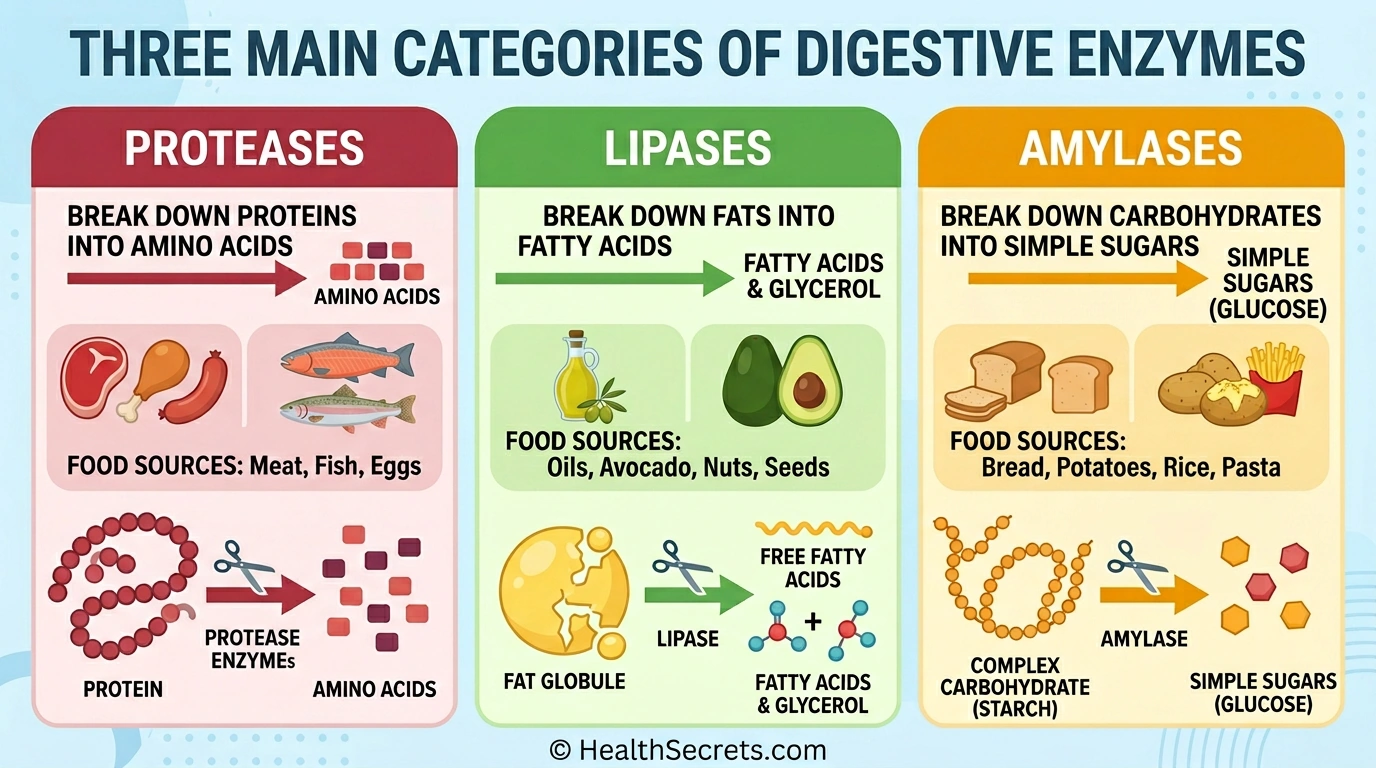
Enzyme potency is measured in activity units, not milligrams. A supplement with 500mg of a proprietary blend tells you almost nothing about its effectiveness. Instead, look for standardized units established by the Food Chemical Codex (FCC): [17]
| Enzyme | Activity Unit | What It Breaks Down | Effective Range |
|---|---|---|---|
| Protease | HUT | Proteins | 20,000–80,000 HUT |
| Lipase | FIP/LU | Fats | 1,000–3,000 FIP |
| Amylase | DU | Starches | 10,000–25,000 DU |
| Lactase | ALU | Lactose (dairy) | 1,000–9,000 ALU |
| Cellulase | CU | Plant fiber | 200–1,000 CU |

Third-party testing is non-negotiable for enzyme supplements. The best products carry certifications from organizations like NSF International, USP, or are verified through independent labs. Additionally, look for:
- GMP certification — confirms manufacturing quality standards
- No proprietary blends — every enzyme should be individually listed with activity units
- Delayed-release or enteric coating — protects enzymes from stomach acid degradation
- Allergen-free formulations — especially important if you have food sensitivities
- Clearly stated enzyme sources — plant-based (Aspergillus), animal-based (porcine pancreatin), or microbial
Plant-Based vs. Animal-Based Enzymes: Which Are Better?
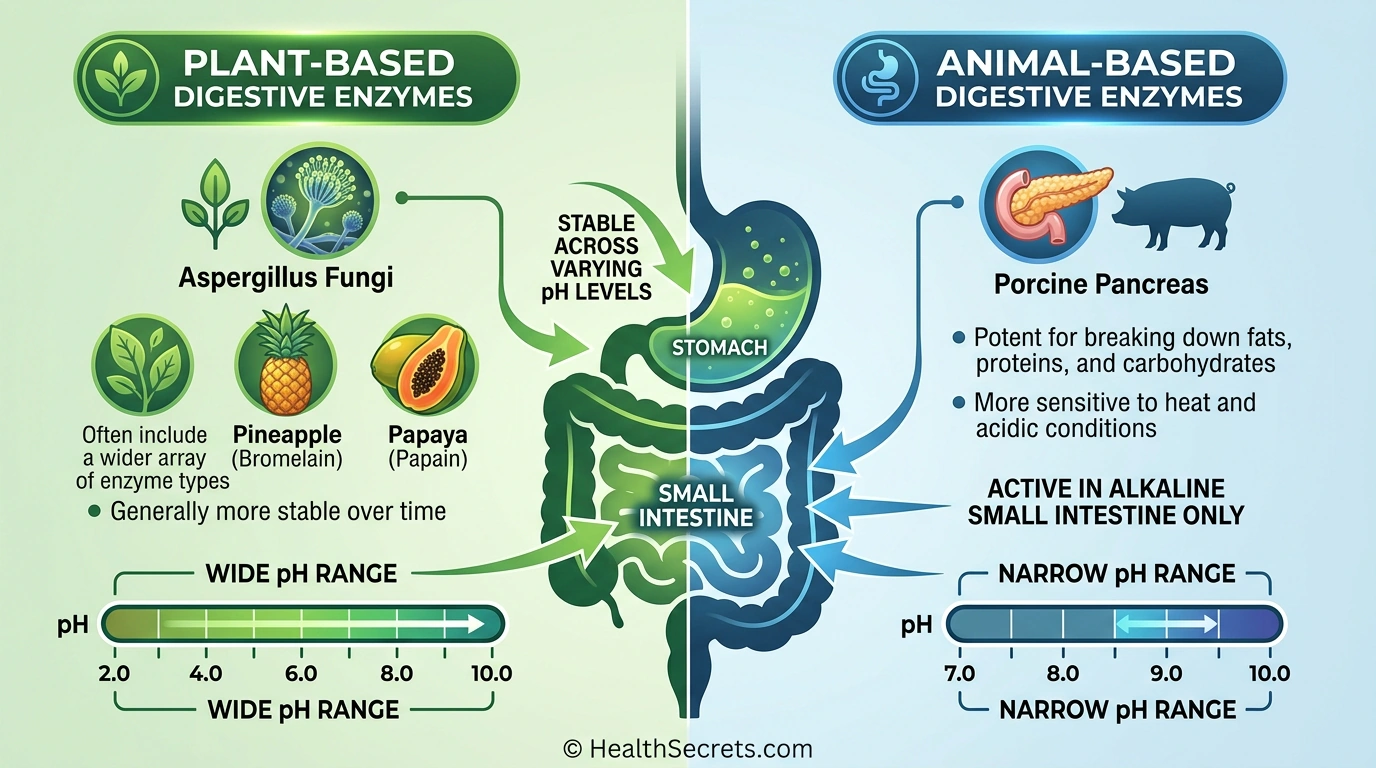
Plant-based enzymes derived from Aspergillus fermentation function across a pH range of 2.0–10.0, meaning they work in both the acidic stomach and the alkaline small intestine. Animal-derived pancreatic enzymes (pancreatin) only activate in the alkaline environment of the small intestine (pH 7.0+), leaving the stomach phase of digestion unsupported. For most people, plant-based broad-spectrum formulas offer superior coverage.

Is Your Gut Ruining Your Day?
Get the free printable tracker thousands of readers use to pinpoint exactly what's causing their gut issues — no restrictive diets required.
How Did We Evaluate These Digestive Enzyme Supplements?
We evaluated over 30 digestive enzyme supplements using a weighted scoring system across seven criteria: enzyme spectrum breadth, potency per serving, third-party testing, ingredient transparency, value per dose, user-reported outcomes, and formulation innovation. Each product was scored out of 100 and only those scoring above 80 made our final recommendations.
Enzyme Spectrum and Potency (35% Weight)
We prioritized products offering at least 10 distinct enzyme types with activity units clearly listed for each. Products using proprietary blends with hidden dosages were penalized. We cross-referenced claimed potency against FCC standards and verified that activity units fell within clinically meaningful ranges based on published research.
Third-Party Testing and Transparency (25% Weight)
Products with NSF, USP, or independent lab verification scored highest. We also evaluated label accuracy by comparing manufacturer claims against available Certificate of Analysis (COA) data. Brands that publish COAs publicly or provide them upon request received bonus points.
User Experience and Tolerability (20% Weight)
We analyzed thousands of verified user reviews across Amazon, iHerb, and independent health forums, focusing on reported effectiveness for bloating, gas, and overall digestion improvement. Products with consistent reports of side effects like nausea or cramping were scored lower.
Value and Formulation (20% Weight)
We calculated cost per serving and cost per enzyme activity unit to determine true value. Products offering delayed-release capsules, DRcaps technology, or acid-resistant coatings scored higher for bioavailability. Vegan, allergen-free, and Non-GMO formulations received additional consideration.

The 14-Day Gut-Friendly Meal Planning System
Fourteen planned days of gut-friendly meals with a gentle four-step fiber ladder, low-FODMAP swaps, shopping lists and a symptom log that adds itself up.
How Do You Use Digestive Enzyme Supplements Effectively?
For optimal results, take digestive enzymes at the very beginning of your meal or with your first few bites of food. This allows the enzymes to mix with food in the stomach and begin breaking down nutrients immediately. Taking enzymes on an empty stomach or well after eating significantly reduces their digestive benefit.
When Should You Take Digestive Enzymes?
Timing is everything with digestive enzymes. The ideal window is 5 minutes before eating through the first few bites of your meal. If you forget, taking them mid-meal still provides benefit, but waiting until after a meal reduces effectiveness by 40–60% according to gastroenterology research.
- Before meals: 1–5 minutes before eating (ideal)
- With first bites: Swallow the capsule with your first sips of water at mealtime
- Mid-meal: Still beneficial if you forgot to take them earlier
- After meals: Reduced effectiveness; only useful within 20–30 minutes of finishing
How Do You Determine the Right Dose?
Start with the manufacturer's recommended dose (typically 1 capsule per meal) for the first week. If symptoms persist, you can gradually increase to 2 capsules per meal. For heavy, high-fat meals, an extra capsule provides additional lipase support. People with diagnosed pancreatic insufficiency should follow their physician's dosing protocol, which may require significantly higher doses.
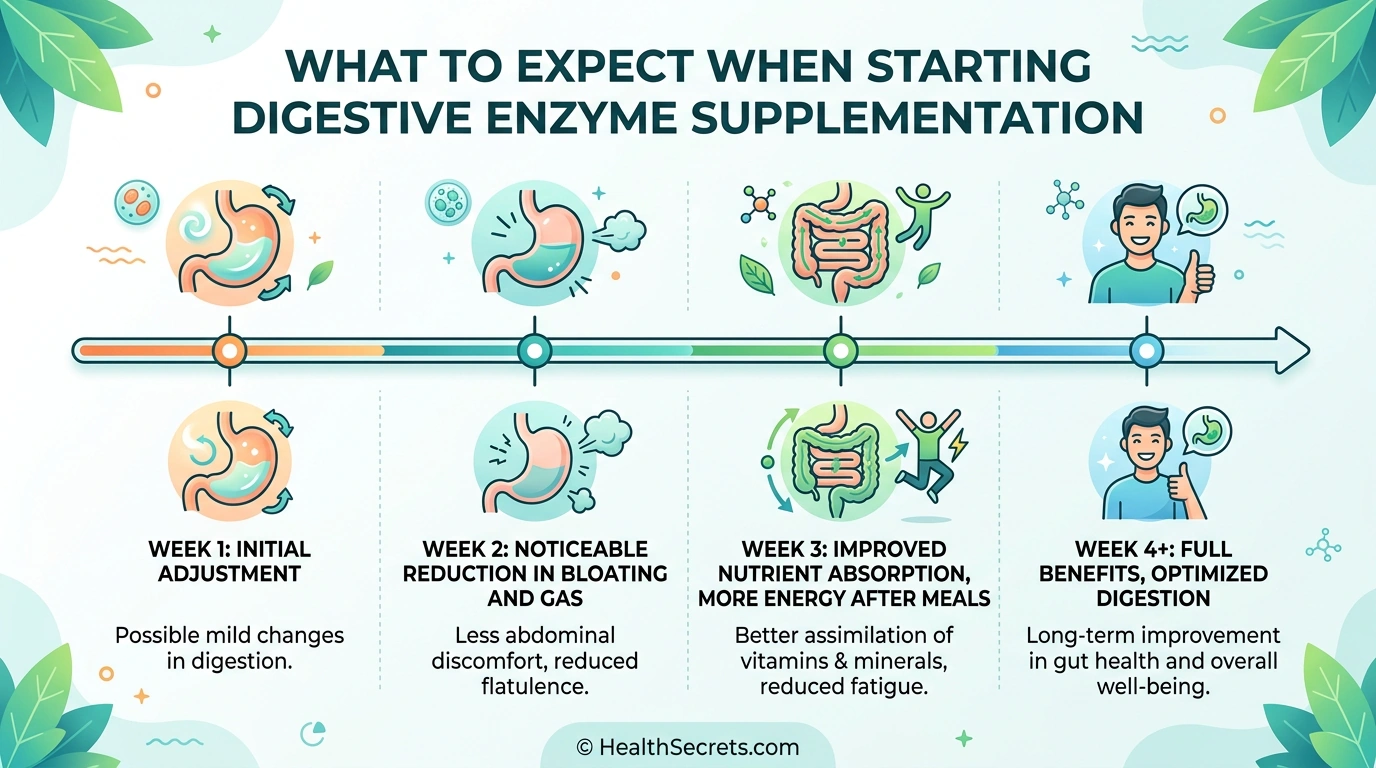
What Should You Expect When Starting?
Most people notice reduced bloating and gas within the first 2–3 days of consistent use. Full benefits typically develop over 1–2 weeks as your body adjusts. Some people experience mild changes in stool consistency during the first few days — this is normal and usually resolves quickly. If you experience persistent discomfort, reduce your dose or try a different formulation.
Are There Any Safety Concerns with Digestive Enzyme Supplements?
Digestive enzyme supplements are generally well-tolerated with a strong safety profile for most adults. The most common side effects are mild and include nausea, stomach cramping, and diarrhea, which typically resolve within a few days. However, certain populations should exercise caution or avoid specific enzyme types.
Who Should Avoid Digestive Enzymes?
- People on blood thinners (warfarin, aspirin, clopidogrel) — proteolytic enzymes like bromelain and papain may increase bleeding risk
- People with active ulcers or gastritis — some enzyme formulas can irritate inflamed stomach lining
- Those allergic to pineapple, papaya, or mold — plant-based enzymes from these sources or Aspergillus fermentation may trigger reactions
- People taking diabetes medications — amylase supplements may affect blood sugar management
- Pregnant or nursing women — insufficient safety data; consult a healthcare provider first
What Are the Known Drug Interactions?
Digestive enzymes can interact with several medication classes [13]. Proteolytic enzymes may potentiate blood thinners and increase bleeding risk. High-dose lipase (above 10,000 units/kg/day) has been associated with fibrosing colonopathy in cystic fibrosis patients. Alpha-galactosidase (Beano) may interfere with the diabetes medication acarbose. Always inform your healthcare provider about enzyme supplementation if you take prescription medications.
What Should You Do First to Improve Your Digestion with Enzymes?
Start by identifying your primary digestive complaint — bloating, gas, fat intolerance, or dairy sensitivity — then choose a targeted enzyme supplement that addresses that specific issue. Begin with a broad-spectrum formula if you have multiple symptoms, and take it consistently with every meal for at least two weeks before assessing results.
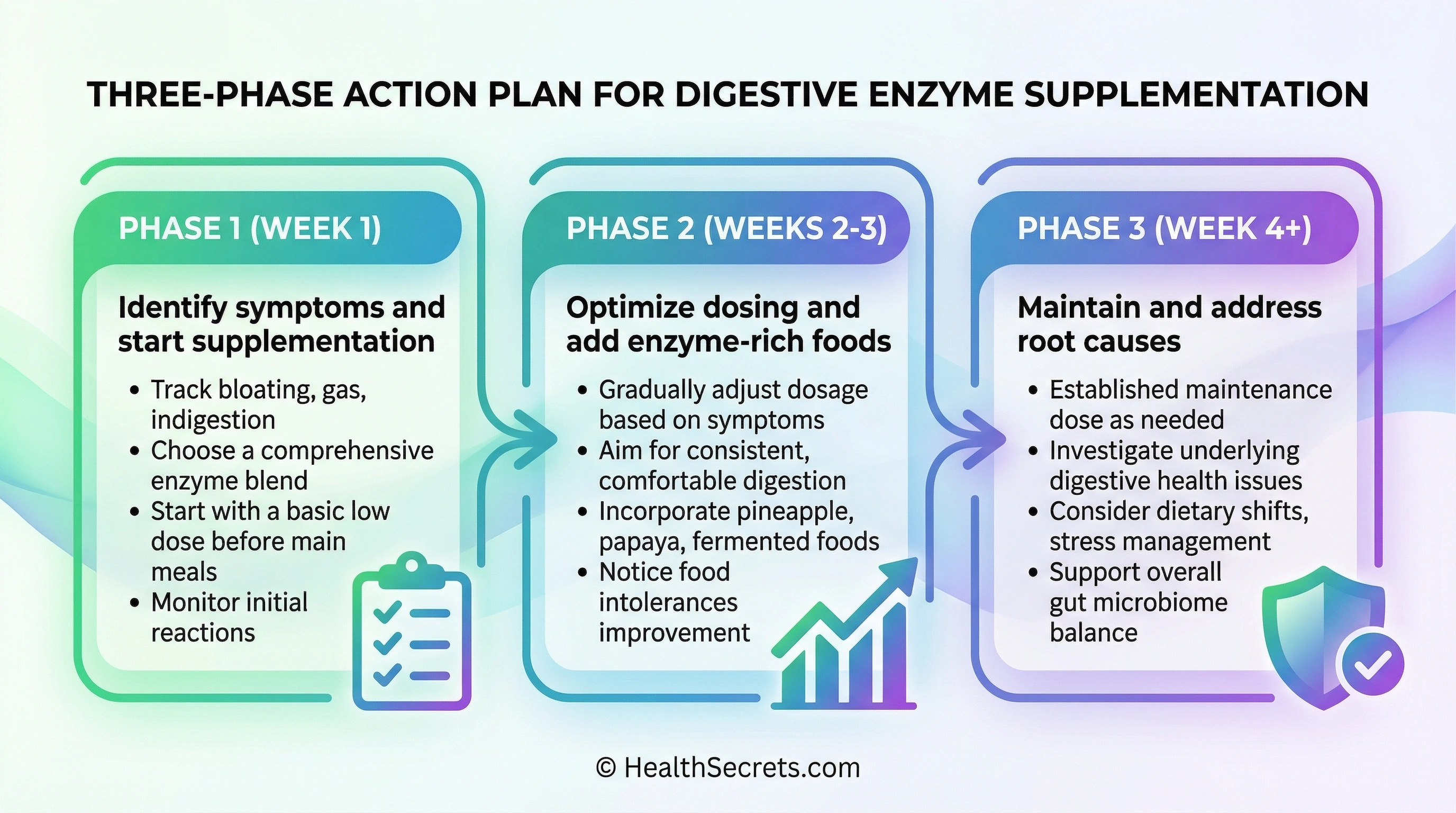
Phase 1: Identify and Start (Week 1)
- Track your digestive symptoms for 2–3 days to identify patterns (which foods trigger issues)
- Choose a broad-spectrum enzyme supplement if you have general digestive discomfort
- Choose a targeted enzyme (lactase, alpha-galactosidase, or lipase) if you have a specific trigger
- Start with 1 capsule at the beginning of each main meal
- Keep a brief food and symptom diary
Phase 2: Optimize (Weeks 2–3)
- Assess symptom improvement — expect 30–50% reduction in bloating and gas
- Increase to 2 capsules per meal if symptoms persist with one
- Add an extra capsule for heavy, high-fat, or high-protein meals
- Incorporate enzyme-rich foods: pineapple, papaya, fermented vegetables, ginger
Phase 3: Maintain and Address Root Causes (Week 4+)
- Continue enzyme supplementation with meals as needed
- Consider testing for pancreatic insufficiency or SIBO if symptoms remain significant
- Support natural enzyme production through stress management and thorough chewing
- Consult a gastroenterologist if you need enzymes with every meal long-term
- Review and adjust your supplement choice based on what works best for your body